-
-
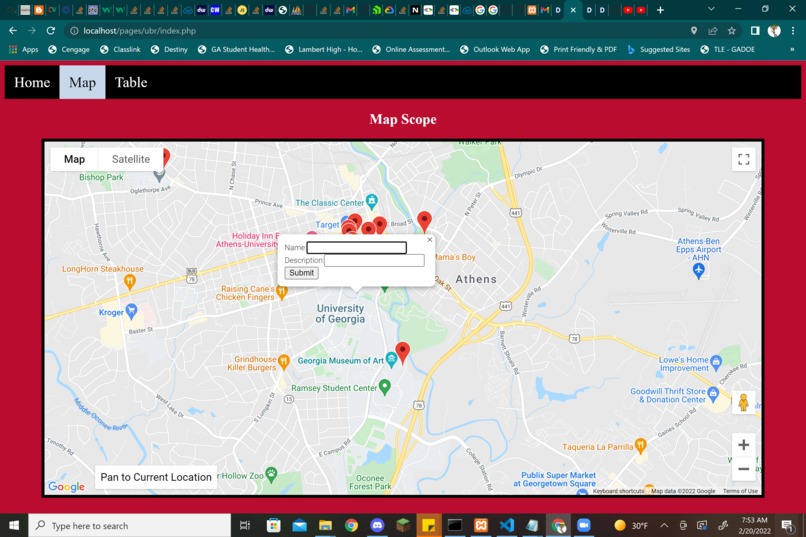
Marked Bathroom Locations
-
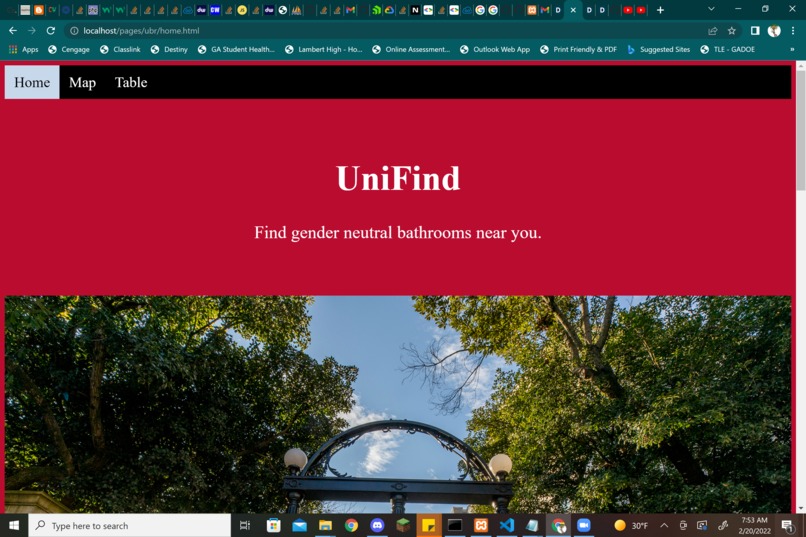
Home Page
-
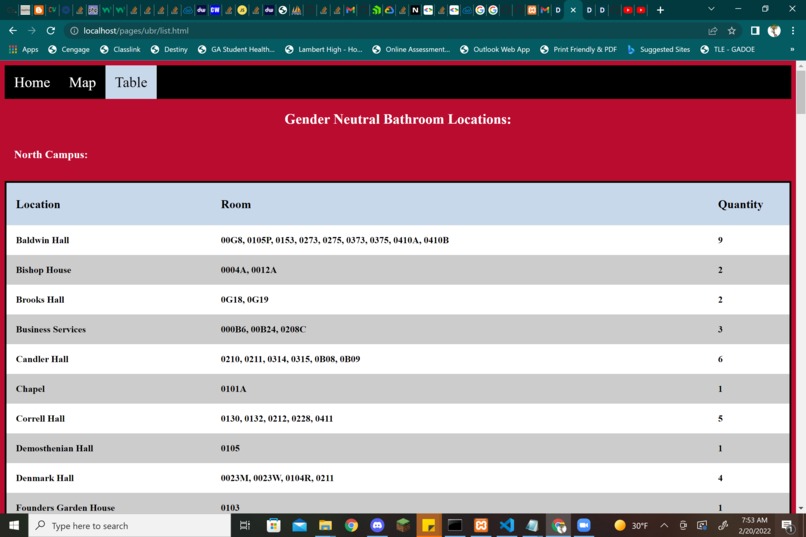
Data
Inspiration
With each generation brings more awareness to challenges faced by transgender and non-binary people. We believe that each new generation of technology should bring forth solutions to help these challenges. Transgender and non-binary people are often subjected to discrimination based on their gender, which can lead to disassociation from their identity and great anxiety when faced with gender-specific products/services. Gender-neutral bathrooms provide a safe and private facility for those not comfortable with conforming to one or the other.
In addition, unisex bathrooms help those with disabilities and families with children. Parents or guardians with children of a different gender may find it difficult to decide which restroom to use. Gender-neutral bathrooms are a great alternative. People with disabilities and people who require a personal attendant (sometimes of a different gender) may find it difficult to use a public restroom due to the size of the stalls and the anxiety caused by being in a crowded area during a vulnerable moment. These people may find a private restroom more comfortable and welcoming.
Gender-neutral bathrooms are a necessity for many people on UGA's campus, but the facilities can be difficult to locate. Students, staff, and visitors may search an entire floor or building before realizing there are no accessible bathrooms. This is why we created UniFind.
What it does
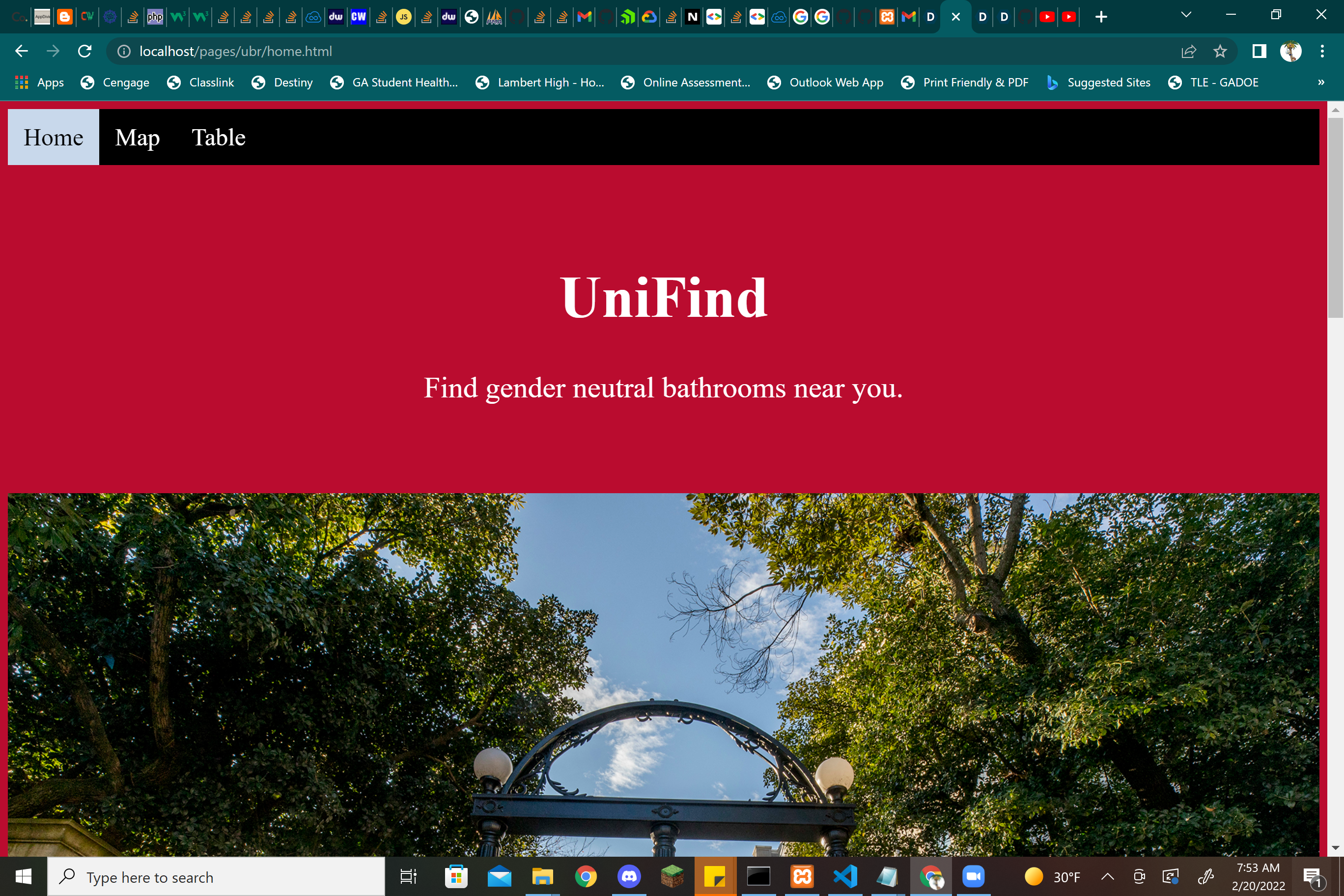
UniFind is a website that uses user input to create a database of known unisex bathroom locations. Users can log the location of a gender-neutral bathroom through UniFind's map feature and record a name and description for each restroom.
Users can easily discover which bathroom is nearest to them using the "Pan to Current Location" button on the bottom left of the map. Users can also enter an origin and destination location in order to receive directions from Google Maps. These features can be used to plan ahead for future events or trips so that users know which buildings contain a gender-neutral restroom.
How we built it
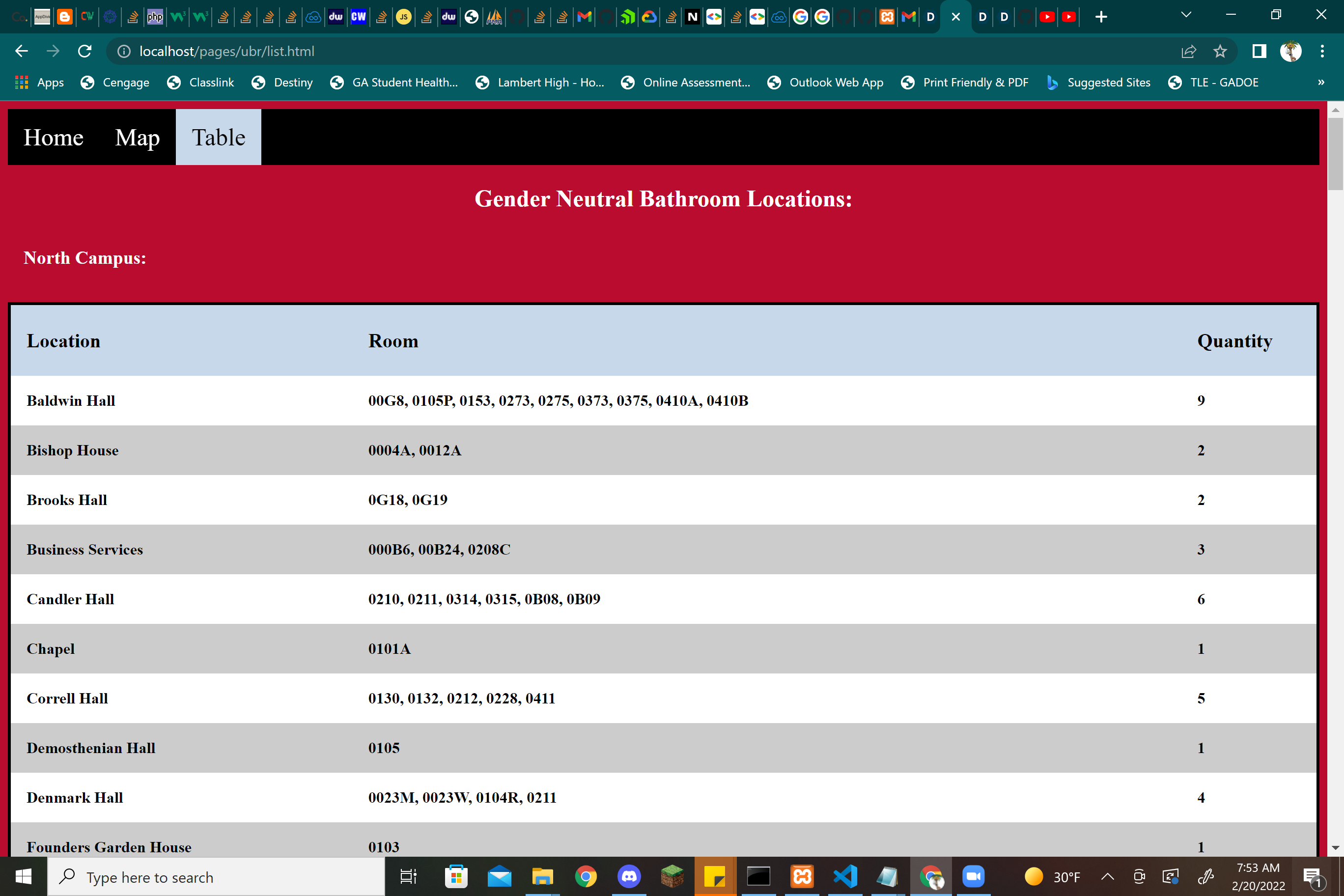
We gathered data from UGA's unisex bathroom location data and entered them into a PHPMyAdmin database. We used PHP as a server-side scripting language to retrieve data from the database via SQL queries and to populate a map generated from Google Maps API. HTML and CSS were used to format the website while JavaScript handled dynamic elements.
Challenges we ran into
Portioning time and delegating work was a challenge because this was our first hackathon and we all had different experience levels. We saw this hackathon as a learning opportunity so our project idea had elements that all of us in some way had no experience in. We heard that Google's Firebase was an efficient tool/server to incorporate API's and we already knew we were going to learn Google Maps API. During the process of learning its functionalities, we decided that this was a tool that required more time to learn. Instead, we locally hosted the website. Learning new concepts was a challenge, Google Maps API was especially difficult because this was the first big, high-level API integration we've ever done before.
Accomplishments that we're proud of
In every facet of this project, somebody learned something. Nobody knew how to use Google Map API, but we incorporated it. PHP, SQL, website formatting, etc. While not wholly complete, we consider our project an accomplishment.
What we learned
Besides broad-stroked computer science concepts, we have learned how to prepare better for next time. Instead of pushing ourselves to use all new high-end programs and tools, we've learned to strike a balance between learning new things and using what we already know.
What's next for UniFind
UniFind has the potential to scale universally as long as users are willing to input data. In the future, UniFind can expand to include the location of breastfeeding & pumping-friendly places as well as bathrooms that contain free menstrual products and changing stations as well as general facilities. UniFind has the potential to de-stigmatize the conversation surrounding restroom accessibility, one user at a time.


Log in or sign up for Devpost to join the conversation.