-
-
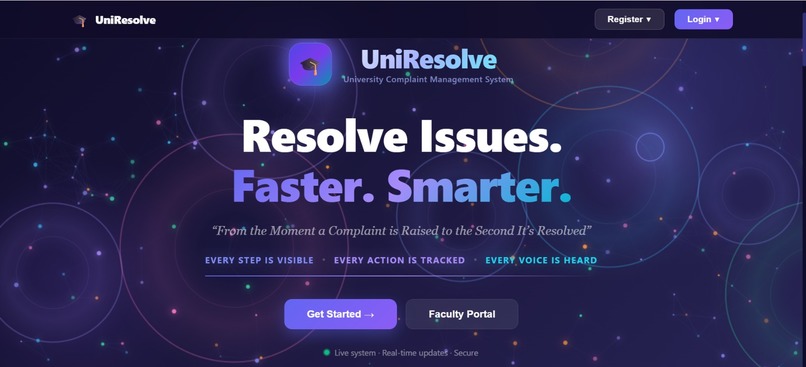
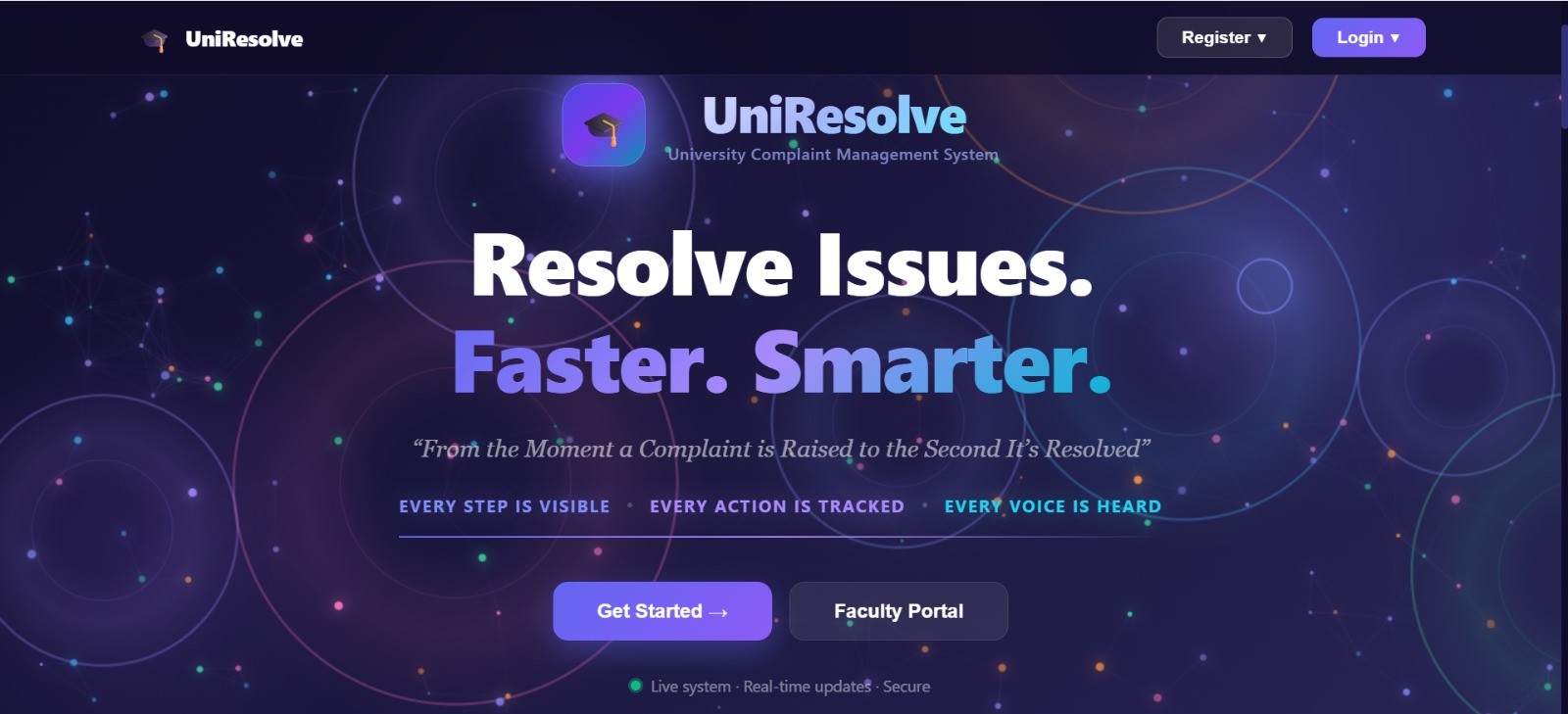
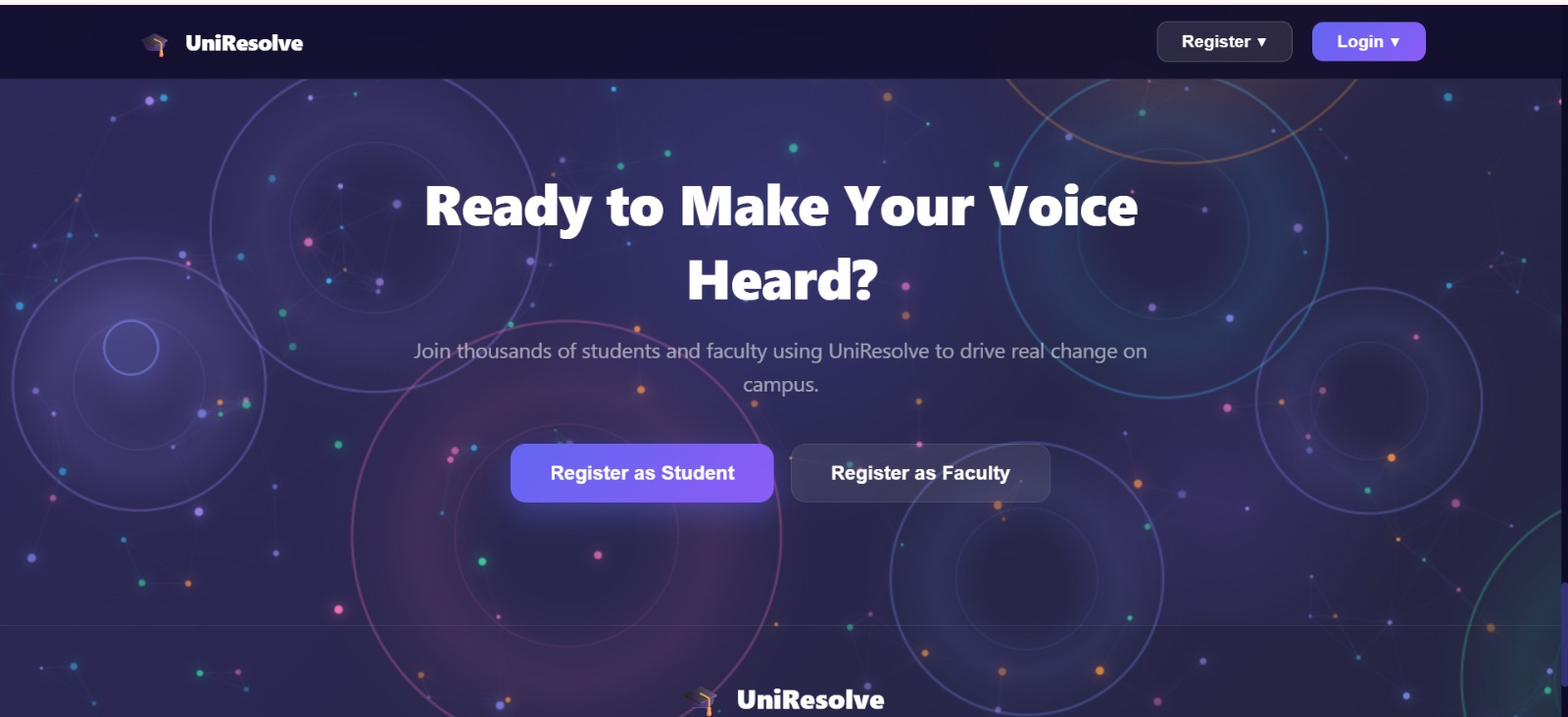
home page
-
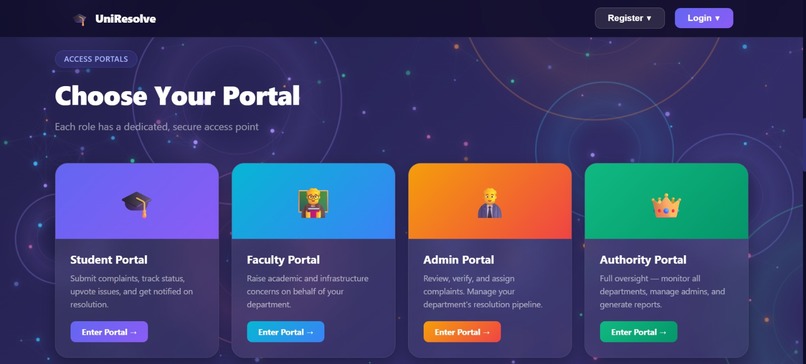
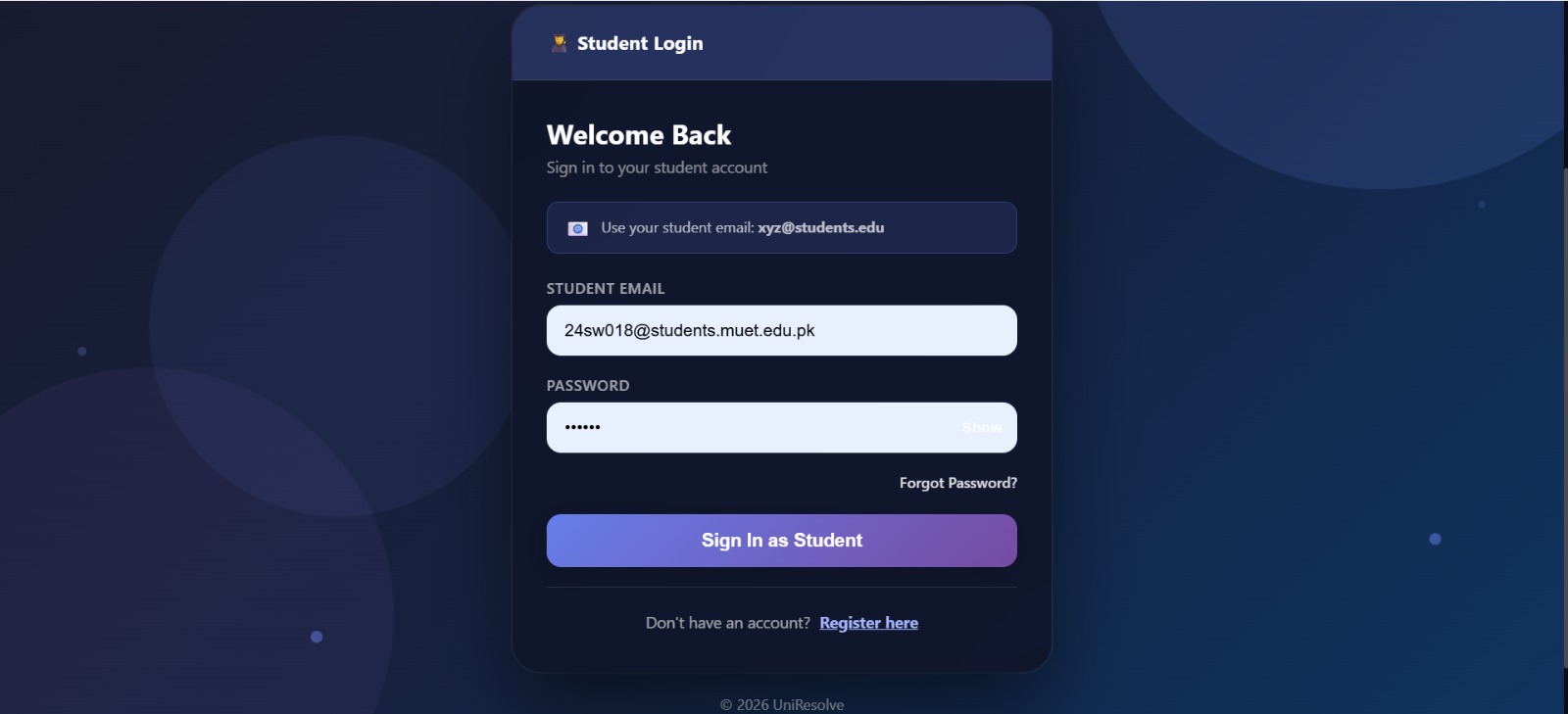
direct login
-
-
-
-
-
-
-
-
-
-
-
-
-
-
-
-
-
-
-
-
Inspiration
The idea for UniResolve came from a real problem we observed in our own university. Students would complain about broken infrastructure, hostel issues, academic problems, and cafeteria concerns — but there was no centralized system to track whether anyone actually acted on those complaints.
The harsh reality we witnessed:
Complaints sent via email would get lost in crowded inboxes
WhatsApp messages would be seen but forgotten within hours
Physically submitting a complaint meant walking from office to office, with no guarantee of resolution
Students had no idea what happened to their complaint after submission
Admins had no deadlines, so delays were common
Higher management had no data on recurring issues
We realized that universities need a digital, transparent, and accountable system — one where students can see exactly where their complaint stands, admins are held responsible for timely action, and authorities have complete visibility.
"No complaint should be silently ignored."
This became our guiding principle and the foundation of UniResolve.
What It Does
UniResolve is a full-stack, role-based complaint management system designed specifically for universities. It replaces informal, broken processes with a structured digital platform where every complaint is tracked, every action is logged, and every voice is heard.
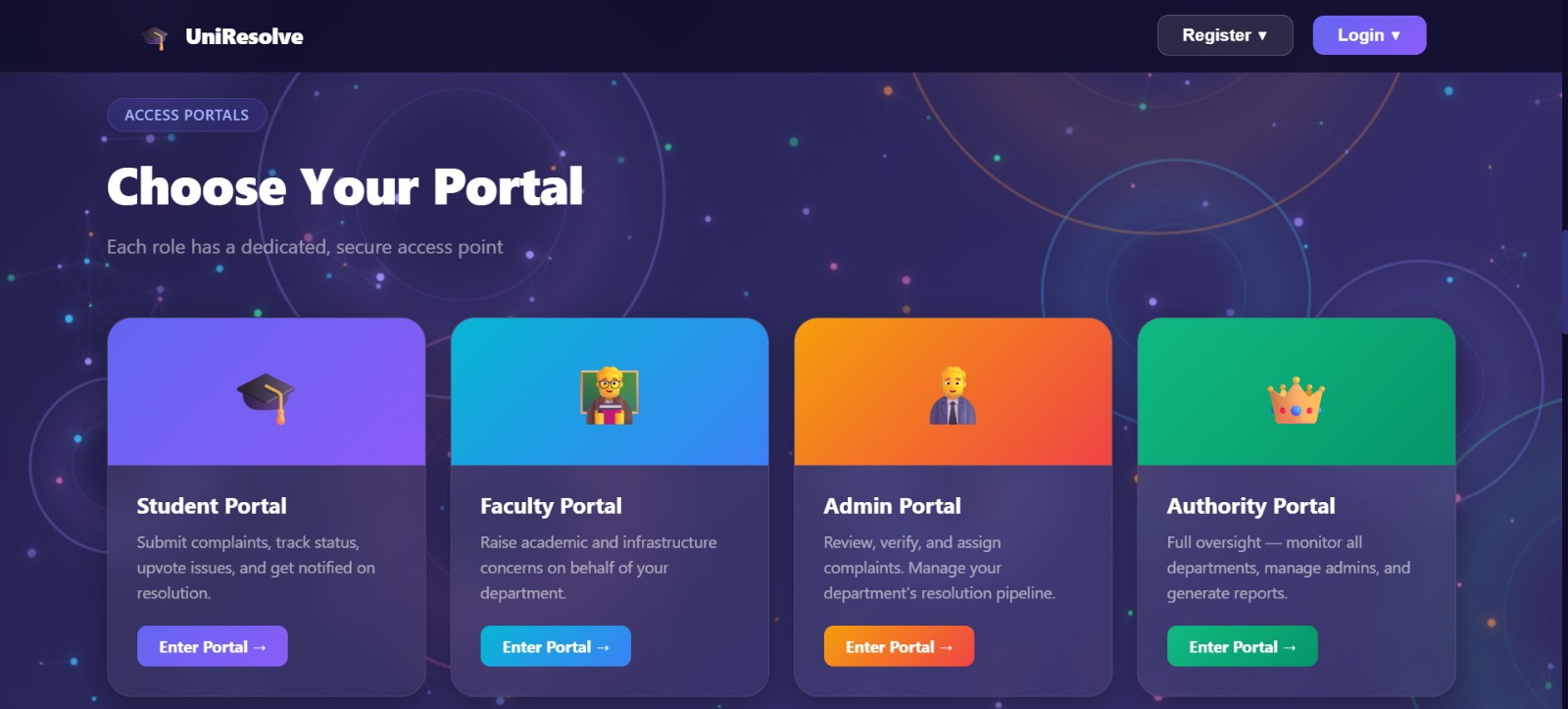
Four User Roles & Their Responsibilities:
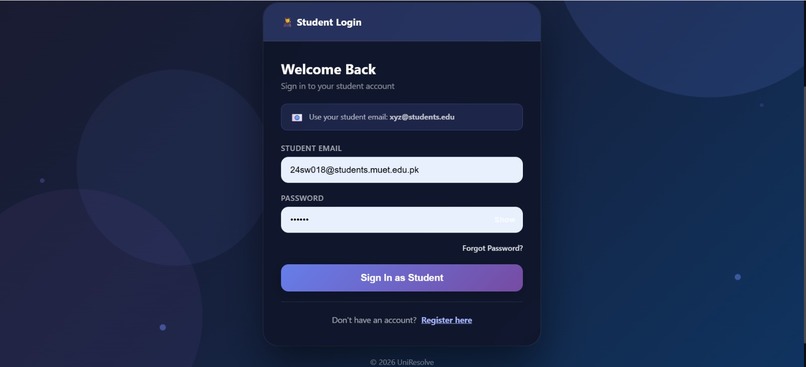
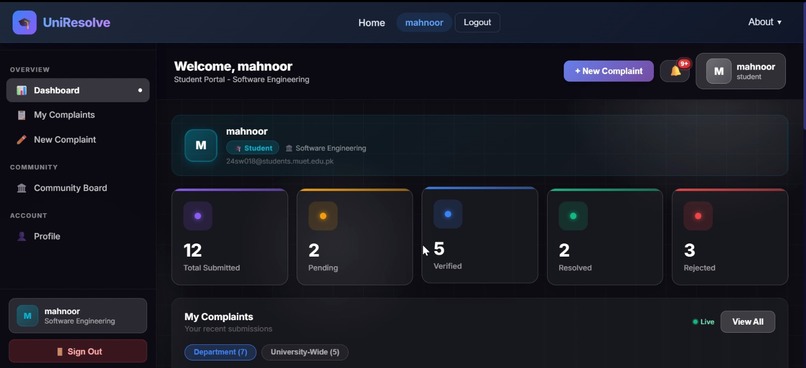
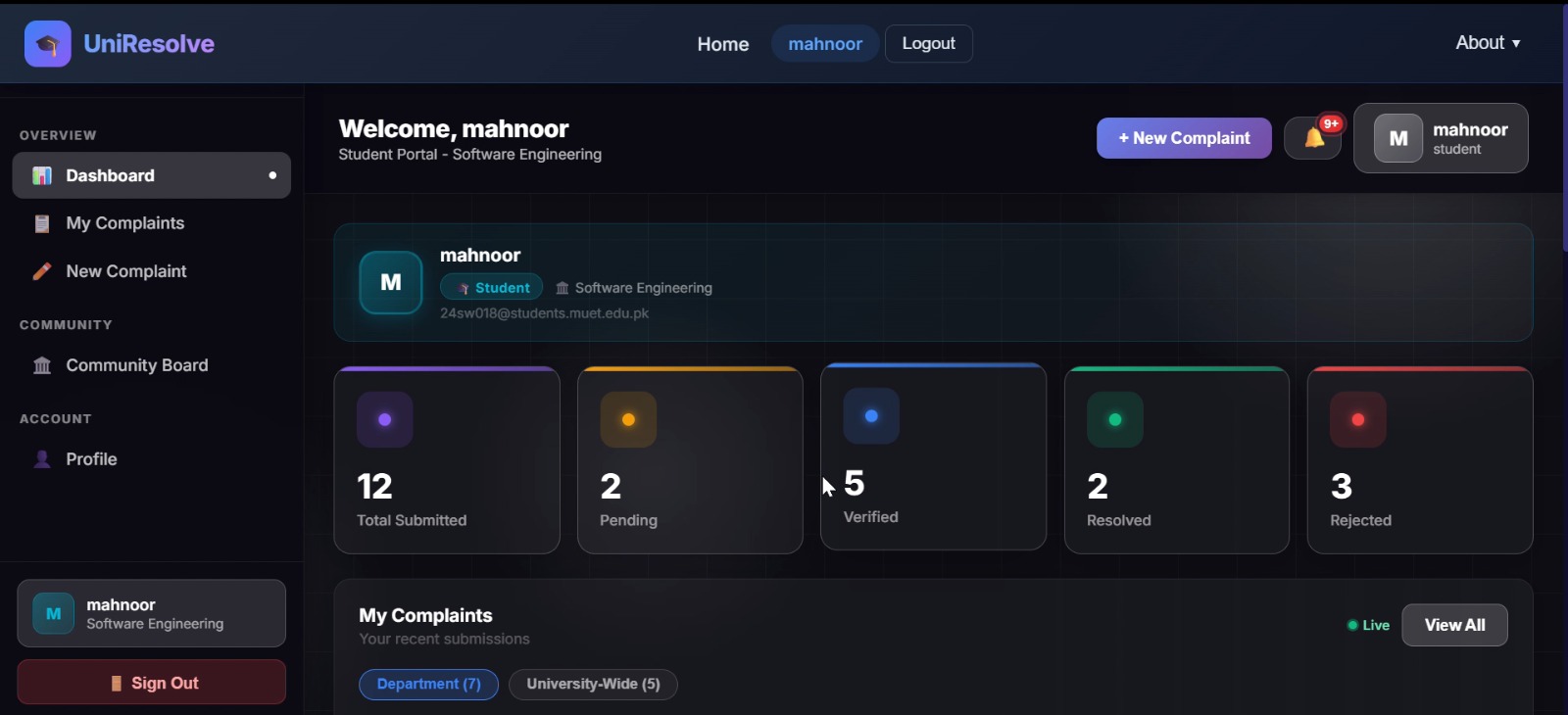
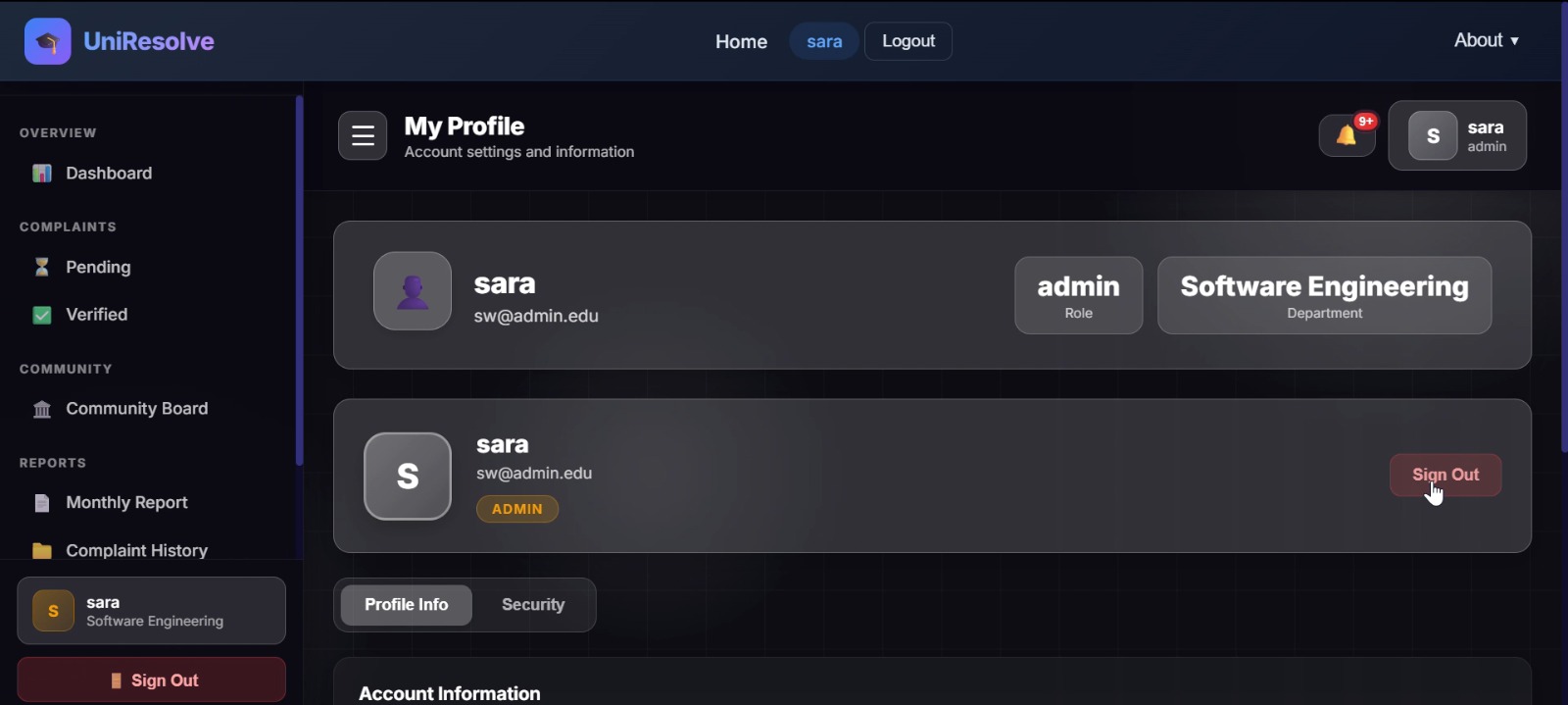
Students and Faculty can submit complaints with title, description, category, and optional images. They can track status in real-time, view the community board, upvote relevant issues, and receive notifications on every update.
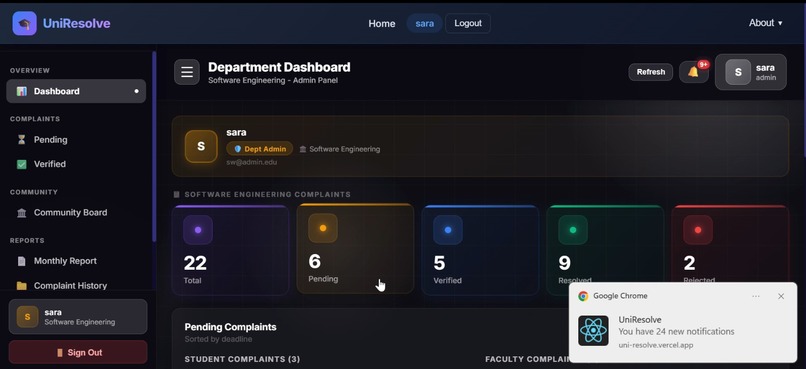
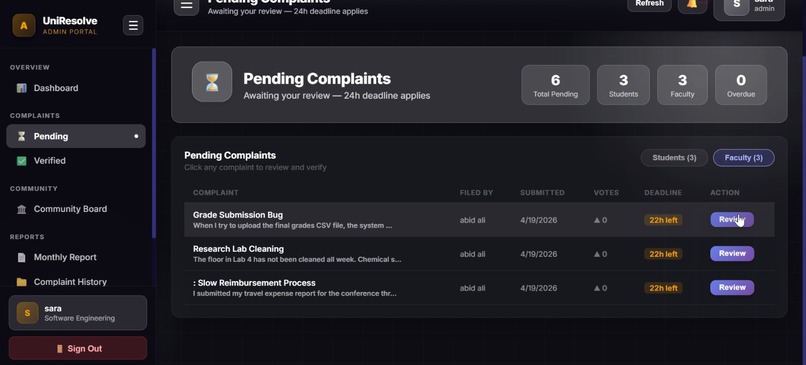
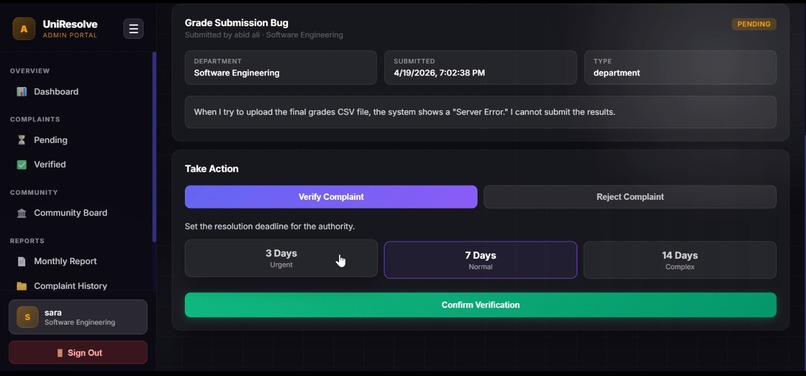
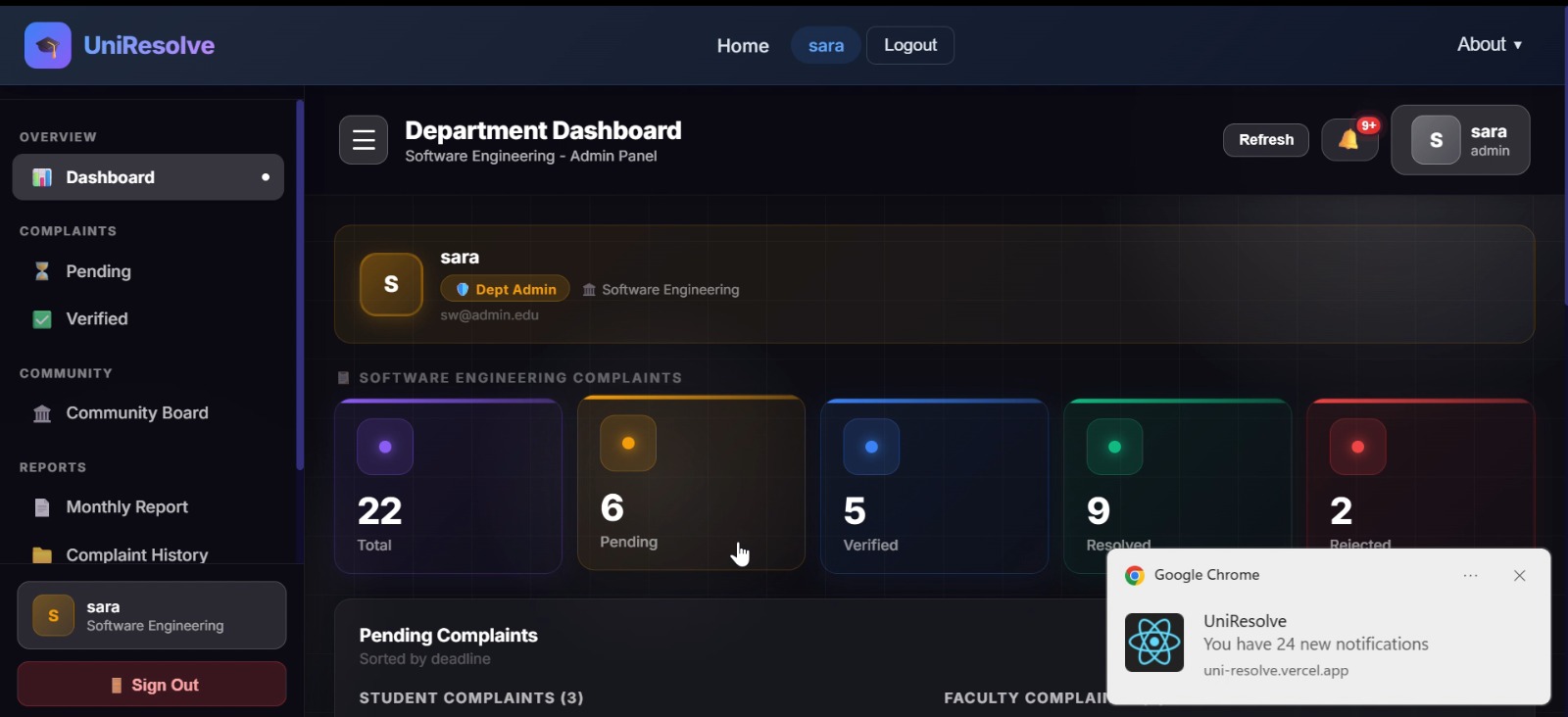
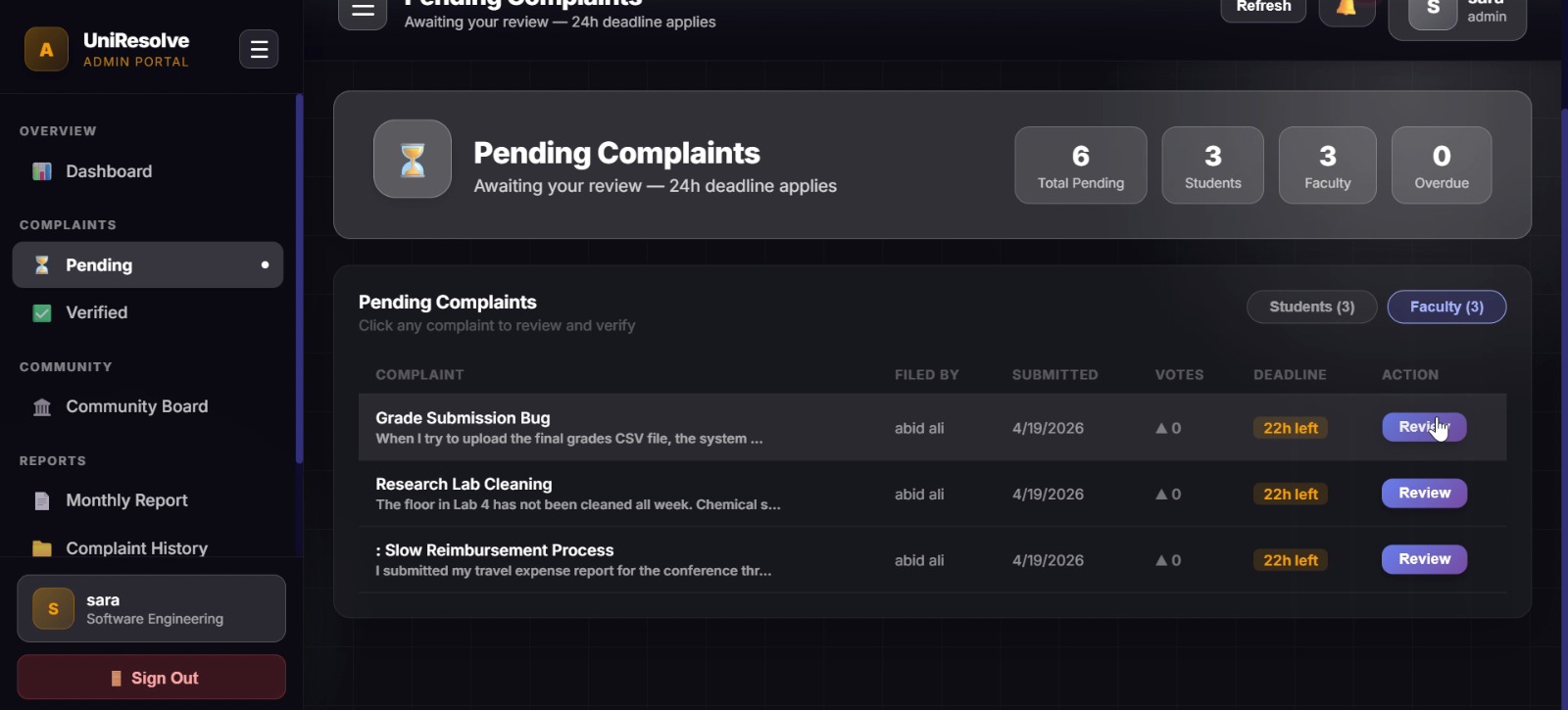
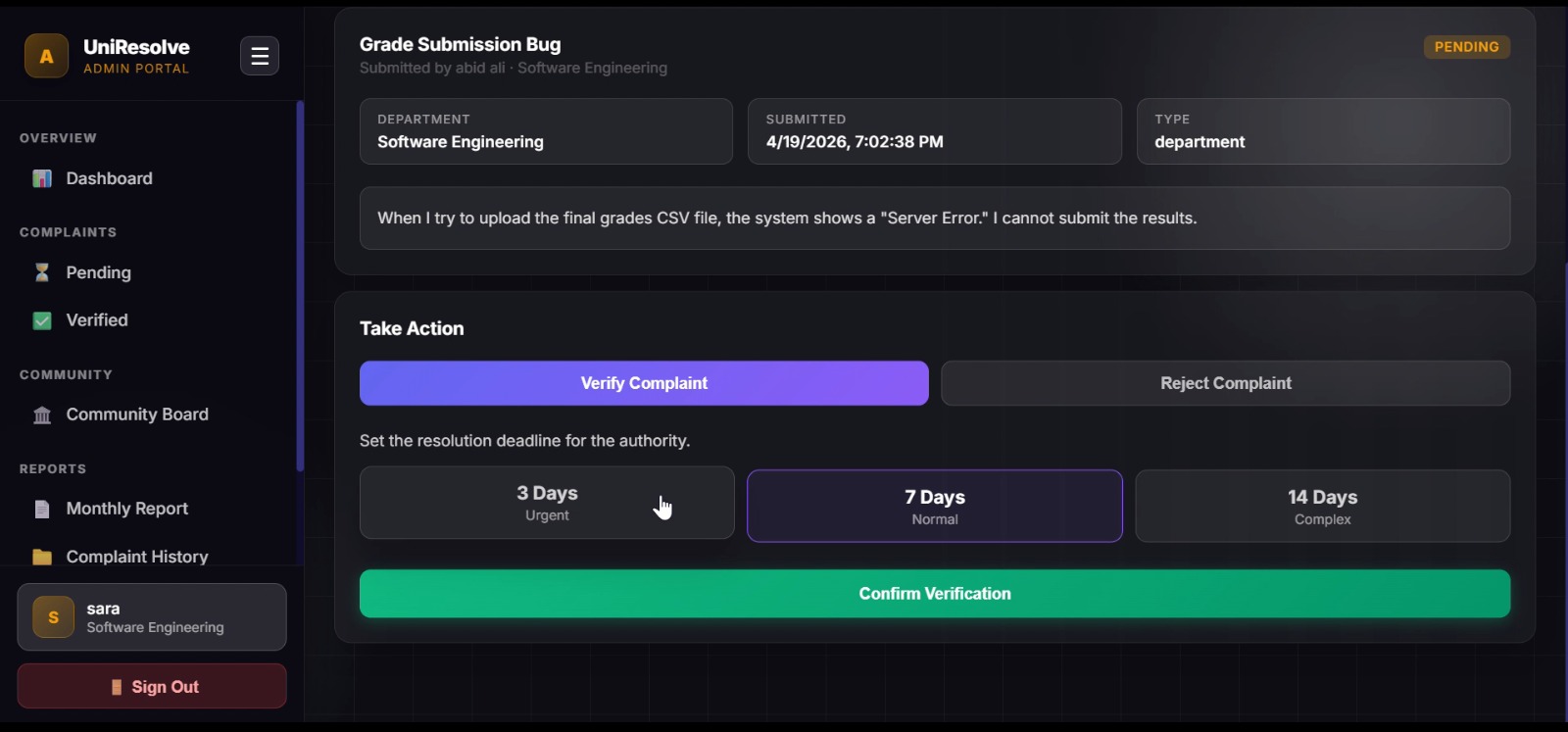
Department Admins view pending complaints from their department. They must verify or reject complaints within 24 hours. They set resolution deadlines for authorities and can track their own performance metrics.
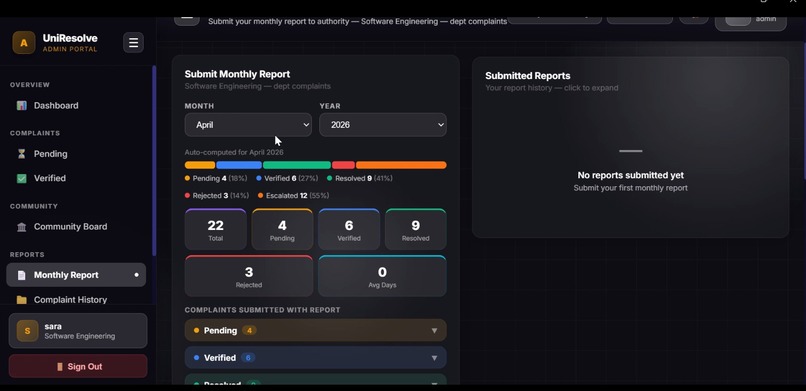
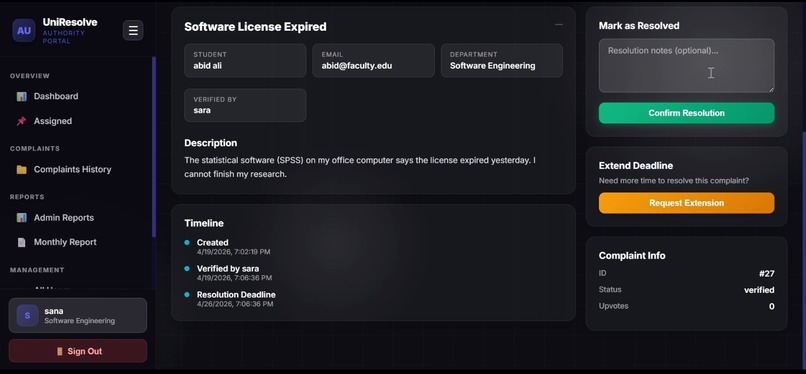
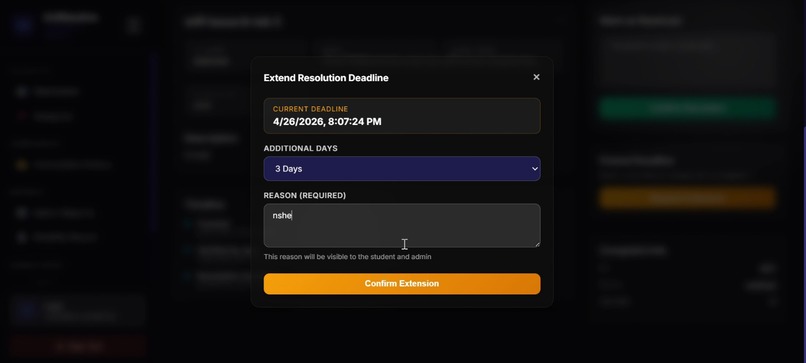
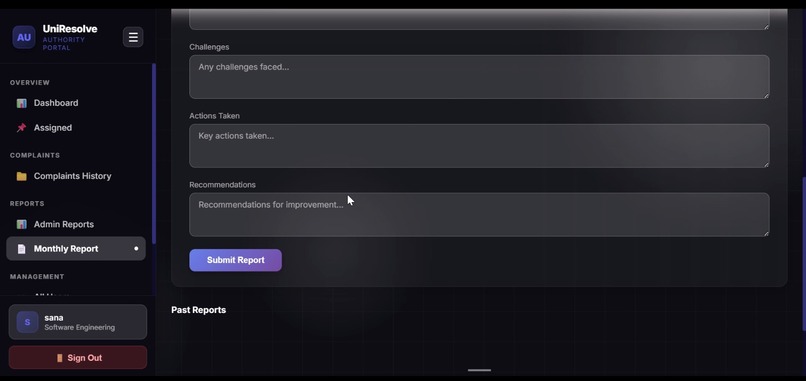
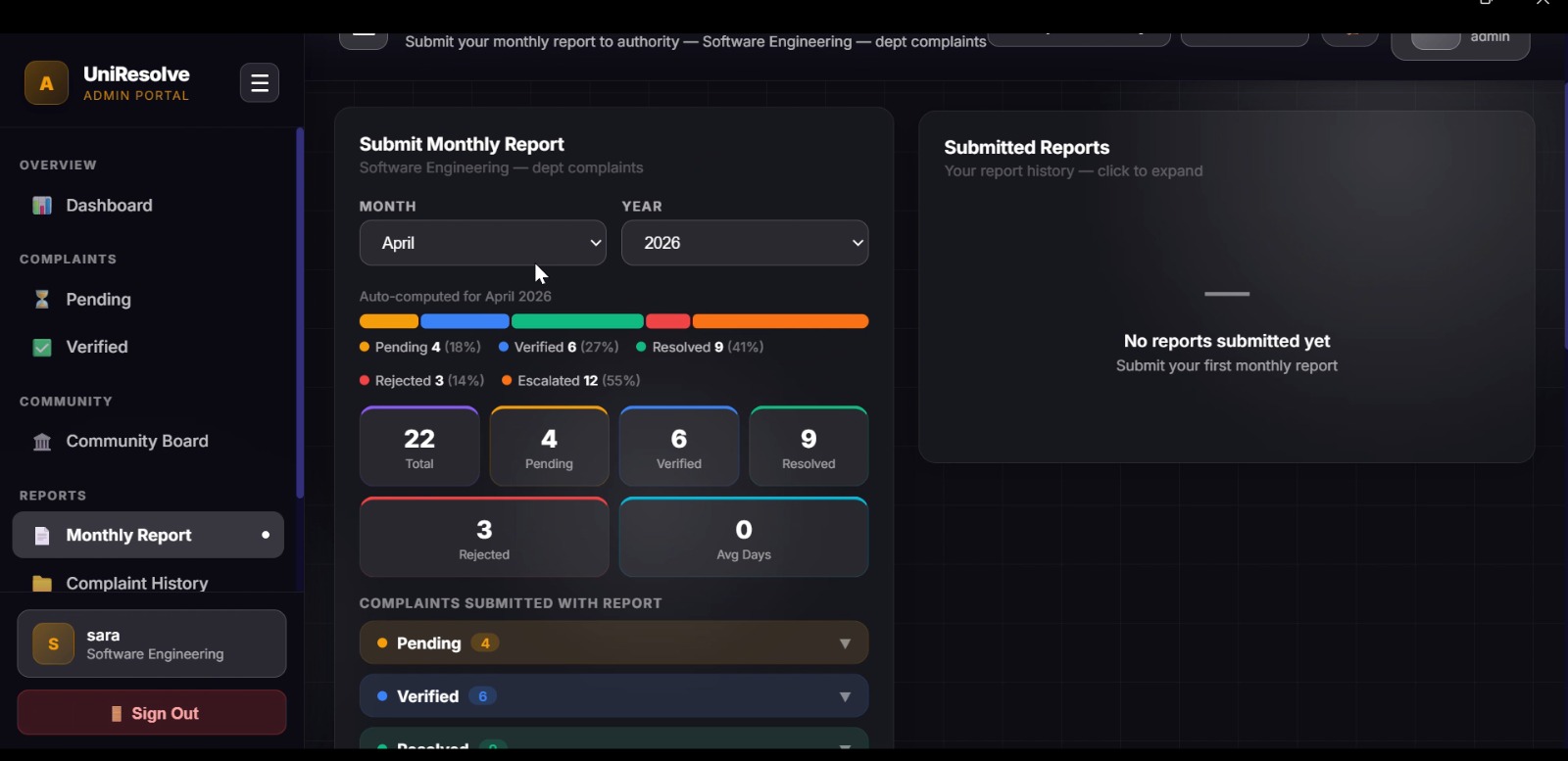
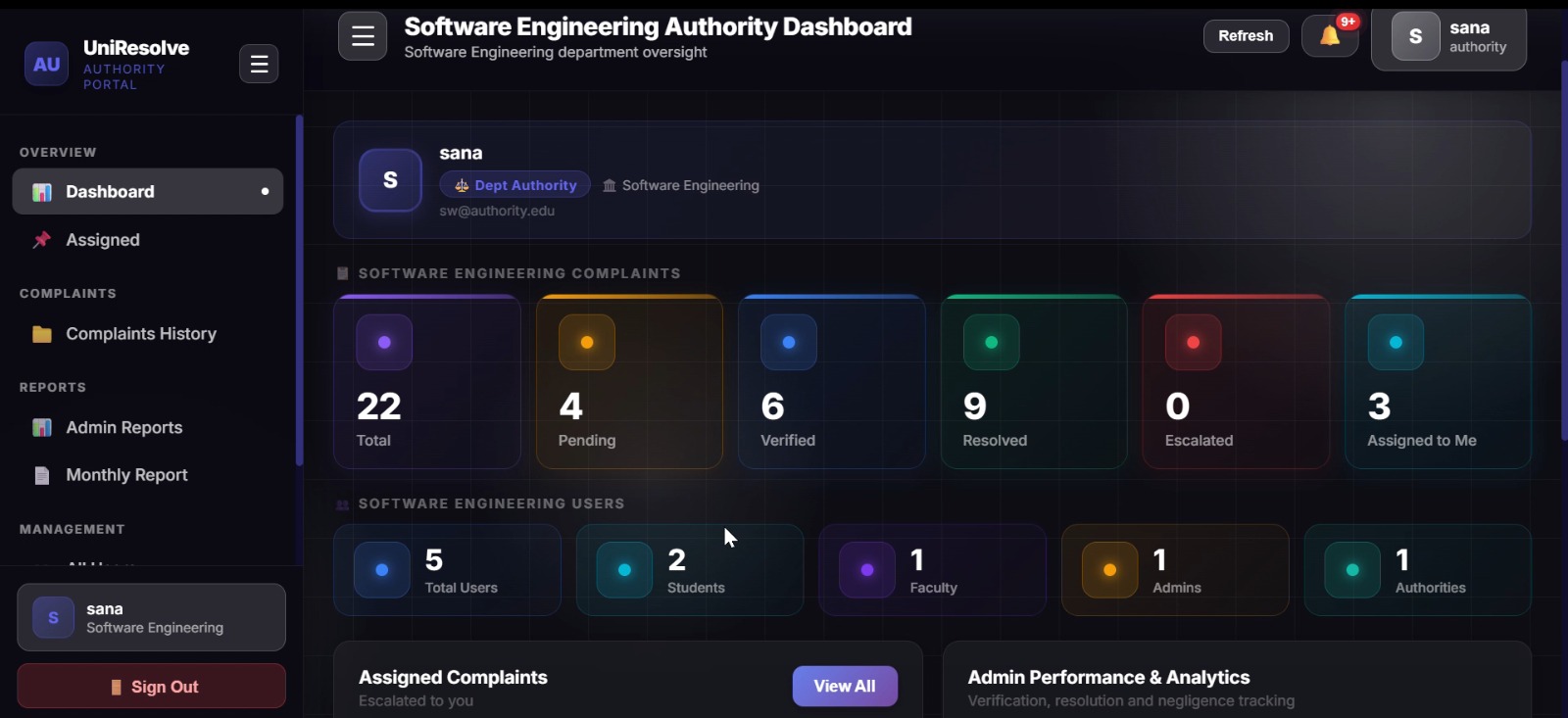
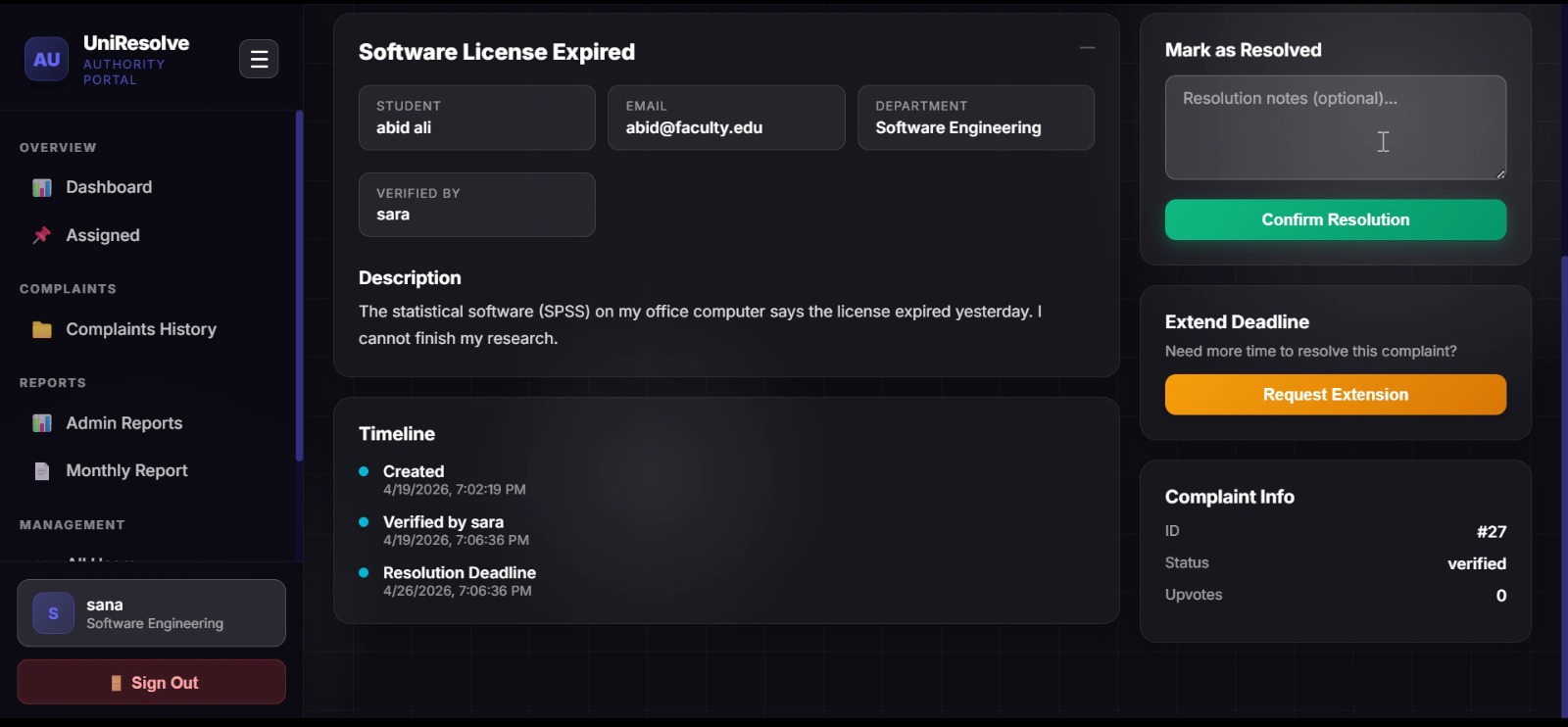
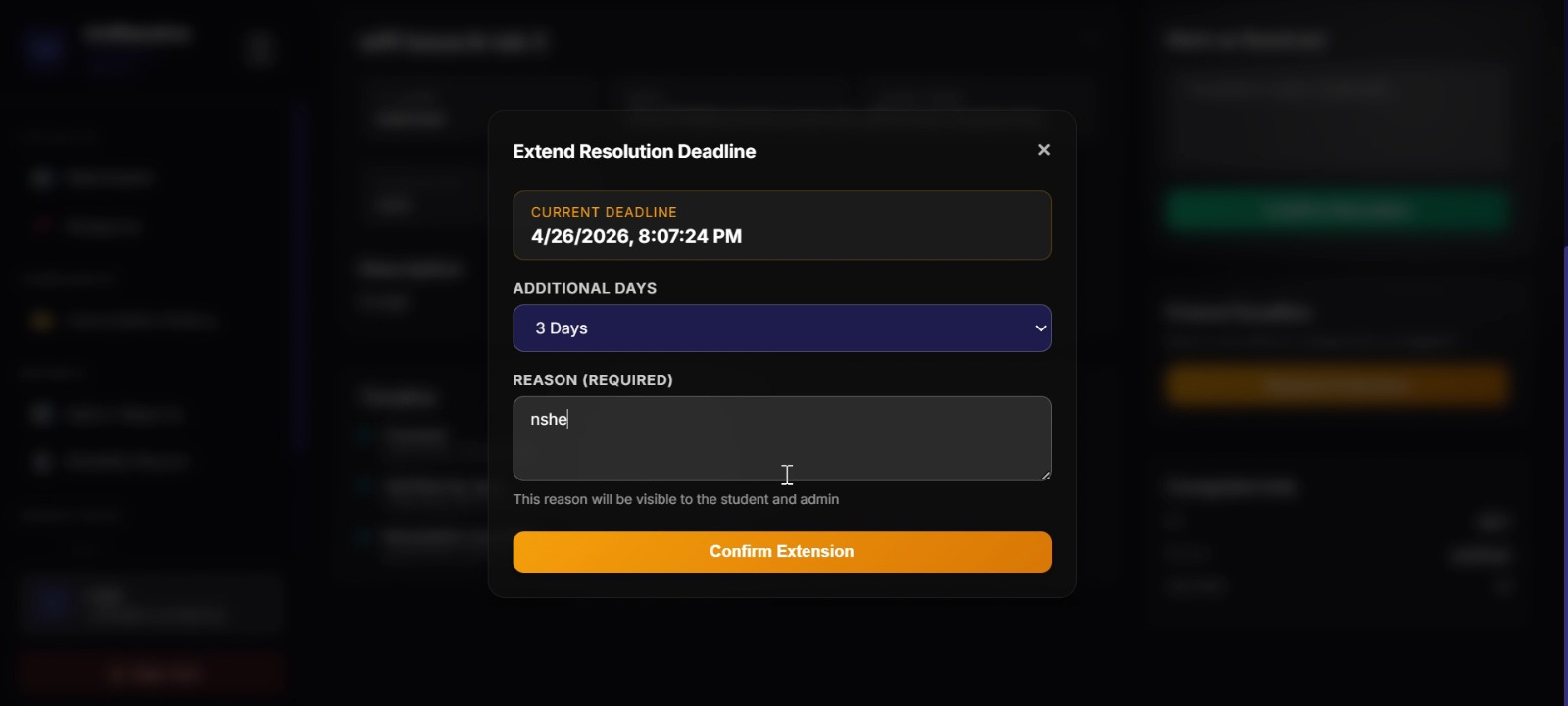
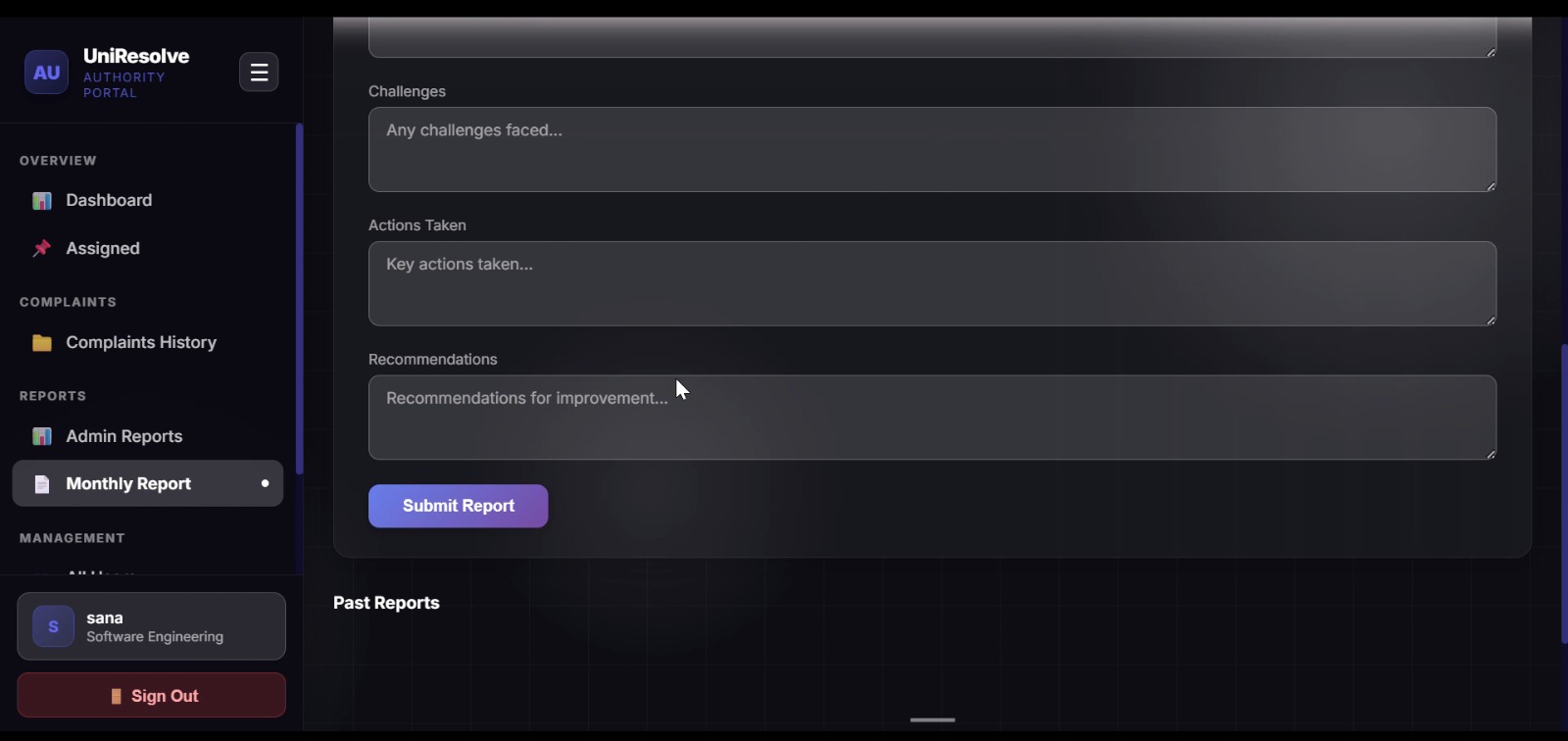
Authorities view complaints assigned to them. They resolve issues within deadlines and can request deadline extensions with valid reasons. They also submit monthly performance reports.
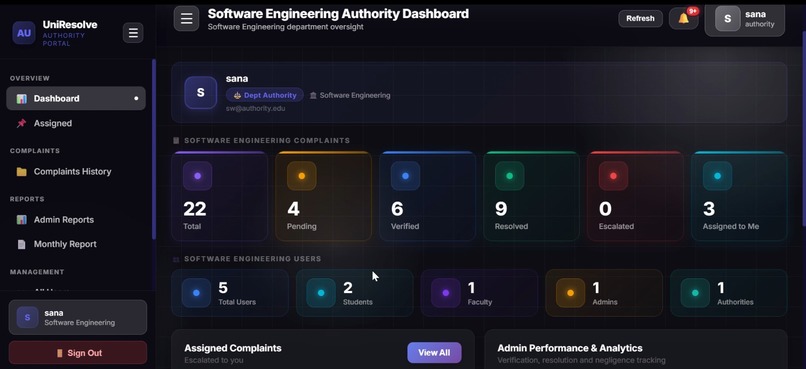
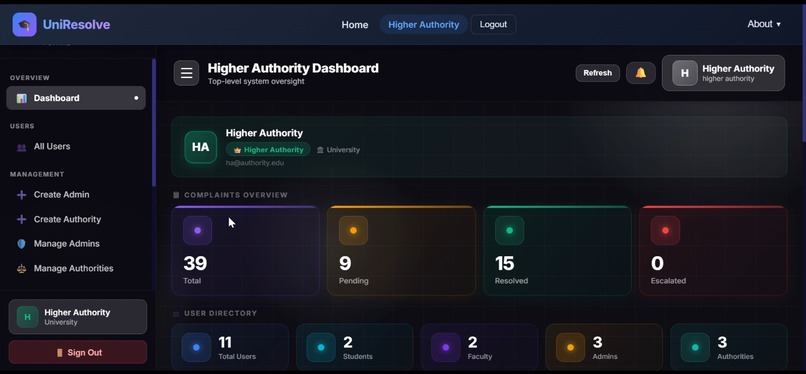
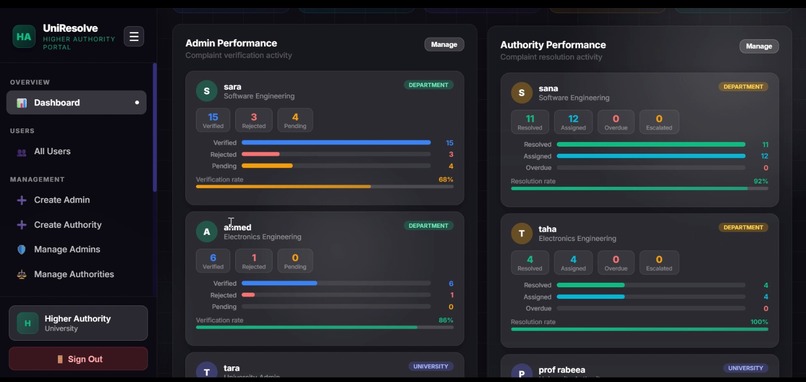
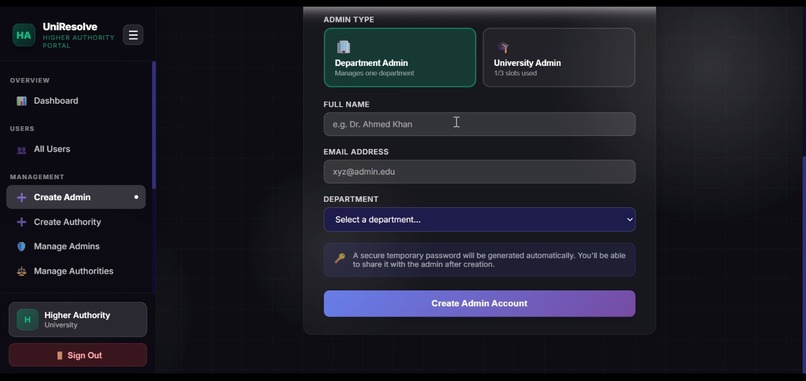
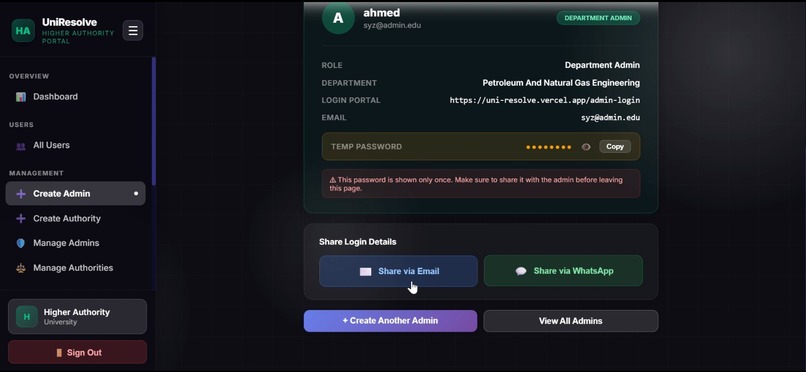
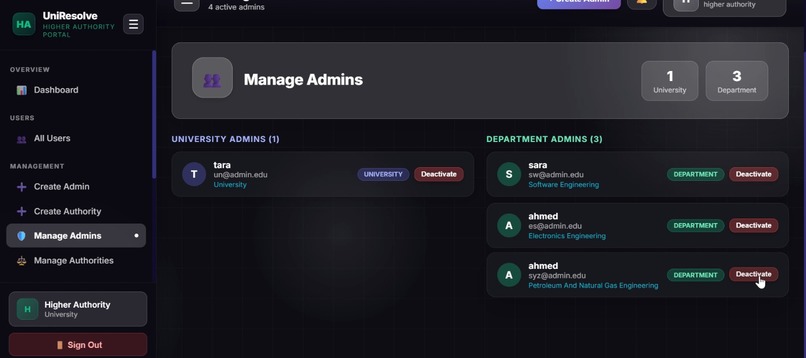
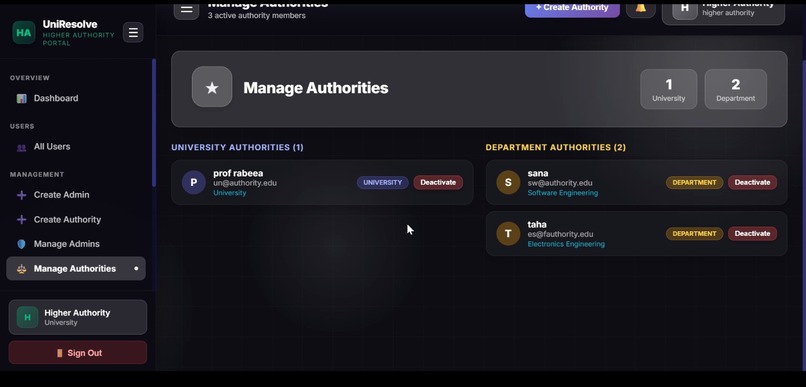
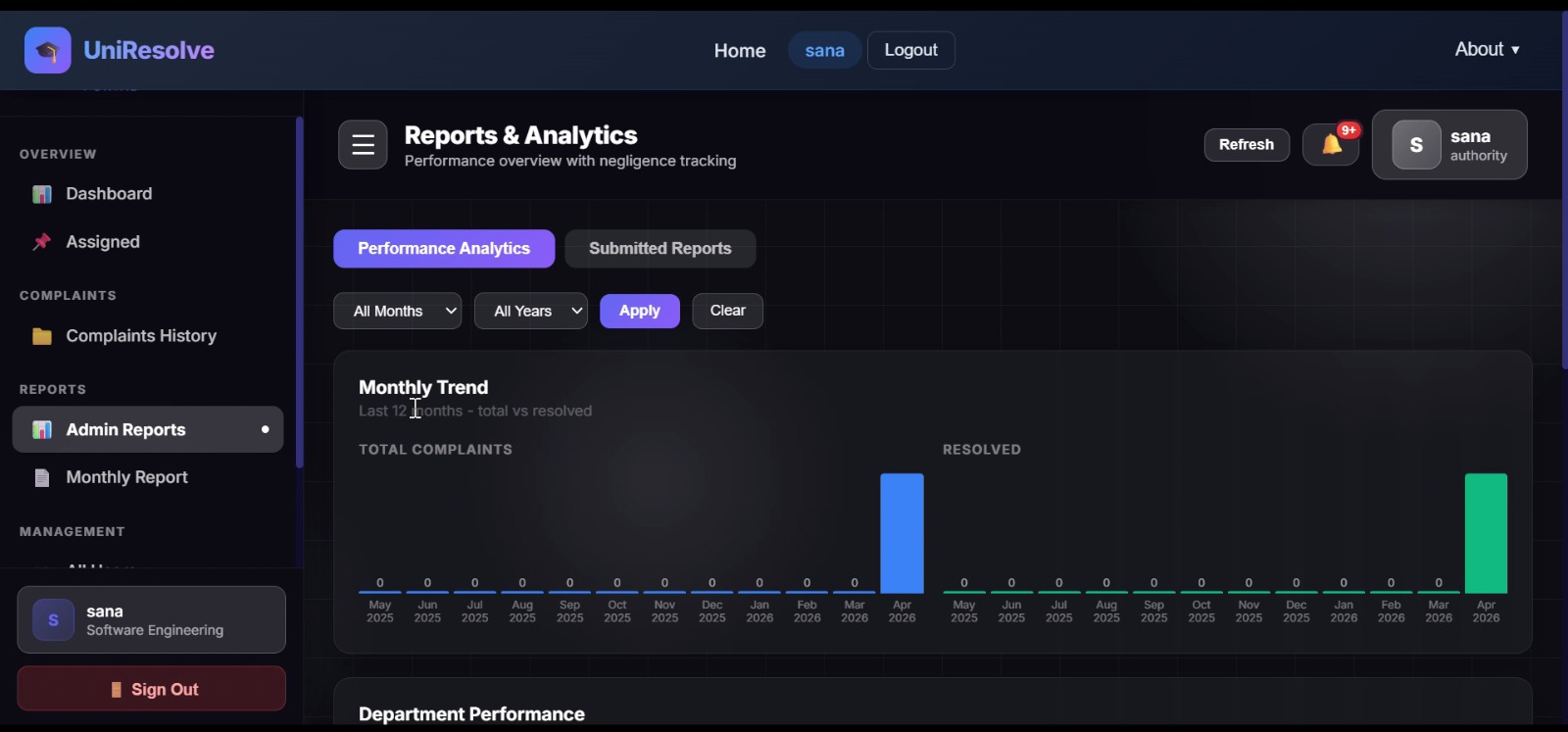
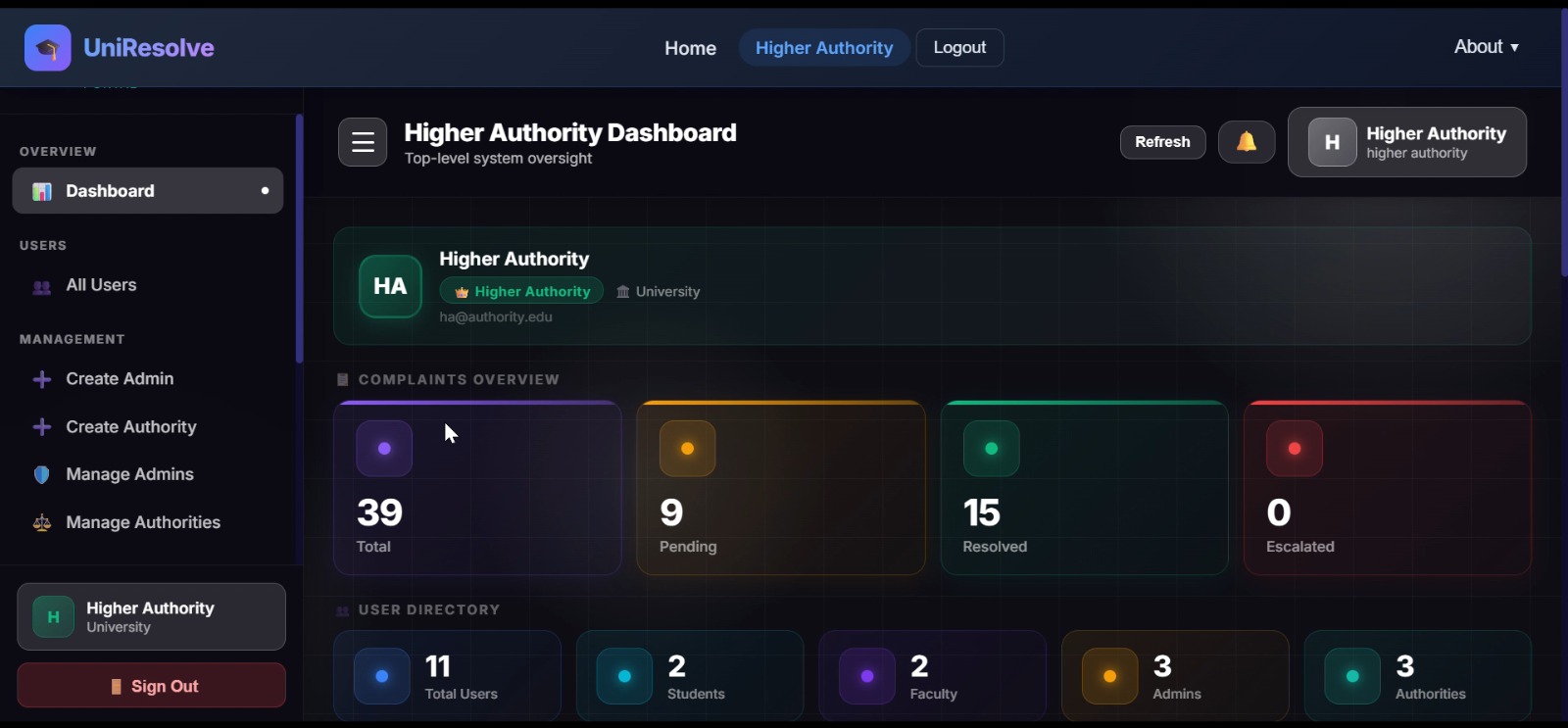
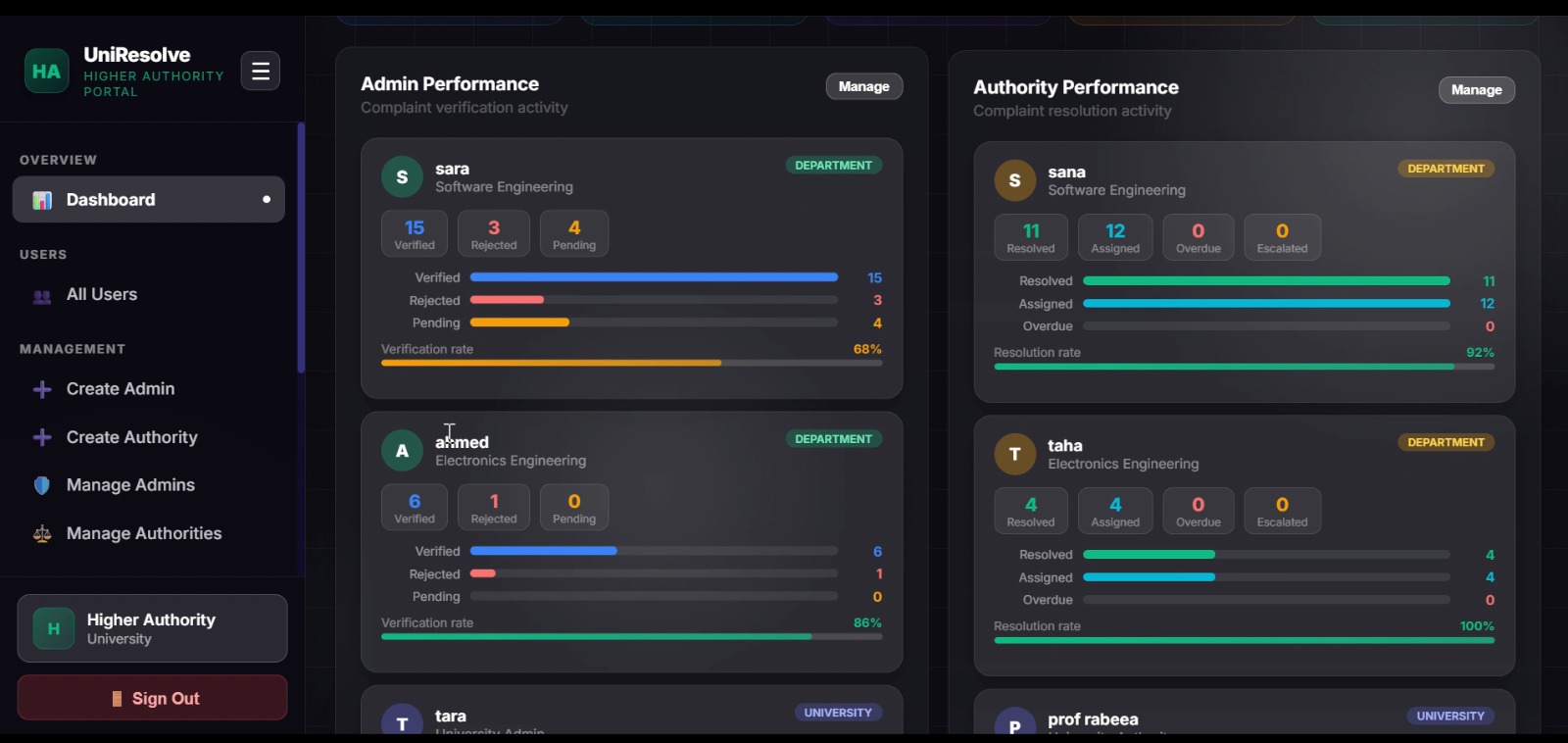
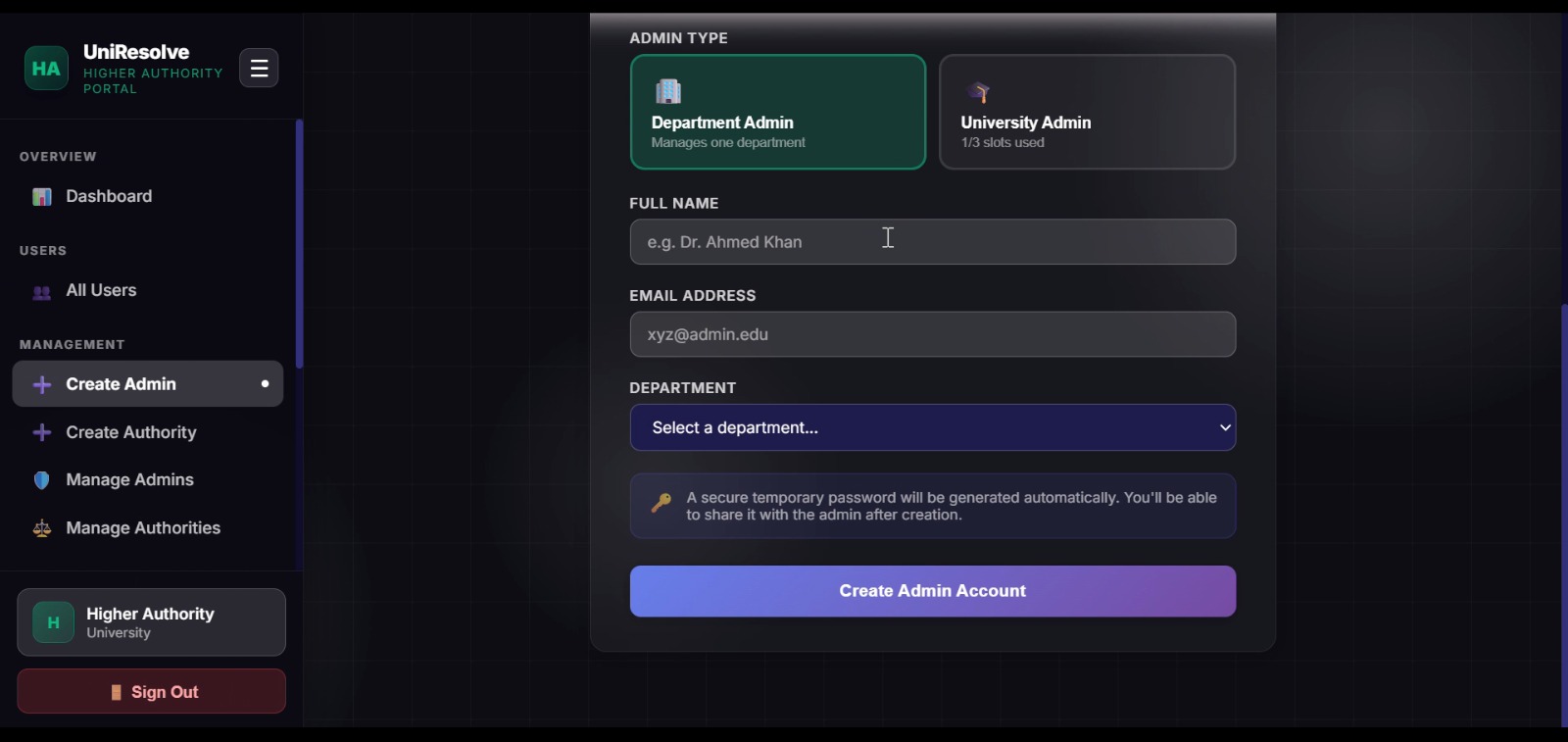
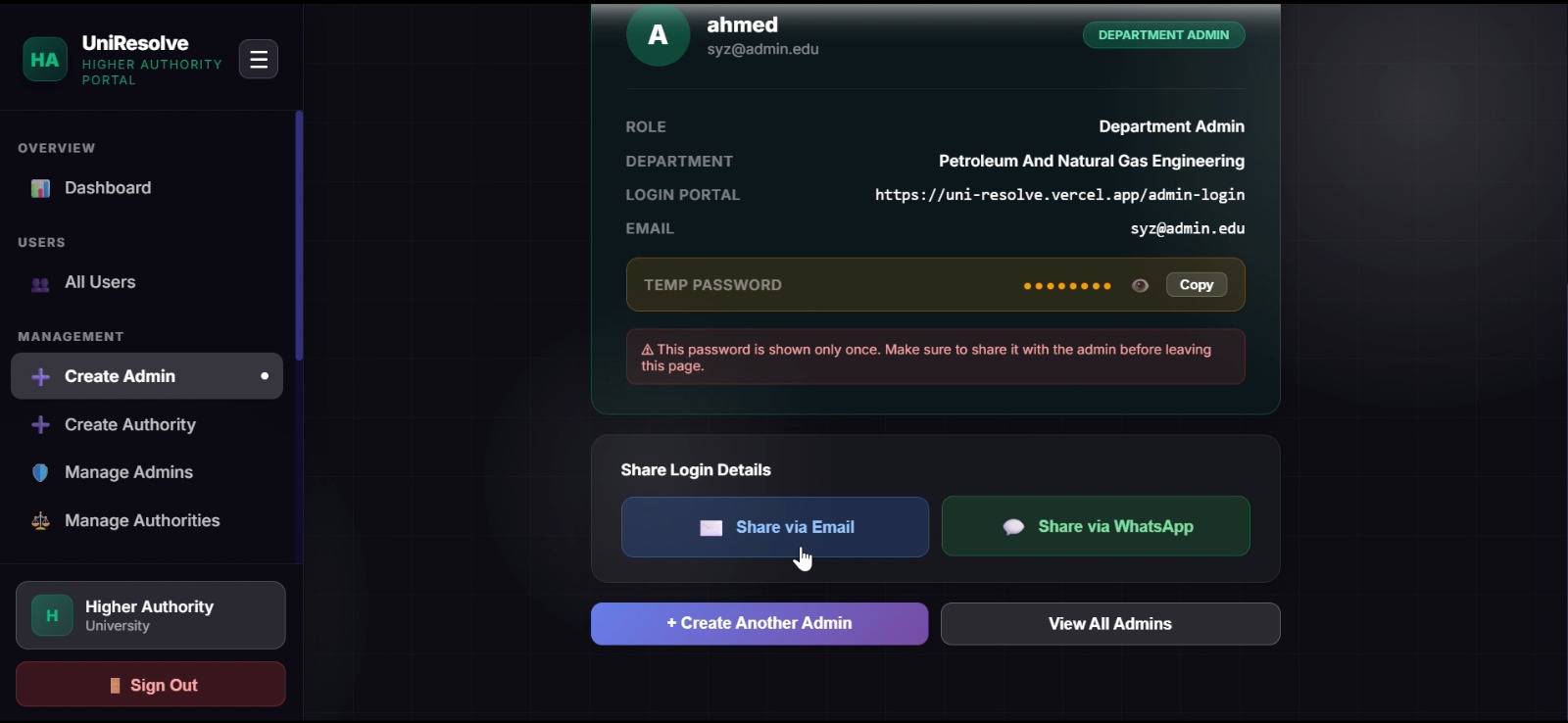
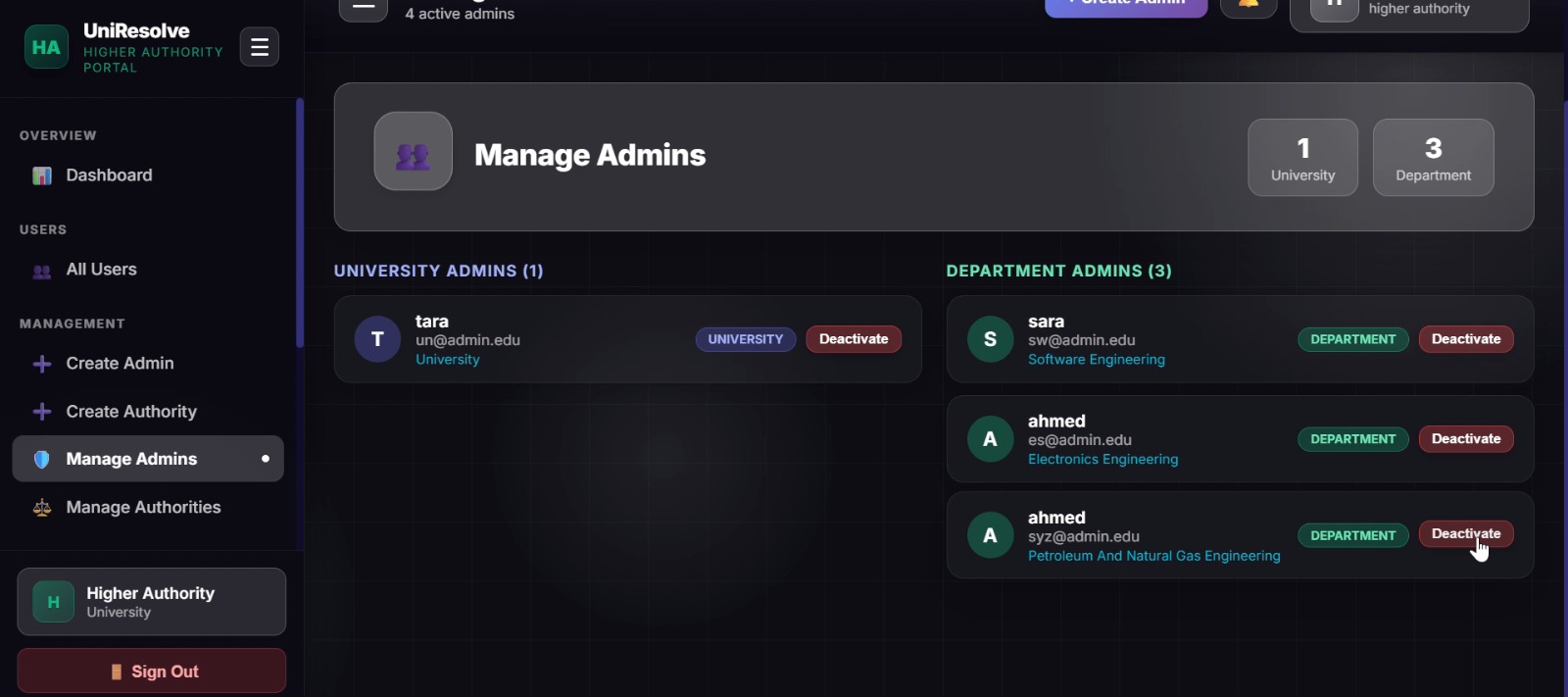
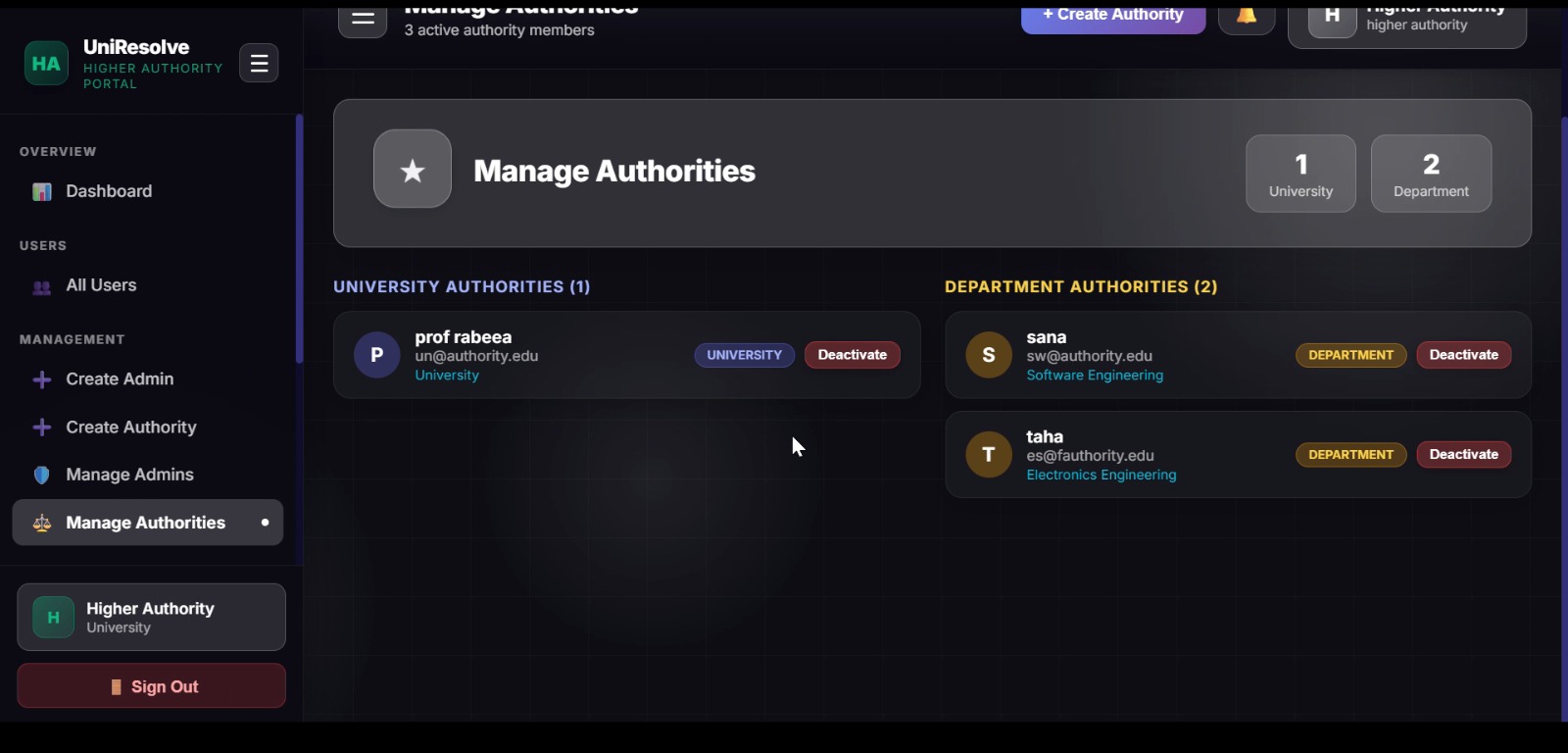
Higher Authority has complete university-wide oversight. They can view all complaints, monitor admin and authority performance, generate analytics reports, and create or manage admins and authorities.
Key Features:
The system includes 24-hour verification deadlines with countdown timers visible to everyone. If an admin ignores a complaint for 24 hours, it auto-escalates to the authority. If the authority ignores it further, it escalates to higher authority — ensuring no complaint is ever ignored.
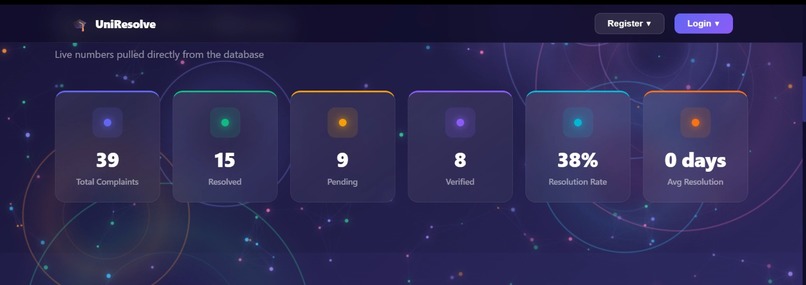
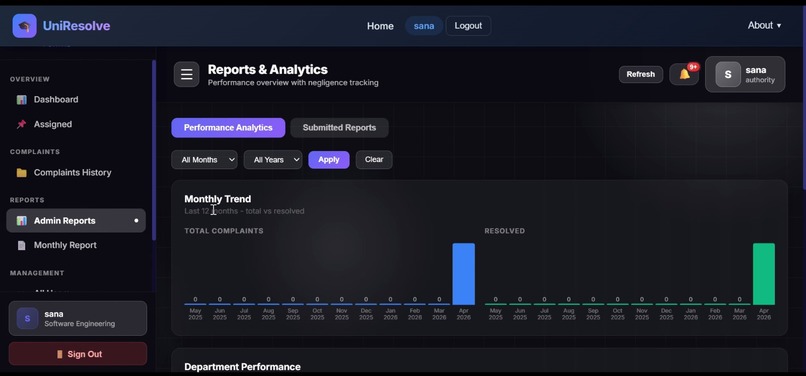
Real-time notifications are sent via both email and in-app alerts for every status change. The analytics dashboard provides monthly reports, department performance metrics, admin rankings, and category analysis.
Students can upvote complaints on the community board — high-upvote issues automatically signal urgency to admins and authorities. The system is fully responsive, working seamlessly on desktop, tablet, and mobile devices. Students can also attach images as evidence with their complaints.
How We Built It
Frontend is built with React.js using component-based architecture. React Router handles client-side navigation, and we used custom CSS-in-JS with responsive design without any external UI library. Axios manages API communication with interceptors for JWT token handling, and React Context API handles global state management. The frontend is deployed on Vercel.
Backend is built with Flask (Python) as a REST API with over 38 endpoints. Flask-JWT-Extended provides secure authentication and role-based access control. Flask-SQLAlchemy serves as the ORM for database operations. Flask-Mail handles email notifications, and APScheduler runs background escalation checks every 15 minutes. The backend is deployed on Render.
Database uses SQLite for development and is ready for PostgreSQL in production. It has 8 interconnected tables including Users, Complaints, Notifications, Reports, Comments, Upvotes, PasswordResetTokens, and DeadlineExtensions.
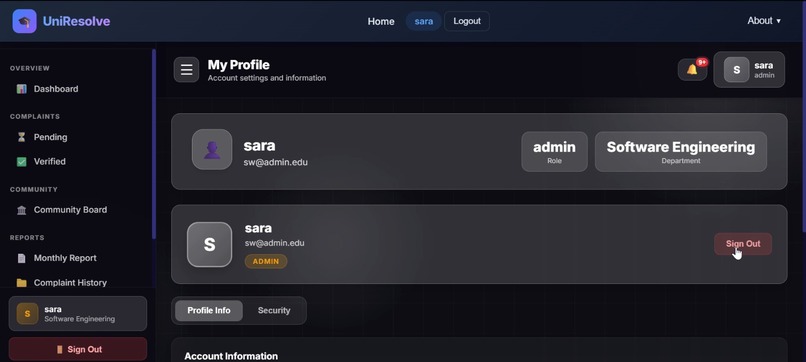
Authentication and Security are handled through JWT tokens with role-based access control. Passwords are hashed using Werkzeug, and department-level data filtering ensures admins only see their own department's complaints. File uploads are validated and secured.
Version Control and Collaboration used Git and GitHub with a 4-member team. We followed an organized branch strategy with feature branches and pull request reviews, plus daily standups and clear task division.
Deployment uses Vercel for the frontend with automatic deployments from GitHub, and Render for the backend with environment variables configuration.
Challenges We Ran Into
24-Hour Deadline & Auto-Escalation Logic was a major challenge. Ensuring deadlines were enforced correctly across different time zones and that escalation happened only after appropriate grace periods required careful planning. We implemented APScheduler running every 15 minutes to check all pending complaints and built a state machine for complaint status with escalation triggers at each failure point. We added a 6-hour grace period for admins and a 24-hour grace period for authorities before final escalation.
Role-Based Access Control was complex because four different user roles needed completely different dashboards, permissions, and data visibility. We stored user role and department in JWT tokens and made every API endpoint validate permissions before processing requests. The frontend uses role-based routing to show or hide navigation items, and database queries automatically filter by department for admin-level access.
Real-Time Dashboard Updates required dashboards to show live counts, deadlines, and status changes without manual page refresh. We implemented auto-refresh every 30 seconds on all dashboards and used JavaScript setInterval for smooth countdown visualization.
Image Upload and Storage caused issues because large image files were slowing uploads and causing server timeouts. We added file size validation (maximum 5MB per image), client-side image compression, and support for up to 5 images per complaint. Images are stored on the server with unique UUID-based filenames.
Team Coordination with 4 members working on different parts needed smooth coordination. We established clear API documentation before development started, held daily standup meetings to track progress and blockers, used GitHub Projects for task tracking, and required pull request code reviews to maintain code quality.
Research and Validation was difficult because many live university complaint portals were behind firewalls or internal networks. We used academic research papers and case studies as references instead of live links, which validated our approach without requiring external access.
Accomplishments That We're Proud Of
We successfully built a fully functional, production-ready complaint management system from scratch. The backend includes over 38 REST APIs covering all user roles and their workflows.
The auto-escalation engine runs every 15 minutes to check deadlines and escalate ignored complaints — ensuring no complaint is ever silently ignored. We created 4 distinct role-based dashboards with unique views and permissions for Students, Admins, Authorities, and Higher Authority.
The system includes real-time notifications via both email and in-app alerts for all status changes. We built a complete reporting system with charts, CSV and PDF exports, and performance metrics that help higher management make data-driven decisions.
The design is fully responsive and works seamlessly on desktop, tablet, and mobile devices with professional gradient themes and smooth animations. We successfully deployed the system on Vercel and Render, making it accessible from anywhere.
Most importantly, our team of 4 coordinated effectively using Git and GitHub, completing the project on time with clean, maintainable code.
Key outcomes include zero complaints being silently ignored thanks to auto-escalation, 24-hour verification deadlines creating admin accountability, real-time tracking giving students complete visibility, and analytics dashboards providing data-driven insights for higher management.
What We Learned
Backend Development taught us that building scalable REST APIs with proper error handling, validation, and documentation is critical for team collaboration. A well-documented API contract saved countless hours of confusion between frontend and backend developers.
Authentication and Security showed us that JWT with role-based access control provides both security and flexibility, but it requires careful planning of permission levels from the very beginning.
Frontend State Management confirmed that React Context API is sufficient for moderate-sized applications and that Redux would have been overkill for our needs.
Deadline Management was a new challenge — implementing background schedulers like APScheduler is essential for time-bound workflows, and we learned how to think about state machines and escalation logic.
Team Collaboration reinforced that daily communication, clear task division, and documented API contracts prevent merge conflicts and delays. A 10-minute daily standup saved hours of confusion later.
Deployment surprised us — platforms like Vercel and Render make deployment surprisingly simple compared to traditional server setups. Environment variables and automatic deployments from GitHub branches are game-changers.
Research taught us that academic papers can substitute for inaccessible live systems when validating project ideas. We learned that citing credible sources adds legitimacy to any project.
"The most valuable lesson was that deadlines create accountability. A system without enforcement is just a database. UniResolve enforces action."
What's Next for UniResolve
Immediate Enhancements include adding email notifications for complaint verification, resolution, and escalation. We plan to add PWA support so UniResolve can be installed as a mobile app, and implement dark mode toggle for better user experience.
Advanced Features on our roadmap include AI-based categorization to automatically suggest complaint categories based on description text. We want to add real-time chat support between students and admins for clarification, satisfaction surveys to collect feedback after complaint resolution, and bulk actions allowing admins to verify or reject multiple complaints at once.
Scaling and Integration plans include multi-university support allowing multiple institutions to use the same system with isolated data. We want to add SSO integration with university credentials using LDAP or OAuth, develop native mobile apps for Android and iOS with push notifications, and expose APIs for third-party integration with existing university systems.
Analytics and Intelligence features we dream about include predictive analytics to forecast complaint volumes based on historical data, sentiment analysis to analyze complaint descriptions for emotional trends, and automated reports scheduled and emailed to stakeholders monthly.
Built With
- apis
- bootstrap
- flask
- python
- react.js
- restful
- sqlalchemy
- sqlite
- tailwind


Log in or sign up for Devpost to join the conversation.