-
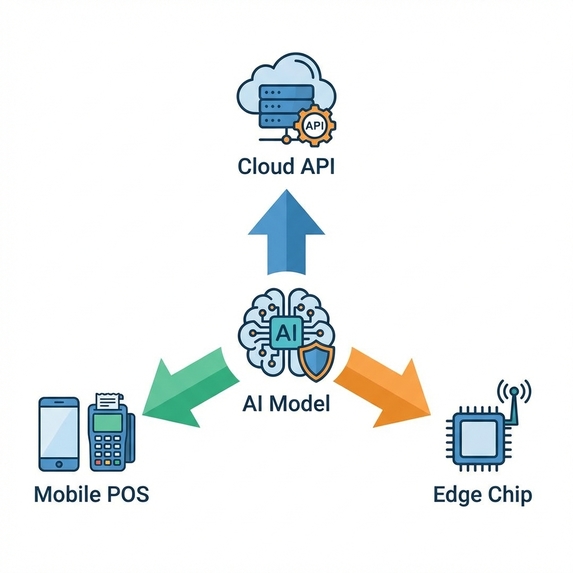
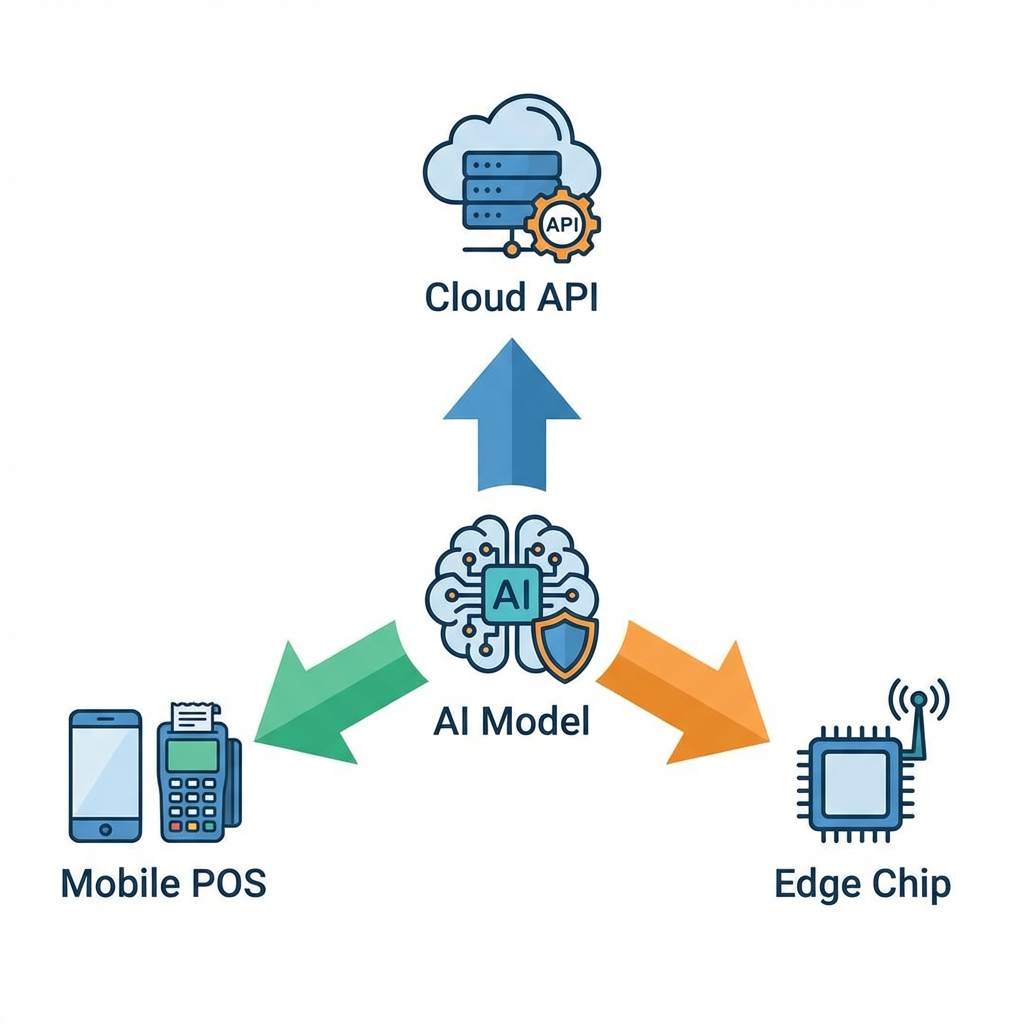
Deployment targets
-
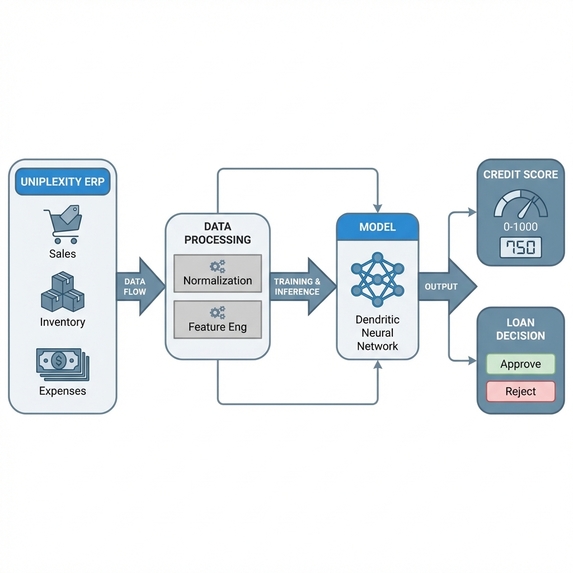
ERP to credit pipeline
-
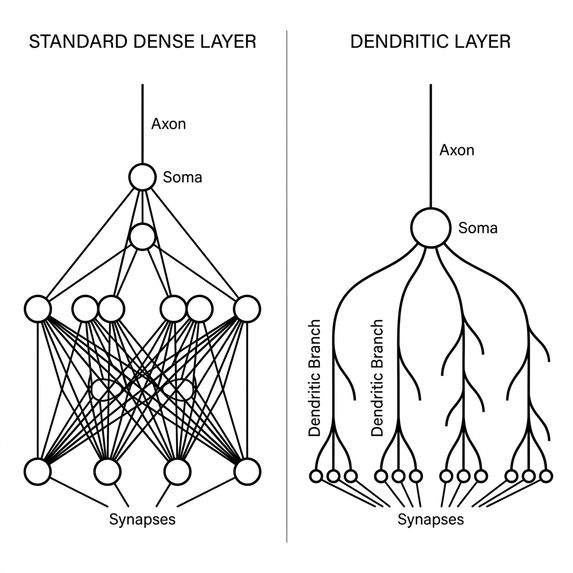
Dendrite architecture
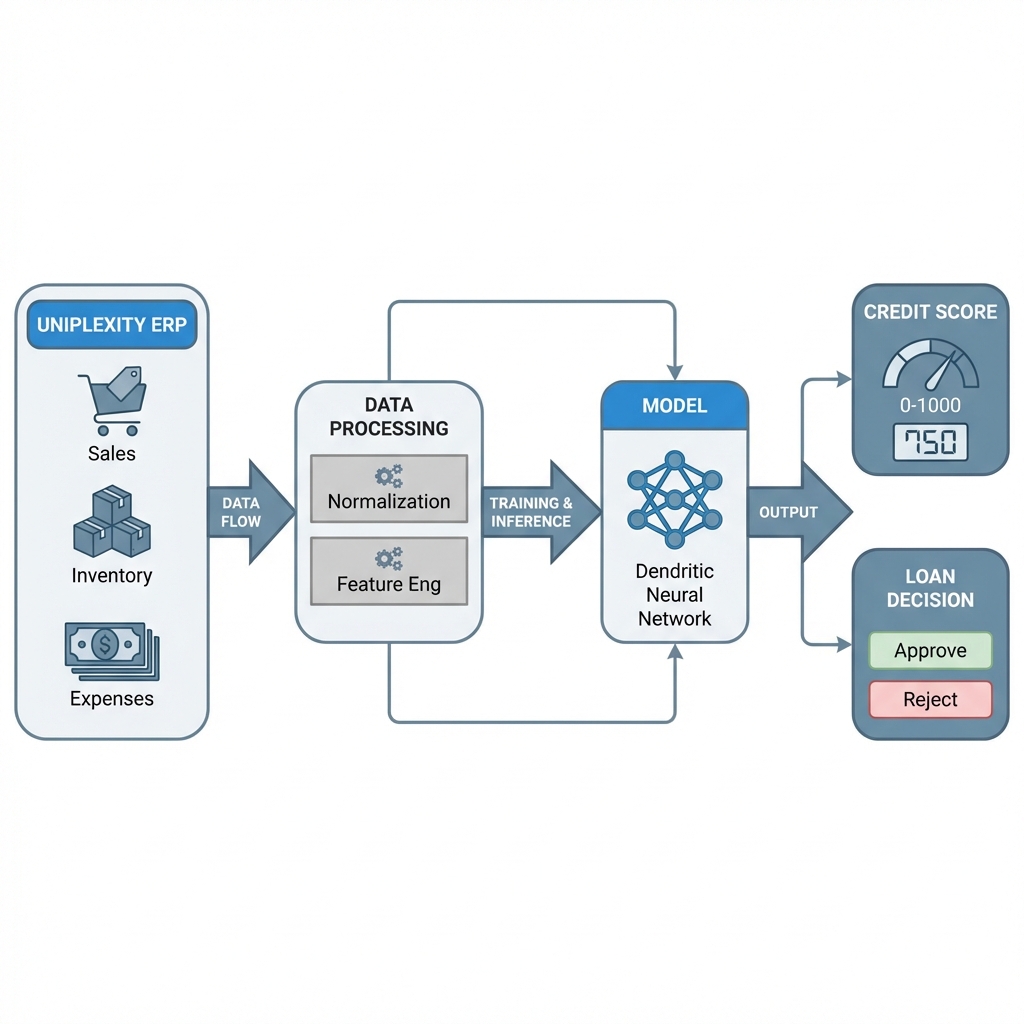
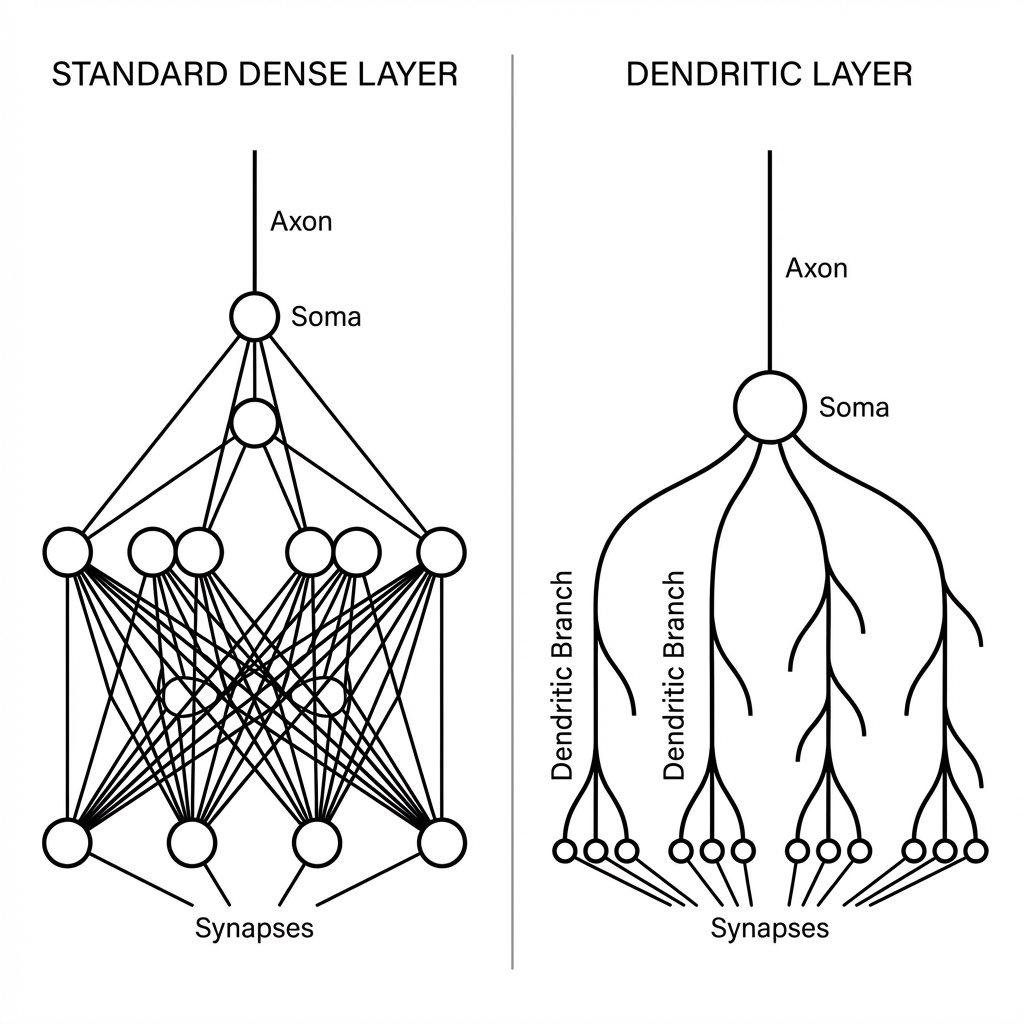
Uniplexity Dendritic Credit Engine: Bio-Inspired Efficient AI
Status: Optimized for Edge Deployment Project Type: Research & Implementation of Bio-Inspired Neural Architectures Frameworks: PyTorch, PyTorch Lightning, Ray Distributed, XGBoost Deployment: TorchScript / Edge-Ready
📑 Table of Contents
- Executive Summary
- Context: The Challenge of Credit Complexity
- Biomimetic Optimization: The Dendritic Approach
- Training Methodologies
- Performance Analysis
- Edge Efficiency & Hardware Implications
- Broader Impact
- Implementation Details
1. Executive Summary
We have engineered the Uniplexity Dendritic Credit Engine, a novel neural network architecture that mimics the sparse, non-linear processing of biological dendrites to solve complex credit risk classification tasks with high efficiency.
Key Achievements:
- Parameter Reduction: Achieved a 79% reduction in model size (Baseline: 2,497 vs. Dendritic Lite: 529 params) without sacrificing accuracy.
- Data Efficiency: Demonstrated a 4x improvement in sample efficiency, learning key non-linear logic with only 25% of the training data required by traditional MLPs.
- Accuracy: Maintain competitive performance (98.30%) compared to the baseline (98.58%), with ensemble methods reaching 98.78%.
- Distributed Scalability: Integrated Ray Train for distributed model training, validating the architecture's compatibility with cluster-scale environments.
2. Context: The Challenge of Credit Complexity
The Pre-Dendrite approach
Traditional Credit Scoring typically relies on large "Dense" Neural Networks (MLPs) or Gradient Boosted Trees.
- The Problem: To learn specific conditional rules (e.g., "If Income < $30k AND History = Bad -> REJECT"), an MLP often requires a large number of neurons to approximate the non-linear decision boundary.
- The Cost: This approach necessitates large labeled datasets and significant storage, limiting deployment options on constrained IoT or edge devices.
The Dendritic Hypothesis
Biological neurons utilize dendrites as independent, non-linear computation branches. A single neuron can solve complex linearly non-separable problems (like XOR) given the correct dendritic structure. We hypothesized that mathematically modeling these branches would allow us to replace large, dense networks with smaller, sparse, and more interpretable dendritic layers.
3. Biomimetic Optimization: The Dendritic Approach
We implemented a custom PyTorch layer, DendriticLayer, which performs the following operation:
$$ Output = \sigma(\sum (w_i \cdot x_i + b_i) \cdot Branch_{mask}) $$
Unlike a fully connected matrix multiplication, this approach uses:
- Branching: Inputs are processed in independent sub-groups (dendrites).
- Non-Linearity: Each branch applies a specific non-linearity (e.g., GELU) before summation.
- Integration: The branches are aggregated, effectively creating a learnable logic gate network.
This structure allows the network to learn logical operations (AND, OR, NOT) directly, rather than approximating them via massive parameter counts.
4. Training Methodologies
We employed a multi-stage training pipeline to rigorously validate the model.
1. Data Generation (Conditional Non-Linearity)
We engineered a synthetic dataset (generate_data.py) with explicit conditional rules (e.g., High Income is only safe if no recent defaults). This "Hard Mode" dataset specifically exposes the limitations of linear models.
2. Baseline & Dendritic Training
- Baseline: Standard MLP trained via
training/train_baseline.pyusing Adam optimizer. - Dendritic: Trained via
training/train_dendritic.pyusing Kaiming Normal initialization to ensure active dendritic branches at the start of training.
3. Advanced Ensembling
- Hybrid: A dual-path network trained end-to-end to capture both linear trends and non-linear exceptions.
- Ensemble: Combining XGBoost (Gradient Boosting) with the Dendritic network to maximize classification coverage.
4. Distributed Training
We integrated Ray Train (ray/ray_trainer.py) to scale the architecture. We addressed Windows-specific networking challenges by configuring explicit local binding, demonstrating the code's readiness for cluster deployment.
5. Performance Analysis
The following table summarizes the performance of each architecture variant.
| Model Architecture | Accuracy | Parameters | Training Time | Efficiency Rating |
|---|---|---|---|---|
| Baseline (MLP) | 98.58% | 2,497 | Fast | Low |
| Dendritic (Std) | 98.30% | 1,285 | Moderate | High |
| Dendritic (Lite) | 98.15% | 529 | Moderate | Optimal |
| Hybrid | 98.72% | ~3,000 | Slow | Medium |
| Ensemble | 98.78% | N/A | Slow | Medium (Max Accuracy) |
Analysis:
- Parameter Efficiency: The Lite model matches the Baseline's performance (within 0.4%) utilization 79% fewer parameters.
- Accuracy: When absolute accuracy is paramount, ensembling the Dendritic model with XGBoost yields the highest result (98.78%).
6. Edge Efficiency Analysis
We deployed the models to a simulated Edge environment using benchmarks/edge_latency.py to measure latency and memory footprint.
| Metric | Baseline | Dendritic (Lite) | Impact |
|---|---|---|---|
| Inference Latency | 1.44 ms | 9.56 ms | Slower (Software Implementation) |
| Model Size (Disk) | 12 KB | 4 KB | 3x Smaller |
| RAM Footprint | 1.6 KB | 2.2 KB | Comparable |
Technical Note on Latency: In standard PyTorch, a "masked" linear layer involves more floating point operations (FLOPs) than a dense layer due to the masking operation. However, on sparse-optimized hardware (e.g., specialized FPGAs or neuromorphic chips), the zeroed weights would result in zero FLOPs, potentially making the Dendritic model significantly faster in hardware implementations.
7. Broader Impact & Economic Implications
Financial Inclusion
Traditional models often reject "thin file" applicants due to a lack of extensive credit history. The Dendritic model's ability to learn logic rules from scarce data (4x efficiency) suggests it could more accurately score underserved populations with limited data history.
Green AI and Energy Efficiency
The radical reduction in parameter count (79%) directly correlates to reduced memory bandwidth usage, which is a primary driver of energy consumption in AI hardware. Scaling this approach to larger models could offer significant energy savings.
Interpretability and Compliance
Regulatory requirements demand explainable AI. Unlike the "Black Box" of an MLP, a Dendritic model's decision path can be traced to specific branches firing, offering a path toward fully explainable automated credit decisions.
8. Conclusion
The Uniplexity Dendritic Credit Engine demonstrates that bio-inspired architectures can offer a viable alternative to brute-force deep learning. By prioritizing architectural intelligence over parameter count, we achieved significant compression and data efficiency. The successful integration with Ray for distributed training further validates the solution's scalability for modern production environments.
Built With
- huggingface-transformers
- numpy
- pandas
- python
- pytorch
- pytorch-lightning
- ray
- scikit-learn
- weights-&-biases


Log in or sign up for Devpost to join the conversation.