-
-
Scan to explore Timego, a living cultural map of campus stories, memories, and footprints.
-
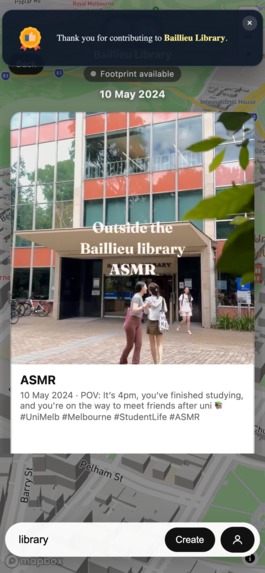
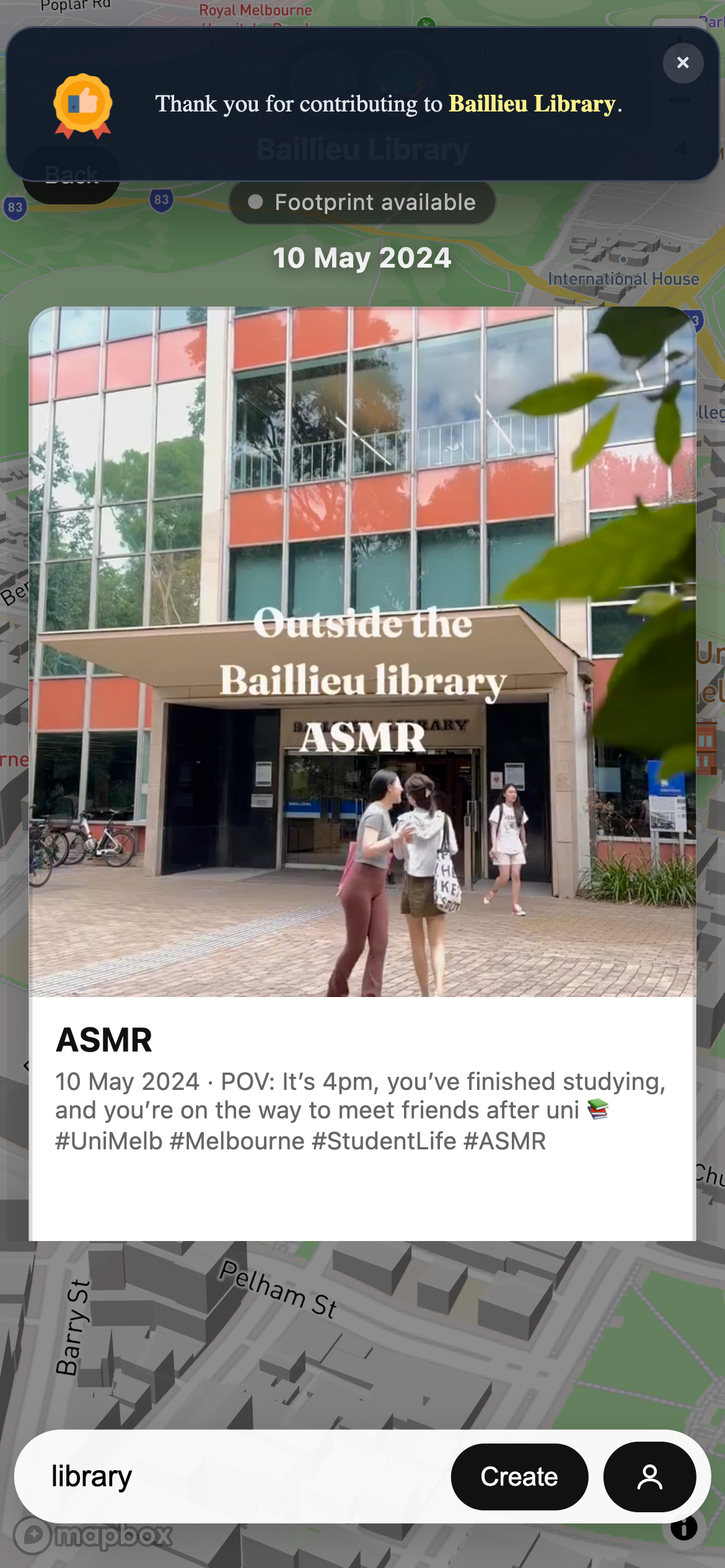
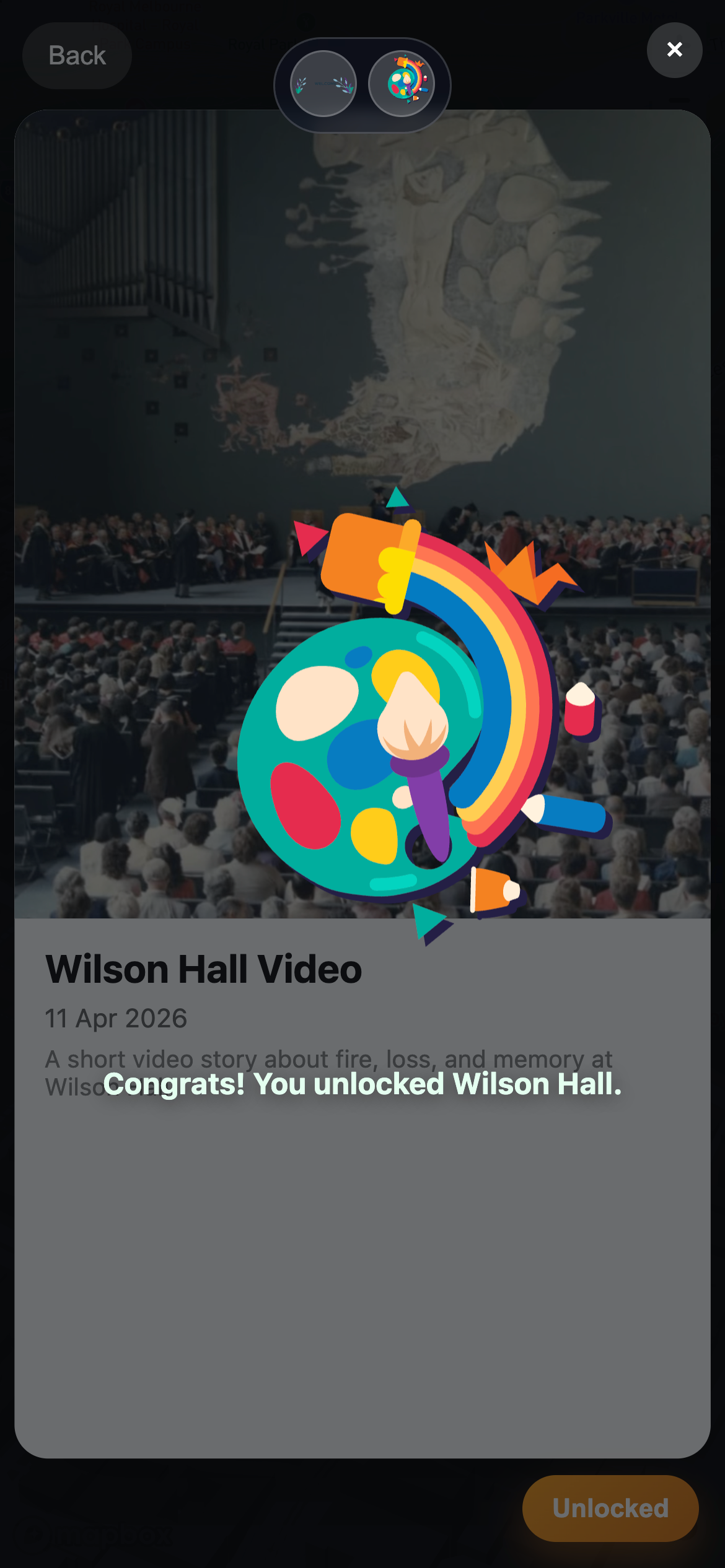
animation showing unique badges can encourage users to create more footprints.
-
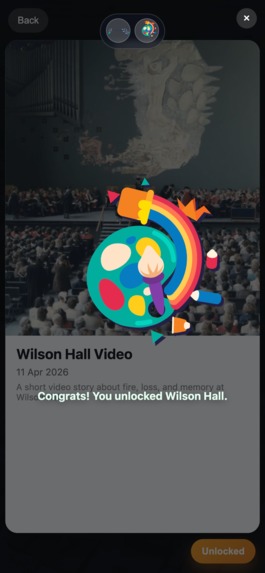
A cultural spot that upgraded from multiple footprints can be checked in by users. The user will then unlock their unique cultural badge.
Inspiration
Campus culture is constantly being created by activists held by clubs in certain courtyards, study events during exam weeks, festival celebrations on the lawn. However, this culture is rarely recorded. Once students graduate, those shared memories often vanish with them. At the same time, international students arrive without knowing which places carry stories or where they might belong. What they lack are cultural connection points. We realized we needed more than an information tool — we needed a way to capture those fragmented traces and turn them into lasting cultural memories.
At the same time, many international and new students arrive on campus without knowing which places carry stories, traditions, or a sense of belonging. We wanted to build more than a navigation tool. We wanted to create a way to capture these fragmented cultural traces and turn them into shared, lasting campus memory.
What it does
Timego is a cultural map designed to create and preserve the stories, memories, and meanings that users attach to a real place. We use the University of Melbourne campus to demo the prototype. It helps students explore campus through location-based stories, media, and community memory rather than simple navigation alone. Students leave "Footprints" at specific campus locations — not simple check-ins, but meaningful records that connect place, community, and time. For example: "This is where many international students attend their first club event." As multiple users contribute to the same location, these fragments can build into shared cultural meaning over time. A footprint point can gradually evolve into an Emerging Cultural Spot, and eventually into a more widely recognized Culture Spot.
How we built it
We built Timego as an interactive web-based prototype that combines a cultural map interface with location-based storytelling. Our focus was on making campus exploration feel visual, intuitive, and meaningful rather than purely informational.
The project brings together clickable locations, story cards, media content, and the concept of community "footprints" to show how cultural memory can be attached to place. We used front-end web technologies to create the user experience, and hosted the project as a lightweight static website so it could be easily accessed and demonstrated online.
Throughout the process, we combined design thinking with rapid prototyping to shape both the concept and the interface within the hackathon timeframe.
Challenges we ran into
One of our biggest challenges was defining the scope of the project clearly. At first, the idea could easily become just another campus map or information platform, so we had to keep refining the concept until the core focus on cultural preservation and shared memory became clear.
Another challenge was translating an abstract idea like culture, belonging, and memory into a concrete and interactive product. We had to think carefully about how to present stories, media, and place-based meaning in a way that felt engaging, simple, and understandable within a short demo experience.
We also had to balance ambition with feasibility, making sure the prototype communicated the long-term vision while still being realistic to build during the hackathon.
Accomplishments that we're proud of
We are proud that we turned an abstract idea about cultural preservation into a working interactive prototype. Instead of presenting campus only as a physical space, we created a concept that reframes it as a living cultural landscape shaped by student experience.
We are also proud that Timego connects technology, storytelling, and UI/UX design in a way that feels accessible and meaningful. The project is not only functional as a demo, but also communicates a clear social and emotional value, especially for new and international students who are looking for connection and belonging on campus.
Most importantly, we are proud that the project stays closely aligned with the idea of preserving culture through participation, not just observation.
What we learned
We learned that culture is not fixed or complete — it is continuously formed through the traces people leave in places. Preserving it cannot rely only on top-down institutional records; it also needs to be shaped collectively by the people who experience it.
We also learned that what matters is not just recording static information, but capturing how place-based culture emerges over time. For international students especially, seeing themselves reflected in a place's ongoing story can be a powerful step toward belonging.
In the end, culture may begin with a single moment, but it becomes lasting when people continue to leave meaning behind.
What's next for Timego
Our next step is to expand Timego into a more community-powered platform. We want to add more campus locations, richer story content, and a clearer contribution flow so students can leave and discover "footprints" more easily.
We also want to further develop the idea of how shared cultural meaning builds over time, so that places can gradually grow from individual memories into more widely recognized cultural spots. In future iterations, we would explore stronger moderation, content organization, and long-term scalability to support Timego as a living archive of campus culture.
While the current prototype is focused on the University of Melbourne, the idea is not limited to a single campus and could be adapted to many other places where culture and community are formed over time.


Log in or sign up for Devpost to join the conversation.