About the Project
Inspiration
As an international student studying in Kazakhstan, I experienced firsthand how difficult it can be to find clear and reliable information about universities in Europe. English is my third or fourth language, so navigating hundreds of university websites, PDFs, admission pages, and different requirements was especially confusing.
But I realized that this problem is not limited to international students like me. Even students who study in English-language programs can struggle to find specific information about universities because the requirements are often scattered across different pages and PDF documents. Finding one important detail can sometimes feel like searching for a needle in a haystack.
Another major problem I faced was the cost of admission agencies. Some agencies asked for around $2,000 for their assistance, while still not guaranteeing admission. I also heard stories from friends about agencies going bankrupt after taking students' money, leaving them without help. In many cases, the information these agencies provided could have been found online for free.
That made me think: why should students pay thousands of dollars just to find information that is already available, but difficult to organize?
This is what inspired me to build UniGate — a platform designed to make the university application process more accessible, organized, and understandable.
How I Built It
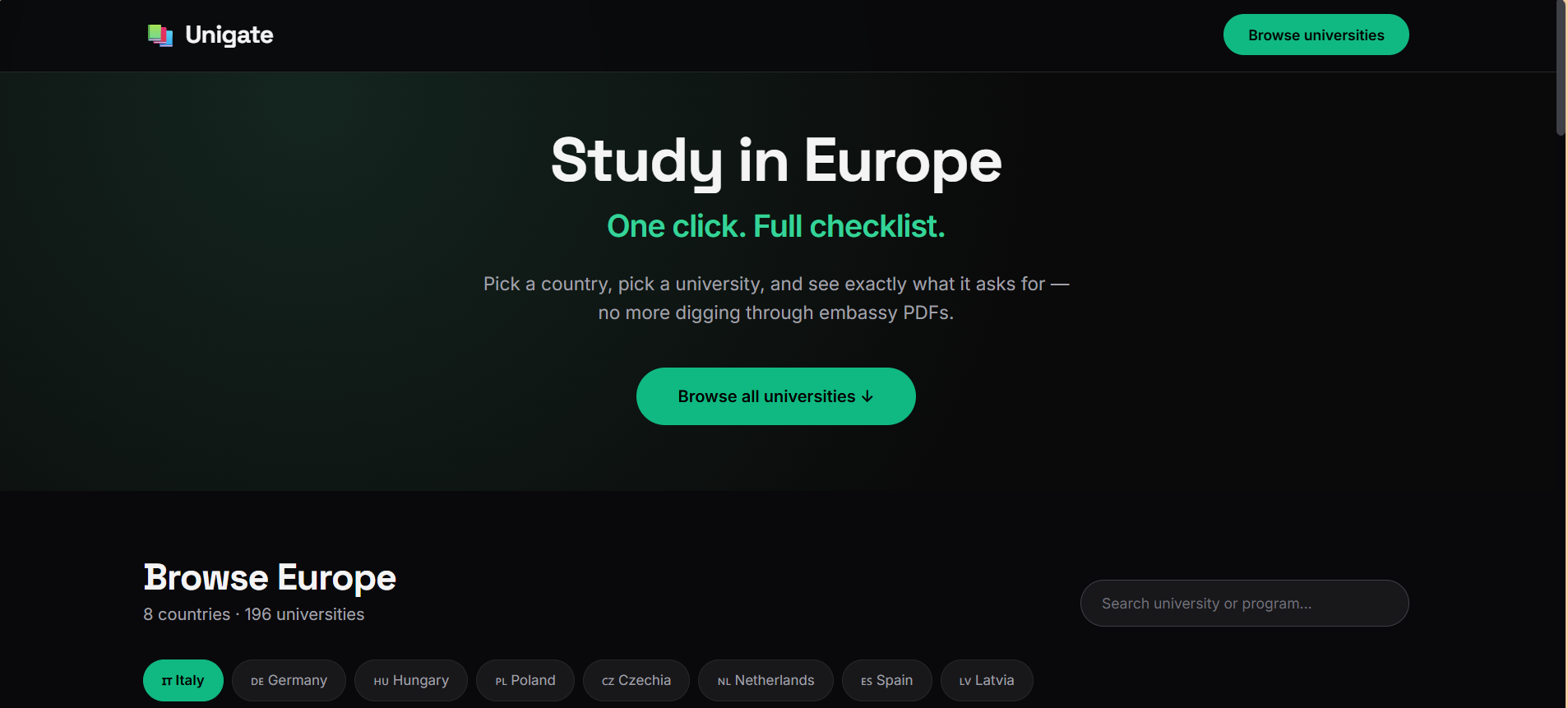
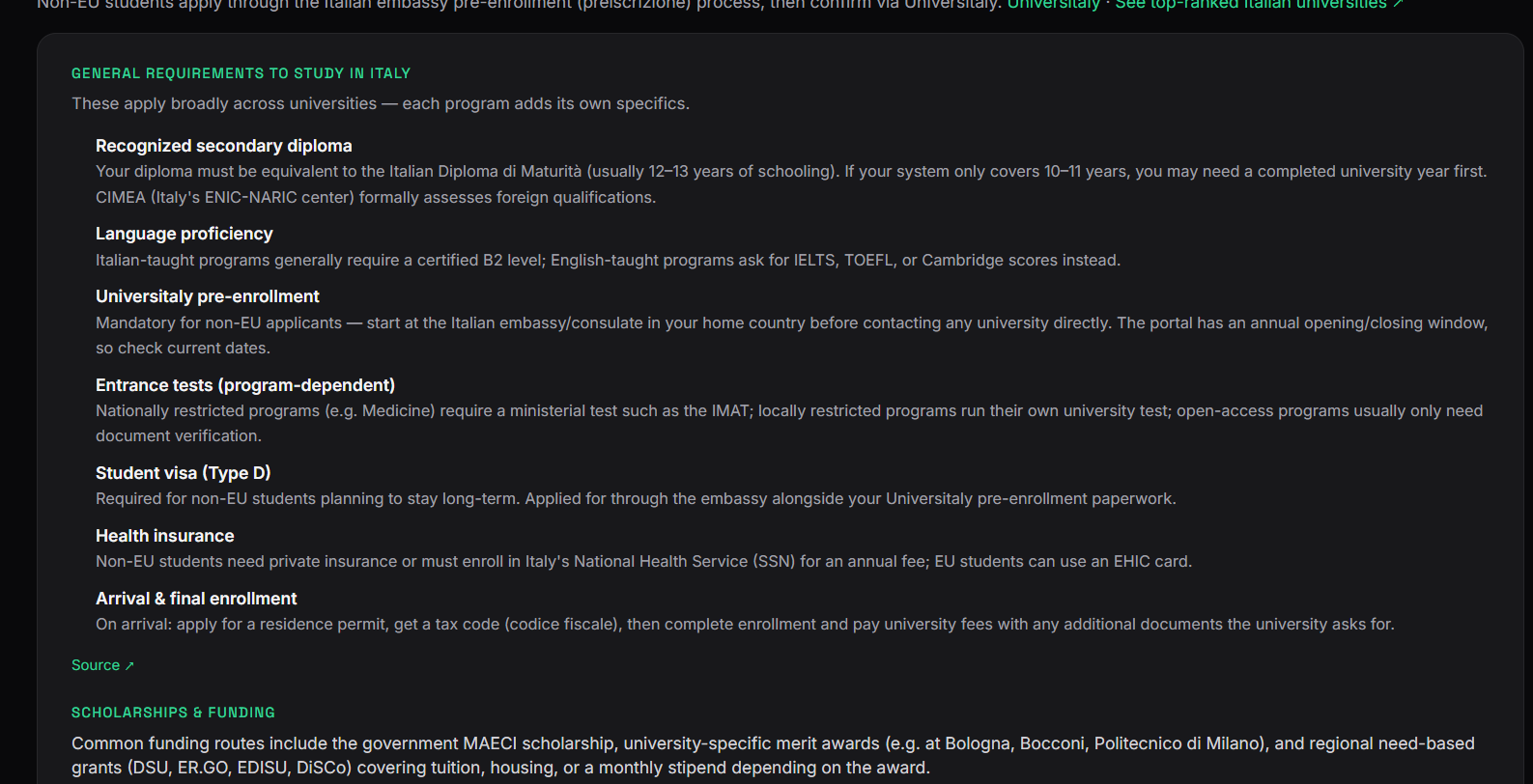
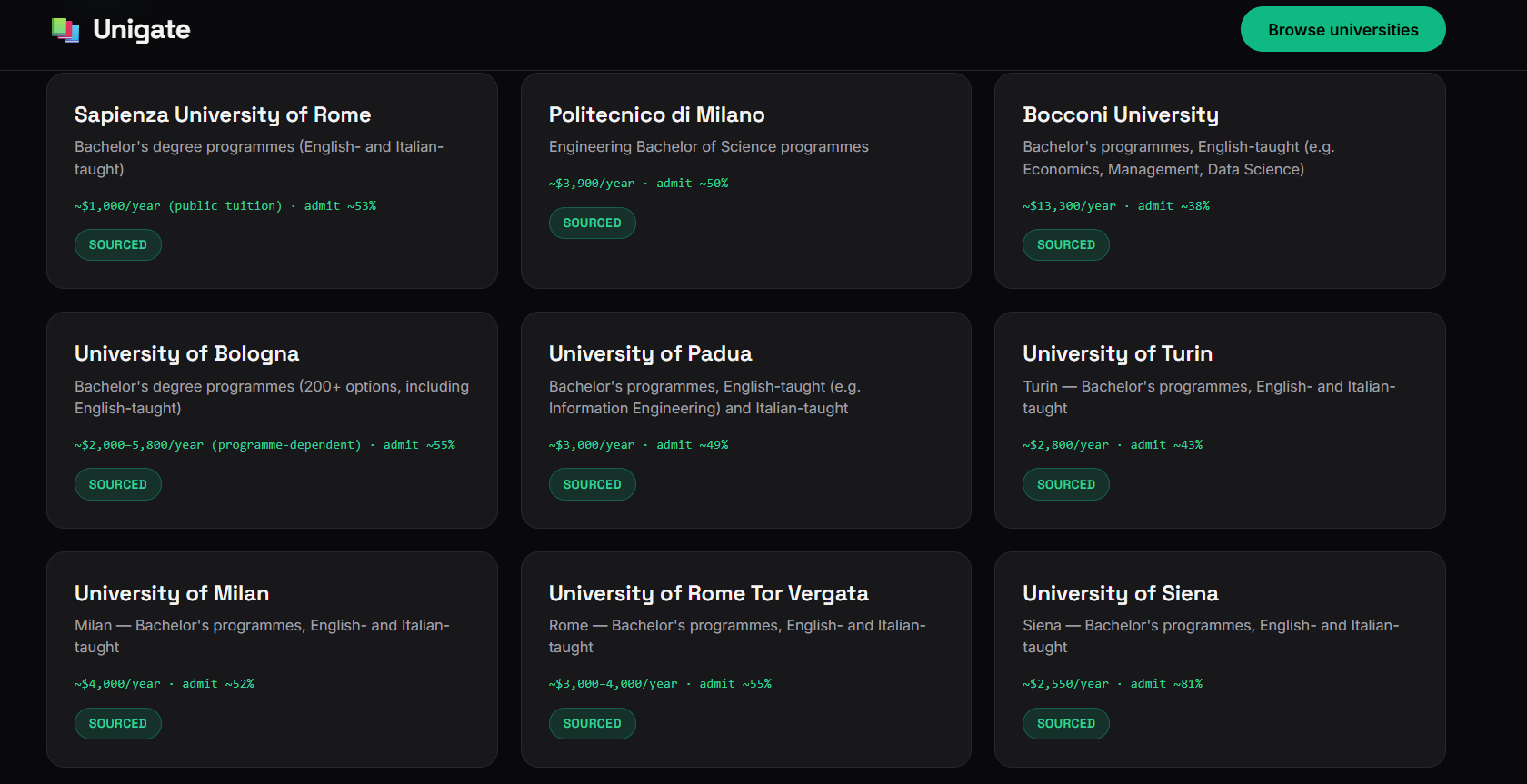
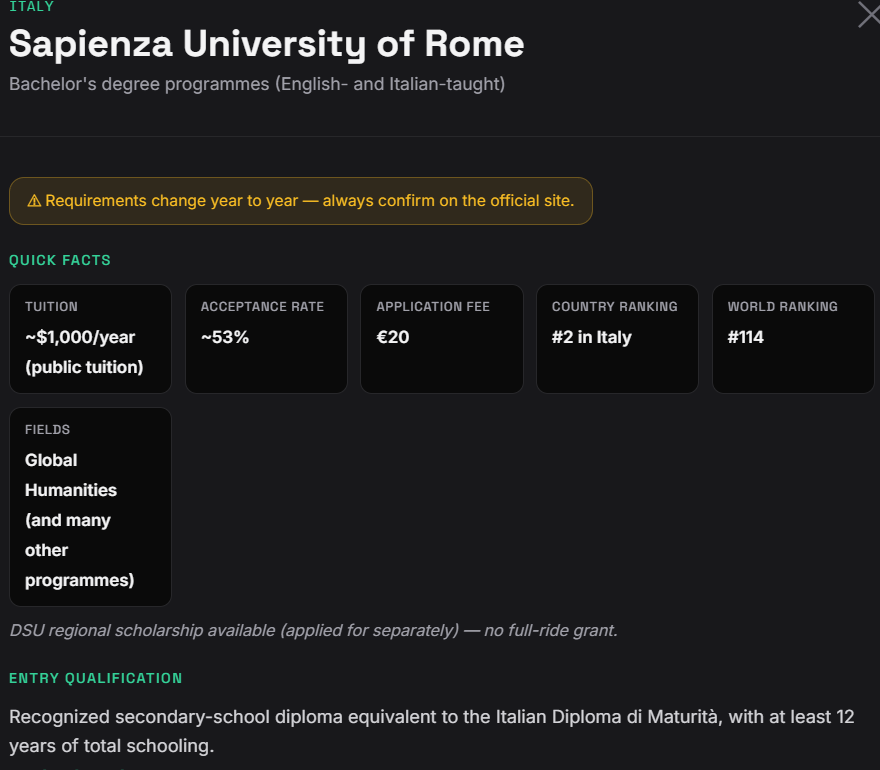
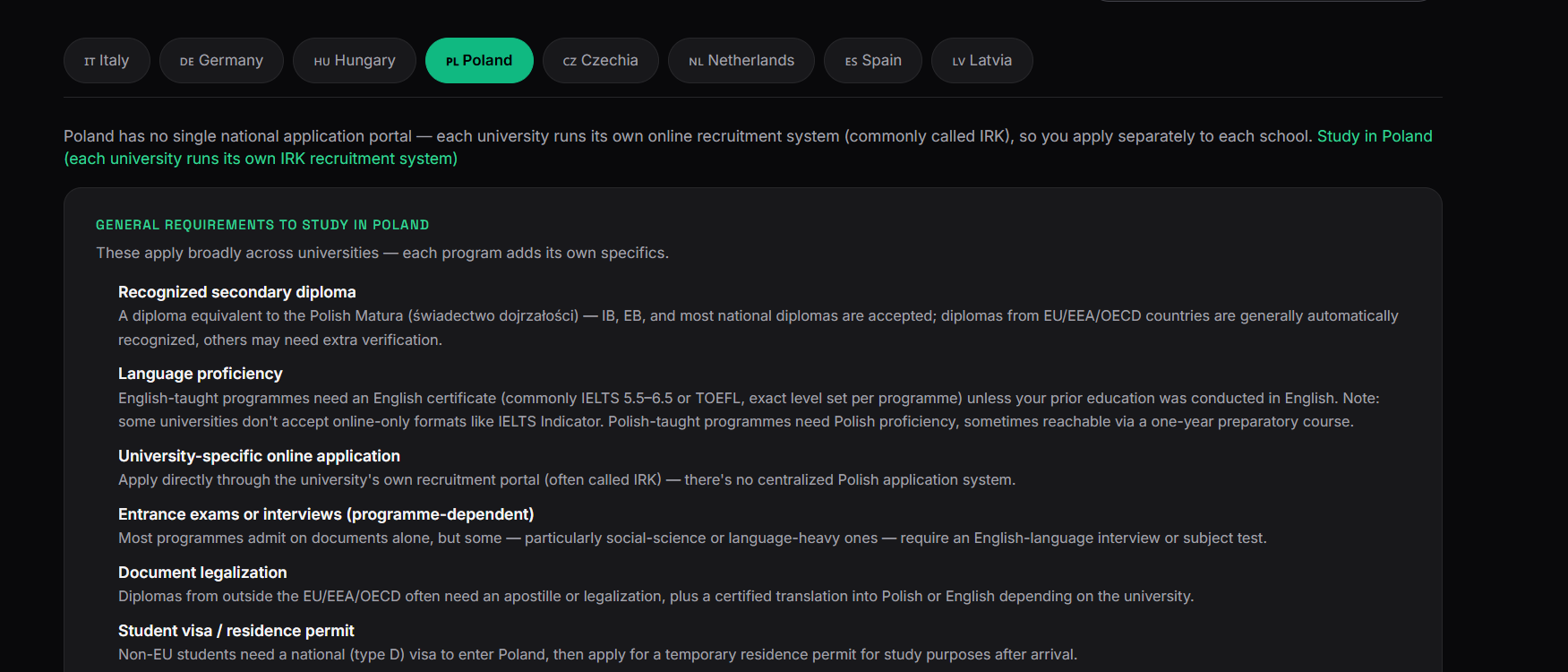
I built UniGate as a web platform that brings important university admission information into one place. Instead of forcing students to search through dozens of websites and PDF files, the platform helps them find and compare relevant university requirements more easily.
I focused on making the interface simple and understandable because I wanted the platform to be useful even for students who are not completely comfortable with English or with the complicated language often used in university admission documents.
What I Learned
While building UniGate, I learned that solving a real problem is not only about writing code. It is also about understanding the people who will actually use the product.
I learned how important it is to organize information clearly, think about user experience, and turn a complicated process into something much simpler. I also gained experience with web development, GitHub, and working with AI-assisted development tools while building the project.
Most importantly, I learned that sometimes the best project ideas come from problems you personally experience.
Challenges
One of the biggest challenges was figuring out how to structure a large amount of university information in a way that would not overwhelm students. University requirements can vary significantly, and important details are often presented differently from one university to another.
Another challenge was designing the platform so that it feels simple despite the complexity of the information behind it. I wanted UniGate to reduce confusion rather than create another complicated website.
Why UniGate?
Applying to a university abroad can already be stressful enough. Students should not have to spend thousands of dollars on agencies or spend countless hours searching through PDFs just to understand basic admission requirements.
With UniGate, my goal is to make the process of finding and comparing university information simpler, faster, and more accessible — especially for students who are applying abroad for the first time.
I built UniGate because I was one of those students who needed a platform like this myself.
Built With
- cloude
- css
- htlm
- javascript
- visual-studio


Log in or sign up for Devpost to join the conversation.