
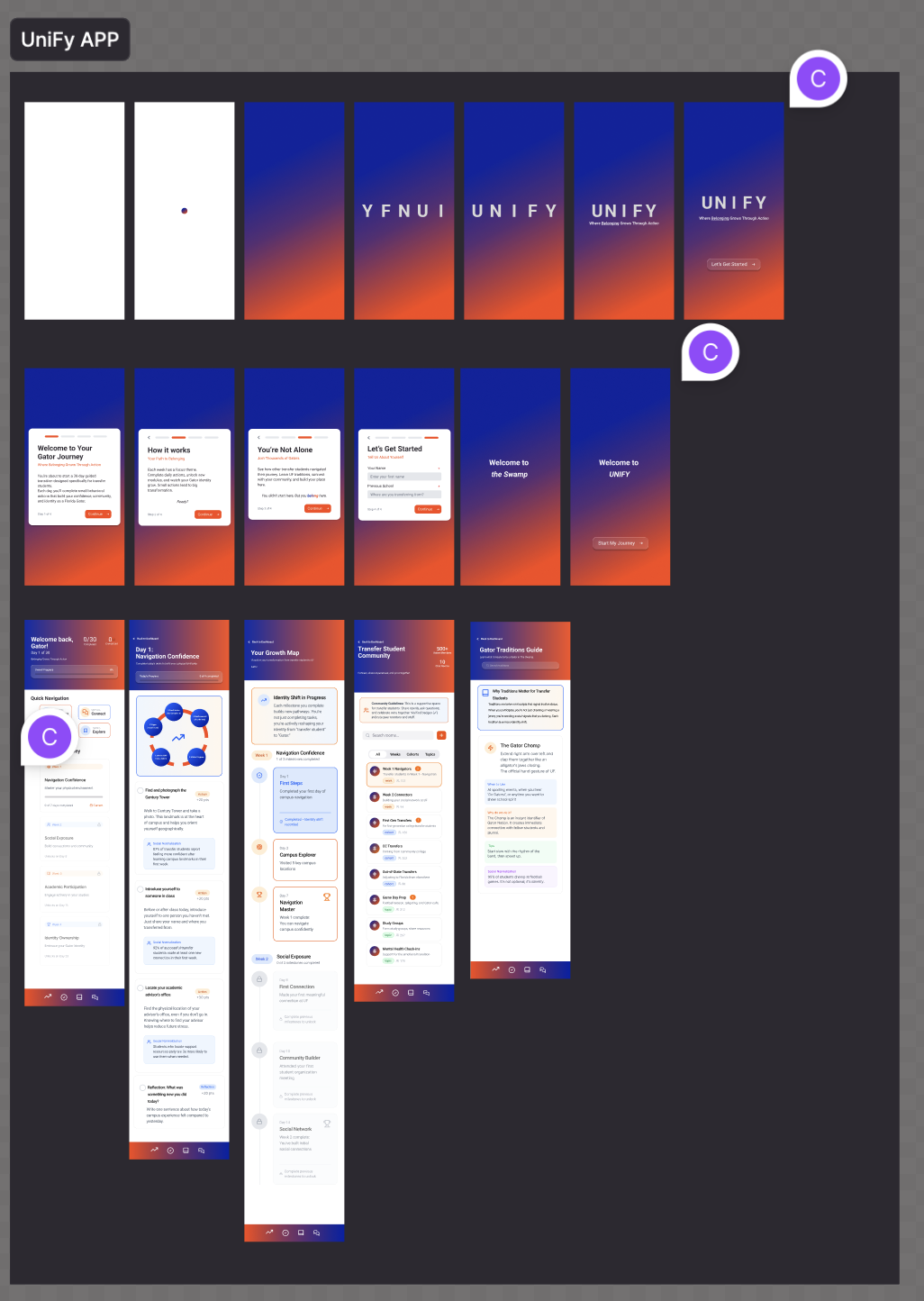

Problem: Transfer students at the University of Florida often experience a psychological and social gap during their first semester; a period where they are not new to college, but also not fully integrated into their new campus environment. While universities provide orientation resources and academic information, there is limited structured support that helps transfer students actively build belonging, confidence, and social integration through intentional action. This creates a quiet but powerful “now what?” moment: a period where students are physically present on campus but do not yet feel ownership of their space within it. This project addresses that gap by designing a 30-day behavioral transition system that guides transfer students through small, manageable daily actions to gradually build confidence, exposure, and belonging.
Inspiration: This idea stems directly from my own experience as a transfer student. After orientation ended and classes began, I remember walking through campus feeling both proud to be there and completely unsure of what to do next. I wasn’t a freshman, but I also didn’t feel established. I didn’t have built-in friendships, routines, or confidence in navigating the culture of campus life. That “in-between” feeling was uncomfortable. I realized that what I was looking for wasn’t more information. It was structure, small pushes, motivation to find my space on campus.
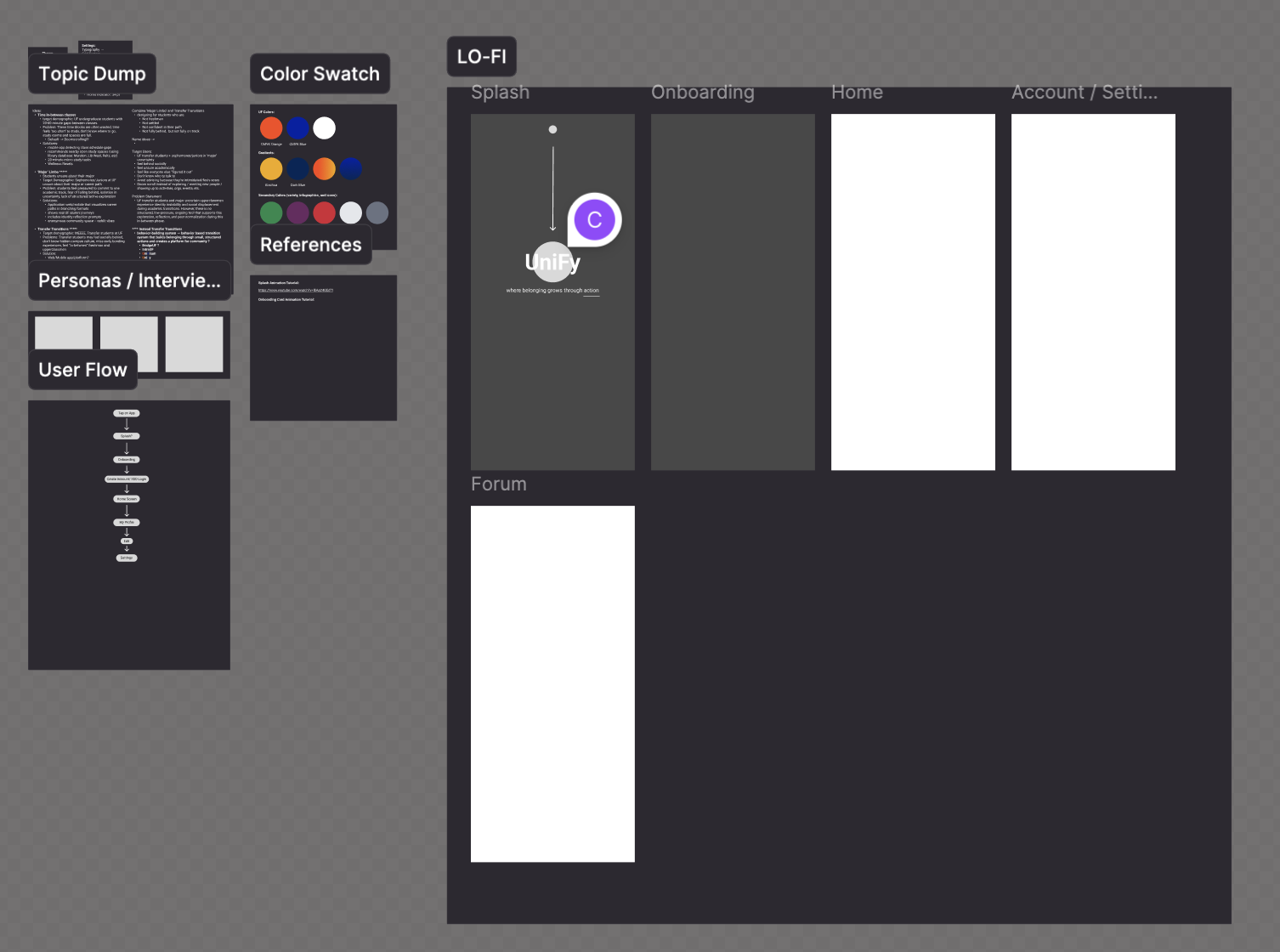
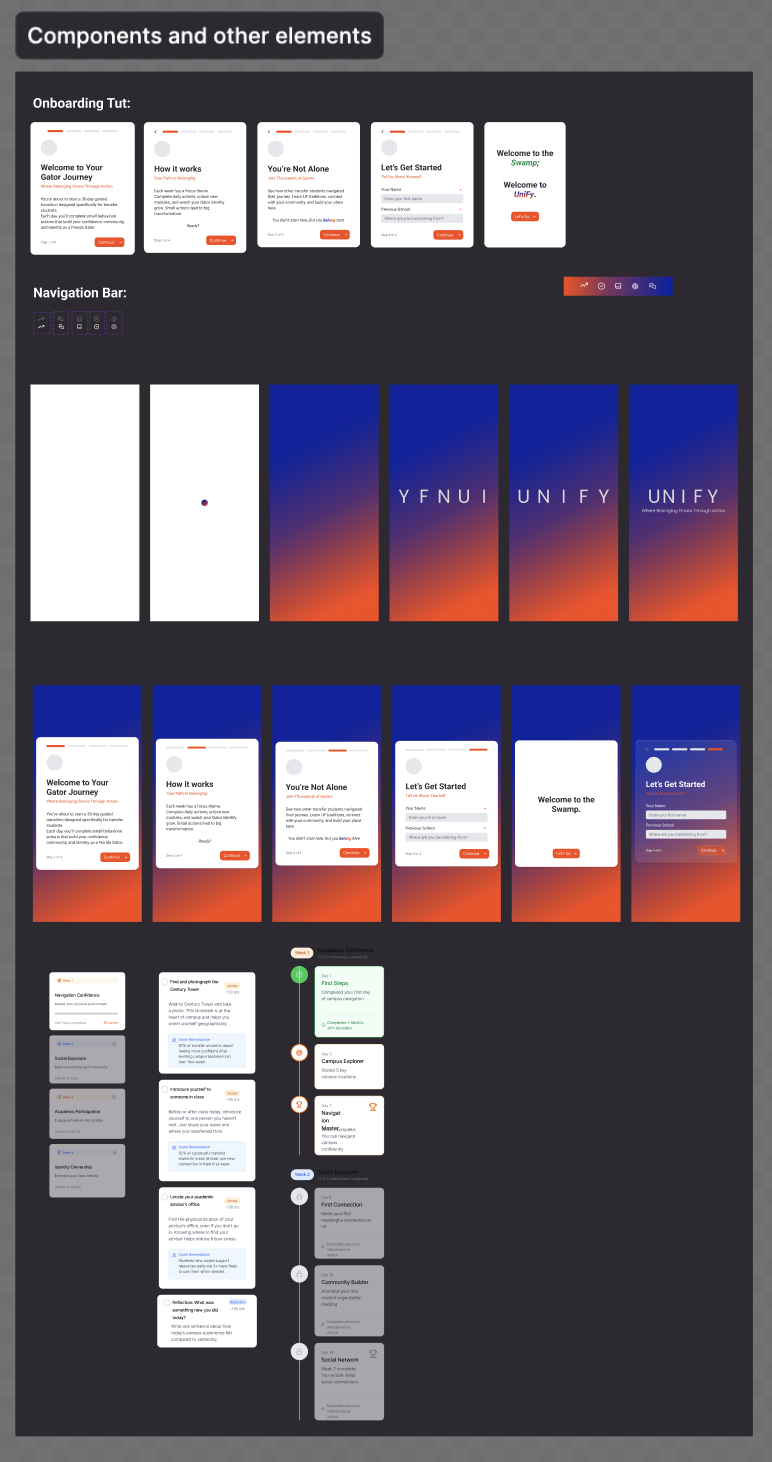
How I Built UniFy: I approached UniFy as a behavioral design challenge. Instead of building a resource hub, I structured the experience around a 30-day progression system. Each day introduces one small, achievable action (social, academic, or exploratory) reinforced with visible progress and subtle gamification. The system is intentionally bold and structured. Transitions should not feel passive; they should feel like forward movement. I designed the prototype entirely in Figma, focusing on: Clear phase-based progression, Daily action prompts, Progress tracking, Emotional onboarding language, Structured behavioral sequencing The tone balances boldness and empathy to reframe transfer identity as strength rather than disadvantage.
What I Learned: Through this process, I learned that designing for transitions requires designing for emotion, not just function. I also learned the importance of scope (Thank you Mareike). Working independently required me to narrow the concept and focus deeply on one population and one core system instead of trying to solve everything at once.
Challenges: Because I worked on this project solo and within a limited time frame, I relied heavily on my personal experience rather than broad user interviews. While that limited external perspectives, it also allowed for a highly empathetic and focused concept. Additionally, some interactive elements, such as the UF traditions carousel, are conceptually designed but not fully clickable within the prototype due to time constraints. However, the behavioral framework and interaction logic are intentionally mapped to demonstrate how the system would function as a live product.
This project is about designing for an invisible moment, the quiet space after arrival and before belonging. Transfer students don’t just need resources. They should have solidified structure, reinforcement, and small actions that build confidence over time. Designing for the in-between means recognizing that growth doesn’t happen automatically, but rather intentionally.
Built With
- figma


Log in or sign up for Devpost to join the conversation.