-
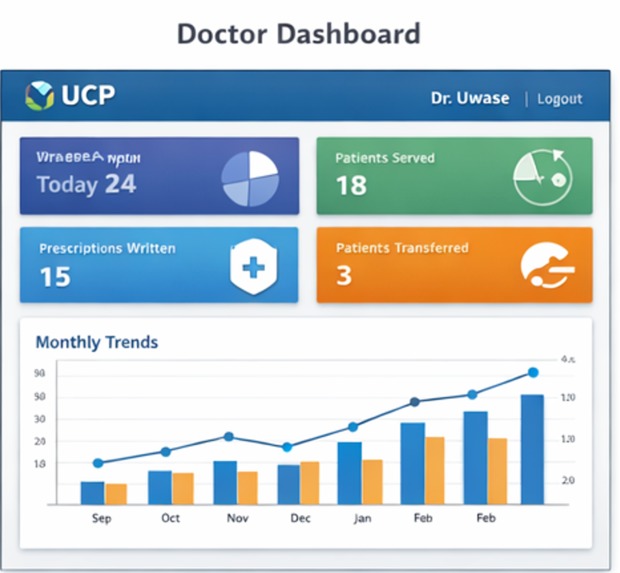
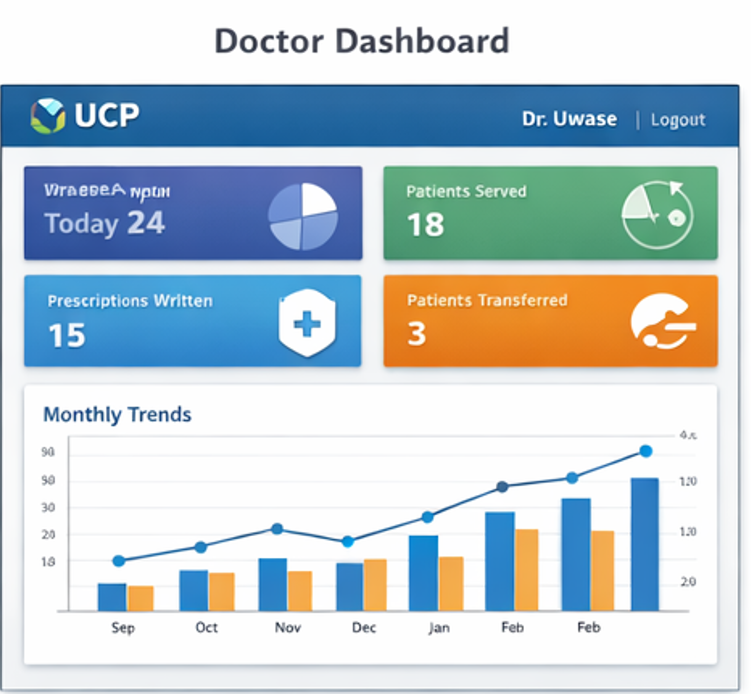
Doctor Dashboard
Inspiration
The inspiration for Unified Consultation for Patient (UCP) came from witnessing a preventable tragedy during my university studies.
A family member was rushed from a rural health center to CHUK with severe complications. Over the previous month, she had received care at three different facilities, undergone diagnostic tests, and been prescribed medications. Yet when she arrived at the emergency unit, the medical team had to start from zero.
There was no access to her medication history. No previous lab results. No allergy information. Doctors spent critical minutes making phone calls to rural health centers, trying to reconstruct her medical history while her condition continued to worsen. Later, one clinician told us that if they had known about her prior cardiac tests and current medications, they could have made faster and safer clinical decisions.
That moment stayed with me. It was devastating to realize that this was not a failure of medical expertise, but a failure of information continuity.
This experience pushed me to investigate whether this was an isolated incident. What I found was alarming:
A 2022 study reviewing 2,304 referral letters in Kigali referral hospitals found that less than 60% contained complete clinical information
Over 40% of referred patients arrive without essential details such as allergies, current medications, chronic conditions, or recent lab results
Rwanda’s e-Ubuzima digital health system was operational in only 15 of 30 districts, leaving half the country dependent on paper-based records
With just 0.84 healthcare workers per 1,000 people, clinicians cannot afford to waste time reconstructing patient histories through phone calls and guesswork
I kept asking myself a simple but urgent question:
What if every clinician, at every facility, could access a patient’s complete medical history in under two minutes?
How many lives could be saved? How many repeated tests could be avoided? How much strain could be reduced on an already stretched healthcare system?
That question became UCP.
Rwanda has achieved remarkable healthcare milestones—over 90% health insurance coverage, a nationwide network of 1,280 health posts, 520 health centers, and 57 hospitals serving more than 14 million people. Yet patients were still being put at risk by something as preventable as fragmented records.
While the Ministry of Health committed to full e-Ubuzima deployment by December 2025, a critical gap remained: ensuring real-time, unified access to patient histories at the point of care, especially during referrals and emergencies.
We identified this as a strategic opportunity to solve the “last-mile” problem—bringing complete, trusted patient histories directly into clinicians’ hands, even in rural settings with limited connectivity. UCP was built to close that gap and ensure that no patient’s life depends on missing paperwork ever again.
Built With
- express.js
- flask
- mysql
- node.js
- react.js
- redis
- tailwind


Log in or sign up for Devpost to join the conversation.