Inspiration
For decades, VCs have relied on intuition and a 'gut feeling' about a founder to decide whether to invest in start-ups. Our product aims to quantify an additional behavioural metric for founders, with a view to improving predictions of start-up performance.
What it does
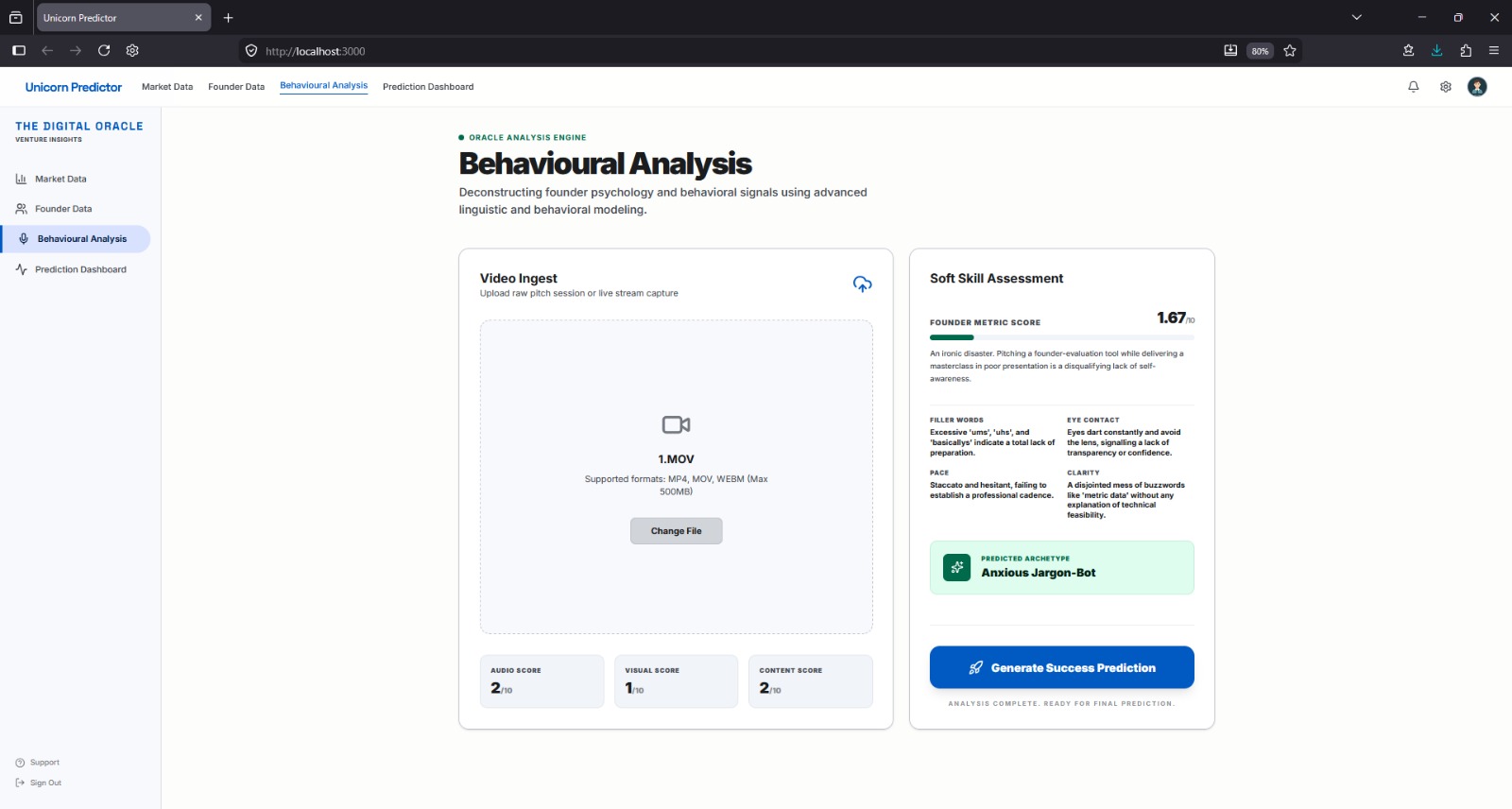
Our product will include a new behavioural psycholinguistic 'founder score' alongside traditional metrics to quantify the founder's oratory skills and marketability based on videos of them communicating their ideas and product, quantifying a metric which has historically been based on qualitative feeling. Traditional metrics include market size & growth, market entry timing, education background and regulatory environment. If successful, our product will include an additional data feature alongside traditional market metrics, providing an edge when forecasting for start-up success.
How we built it
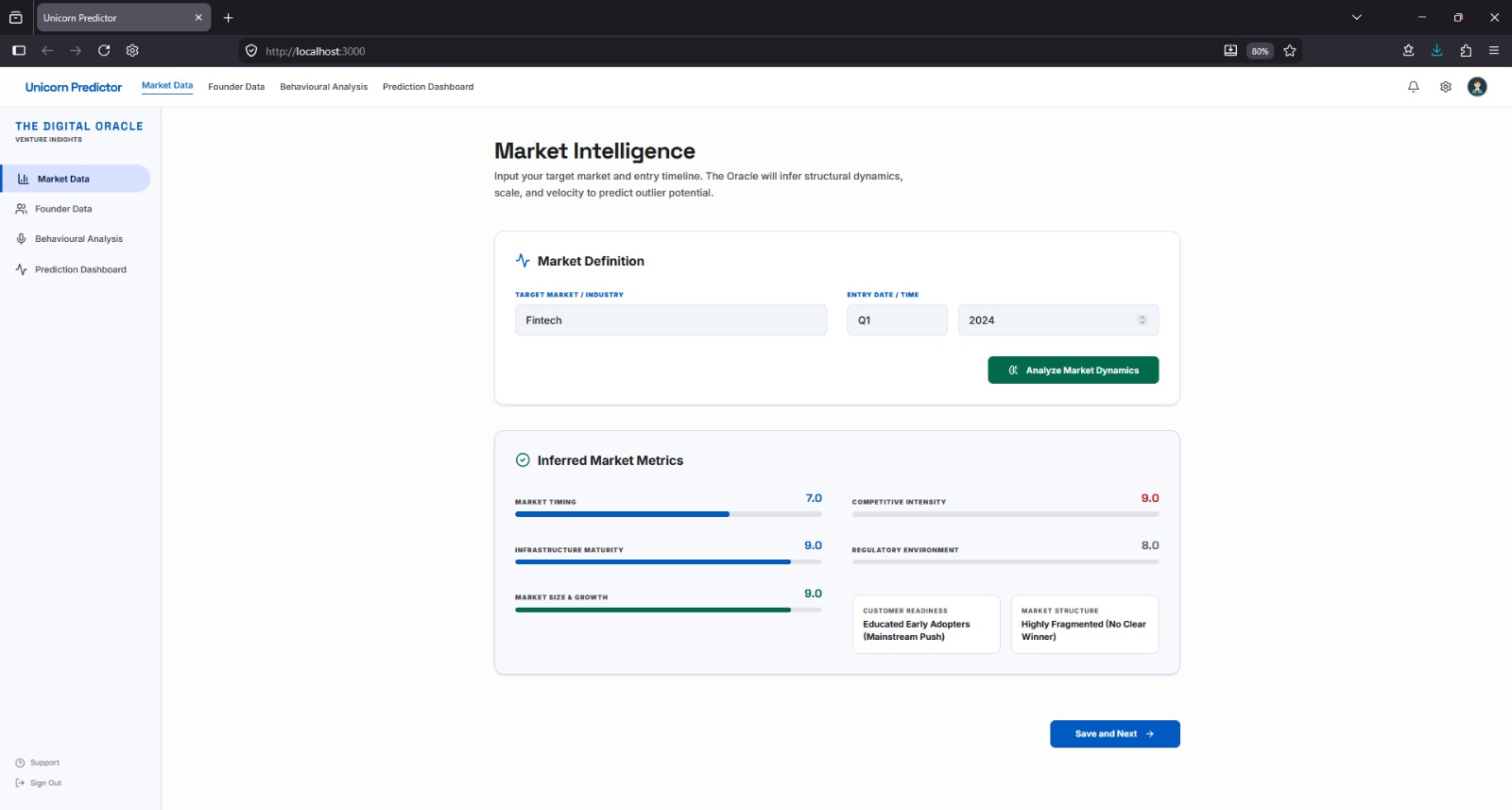
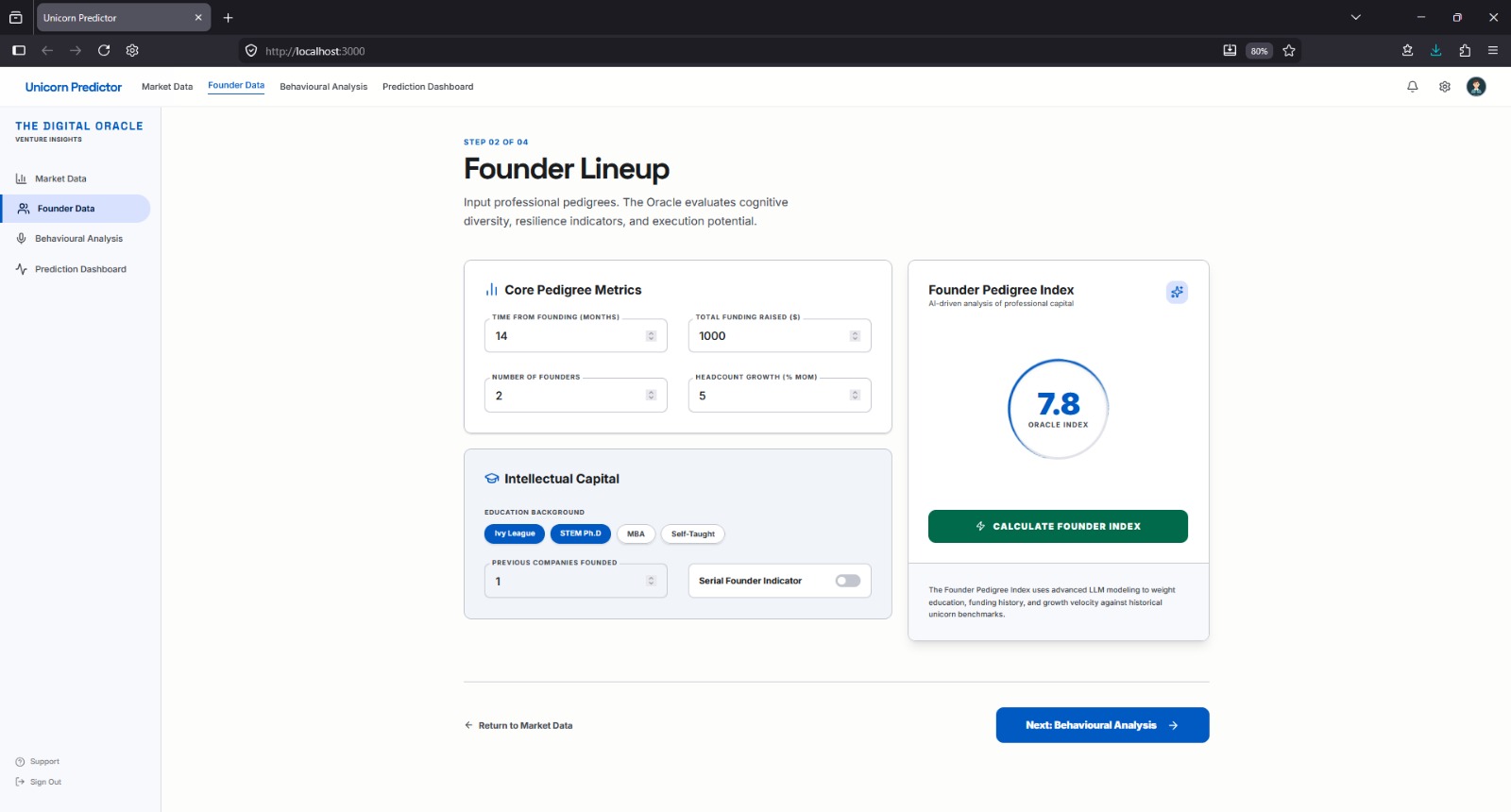
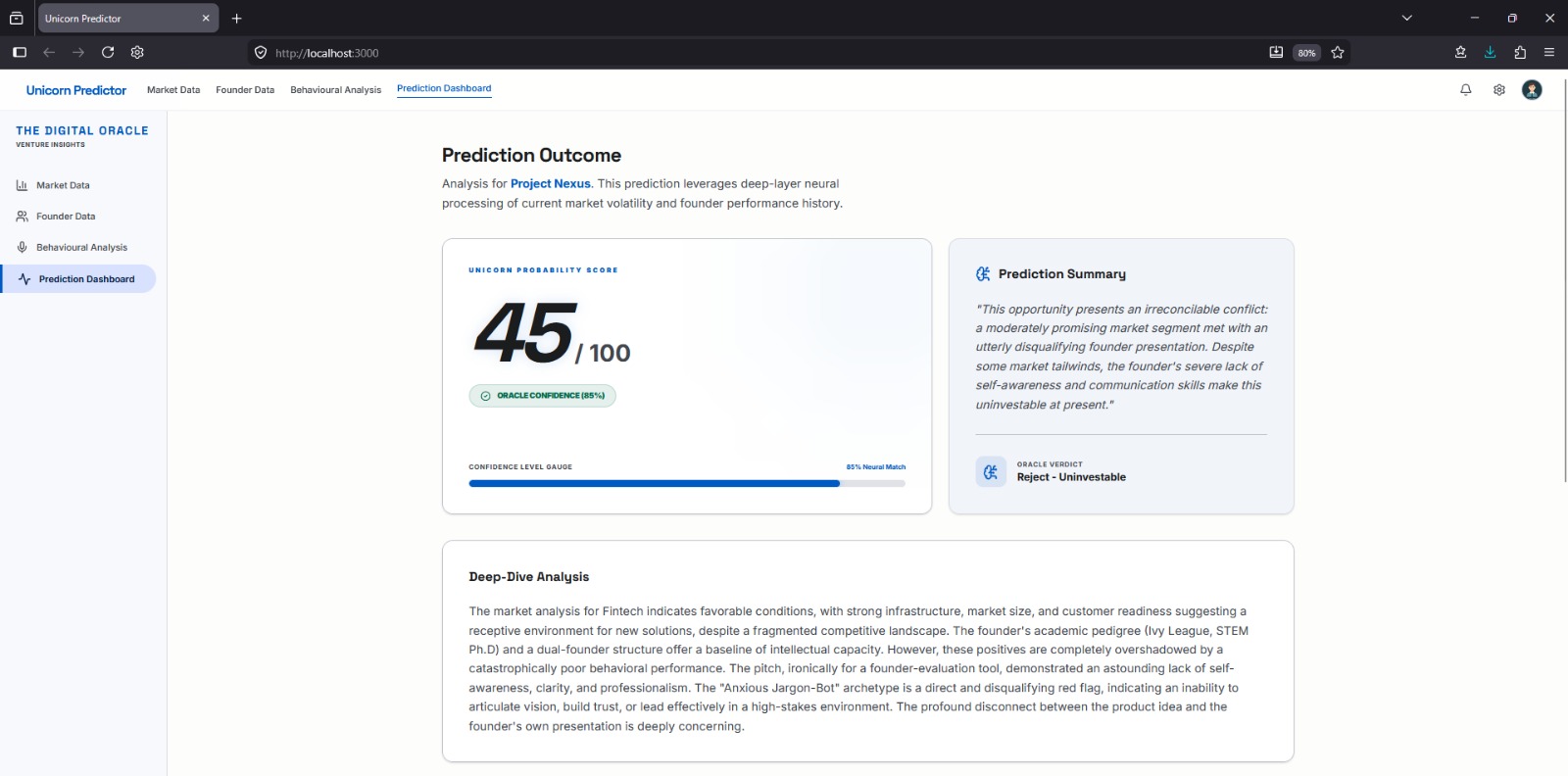
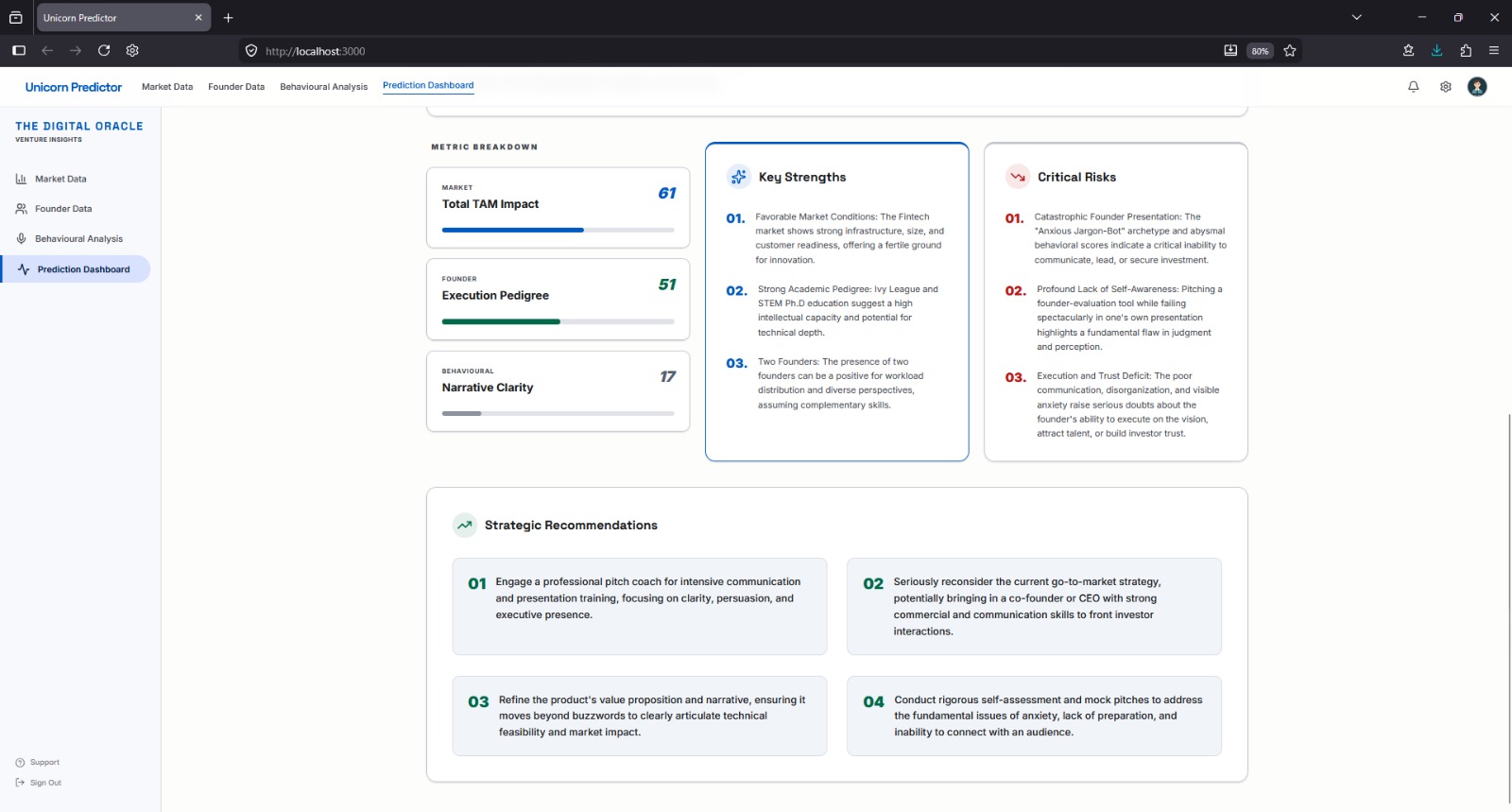
The product design can be split into three different sections: Market Data analysis, Founder Data analysis and Behavioural analysis, all combined into one application to give a final start-up score.
For the Market Data analysis, based on the given specific markets, we could already infer a few metrics about the market. For example, market Timing, customer Readiness, market size & growth, and regulatory environment. We then factor in this data in order to produce a market index out of 10, to find if the market is an ideal environment, at the given time, to initiate a startup.
For the Founder Data analysis, the founder data could be pipelined in from Crunchbase. Using a REST API, from the Crunchbase service, it is possible to extract the following data: time from founding, total funding raised, number of funding rounds, last funding round size & type (Seed, Series A, etc.), number of founders, previous companies founded/worked at, education background, founder success rate, and headcount growth. We then factor in this data in order to produce a finder index out of 10, to quantify if the founder is a well-qualified one.
For the Founder Data analysis, we input relevant information about the founder that could potentially affect the chances of the start-up being a successful one. For example, the founder's educational background, successful founding experience, total funding raised, total time founded and headcount growth
Our Behavioural analysis evaluates three core pillars: audio, visual, and speech content. • Audio Cues: Powered by the Hume AI API, we analyse vocal prosody for charisma and emotional resonance, while calculating speaking rate and filler word ("um"/"ah") frequency to generate an Audio Score. • Visual Cues: Using the Google Cloud Vision API, we extract micro-expressions (measuring emotions like joy or hesitation) and track eye-contact consistency to formulate a Visual Score. • Content & Feasibility: The Gemini API evaluates the raw transcript for clarity, narrative strength, and business feasibility. Finally, these three pillars are weighted and synthesised to output the ultimate Founder Conviction Score.
Challenges we ran into
Initially, our behavioural engine was too generous. It gave famously evasive, jargon-heavy speakers—like Sam Bankman-Fried—surprisingly high scores. We realised the baseline AI was falling into the exact same trap human investors did in 2021: mistaking buzzword-heavy "jargon salad" for genuine domain expertise. To fix this, we re-engineered our pipeline with strict negative constraints and hard scoring caps. By forcing the model to actively penalise evasive body language, filler words, and complex jargon that masked a lack of business clarity, we successfully calibrated the engine to accurately differentiate true founder conviction from nervous evasion.
Accomplishments that we're proud of
Our proudest achievement is the engine's proven ability to look past superficial market hype. When tested against historical data, our behavioural analysis successfully flagged the evasive, low-conviction communication styles of founders like Sam Bankman-Fried—even when their traditional market metrics and funding velocity appeared flawless. This provides a distinct analytical advantage over traditional VC models, which infamously failed to quantify these behavioural red flags. Furthermore, the engine goes beyond a simple numerical score by diagnosing highly specific positive and negative communication traits, successfully classifying historical baselines (such as accurately identifying Steve Jobs as a high-conviction "Visionary").
What we learned
-Using latest technology to pipeline data and code -Collaborate as a team on code -Traditional metric for VC to judge a start-up
What's next for Unicorn Predictor (Focus on Human Analysis)
Machine learning model trained to pinpoint the optimised weights to combine the market index, founder index and behavioural index.
Built With
- api
- crunchbase
- css
- html
- javascript
- python
- rest
- sql
- tailwind
- typescript
- vite

Log in or sign up for Devpost to join the conversation.