
Most of the details are well covered in report. I have added abstract to provide brief overview.
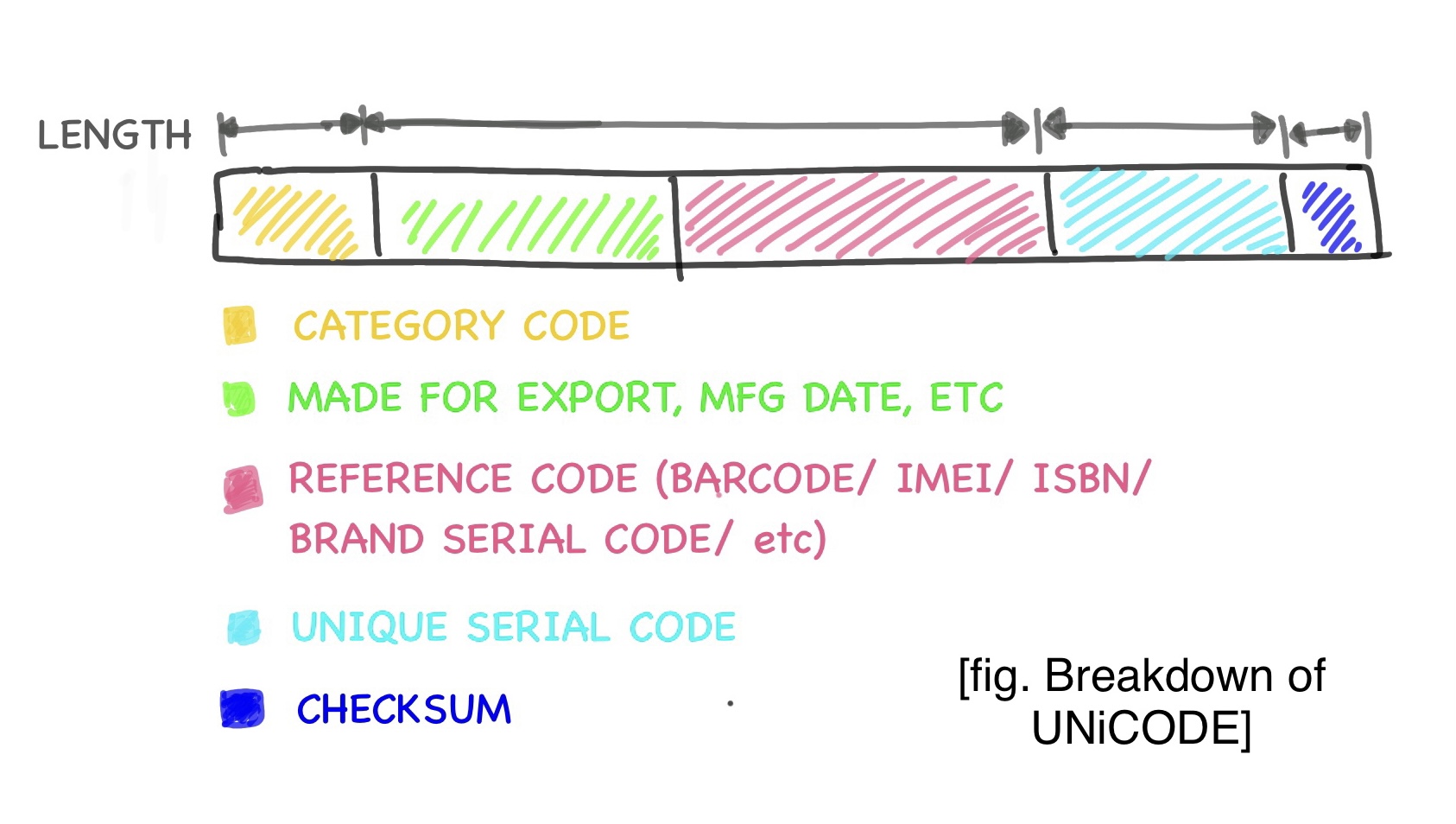
UNiCODE is a general purpose code to serialize Goods. It acts as a bridge across different categories and adds a layer of protection for both brands and consumers. Brands apply unique code for each and every product. When a product goes in the supply chain, Resellers, E-commerce Warehouse/ Retailers scan the code and add footprint to it. Once the product is purchased/delivered, customers can see complete details (by verifying credentials). Every good actor across the supply chain has upside. Unicode is built for trust.
2nd hand goods attract duplicate products in large amounts. There are issues about trust, ownership and tracking. With UNiCODE, you can transfer ownership just like you’d change your Email ID on xyz platform.
UNiCODE requires minimal details and hence is effective. For example, with rate limiting measures - anyone who purchases a new product can be confident about their purchase or 2nd hand buyer wouldn’t have to worry about stolen goods. Brands can handle warranty and don’t need to deal with registration.
For existing systems reference code inside UNiCODE can be handy. For policy makers, having and adopting general purpose code can give a good picture about consumers, brand, sellers and general pain points to guide them in making big decisions.
In Future, UNiCODE can help both small and large cross-border shipments. In India, With ONDC, consumers can buy anything from a single app without worrying about details and hassle Of multiple eCommerce platforms and sellers. Many have concerns over counterfeiting. Adding UNiCODE layer to such a protocol will be game changing.
Check out the video and report for detailed info!
Built With
- open-source

Log in or sign up for Devpost to join the conversation.