-
-

some grading processes
-

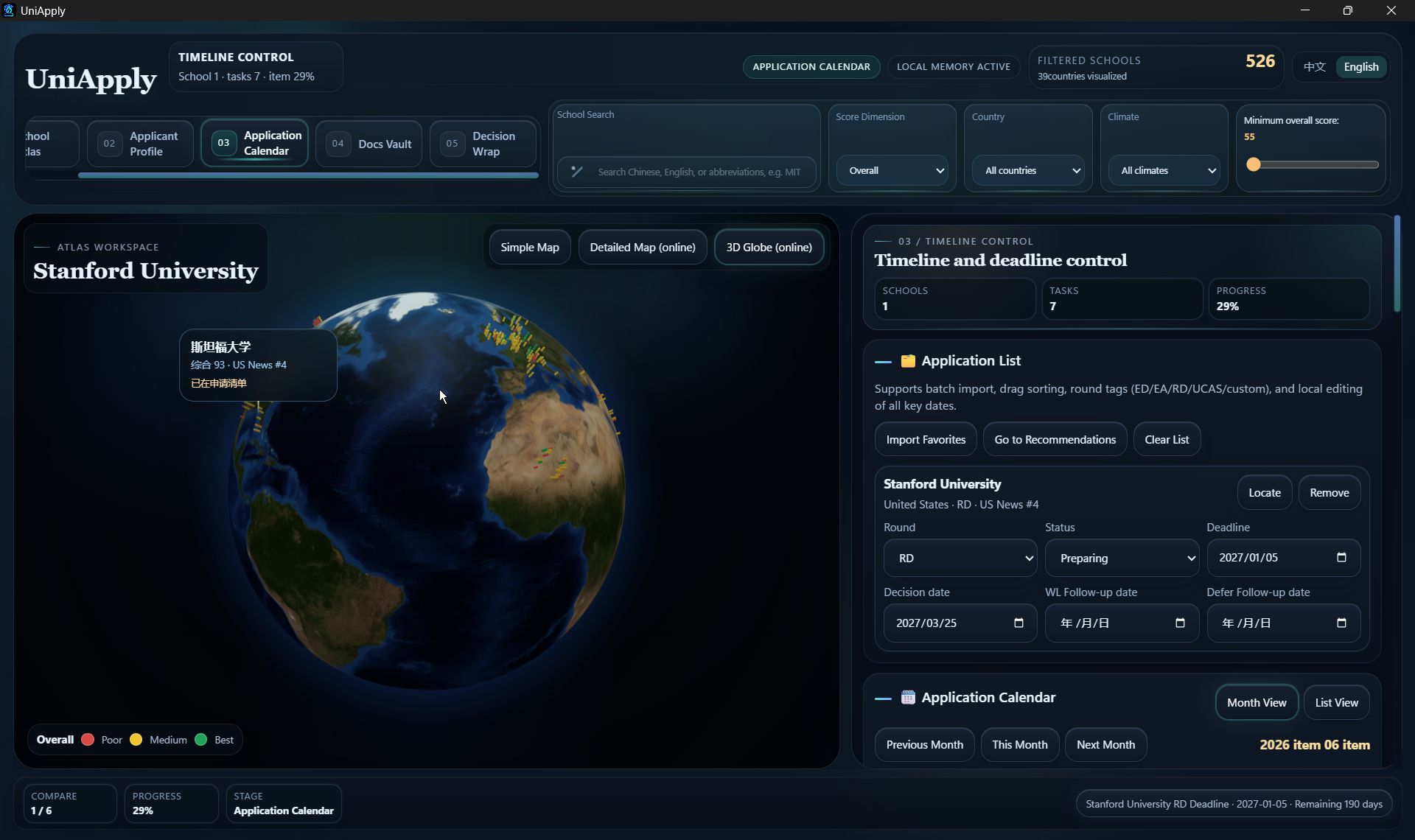
calendar (ea,ed,rd)
-

the final result that students can show
-
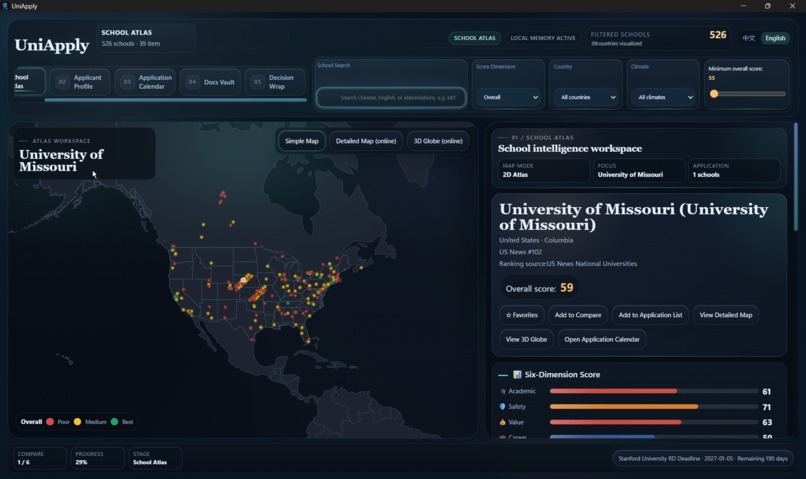
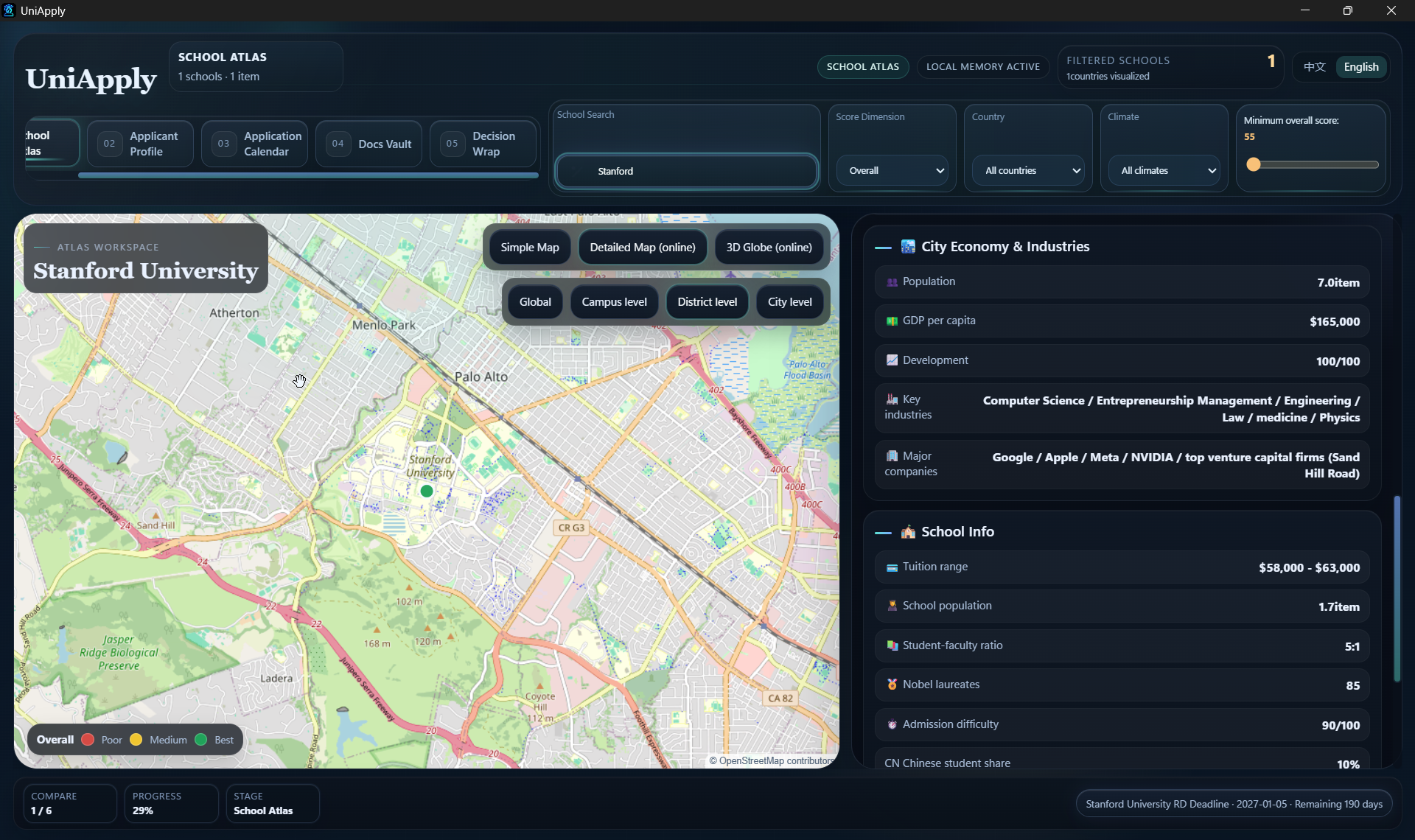
introducing of universities
-
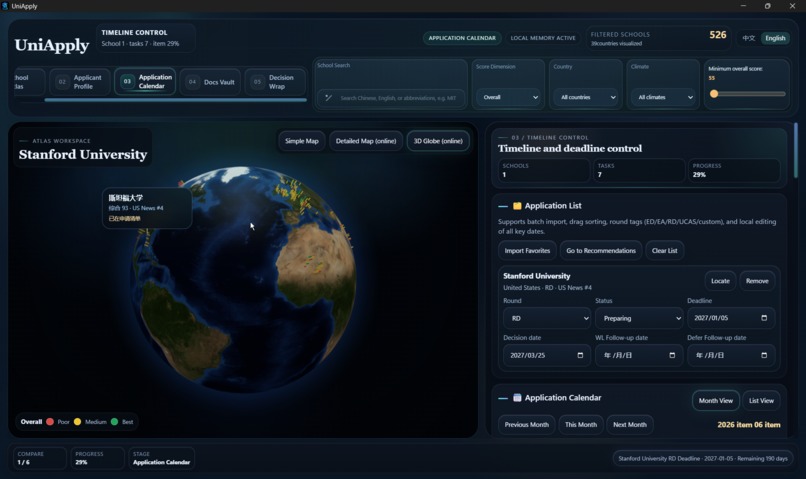
some grading process, helping students find the best fit schools
-
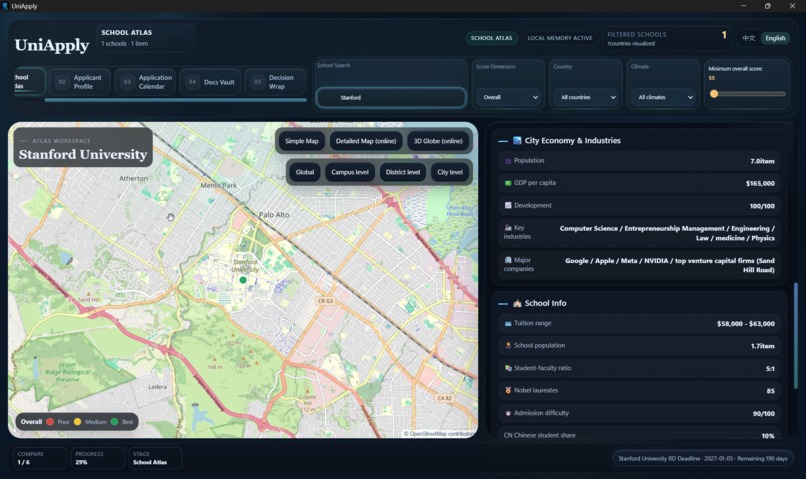
three kinds of maps to choose



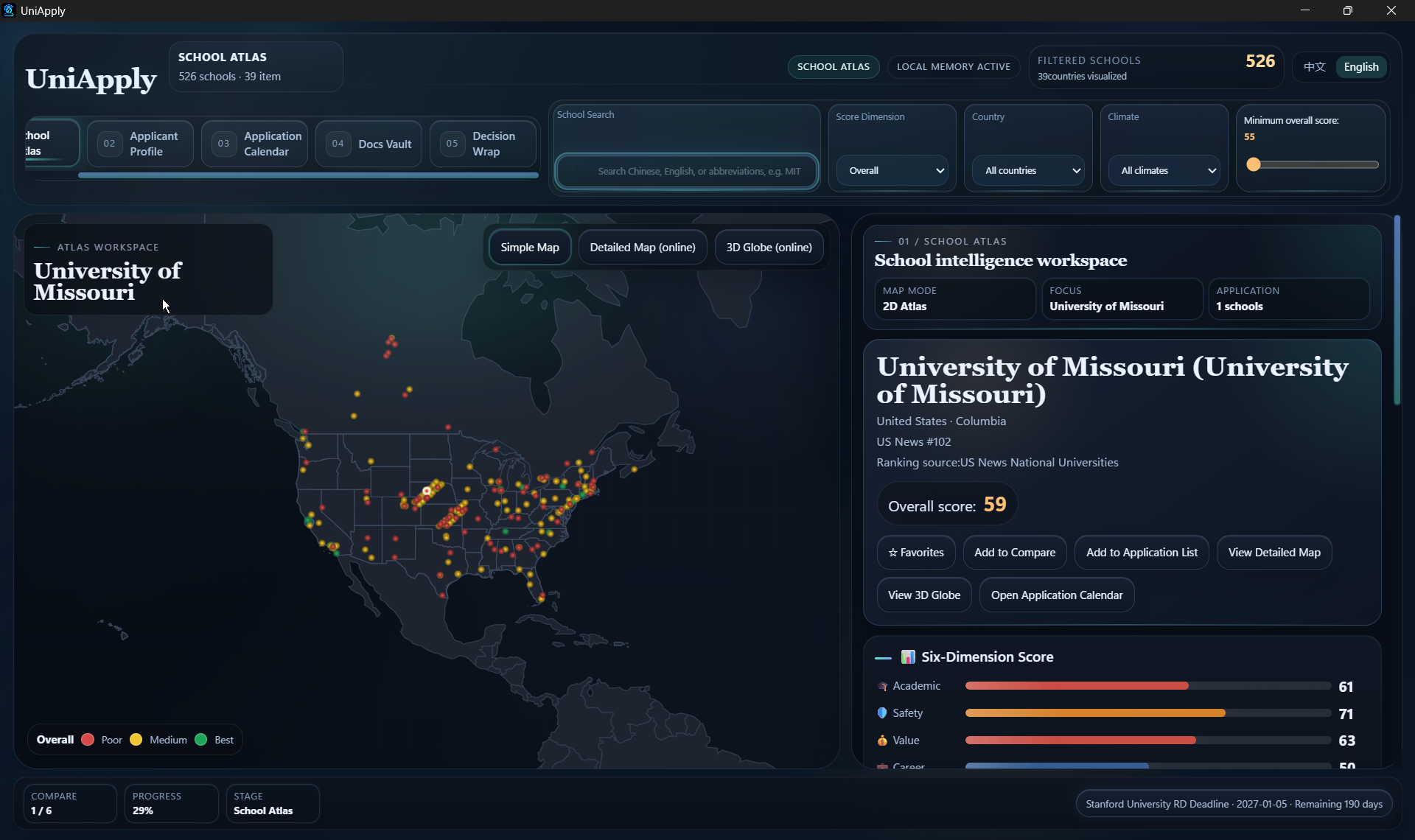
Inspiration
UniApply was inspired by a real problem in the university application process: students often manage everything across too many disconnected tools. School research may be stored in browser tabs, deadlines in calendars, essays in folders, notes in documents, and admission results in spreadsheets or chat history. For international applicants, the process becomes even more complicated because they often work across both Chinese and English materials.
I wanted to build a dedicated application command center that helps students manage the full application journey in one place instead of relying on scattered files and manual tracking.
What it does
UniApply is an offline-first AI-assisted Windows desktop application for university application planning.
It helps students:
- Explore universities visually through a school atlas
- Search and filter schools by country, climate, score, and other factors
- Compare universities and build an application list
- Organize applicant background information such as GPA, test scores, activities, awards, research, and internships
- Track application rounds, deadlines, submission status, and tasks
- Manage essays, uploaded files, and local application documents
- Record admission results, scholarships, waitlists, rejections, and final decisions
- Switch between Chinese and English interface modes
The goal is to turn a fragmented application process into one structured workflow.
How we built it
UniApply is built as a Windows desktop application using Electron, React, TypeScript, Vite, and Node.js.
Electron is used to package the application as a desktop app. React powers the user interface. TypeScript improves reliability and maintainability. Vite provides the frontend build system, and Node.js supports development and packaging.
The application uses local university and ranking data to support school exploration and planning. It is designed with an offline-first workflow so users can keep sensitive application information on their own machine.
Challenges we ran into
One major challenge was designing the application as more than a simple school search tool. The university application process has many connected stages, including school discovery, applicant profile evaluation, timeline planning, document organization, and decision tracking. The challenge was to connect these stages into one coherent workflow.
Another challenge was bilingual support. International applicants often move between Chinese and English while researching universities and organizing personal plans, so the interface needed to support both languages.
Packaging the project as a Windows desktop release was also important because the product is designed to be directly downloaded and tested.
Accomplishments that we're proud of
I am proud that UniApply presents a complete product direction instead of only one isolated feature. It combines school exploration, applicant profile organization, application calendar planning, document archiving, admission result tracking, bilingual support, and local-first desktop packaging.
The project is also built around a real user need. University applications are high-pressure, information-heavy, and long-term. UniApply helps reduce information overload and gives students a clearer structure for making application decisions.
What we learned
This project showed that AI-assisted education tools should not only generate answers, but also help users organize complex workflows. In university applications, the main problem is not just lack of information. The bigger problem is that information is scattered and difficult to manage over time.
Building UniApply also reinforced the importance of user privacy, bilingual accessibility, and workflow design in education technology.
What's next for UniApply
Future versions of UniApply can add deeper AI-assisted features, including:
- Smarter school matching
- Personalized recommendation explanations
- Applicant competitiveness analysis
- Essay planning support
- Automatic deadline reminders
- Counselor collaboration tools
- Optional cloud synchronization
- Expanded university datasets
- More detailed result visualization
The long-term goal is to make UniApply a complete digital assistant for university applicants, from early school research to final enrollment decisions.
Built With
- css
- desktop
- electron
- html
- javascript
- local-storage
- node.js
- react
- typescript
- university-datasets
- vite
- windows

Log in or sign up for Devpost to join the conversation.