-
-
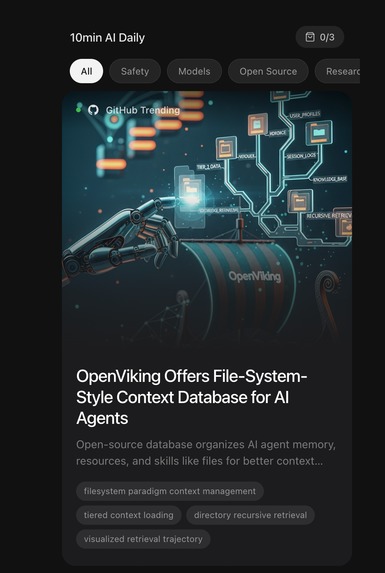
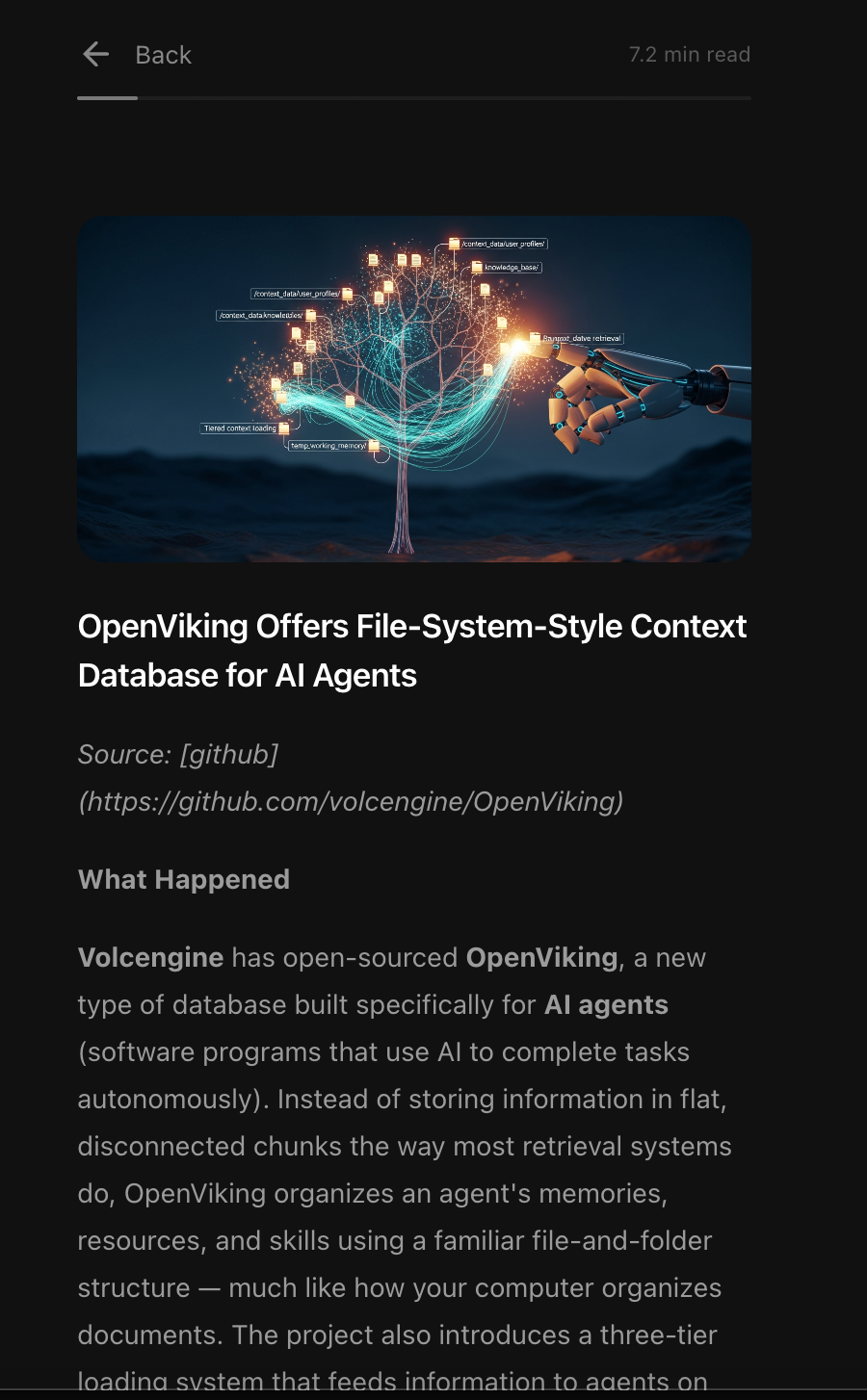
swipe through the cards
-
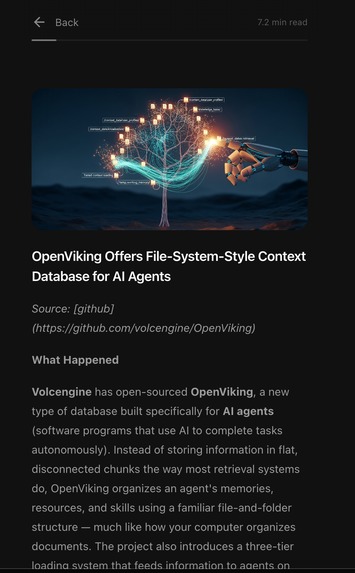
personalised 10-minute briefing
-
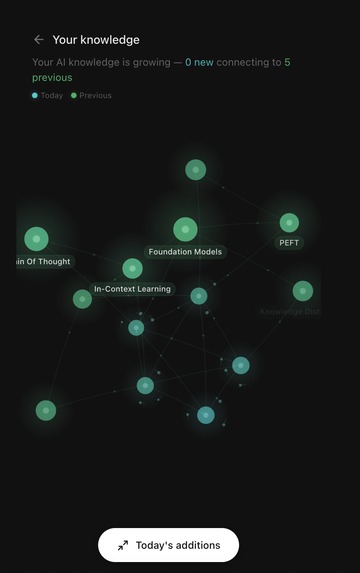
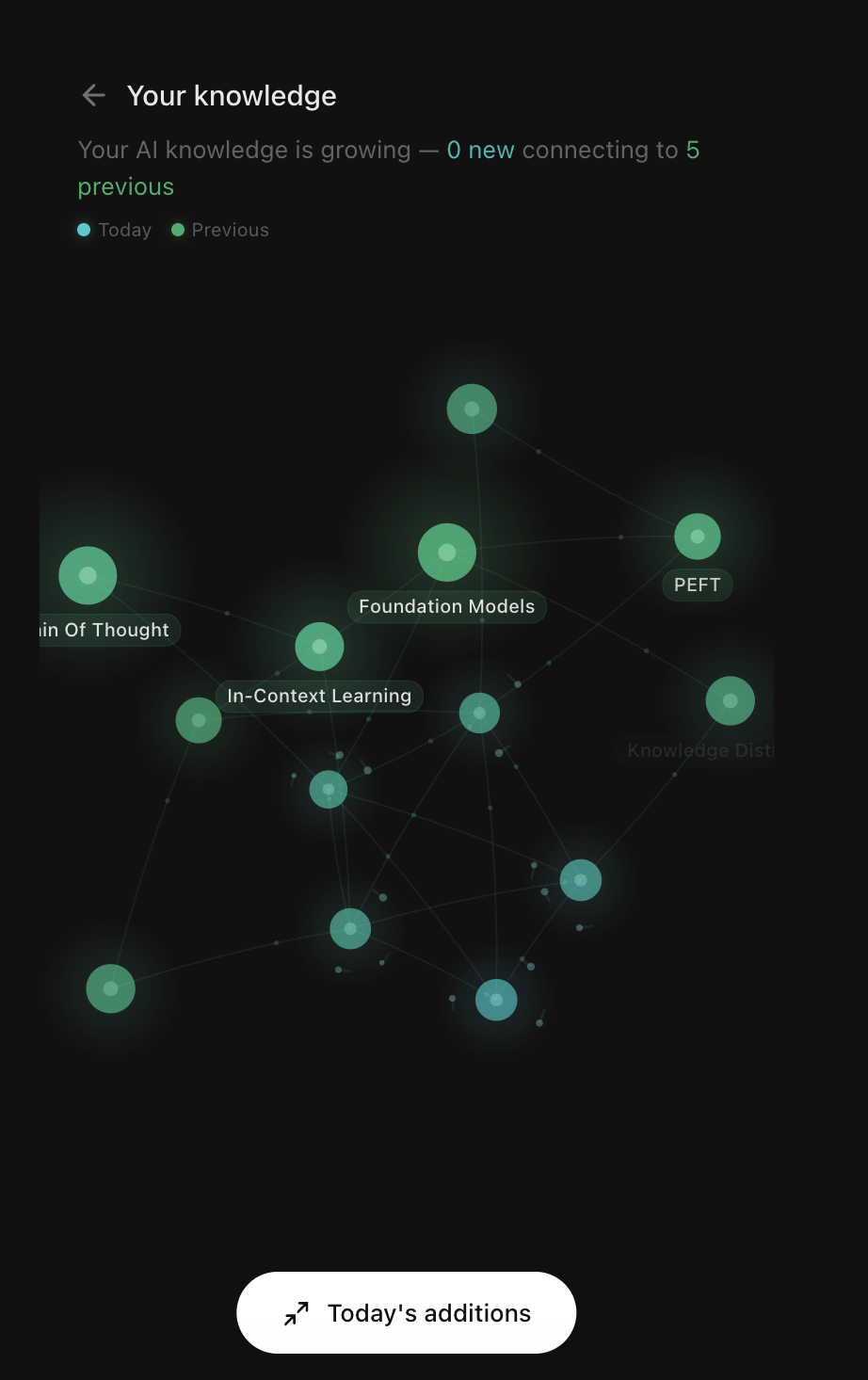
knowledge graph
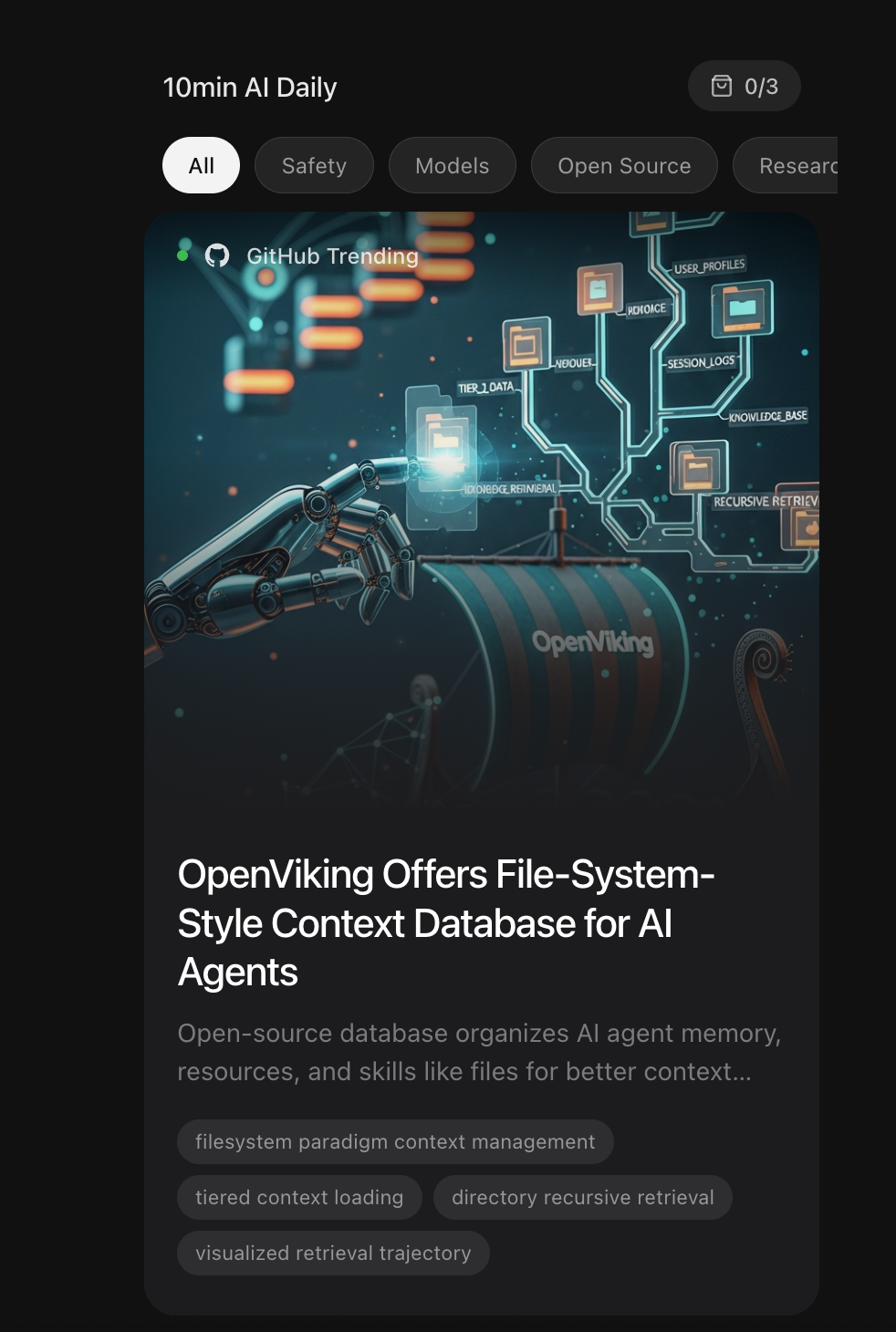
Inspiration
Have you ever felt overwhelmed by how fast the AI field evolves? One week, everyone is talking about a new model, paper, or tool, and the next week the conversation has already moved on. If you are a student, developer, founder, researcher, professional, or simply someone trying to keep up with AI, it is easy to feel like you are always one step behind.
As university students, we know this feeling well. Between classes, assignments, projects, work, and everything else, who really has time to check GitHub, Hugging Face, OpenAI, Anthropic, and a dozen other sources every day just to figure out what actually matters? And even when you do, the information is often scattered, repetitive, and difficult to turn into real understanding.
That is why we created Neuron.
Neuron is an AI-powered platform that helps people stay on top of the rapidly evolving AI landscape without the stress of endless searching and scrolling. Instead of making users jump across different websites and sources, Neuron gathers the newest first-hand AI updates in one place, helping them quickly discover what matters, learn it in a way that feels manageable, and build knowledge over time.
Our goal is simple: make staying up to date with AI easy, engaging, and enjoyable. In just 10 minutes a day, Neuron helps users feel informed, curious, and confident in a fast-moving world.
What it does
Neuron turns AI information overload into a daily, personalised 10-minute learning experience.
It begins by collecting the latest AI developments from first-hand sources such as GitHub Trending, Hugging Face Papers, the OpenAI Blog, and the Anthropic Blog. Instead of showing users a long and overwhelming stream of raw information, Neuron transforms these updates into clean, visually appealing cards with concise summaries, keywords, and source context. This allows users to quickly understand what each item is about at a glance.
Users can then swipe through the cards and select the ones that interest them most. This interaction is intentionally fast, intuitive, and satisfying. The card design makes discovery feel lightweight and rewarding, while visual and audio feedback turns learning into a more engaging daily habit.
Once a few cards are selected, Neuron generates a personalised 10-minute briefing. Rather than simply shortening articles, it synthesises the chosen items into one coherent, easy-to-read summary that explains what happened, why it matters, and how the ideas connect. This helps users stay current without needing to spend hours reading scattered articles, papers, or repository pages.
Neuron also includes a recommendation system that learns from the user over time. By recording swipe behaviour and tracking which keywords appear in the cards users consistently choose, Neuron gradually builds a preference profile. Future cards are then reordered to better match the user’s interests, making the experience more relevant and personalised with each session.
Finally, Neuron builds a living knowledge graph from the concepts inside each briefing. As users read more, Neuron extracts important ideas and links them to concepts they have already explored. The result is an interactive visual map that helps users track their growth, connect ideas together, and turn short daily reading into long-term learning.
In short, Neuron helps users discover, choose, understand, personalise, and remember AI knowledge in one seamless experience.
How we built it
NLP : Preprocessing: We convert non-text content into machine-readable text using OCR. The extracted text then goes through normalization and cleaning, including removing non-informative sections such as references, citations. Concept extraction: Using the cleaned data, we apply a pretrained LLM with carefully engineered prompts to identify and extract the core innovative concepts presented in the source content. Briefing generation: Based on the cleaned text and the extracted concepts, we prompt the LLM to generate concise summaries that highlight the key ideas and important insights from the content. Knowledge graph construction: We construct a knowledge graph by linking concept nodes based on the cosine similarity of their embeddings. The embeddings are generated from both the concept labels and descriptions, combined with signals from LLM outputs. Low-confidence edges are pruned using similarity thresholds to maintain graph quality. Recommendation: To recommend new content, we compute TF-IDF cosine similarity between a user’s previously liked content and newly generated content cards.
Challenges we ran into
One of our biggest challenges was turning very different types of AI content into one smooth product experience. A GitHub repository, a research paper, and a company blog post all have completely different structures, tones, and levels of detail. Making them feel consistent as clean, swipeable cards required far more than simple scraping and summarisation.
Another major challenge was balancing freshness, reliability, and deployment readiness at the same time. We wanted Neuron to work with real, first-hand, up-to-date AI content, but we also needed the app to stay stable when deployed online. That meant handling scraper failures, fallback data, cached outputs, and service coordination across the full stack without breaking the live product experience.
The knowledge graph was one of the hardest technical parts of the project. It was not enough to just extract concepts. We also needed to generate meaningful edges between them, test different relationship strategies, and merge repeated or overlapping concepts into a graph that felt both accurate and readable. We spent a lot of time making this pipeline more robust so the graph was not just visually impressive, but actually useful.
Personalisation and engagement were also tricky. We wanted users to stay engaged beyond the first few swipes, so we had to think carefully about interaction design, feedback, and habit-forming product choices. Designing card swiping, instant visual response, recommendation updates, and a graph that makes learning feel cumulative was a challenge because the system had to feel fun while still serving a serious learning purpose.
We also ran into team management and planning challenges. Even though we set up a PRD and organised our work in Linear from the start, hackathon development still moved very quickly, and priorities kept shifting as we tested what was feasible, polished, and demo-worthy. Balancing ambitious ideas with limited time, coordinating parallel workstreams, and keeping everyone aligned on the core product loop was an ongoing challenge throughout the build.
Finally, one of the hardest overall challenges was making everything feel polished. Neuron had to be technically interesting, visually engaging, easy to understand, and smooth enough to demo confidently within seconds. Bringing together ingestion, recommendation, generation, graph logic, frontend interaction, and team execution into one cohesive experience was one of the most demanding parts of the build.
Accomplishments that we're proud of
We are proud that Neuron feels like a real product, not just a hackathon prototype.
One of our biggest accomplishments was building a complete end-to-end experience. We did not just create a feed of AI news. We built a full learning loop where fresh first-hand AI signals become swipeable cards, selected content becomes a personalised 10-minute briefing, and each session contributes to a growing knowledge graph.
We are also proud of the product polish. The swipe interaction, card design, instant feedback, streaming briefing experience, and interactive graph all work together to make the app feel intuitive, engaging, and memorable. We wanted Neuron to be something judges could understand within seconds and something users would genuinely enjoy using.
From a technical perspective, we are proud that we combined live multi-source ingestion, LLM-powered preprocessing, personalised recommendation, online deployment, and a custom knowledge graph visualisation into one cohesive system. In particular, we are proud of the graph pipeline, where concept extraction, edge generation, and concept merging came together in a way that made the graph both visually appealing and genuinely useful.
We are also proud that Neuron does more than summarise content. By learning from user swipe behaviour and keyword preferences over time, it becomes more relevant and personal with each session. That made the product feel much closer to a true AI learning companion than a static news app.
Finally, we are proud of how our team executed under hackathon pressure. Even with shifting priorities and tight time constraints, we turned an ambitious idea into a polished, working product with a clear story, strong user experience, and visible technical depth.
What we learned
We learned that a strong hackathon project is not just about having a good idea or interesting technical components. It is about turning those pieces into one clear experience that users can understand instantly and enjoy using.
One of our biggest lessons was that integration is often harder than implementation. Building scraping, summarisation, recommendation, graph generation, and deployment as separate parts was manageable, but making them work smoothly together in one product required much more coordination than we first expected.
We also learned how important small team communication habits are during fast development. For example, even simple things like checking with each other before pulling or pushing changes became important once multiple people were working across connected parts of the app. A small misstep in one branch could easily affect someone else's progress, so keeping communication tight saved us time and prevented unnecessary merge problems.
Another lesson was that personalisation does not have to start with a highly complex model. We found that simple, explainable signals such as swipe history and keyword preference tracking were already powerful enough to make the product feel more relevant and responsive.
From the graph work, we learned that extracting concepts is only one part of the challenge. Making relationships meaningful, merging repeated ideas cleanly, and keeping the graph readable all mattered just as much as the extraction itself.
Finally, we learned that hackathon execution depends heavily on prioritisation. Even with a PRD and Linear set up from the start, plans kept changing as we discovered what was feasible, what looked polished, and what created the strongest demo impact. That taught us to stay flexible, communicate often, and keep returning to the core question: what will make the product both useful and memorable?
What's next for Neuron
The next step for Neuron is to move beyond the hackathon and test whether this is something people would genuinely want to use every day.
Our first priority is market validation. We want to put Neuron in front of real users, including students, developers, researchers, and other people trying to keep up with AI, and learn how they actually use it. We want to gather feedback on what feels most valuable, what parts of the experience are most engaging, and where the product still creates friction.
That feedback will help us refine the product further. In particular, we want to improve the recommendation system, make the briefings even more useful for different types of users, and strengthen the knowledge graph so it becomes a more meaningful long-term learning tool rather than just a session-based visual.
We also want to expand the range of sources, improve deployment robustness, and make the experience more personalised over time. Longer term, we see Neuron becoming more than a daily AI update tool. We see it becoming a true AI learning companion that helps users not only keep up with the field, but build lasting understanding as it evolves.
(note: the final product is in the branch "UI_backend_merge")
Built With
- beautiful-soup
- chatgpt
- claude
- fastapi
- genmini
- github
- openai
- python
- railway
- react
- supabase
- typescript
- versel


Log in or sign up for Devpost to join the conversation.