-
Uni-Ride logo
-
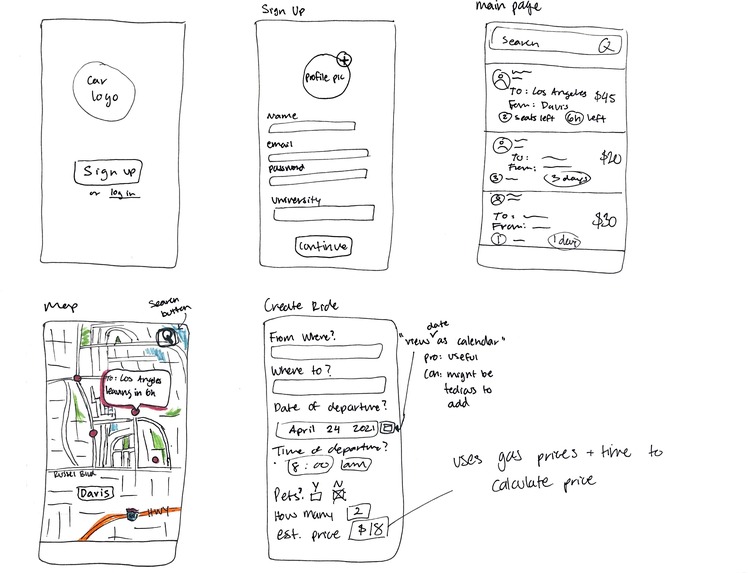
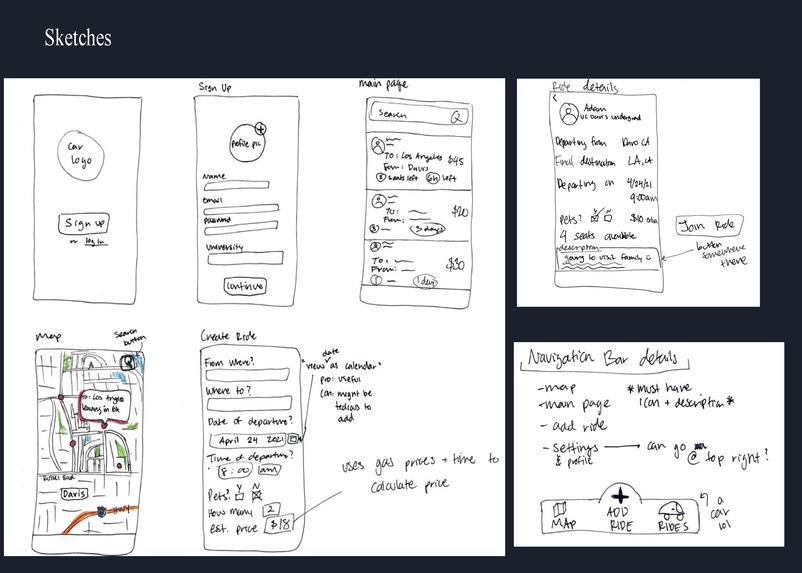
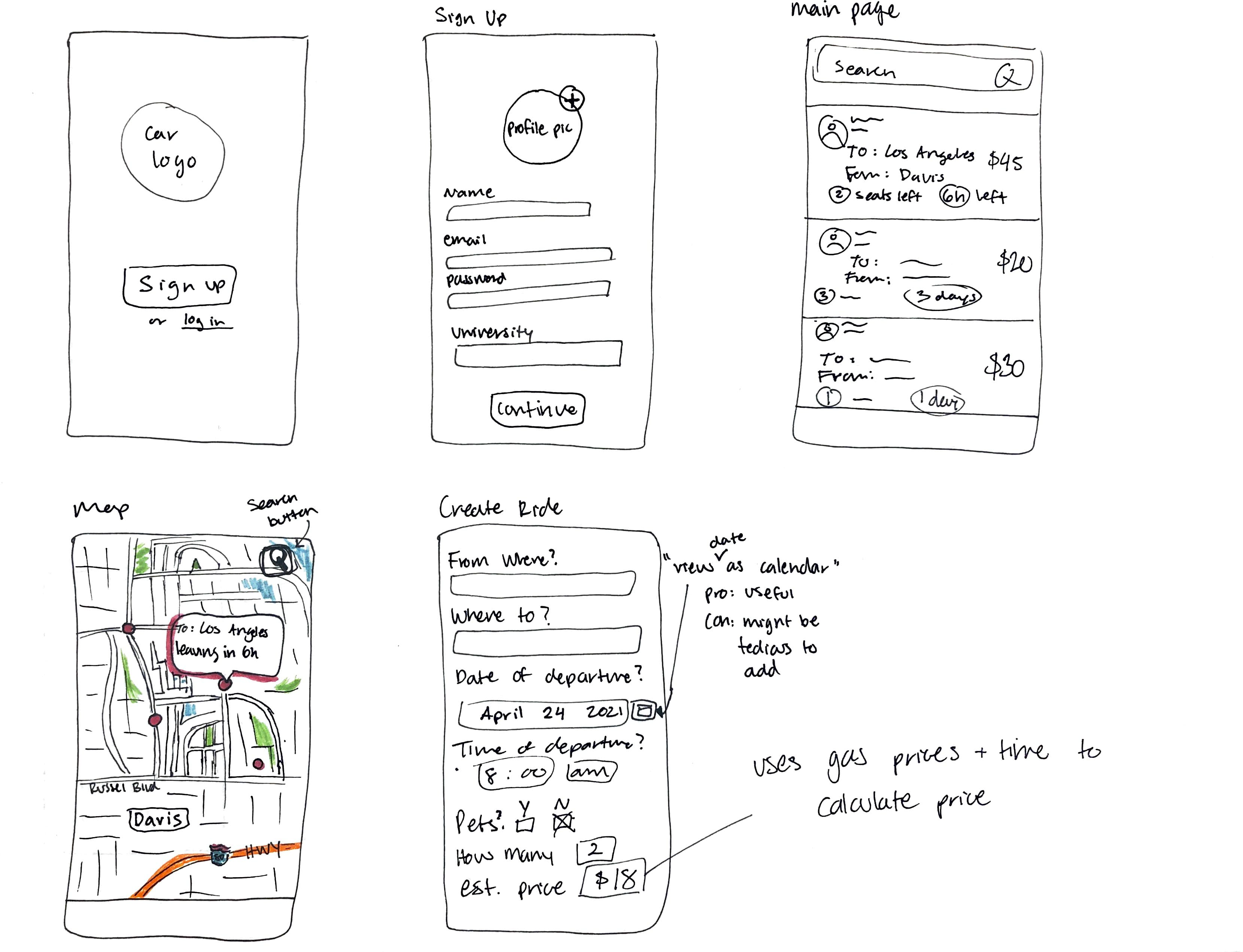
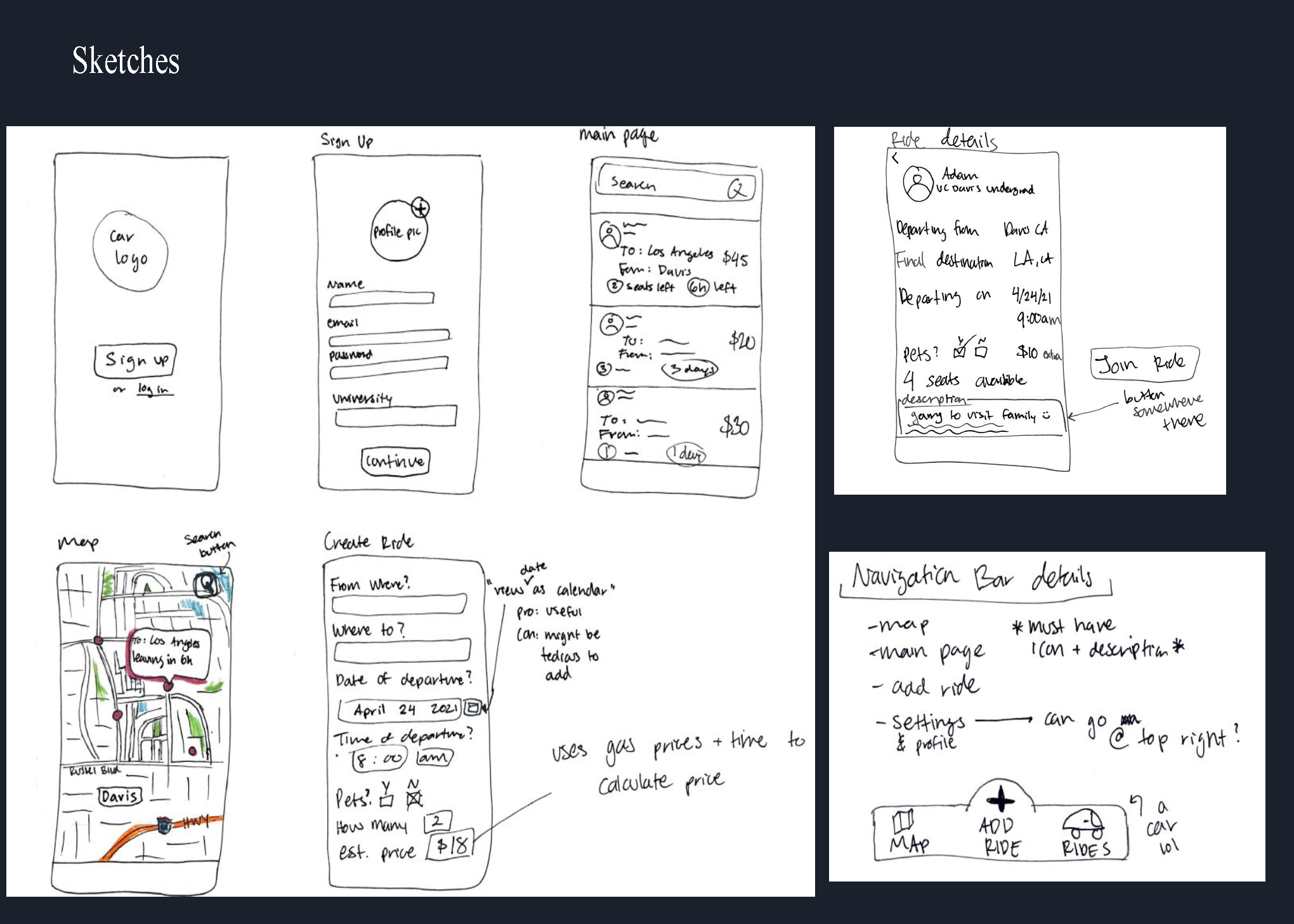
Preliminary sketches page 1
-
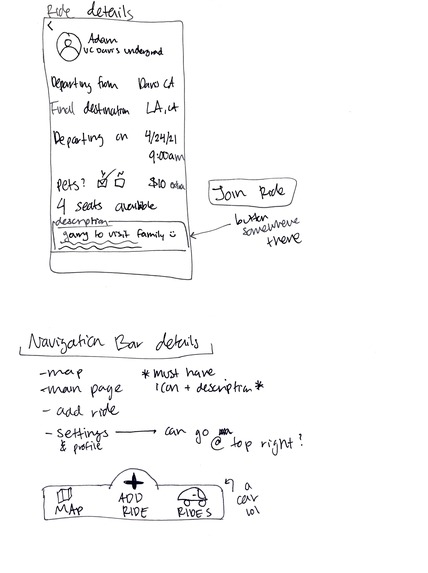
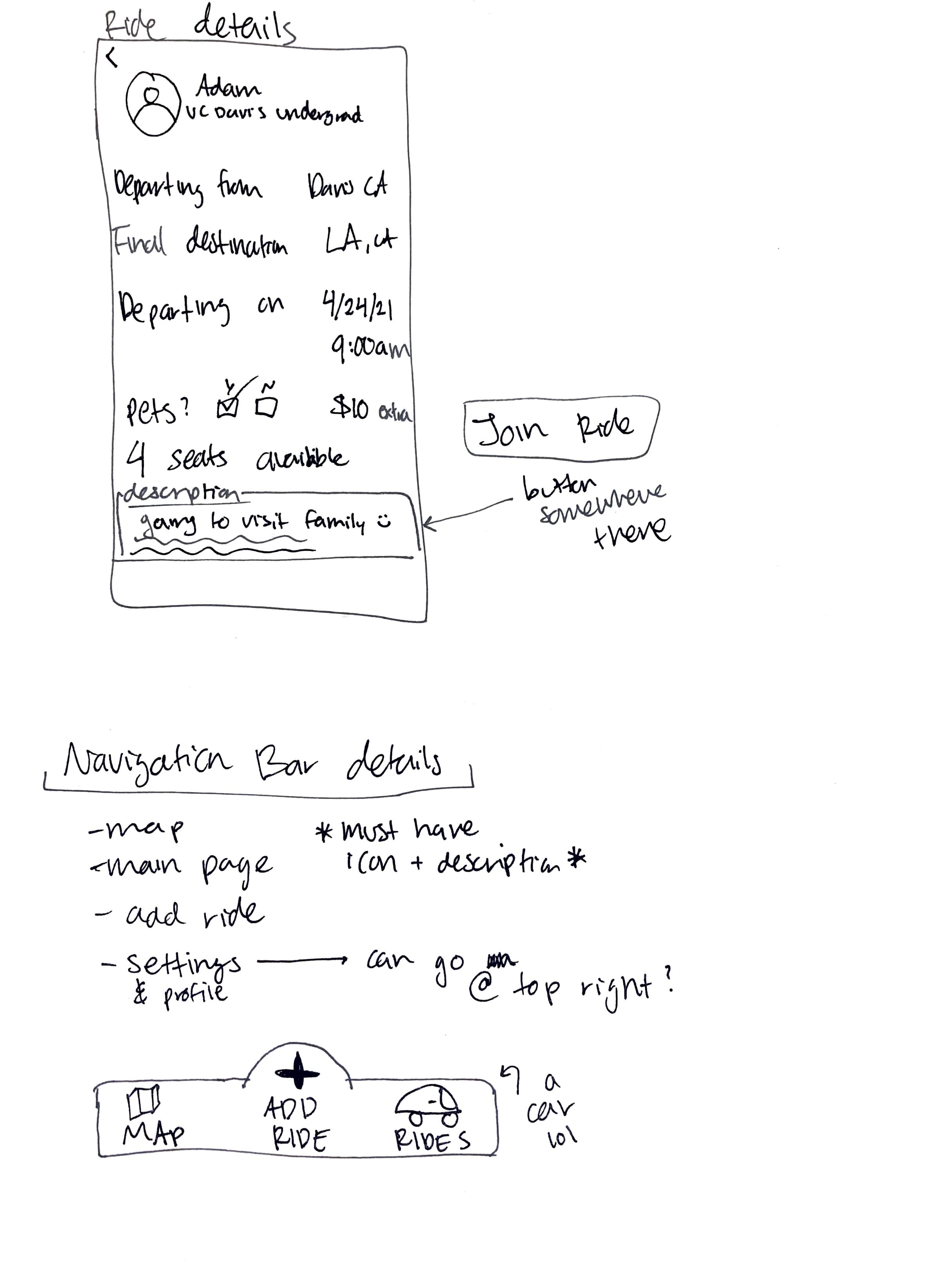
Preliminary sketches part 2
-
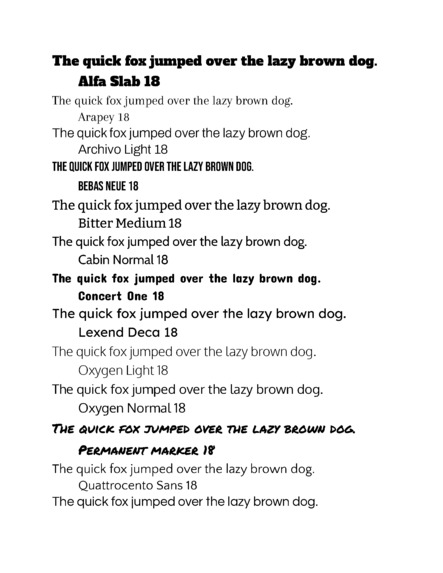
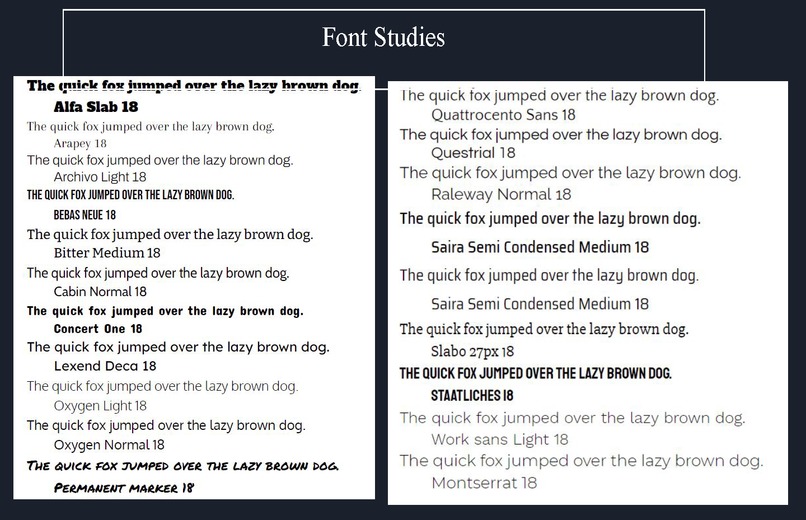
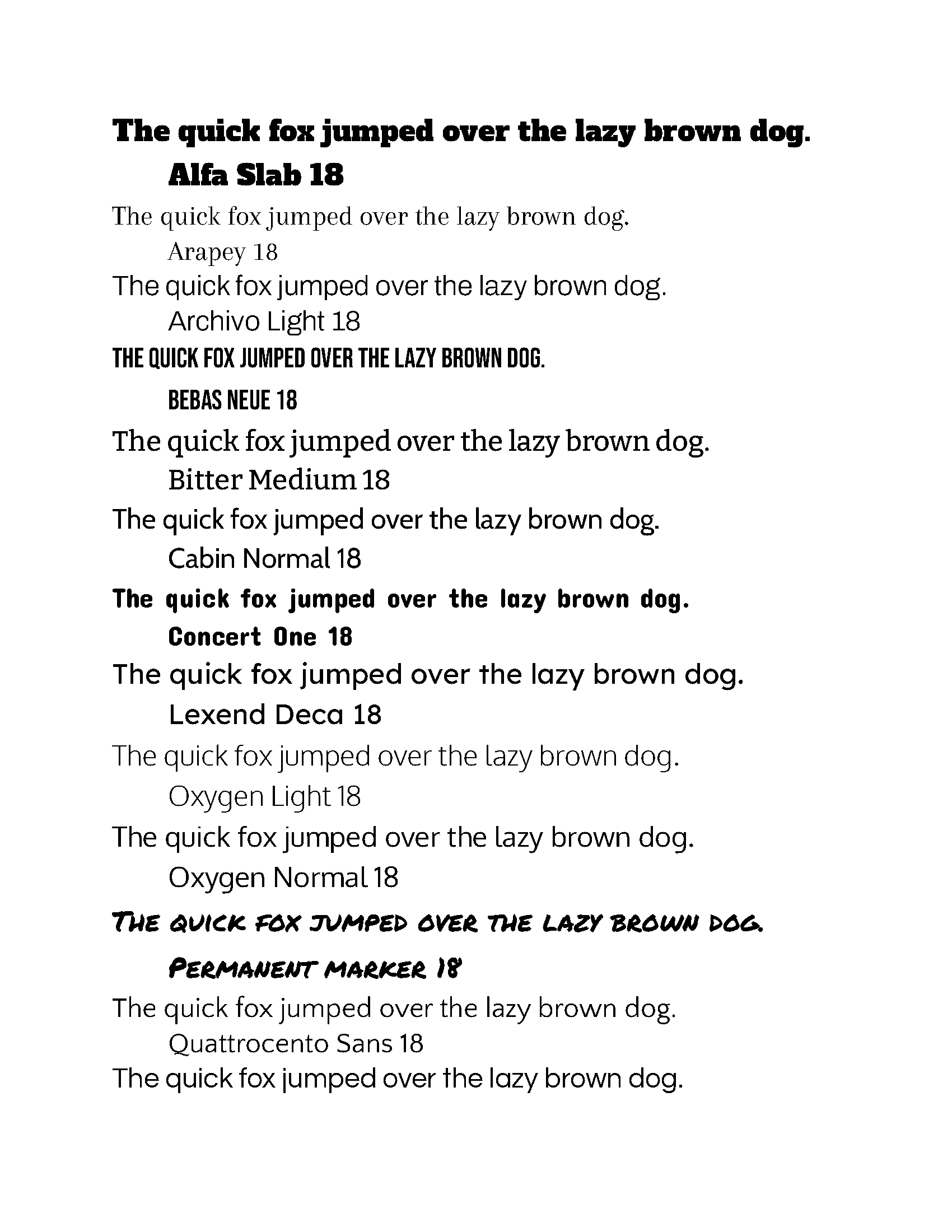
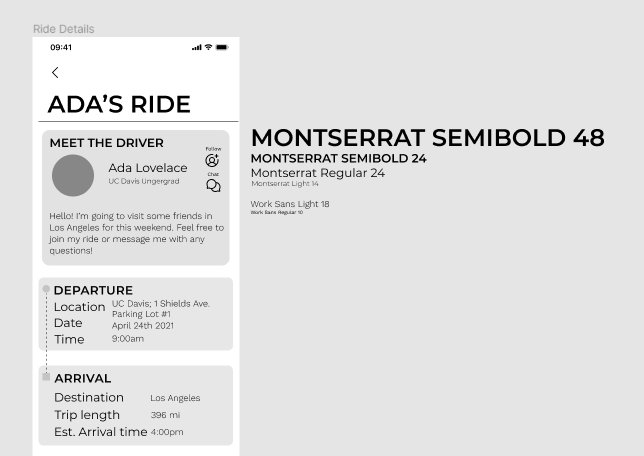
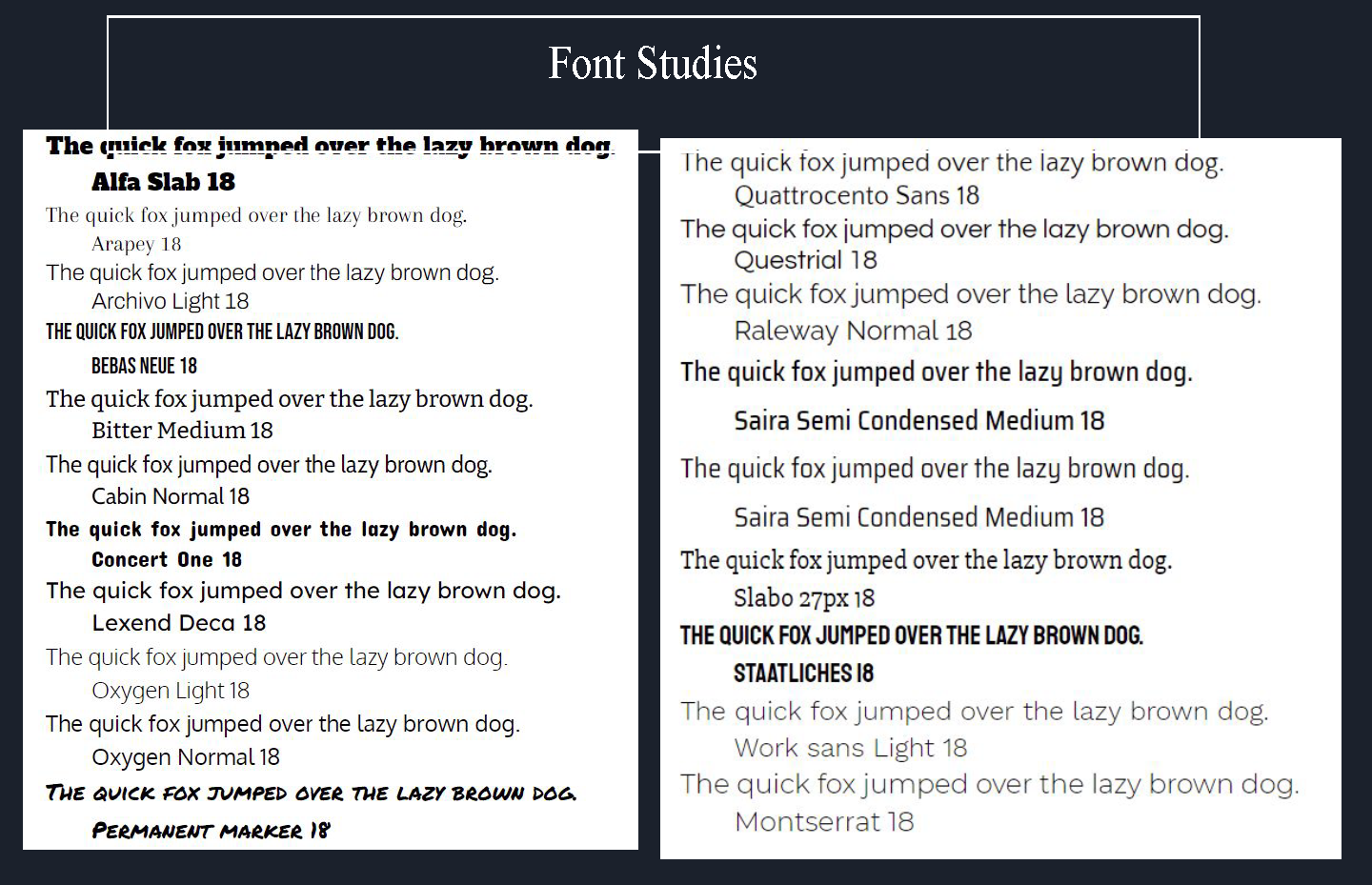
Type Study excerpt. Each type family is found on Google Fonts.
-
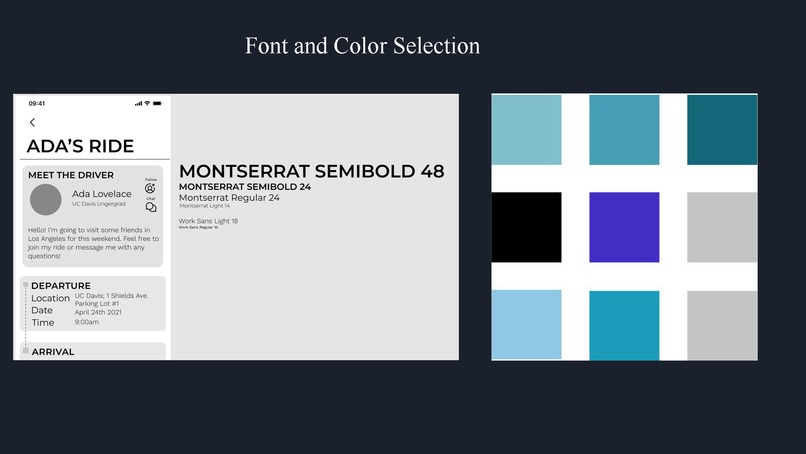
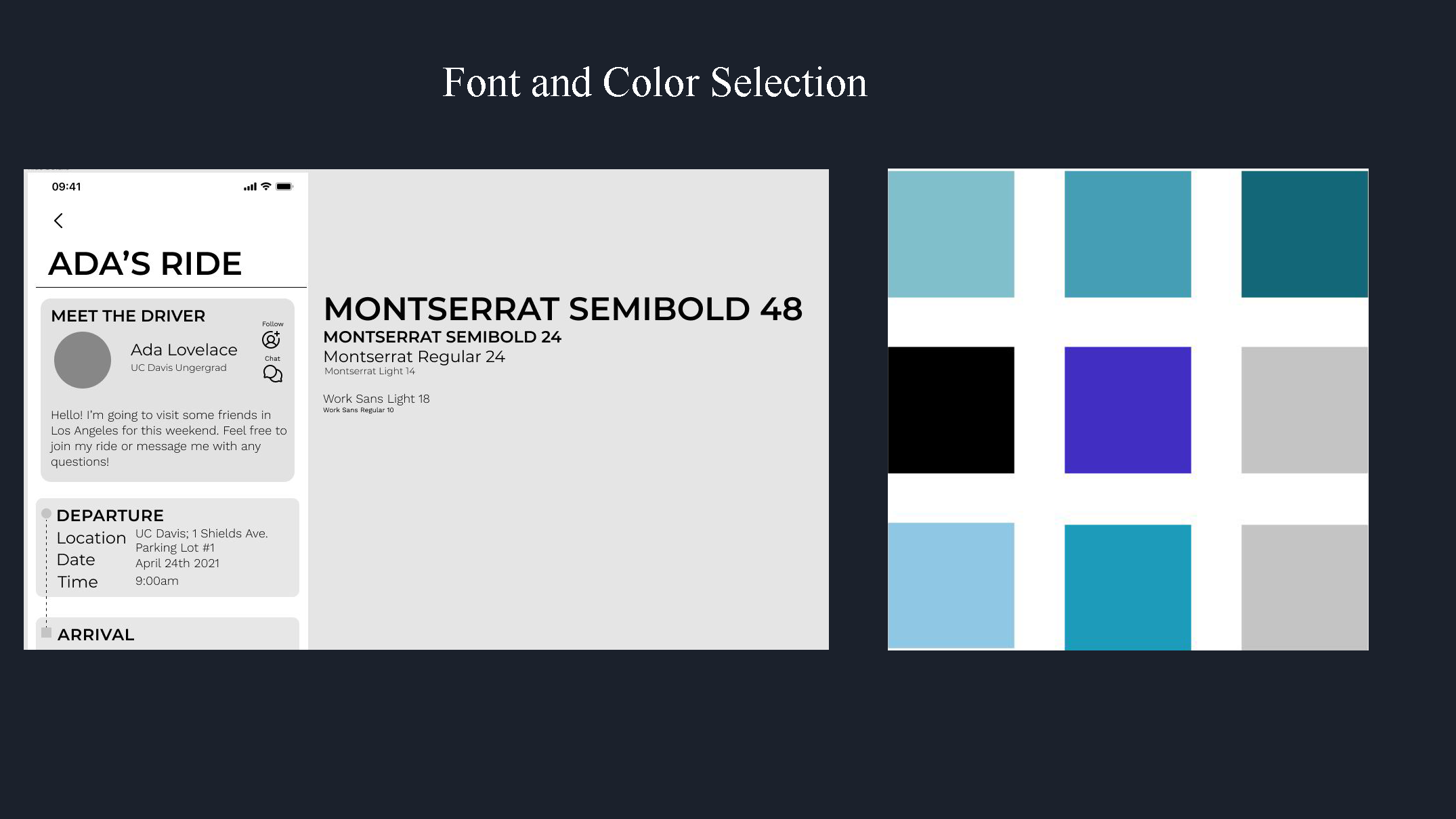
Final type family choices
-
-
-
-
-
-
-
Inspiration
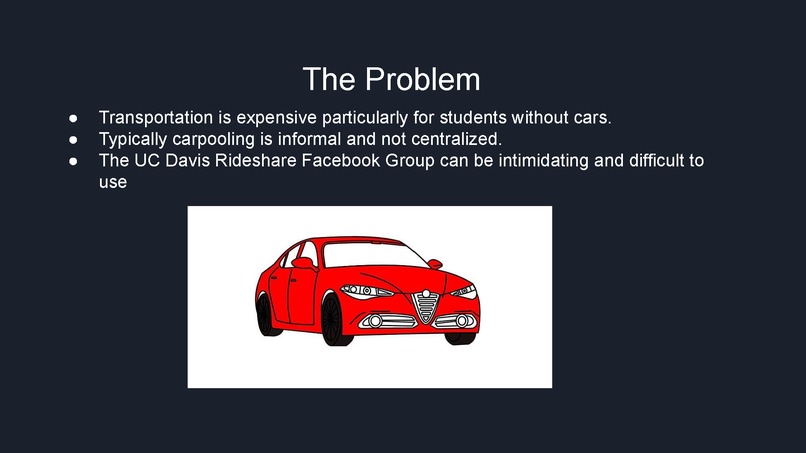
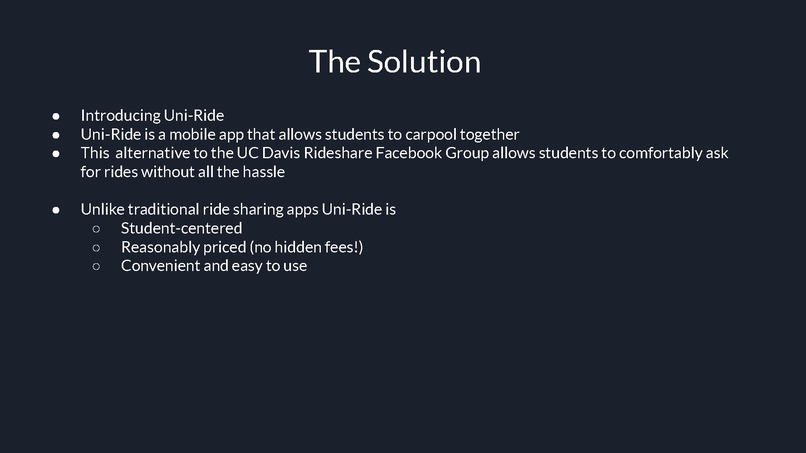
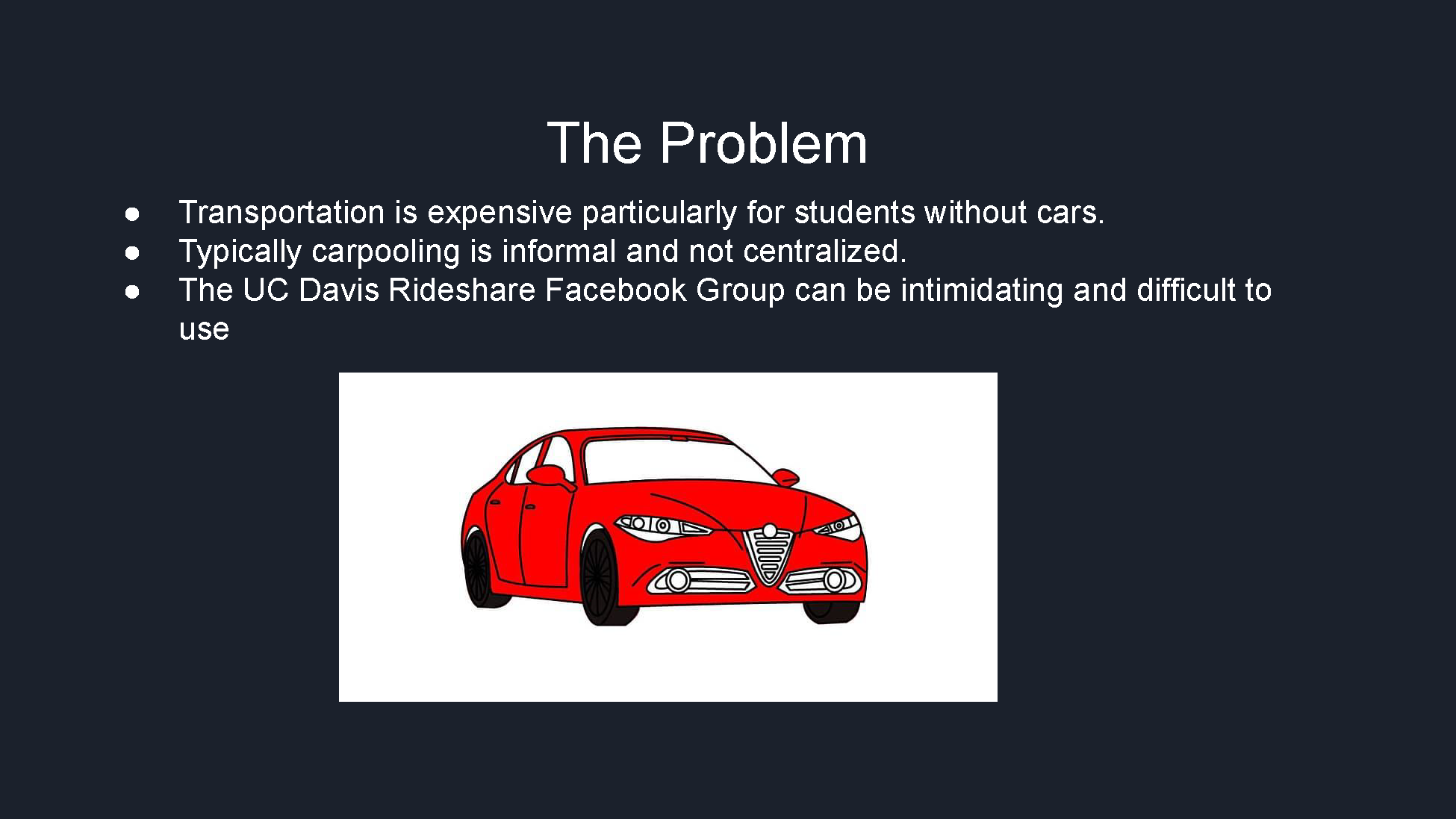
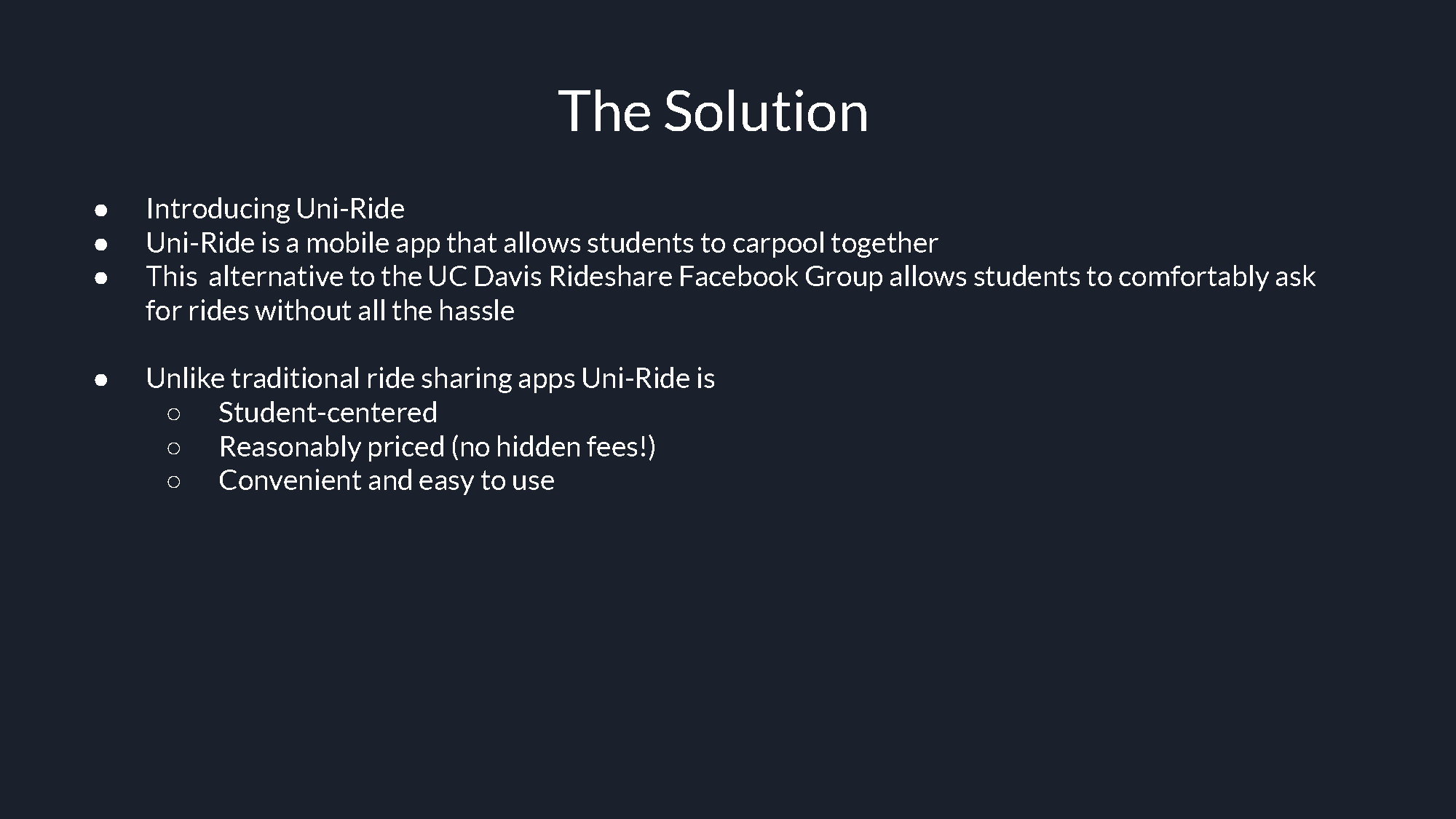
Transportation is expensive particularly for cash strapped college students. Not every student has a car. Introducing Uni-Ride, a Carpool app created by college students for college students. Inspired by the UC Davis Rideshare Facebook group, Uni-Ride connects students with student drivers that are going to the same city.
What it does
Uni-Ride groups up students going to the same place into one car so that they can carpool together for long and short drives, without the need to pay for or worry about the company's ethics for paid individual rideshare services like Uber and Lyft. Students can also control how much they pay and who they pay, avoiding exuberant prices and fees that do not go directly to the driver. There, students can chat together to plan trips, pay the driver a (reasonable) gas fee, and use location services to track their own friends on their car trips. The application uses Google Maps data including travel distance between two points, approximate trip time, as well as satellite maps.
Additionally, we wanted to implement security features that riders and drivers can access in the app, like being able to track a friend's location, driver/rider block and follow functions, and possibly the ability to use virtual wallets like Samsung Pay and ApplePay from within the application.
How we built it
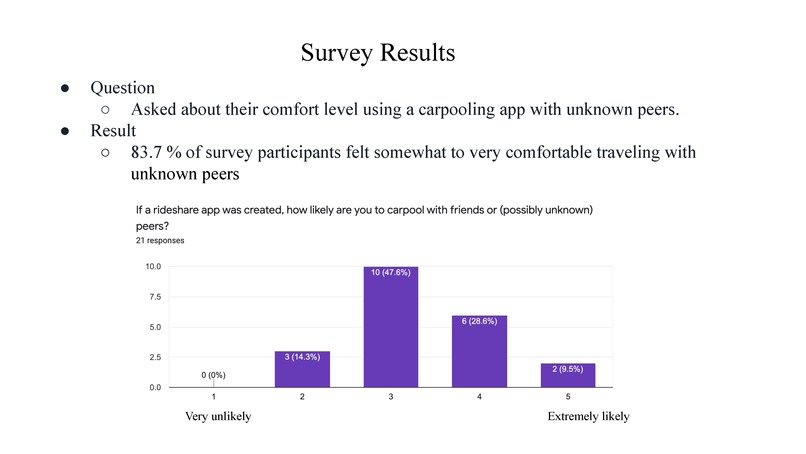
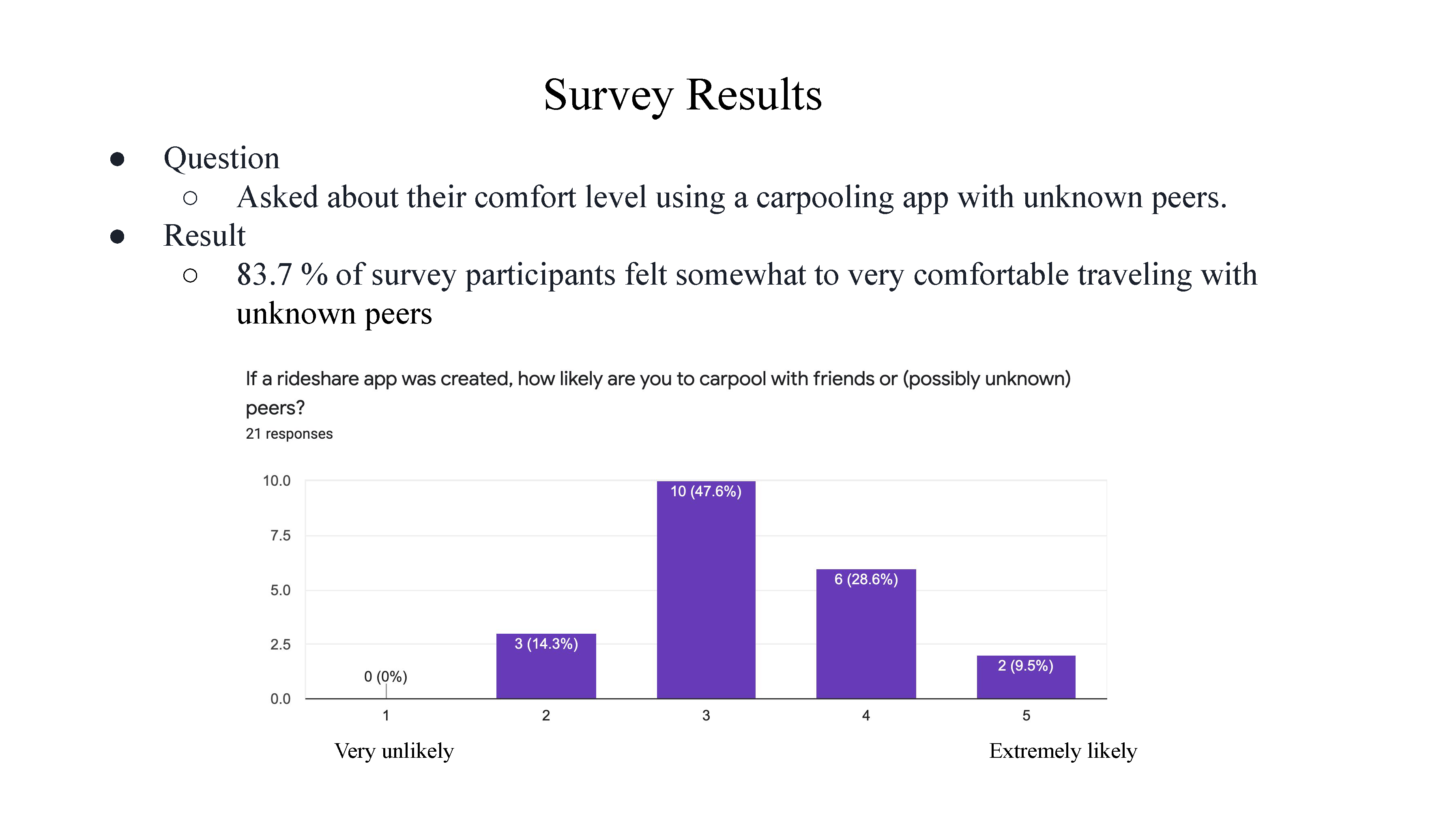
First, we conducted a short survey using Google Survey about rideshare services. Despite the small sample size, we were able to get a good idea of how college students and college-aged young adults feel about rideshare services. Based on an overwhelming response to individual safety and overpricing, we focused on the audience (UC students with active university-assigned email addresses) as well as pricing (students only pay for their share of gas and car depreciation). The complete results of the survey can be viewed here.
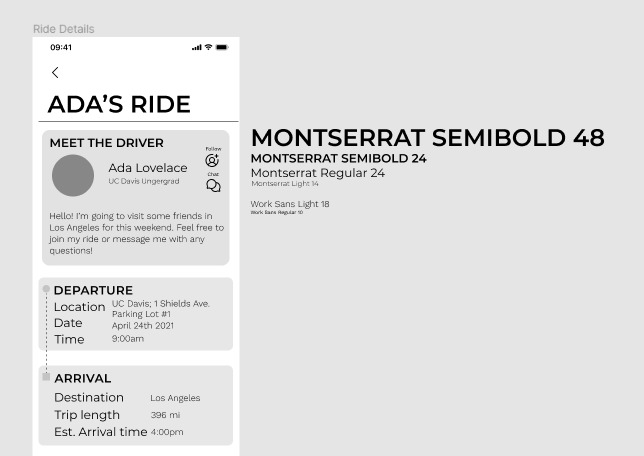
The application was built off of a few rudimentary sketches of the main pages in the app. Then, we moved to a simple framework design to determine a basic aesthetic before doing type and color studies. Finally, we reworked the original framework into a prototype in figma that users can explore by clicking various links.
Challenges we ran into
None of our group members actually know how to program, therefore we focused on the user interface of our app as well as completely designed the user experience. Furthermore, we struggled with how and what we were able to incorporate from Google Maps.
Accomplishments that we're proud of
One of the main challenges we faced was learning how to use figma. As inexperienced newcomers to hackathons as well as not being programmers, we struggled with some of the intricacies of figma. However we eventually got the hang of the basics and learned how to design an app from scratch. Additionally, our group members worked seamlessly together despite just having met.
What we learned
We learned how to prototype applications from scratch without programming in figma.
What's next for Uni-Ride
The next step for Uni-Ride is implementation and app programming. Furthermore, we need to finalize the features we cross-connect using Maps API before releasing features like the trip's approximate gas cost.
Built With
- figma


Log in or sign up for Devpost to join the conversation.