Inspiration
Every day on campus, students need items delivered from one location to another, while other students are already travelling in that direction. We realized that these two needs could be connected.
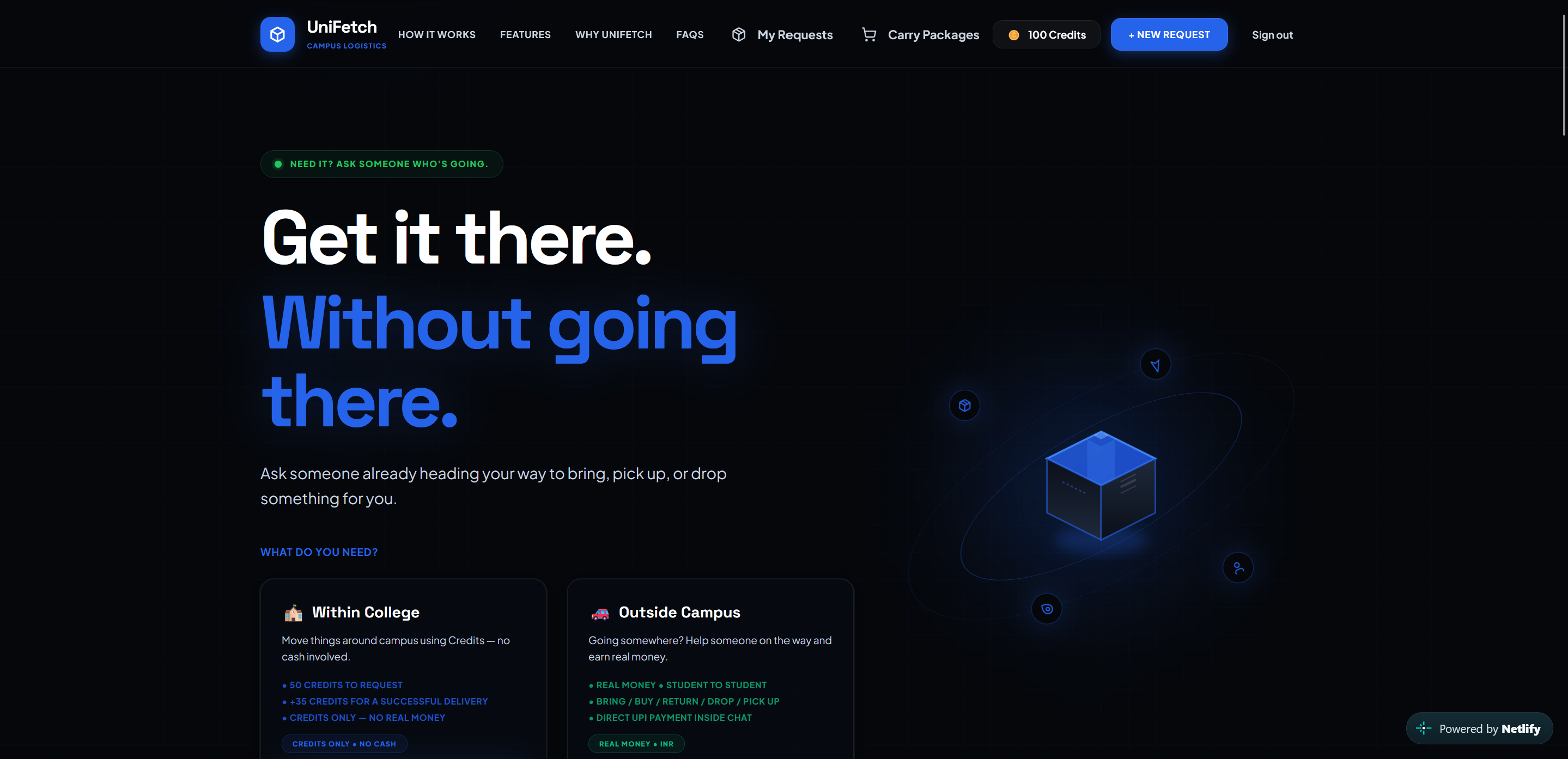
Instead of creating a separate delivery trip for every request, we wanted to use journeys that are already happening. This inspired Uni-fetch V2, built around the idea:
"Need It? Ask Someone Who's Going."
Our goal was to build a peer-to-peer delivery platform that connects students, saves time, and rewards those who help others. V2 expands the original campus delivery concept to include both within-campus and outside-campus deliveries.
What it does
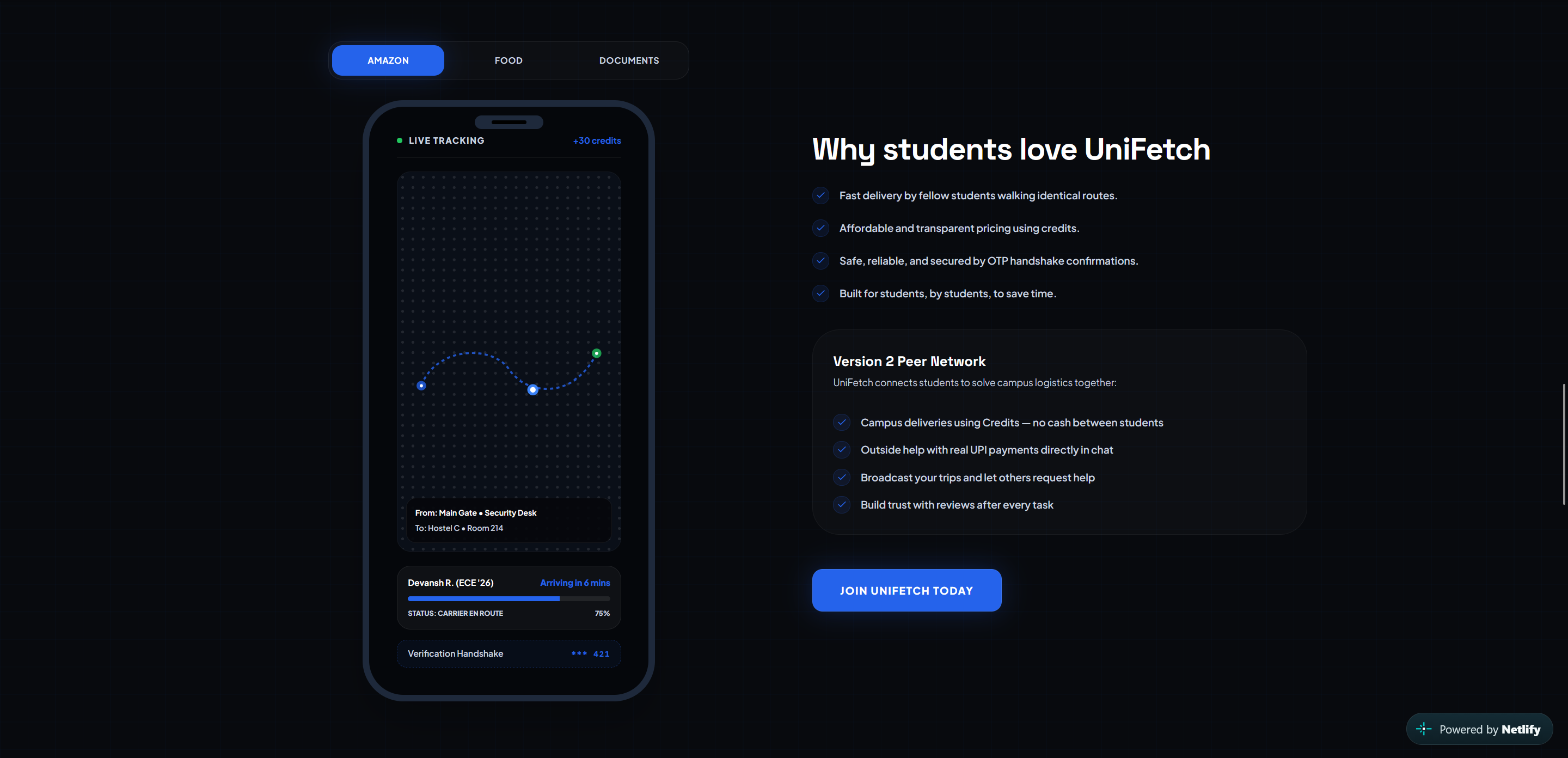
Uni-fetch V2 is a peer-to-peer delivery platform that connects students who need something delivered with students who are already travelling in that direction.
Users can:
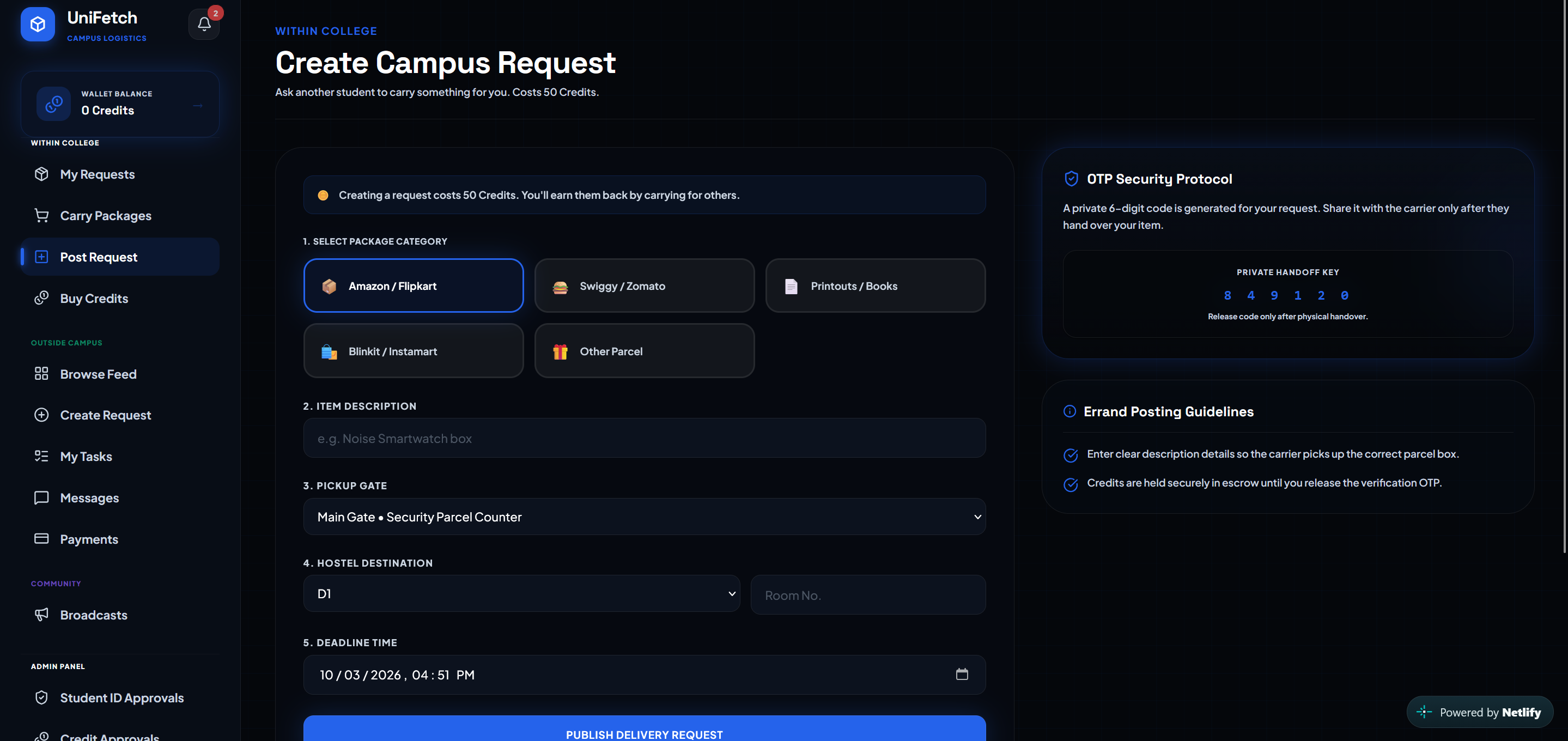
- Create and browse campus delivery requests
- Accept requests and earn credits
- Track delivery status
- Use OTP verification for secure handoffs
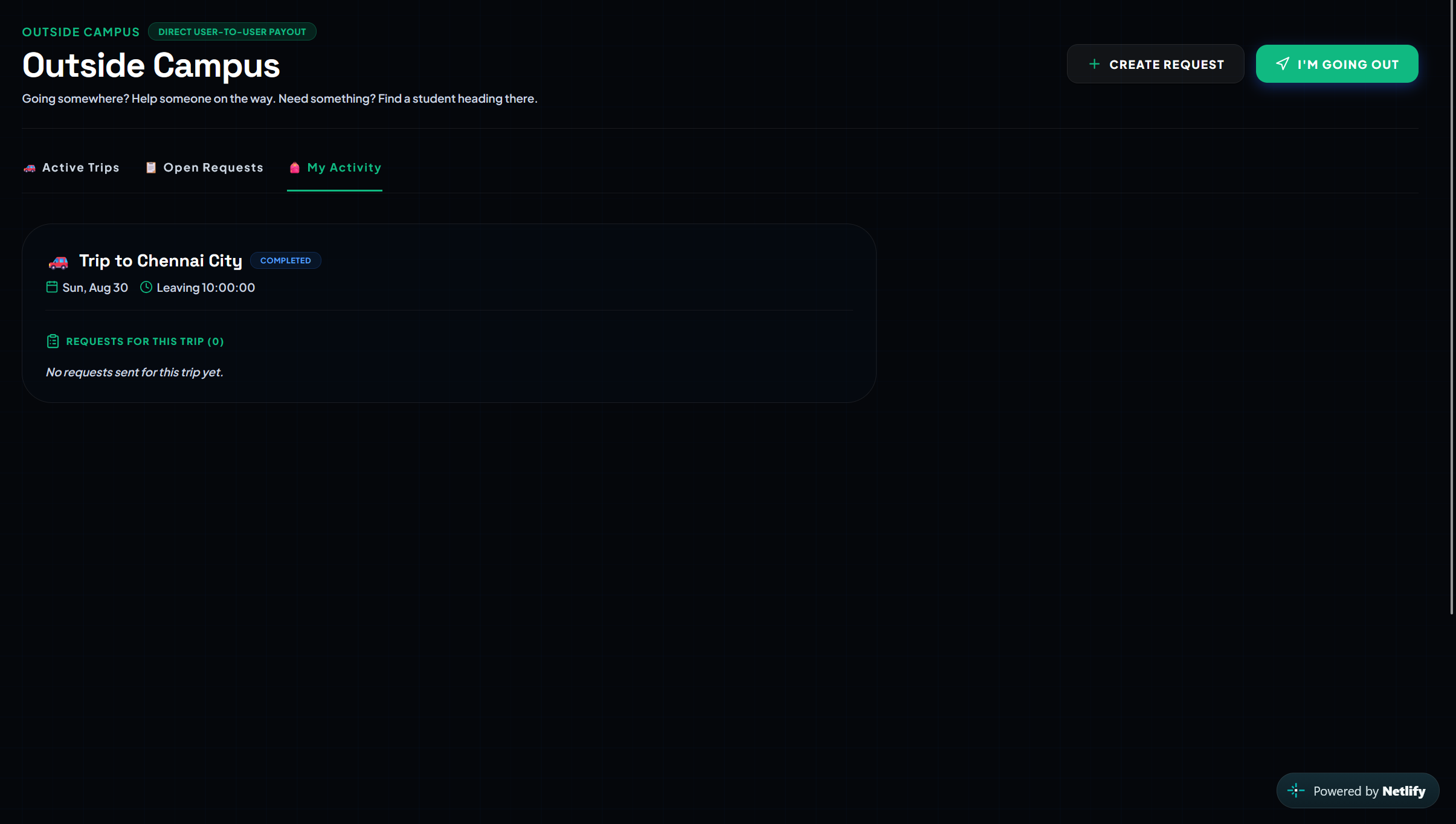
- Create and browse outside-campus trips
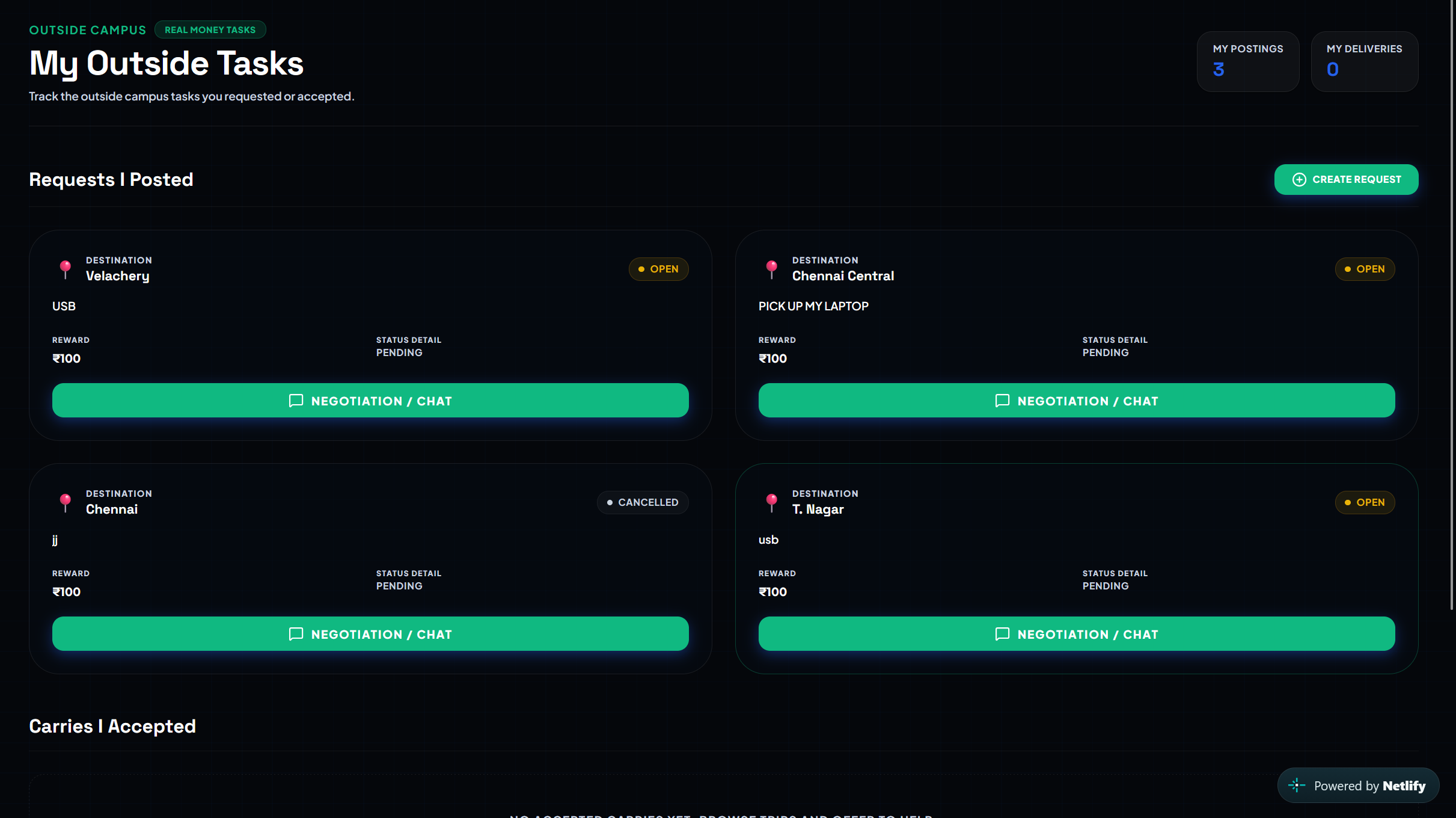
- Request deliveries through existing trips
- Negotiate delivery rewards through messaging
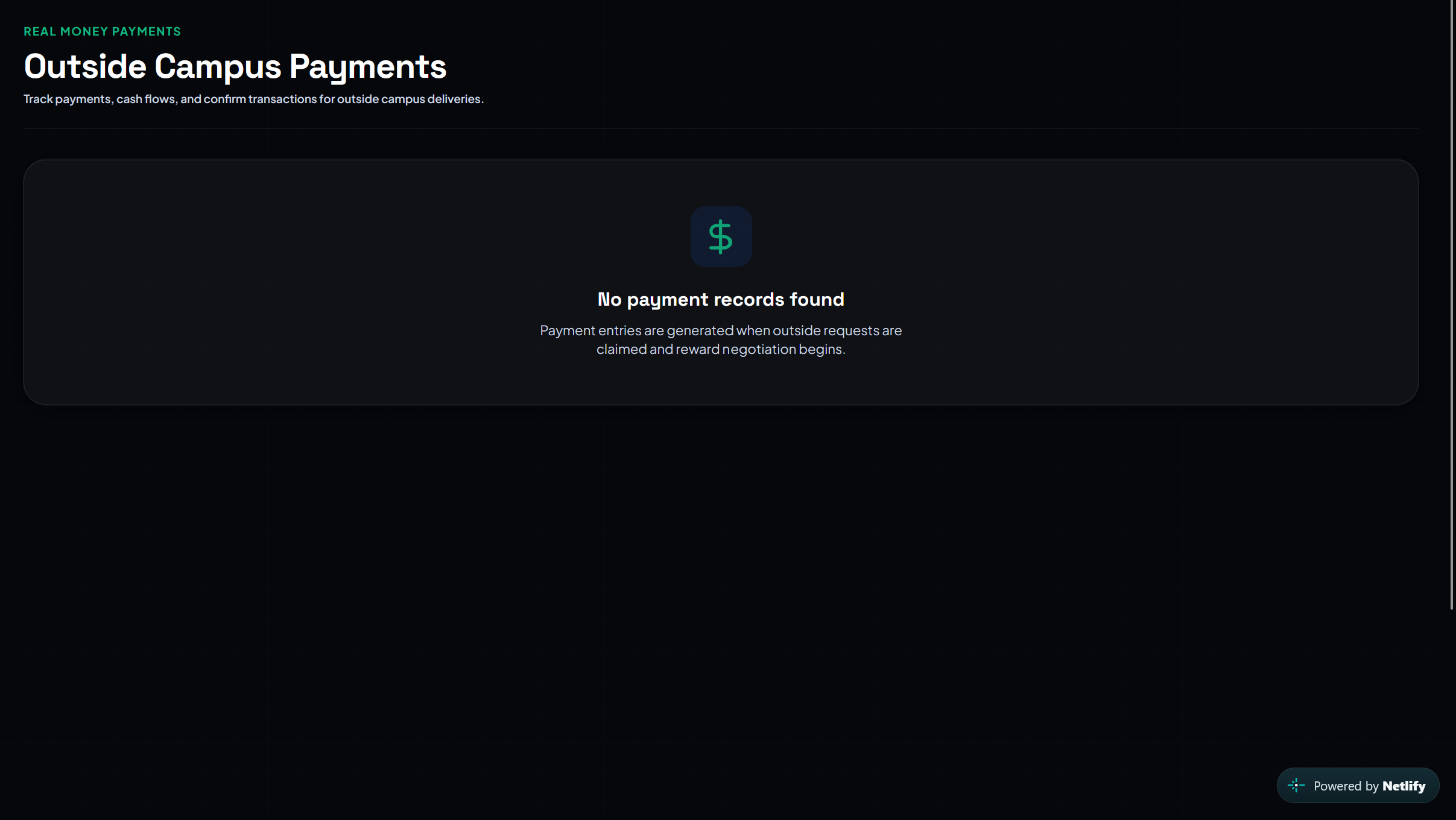
- Manage credits and outside-delivery payments
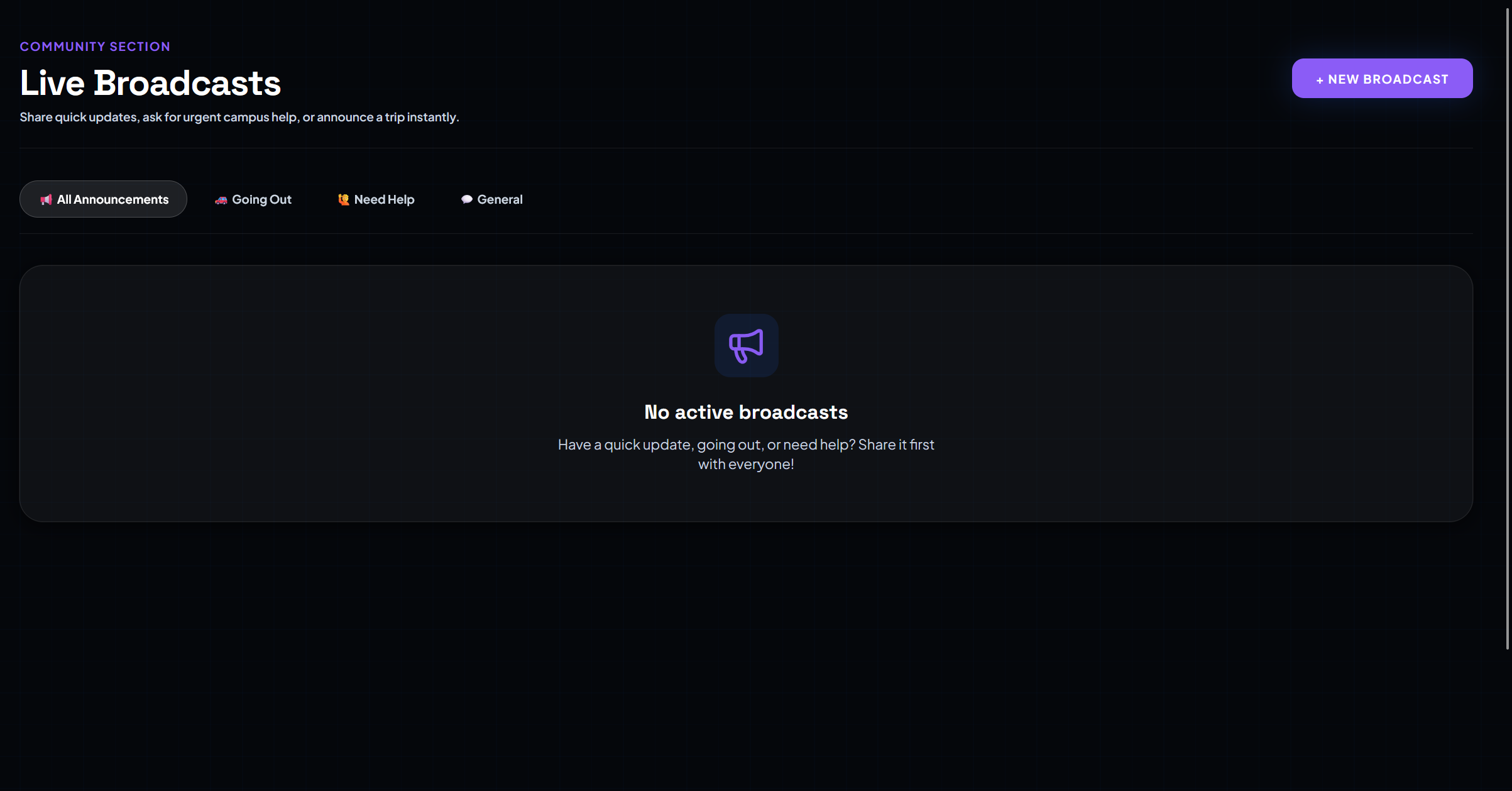
- Receive real-time notifications
- Rate and review completed deliveries
- Explore the platform through demo mode
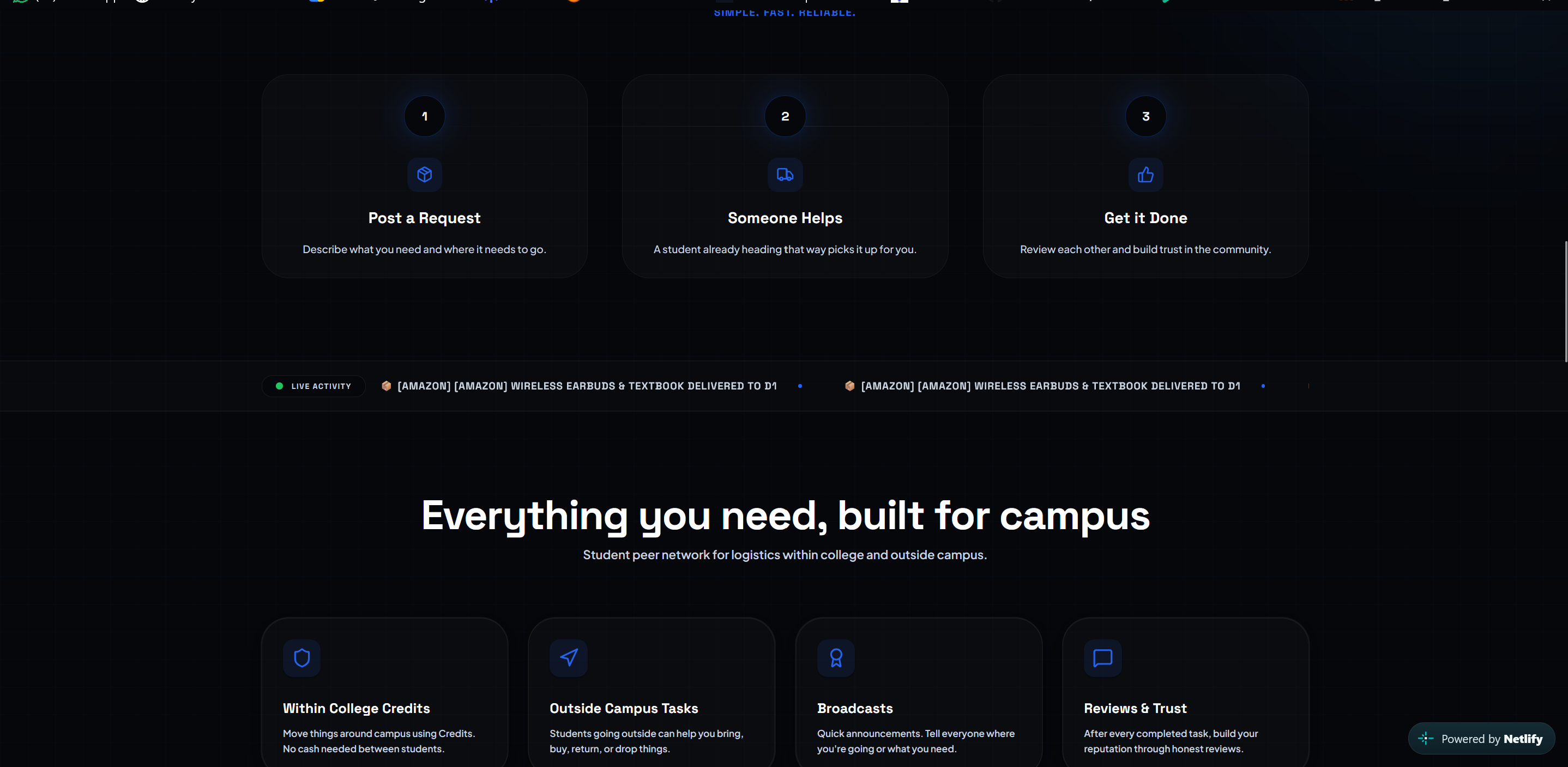
The campus delivery workflow is:
Request → Accept → Pickup → OTP Verification → Deliver → Earn Credits
The outside-campus workflow is:
Trip → Request → Negotiation → Acceptance → Delivery → Payment → Review
How we built it
We built Uni-fetch V2 as a full-stack web application with a focus on usability, security, and complete delivery workflows.
Tech Stack
- Next.js — Full-stack web framework
- React — Frontend user interface
- TypeScript — Type-safe application development
- Supabase — Authentication, storage, backend services, and realtime functionality
- PostgreSQL — Database and transaction management
- Tailwind CSS / CSS — Responsive user interface
- Netlify — Deployment and hosting
- GitHub — Version control
- Playwright — End-to-end testing
We designed the database around users, delivery requests, trips, messages, credits, payments, notifications, and reviews. Supabase connects the frontend to the database and provides authentication, storage, and realtime updates.
We also implemented Row Level Security (RLS) and role-based access controls to protect user data and restrict unauthorized actions.
A major focus was building a complete two-sided platform where both requesters and carriers have clear workflows.
Challenges we ran into
Expanding beyond campus
The original version focused on within-campus deliveries. In V2, we expanded the concept to support outside-campus trips and delivery requests.
This required additional workflows for trip creation, request matching, negotiation, messaging, payments, and delivery completion.
Building trust between students
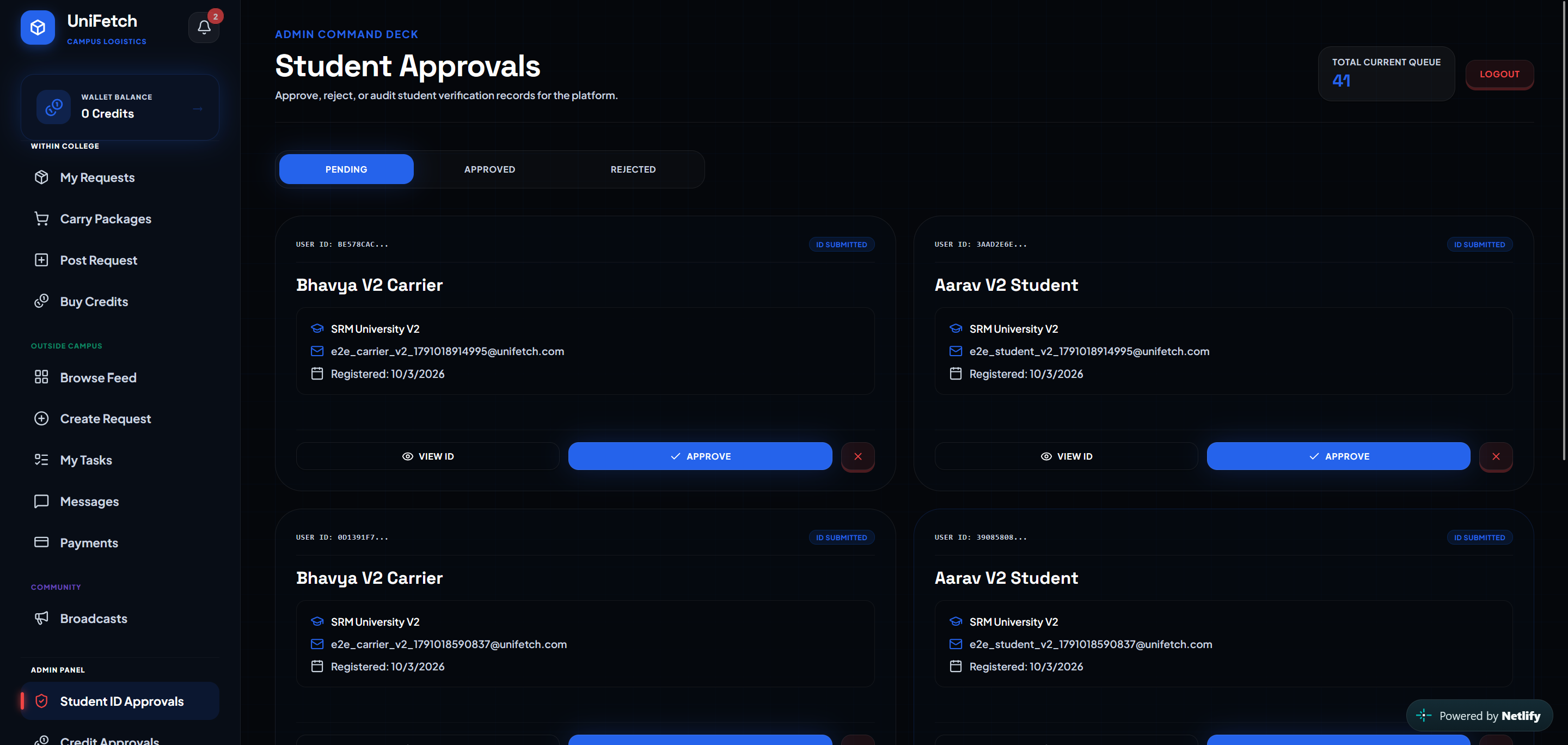
Since deliveries are handled by students, trust was an important challenge. We introduced authentication, student ID submission, OTP-protected handoffs, delivery tracking, ratings, and reviews to improve accountability.
Managing credits and payments
Campus deliveries use credits, while outside-campus deliveries support monetary rewards. We had to handle these different workflows while maintaining consistent delivery and transaction states.
Implementing realtime functionality
Users need timely updates when requests change, messages arrive, or deliveries progress. We used Supabase Realtime and notifications to keep users informed.
Maintaining database security
As the platform grew, protecting user information and preventing unauthorized actions became increasingly important. We implemented database-level security policies and role-based access controls.
Testing complete user journeys
We needed to verify more than individual pages. We tested complete workflows involving onboarding, campus deliveries, OTP verification, credits, outside trips, payments, notifications, security, and mobile responsiveness.
Accomplishments that we're proud of
We are proud to have evolved Uni-fetch from a campus delivery prototype into a broader peer-to-peer delivery platform.
Some of our key accomplishments include:
- A complete campus delivery workflow
- Outside-campus trip creation and discovery
- Negotiation and messaging between users
- Credit-based campus rewards
- Outside-delivery payment workflows
- OTP-protected delivery handoffs
- Student verification workflows
- Realtime notifications
- Ratings and reviews
- Authentication and role-based access control
- PostgreSQL-backed data persistence
- Row Level Security
- Responsive mobile and desktop interfaces
- A demo mode for exploring the platform
We also completed an end-to-end testing cycle covering 12 major areas of the V2 application in the local test environment connected to Supabase.
Most importantly, we turned a simple observation into a platform designed around a practical, everyday problem.
What we learned
Uni-fetch V2 taught us that building a product involves much more than implementing features.
We learned how to:
- Design around a real-world user problem
- Build a two-sided peer-to-peer platform
- Create state-based delivery workflows
- Connect a Next.js application with Supabase and PostgreSQL
- Implement authentication and database security
- Work with realtime notifications and messaging
- Manage credit and payment workflows
- Design trust mechanisms for peer-to-peer interactions
- Test complete user journeys using Playwright
- Expand an existing product while preserving its core purpose
Our biggest takeaway was that existing movement can become useful delivery capacity when the right people are connected.
What's next for Uni-fetch
Our next step is to test Uni-fetch with real campus users and understand how students use the platform in everyday situations.
We want to measure:
- Number of delivery requests
- Successful delivery rate
- Request-to-acceptance time
- Number of active trips
- Negotiation success rate
- Repeat usage
- Credit and payment activity
- User feedback
Based on these results, we plan to improve delivery matching, trust mechanisms, notifications, and the overall user experience.
Our long-term vision is to build a reliable peer-to-peer delivery network that makes better use of journeys people are already taking.
Prove the campus use case → expand peer-to-peer deliveries → improve matching → build a reliable delivery network.
Built With
- authentication
- delivery-platform
- github
- netlify
- next.js
- peer-to-peer
- playwright
- postgresql
- react
- realtime
- supabase
- tailwind-css
- typescript
- web

Log in or sign up for Devpost to join the conversation.