
Inspiration
Most manifestation practitioners face a double struggle on their journey:
The Invisible Cage: Many are stuck in suboptimal realities without realizing that their experience is a projection of deep-seated limiting beliefs. They fail to see the harm of the "Ego," mistaking fear for protection.
The Stubborn Grip: Even when they identify the problem, the mind often refuses to let go—the "how" of releasing remains elusive.
We realized that the essence of manifestation is not only about "adding" positive affirmation. It's also about "subtracting" resistance. As the psychological insight goes: "Once a negative emotion is accurately named, its power dissolves." We built HEART OS to be an AI Release Coach that unravels these scripts, guiding users to that "Aha!" moment of epiphany.
What it does
HEART OS is a "black tech" tool for manifestation players to upgrade their underlying system:
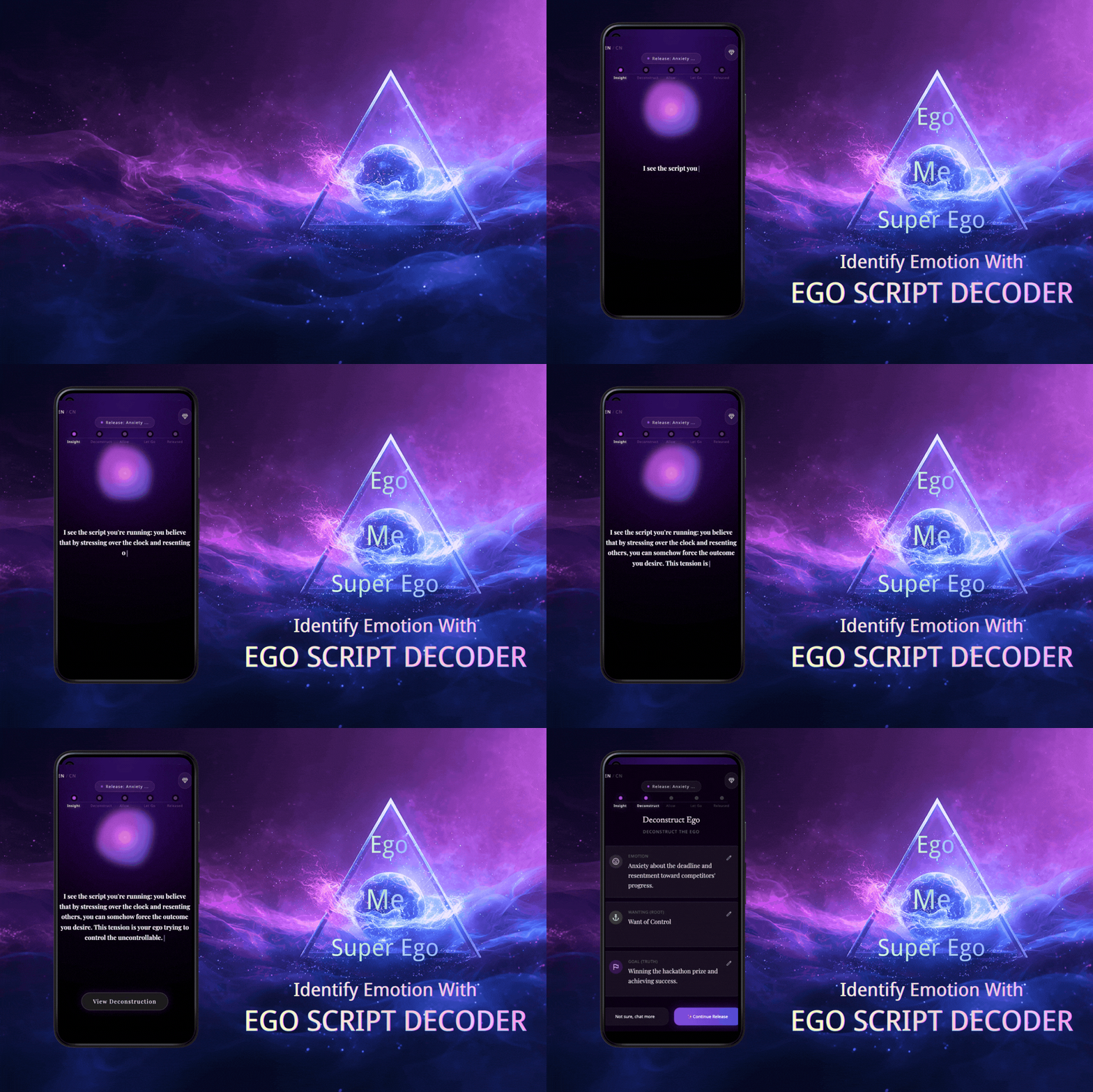
- Deep Ego Deconstruction: The AI acts as a "System Monitor," unraveling ego scripts through dialogue. When a user gains awareness of a limiting belief through AI guidance, the release happens naturally.
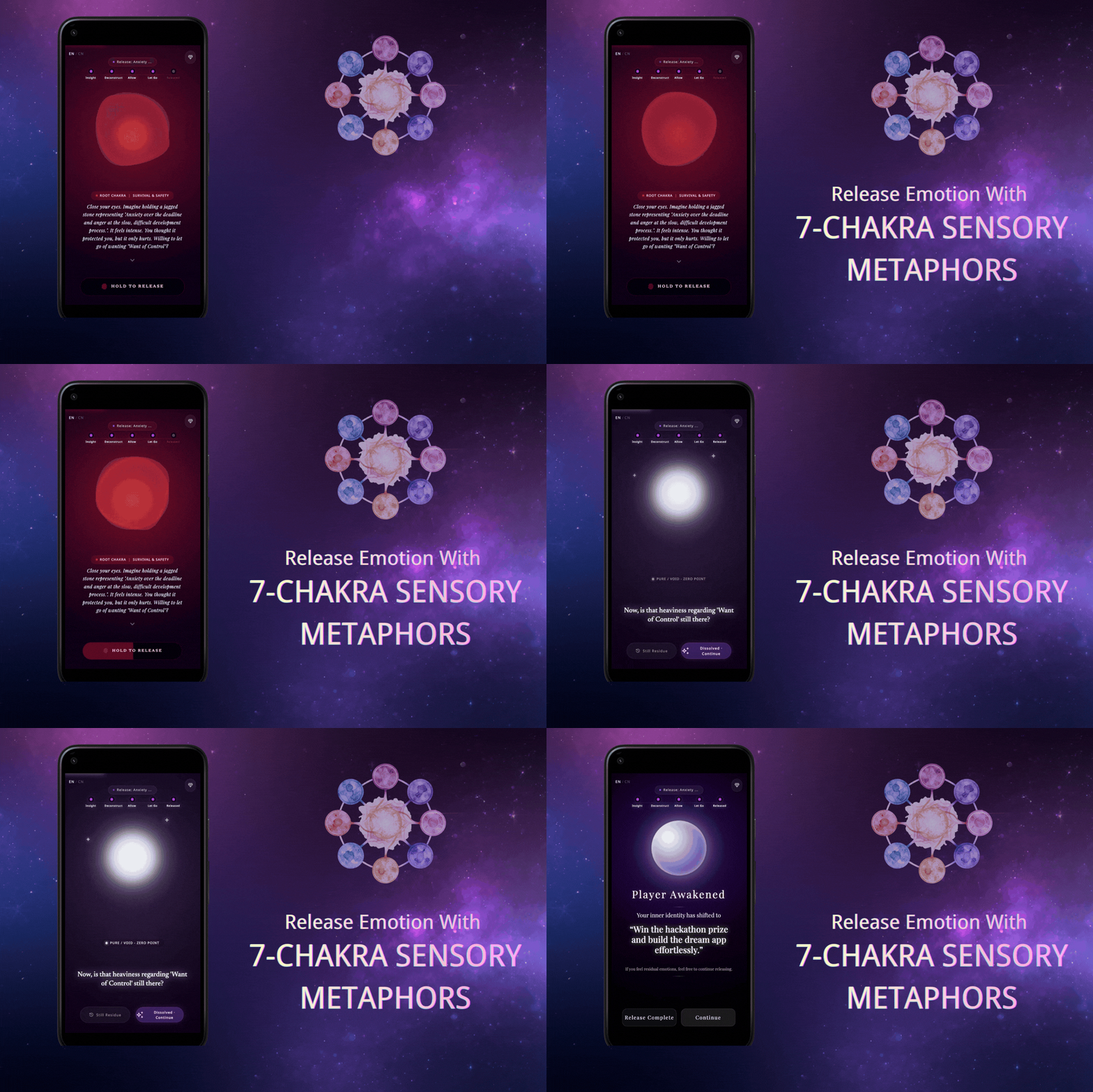
- 7-Chakra Sensory Release: Utilizing Three.js, the app helps users visualize abstract emotions as dynamic 3D energy orbs. Combined with sensory metaphors (e.g., a boiling pressure cooker), it conquers the mind's stubborn refusal to let go.
- System Reboot: It transitions the user from being a "Character in the Drama" to becoming the "Master Player of the 3D Reality."
How we built it
We utilized a cohesive "Google Full Stack" approach to ensure a high-performance experience:
- Gemini 3.0 (The Brain): Powers the core logic and state machine transitions using the @google/genai SDK.
- Three.js (Visual Engine): Renders the chakra energy orbs and their dissipation effects, turning abstract feelings into visceral visual feedback.
- NotebookLM (Intelligence Tuning): We ingested Sedona Method master archives to "fine-tune" the AI's coaching wisdom before implementation.
- React 19 & Vite: Leveraged the latest frontend ecosystem for lightning-fast performance and seamless UI transitions.
Challenges we ran into
- Instruction Precision: To make Gemini act as a "Soul Surgeon," we used NotebookLM to feed it expert knowledge, ensuring its inquiries were direct and soul-piercing rather than generic.
- Real-time UX vs. Generation: We initially tried generating unique AI images for metaphors in real-time, but the lag broke the immersion.
- The Pivot: We switched to Three.js-powered Chakra Orbs. This color-coded energy approach provided instant, smooth visual feedback that actually enhanced the psychological impact of the release.
Accomplishments that we're proud of
- Insightful Ego Detection: The AI's ability to call out a "Victim Script" or a "Not Enough" trap in real-time creates a profound sense of "being seen."
- Aesthetic Immersion: Thanks to Google Stitch design and Three.js rendering, the app makes releasing a beautiful, meditative experience rather than a chore.
- OS Metaphor: Creating a product that feels like an operating system for the human heart.
What we learned
Early on, we struggled by asking Gemini to generate raw code for us to integrate, which caused consistency issues. We eventually found the perfect "Google Ecosystem Workflow":
- Gemini as the Brain (Logic).
- Stitch for the Visual Vibe (Design).
- AI Studio for Integration (Implementation).
What's next
- Genie 3 API Integration: introducing real-time 3A-game-quality visuals that morph based on the specific metaphor the AI creates, making release as thrilling as an immersive game.
- Subconscious Audit Logs: Implementing a persistent "Ego Audit Report" to track recurring scripts (e.g., "Wanting Approval") over time.
- Multi-Sensory Feedback: Syncing phone haptics with the visual "dissipation" of the 3D orbs for a truly physical sense of letting go.
Built With
- gemini
- google-cloud
- googleaistudio
- notebooklm
- react
- tailwindcss
- three.js
- typescript
- vite

Log in or sign up for Devpost to join the conversation.