Inspiration
Every iPhone before the Duo could be tapped, swiped, and tilted. That's it. The Duo is the first one with a joint, and when we saw Apple's hinge API we kept thinking about what else in the world works like a hinge.
Camera heads do. Film sets use motion-control rigs to move a camera the exact same way on every take, which is how you get shots like one actor appearing twice in the same moving frame. Those rigs are expensive and way out of reach for vloggers and small creators. We wanted to see if a phone fold and a few cheap servos could get close.
What it does
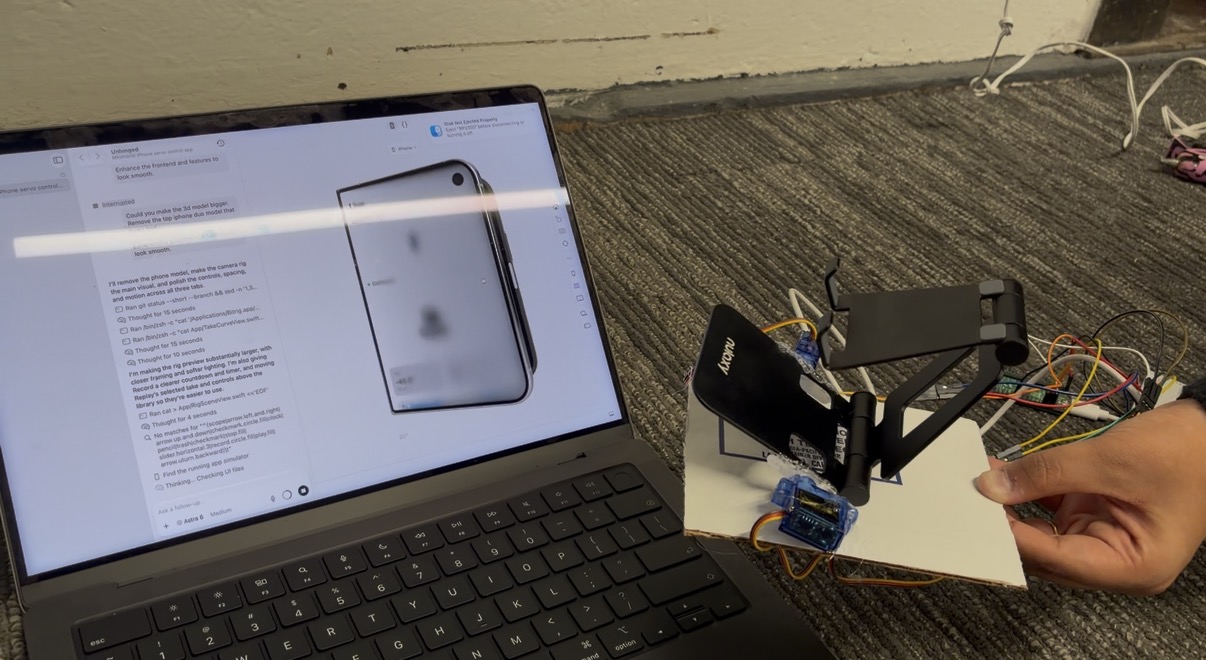
Sit the iPhone Duo on a table in its L shape and it becomes a tiny model of the camera rig. The top half is the camera. Lean it back and the real camera tilts up. Pull it forward and it tilts down. Turn the phone and the rig pans.
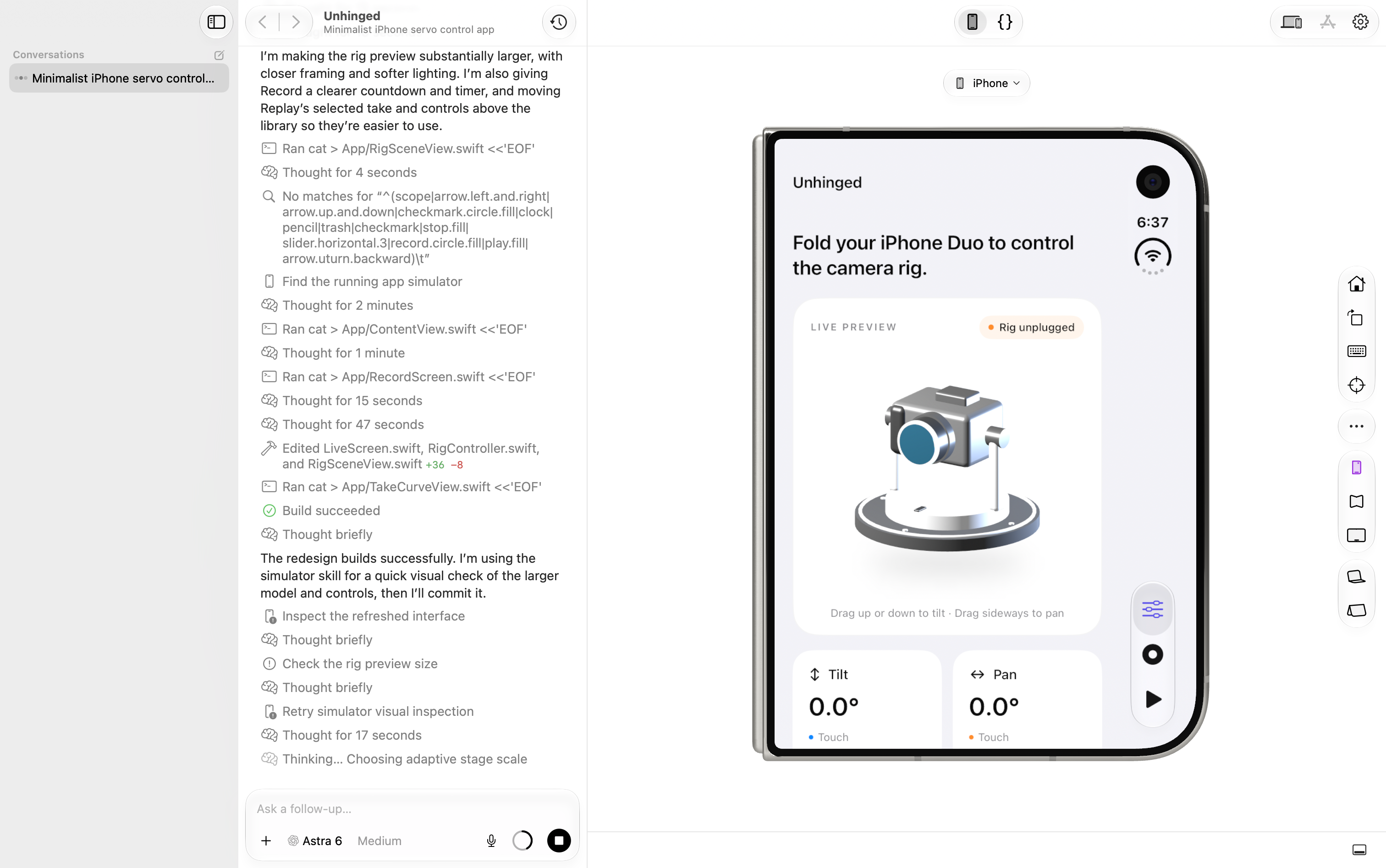
The app shows a 3D model of the rig that moves along with you, so you can see what the camera is doing before you look at the hardware. [Record a move once and the rig replays it, forwards or backwards.]
How we built it
The iOS app is SwiftUI, built on Bitrig. Tilt comes straight from onHingeChange, the new iOS 27.1 API that reports the Duo's fold angle. We tested everything in the iPhone Duo simulator by folding it with Device Hub's hinge slider [and Bitrig's 3D simulator].
The app sends angles to a small script on the Mac, which passes them over USB to a Raspberry Pi Pico. The Pico drives two SG90 micro servos: one on the bottom for pan, and one mounted sideways on top of it for tilt, holding the camera. The whole rig is about $10 in parts.
Challenges we ran into
We fried a microcontroller. Our first board handled three servos without complaining, then we added a camera module and it went into a restart loop and never came back, not even in boot mode. We rebuilt on a Raspberry Pi Pico and kept the camera off the servo board.
We also had no actual iPhone Duo, just a simulator. The simulator has no gyroscope, so we had to rethink how pan works while testing.
And SG90s are tiny. Getting them to move a phone meant balancing the load over the pan axis so the servos turn things instead of holding them up.
Accomplishments that we're proud of
Folding a phone that doesn't physically exist yet and watching a real camera move on the table. The first time it worked, we just kept folding it back and forth.
What we learned
The hinge is a surprisingly good controller. It has resistance and holds its position, which is exactly what you want when you're aiming a camera. Also, keep cameras and servos on separate boards.

Log in or sign up for Devpost to join the conversation.