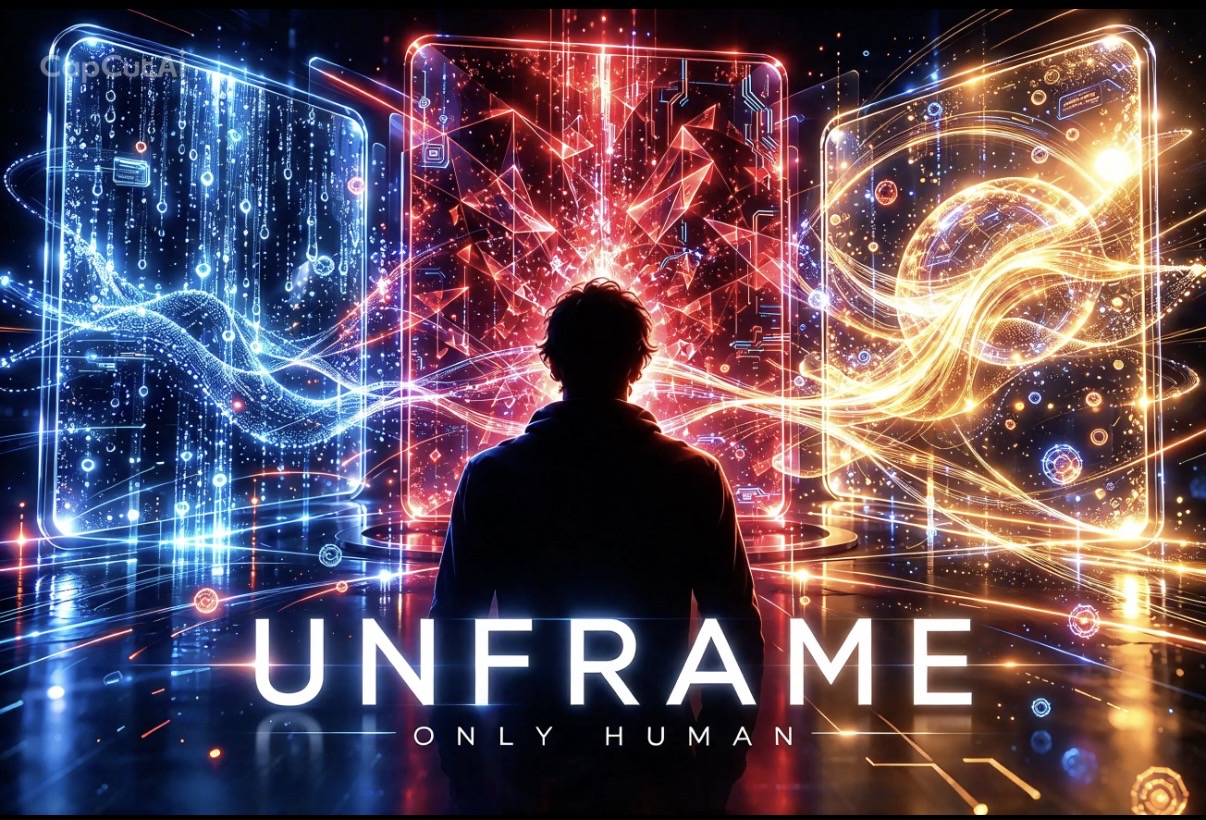
Inspiration As a Snapchat Lens Creator, I spend a lot of time changing how faces look on screen. That made me curious about how those changes affect the way we interpret the person behind them.
With UNFRAME, I wanted to explore that through my own lenses, music and visual ideas. Someone can look happy and still feel sad. They can feel strong and vulnerable at the same time. Nobody is just one emotion, and I wanted to make room for that.
What it does UNFRAME is an interactive web experience where you watch a person through three emotional lens treatments: angry, sad and happy. After each clip, you choose the mood you think you see.
Towards the end of each emotional lens clip, visual effects appear on screen. Each effect includes a contrasting detail, such as one golden drop rising while the others fall. When you try UNFRAME a second time, the effects switch to their opposites, giving you a different visual experience of the same clips.
You also watch an unfiltered clip and see your answers alongside the treatments used. The experience ends with a question that invites you to reflect on your impressions.
UNFRAME does not detect emotions or tell you how someone really feels. It asks you to consider how much of your impression comes from what is presented on screen.
How we built it I built UNFRAME as a solo creator with Claude Code and the Devpost Learn Skill Pack. The process helped me work through the idea, write down a plan and build in small steps.
I created the three lenses using AI-powered Face Enhanced ML tools and brought together my own video clips and song, ONLY HUMAN. I chose the visual style, described the effects and tested how everything felt as an experience.
I explained what I wanted, and Claude Code wrote the code. As I tested the results, I got better at describing what needed to change and giving clearer instructions.
The app uses HTML, CSS and JavaScript. An app map explains where the main parts live and how they connect, so I can find my way around the project. Viewers’ answers stay in the page’s memory and are not sent to a server.
Challenges we ran into My biggest creative challenge was knowing when to stop. I get curious and start thinking, “What if I just add this?” Before I know it, a simple idea can become much bigger than I intended.
I had to keep coming back to what I wanted people to experience and decide which additions actually helped communicate that.
Another challenge was getting the ideas out of my head clearly enough for Claude Code to build them. Colours, movement, contrasts and timing all mattered. I tested the results, explained what felt wrong and worked through changes step by step.
Preparing a GitHub repository was also completely new to me.
Accomplishments that we’re proud of I am proud that I brought my lenses, music and visual ideas together in an app that people can actually use from beginning to end.
The small details matter to me. The effects have a purpose: each one contains something that goes against the main feeling, and the second round changes what the viewer sees.
I also tested the experience with two other people and used their feedback to improve it. They said it was good and really made them think. Getting another person’s honest reaction helped me see things I could not judge as clearly on my own.
What we learned I could picture the effects in my head, but I had to learn how to explain them to the AI. Even one small detail mattered to me, like a golden drop moving up while the others fall. I wanted the effects to mean something: you can feel more than one thing at once, and there is room for all of it.
I learned to give clearer instructions by describing what should happen on screen, checking the result and explaining what needed to change.
Planning and building in small steps also helped me keep track of the project. The app map gave me a way to understand how the pieces fit together.
Most of all, I learned that adding more is not always the same as making something better. Sometimes the strongest version is the one that gives the original idea enough space.
What’s next for UNFRAME I want more people to try UNFRAME and tell me what they noticed, including whether the second round changed their impression.
From there, I want to refine the pacing and wording wherever people get confused. My next step is to understand how the experience works for others before deciding whether it needs anything more.
I want people to leave with a little more curiosity about the person behind the image.


Log in or sign up for Devpost to join the conversation.