-
-
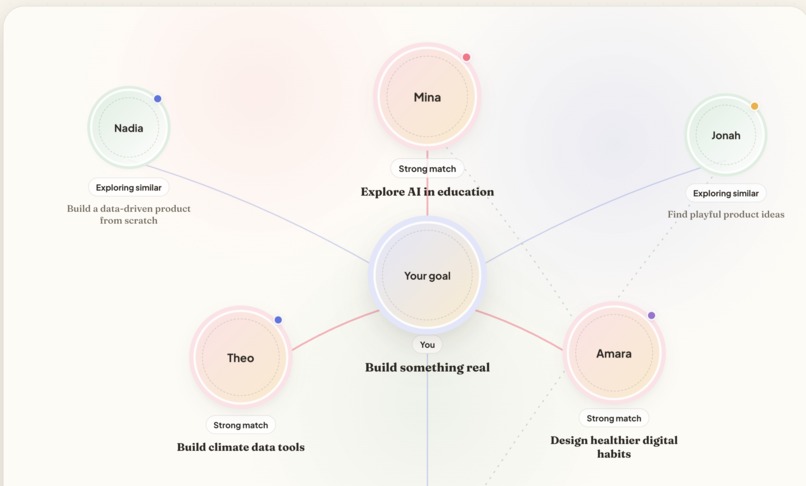
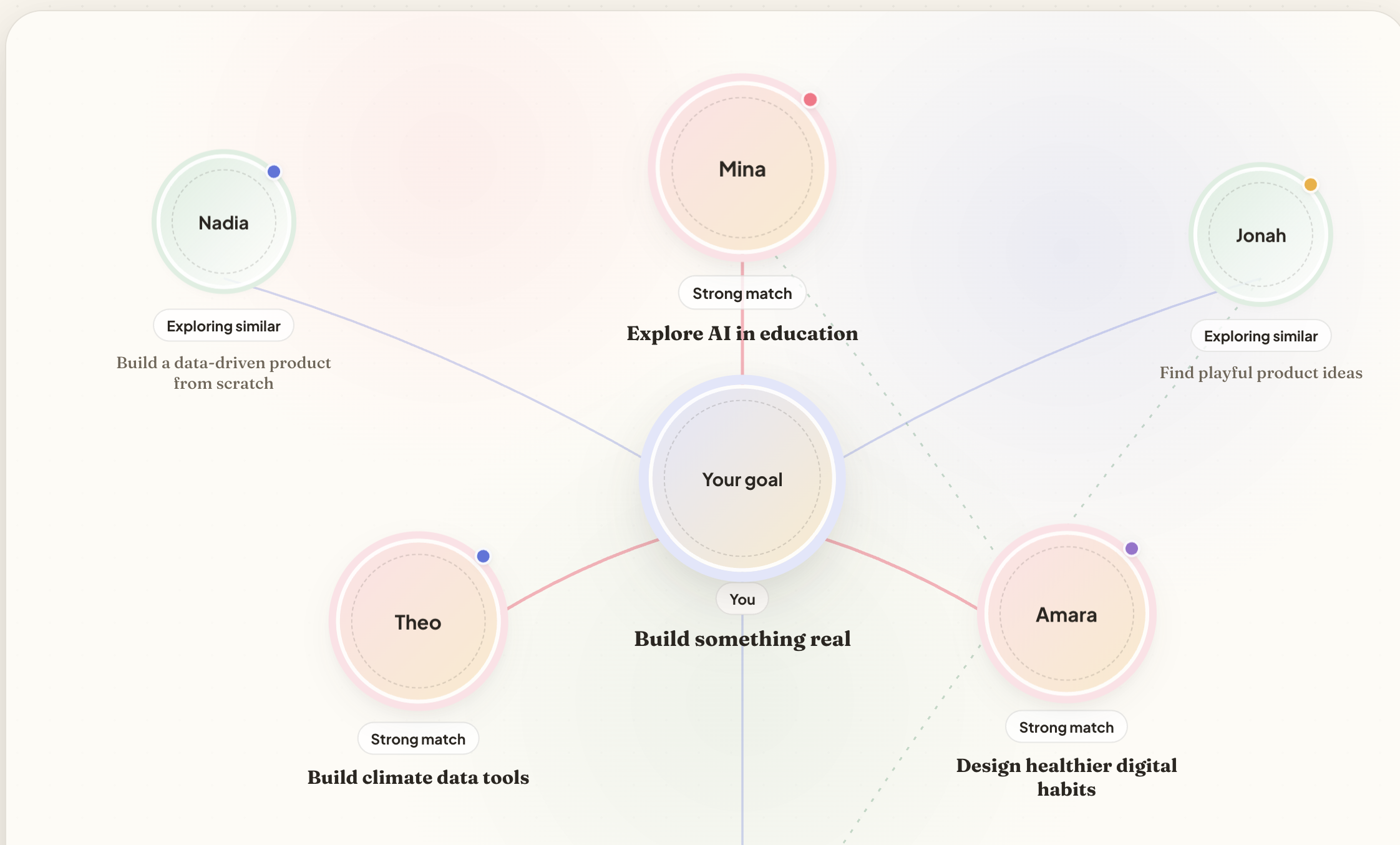
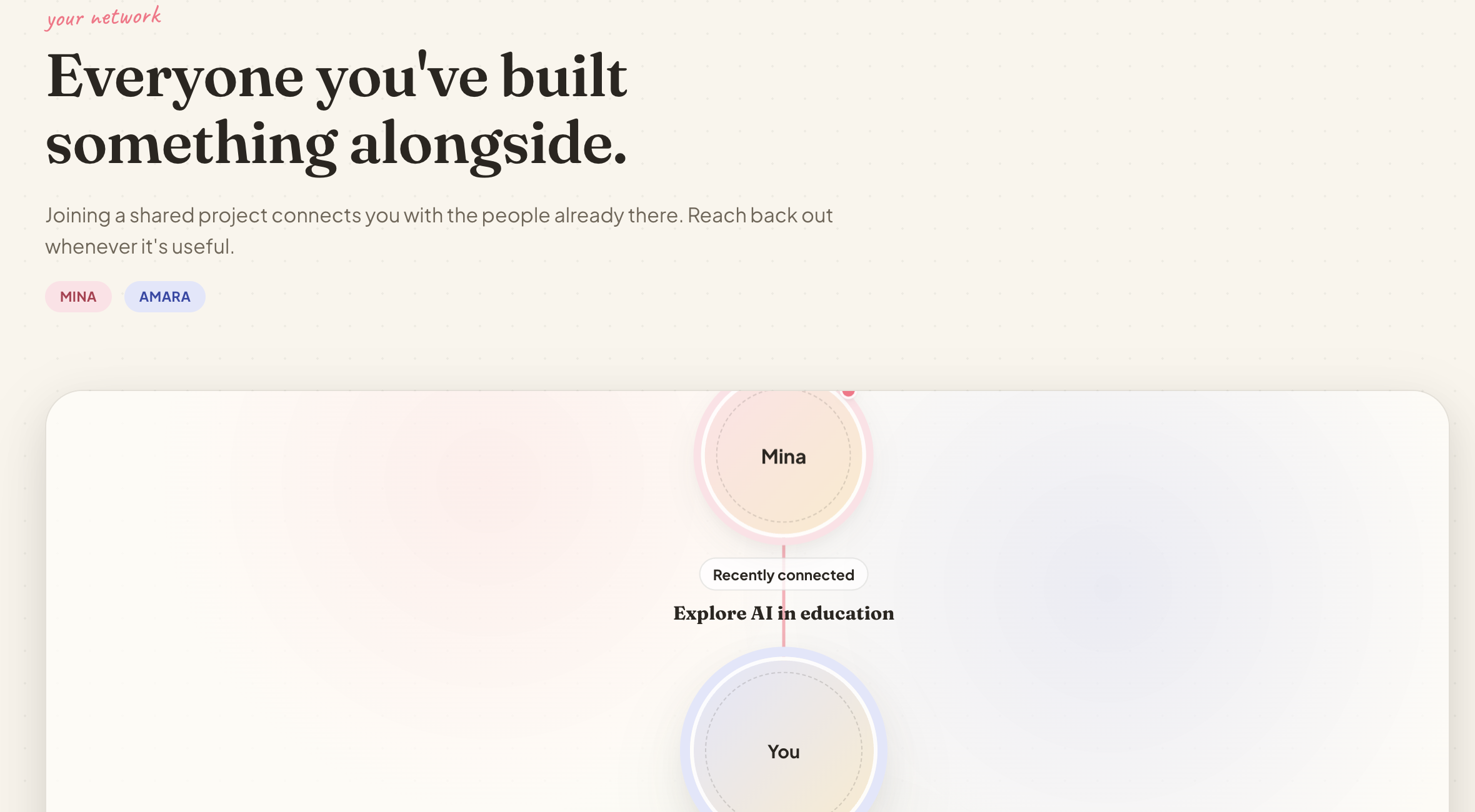
Goal mapping page (connecting user to other users of similar interests/paths)
-
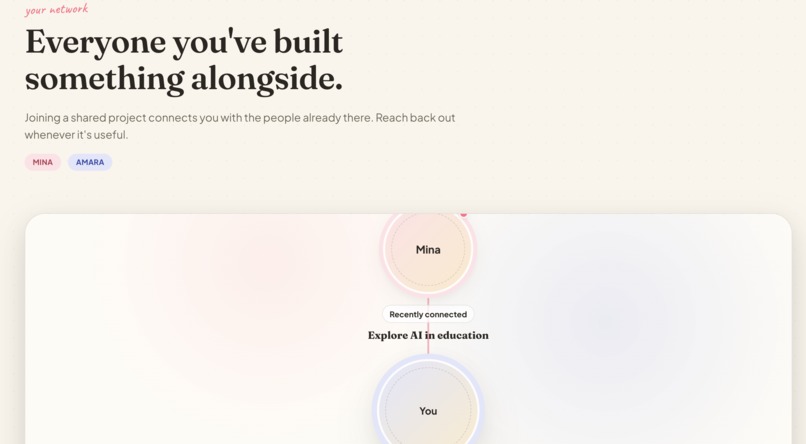
Connections Page
-
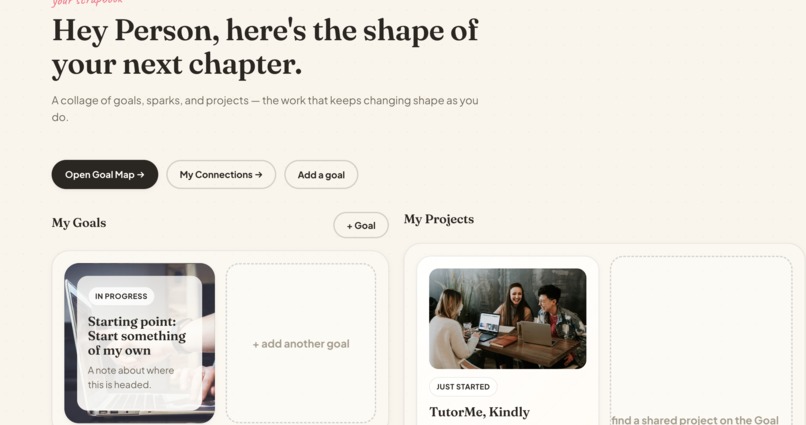
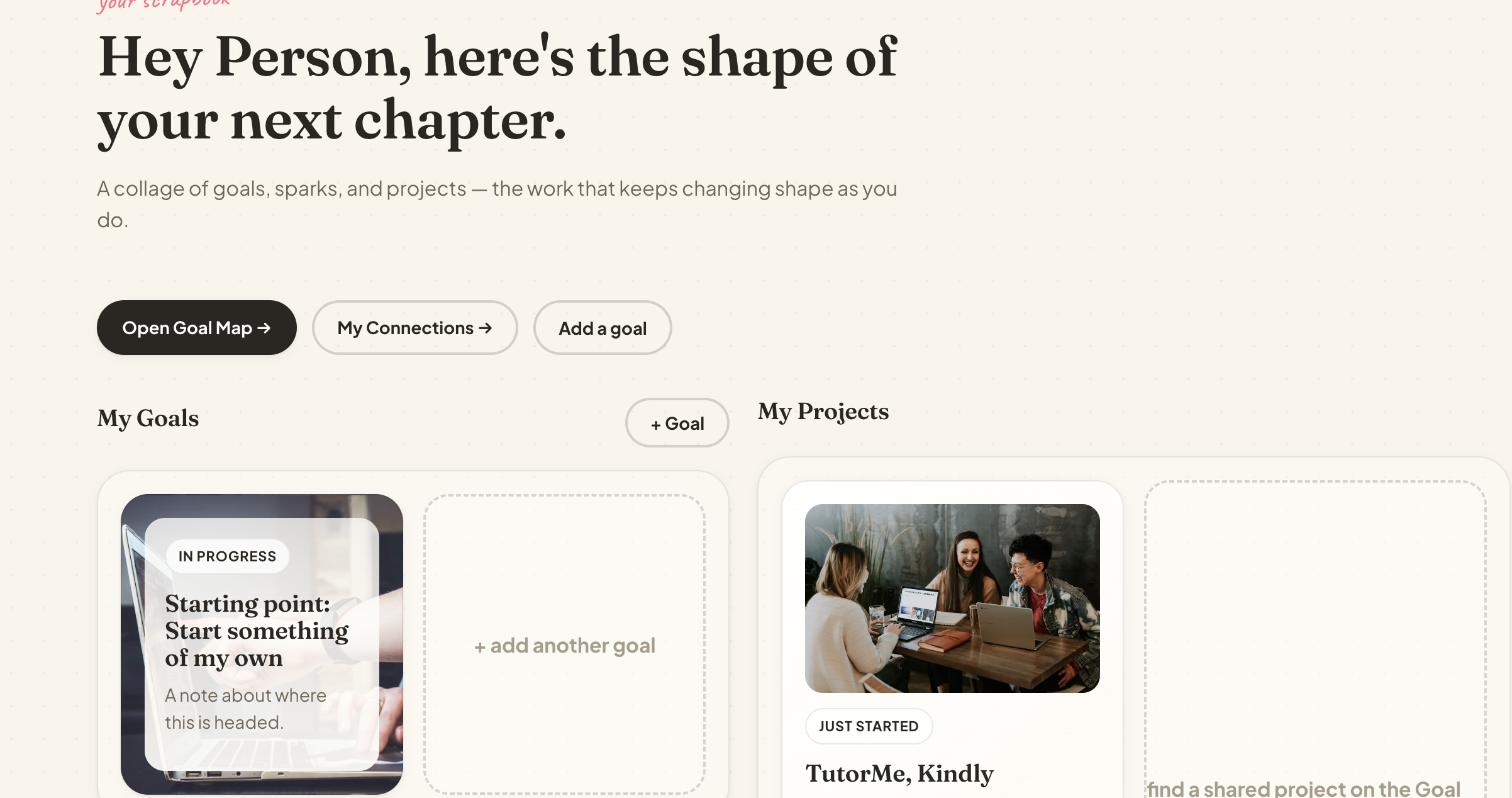
Dashboard Page (Personal Scrapboard)
-
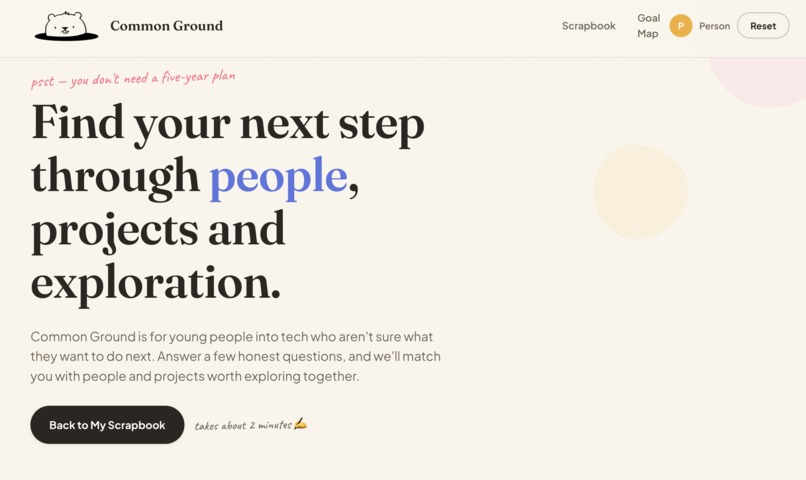
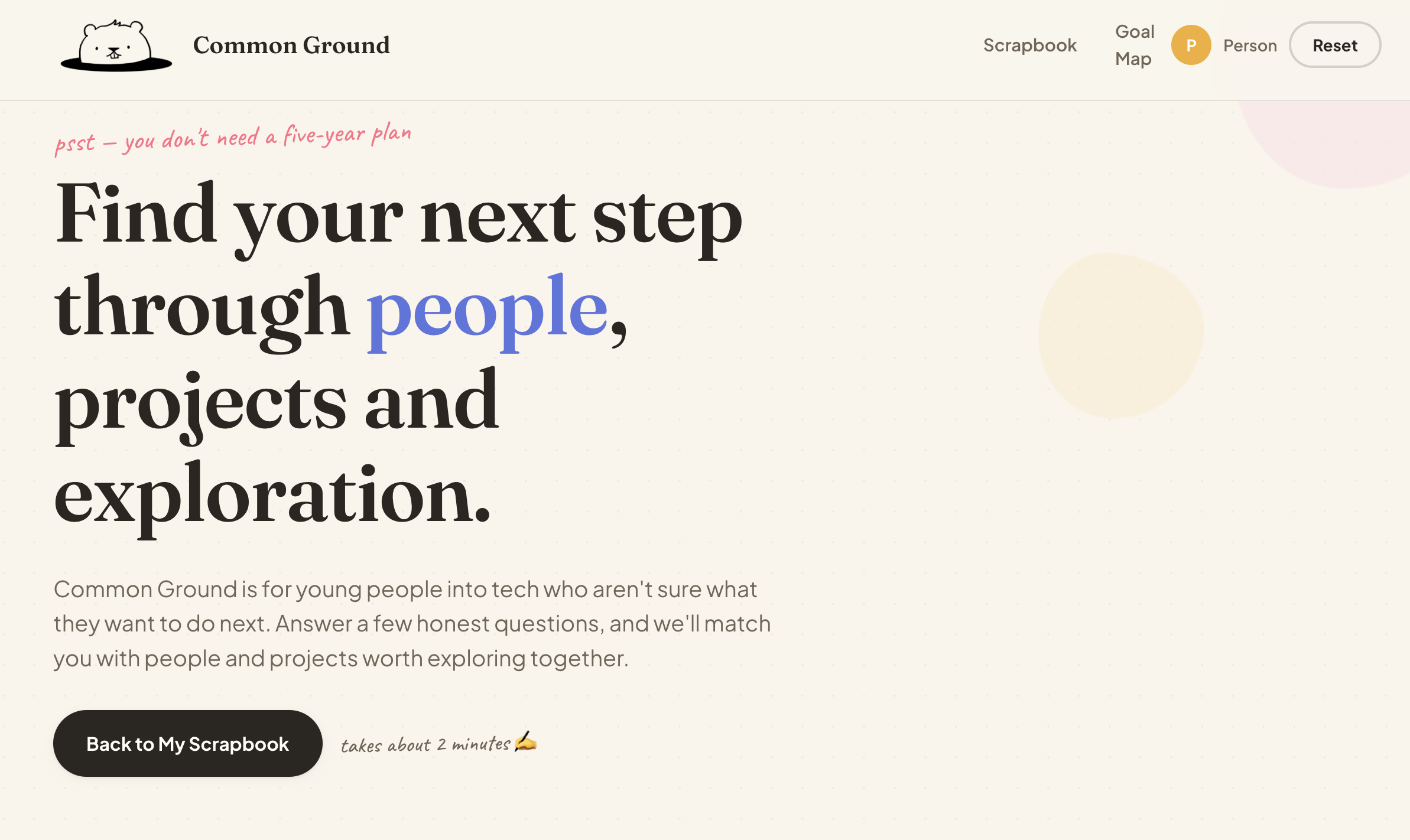
Index/welcome page
-
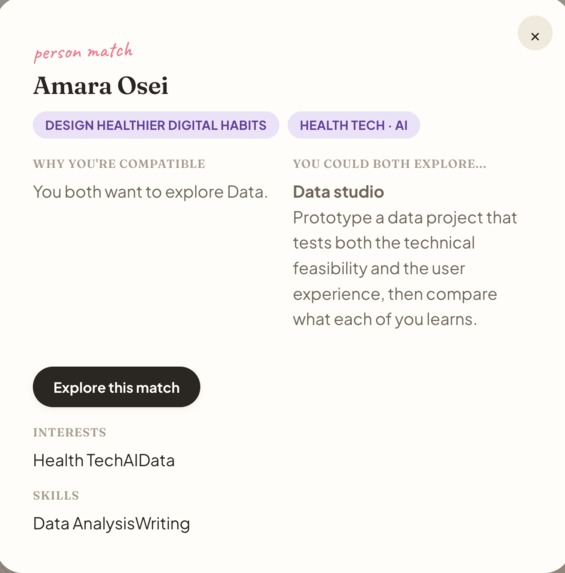
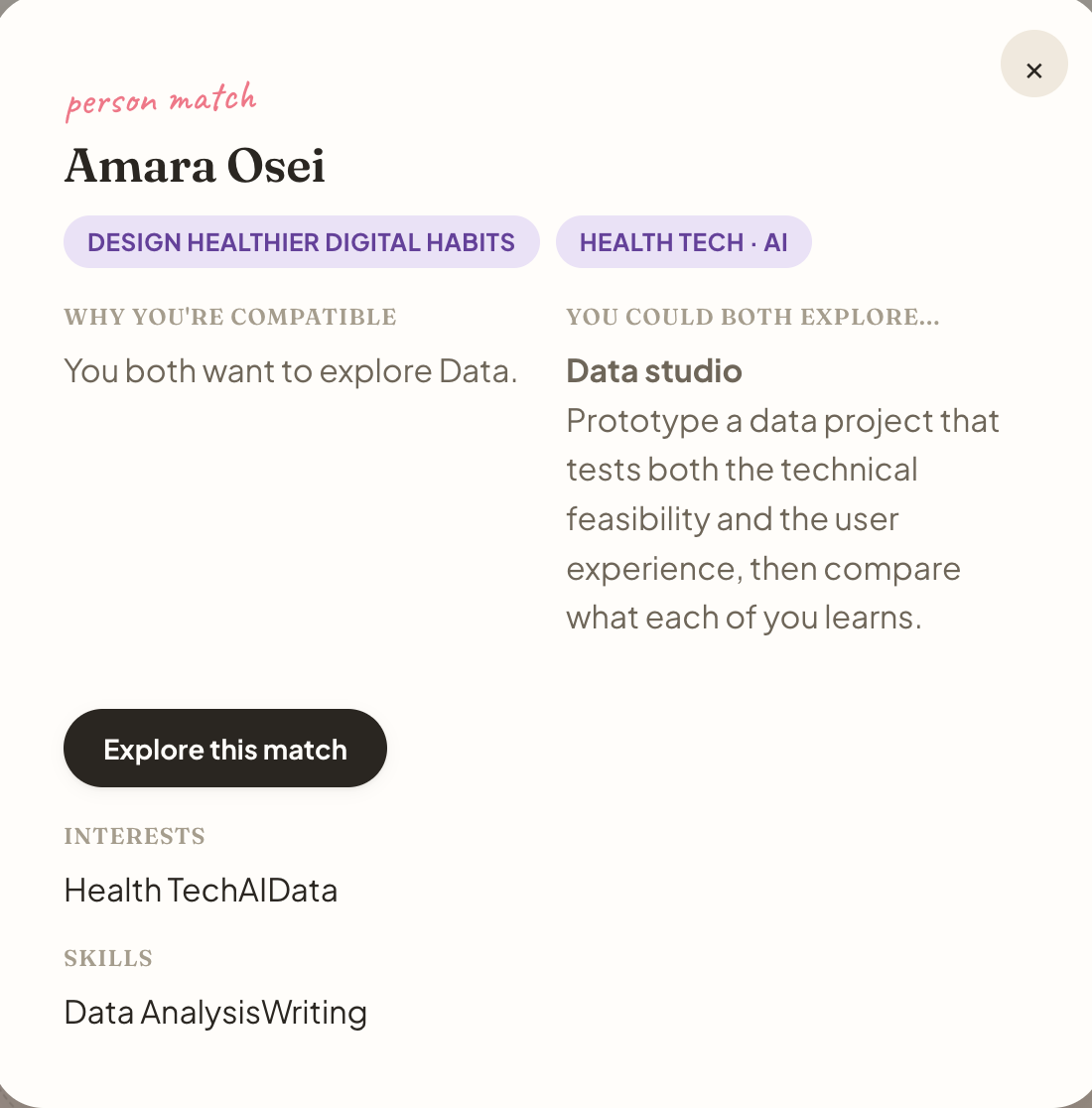
View other user's projects/interests based on auto matching/recommendations
-
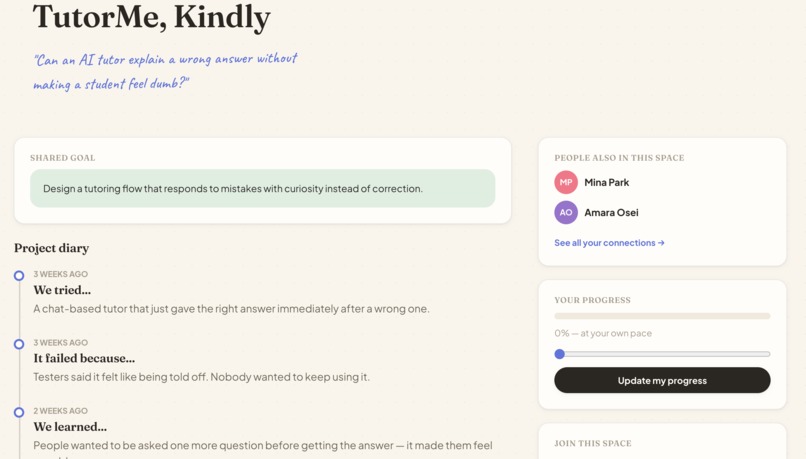
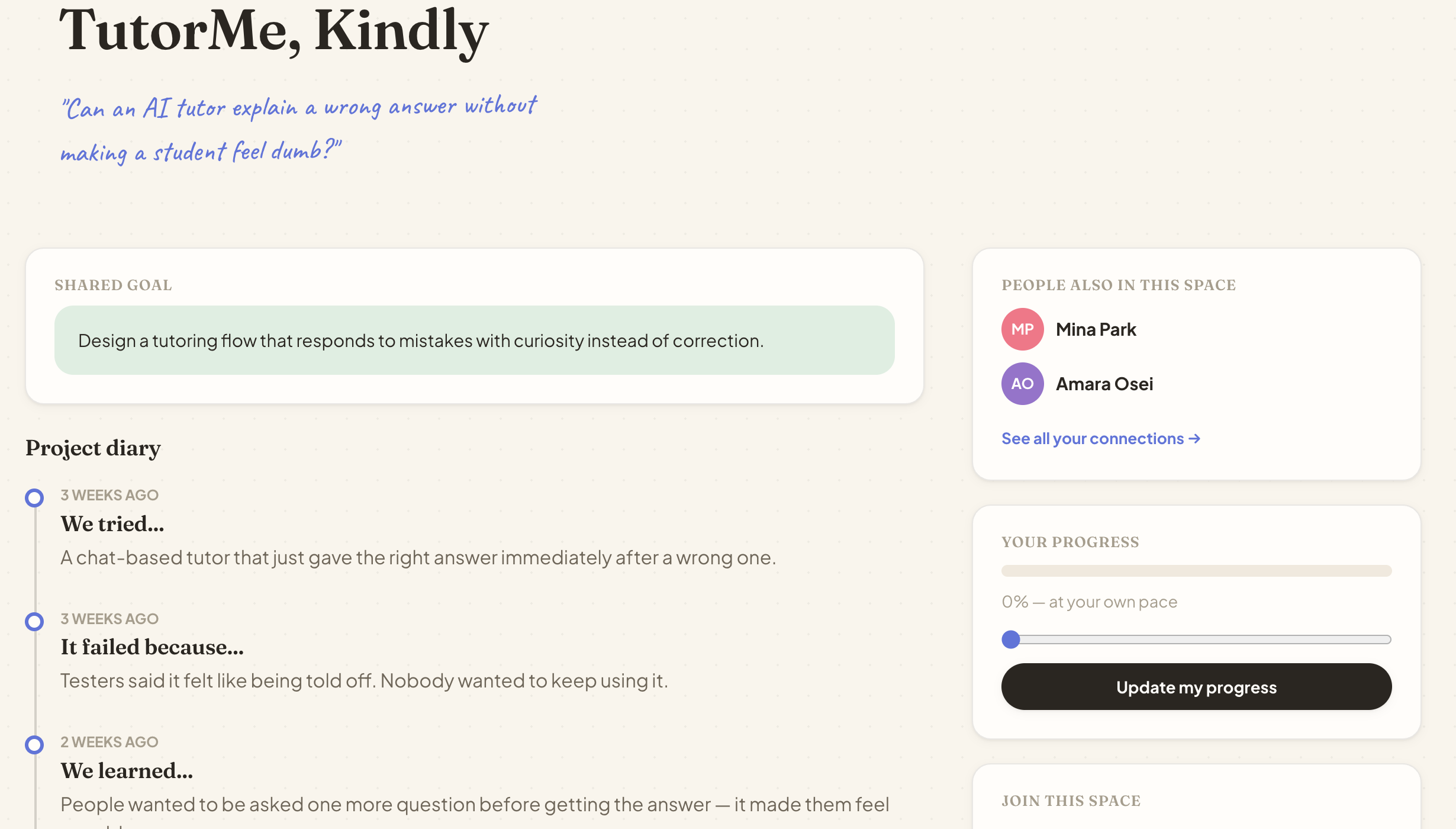
Project overview page pt1
-
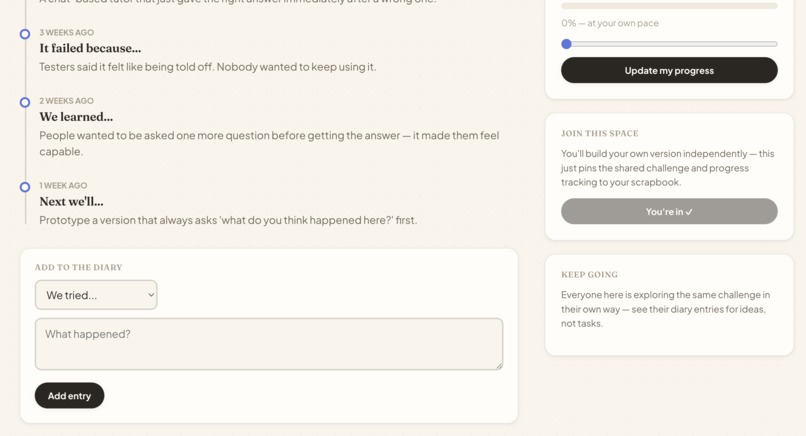
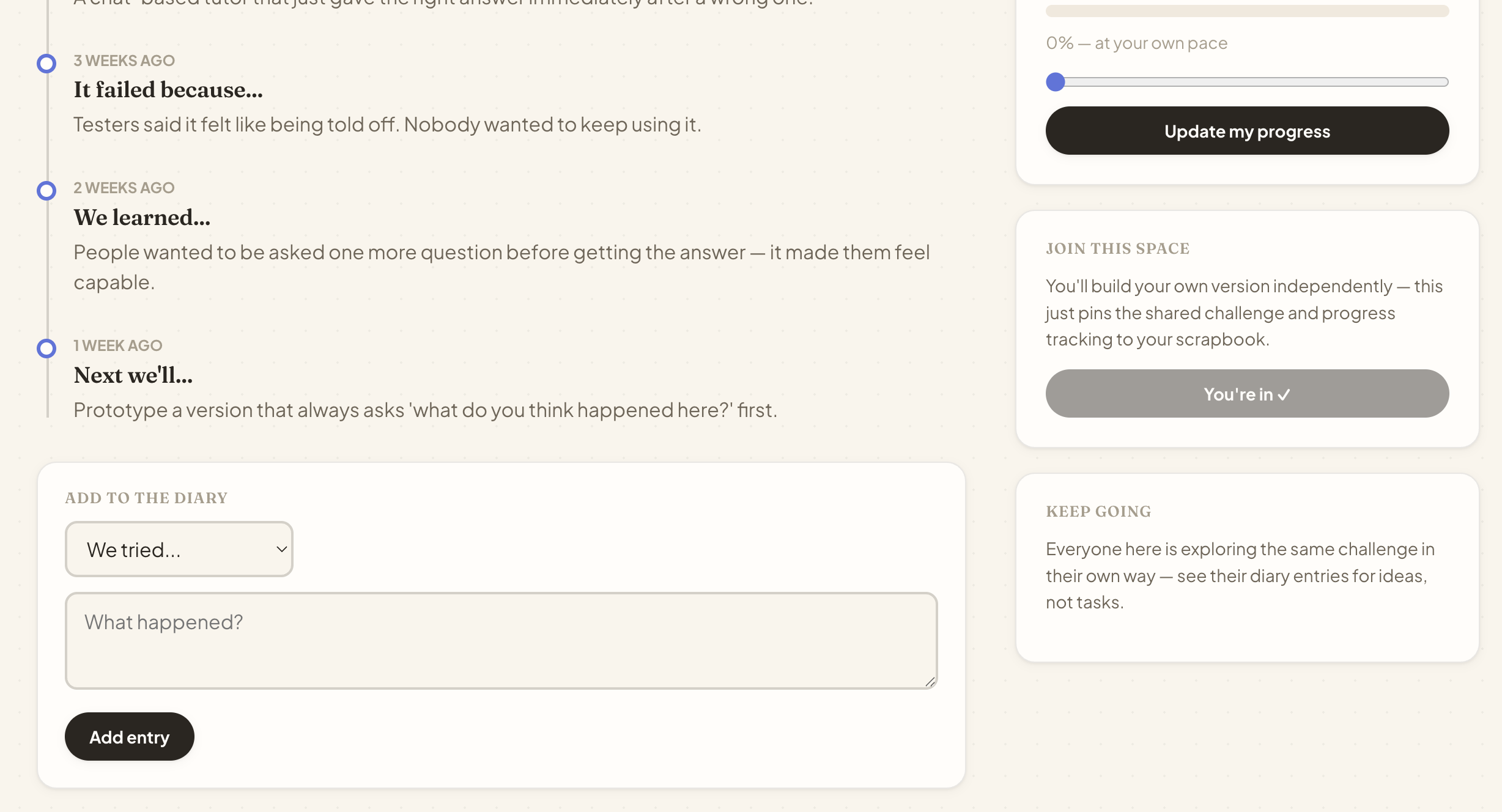
Project overview page pt2
Inspiration
Many young people interested in technology know they want to build, but don't necessarily know where to start. With so many possible careers and interests to explore, figuring out the next step can feel overwhelming.
The problem
The transition from university to industry can be challenging, particularly for young people who are still figuring out where they fit within the tech industry. Many students don’t have a clear career path, don’t know which roles or industries suit their interests and skills, and lack the confidence or connections to take their first steps into the industry. The hardest part isn’t knowing where you want to end up — it’s knowing where to start.
Our implementation
This led to Common Ground: a platform built around the idea that finding people with similar goals can make it easier to take the first step.
What it does
Common Ground starts by asking users about their interests, goals, existing skills, and skills they want to explore.
Their goal then becomes the centre of an interactive Goal Map, where they can discover other people pursuing similar or overlapping directions. The platform identifies compatible goals and suggests a Common Ground Project, a project idea that gives both people something meaningful to explore.
Rather than forming traditional project teams, users independently work on their own version of the same shared challenge. They can post progress updates and see how other participants are approaching the project, creating motivation through shared progress without requiring direct collaboration.
Each user's journey is captured in their Digital Project Scrapbook, a visual collection of their goals, projects, progress, and reflections. Over time, the scrapbook becomes a record of what they have explored and what they have discovered about themselves.
How we built it
We built Common Ground as a lightweight, interactive web prototype using:
- HTML
- CSS
- Vanilla JavaScript
- localStorage
- Hardcoded demo data " AI model Claude by Anthropic to help create the base structure to build on
We designed the experience around three core features: the Visual Scrapbook, the interactive Goal Map, and Common Ground Projects.
The Goal Map uses user interests, goals, current skills, and skills they want to learn to identify compatible connections. We then use these connections to generate relevant shared project ideas.
The project was designed as a static prototype so that the entire experience could run in the browser and be easily deployed using GitHub Pages for the purpose of the Hackathon.
Challenges we ran into
One of our biggest challenges was defining what it actually means to connect people through goals.
Our original concept leaned more heavily towards traditional collaboration, where matched users would form teams and build a project together. However, we realised that this created pressure to coordinate, divide tasks, and commit to working with people they had just met.
We refined the concept into something simpler: shared projects without shared ownership.
Users can independently work on the same challenge while seeing other people's progress and approaches. This allowed us to preserve the motivation and connection of building alongside others without requiring the complexity of managing a team.
Another challenge was making the Goal Map feel creative and intuitive rather than like a technical data visualisation. We had to balance showing meaningful relationships between users while keeping the experience playful and visually approachable.
Accomplishments that we're proud of
We're particularly proud of creating a product experience that connects the platform's features into one clear journey. A user's goal leads them to the Goal Map. The Goal Map helps them find people with overlapping directions. Those connections lead to a concrete project idea. Working on the project creates progress and reflection, which then feeds back into their Digital Project Scrapbook.
We're also proud of shifting the focus away from presenting a polished version of yourself. Instead, Common Ground captures curiosity, experimentation, progress, and reflection—the parts of learning and finding direction that often happen before someone has a clear path.
What we learned
One of the biggest things we learned was that helping someone find direction doesn't necessarily mean giving them an answer. A more useful approach can be helping someone take a meaningful next step and giving them an environment where they can learn from the experience.
We also learned the importance of simplifying a product idea. During development, we explored several different directions for how people should connect and collaborate. Refining the product down to a clear goal → project → progress → reflection loop made both the product and the user experience much stronger.
What's next for Common Ground
Common Ground is currently a prototype, but we see potential to develop it into a real community for people exploring technology.
Future iterations could include real user accounts, more personalised compatibility matching, AI-generated project challenges, and smarter recommendations based on patterns across a user's goals, projects, and reflections.
We would also like to explore ways for the platform to better identify how someone's interests evolve over time.
Ultimately, we want Common Ground to help people move from:
"I don't know where I'm going."
to:
"I know what I want to try next."


Log in or sign up for Devpost to join the conversation.