-
-
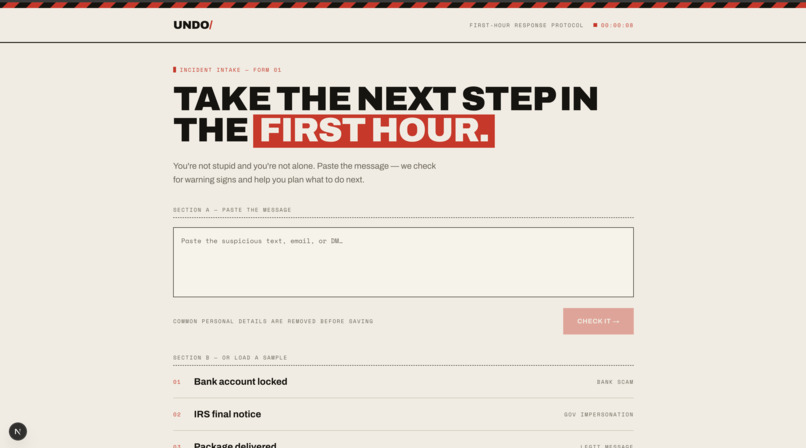
landing page
-
-
-
-
-
-
-
-
-
-
-
-
-
Inspiration
I love online shopping. It’s fast, it’s easy, and packages are always on the way. So when I got a text saying FedEx had my package, I didn’t think twice. I clicked the link, and it asked for my card details to “reschedule delivery.” I typed them in. A few minutes later it clicked: there was no package. It was a scam, and my credit card was no longer safe.
The worst part wasn’t the text itself. It was the panic afterward. I didn’t know who to call first, what was already exposed, or how much time I had. I just sat there Googling “what do I do” while my card number was out in the world. Banks can often freeze a card and reverse charges, but only if you move fast, and nobody gives you that checklist in plain language when you need it.
That moment is why I built UNDO: the thing I wish I’d had open on my screen right after I hit “submit.” It tells you what just happened, what’s at risk, and exactly what to do next, one calm step at a time.
What it does
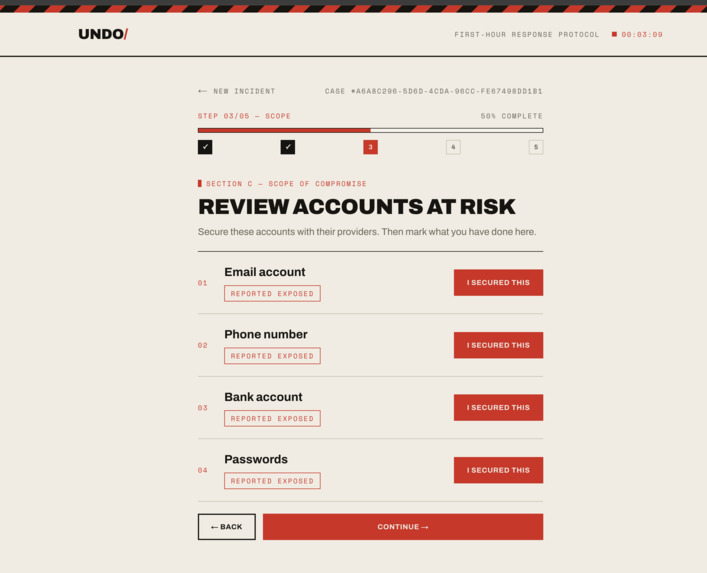
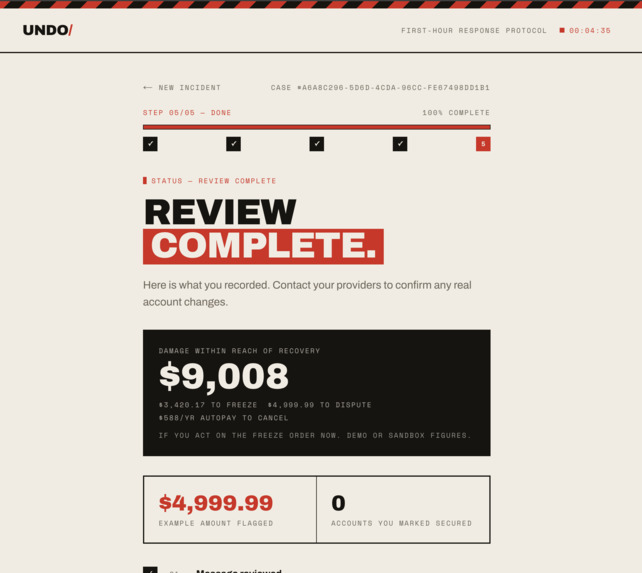
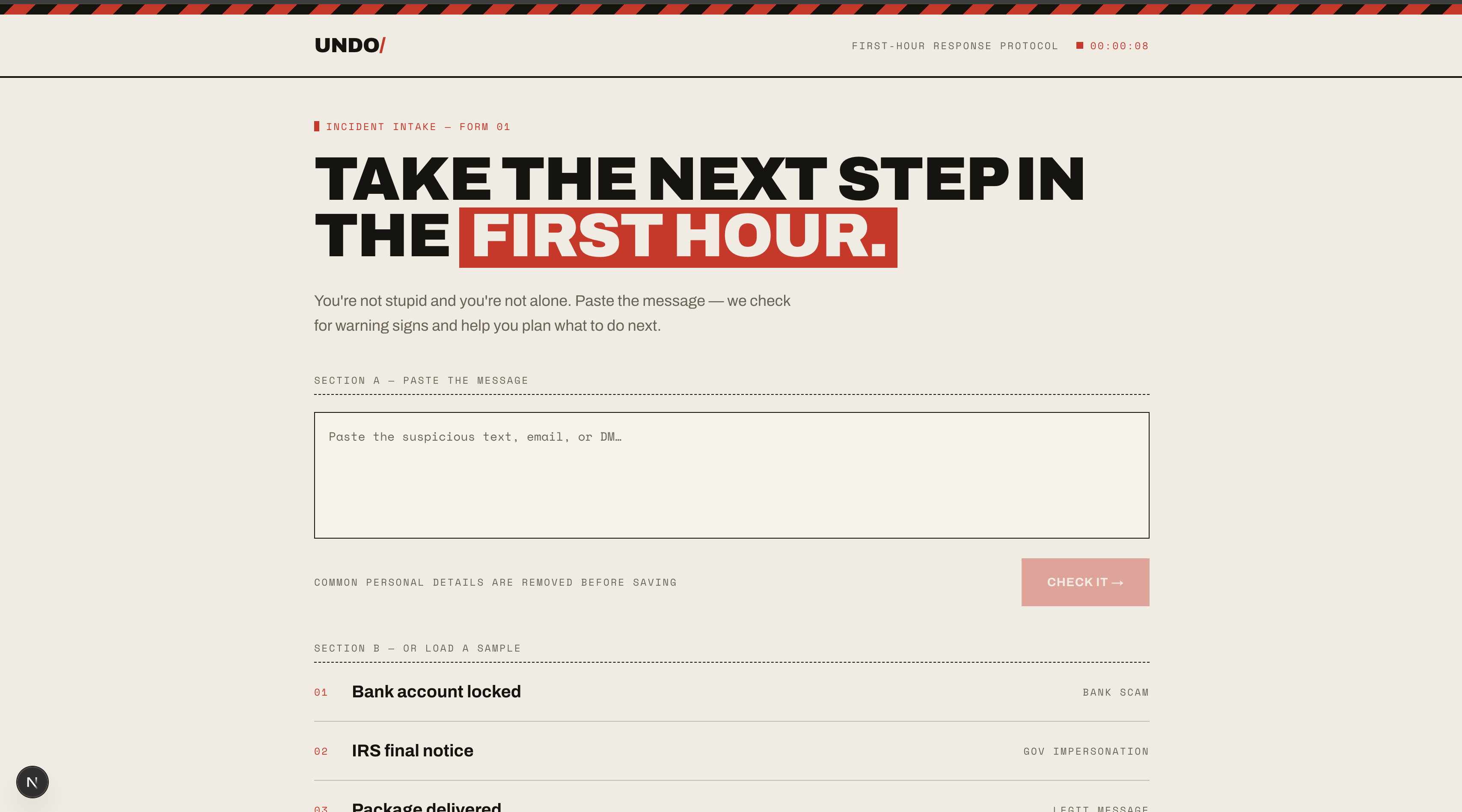
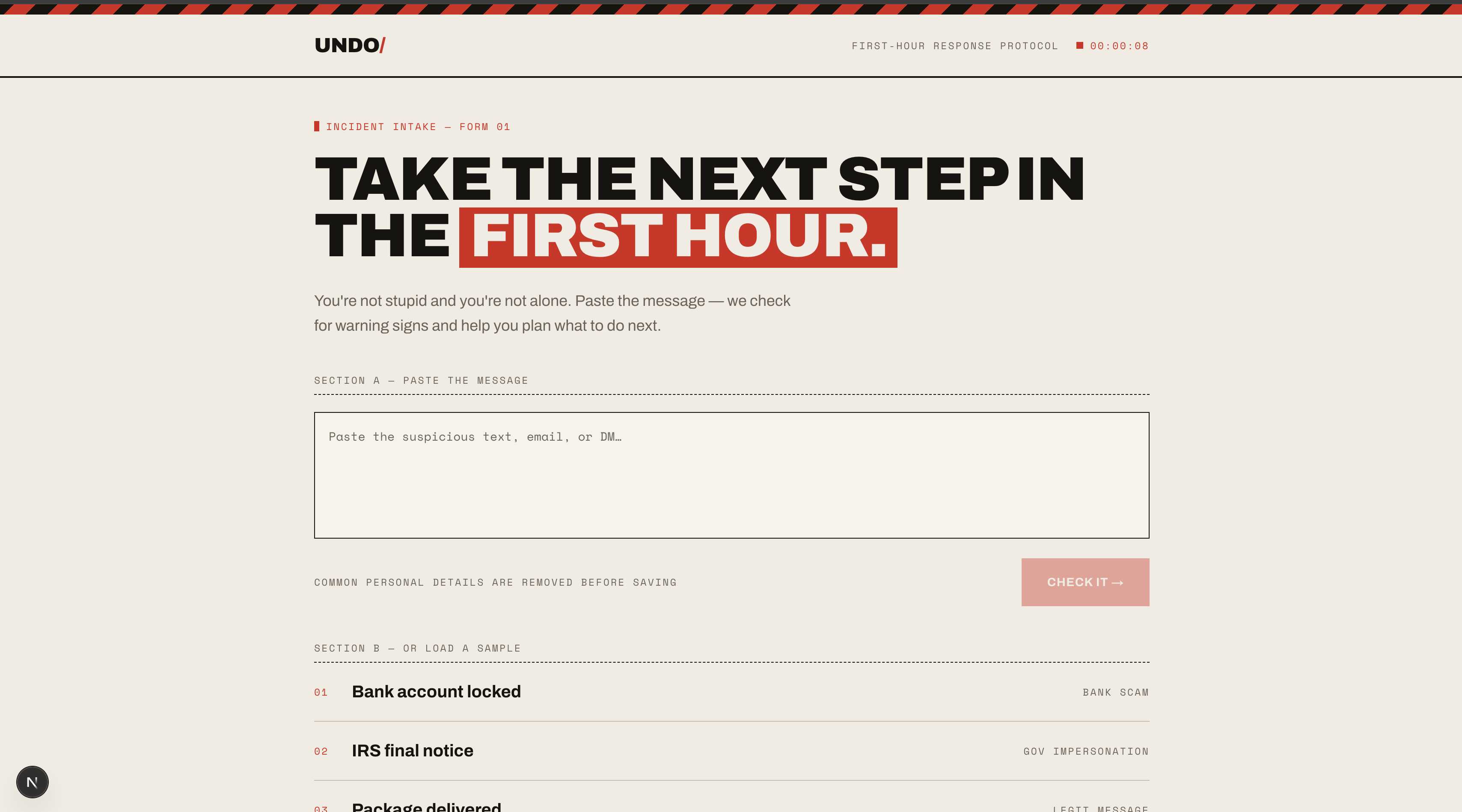
UNDO is a first-hour response plan for scam victims. Paste the suspicious message and it does four things, one screen at a time:
- Reads the message and tells you, honestly, how sure it is it's a scam — with the exact red flags highlighted, not a black-box "97%."
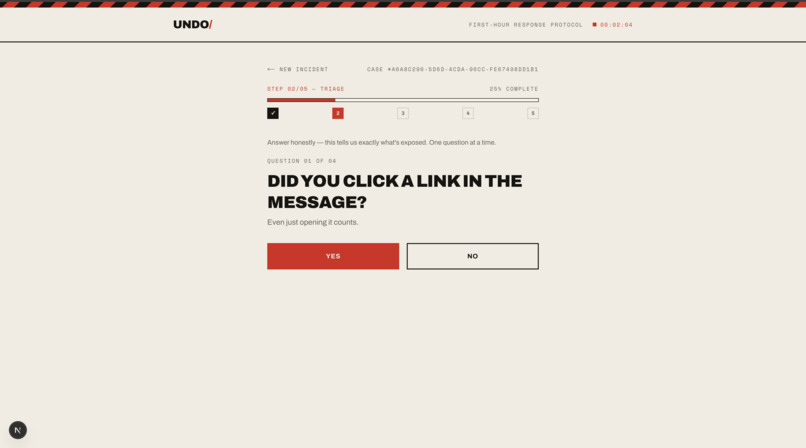
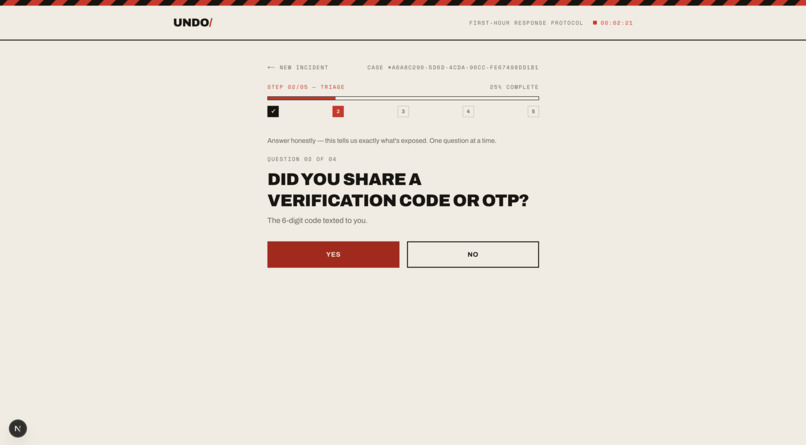
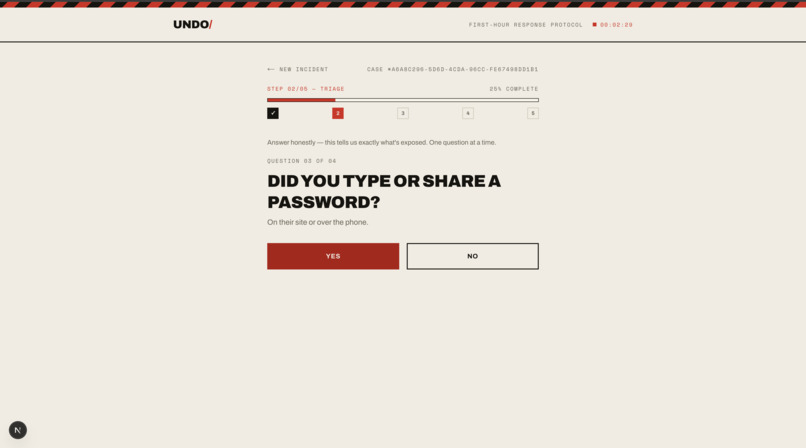
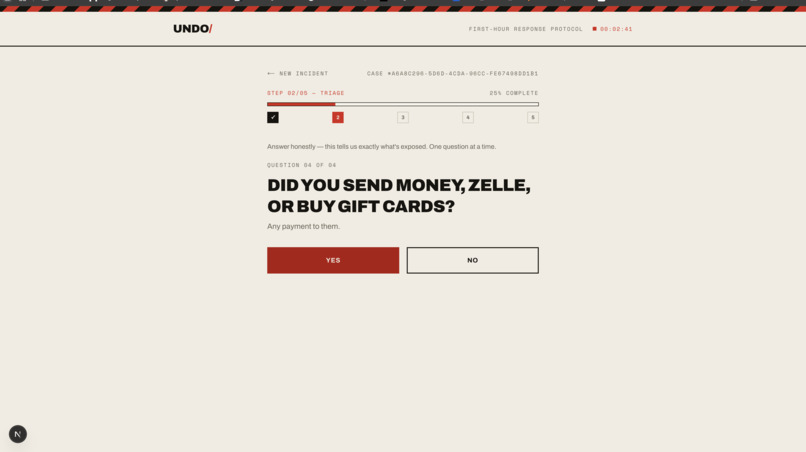
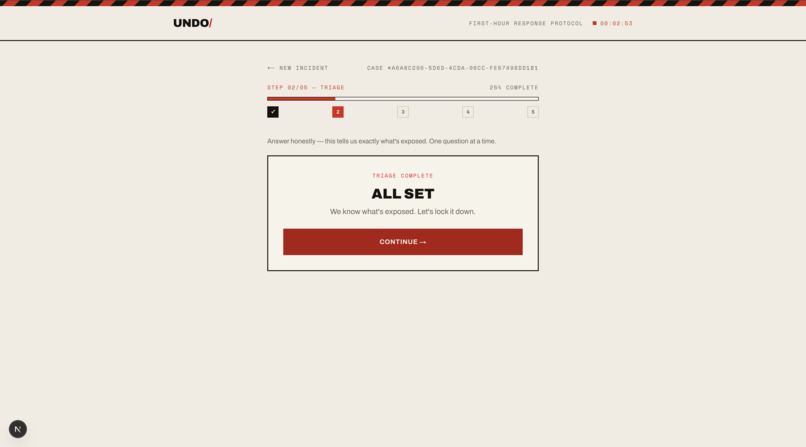
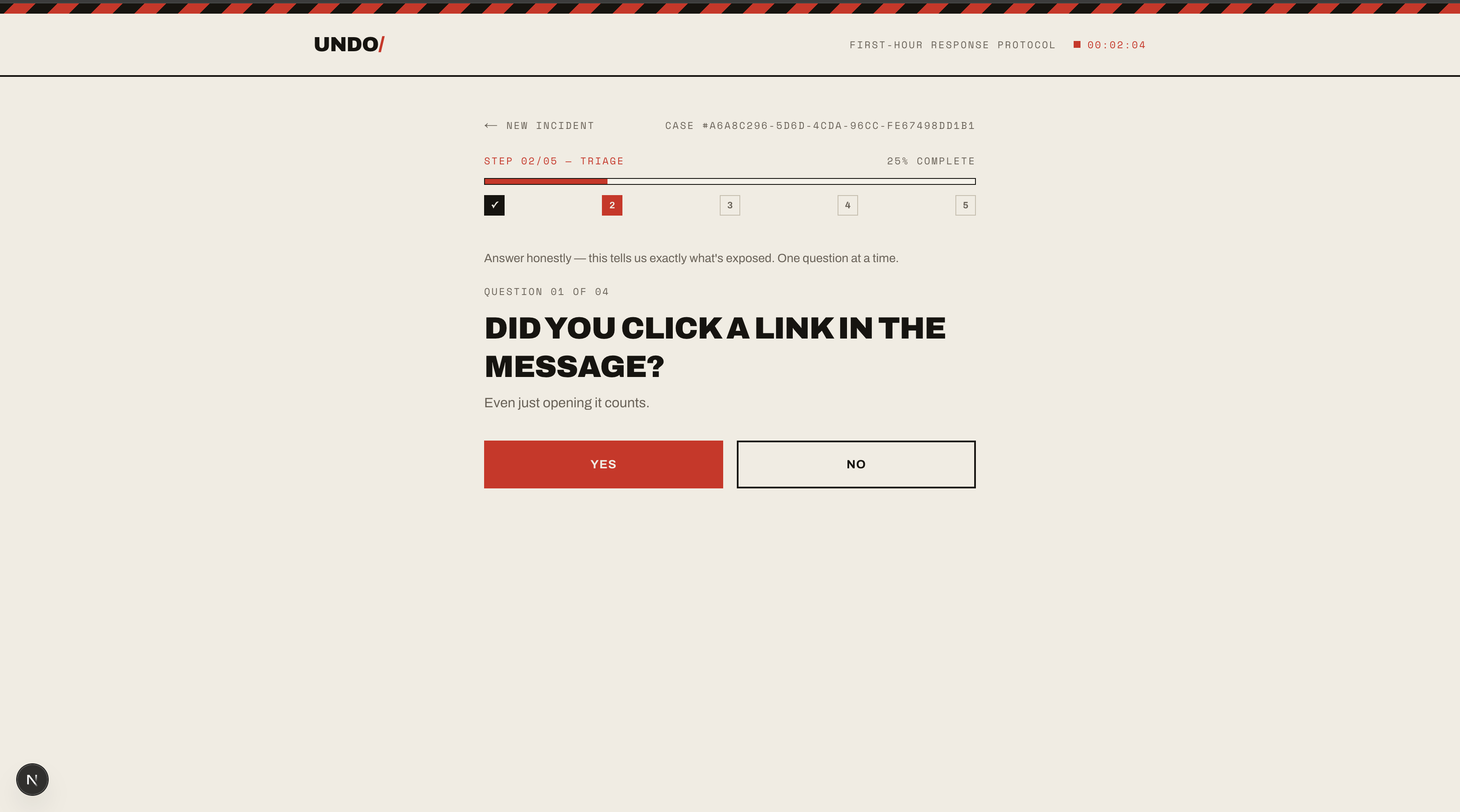
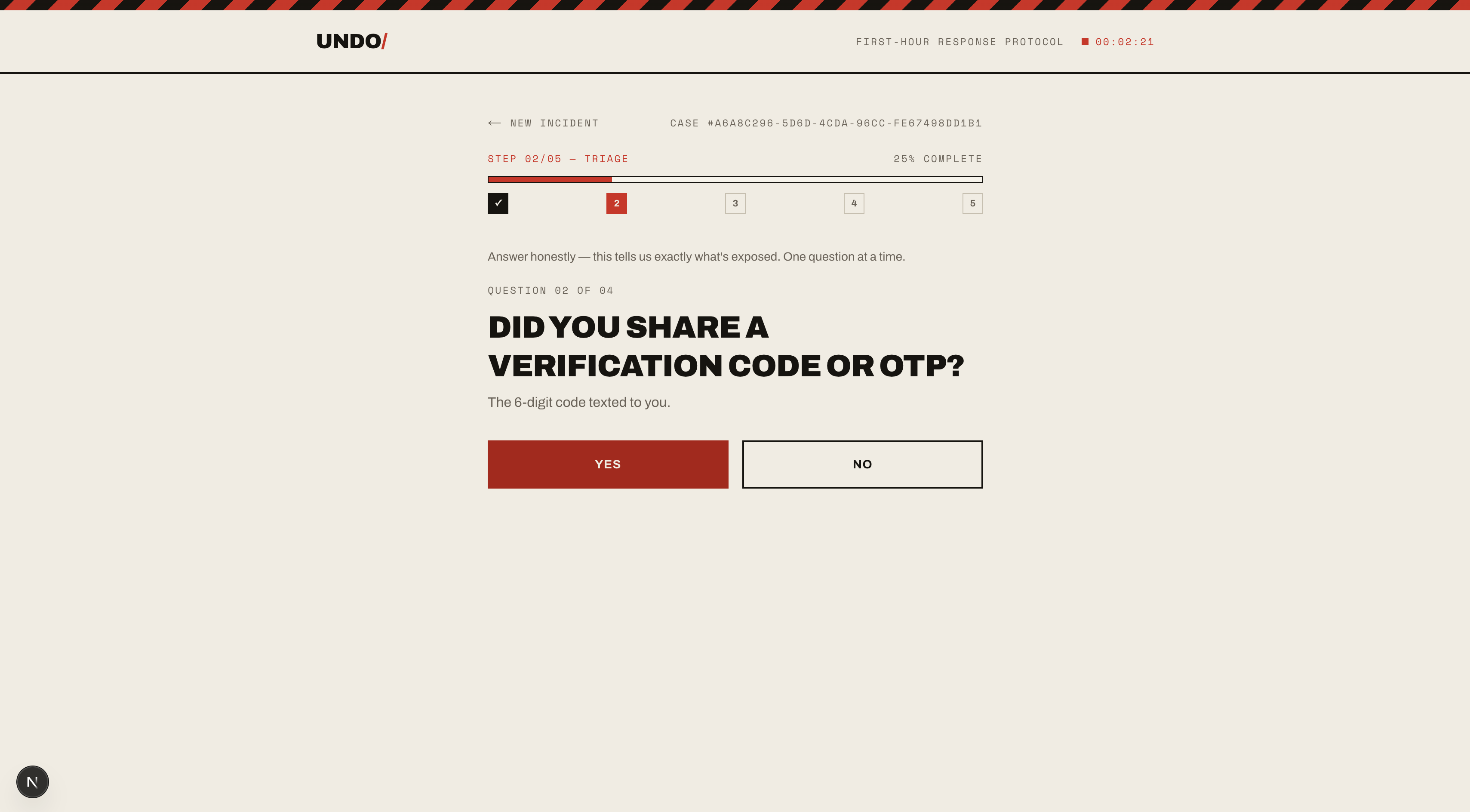
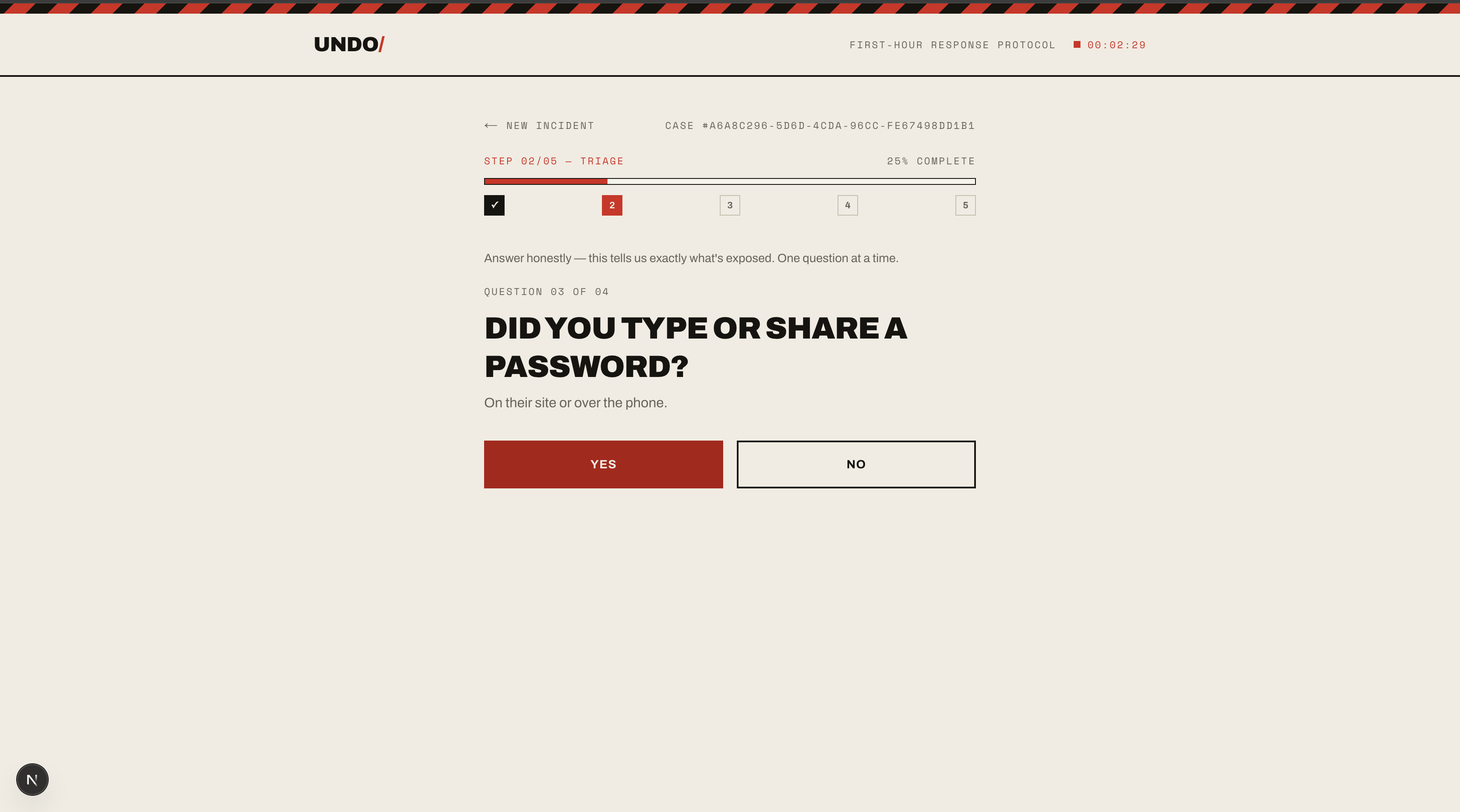
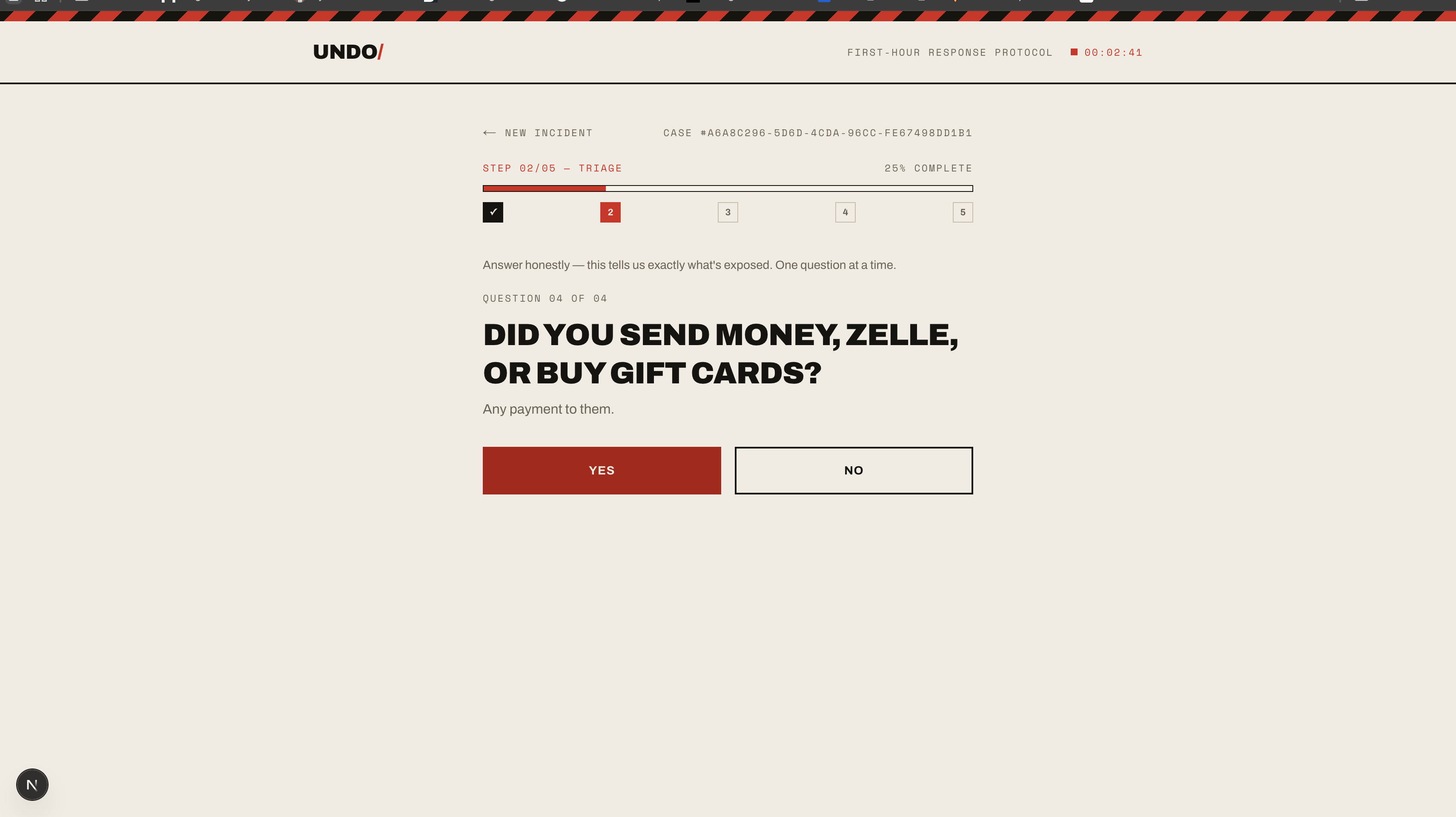
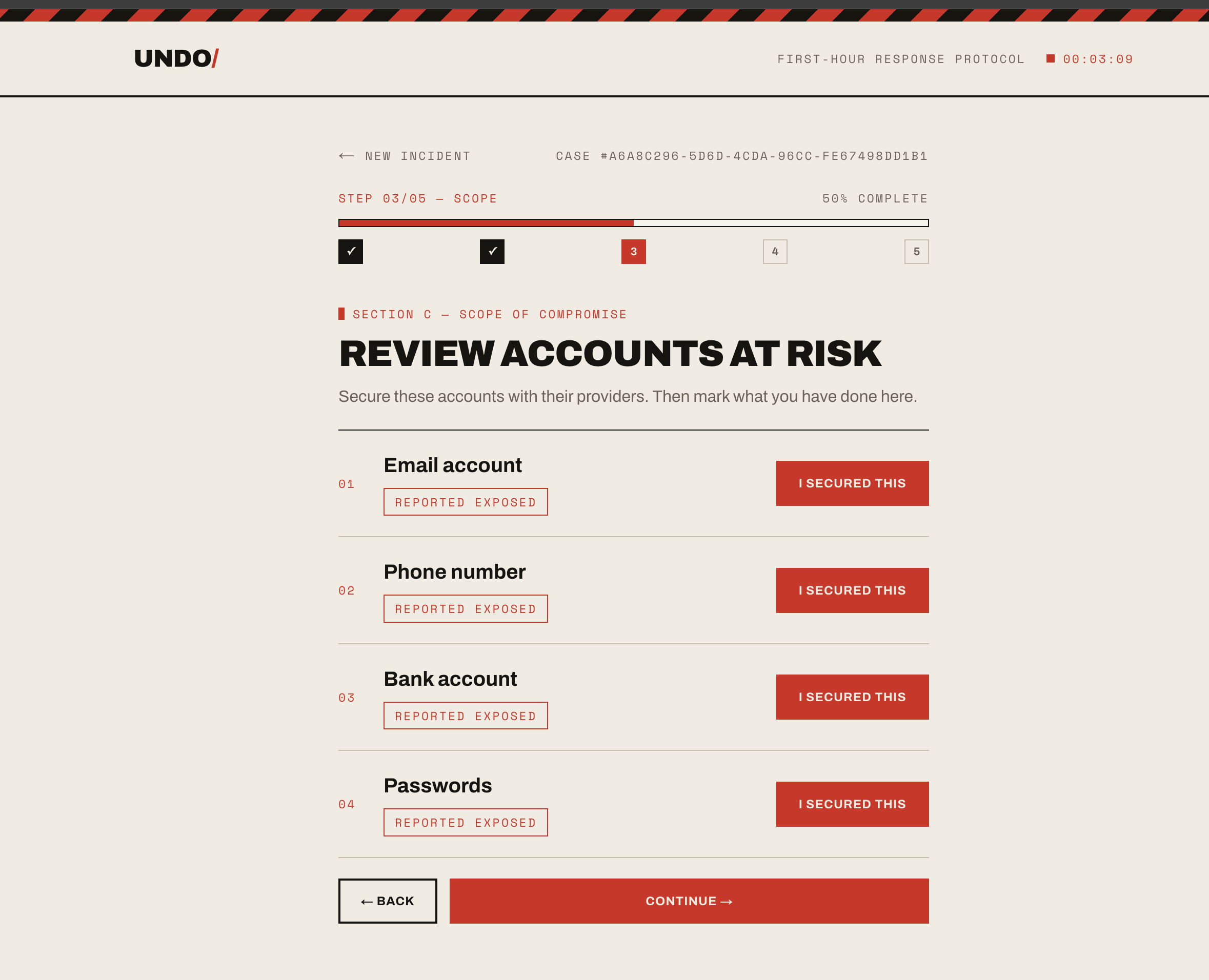
- Asks what you did (clicked a link? shared a code? sent money?) and maps that to exactly which accounts are now exposed.
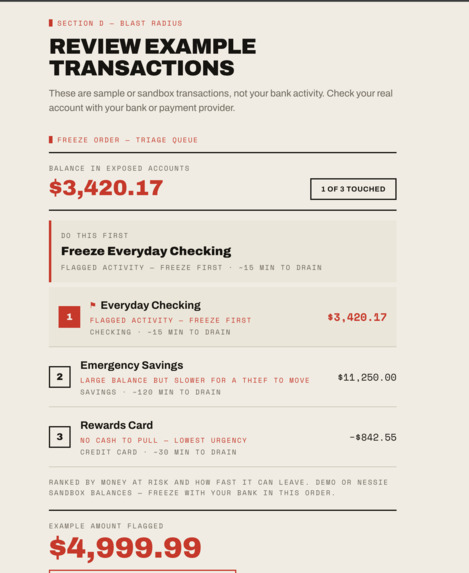
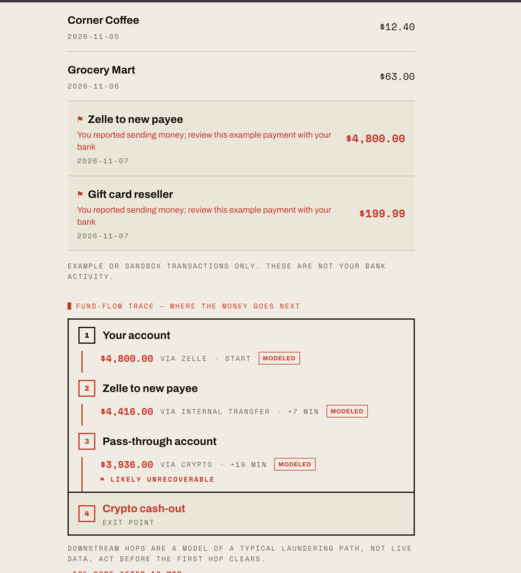
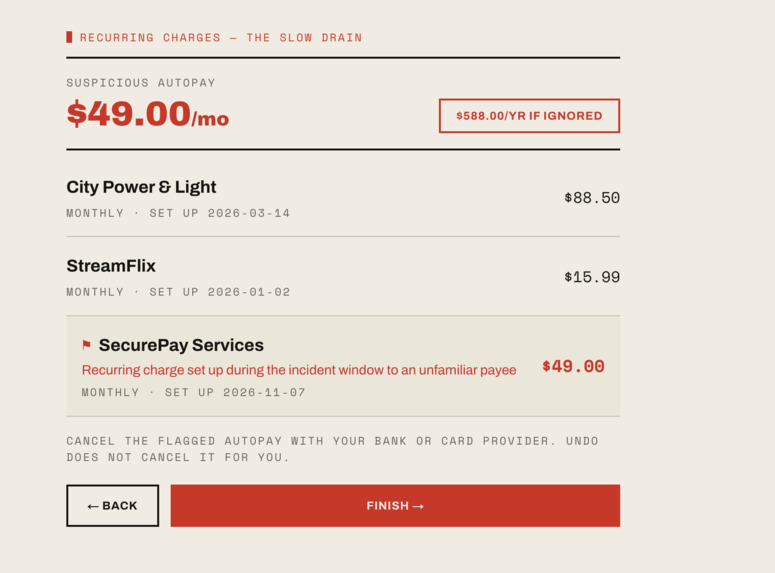
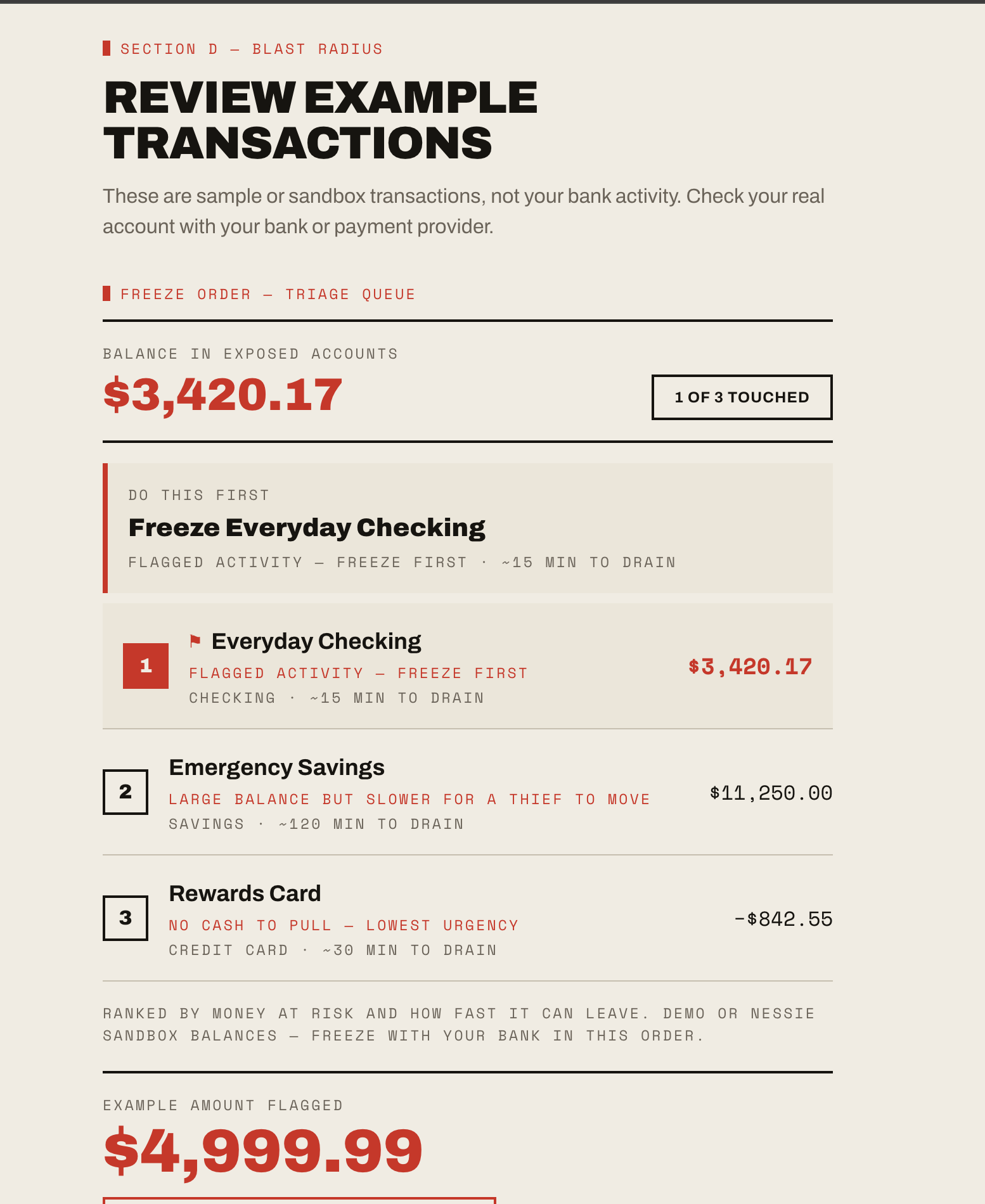
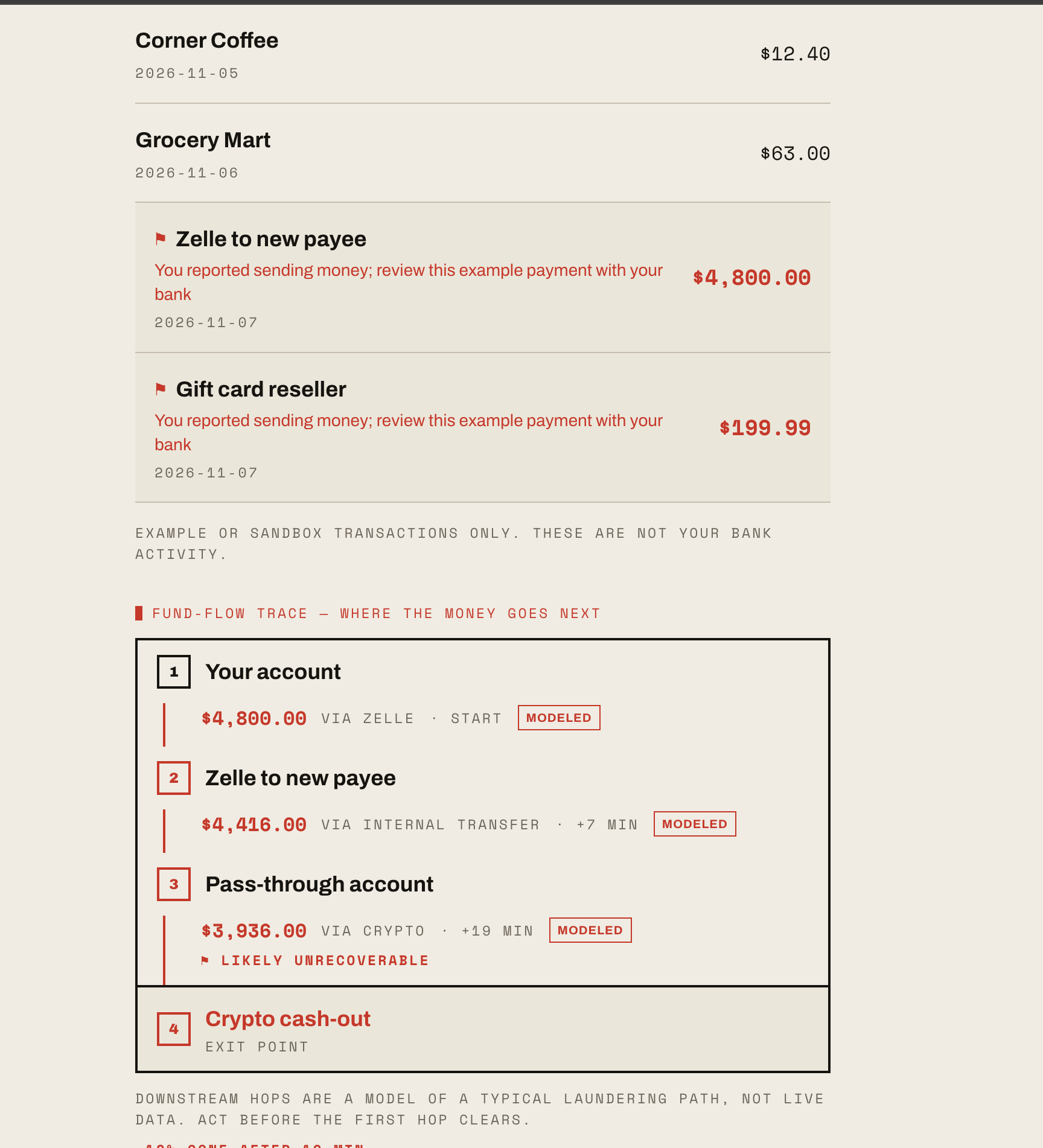
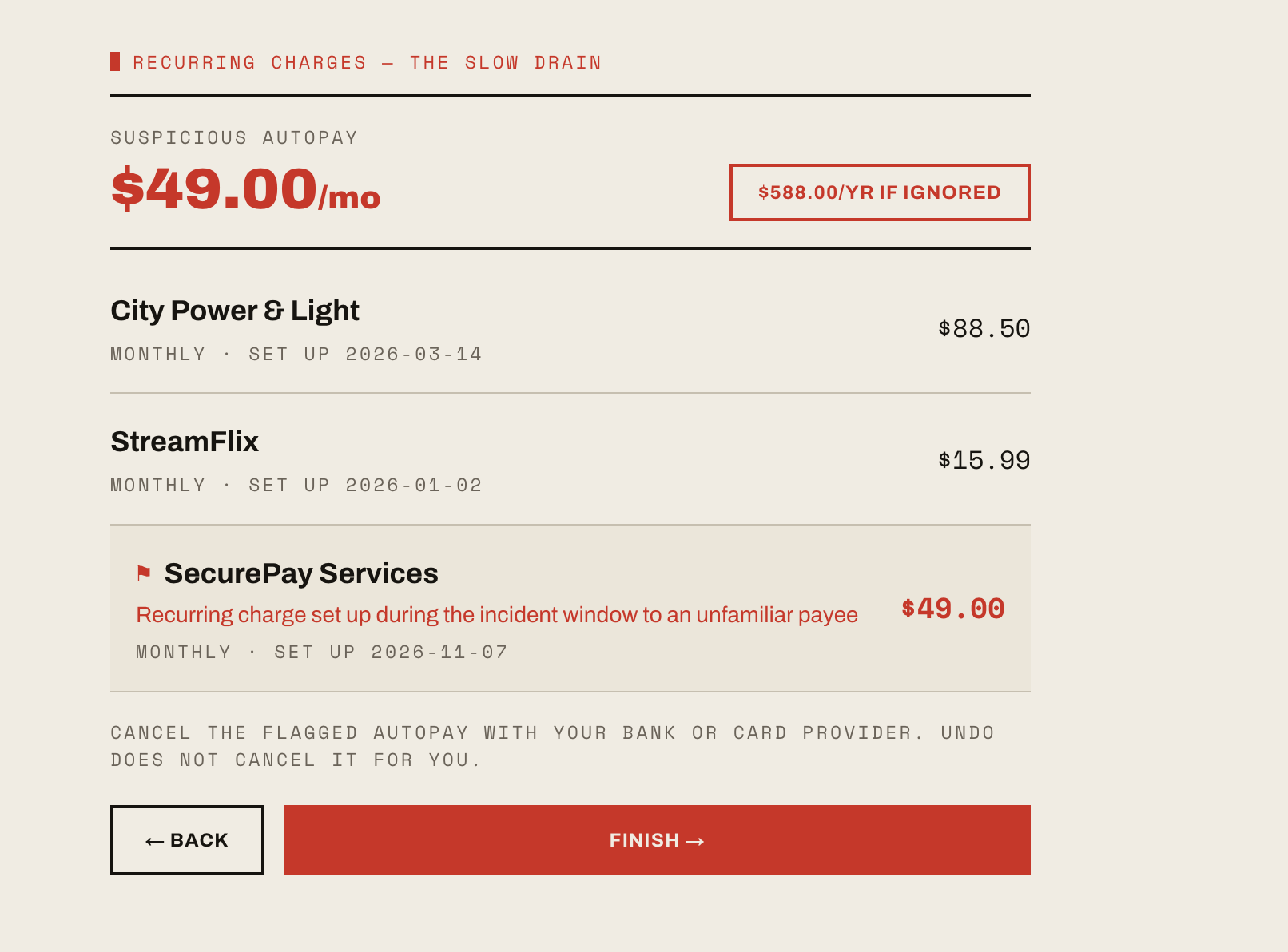
- Traces the money against account data (Capital One's Nessie API), flagging the transactions that match the scam's pattern.
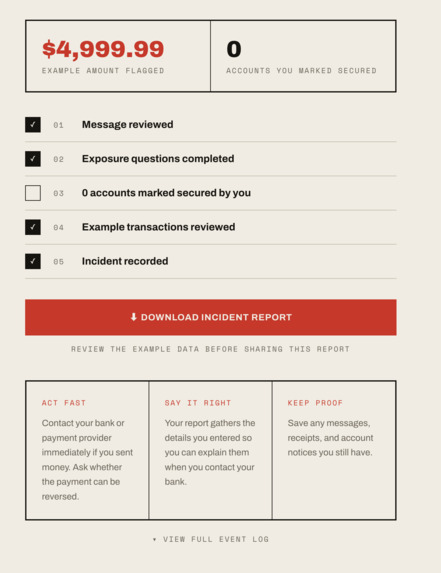
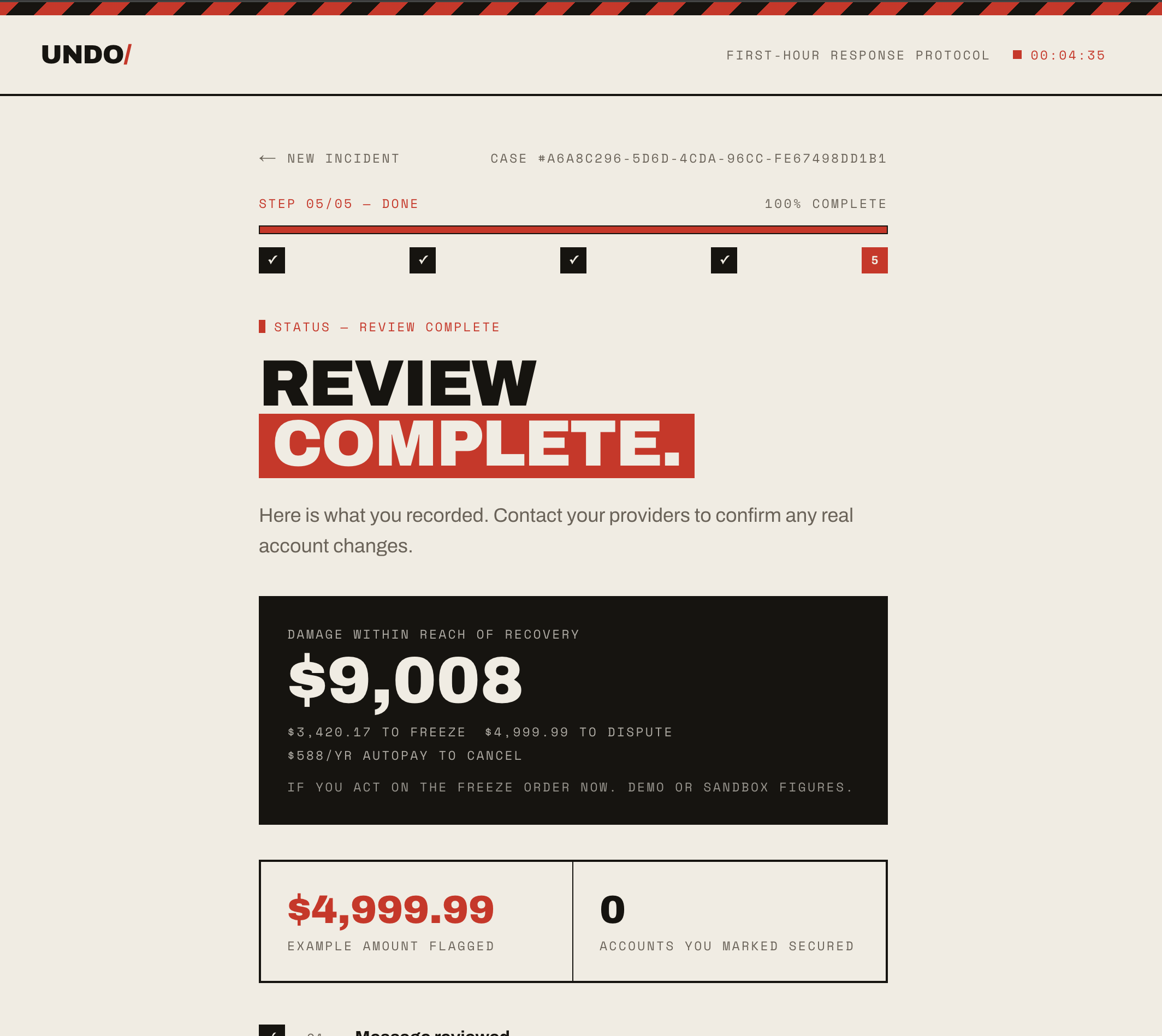
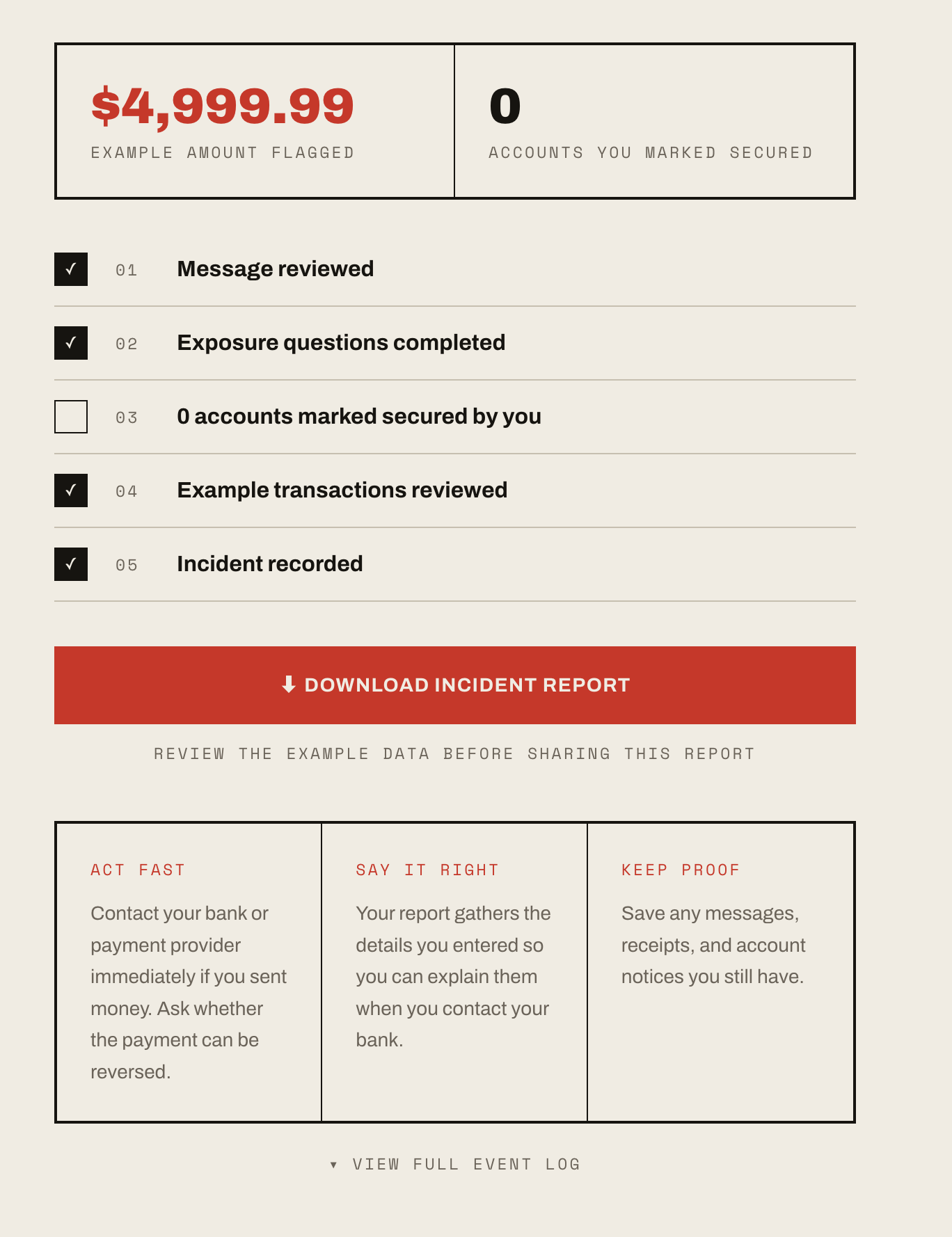
- Logs everything into a timestamped incident report you can hand to your bank or the police. It ends on one screen: what you protected, and the next calls to make, in order.
How we built it
Next.js (App Router) for one app holding both the UI and the API. The frontend
is an editorial "emergency form" — Archivo + Space Mono, cream paper, red
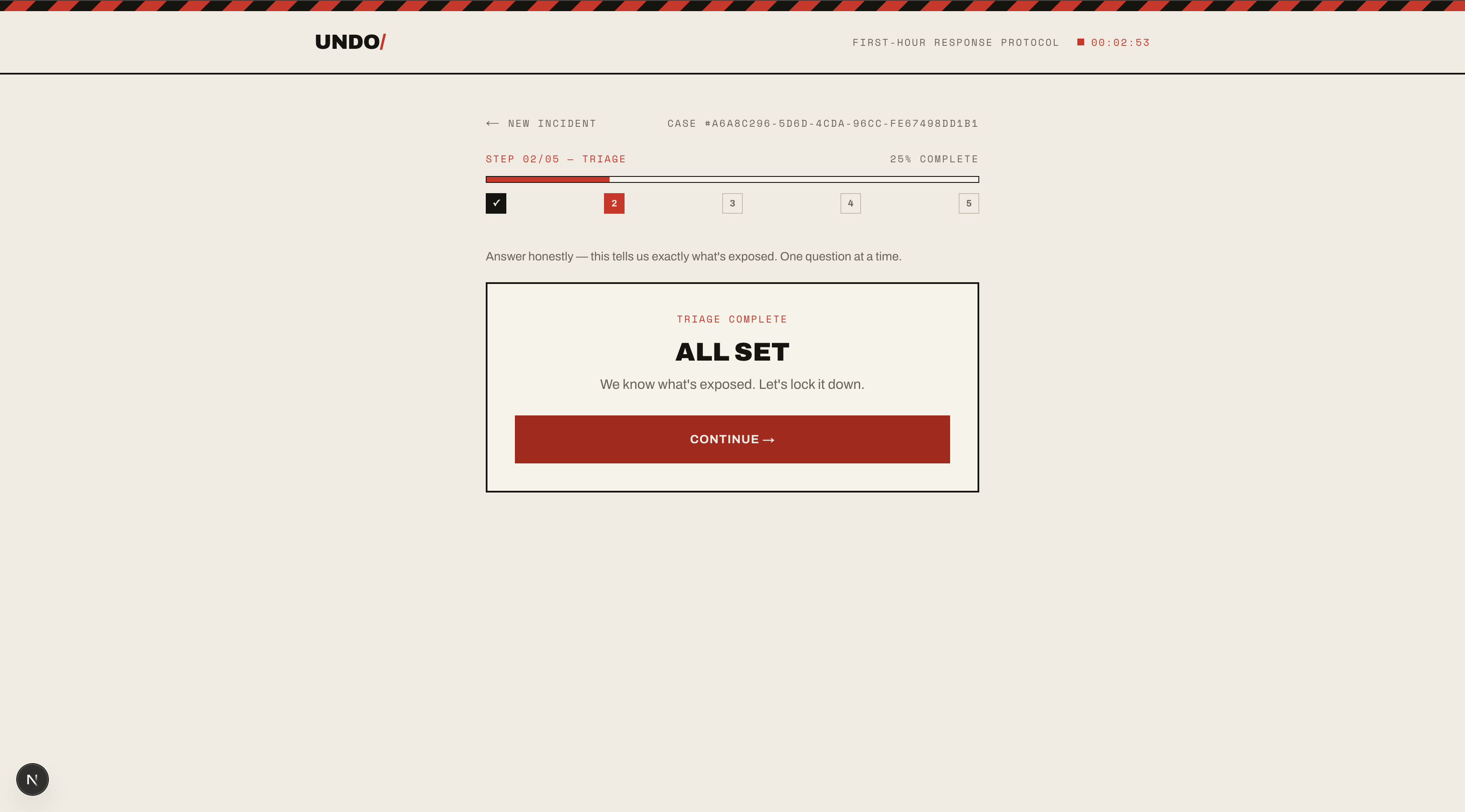
accent — built as a guided stepper instead of one overwhelming dashboard, using
Laws of UX (Hick's, Goal-Gradient, Peak-End) so a panicking person isn't lost.
The backend is rules-only: a keyword classifier that never sends your message to
an external model, a PII scrubber that strips phones/emails/numbers before
anything is stored, a scope engine that maps actions to exposed assets, and a
Nessie money-tracer. State lives in local JSON files, so the core works with no
external services. We split cleanly — one person on backend (/lib, /app/api),
one on frontend — and built against a shared API contract so neither was blocked.
Challenges we ran into
- Not overclaiming. It's tempting to shout "SCAM — 99%." But a wrong, confident verdict is dangerous. We rebuilt the classifier to abstain and say "unverified — treat it as a scam anyway" when it isn't sure, and labeled the money data honestly as examples, not your real bank.
- Making it calm under stress. Our first two UI passes looked like generic AI dashboards. We threw them out and went full editorial/brutalist so it reads like a form you can follow with shaking hands.
- Two people, one repo. Mock-first frontend vs. real backend, merge
conflicts, and a few
.nextbuild collisions — solved with a strict API contract and a mock that flips to the real backend with one env var.
Accomplishments that we're proud of
- It fuses three sponsor challenges into one honest story: T-Mobile (scam detection, honest confidence, privacy by design), Capital One (Nessie money tracing), and Winstead (incident log, scope board, works without external services).
- Privacy that's real, not a bullet point: your message never leaves the box to a third-party model, and PII is scrubbed before storage.
- A UI a scared, non-technical person can actually finish — start to "contained" in under two minutes.
What we learned
Detection is the easy, flashy part — the hard part is what you tell someone to do next, and saying it without lying about certainty. We also learned how much UX carries a safety product: the same logic in a cluttered dashboard is useless to someone in panic, and genuinely usable in a calm, one-step-at-a-time flow.
What's next for UNDO
- Real Nessie sandbox accounts (plumbing is already wired behind an env key).
- Voice mode for people who can't read a screen mid-panic.
- A "helper" view so a family member can run the steps alongside the victim.
- Localized, region-aware reporting links (FTC, IC3, local police non-emergency).
Built With
- capital-one-nessie
- github
- google-font
- nextjs
- node.js
- python
- react
- rest-api
- typescript
- vercel
