-
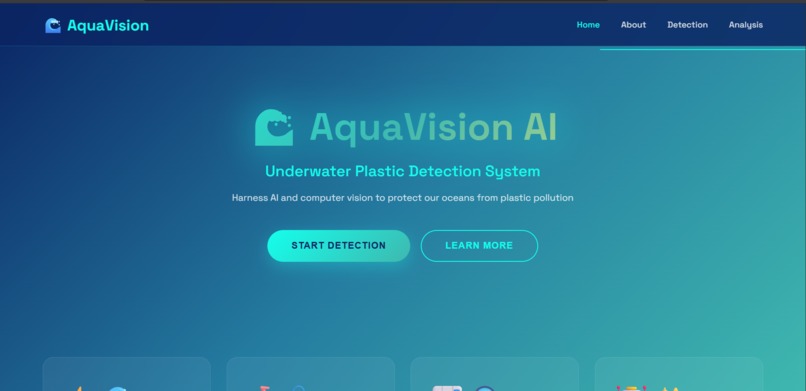
My website
-
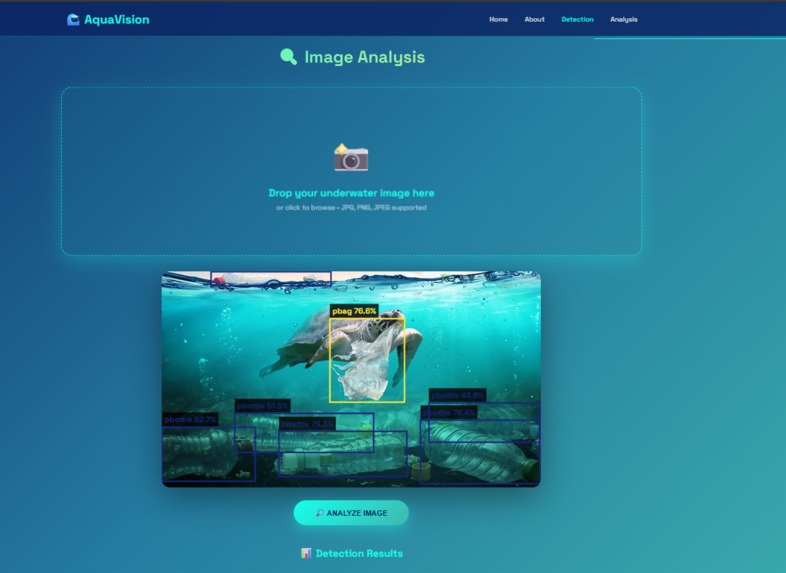
The main part
-
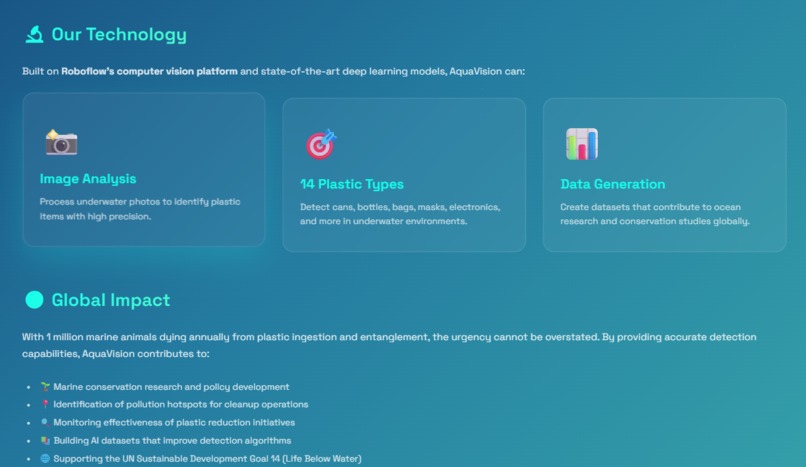
All about the website
-
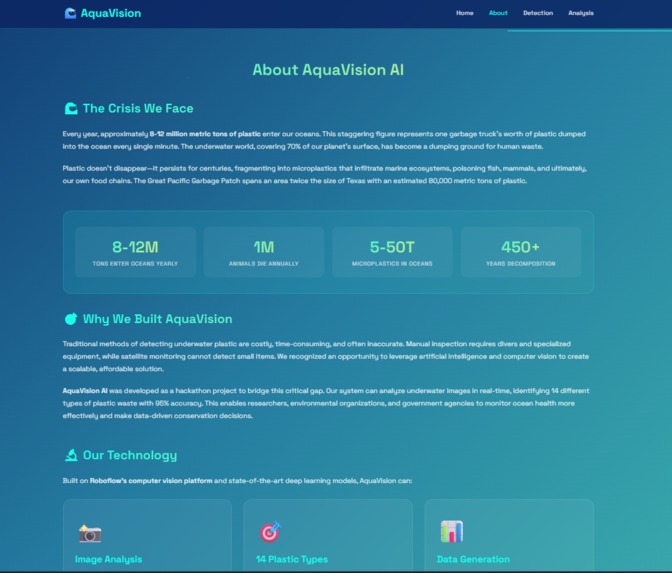
More details of website
Inspiration
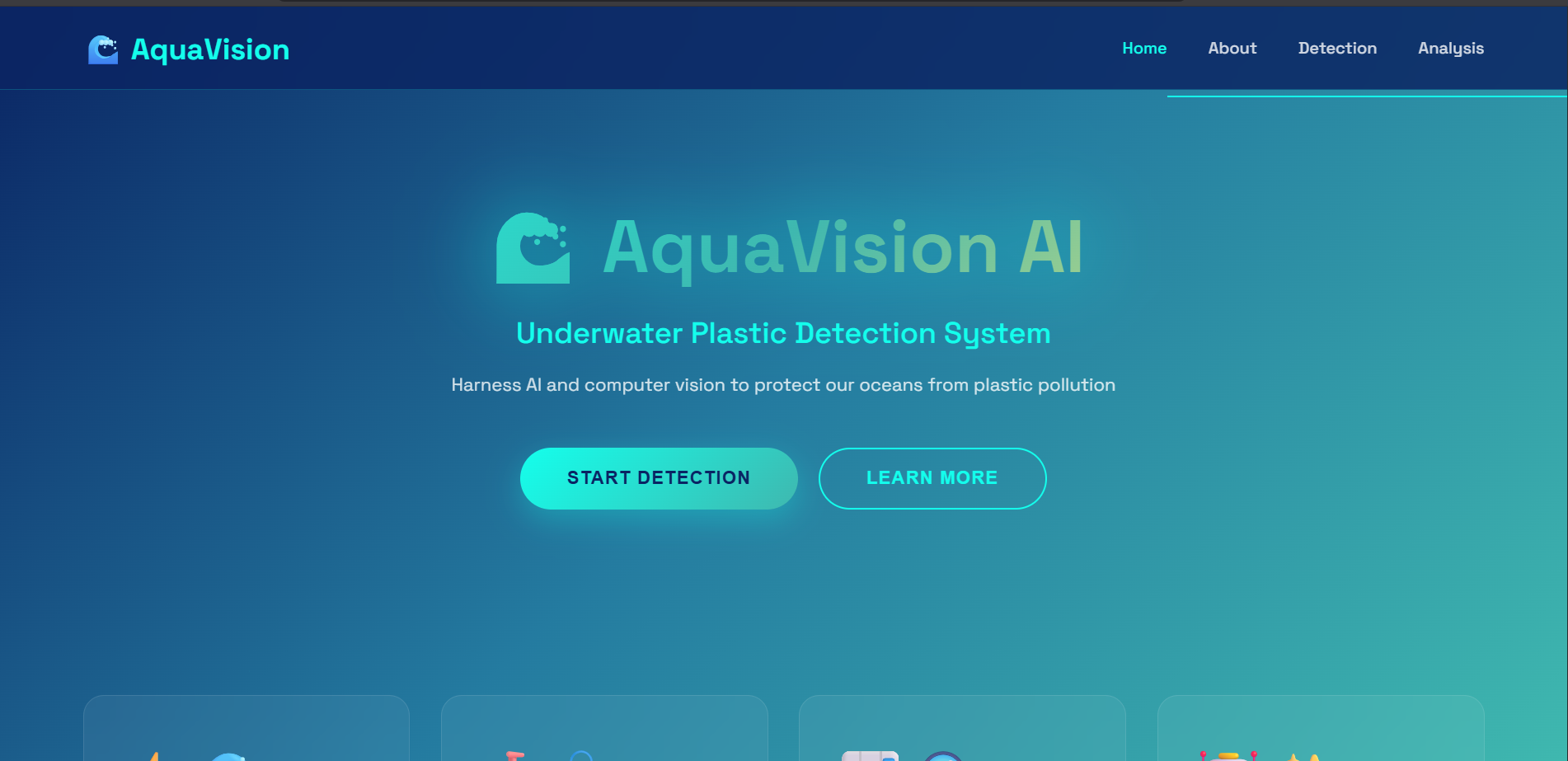
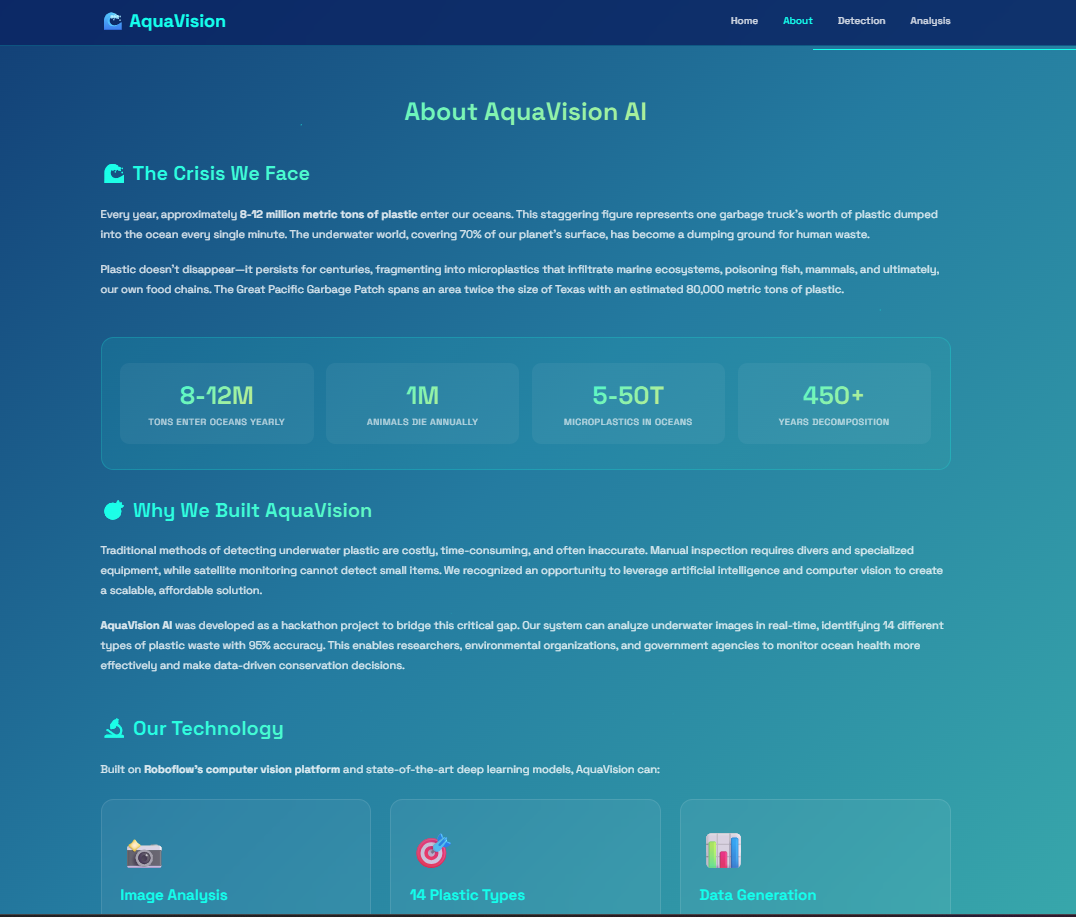
Plastic pollution in oceans and lakes is one of the biggest environmental challenges today. Manual monitoring and cleanup are slow, expensive, and inefficient, especially underwater where visibility is limited. We wanted to explore how AI and computer vision could automate this process and assist conservation teams with faster and smarter detection of plastic waste. This idea led to AquaVision AI — using technology to protect marine ecosystems.
What it does
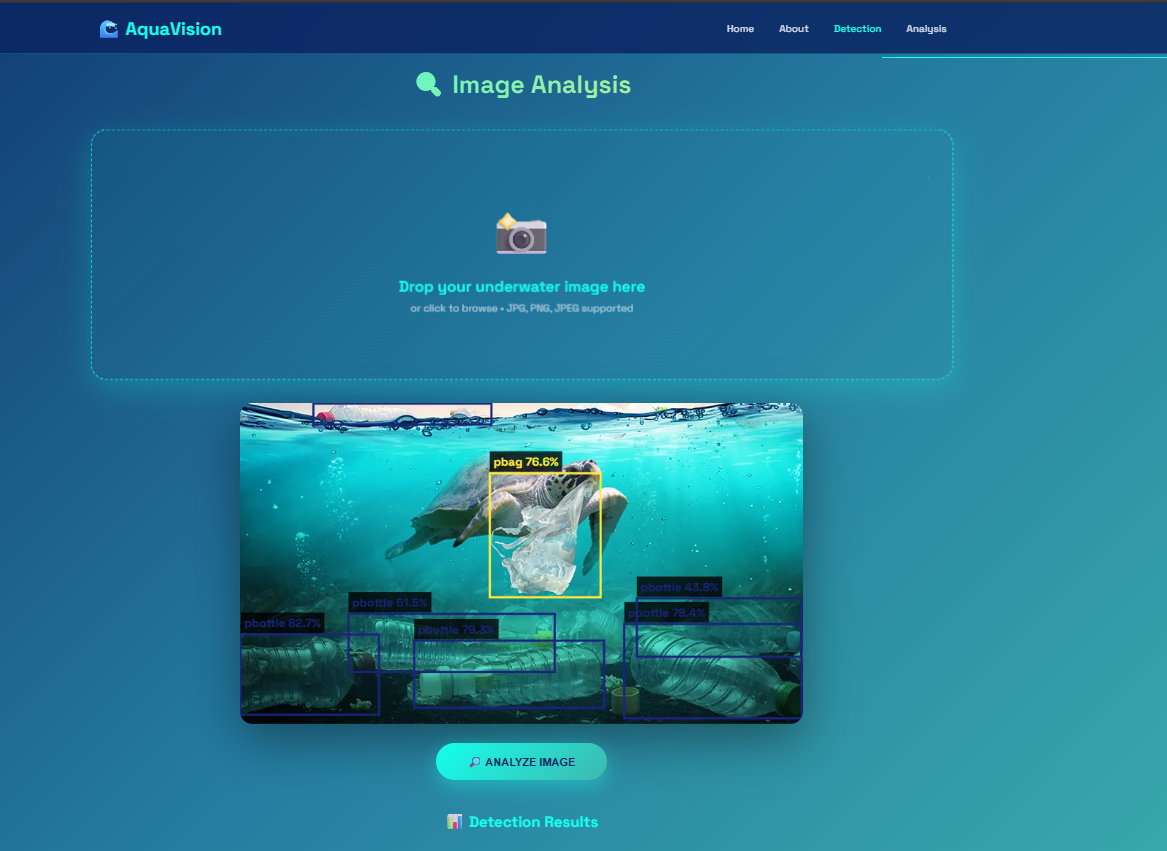
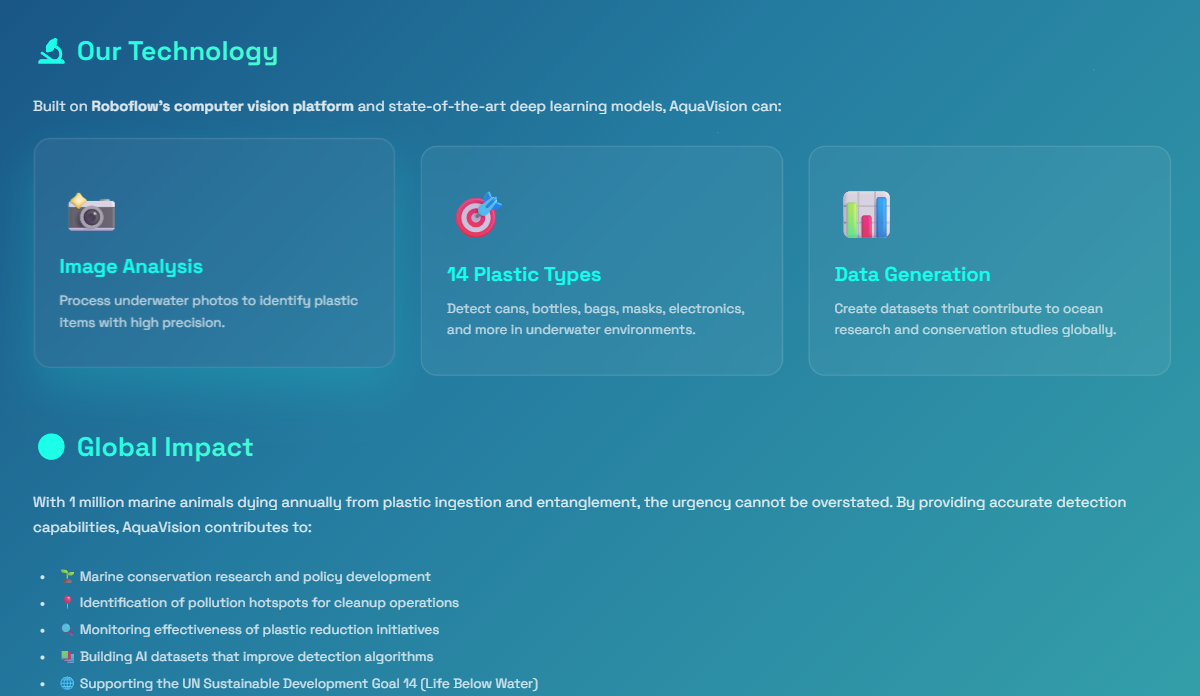
AquaVision AI is an underwater plastic detection system powered by computer vision. It analyzes underwater images or video feeds and automatically detects plastic waste in real time. The system highlights detected objects with bounding boxes, enabling quick identification and supporting efficient cleanup operations. It can be integrated with cameras, drones, or underwater robots for scalable environmental monitoring.
How we built it
We built the project using Roboflow to collect, annotate, and preprocess underwater plastic datasets. The images were labeled and augmented to handle different lighting and water conditions. We trained an object detection model for plastic recognition and deployed it for real-time inference. The system pipeline includes:
Dataset preparation and augmentation
Model training using Roboflow
Real-time detection with bounding boxes
Visualization and testing on underwater footage
Challenges we ran into
Working with underwater images was challenging due to low visibility, light distortion, and blurry objects. Collecting a balanced dataset for different types of plastic waste required extensive labeling. Optimizing the model to run efficiently in real time while maintaining accuracy was another key hurdle. Time constraints during the hackathon also pushed us to iterate quickly.
Accomplishments that we're proud of
Qualifying among the Top 19 teams out of 1200+ participants at Indradhanu Hackathon Building a functional end-to-end prototype within a limited timeframe Achieving reliable plastic detection in diverse underwater conditions Successfully demonstrating a real-world environmental use case for AI
What we learned
We gained hands-on experience with computer vision, dataset preparation, and model training. We learned how to rapidly prototype under deadlines, divide responsibilities as a team, and present technical solutions clearly. Most importantly, we understood how AI can create meaningful social and environmental impact.
What's next for Underwater Plastic Detection using Computer Vision
We plan to expand the dataset with more underwater samples to improve accuracy. Future improvements include deploying the model on edge devices, integrating with underwater drones or ROVs, and adding GPS-based waste mapping for large-scale cleanup operations. Our goal is to turn AquaVision AI into a practical tool for real-world ocean conservation efforts.
Built With
- flask
- htm
- javascript
- python
- rfdetr
- roboflow

Log in or sign up for Devpost to join the conversation.