-
-
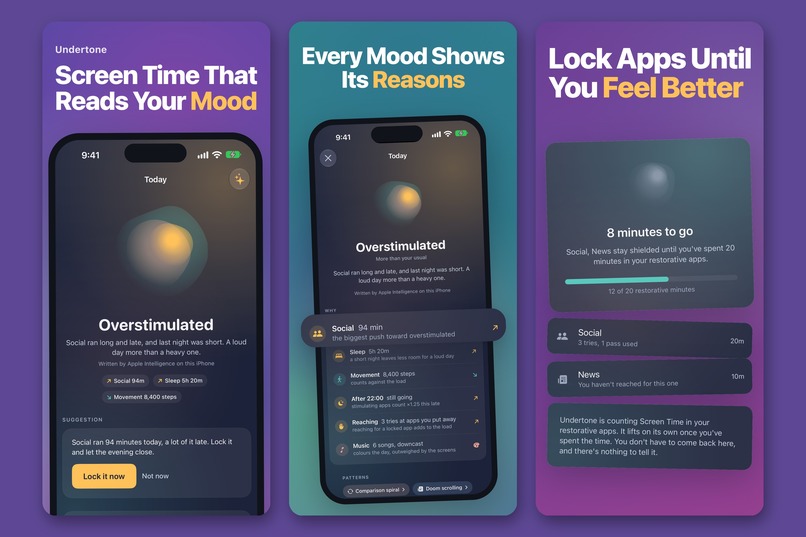
One word for your day, every reason behind it, and a lock that lifts once you feel better.
-
 GIF
GIF
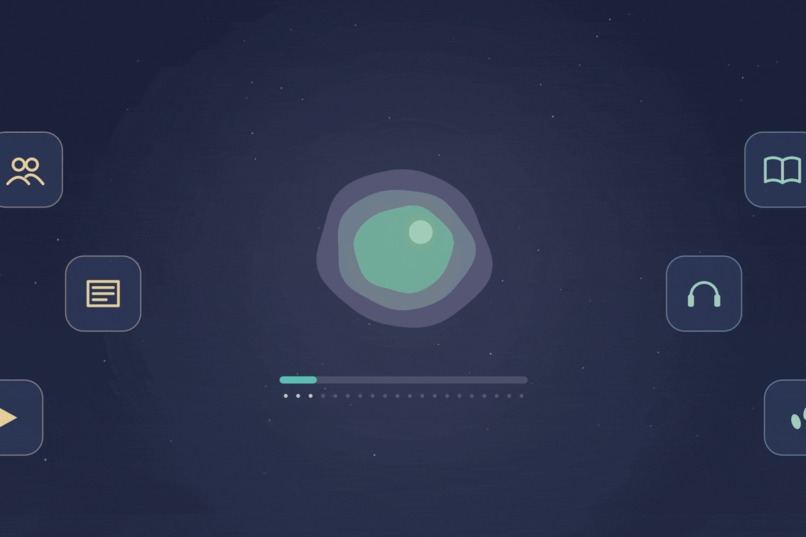
Undertone locks the apps that wind you up, and you earn them back by walking, reading or listening.
-
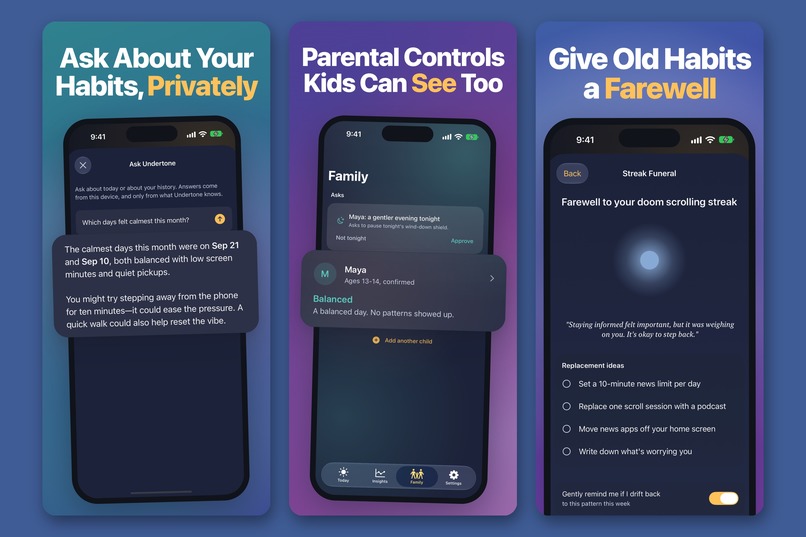
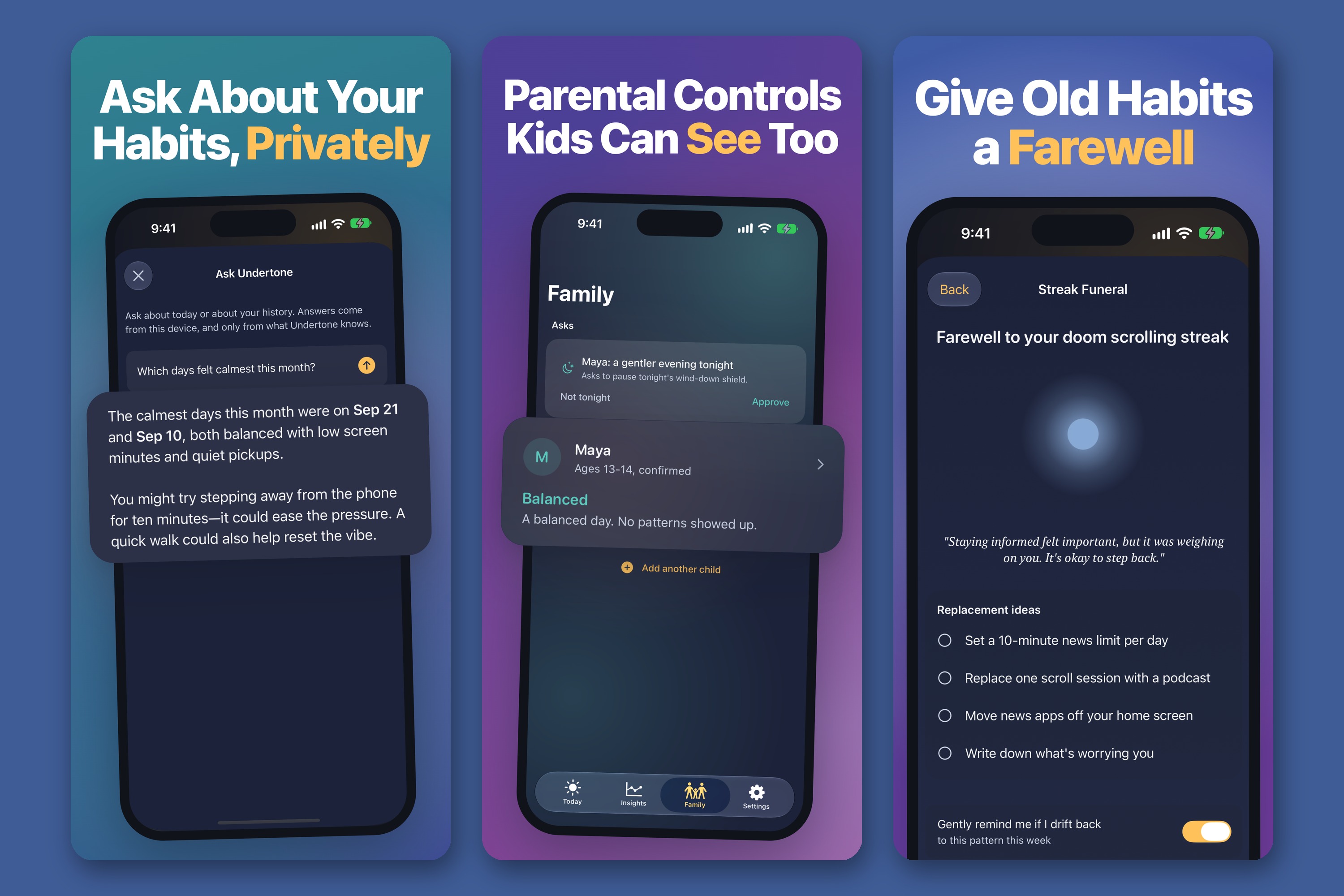
Ask about your habits privately, a family view where kids see what parents see, and a farewell for old habits.
-
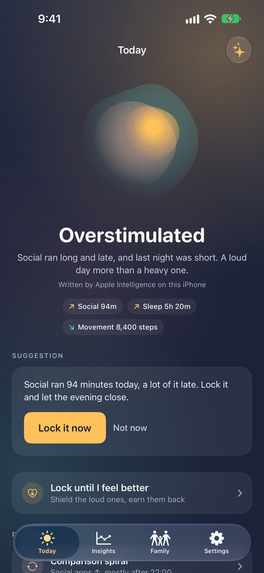
Frameless screenshot: today's mood, the reasons behind it, and one thing to do next.
-
App icon, 1024 x 1024.
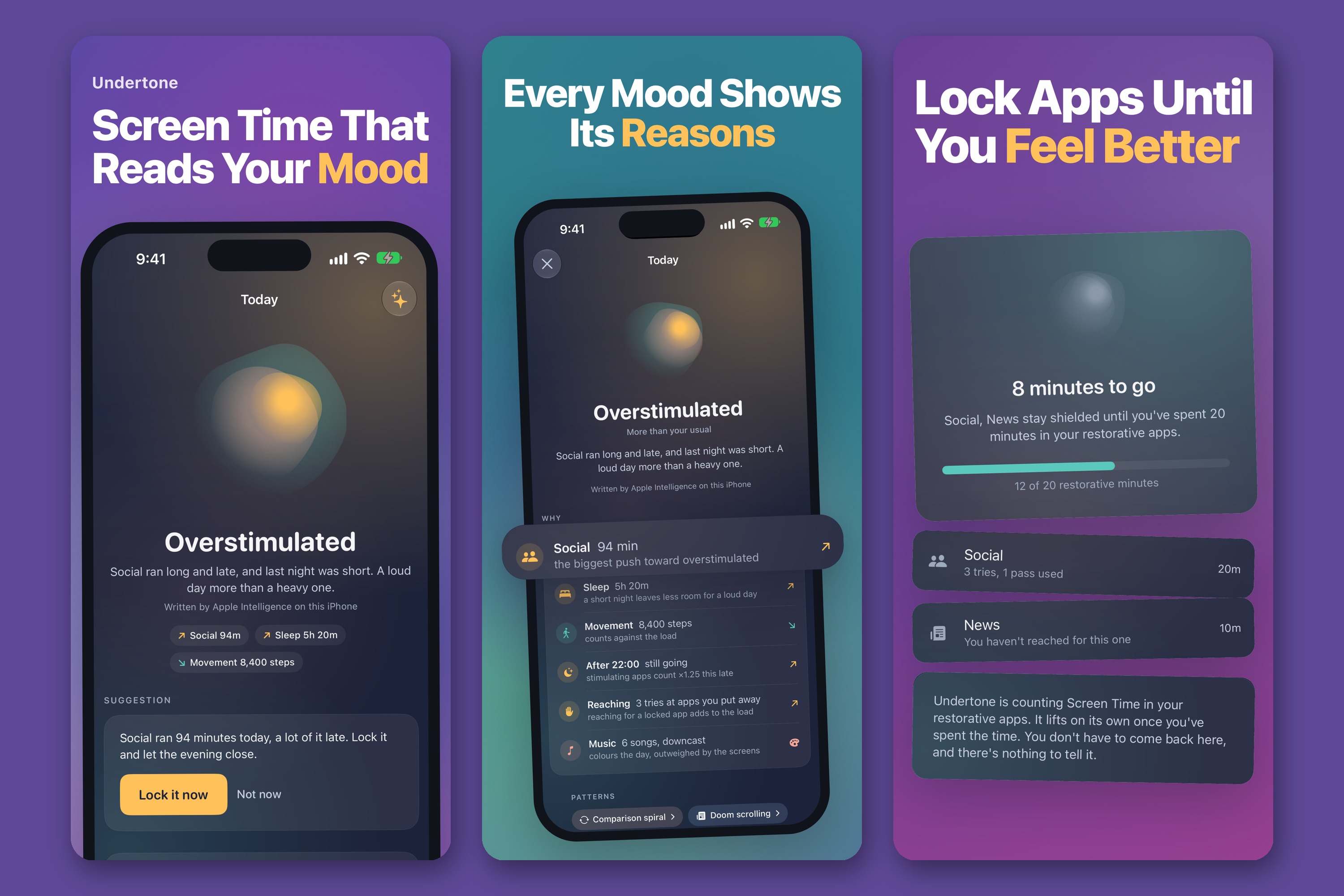
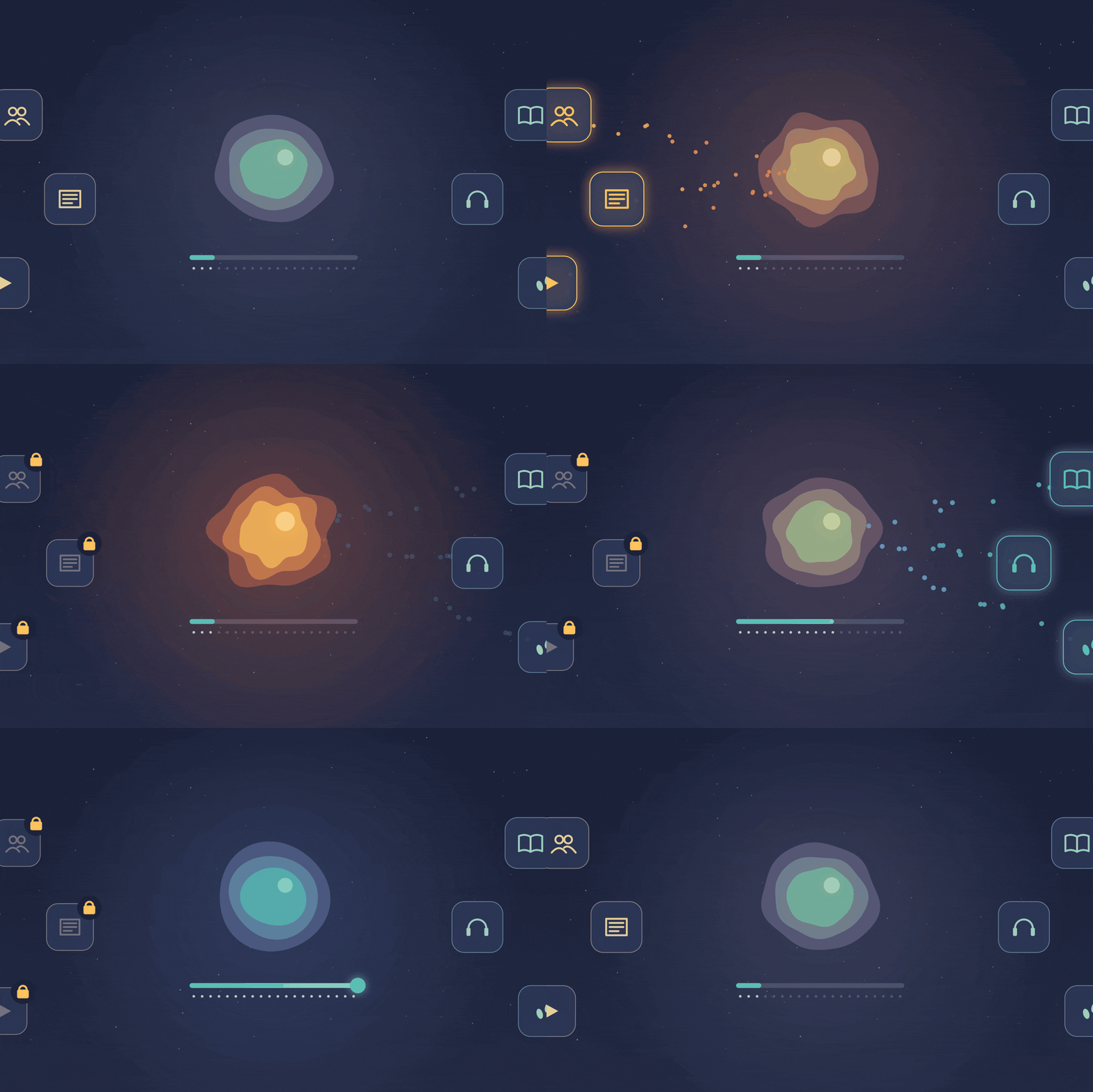
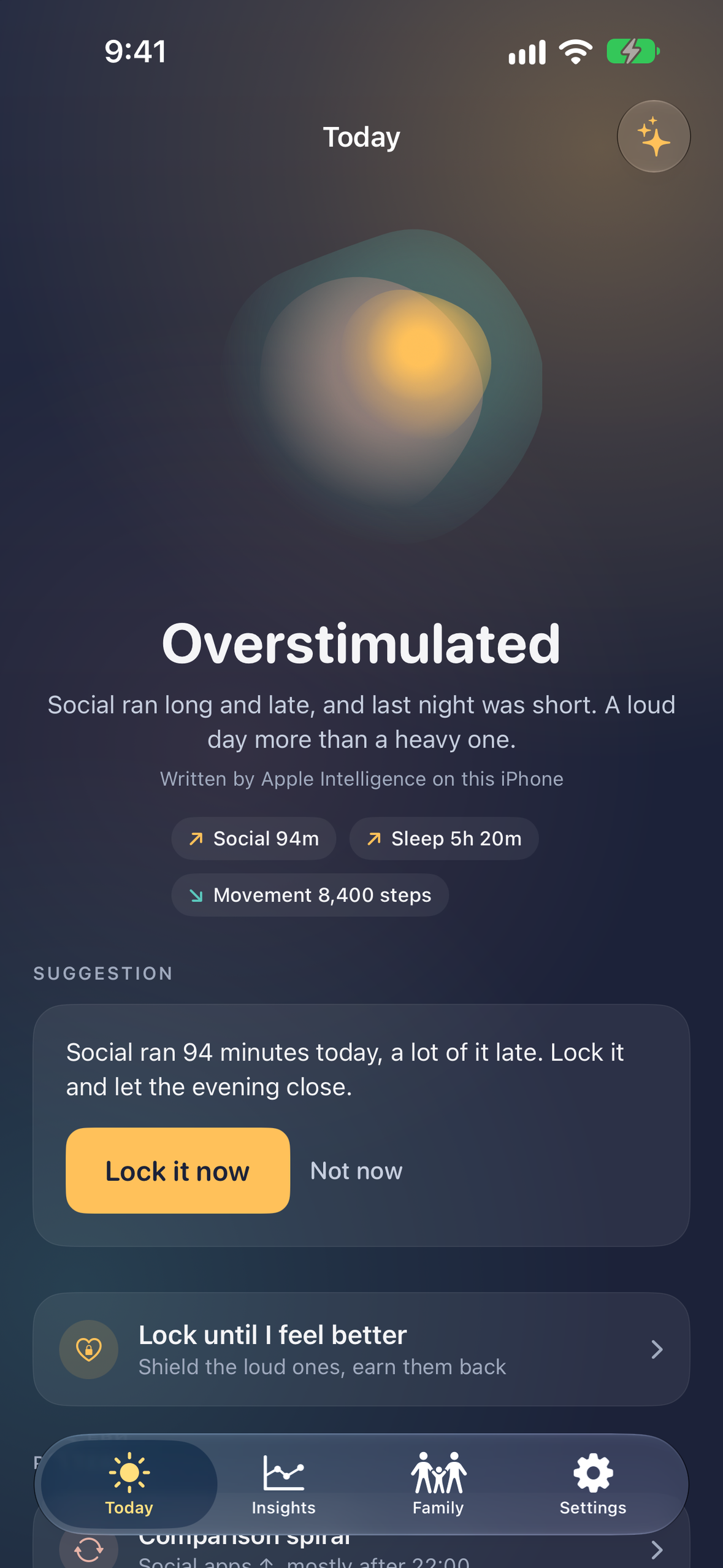
Undertone locks the apps that wind you up until you've walked it off. It reads your Screen Time, sleep, steps and music, names your day in one word and shows you why. The lock lifts on its own once you've spent enough time walking, reading or listening, even with the app closed.
The problem. Screen time tools count hours and nag. An hour of reading and an hour of doom-scrolling look identical to them, so the numbers explain nothing and people switch the limits off. Parental controls go the other way and hand parents a log of everything their child did, which turns the phone into a surveillance device.
The job Undertone does. For adults: when my phone leaves me wired and wrecked, tell me why and give me one small thing to do about it. For parents: let me know my kid is OK without reading their activity log.
Who it's for. Adults whose attention is stretched thin, including people who get nothing from hour counts. Teenagers aged 10 to 17 and the parents who worry about them.
Inspiration
Screen Time counts an hour of Books and an hour of news as the same hour, and anyone who has read the news until midnight knows they aren't. I wanted feedback that explains instead of scolds, a limit people would keep instead of dismissing, and a family view that shows a parent how their child's day felt without showing them what their child did.
What it does
- One word for your day. Balanced, overstimulated, overloaded, withdrawn, understimulated or restless, worked out from your apps, sleep, steps and music.
- Every reason, shown. Tap the word and see what pushed it: "Social 94 min, the biggest push toward overstimulated". "Sleep 5h 20m, a short night leaves less room for a loud day". "8,400 steps, counts against the load".
- One thing to do next. Home shows a single suggestion you can act on in a minute, such as locking the noisy apps and taking a walk.
- A lock you earn back. Choose the apps that wind you up and lock them until you've spent enough minutes on things that settle you: walking, reading, podcasts, music or meditation. It releases itself. Keep reaching for a locked app and it takes longer to earn back; leave it alone and it gets easier. Two short passes a day cover real emergencies.
- Ask. "Which days felt calmest this month?" Answered privately on the iPhone, from your own history only.
- Streak funeral. Retire a bad habit on purpose: hold to let the doom-scrolling streak go, then pick what replaces it.
- Family. A child's phone shares one mood word, its trend and a tip for checking in. It never shares minutes or app names, and the child sees exactly the card the parent sees. A child can ask for a gentler evening, and the parent approves with one tap.
How I built it
I built Undertone alone. Everything runs on the iPhone, using Apple's Screen Time, Health and Music frameworks and Apple Intelligence on the device. A set of clear rules decides the mood, so the result is explainable and the AI can't make one up; the AI only writes the day's sentence and answers questions. Family sharing goes through the parent's and the child's own iCloud accounts. There are no Undertone servers and no analytics. RevenueCat runs the subscriptions.
Challenges I ran into
- Making a limit people keep. Most limits have an "ignore" button, so people ignore them. Undertone's lock is set in a calm moment and released by doing something that helps, with two emergency passes instead of a dismiss button.
- Trust between a parent and a teenager. The answer was symmetry: the child sees exactly what the parent sees, and sees it before anything is shared.
- Keeping an AI coach honest about wellbeing. The AI can phrase the day but never decide it, and it is told never to diagnose or name a condition. If the rules say balanced, the sentence can't say overloaded.
- Working within Screen Time's privacy rules. Apple doesn't give apps a minute-by-minute log. Undertone builds its picture from the limits it sets for each kind of app, which keeps it inside Apple's privacy model.
Accomplishments that I'm proud of
- The reasons screen, which turns "6h 12m" into something a person can act on.
- A lock that frees itself once you've done the thing that helps, even when the app is closed.
- A family view where the parent and the child see the same card.
What I learned
I built the lock around one idea: a limit you set yourself in a calm moment is easier to keep than one somebody else set for you. The screen on a locked app says so: "You set this up with a clearer head than the one asking now."
What's next
Mood check-ins saved to Apple Health, and more languages.
Built With
- app-intents
- cloudkit
- deviceactivity
- familycontrols
- foundation-models
- healthkit
- managedsettings
- musickit
- private-cloud-compute
- revenuecat
- swift
- swiftui
- the-composable-architecture
- widgetkit

Log in or sign up for Devpost to join the conversation.