-
-
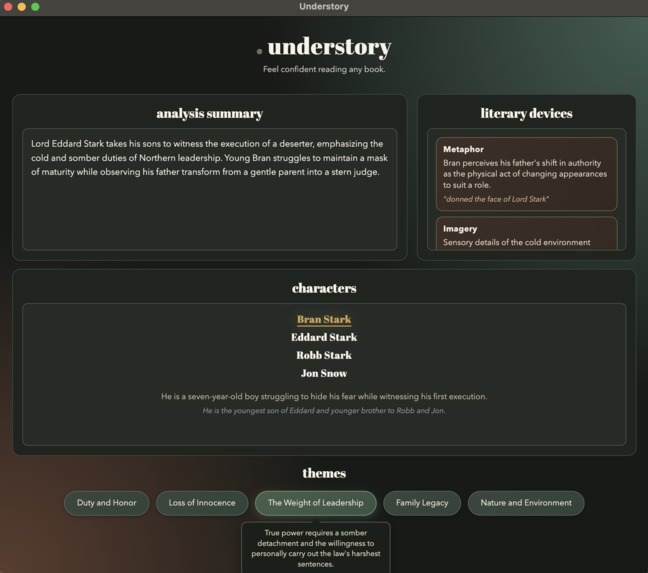
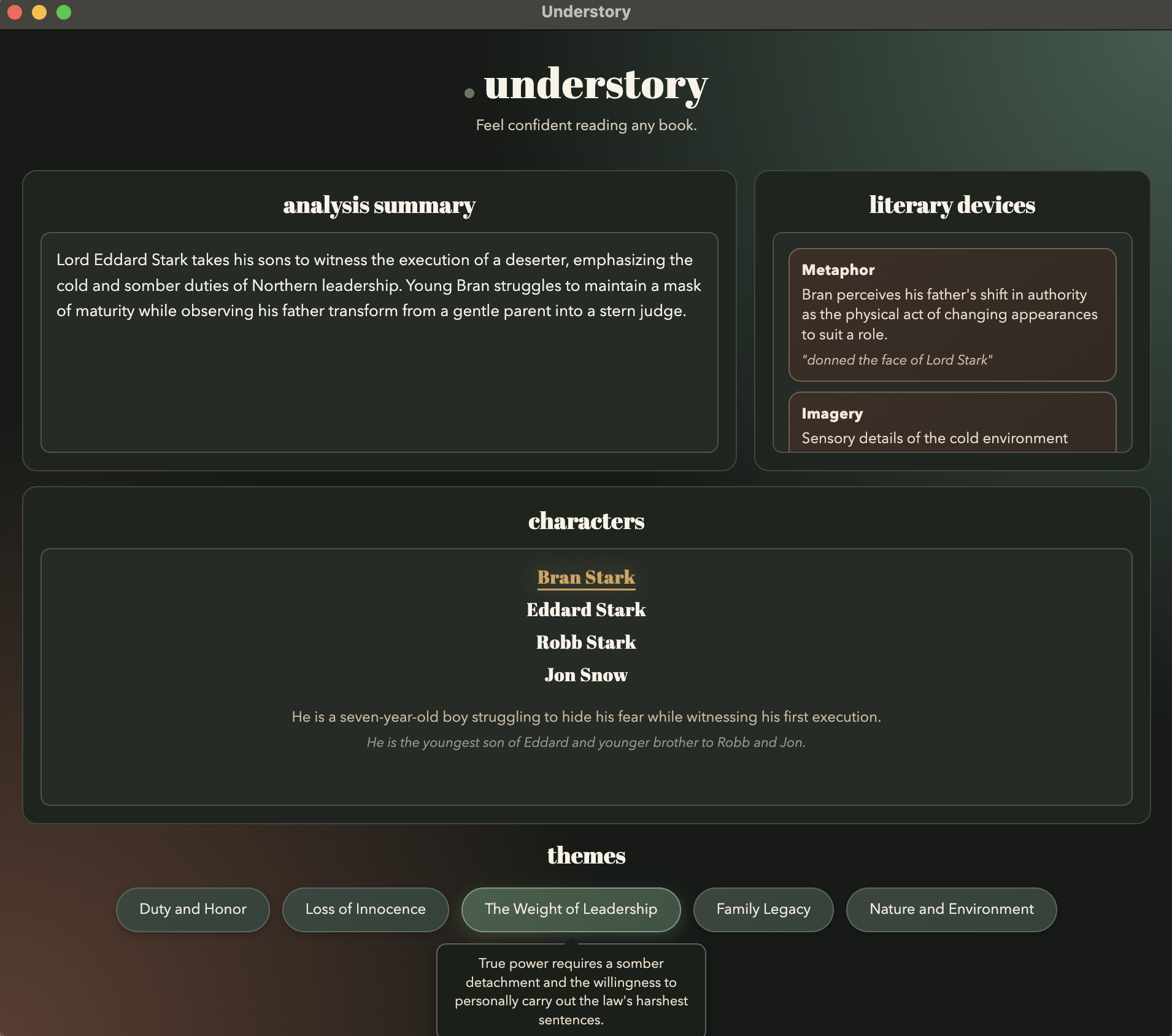
View from the app where we can engage further with the text with the use of literary devices, character analysis, and overall book themes.
-
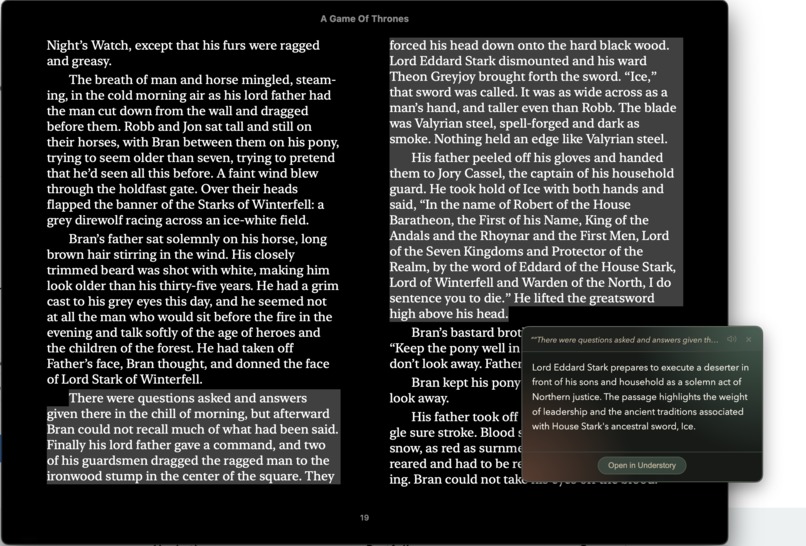
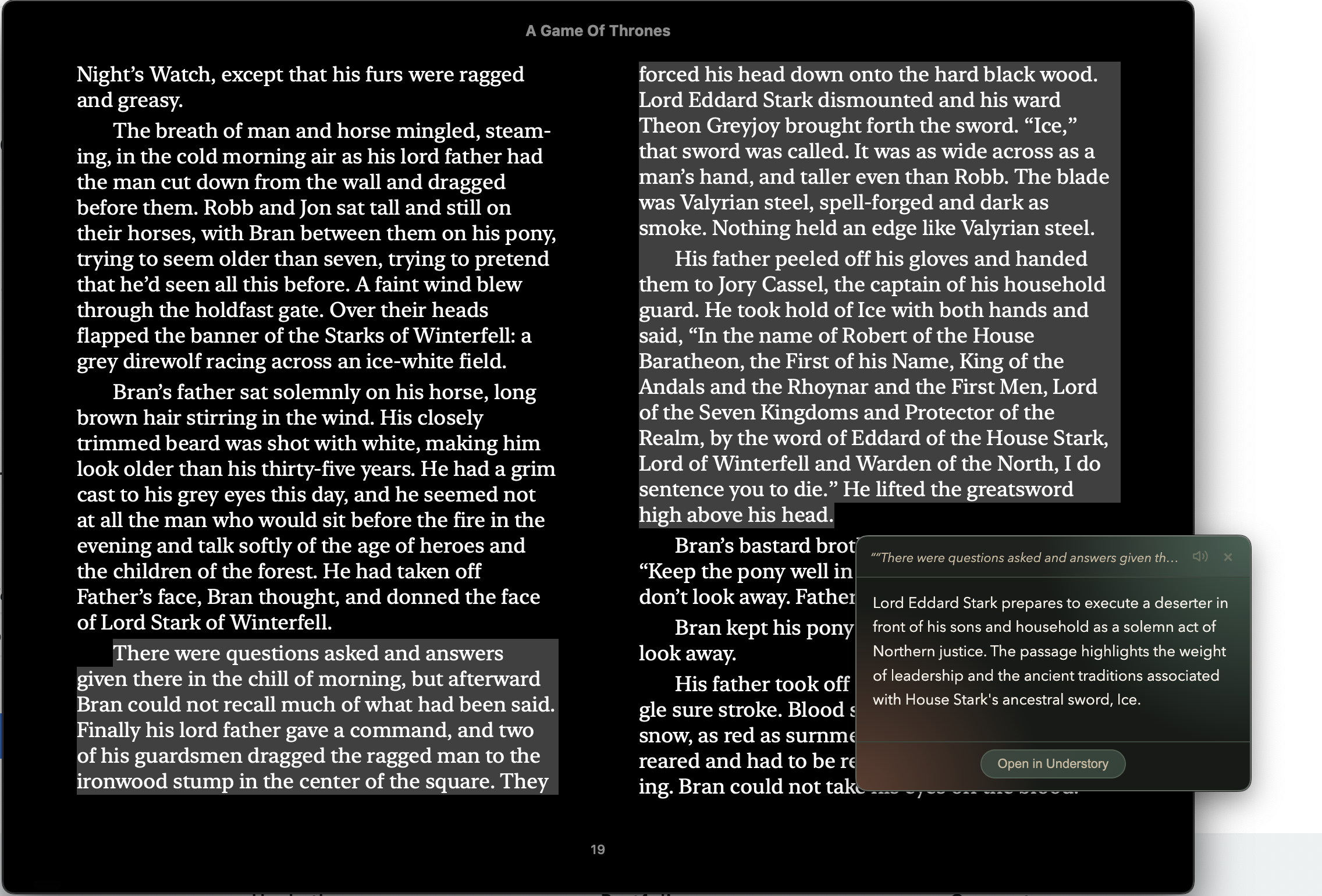
View from pop up where we can access the description of the passage, the text-to-speech of the description and access the app.
Inspiration
understory was inspired by the growing literacy crisis and the reality that the average reading level in the United States is around a seventh-grade level. Many readers want to engage with complex literature, but dense language and academic-style analysis can feel intimidating or exclusionary. We wanted to build something that lowers those barriers. Instead of replacing reading with summaries or shortcuts, understory supports deeper engagement by making complex texts more approachable and less overwhelming.
What it does
understory is an AI-assisted reading companion that makes complex literature more accessible in real time. When a user highlights a portion of text, understory generates a clear and structured explanation of that specific section, helping unpack difficult language, character motivations, and narrative developments. Users can also activate an interactive analysis mode that provides deeper literary exploration, including character dynamics, themes, emotional tone, and literary devices. To further improve accessibility, we integrated text-to-speech functionality for the generated explanations, allowing users to listen to the analysis directly from the pop-up interface. This supports readers who benefit from auditory processing and makes engagement with challenging texts more flexible and inclusive. Rather than functioning as a chatbot, understory delivers layered, structured insights that support comprehension while preserving the integrity of the original reading experience.
How we built it
We built understory using an agent-based architecture powered by the Gemini API for structured literary analysis and ElevenLabs for high-quality text-to-speech. When a user highlights a section of text, we send structured prompts to Gemini to generate clear explanations focused on character dynamics, themes, emotional tone, and literary devices. By constraining our prompts, we ensured the outputs remained organized, readable, and accessible. To expand accessibility, we integrated ElevenLabs to convert each explanation into natural, expressive audio. Users can listen to the generated analysis directly from the pop-up interface, supporting different learning styles and making engagement with complex texts more inclusive. The frontend was built with Electron, JavaScript, HTML, and CSS, creating a highlight-triggered pop-up experience that feels like a reading companion rather than a chatbot.
Challenges we ran into
One of our biggest challenges was prompt engineering. Generating meaningful literary explanations while keeping them accessible required careful refinement and constraint. We had to balance analytical depth with clarity so that explanations felt supportive rather than overwhelming. Another challenge was designing an interface that avoided a traditional chatbot experience while still clearly presenting AI-generated content. Integrating text-to-speech in a seamless and non-disruptive way also required thoughtful design to maintain a smooth reading flow.
Accomplishments that we're proud of
We are proud of building an accessibility-focused AI system that supports readers in real time. Our highlight-based interaction model keeps the reader in control and maintains engagement with the original text. We are also proud of our structured, agent-based approach to using Gemini, which allowed us to produce organized and purposeful literary analysis rather than generic outputs.
What we learned
We learned that generative AI becomes significantly more effective when prompts are carefully structured and aligned with a clear user goal. Constraining outputs improves clarity and accessibility. We also learned that interface design plays a critical role in shaping how users perceive AI, especially when the goal is support rather than replacement.
What's next for understory
Next, we plan to expand adaptive reading-level adjustments so explanations can dynamically match different comprehension levels. We also want to enhance the text-to-speech experience with adjustable voice settings and pacing controls. Long term, we envision understory as a platform that empowers readers of all backgrounds to engage confidently with complex literature while maintaining ownership of their reading experience.

Log in or sign up for Devpost to join the conversation.