-
-
The wordmark for First Step Out, the first feature of Throughline.
-
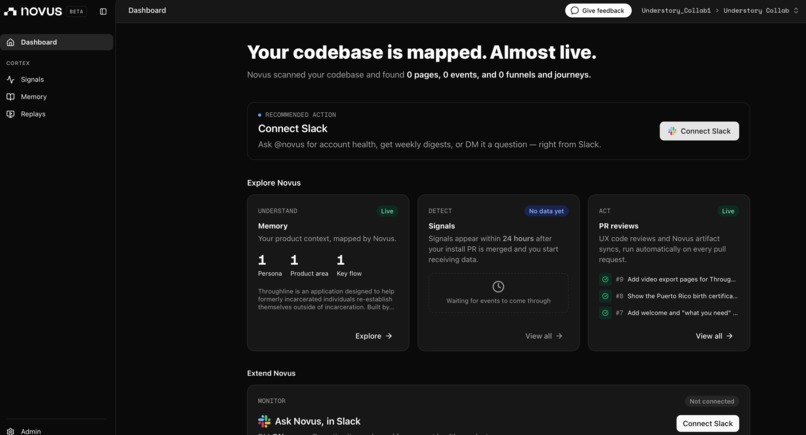
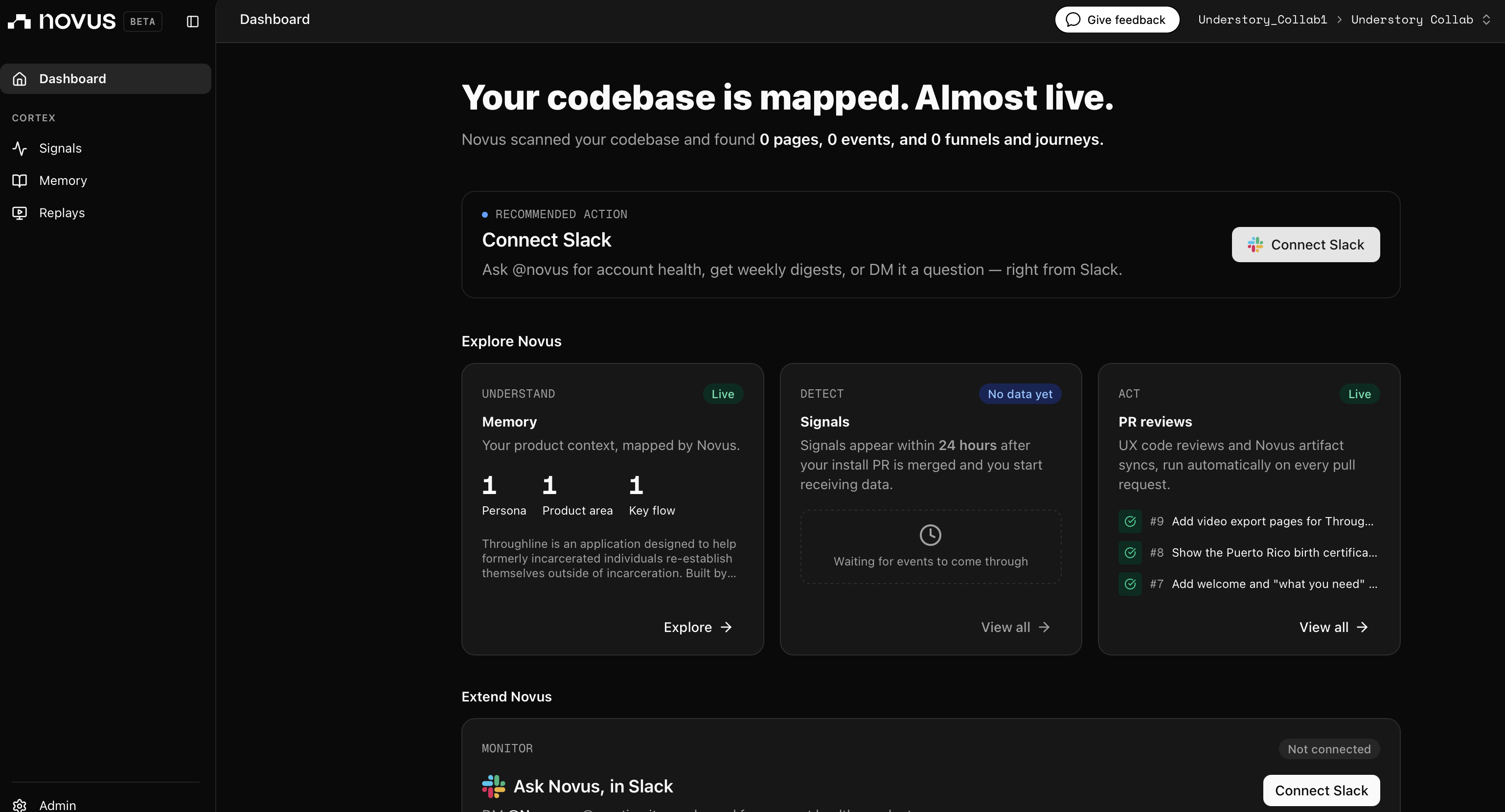
Novus dashboard
Inspiration
The Texas DPS REAL ID Checklist tells you what to bring to get your state ID. It is written at a 12th grade reading level. It assumes you have a current address, a recent ID, and time to read carefully.
None of that is true for someone who just walked out of prison.
The average TDCJ release reads at a 7th-grade level. Many read lower. They often leave with an old Social Security card and the clothes they came in with. They have a job lined up that they cannot take without an I-9. They have one bus fare to spend on a DPS trip, and they cannot afford to be turned away.
The system has a checklist. It does not work for the person who needs it most. We built the friendlier version.
What it does
First Step Out asks a short set of plain questions. What do you have. Where are you staying. What are you applying for.
It returns a personalized printable. Here is what to bring to DPS. Here is what you have already. Here is what you still need. Here is where to get it.
It is written at a 3rd to 4th grade reading level. It works on a cheap phone. It saves your progress on your device, so nothing about you is sent to a server.
When something is outside what the tool can do, it says so plainly and points to where to go next. The exact agency, the exact form, the cost. For the harder cases, a real legal aid org instead of a dead link.
How we built it
The app is Vite, React, TypeScript, and Tailwind CSS v4. It builds to a static bundle and runs on Vercel. The question tree and document content live in the repo as version-controlled data, so collaborators with lived experience can read and correct the actual words.
State lives in the browser. There is no backend, no account, no login. Our users have good reason to guard their personal information, so we collect the least we can.
We built the product brief, the personas, and the design system in the same repo as the code. Engineering follows test-driven development. The team agreed on a house writing style that bans em dashes, "not this but that" phrasing, and the other tells that make text sound like a machine.
Challenges we ran into
Writing at a 3rd to 4th grade reading level is harder than it sounds. Words like "verify," "residency," and "issued" all had to go. Every sentence we kept earned its place.
Getting the Texas DPS requirements right was the load-bearing piece. The rules change, and a wrong checklist sends someone to DPS underprepared. We grounded the document table in the official DPS source.
We had to decide what First Step Out does not do. It does not fetch documents. It does not file forms. It does not replace the person sitting next to you. Naming that scope honestly was harder than adding features.
Accomplishments that we're proud of
We started this build with a session with a formerly incarcerated reviewer, before writing a line of code. They will see the product again before we submit. The flow, the questions, and the language have been shaped by what they said, not by what we assumed.
The product respects the person using it. We assume competence, not failure. We lead with what someone has, not what they are missing. We never make the user feel watched or graded.
The brand direction is a felt place, not a color swatch. A porch on a cool, breezy day. Lemonade. Leon Bridges. Lilacs on the wind. The design we built tries to feel like that, on a phone, while the person is reading under stress.
We are building a tool, not a community. Where a person should help, we point to a person. Software supports the work. It does not deliver it.
What we learned
The system already has a checklist tool. Texas DPS shipped one. It is technically accurate. It is also useless to the person it most needs to reach. The gap was not a missing feature. The gap was a missing posture.
Building with the community changes what gets built. Our pre-build session with a formerly incarcerated reviewer changed the question order, the language, and the moments where we hand off to a person. None of that came from us. It came from the room.
What's next for First Step Out
First Step Out is the first feature of Throughline, a companion for the moments that decide whether reentry holds together. On Time keeps you on track with court dates. Clear Path helps clear your record. Good People helps you know who to trust.
We built Texas as the first configuration of an engine that can hold other states. The document chain is similar everywhere, even when the agencies and the forms differ. The question tree and the document data live in the repo as version-controlled content, so adding a state is a writing job, not a rebuild.
Next is more time with formerly incarcerated reviewers in Texas, then a real-world session with a peer navigator working with people right out of TDCJ. We are building an advisory board of formerly incarcerated individuals to guide what gets built and how it gets built, beyond this hackathon.
Built With
- claude-code
- github
- novus.ai
- react
- tailwind-css
- typescript
- vercel
- vite


Log in or sign up for Devpost to join the conversation.