-
-
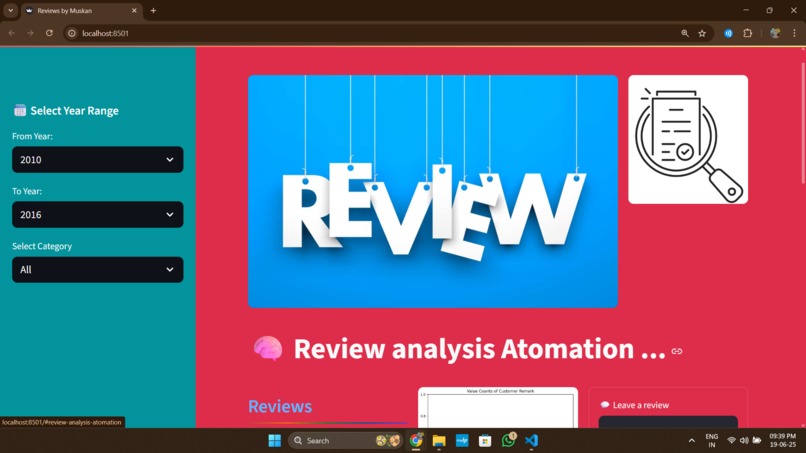
Front-page
-
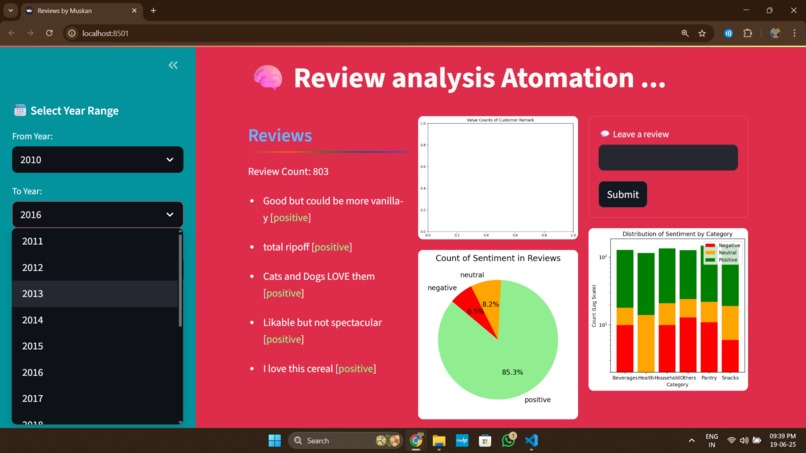
Reviews-analysis
-
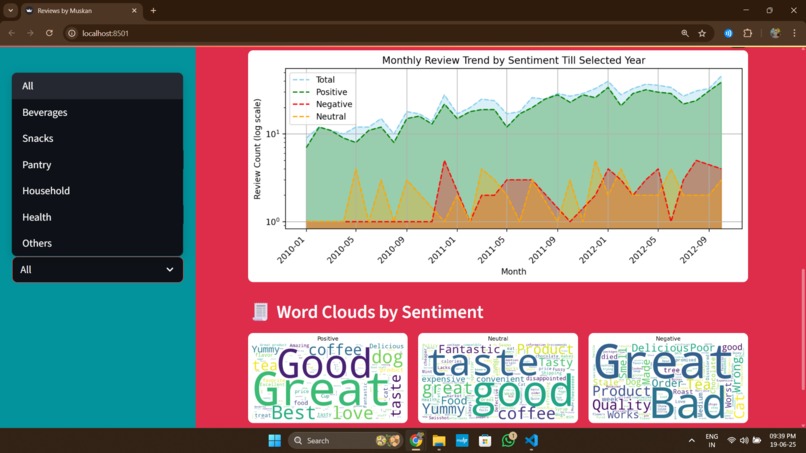
Final-sentiment
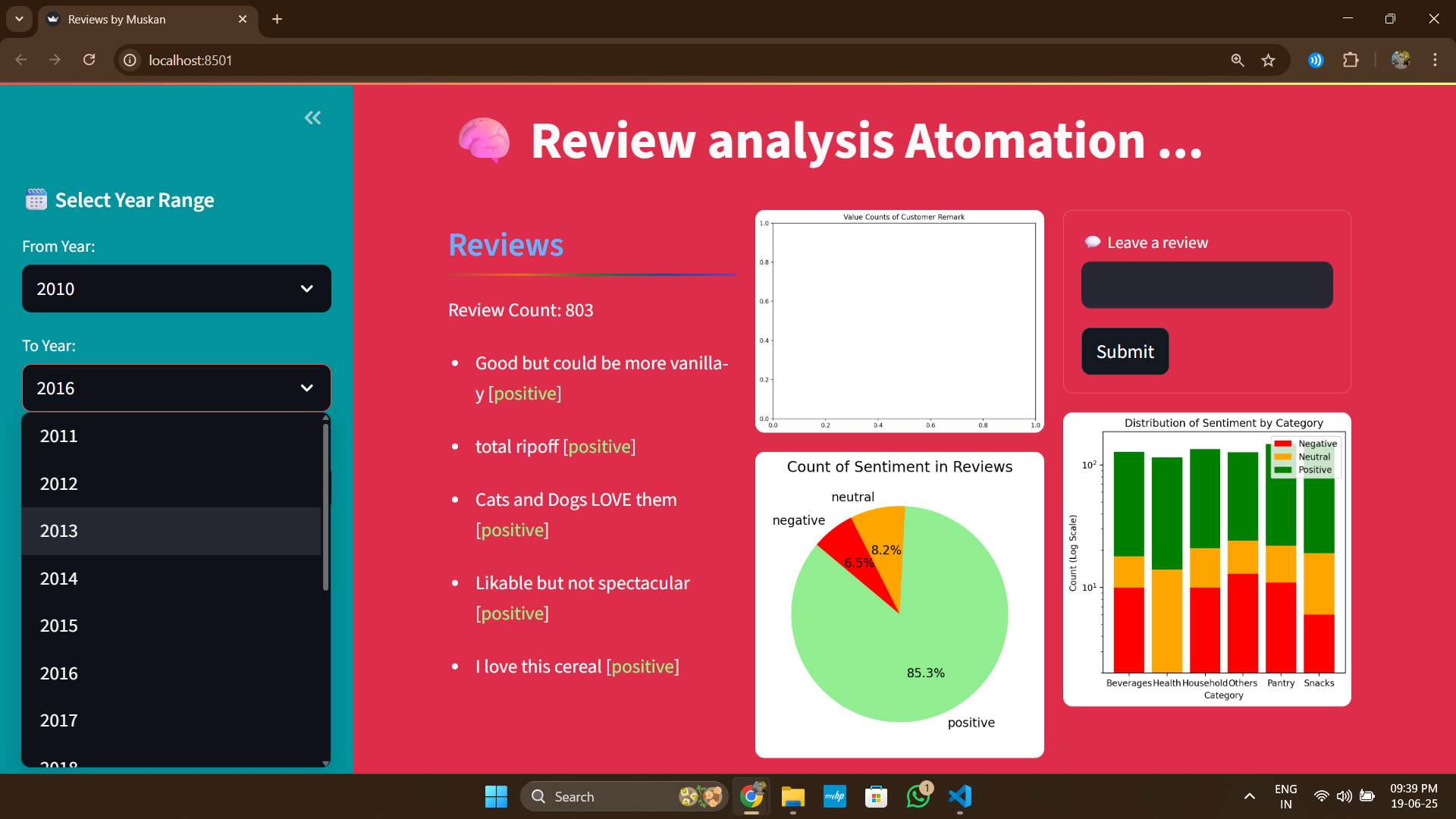
Inspiration With the overwhelming amount of customer feedback available online—through reviews, comments, and ratings—businesses often struggle to extract meaningful insights efficiently. We were inspired by the idea that machine learning and NLP could bridge this gap, helping brands truly understand their customers at scale. Our goal was to design a system that goes beyond surface-level ratings and uncovers what people are really saying, how they feel, and why.
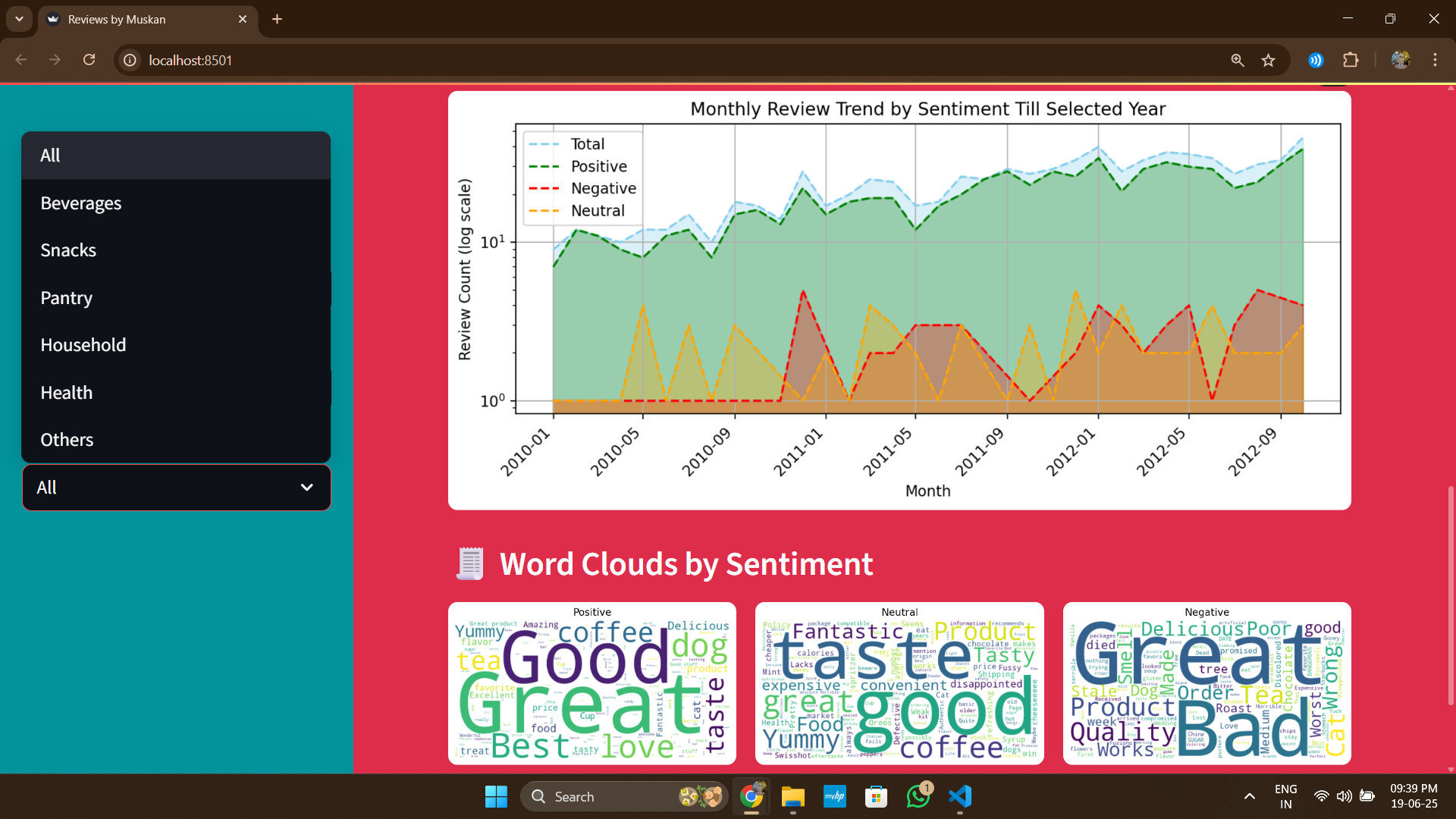
What it does Our project automatically analyzes customer reviews using Natural Language Processing to determine the sentiment behind each review—categorizing them as positive, negative, or neutral. It also extracts key themes and keywords, giving deeper context to user feedback. This system helps businesses or product teams monitor public opinion, prioritize improvements, and make data-informed decisions.
How we built it We began by collecting a dataset of product reviews from open-source repositories. The pipeline includes:
Text preprocessing: cleaning, tokenization, stop-word removal, and lemmatization.
Feature extraction using TF-IDF and word embeddings.
Model training using:
Logistic Regression for baseline sentiment classification.
BERT (Bidirectional Encoder Representations from Transformers) for contextual understanding and improved accuracy.
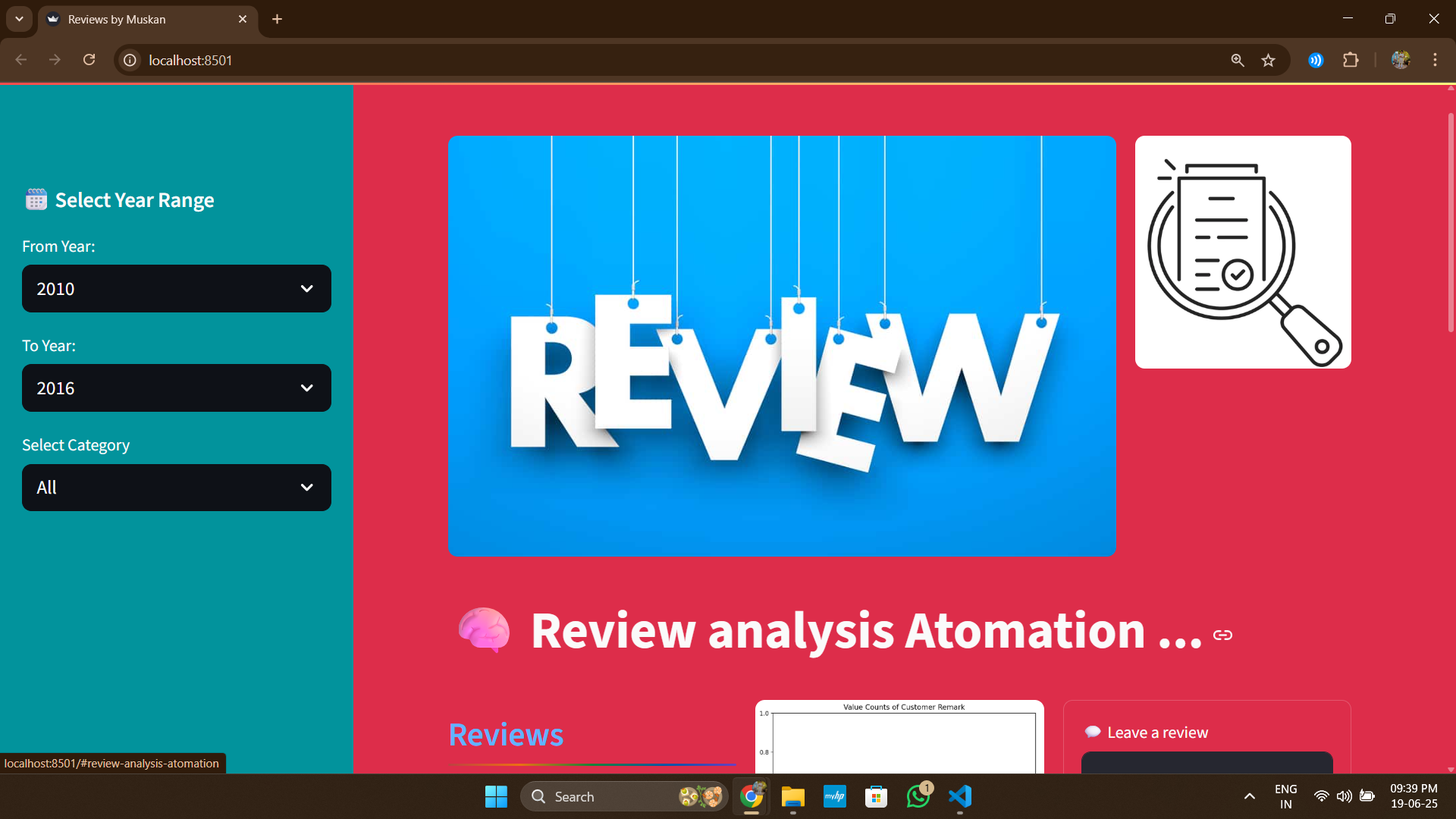
Visualized results with matplotlib and seaborn, and deployed a simple interface using Streamlit.
Challenges we ran into Imbalanced data: Some sentiment classes were underrepresented, requiring techniques like oversampling and class weighting.
Computational limitations: Training transformer models like BERT is resource-intensive, so we had to optimize batch sizes and use pre-trained models.
Ambiguous language: Sarcasm and mixed sentiments in reviews posed classification challenges that required more nuanced handling.
Accomplishments that we're proud of Achieved over 90% accuracy using BERT on a cleaned, balanced dataset.
Successfully visualized sentiment distribution and keyword trends across thousands of reviews.
Built an intuitive prototype that makes complex NLP accessible for non-technical stakeholders.
What we learned The real-world application of NLP often involves significant preprocessing and thoughtful model selection.
Even small shifts in feature extraction or model tuning can impact results dramatically.
We also deepened our understanding of sentiment’s context-dependency and the limitations of basic classifiers when handling complex emotions.
What's next for Understanding the Voice of Customer: Using ML techniques Emotion Detection: Moving beyond sentiment to detect specific emotions (anger, joy, frustration).
Topic Modeling: Automatically identify recurring themes and product-specific issues.
Multilingual Support: Extend the system to support analysis of non-English reviews.
Real-time Dashboard: Deploy the tool as a web service that continuously updates with new feedback.

Log in or sign up for Devpost to join the conversation.