-
-
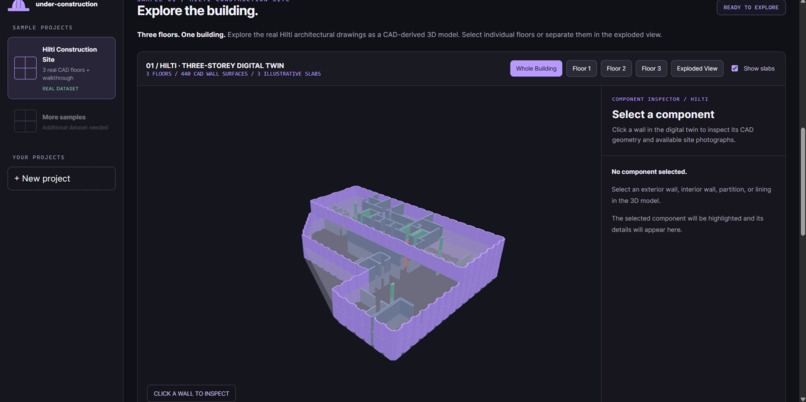
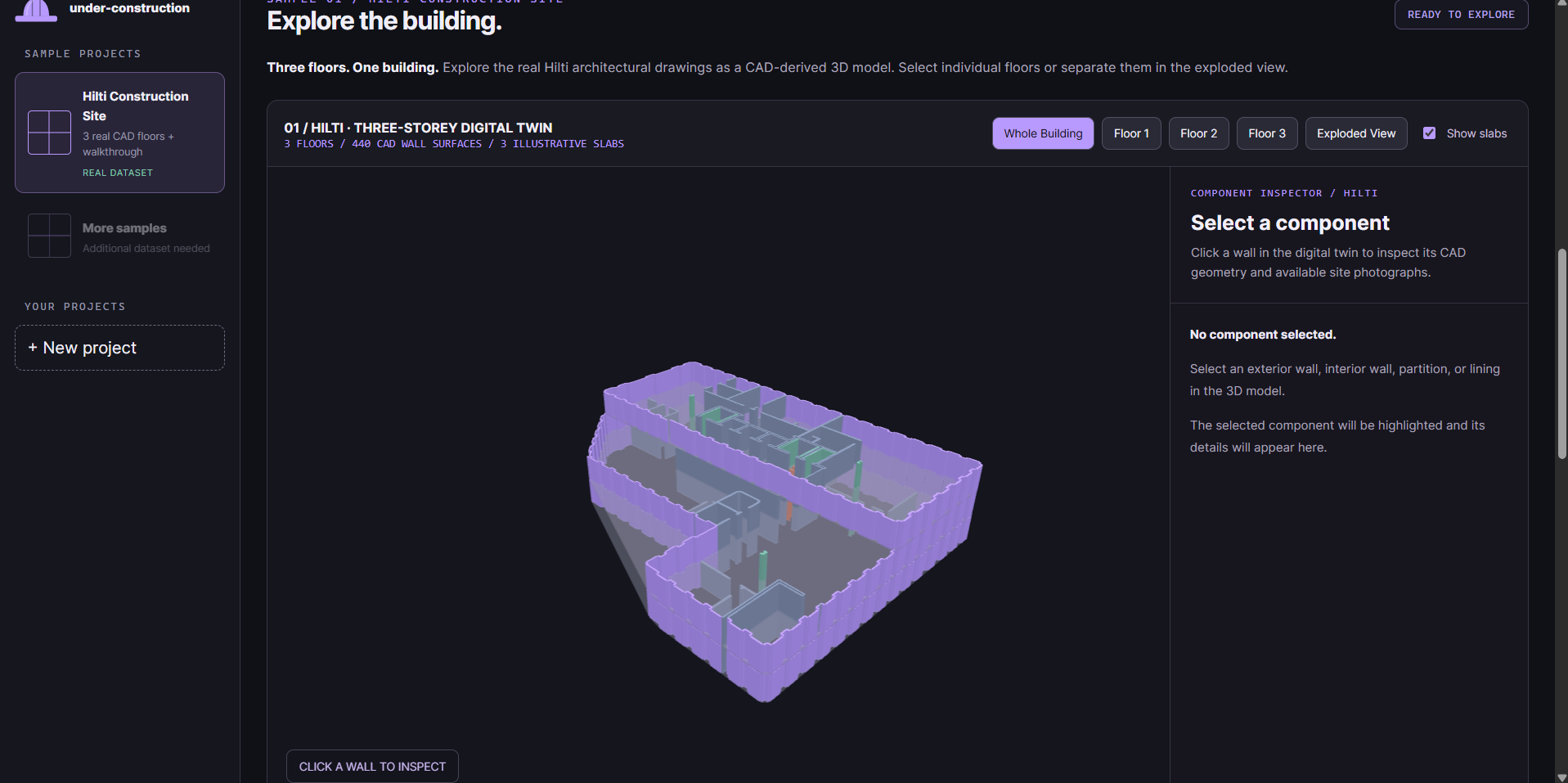
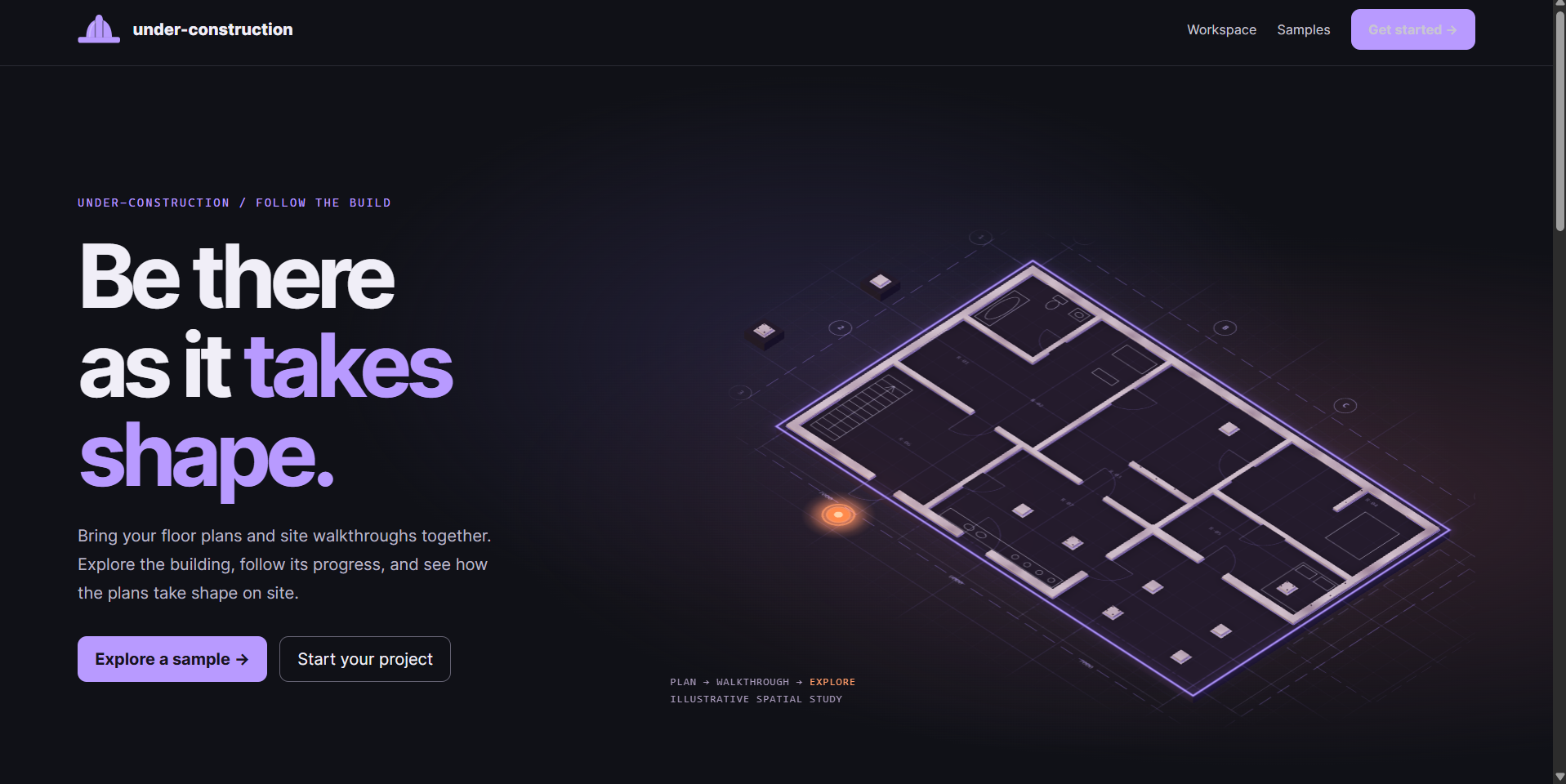
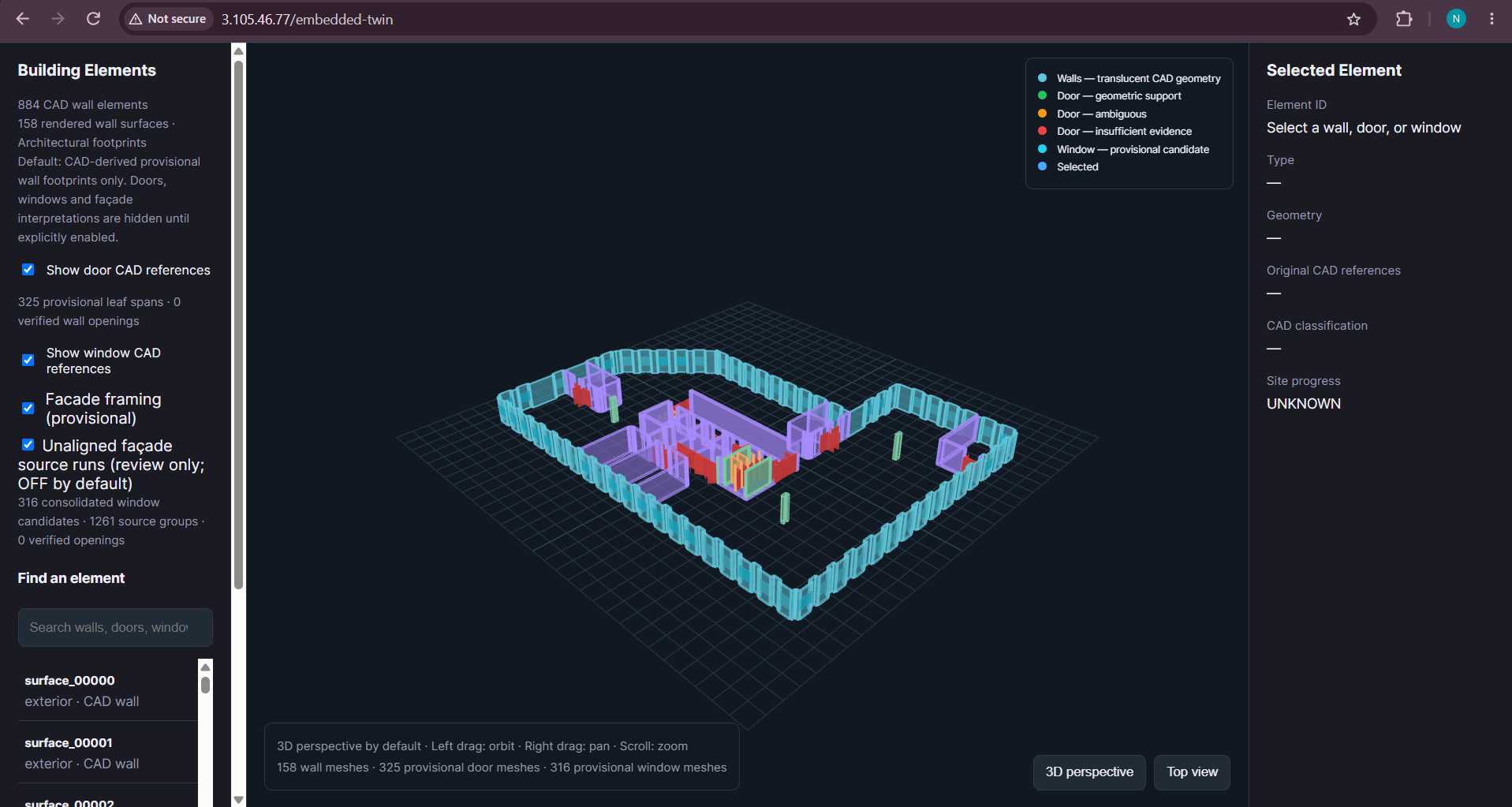
Explore building geometry in an interactive 3D environment.
-
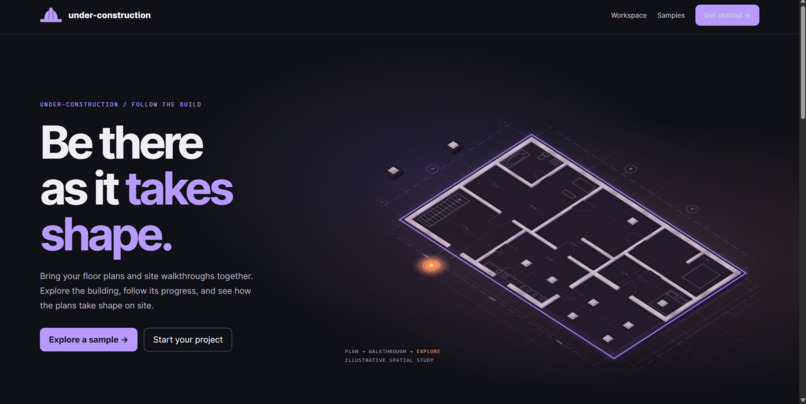
UnderConstruction — turning construction imagery and architectural drawings into a clearer picture of progress.
-
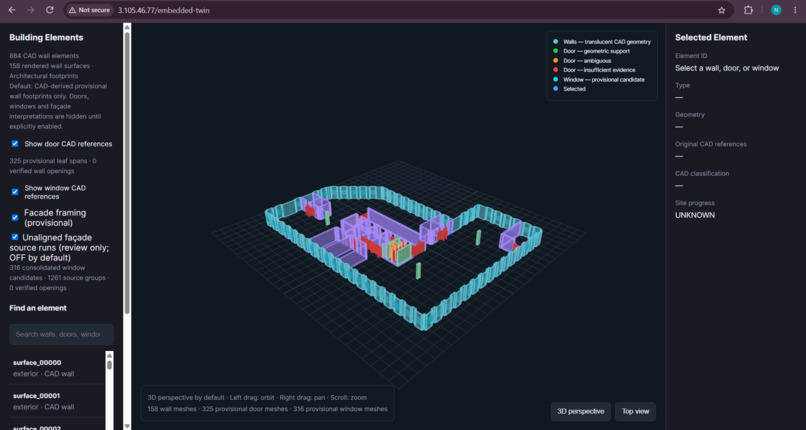
From architectural drawings to an interactive view of building elements.
Inspiration
I come from a family involved in the construction business, so construction sites have always been familiar territory. But here's the funny part: despite being around them for years, I never really had a clear picture of how much work was actually getting done.
We have drawings showing what should exist and site photos showing what does exist. I wanted to bring those two worlds together. That's how UnderConstruction started.
What it does
UnderConstruction turns construction imagery and architectural drawings into a more understandable view of site progress.
Using computer vision, CAD processing, and an interactive 3D digital twin, it helps users explore what's happening on-site instead of piecing everything together from scattered photos and drawings.
Think of it as giving construction progress a visual language.
How we built it
We used Python, OpenCV 5, and ONNX Runtime for image processing and computer vision, ezdxf for interpreting architectural drawings, and Three.js for the interactive 3D experience.
Everything comes together in a Flask dashboard, deployed on AWS EC2 with Gunicorn and Nginx.
Challenges we ran into
The biggest challenge? Real construction sites don't behave like clean datasets.
Camera angles change, structures overlap, drawings don't always line up neatly with photographs, and visual progress isn't as straightforward as it sounds.
Getting computer vision, CAD geometry, and 3D visualization to work together was another adventure. And deploying the entire thing on AWS added a few plot twists of its own.
Accomplishments that we're proud of
We built a working end-to-end prototype that brings construction imagery, CAD information, and an interactive 3D viewer into one application.
We also deployed it on AWS, turning what started as a personal observation into something people can actually open and explore.
Live demo: http://3.105.46.77
What we learned
Construction progress is surprisingly difficult to measure from visuals alone. A convincing visualization isn't necessarily an accurate measurement.
We learned a lot about computer vision, architectural geometry, integrating different technologies, and the importance of knowing when a system's output still needs human verification.
What's next for UnderConstruction
More real-site testing, better alignment between CAD drawings and construction imagery, and more reliable progress tracking across different viewpoints.
The long-term goal is simple: make it easier to understand what's happening on a construction site without having to guess.
Construction projects are complicated enough. Understanding their progress shouldn't be.
Built With
- 3d-visulaization
- amazon-web-services
- cad
- ezdxf
- flask
- javascript
- opencv5
- python
- three.js


Log in or sign up for Devpost to join the conversation.