-
-
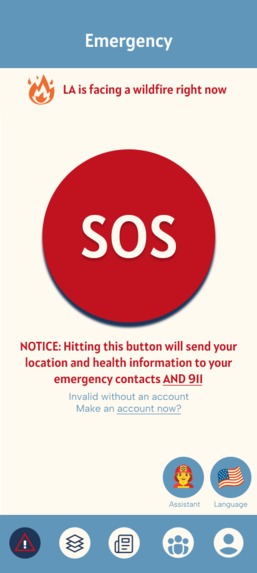
Landing Page
-
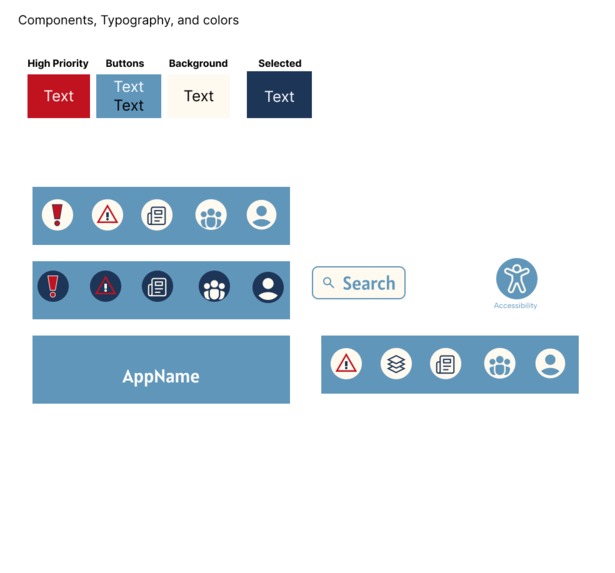
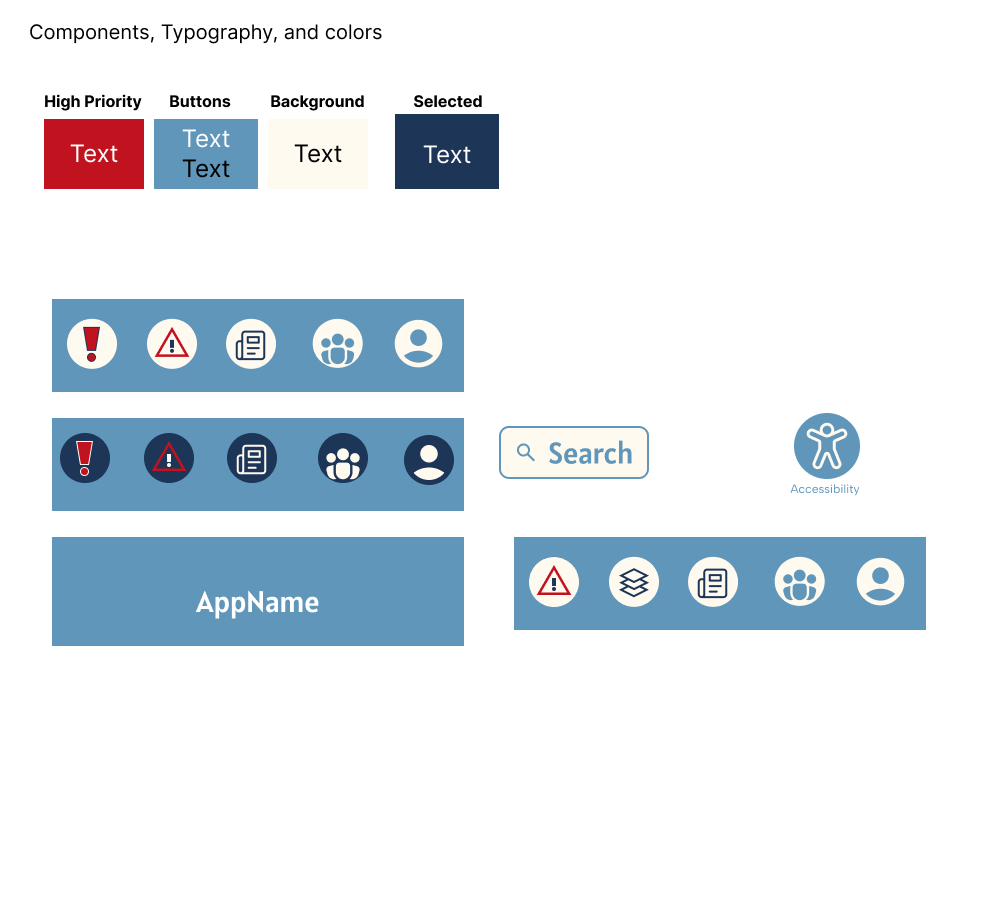
Design System, Sticker Sheets, and Components
-
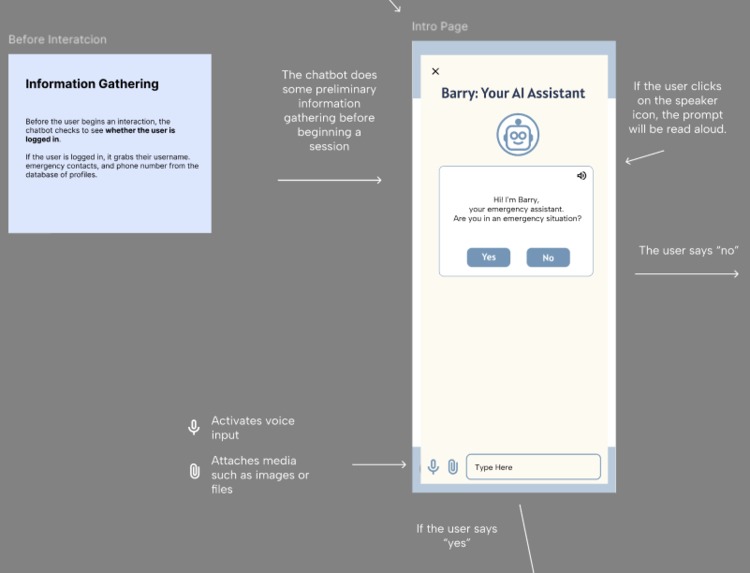
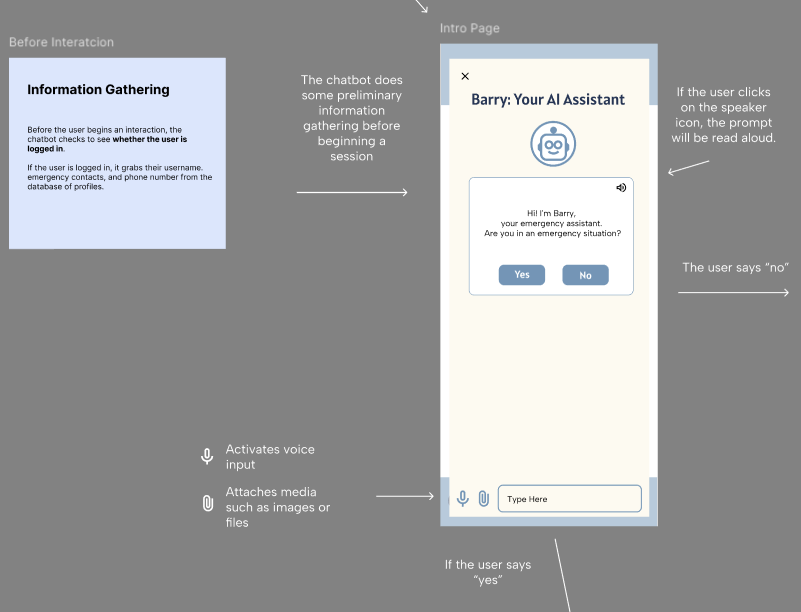
The AI Assistant Landing Page as viewed through the Figma File with annotations.
-
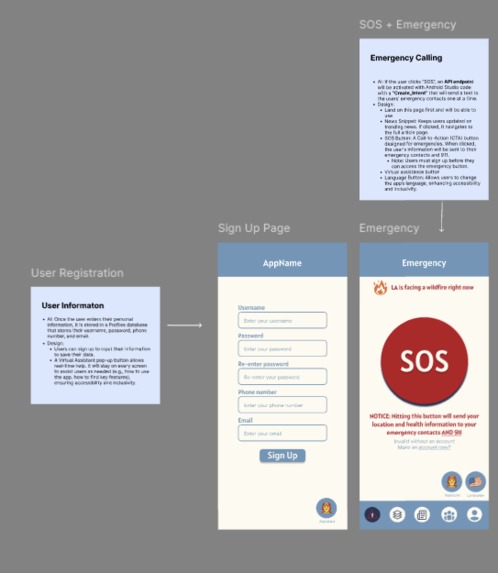
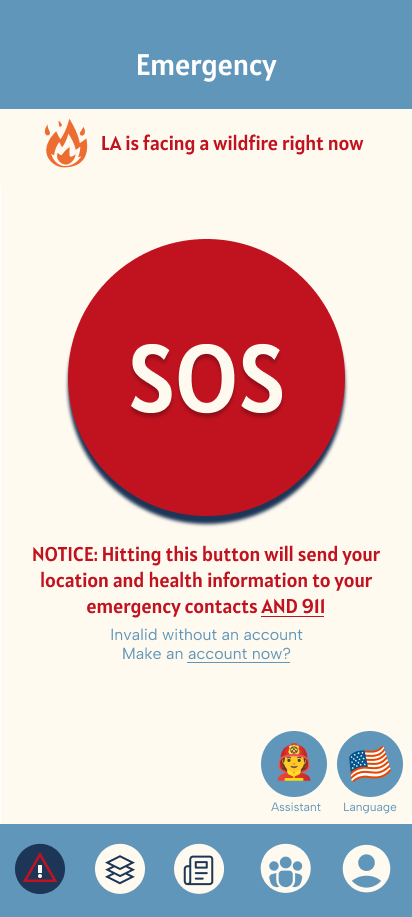
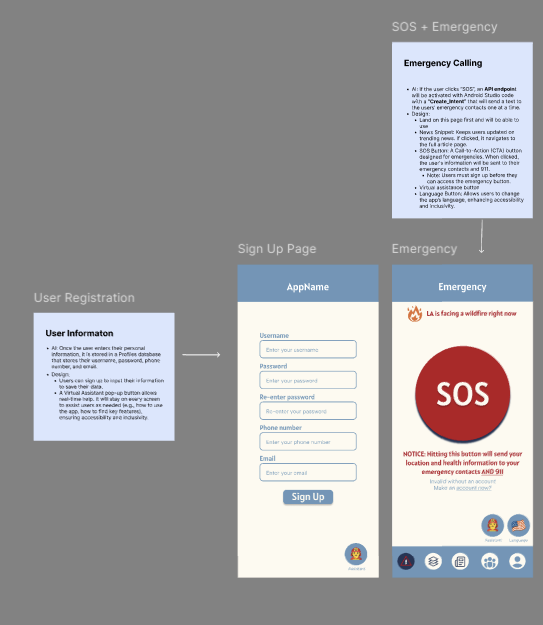
The Main App Landing Page as viewed through the Figma File with annotations.
Inspiration
Thousands of people have been affected by the fires in the LA Area, and it has been difficult for many to receive aid, whether due to language barriers, scattered information, or just an uncertainty of where to find resources. With this app, we hope to provide support to meet those needs.
What it does
Our application is designed to aid victims of the Los Angeles wildfires both while in an emergency situation and while evacuating with resources such as shelter, food, and medical aid. It does so through the main app and through an AI Assistant Chatbot that provides all of those features, as well as mental health support.
How we built it
Tools
We developed this application in Figma by iterating through Low, Medium, and High fidelity prototypes. We did additional research and prototyped a framework for how APIs, databases, and an AI assistant would be integrated into the final app.
User Research
Our audience consists of LA Wildlife Survivors. Some of the highly affected members of the community include:
- Lower income communities
- People of Color
- Outdoor workers
Some of their major concerns include:
- Impact to housing such as higher housing costs, insurance price spikes, and issues with utilities
- Economic impacts such as business-related losses, transportation issues, and lack of access to food.
Some of their needs include:
- Housing: shelters, churches, and open houses
- Food: local restaurants and stores that are open
- Medical Aid: hospitals, police/fire station aid
Our application aims to provide access to these top resources and keep in mind vulnerable populations by providing features that support users who speak languages other than English and those with disabilities.
System Research
Existing chatbots Such as Red Cross’s Clara the Disaster Chatbot and Rapid Circle’s Chatbot provide support such as looking up local shelters, getting financial assistance, and assisting medical professionals by identifying the severity of an emergency call also provide support for people with disabilities through features such as text so speech, hands-free navigation, and integration with Geographic Information Systems (GIS).
We developed an AI assistant for our app that draws on the unique affordances LLMs provide and that accumulates the various features those apps can provide in one place.
Challenges we ran into
One difficulty was identifying how the AI assistant workflow would look. Given that it would rely on various APIs and databases, we spent time developing this potential workflow and understanding how those external resources would connect with our main application.
Accomplishments that we're proud of
We are proud of our project overall, because it required a lot of teamwork, coordination, and time spent truly understanding the problem and our users’ needs. Specifically, we are proud of our SOS feature and our AI Assistant.
What we learned
During this process, we gained technical skills in Figma and with the other platforms used during the hackathon. Additionally, we improved on our prototyping skills based on feedback from each other and from mentoring sessions, by truly focusing on putting the user at the center of our design.
What's next for Ember Aid
In the future, we hope to implement additional features that would be of value for a user. Examples of such features include a mental health hotline, resources for legal documents that someone might need to keep on hand during an evacuation and what to do if they get lost while evacuating, and additional types of stores and donation centers. We also hope to implement this app using Android Studio, Gemini, and Firebase.
Note on "Try it out" Links
Figma Link
The first link links to our prototype.
Google Drive Link
This is supplemental information with a marked up version of the design (NOT the prototype link) and our case study. The Figma file is large and may take some time to load. In that case, if you would like to view the marked up file on Figma (NOT the prototype link), you can also visit this link: Figma File.
References
Built With
- figma



Log in or sign up for Devpost to join the conversation.