-
-
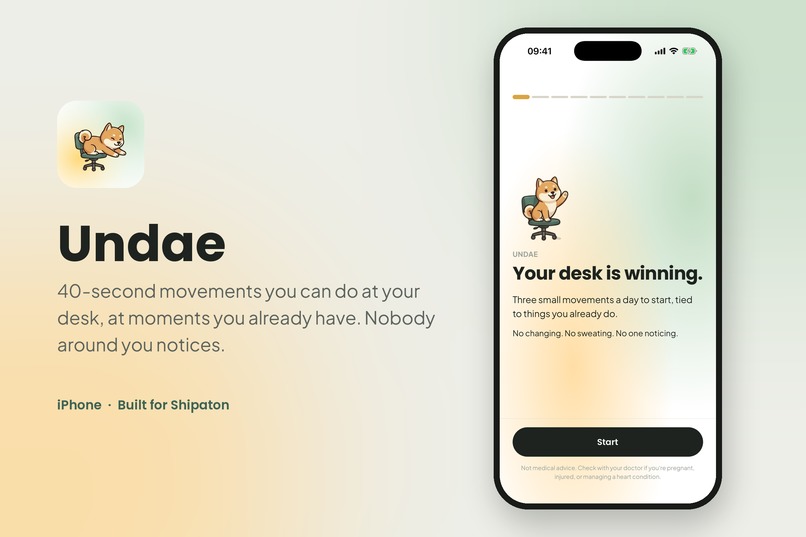
Cover
-
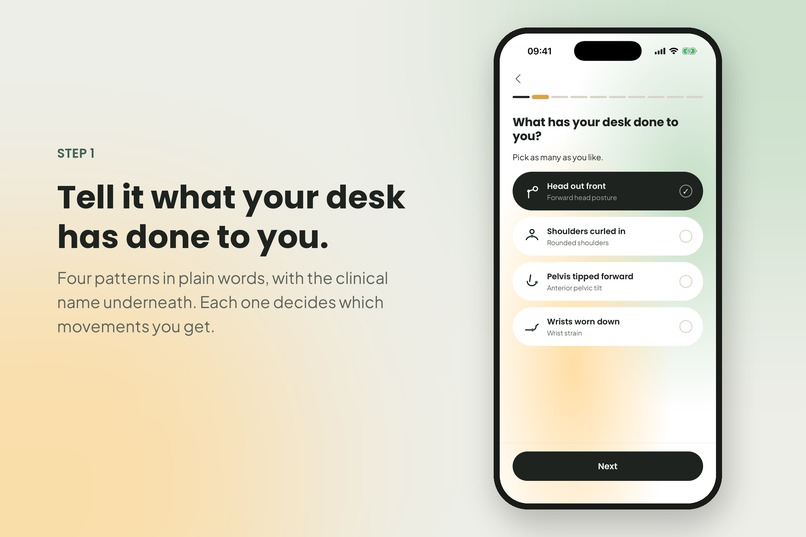
Posture
-
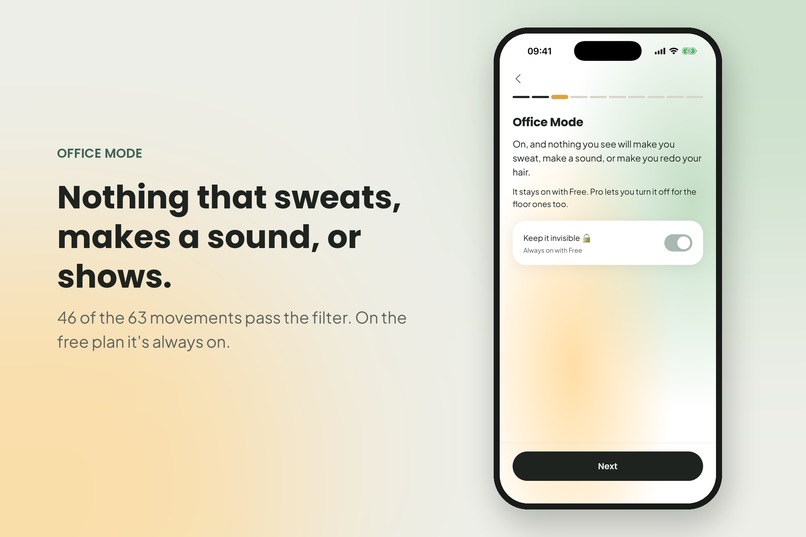
Office mode
-
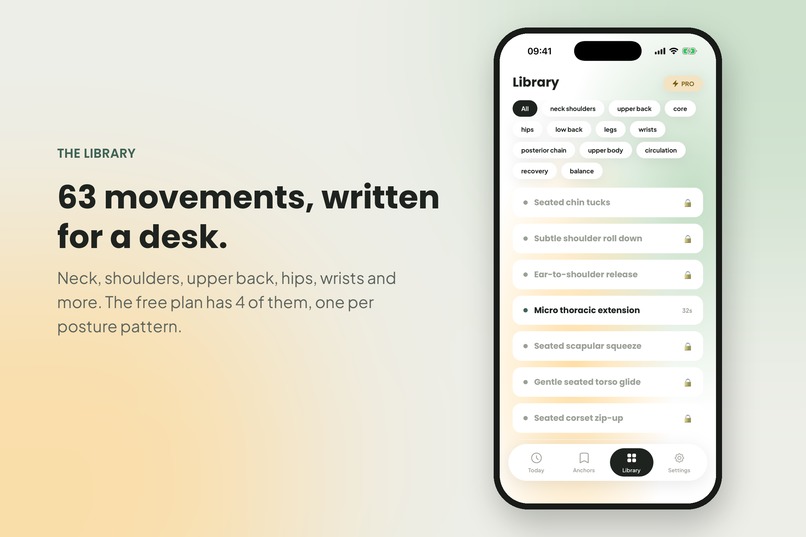
Library
-
Today
-
Player
-
Bravo
-
Anchors
-
Icon
-
-
-
-
Inspiration
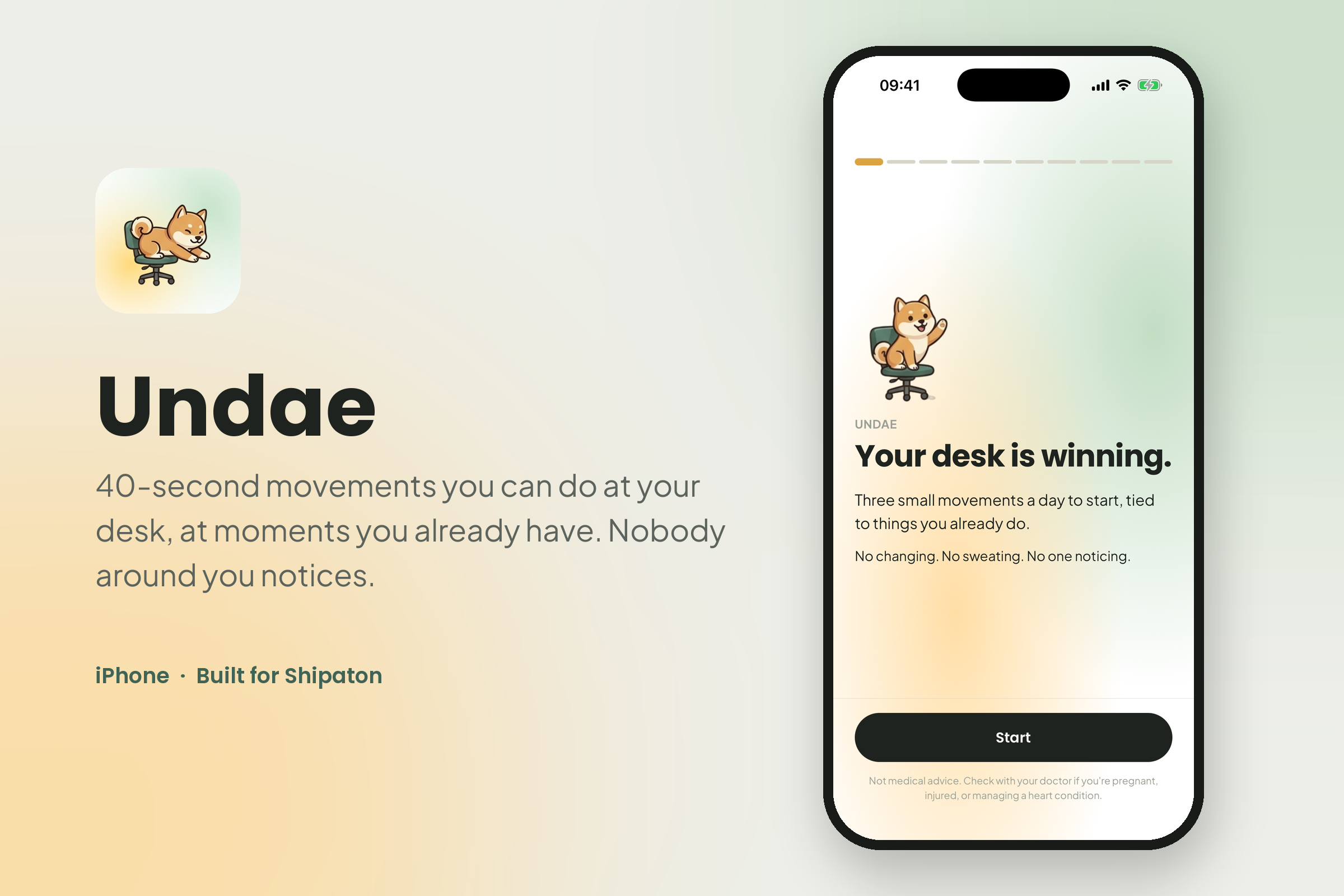
I work at a desk all day, and I'm raising my daughter on my own. My back has been sore for a long time, and it's worst when I carry her. I pay for a gym membership that I rarely use. Getting there means finding an hour around work and around her, and most weeks that hour doesn't exist. What I did have were small gaps in the workday, like waiting for my coffee or the minute after a meeting ends. I know a minute of movement at my desk won't do what the gym does, but but it limits the damage of a long day of sitting. I wanted something I could do in those gaps without it looking like a workout to the people around me. I couldn't find it, so I built it.
What it does
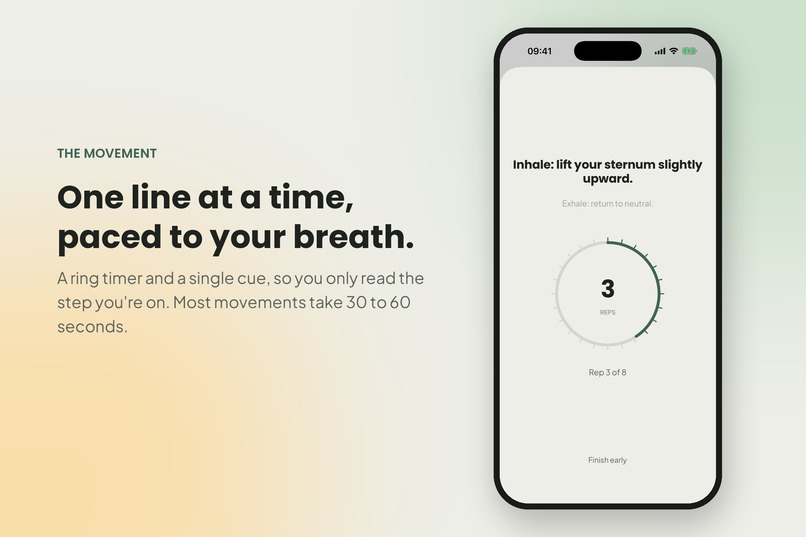
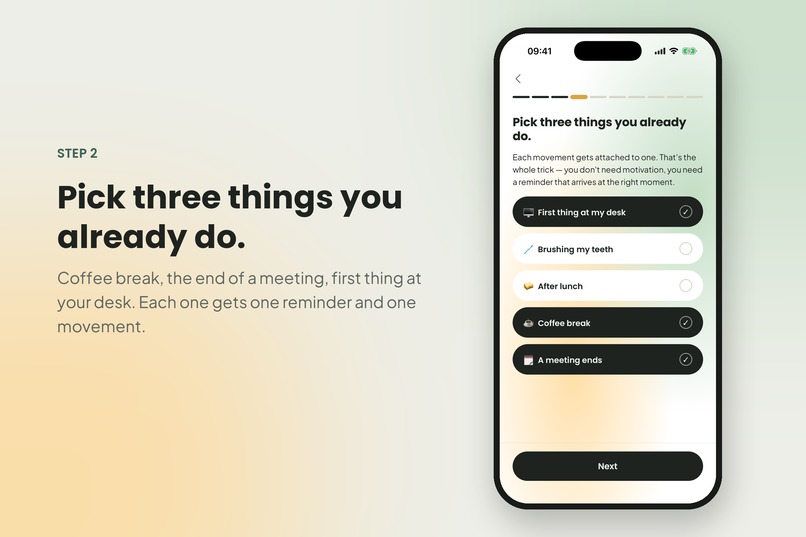
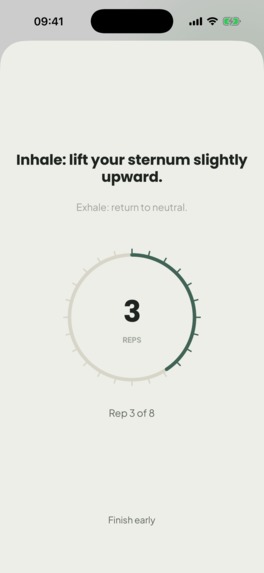
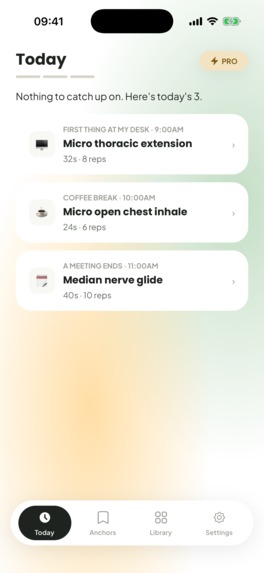
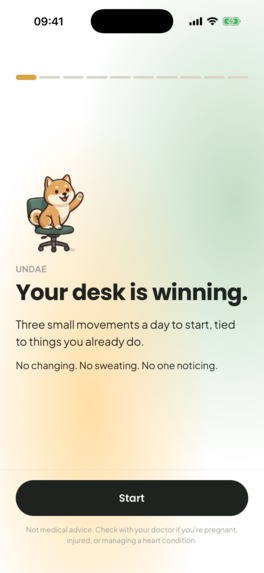
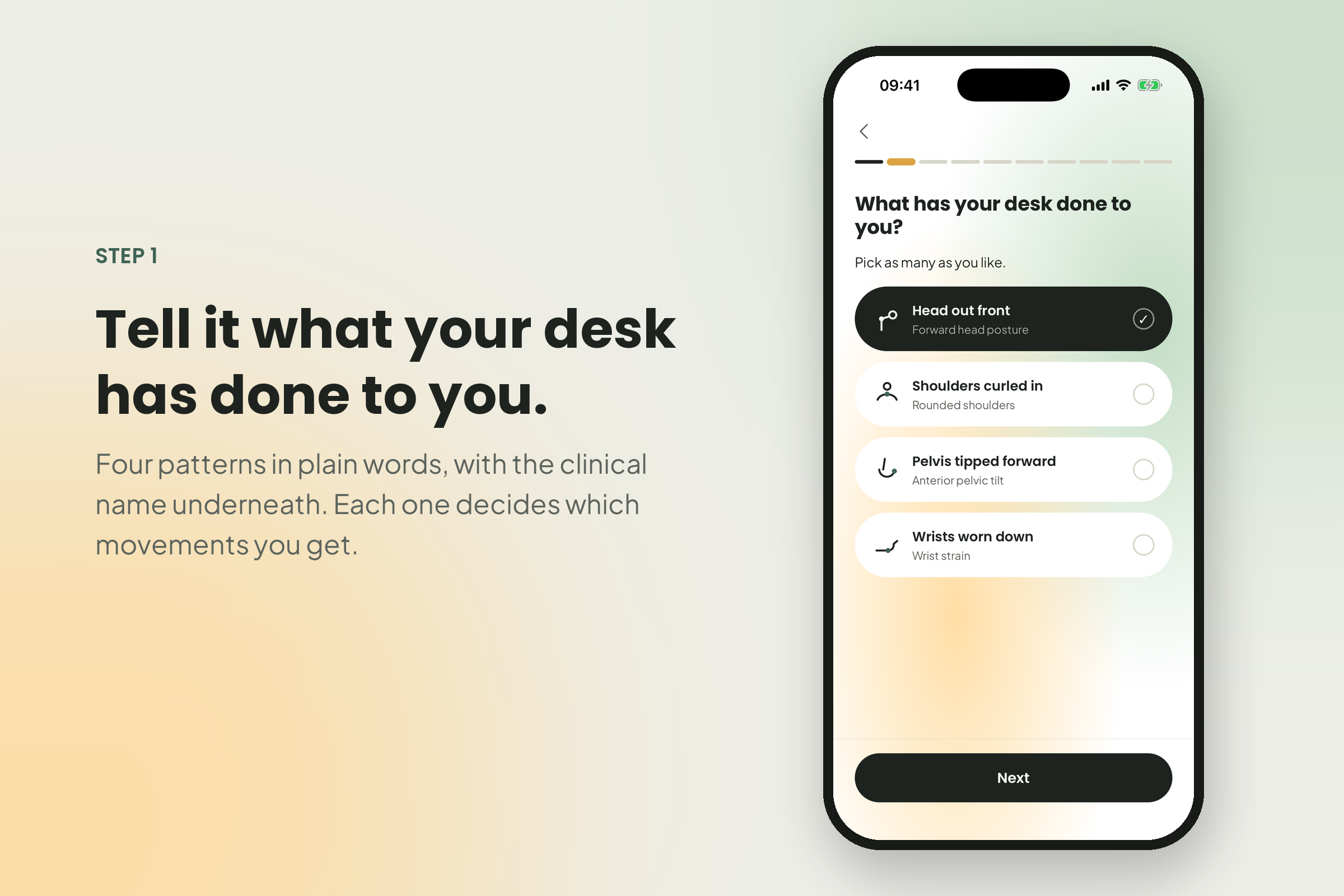
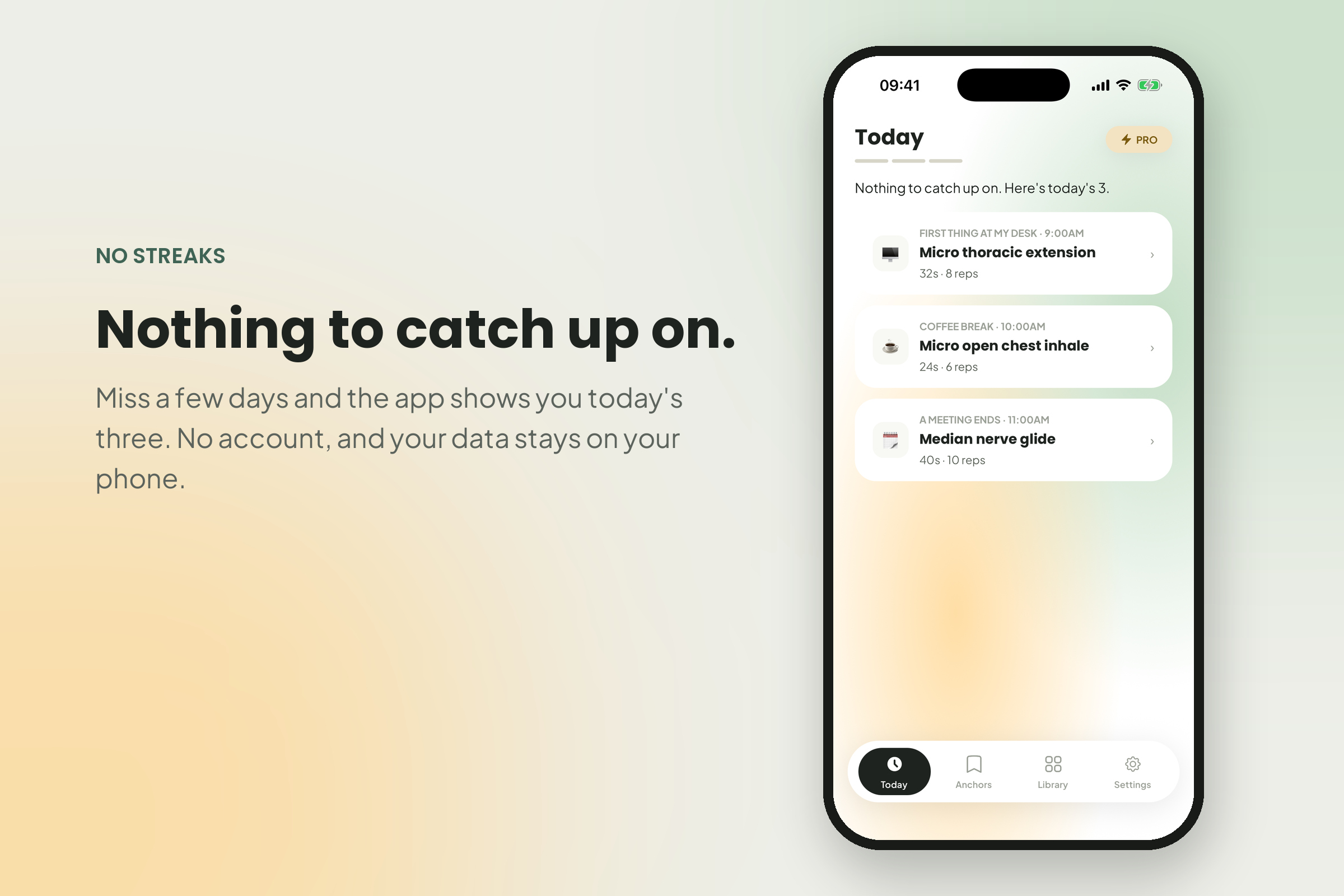
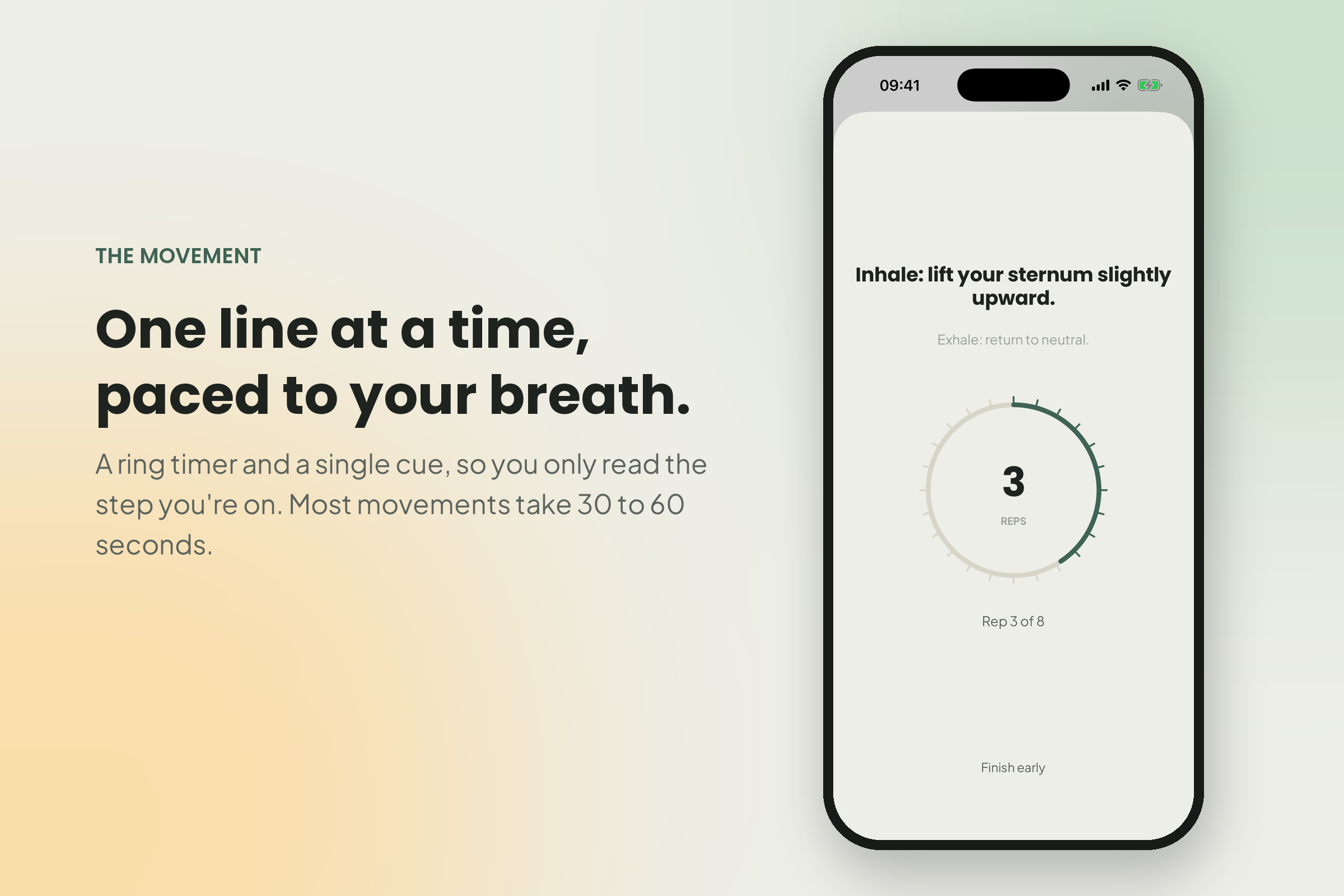
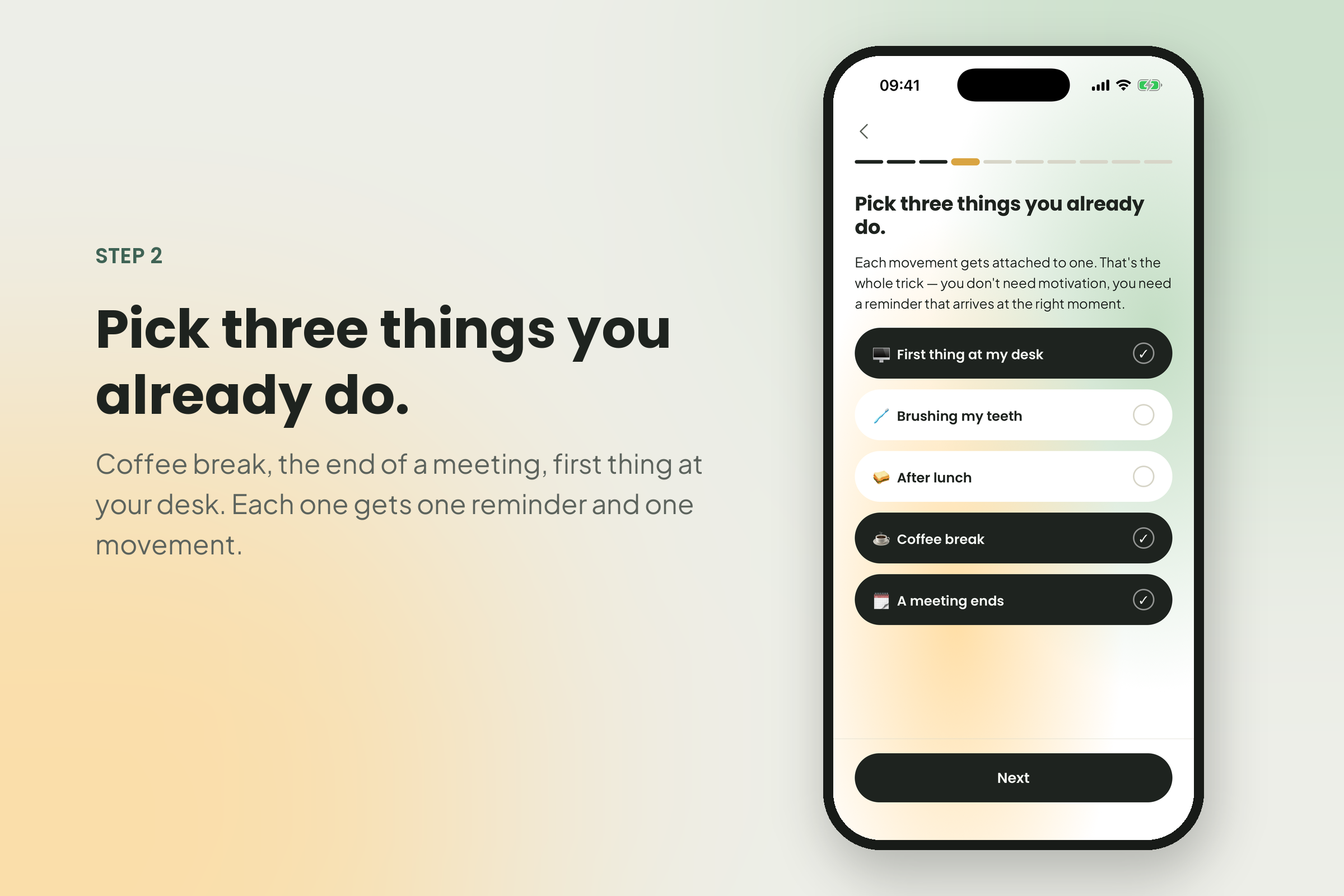
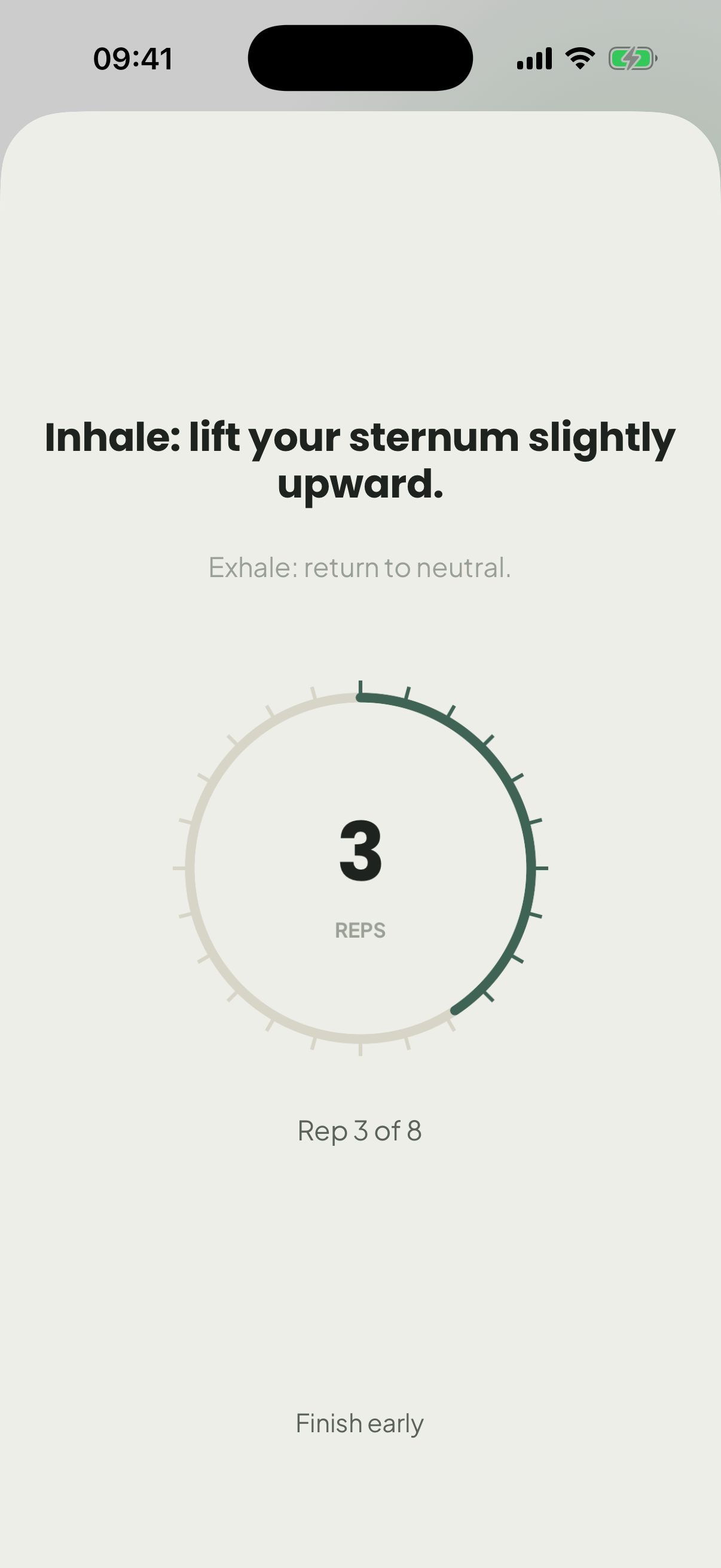
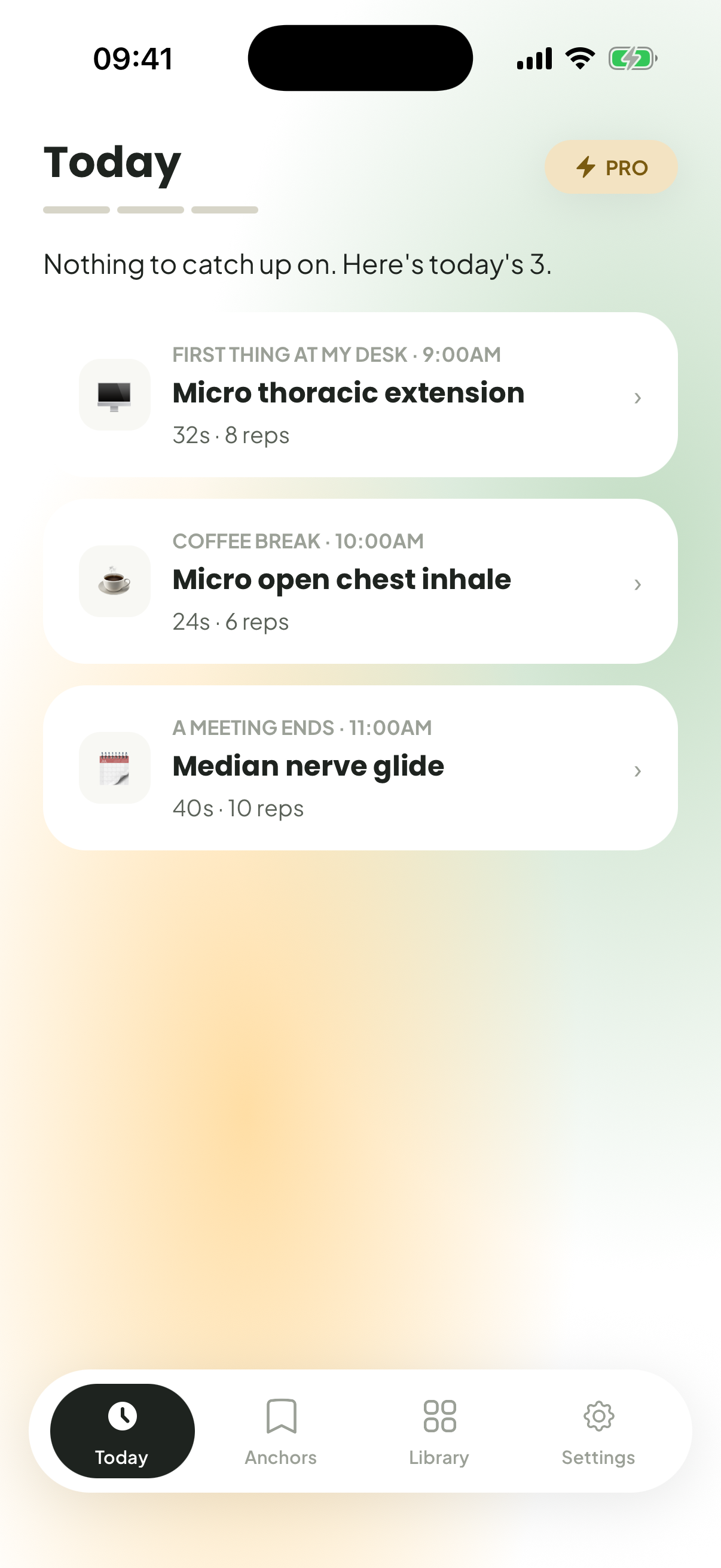
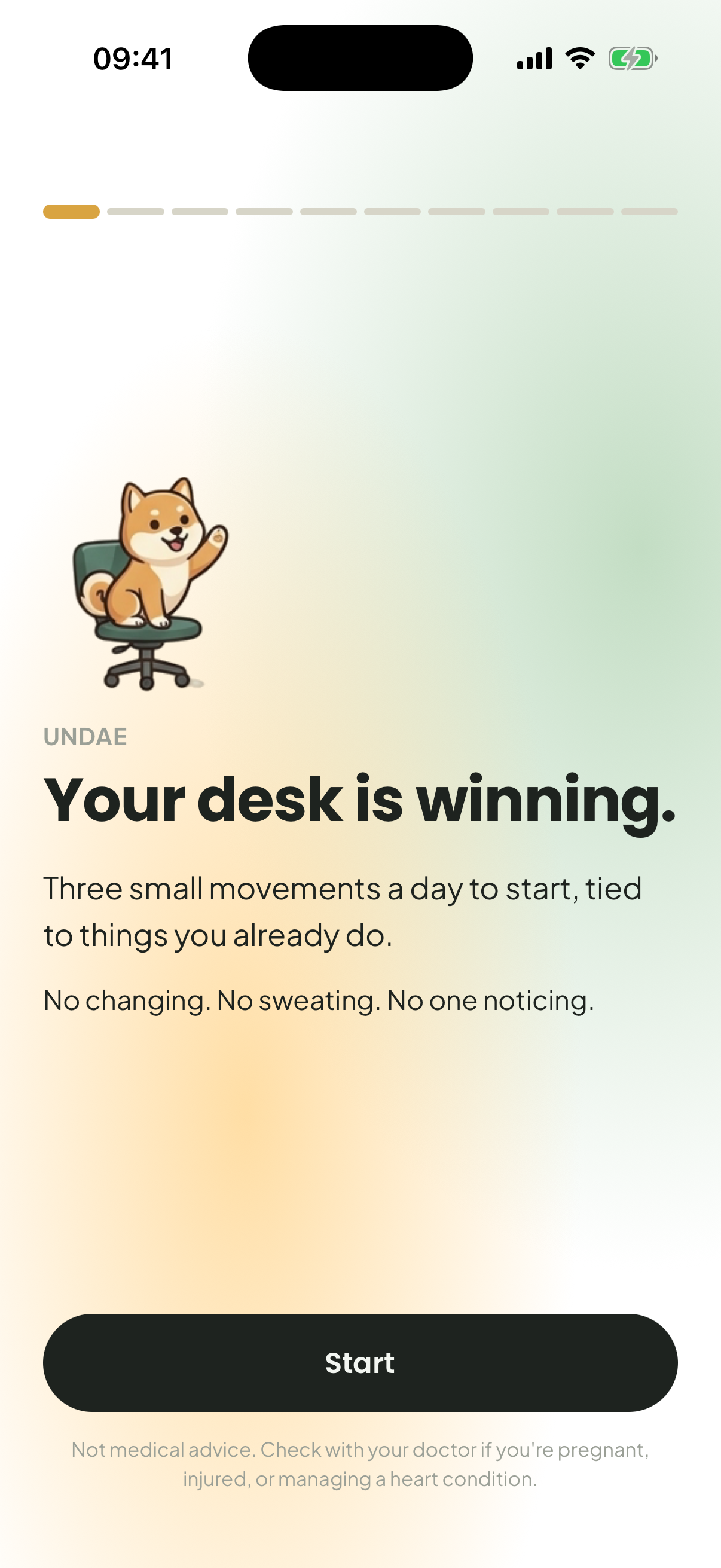
You start by telling Undae what your desk has done to you: head out front, shoulders curled in, pelvis tipped forward, or wrists worn down. Then you pick three things you already do every day, such as a coffee break or the end of a meeting. Those are your anchors. Each one gets a reminder at the time you choose and a movement matched to your posture pattern. When you tap the reminder, the player shows a ring timer and one line of instruction at a time, paced to your breathing. Most movements take 30 to 60 seconds.
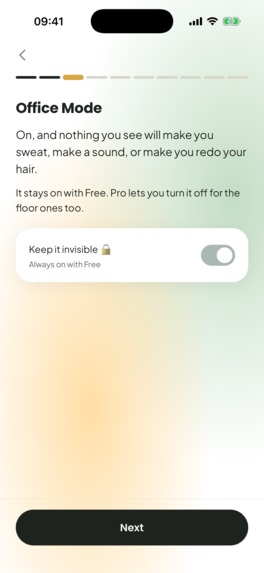
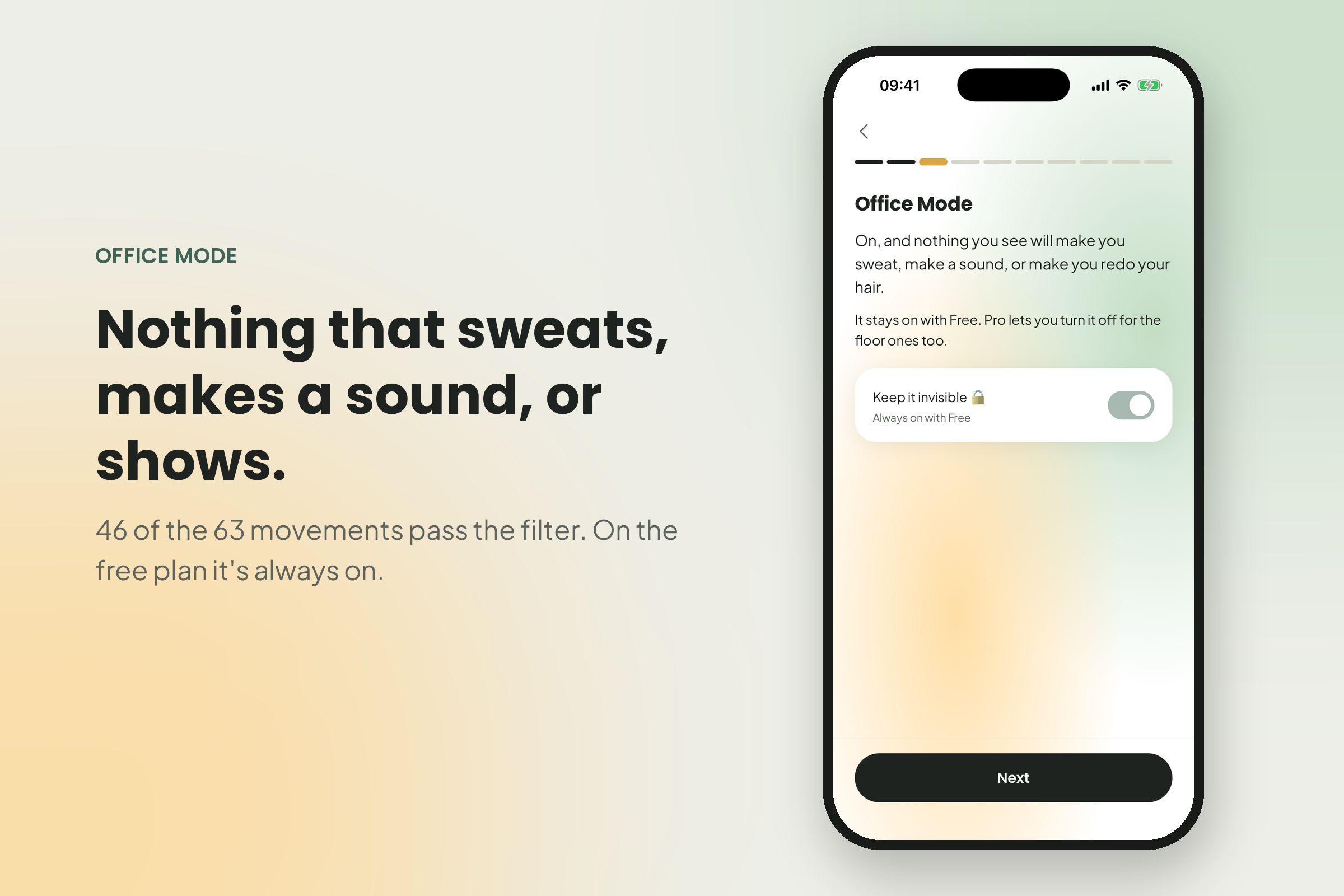
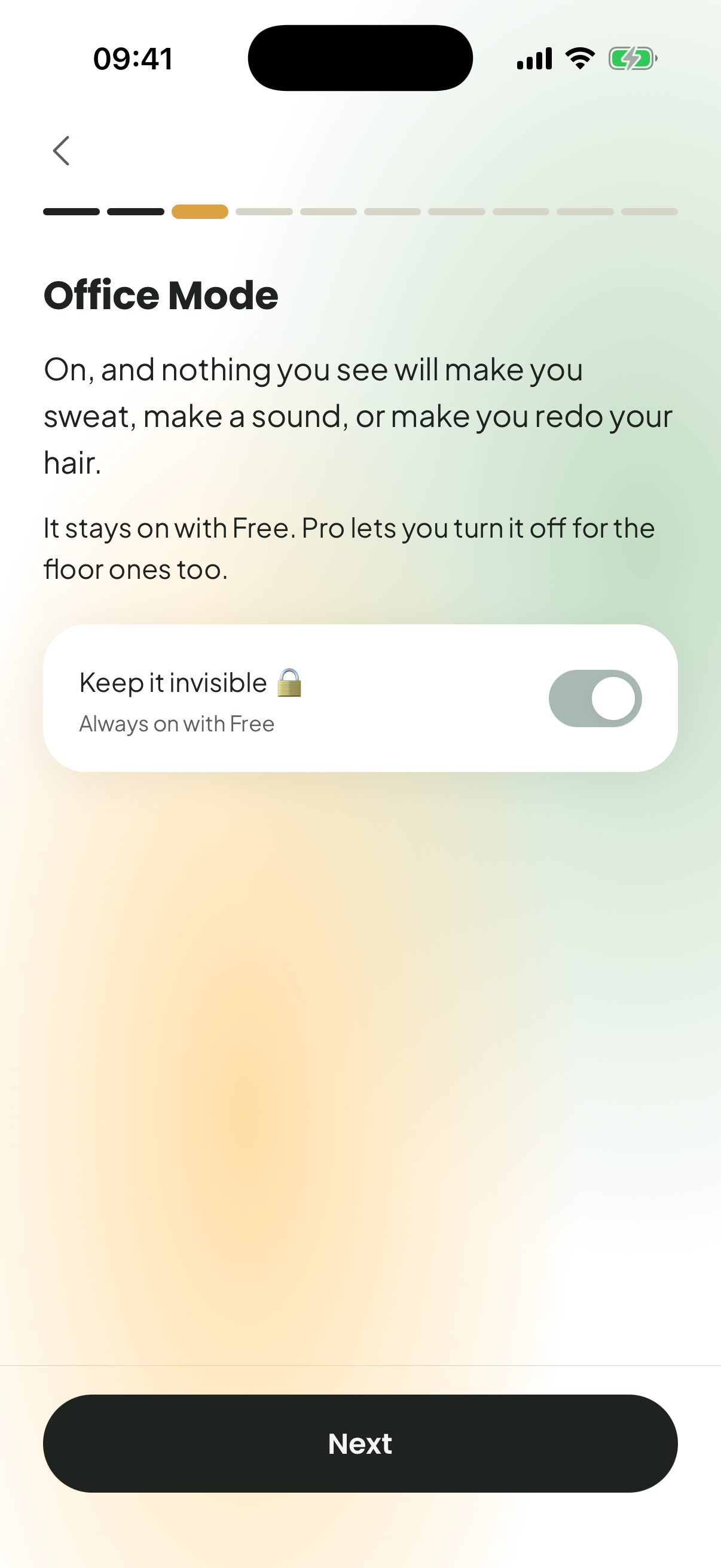
Office Mode is the part I care about most. With it on, Undae only suggests movements that won't make you sweat or make a sound, don't need the floor or different shoes, and leave your hair as it was.
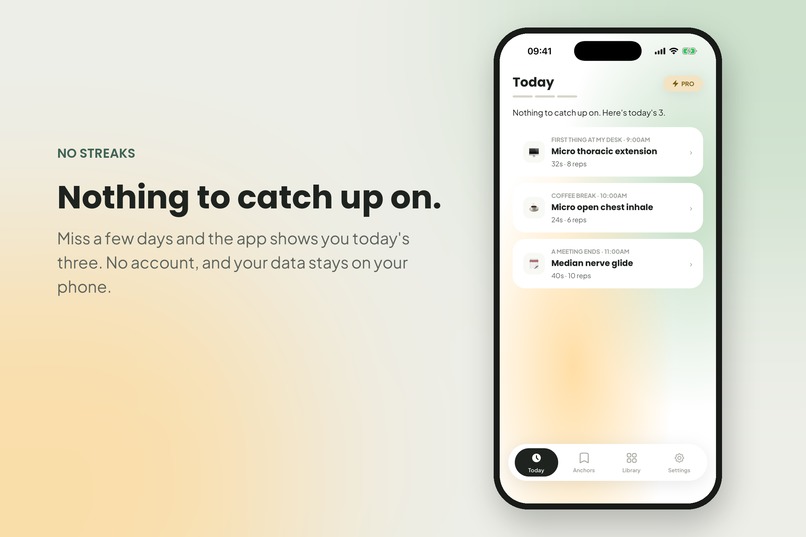
There are no streaks. If you come back after a week away, the app says "Nothing to catch up on. Here's today's 3." You don't need an account, there are no analytics, and your data stays on your phone.
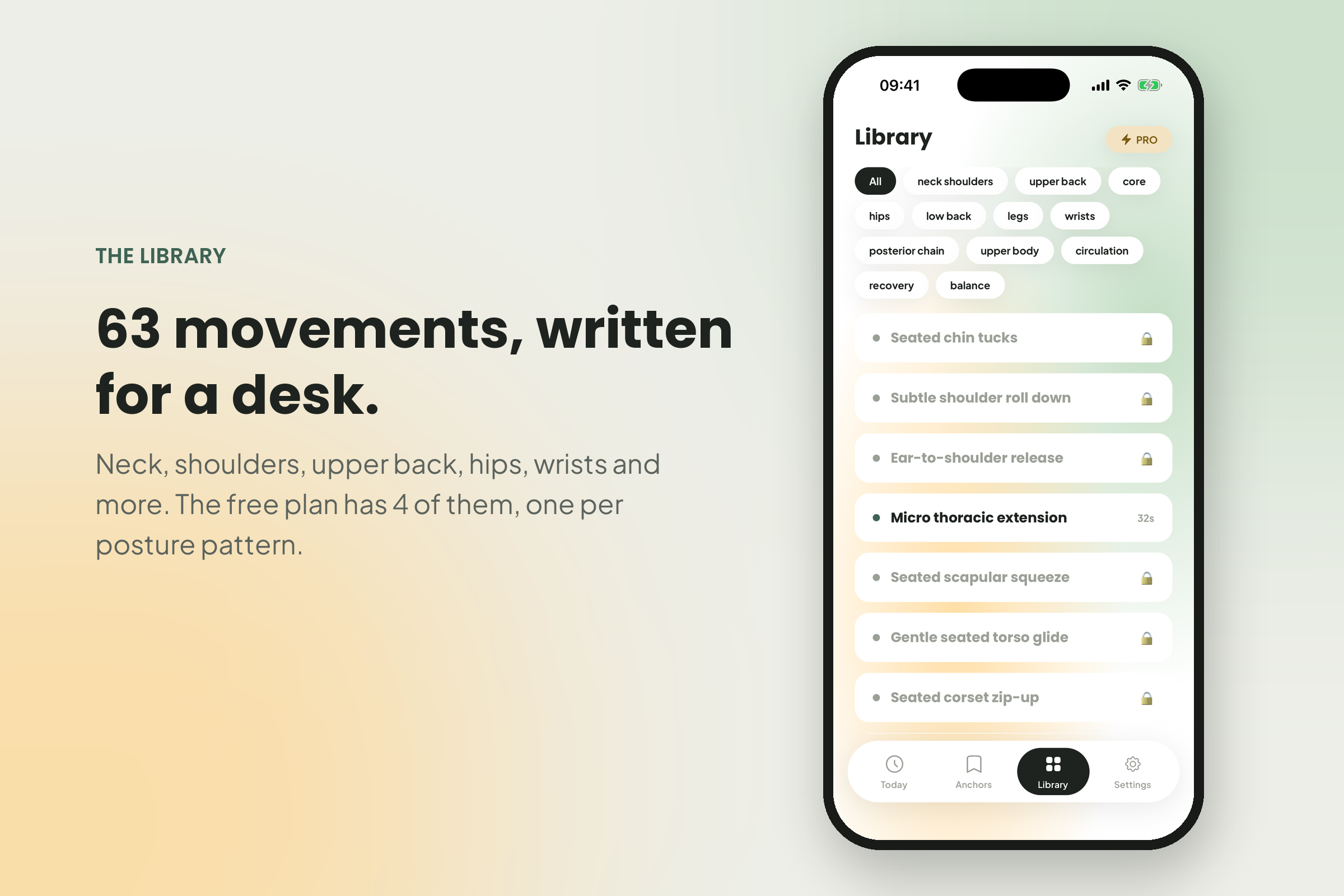
The free plan is permanent, with 3 anchors and 4 movements. Pro unlocks all 63 movements, unlimited anchors, vibration cues, and the option to turn Office Mode off for floor movements at home.
How I built it
I built the app between 31 August and 13 September 2026, with Expo and React Native, using Claude Code.
It's iPhone only and has no backend. Data lives in SQLite on the device, reminders are local notifications, and RevenueCat handles the subscription and the paywall. The app works out each day's movements from the date, so it never has to store or sync a plan.
I didn't really build this in public. I was building it for my own back first, and the only people who saw it before Shipaton were family and friends, once it ran on a phone.
Challenges I ran into
The app was first called Undo, as in "undo what your desk is doing to you". A funded app in the same App Store category already had that name, so mine became Undae, and the tagline lost its pun.
The other big changes came from family and friends who tried it. The first version asked where it hurts, by body area. After their feedback, I replaced that with four posture patterns, so each movement is chosen for the posture habit behind the soreness.
Pricing changed after their feedback too. On 11 September I put the whole app behind the paywall and dropped the free tier. The next day I brought the free tier back, limited to 3 anchors and 4 movements.
Accomplishments that I'm proud of
Office Mode came from something I was already doing. My physiotherapist told me to wake up my glutes by squeezing them while sitting at my desk, and I'd been doing it now and then without anyone around me noticing. I turned that into a rule for the whole app: every movement in Office Mode has to be that discreet. 46 of the 63 movements pass it.
The app went from an empty Expo project to a working iPhone app with a paywall in two weeks, built alone around work and parenting.
Nothing leaves your phone except the anonymous purchase ID RevenueCat needs. The app works in airplane mode.
What I learned
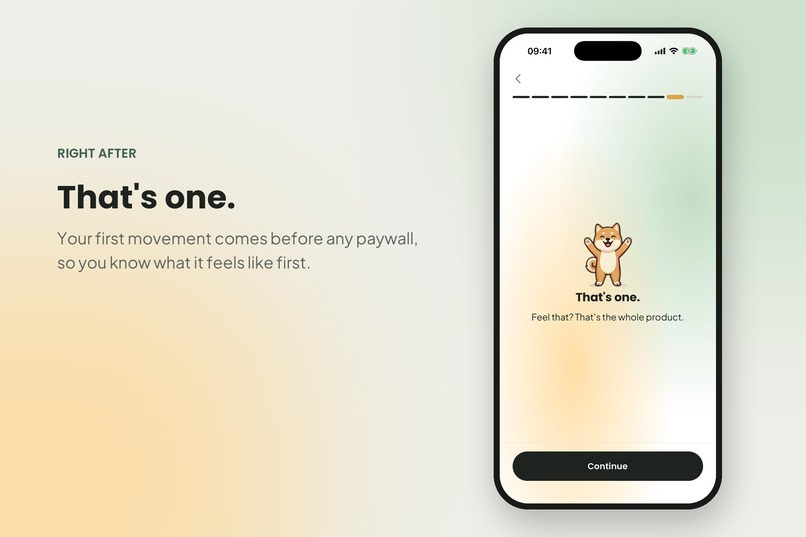
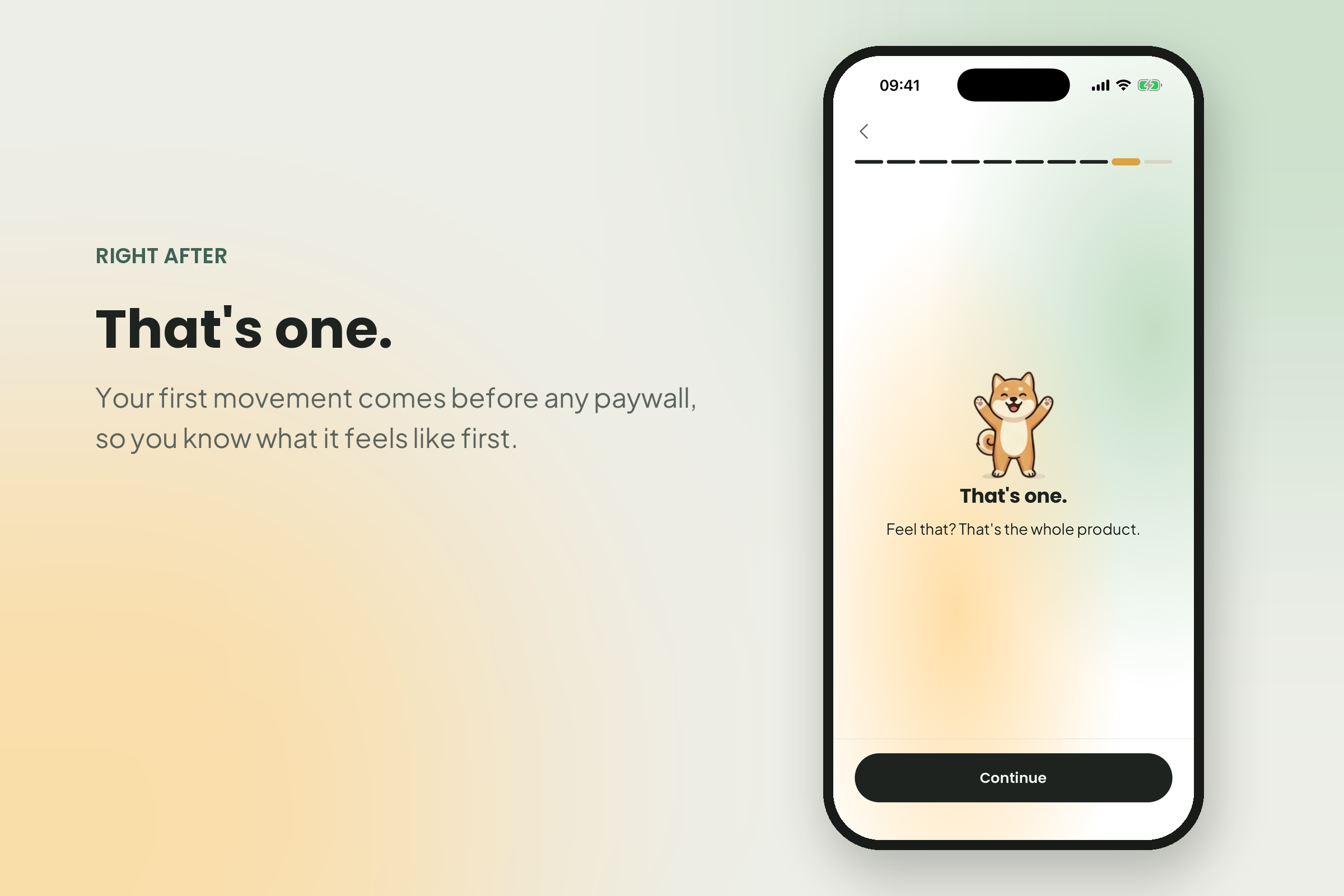
Someone with a sore back should be able to try a 40-second movement before paying for anything. The paywall now appears after your first completed movement, when you know what you'd be paying for.
What's next for Undae: invisible movement breaks for desk workers
French and Spanish are fully translated, including all 63 movements and their cues, but the app has no language switch yet. Adding one is the next step.
After that, I want to talk to people who work at a desk all day and find out whether the anchors match their days as well as they match mine. The roadmap also has a home screen widget and movement sets for the evening and the commute.
Built With
- claude-code
- eas-build
- expo-dev-client
- expo-haptics
- expo-notifications
- expo-router
- expo-sqlite
- expo.io
- html
- ios
- javascript
- node.js
- react
- react-native
- react-native-gesture-handler
- react-native-reanimated
- react-native-svg
- revenuecat
- sqlite
- typescript
- zustand


Log in or sign up for Devpost to join the conversation.