About
In this project, we analyze oral transcripts from Supreme Court cases spanning 2006 to 2024, with a focus on the spoken words of Chief Justice Roberts. Our goal is to uncover patterns in his speech, identify potential biases—whether demographic, issue-based, or political—against defendants based on historical trial data, and predict his sentiment toward a case using general case information.
This tool is designed for people who may not have access to strong legal representation. By analyzing how judges, particularly Chief Justice Roberts, speak during oral arguments, the tool helps uncover patterns and potential bias that may influence decisions. It offers individuals a clearer, more informed view of how their case might be received, helping them prepare more effectively. While the data is drawn from the Supreme Court, a tool like this could be especially useful in local court systems, such as in Yolo County, giving users insight into how judges may respond based on past behavior. Ultimately, it aims to save people time, money, and stress by helping them navigate legal proceedings with greater confidence and understanding.
Inspiration
Our inspiration came from wanting to provide deeper insights into court proceedings. Due to nuances and the complexity of court cases, we wanted to create a tool to better analyze this data. Our tool is designed to uncover hidden patterns and potential biases in courtroom interactions from years of oral argument transcripts. We wanted to ultimately compare bias between Supreme Court justices and create a user-friendly interface for the ability to independently understand and predict supreme court results.
What it does
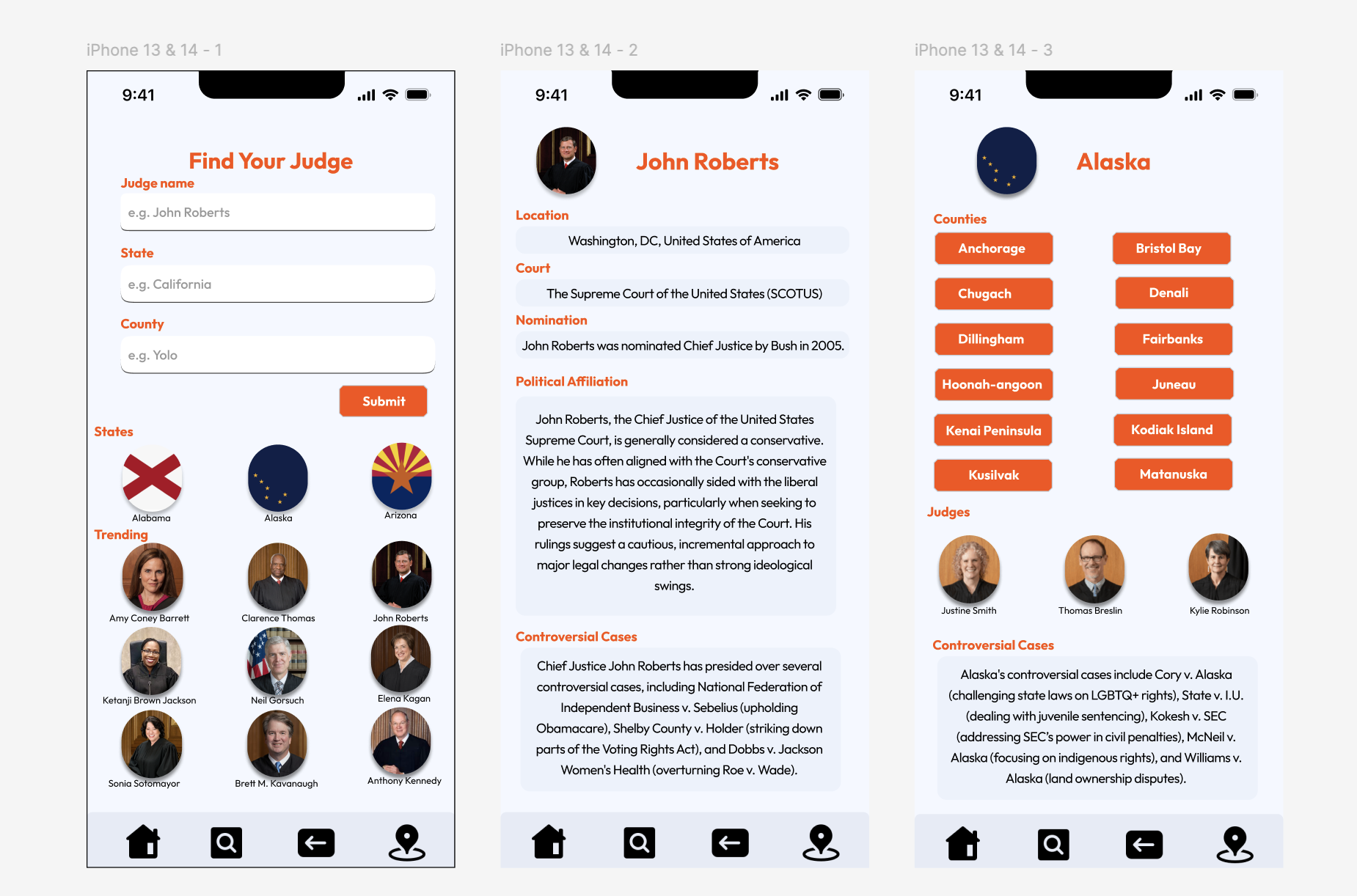
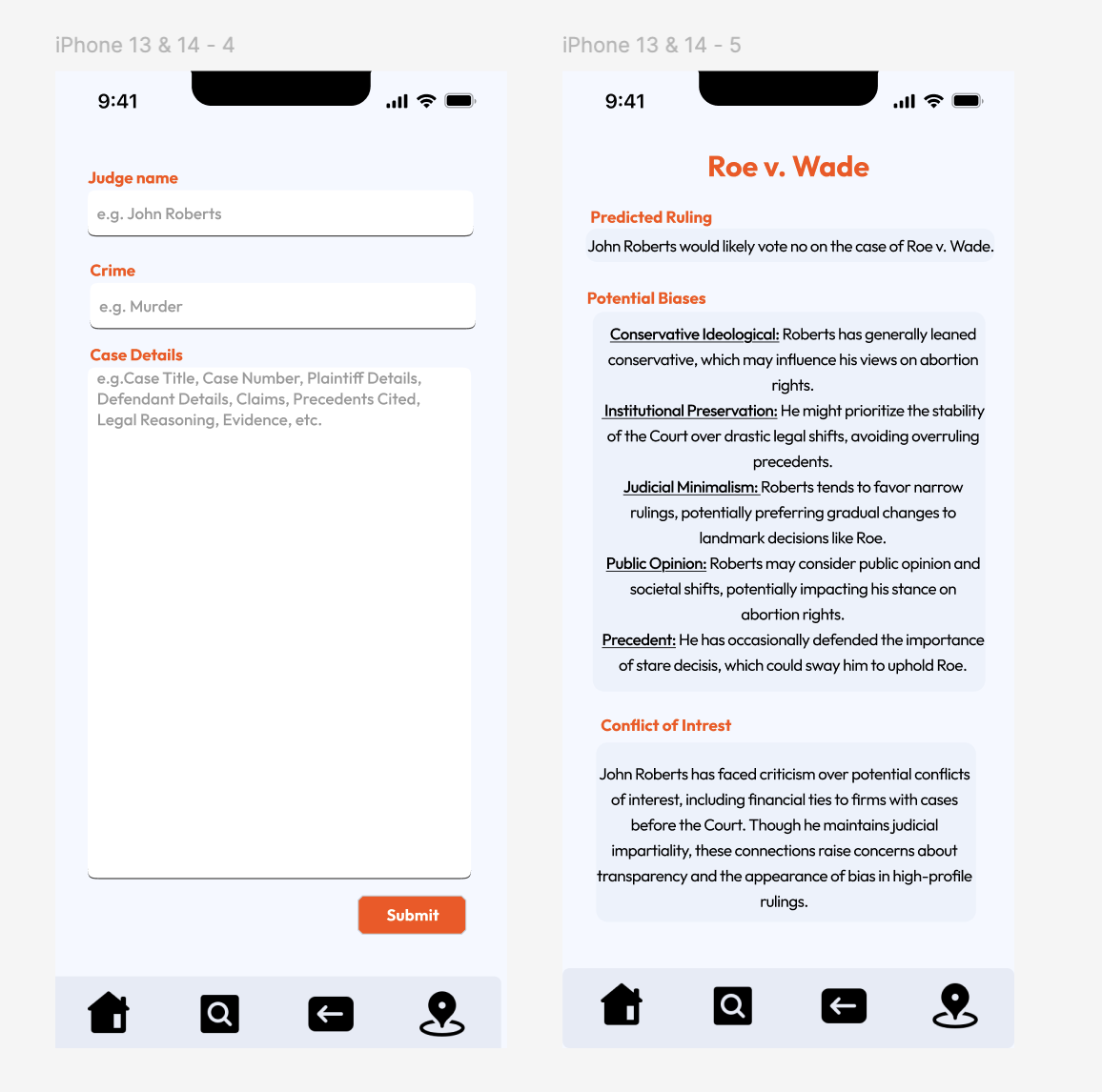
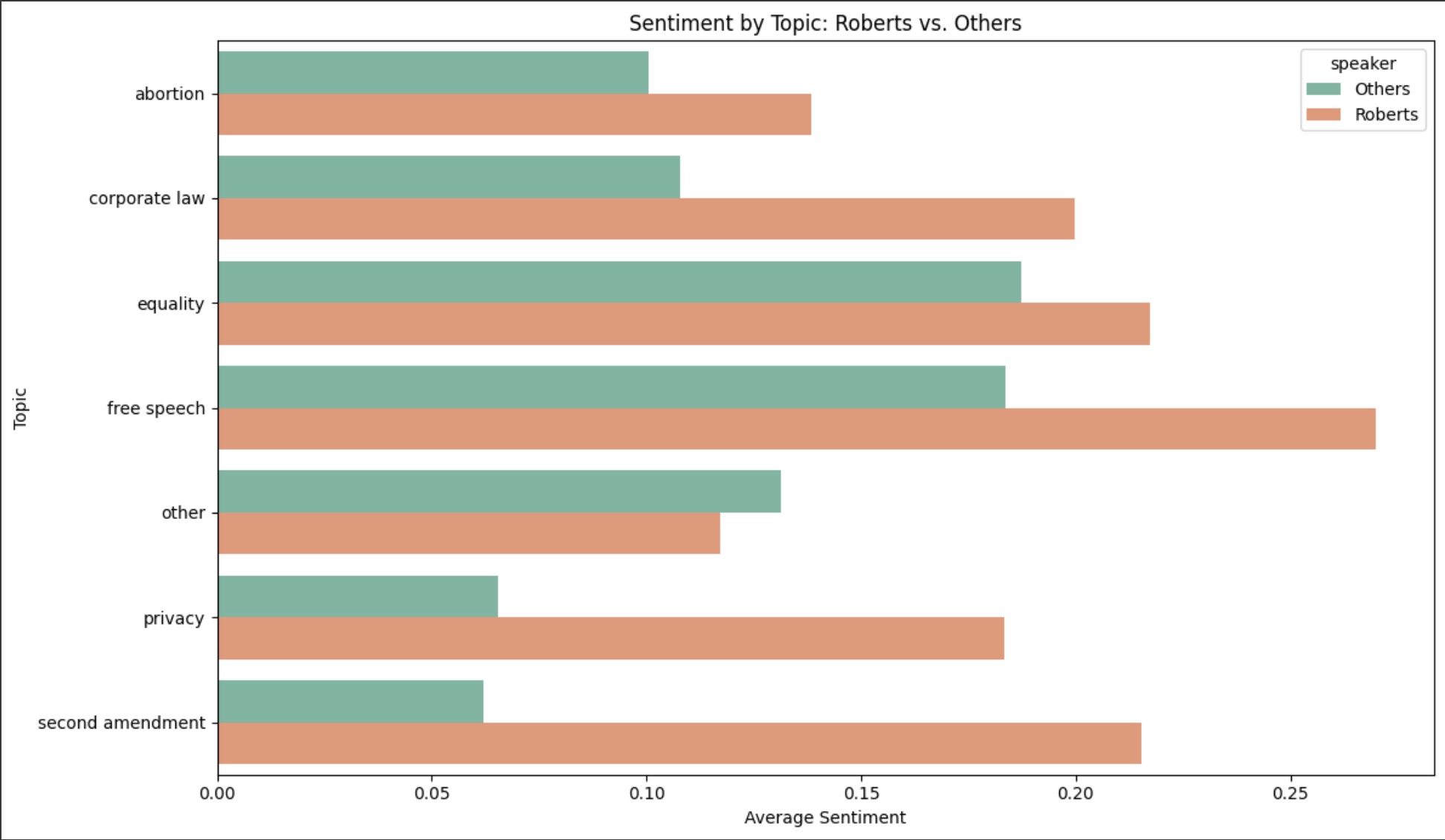
This mock up application allows users to input their case information and run it through our model to view predicted decisions for each Supreme Court Justice. It helps users understand the appeal process and provides insights into how Chief Justice Roberts, as well as other justices, might decide on various issues. The project employs sentiment analysis to assess Roberts's unique sentiments on different topics, helping identify any biases in his decision-making. Users can also access general information about Roberts and other justices. Future iterations of this tool will expand the analysis to include all justices, providing a broader understanding of judicial behavior.
How we built it
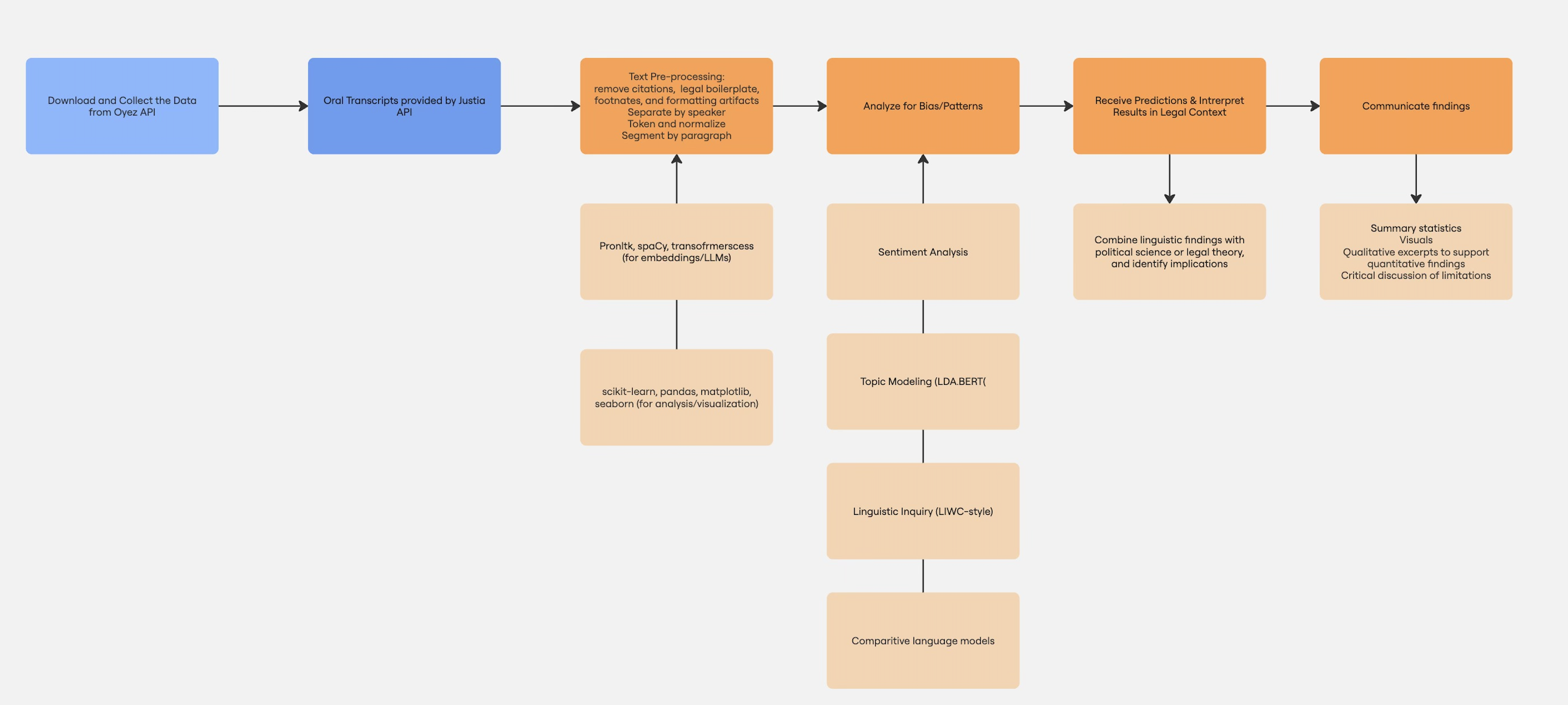
We collected case data using the Oyez API, including case information and oral argument transcripts. We then extracted, cleaned, and structured the raw transcript data into meaningful records, focusing on key attributes like speaker, text, case name, and topics. A CSV file was generated for further analysis. Our tool is designed to accommodate dynamic updates to the dataset, allowing for easy inclusion of new case transcripts as they are released. We scraped Justia’s audio file transcripts, parsing the data to extract topics and perform sentiment analysis on the spoken words.
We visualized sentiment analysis for Chief Justice Roberts and other justices across various topics. Additionally, we built a neural network model to predict Roberts’s sentiment and decisions based on general case information. As part of the project, we also created a mock-up of an application that civilians could use to input their case data and view general information about justices.
Challenges we ran into
The biggest challenge was sourcing the data. Court case records are often not easily accessible and must be requested directly from the courts. We turned to the unofficial Oyez API, which archives Supreme Court cases, but encountered issues with messy outputs. Additionally, Justia's website lacked clear decision information for each justice, complicating the analysis.
Accomplishments that we're proud of
We’re proud of our ability to extract real data from websites—none of us had previous experience with web scraping or working with the Oyez API. Successfully cleaning and structuring this data into a usable format was a major accomplishment. Additionally, we were able to apply sentiment analysis and neural networks in a meaningful way to predict outcomes based on the justices’ historical behaviors.
What we learned
Throughout this project, we honed our skills in working with APIs, natural language processing (NLP), sentiment analysis, and neural networks. We also learned how to handle and clean real-world data, especially from unstructured sources like web scraping.
Conclusion
We believe a predictive system for judicial decisions can be an invaluable tool for lawyers, judges, and individuals. It can help identify patterns in judicial rulings, predict case outcomes, and prioritize high-risk cases. This tool could also speed up the decision-making process, reduce court backlogs, and empower individuals by providing insight into their case's prospects.
This project could assist legal professionals in tailoring their strategies and help individuals assess the merits of their cases. By offering predictions based on past Supreme Court rulings, it could save time, money, and stress for those navigating the legal system. It would also help lower courts understand how similar cases were decided at the Supreme Court level.
This tool could democratize access to legal insights, giving individuals without strong legal representation a clearer understanding of their case. By analyzing judicial biases, especially in Chief Justice Roberts’s rulings, it could promote transparency and fairness in the judicial process. Expanding to include all justices and refining sentiment analysis could further enhance its utility, making legal processes more efficient and transparent.

Log in or sign up for Devpost to join the conversation.