Inspiration
I’ve always loved strategy games. Risk, Civilization, Catan, and countless others have kept me coming back to that same irresistible promise: start with something small, build it into something powerful, and see how far you can take it. The possibility of total conquest never seems to lose its appeal.
I’ve also been fascinated by AR and VR since I first encountered the technology decades ago. I think my first hands on experience was some ridiculous Pterodactylus game where these extremely rudimentary geometric shapes flew around my head. While I don't have a clue what the point of the game was, I do remember the impact it had on me. I knew from that moment this technology was truly revolutionary.
And now I finally have a chance to take these passions and combine them. Instead of just playing a 2D strategy game, I can now see my empire come to life in my own living room as I build it with my own hands.
Others have explored this territory, but I haven’t yet found an experience that captures everything that makes strategy in VR exciting. Unciv VR is my attempt to create that experience—the game I’ve wanted to play for years.
In many ways, Unciv VR is a personal homage to the strategy games that shaped my imagination. If it seems familiar, that's the point. It's meant to draw from the best of the past, while adopting the advances of the future.
What it does
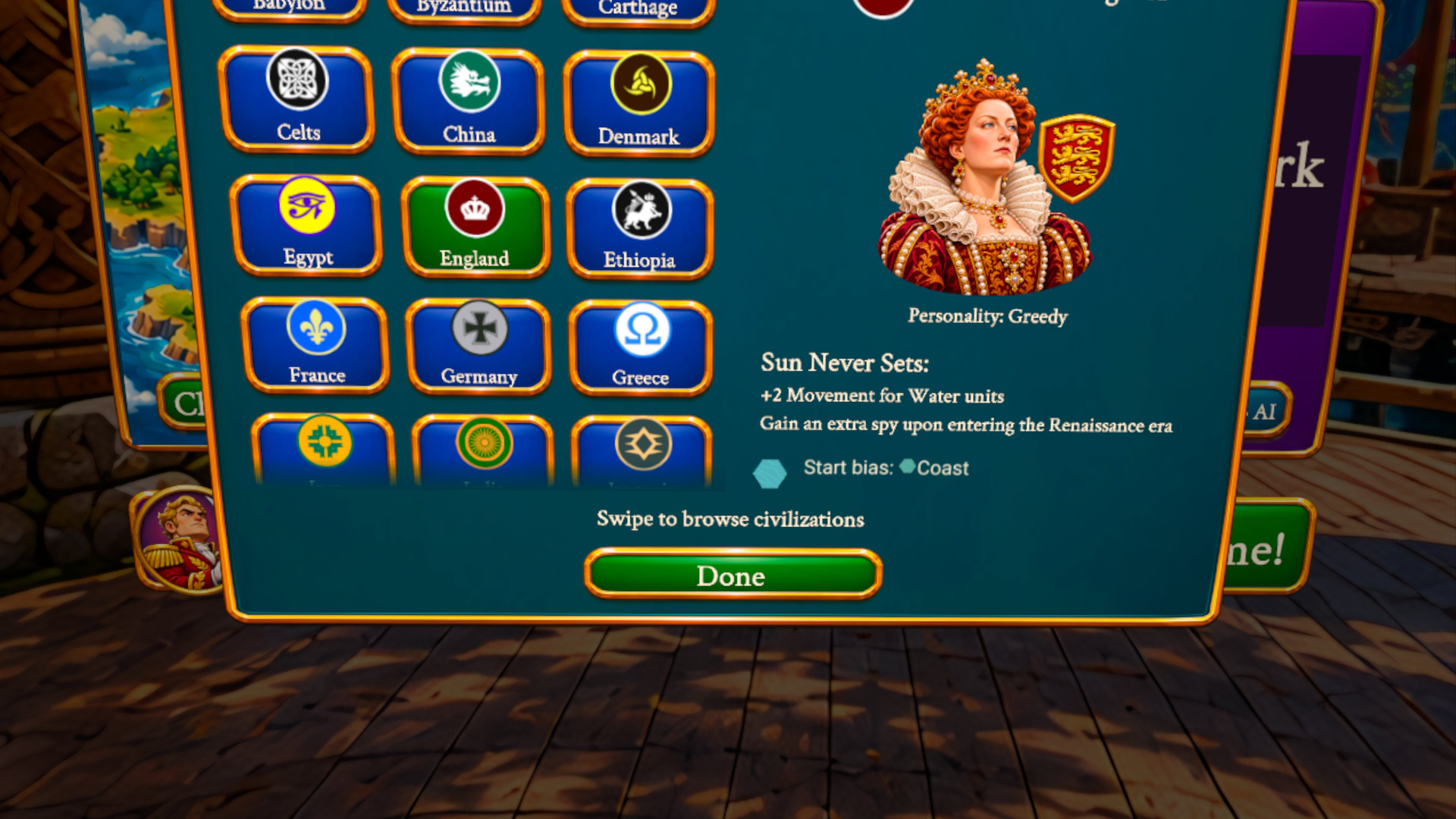
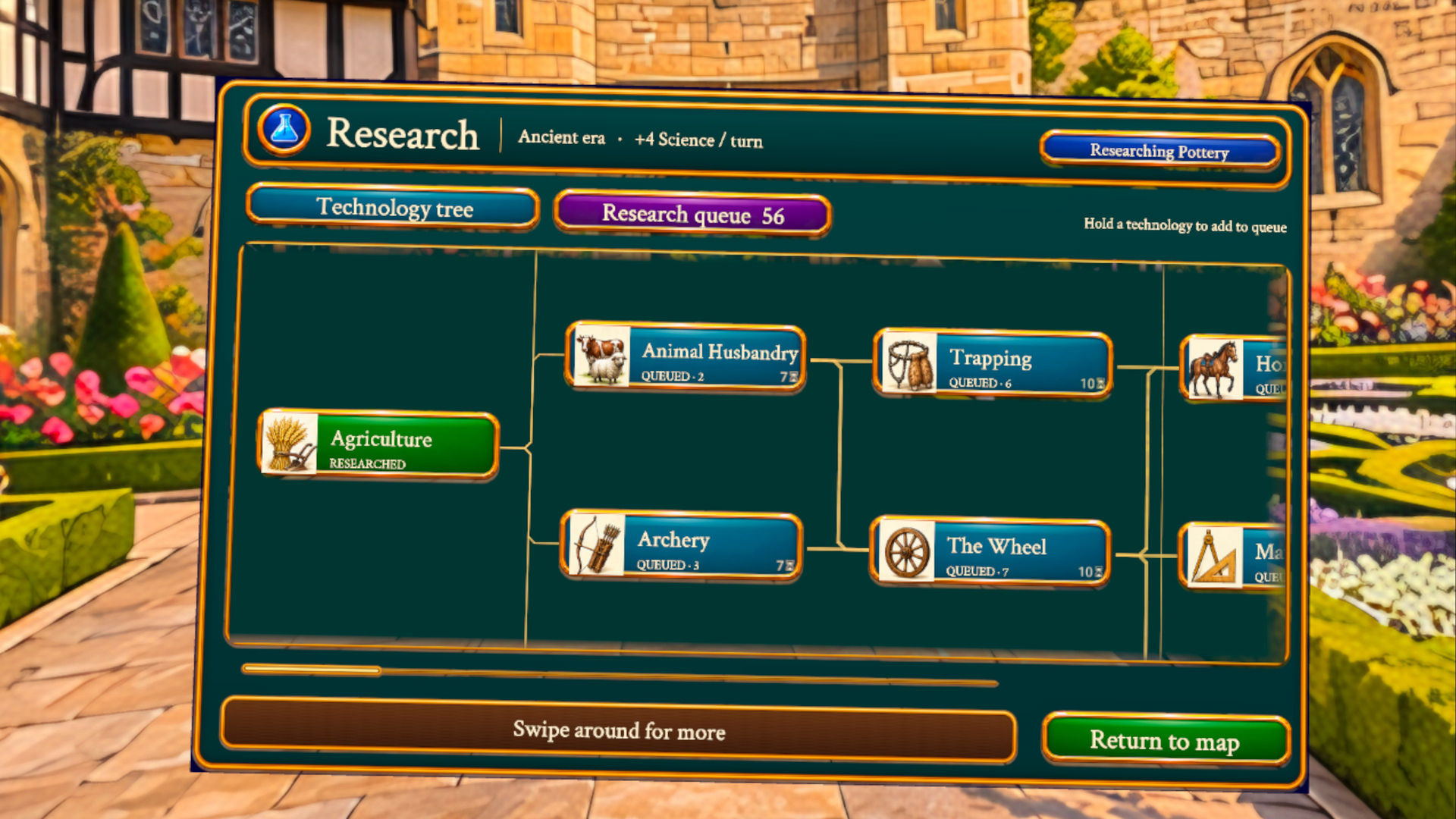
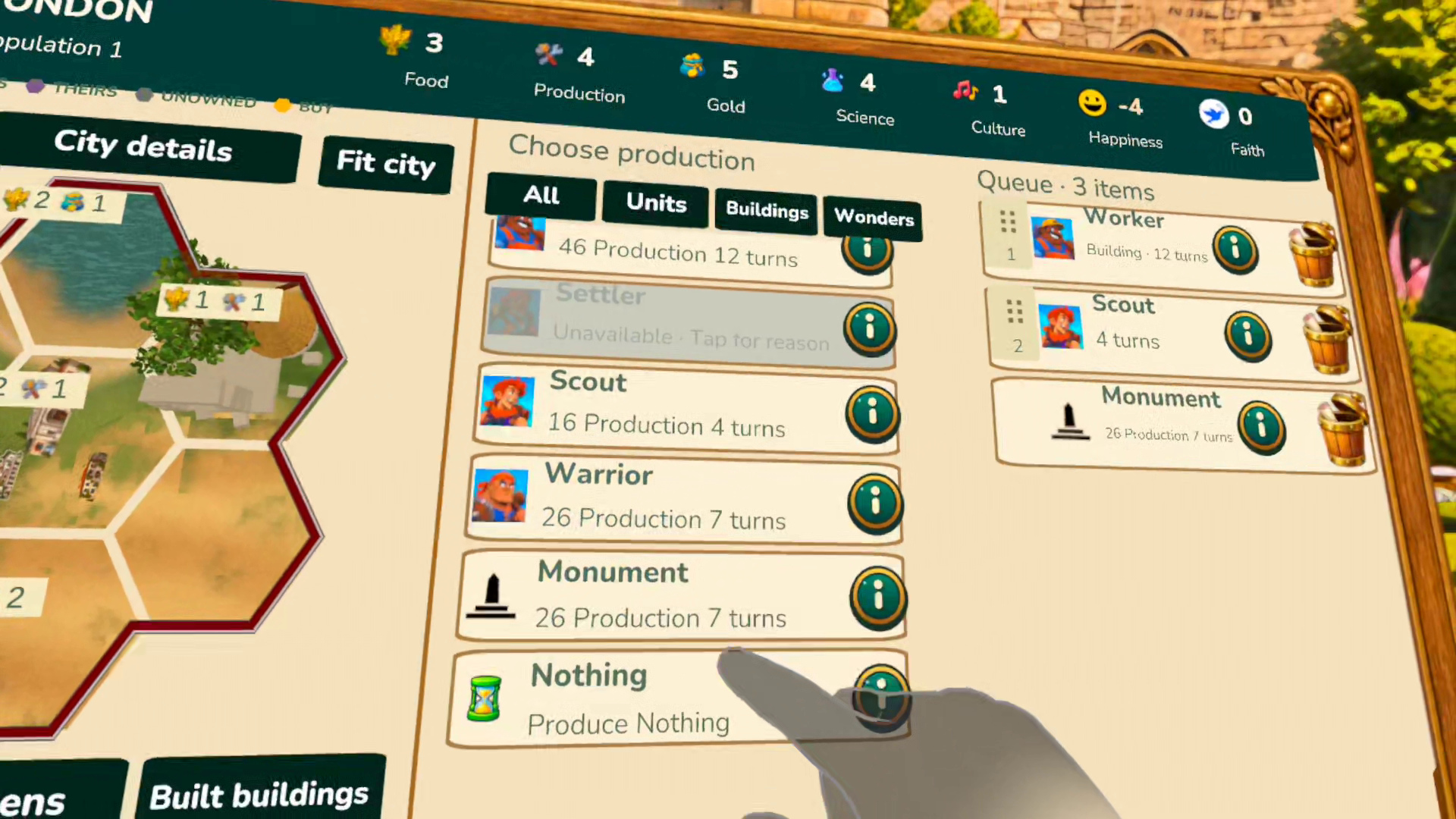
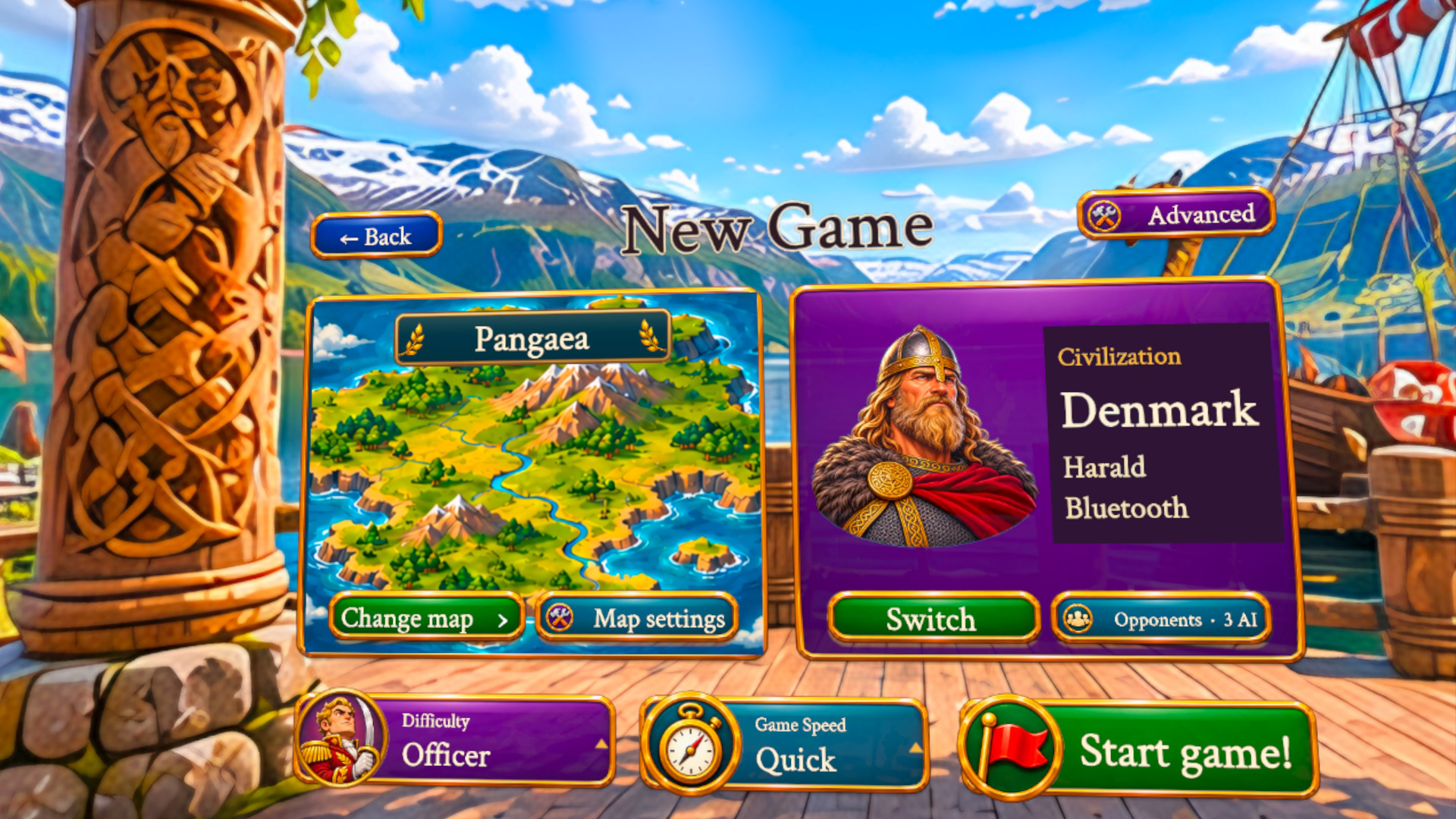
Unciv VR is a standalone, turn-based strategy game for Meta Quest. Explore a hex-based world, establish cities, research technologies, manage resources, negotiate with other nations, and command your units as your civilization advances through the ages.
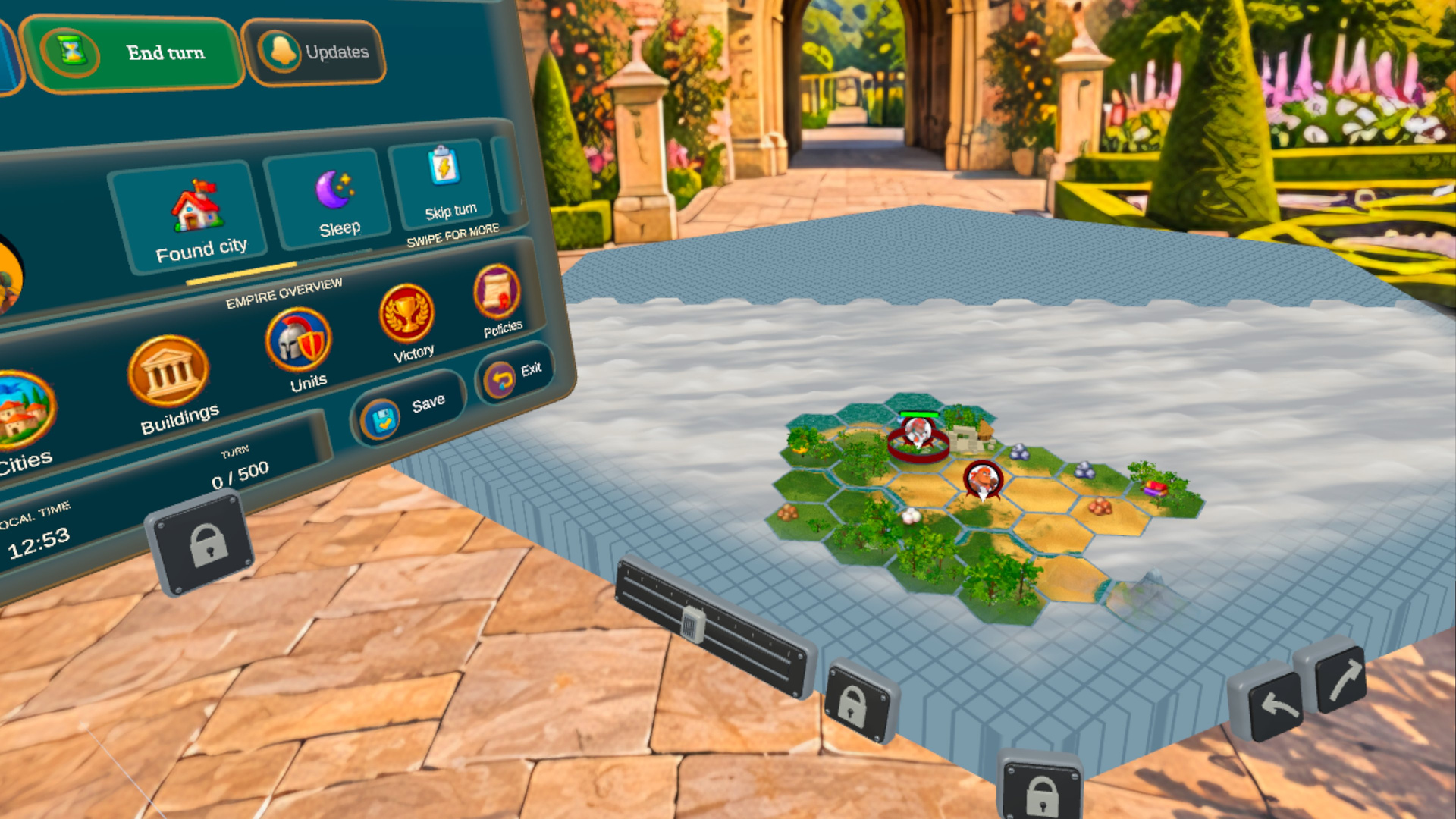
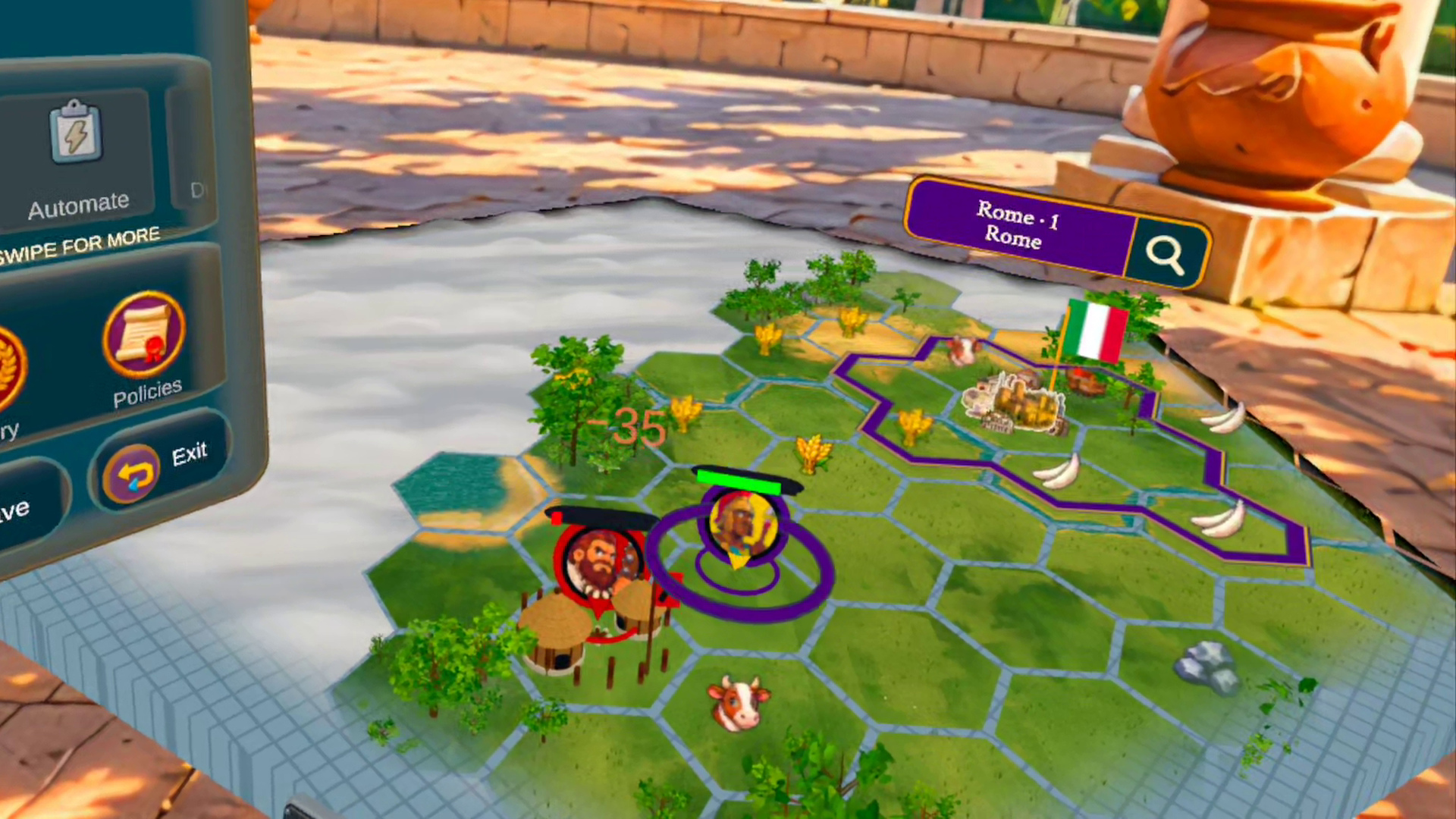
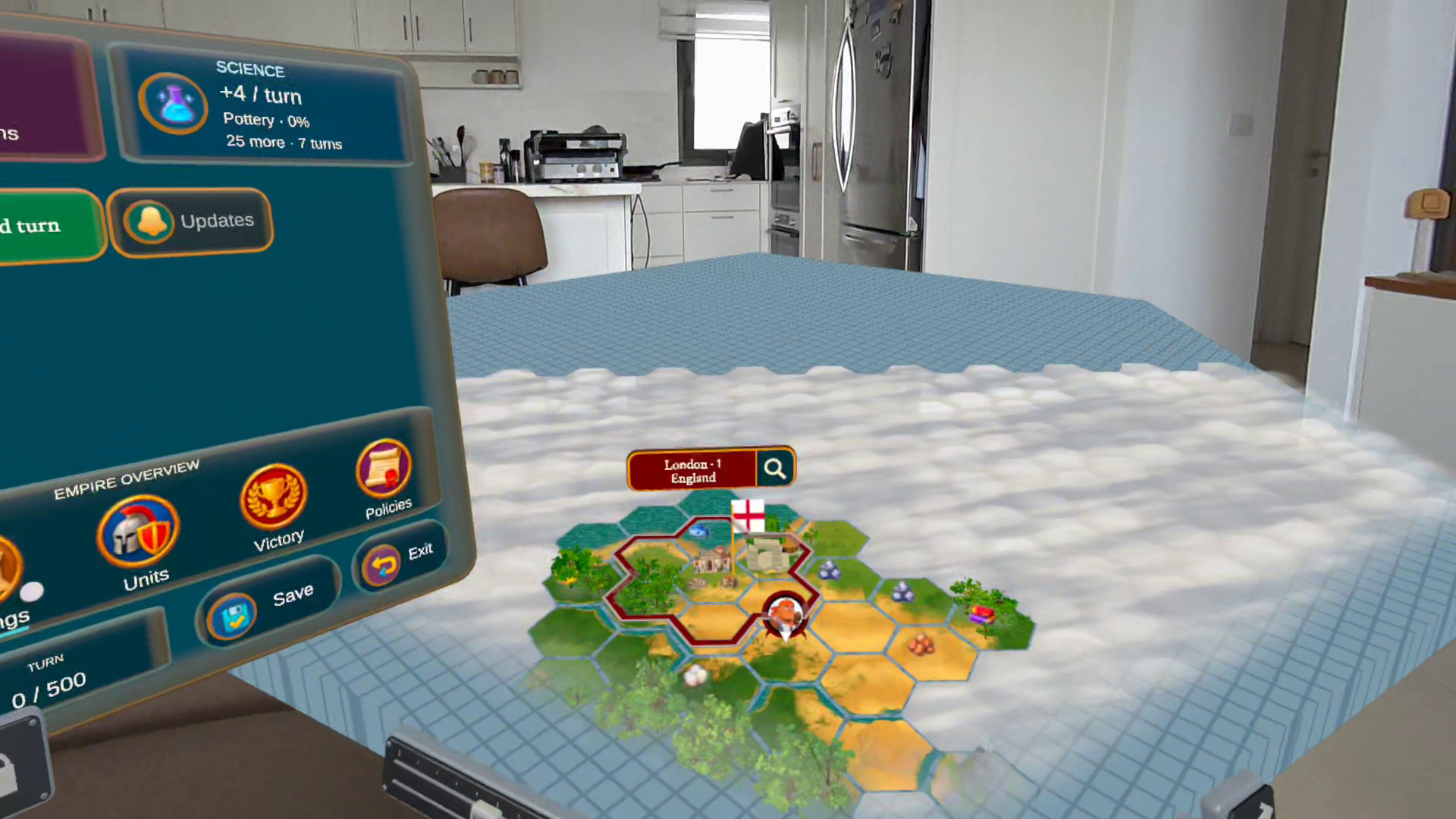
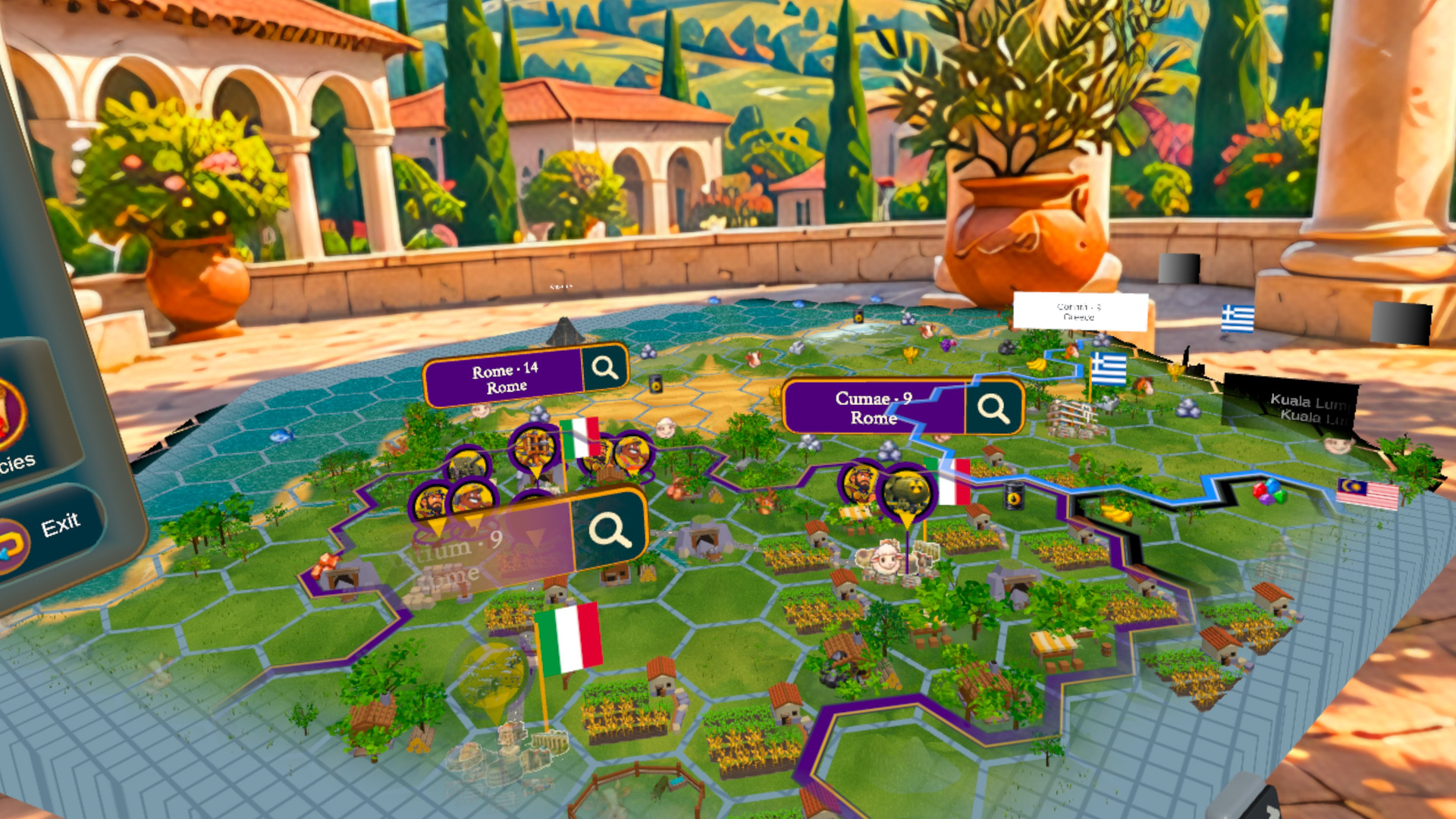
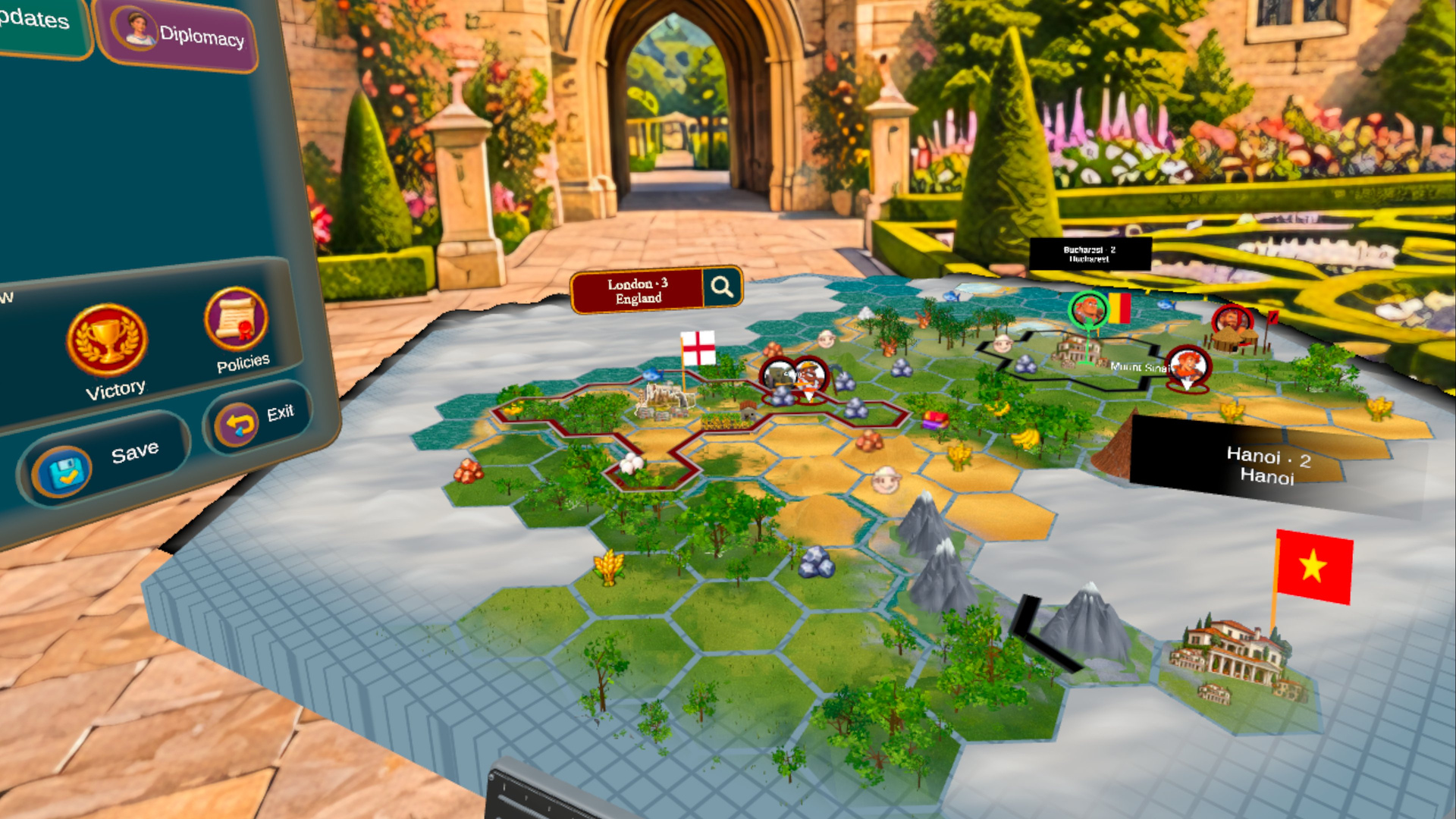
The world floats before you as an interactive tabletop. Use tracked hands to select units, issue orders, inspect cities, and navigate the game’s systems. Adjust the board’s position, angle, and size to suit your view and reach.
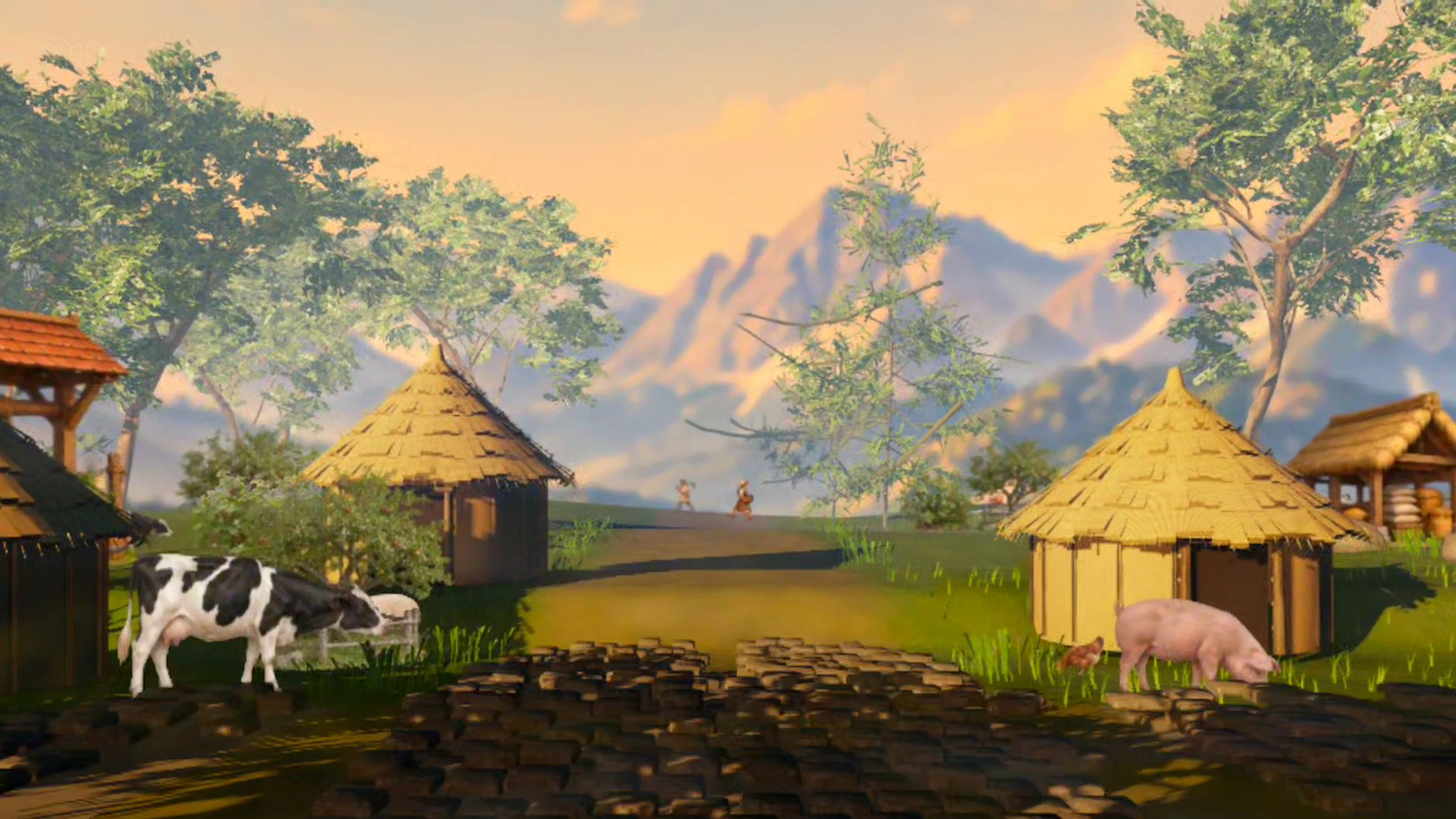
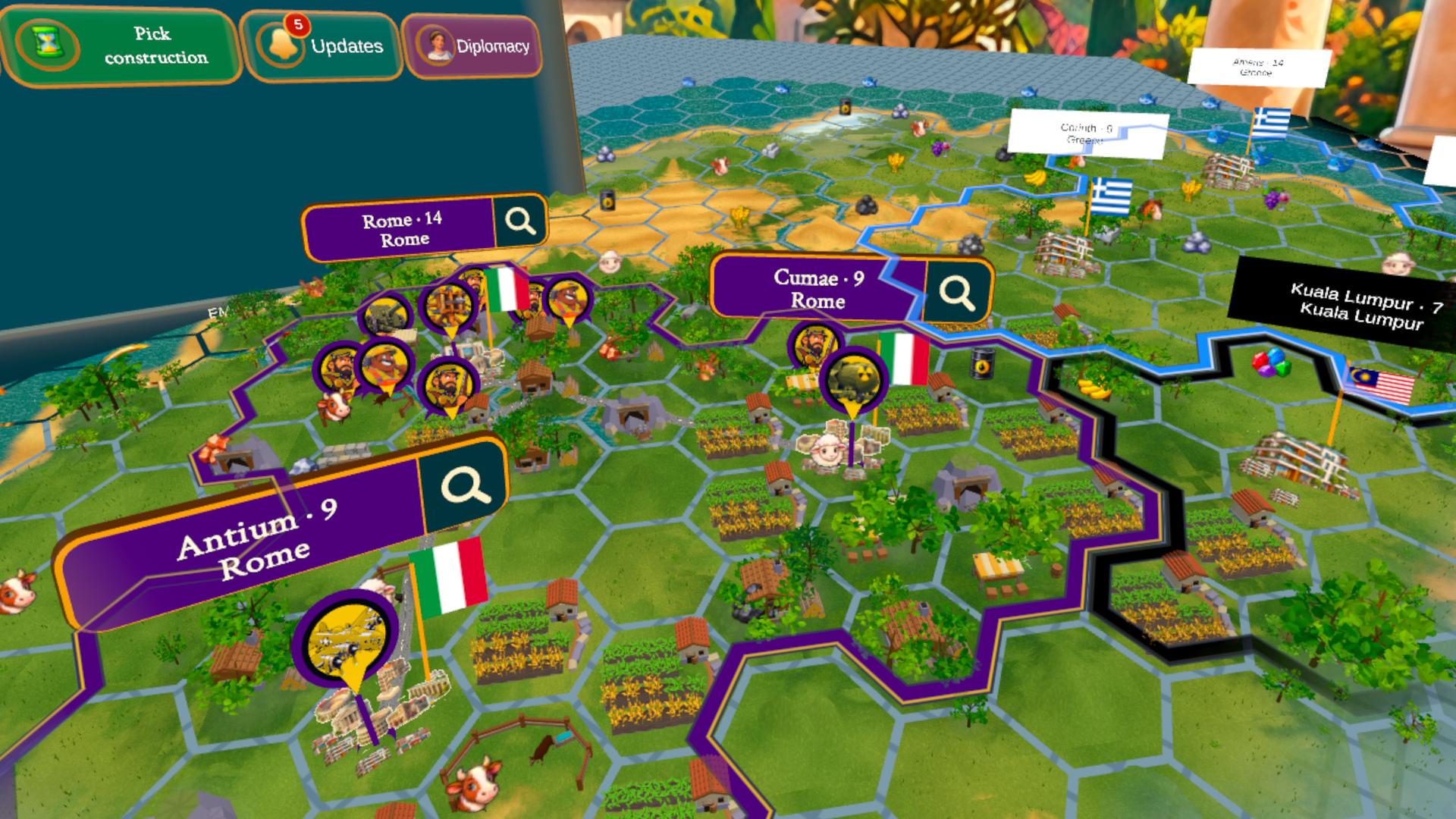
Illustrated unit tokens keep the strategic map readable, while animated combat brings encounters to life. Cities occupy individual map tiles, with a closer inspection view revealing their buildings and development.
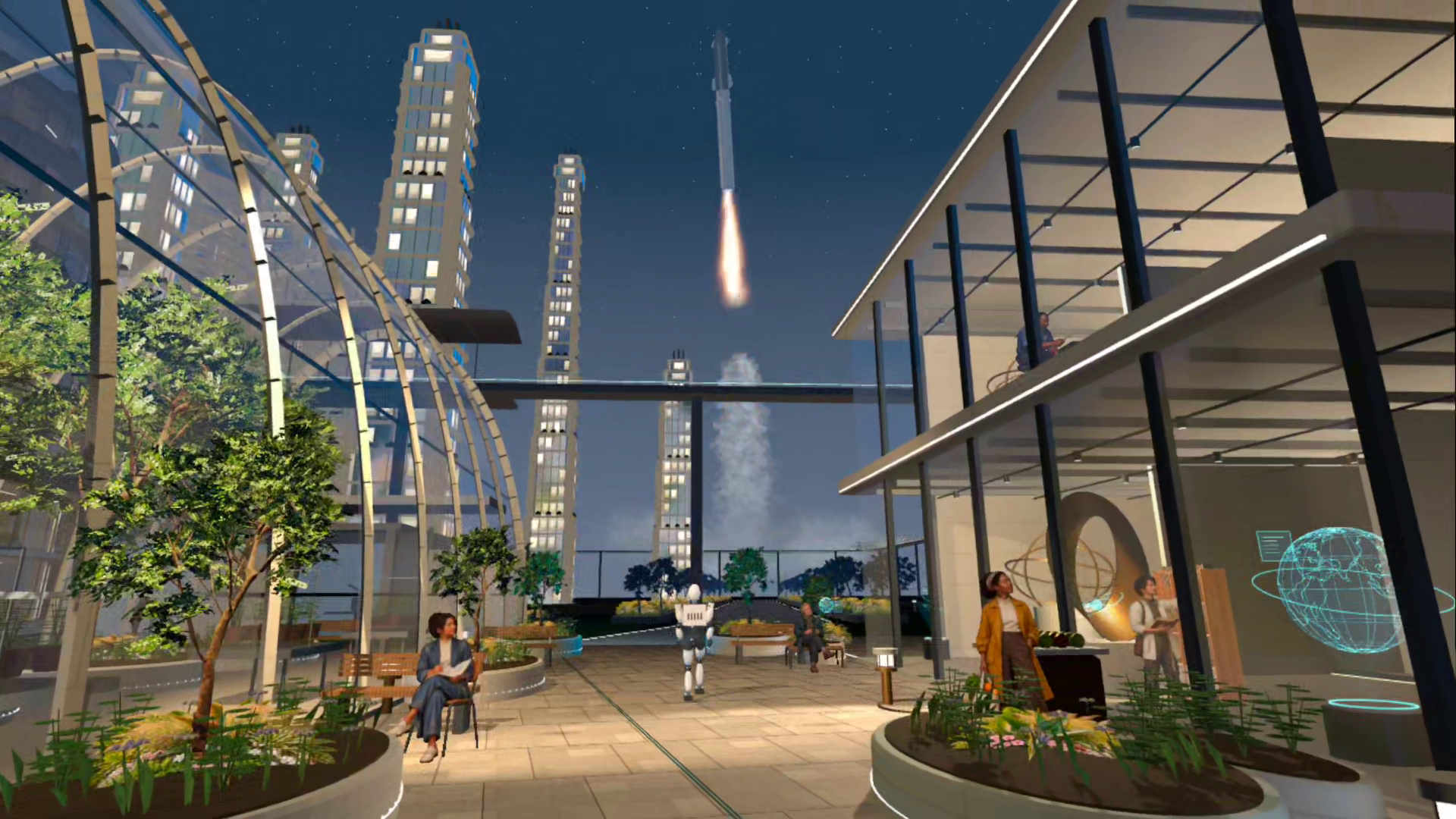
Play in an immersive environment or bring the board into your own surroundings through passthrough mixed reality.
How I built it
I built the VR experience in Unity using C#, Meta’s XR and Interaction SDKs, and OpenXR, with the open-source Unciv engine providing the underlying strategy foundation.
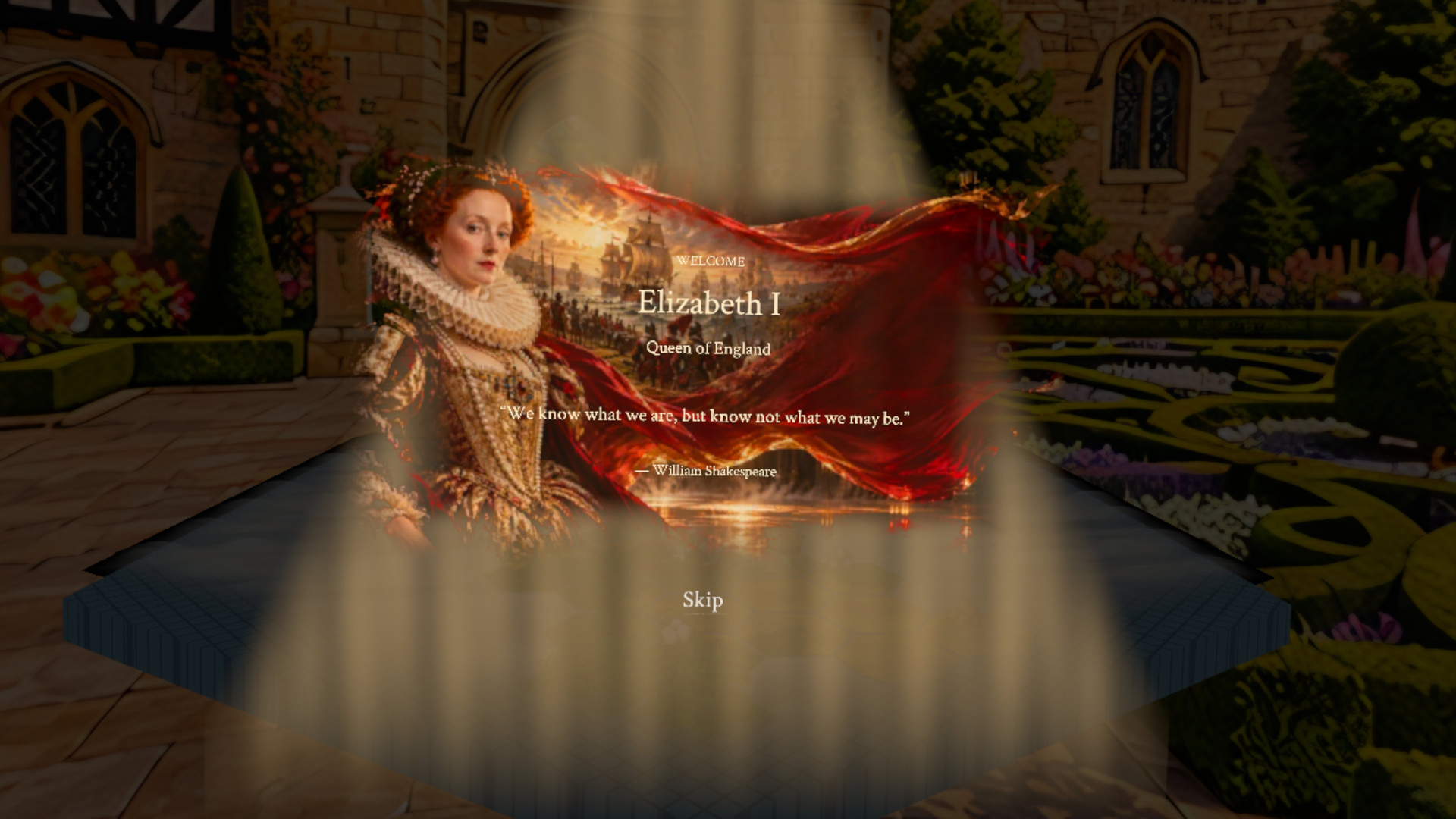
My work focuses on the spatial presentation and interaction: the tabletop world, hand controls, floating interfaces, illustrated units, combat presentation, city inspection, sound, and onboarding.
Adapting an existing strategy engine allowed me to concentrate on the central design challenge: making a complex game comfortable and understandable when played with your hands.
Challenges
A strategy game contains a great deal of information. Presenting it in VR required careful decisions about what belongs on the board, what appears when requested, and how to keep text and controls readable.
Hand interaction also introduces ambiguity. Reaching toward a unit, inspecting it, and repositioning the board must feel distinct. Accidental touches should not interrupt a carefully considered turn.
Another challenge was balancing spectacle with clarity. Animated encounters and detailed cities add personality, while the ordinary strategic view still needs to communicate ownership, position, and available actions quickly.
What I learned
The smallest interaction details can shape the entire experience: where a panel appears, when the board moves, how an action is confirmed, and whether a hand obscures important information.
The strongest improvements often came from making those details more predictable. A world feels tangible when it responds consistently to the player.
What’s next
There are five directions I’m particularly excited to explore:
An AI Era: Extend the game’s progression with an era that explores the technological, military, and economic transformations taking shape in our world. I want these developments to introduce meaningful strategic choices about how a civilization adapts, competes, and prospers.
Leaderboards across multiple categories: Give players ways to compare their achievements across different dimensions of empire-building. Categories could recognize scientific advancement, economic strength, military success, cultural influence, and speed of victory, rewarding different strategies and encouraging players to try new approaches.
Multiplayer: Bring human opponents and allies to the tabletop. Sharing this world with other players would bring the negotiation, rivalry, and unpredictability I’ve always loved in strategy board games.
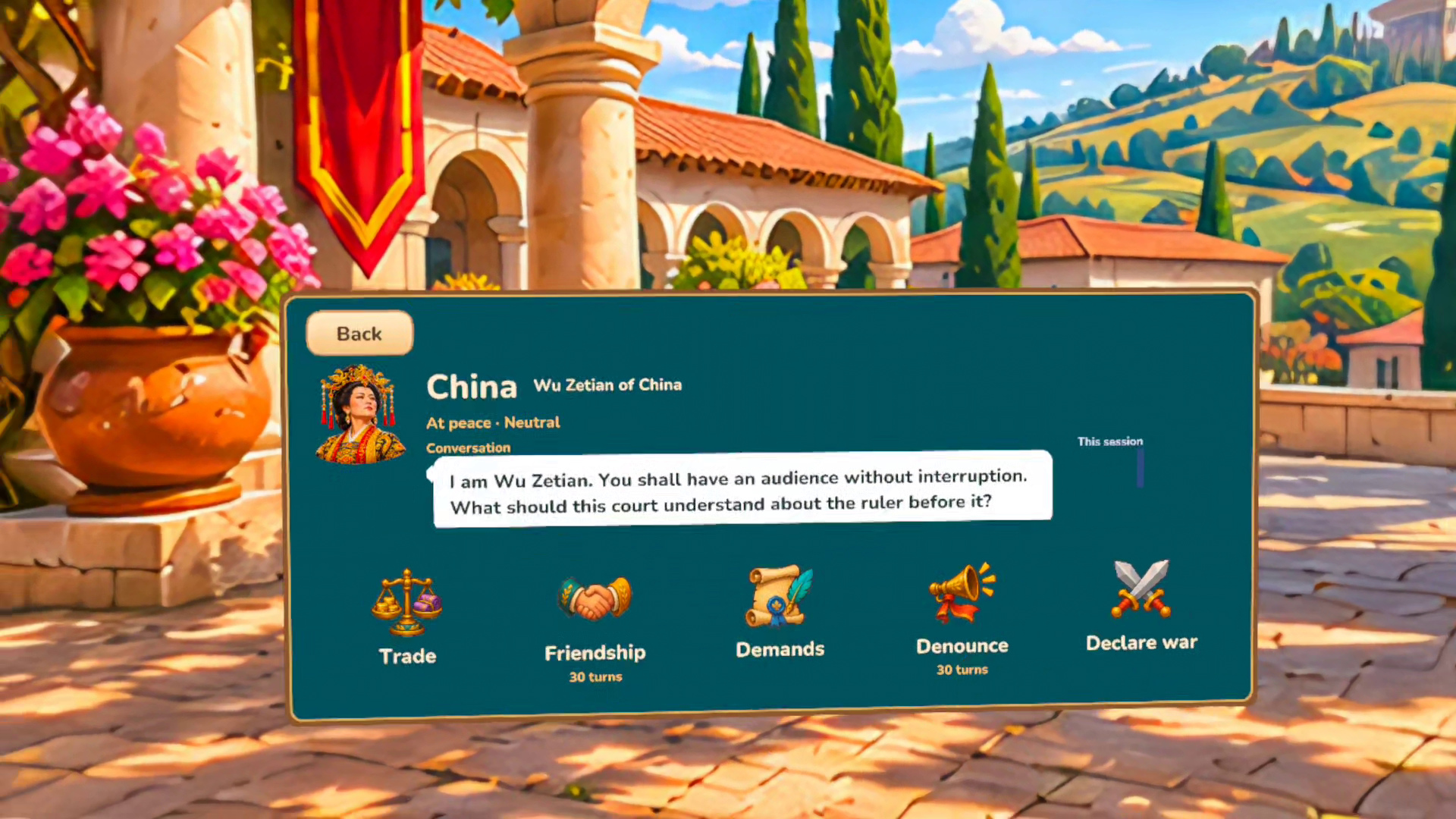
Conversational diplomacy: Prototype a lightweight, open-source language model that lets players converse naturally with AI opponents. The ambition is for those conversations to influence an opponent’s decisions and behavior, giving persuasion, negotiation, and threats real strategic consequences. This remains an experiment to evaluate for feasibility and gameplay value.
More satisfying construction: Improve the animations for creating buildings and wonders. These are milestones in the growth of an empire, and I want their construction and completion to feel more convincing, distinctive, and rewarding.
UX and UI touchups: Although I'm nearing the finish line, this game is still a work and progress, and I do need to clean up some issues.
Target launch date: Christmas Day, December 25, 2026.
Work completed during the competition
I began developing Unciv VR on September 28, 2026, when I decided to enter this competition. All of the Unciv VR development presented in this submission was completed since that date.
The project builds on the pre-existing open-source Unciv engine. My work during the competition created the VR experience around that foundation: the interactive tabletop, hand controls, immersive and passthrough environments, spatial interfaces, illustrated unit presentation, animated combat, city inspection, construction animations, sound, and onboarding.
This submission represents the resulting playable VR adaptation.


