-
-
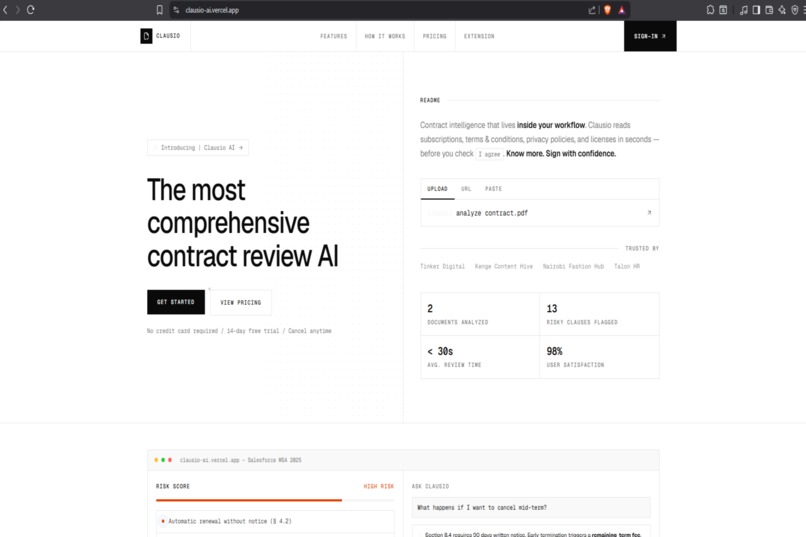
Home
-
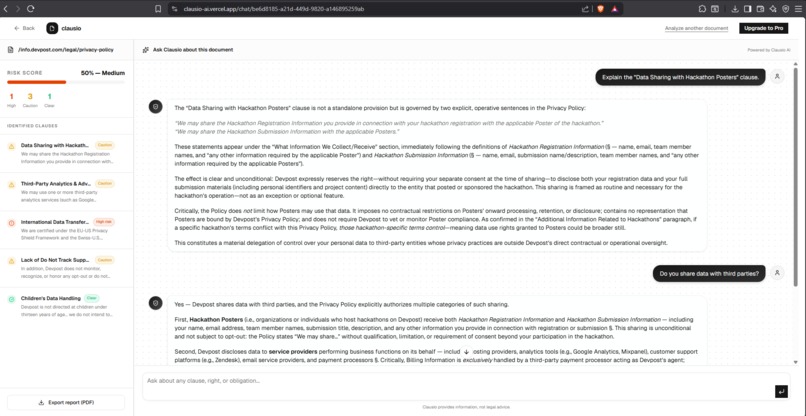
Chat with documents
-
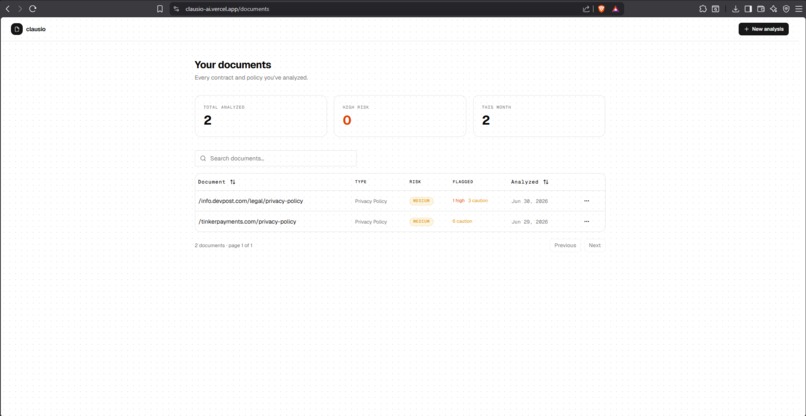
User documents
-
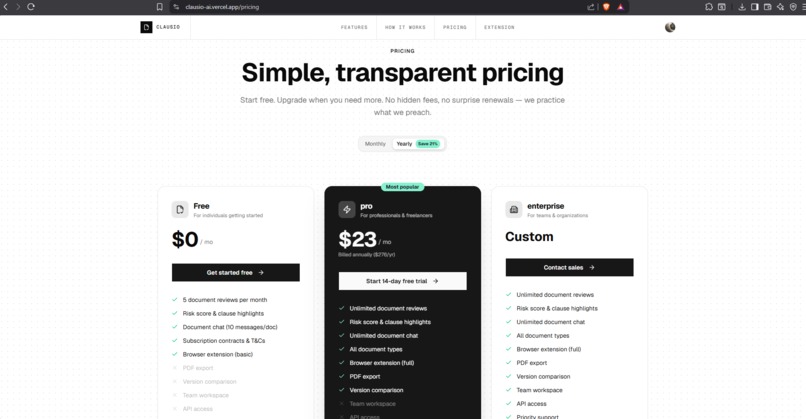
Pricing
-
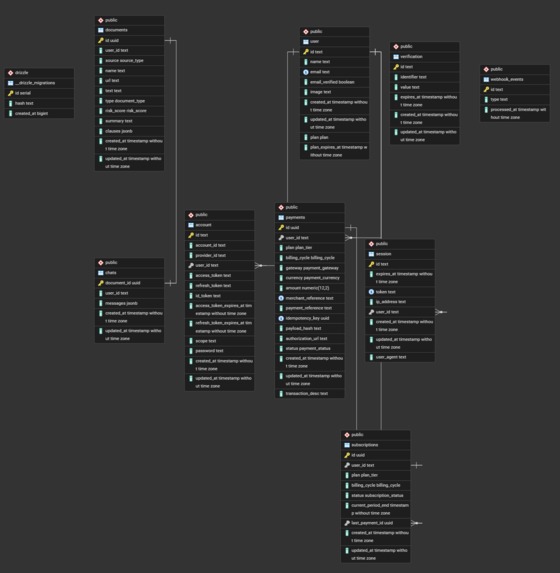
ERD

Inspiration
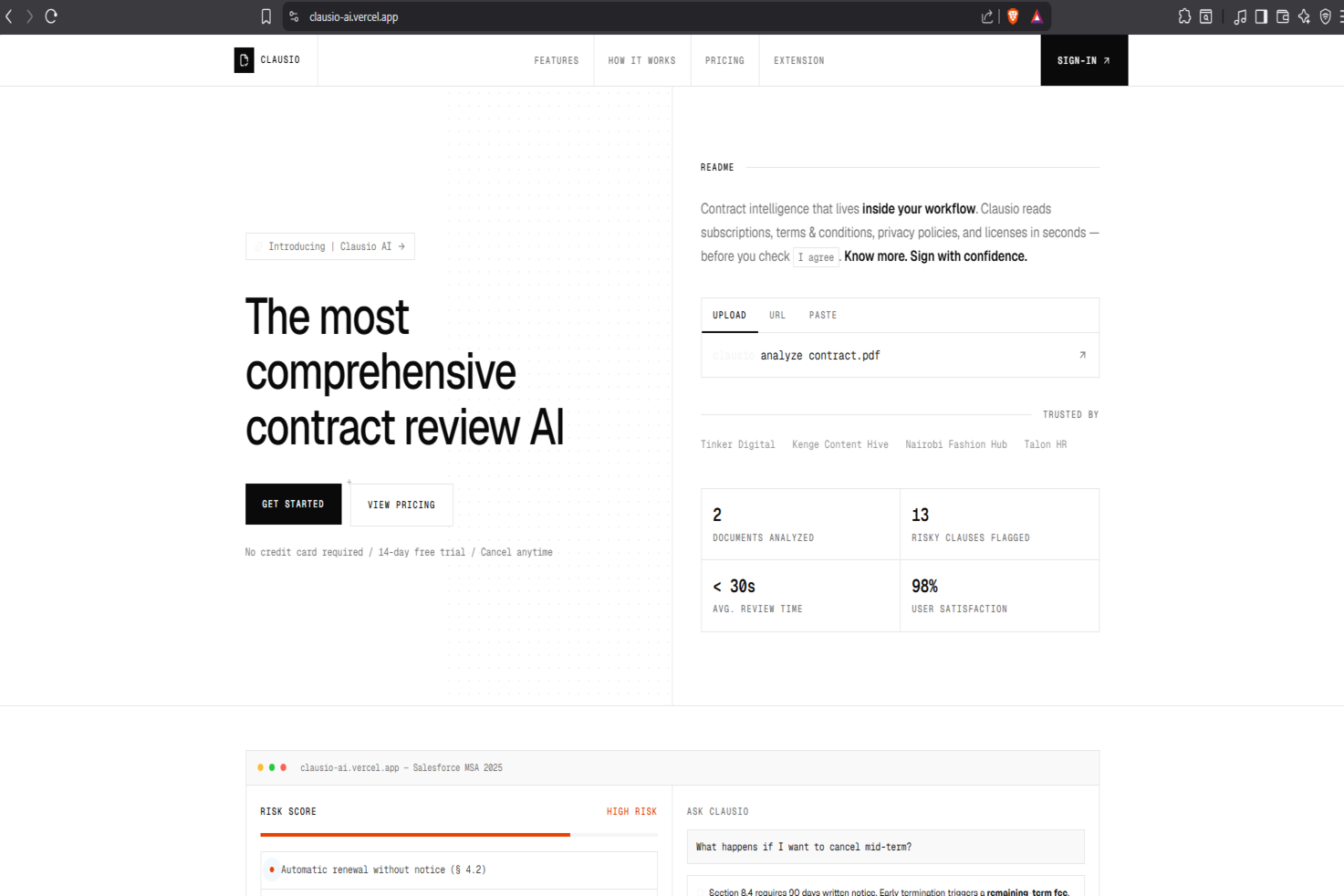
We click "I Agree" dozens of times a year without reading a word. Subscription terms, privacy policies, software licenses, and T&Cs are long, dense, and written to be skimmed past which is exactly where auto‑renewals, data‑sharing clauses, arbitration waivers, and hidden fees live. Clausio AI started from a simple frustration: the people bound by these documents are the least equipped to understand them. I wanted to put a contract reviewer everywhere people actually click "I Agree" in their pocket, on their lap, and on their desk one that reads the fine print in seconds and explains, in plain language, what you're actually agreeing to.
What it does
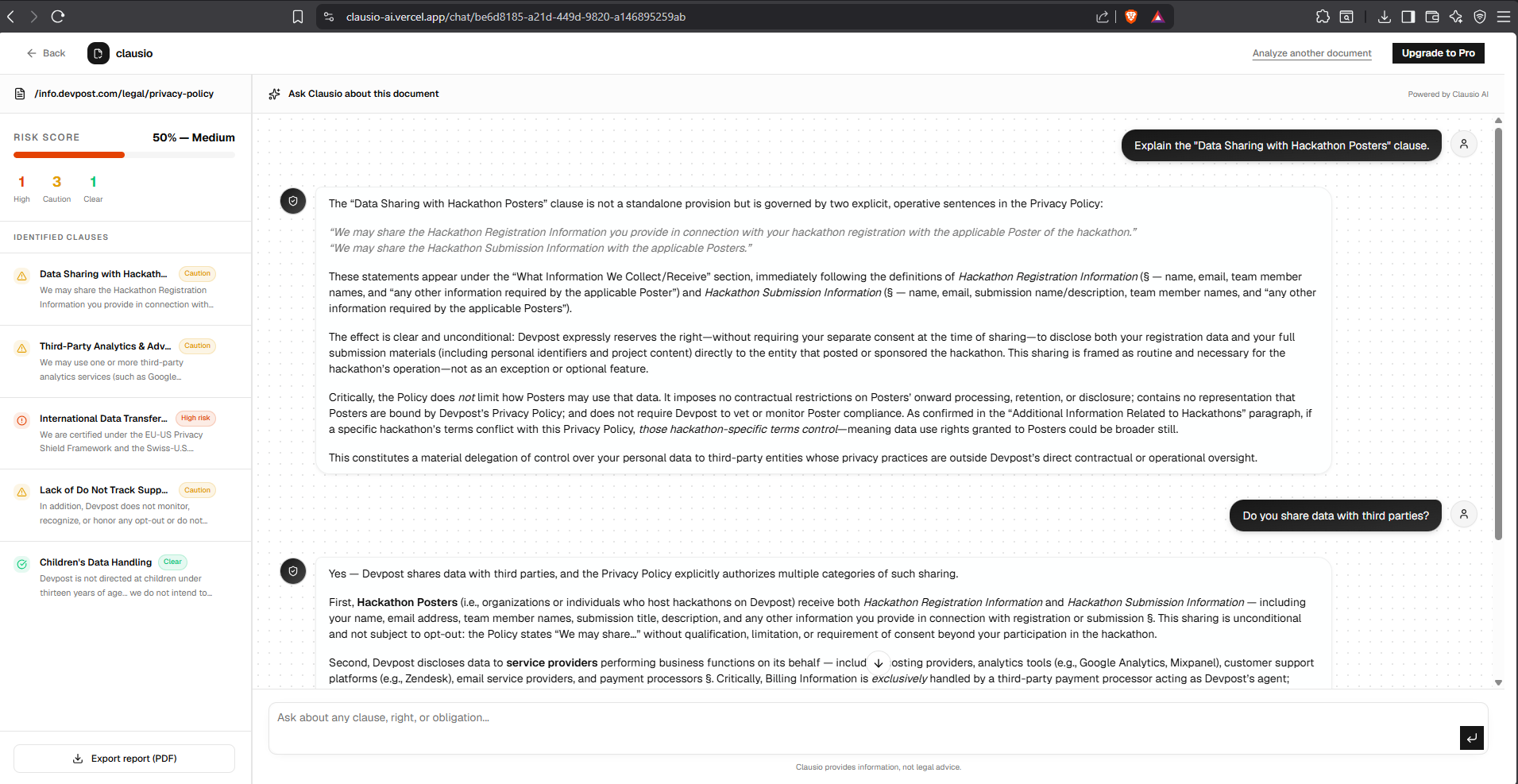
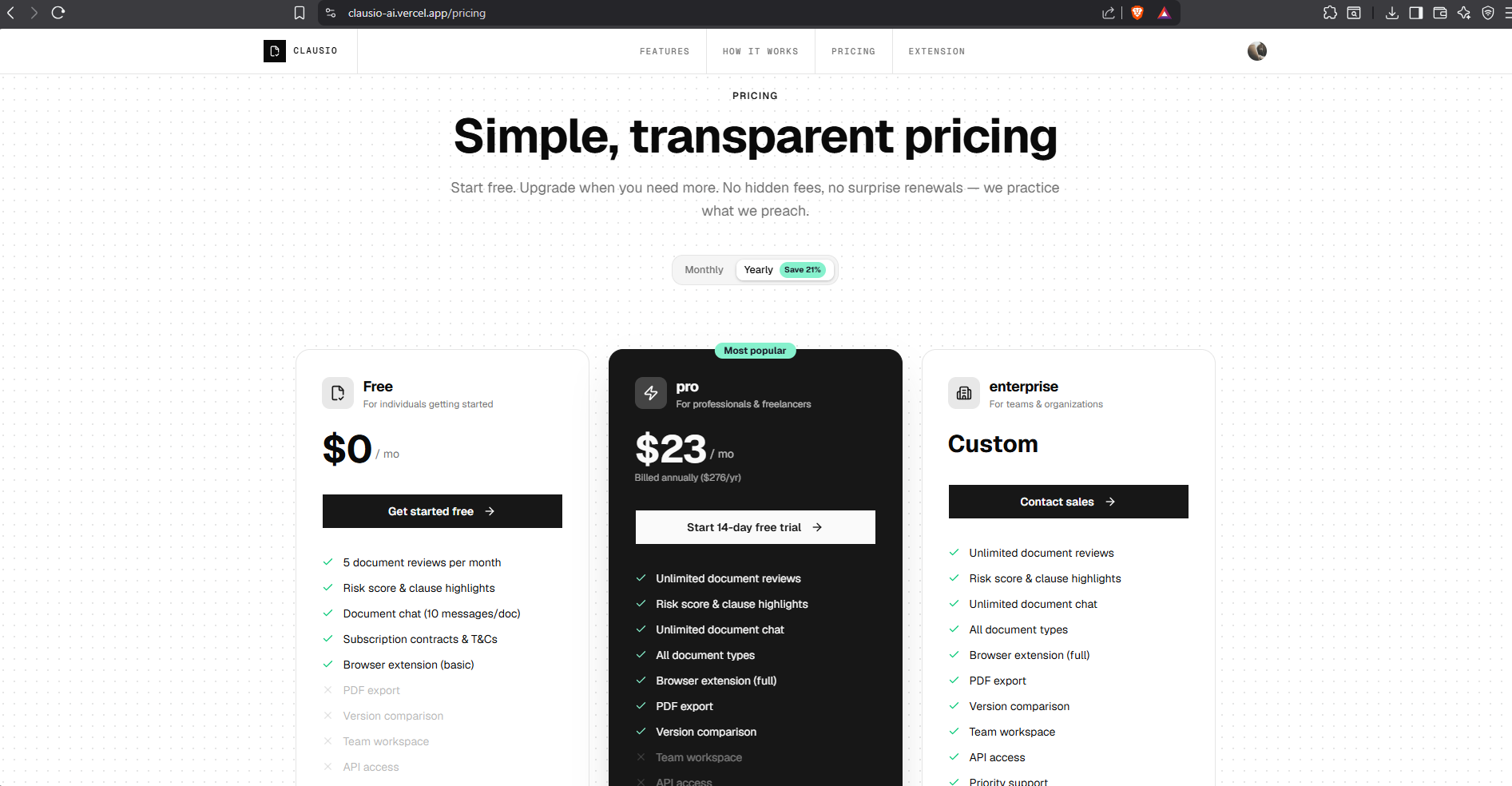
Clausio AI reviews legal and contractual documents subscription terms, terms & conditions, privacy policies, software licenses, and more and surfaces what matters: risky clauses, obligations, renewal traps, and data practices, all in plain English. You upload or paste a document and Clausio reviews it in seconds, so you can see what you're agreeing to before you accept. Clausio ships with three plans Free, Pro, and Enterprise and Pro, Enterprise, and 14‑day trial users can export a polished PDF of any review to keep or share. (Clausio helps you understand documents faster; it isn't a substitute for legal advice.)
How we built it
Clausio is a Next.js (TypeScript) application, designed and iterated end‑to‑end in v0 and deployed on Vercel. The review experience is built on the Vercel AI SDK and AI Elements, which gave me streaming, chat‑style AI interfaces out of the box. The interface is Tailwind CSS + shadcn/ui with Motion for animation.
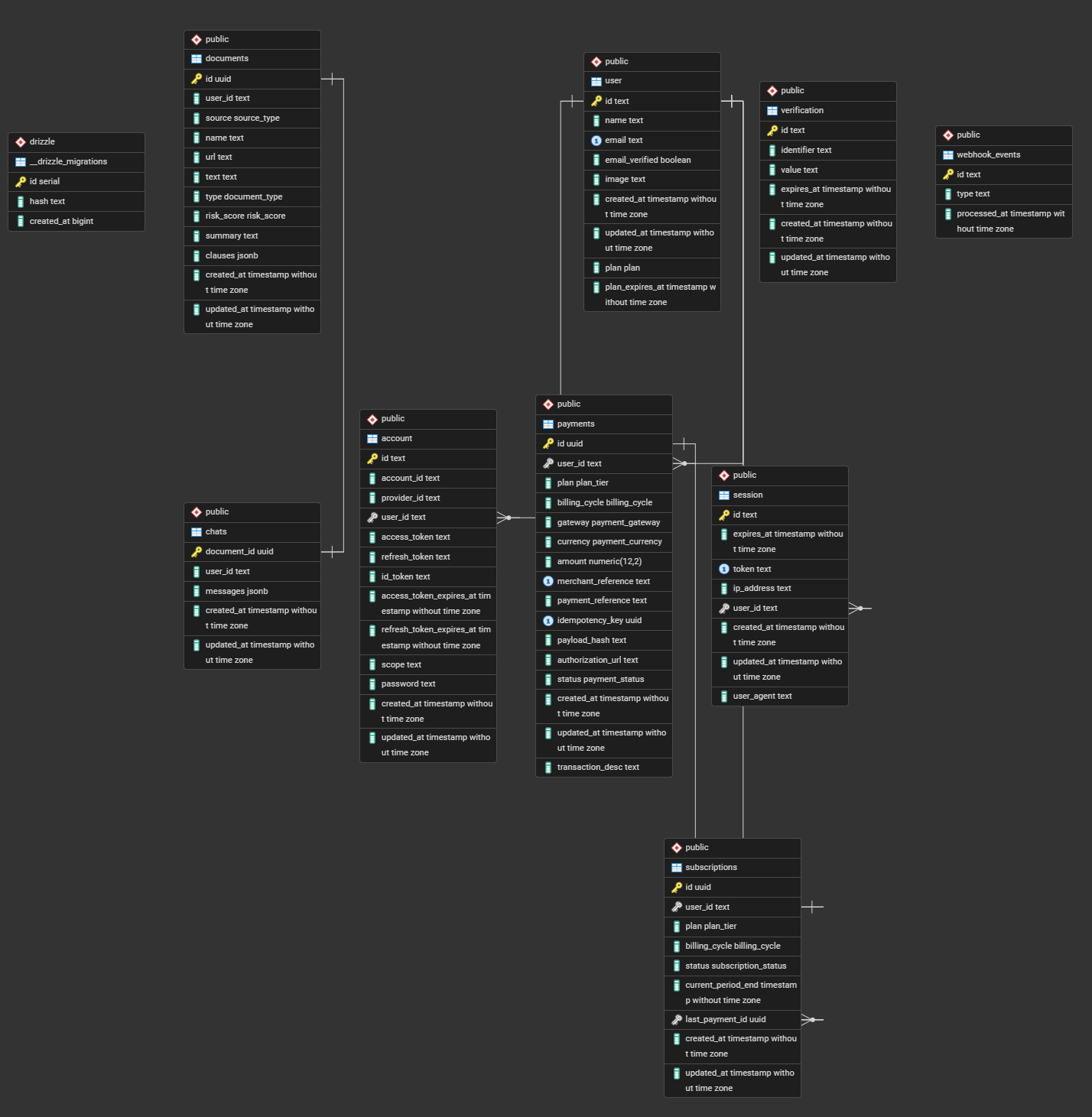
On the backend, I used tRPC for a fully type‑safe API layer, Drizzle ORM for the data layer, and Better Auth for authentication. Persistence runs on AWS Aurora PostgreSQL, which stores users and sessions, uploaded and reviewed documents, the structured results of each review, and subscription/plan state that gates feature like PDF export. Drizzle gave me type‑safe schema and migrations against Aurora, and tRPC carried those types all the way to the client.
Challenges we ran into
Reliable structure from a freeform model. Legal review has to be trustworthy, so the hardest problem was getting the model to flag and categorize clauses consistently without inventing obligations that aren't in the text. I leaned on careful prompting and structured outputs over the AI SDK.
Serverless Aurora connections. Connecting Vercel's serverless functions to Aurora PostgreSQL meant handling connection limits and pooling a classic serverless‑Postgres pain point and tuning how Drizzle opens and reuses connections.
Plan‑gated features. Wiring subscription state through auth, tRPC, and the UI so PDF export and usage limits behave correctly for Free vs. Pro/Enterprise vs. trial users.
Accomplishments that we're proud of
A real, polished product on the exact stack the hackathon calls for. Clausio was designed and shipped in v0, deployed on Vercel, and backed by AWS Aurora PostgreSQL not a prototype, but a working app with auth, billing tiers, and AI review. Aurora PostgreSQL running cleanly behind serverless. Getting connection pooling and reuse right so Aurora behaves reliably under Vercel's serverless functions, instead of exhausting connections.
End‑to‑end type safety. Types flow from the Aurora schema through Drizzle and tRPC all the way to the React client, with no hand‑written API glue. Trustworthy AI output. Structured, categorized clause review that flags what actually matters without hallucinating obligations.
A complete SaaS surface. Free / Pro / Enterprise plus a 14‑day trial, with real feature gating like PDF export wired through auth and the UI.
What we learned
How far v0 can carry a real product. Not just a landing page a full application with authentication, a production database, and AI features, designed and refined in v0.
The realities of Vercel serverless + AWS Aurora PostgreSQL. Pooling, connection reuse, and tuning Drizzle for a serverless runtime are the difference between a demo and something that holds up.
Prompt engineering and structured outputs with the Vercel AI SDK in a domain where being wrong has real consequences, so accuracy and structure mattered more than fluency.
End‑to‑end type safety (Drizzle + tRPC) is a major accelerant once it's set up refactors stop being scary and the client/server contract is always in sync.
What's next for Clausio AI
A browser extension. The next major step is meeting users at the exact moment they click "I Agree": an extension that automatically detects and extracts links to T&Cs, privacy policies, and agreements on the page you're visiting and hands them to the same review engine so you can review them before you accept, without copy‑pasting a wall of legal text.
More document types and languages, so Clausio can review a wider range of agreements for a global audience.
Side‑by‑side version comparison, so you can see exactly what changed when a policy or contract is updated.
Redline‑style suggestions that go beyond flagging clauses to proposing edits.
Team and collaboration features for Enterprise customers reviewing vendor contracts at scale.
Built With
- ai-elements
- amazon-web-services
- better-auth
- drizzle-orm
- google-auth
- nextjs
- postgresql
- shadcn
- tailwind
- tanstack
- trpc
- typescript
- vercel
- vercel-ai
- vercel-v0

Log in or sign up for Devpost to join the conversation.