-
-
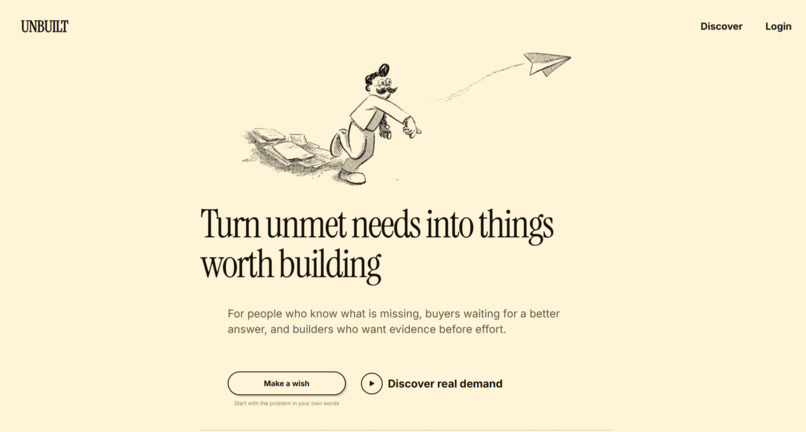
Landing Page
-
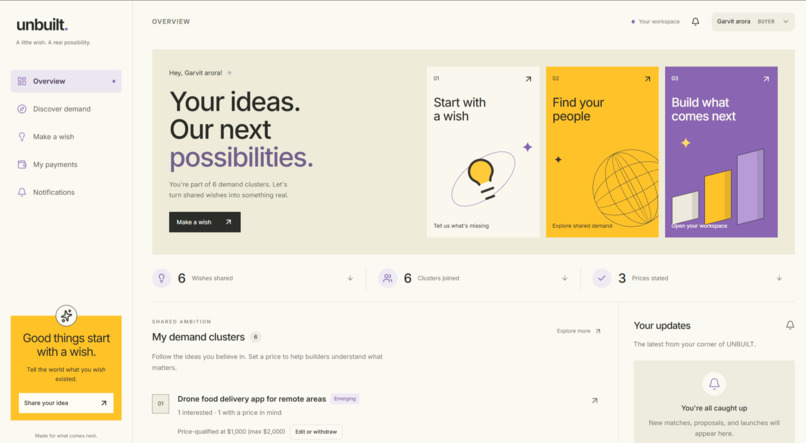
Overview Page
-
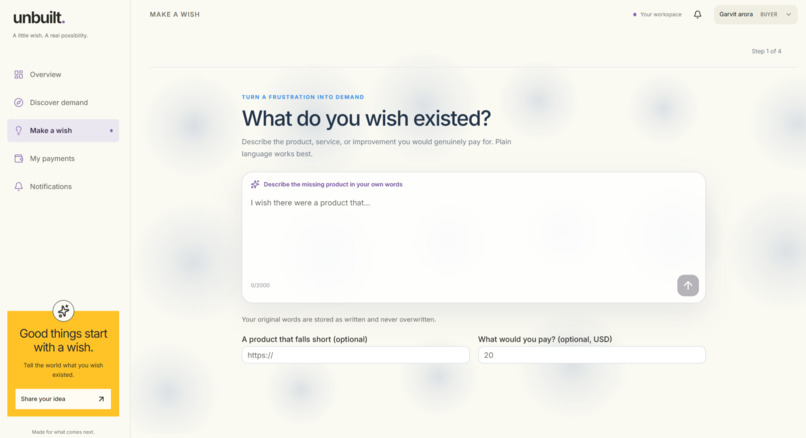
Wish Page
-
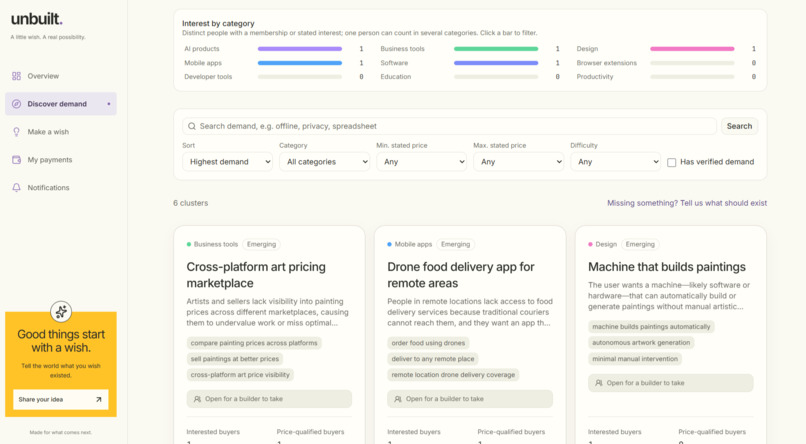
Demand Page
-
-
-
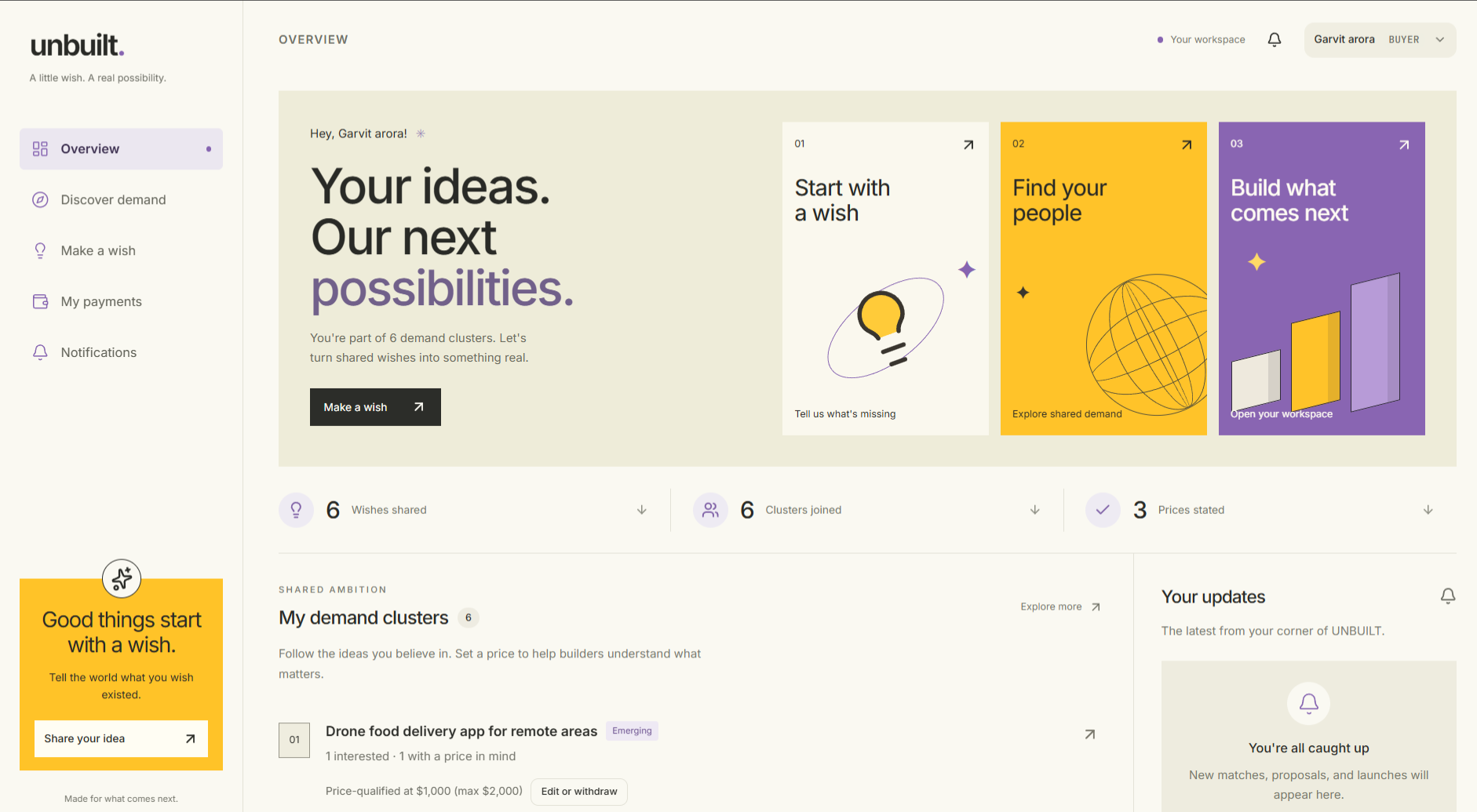
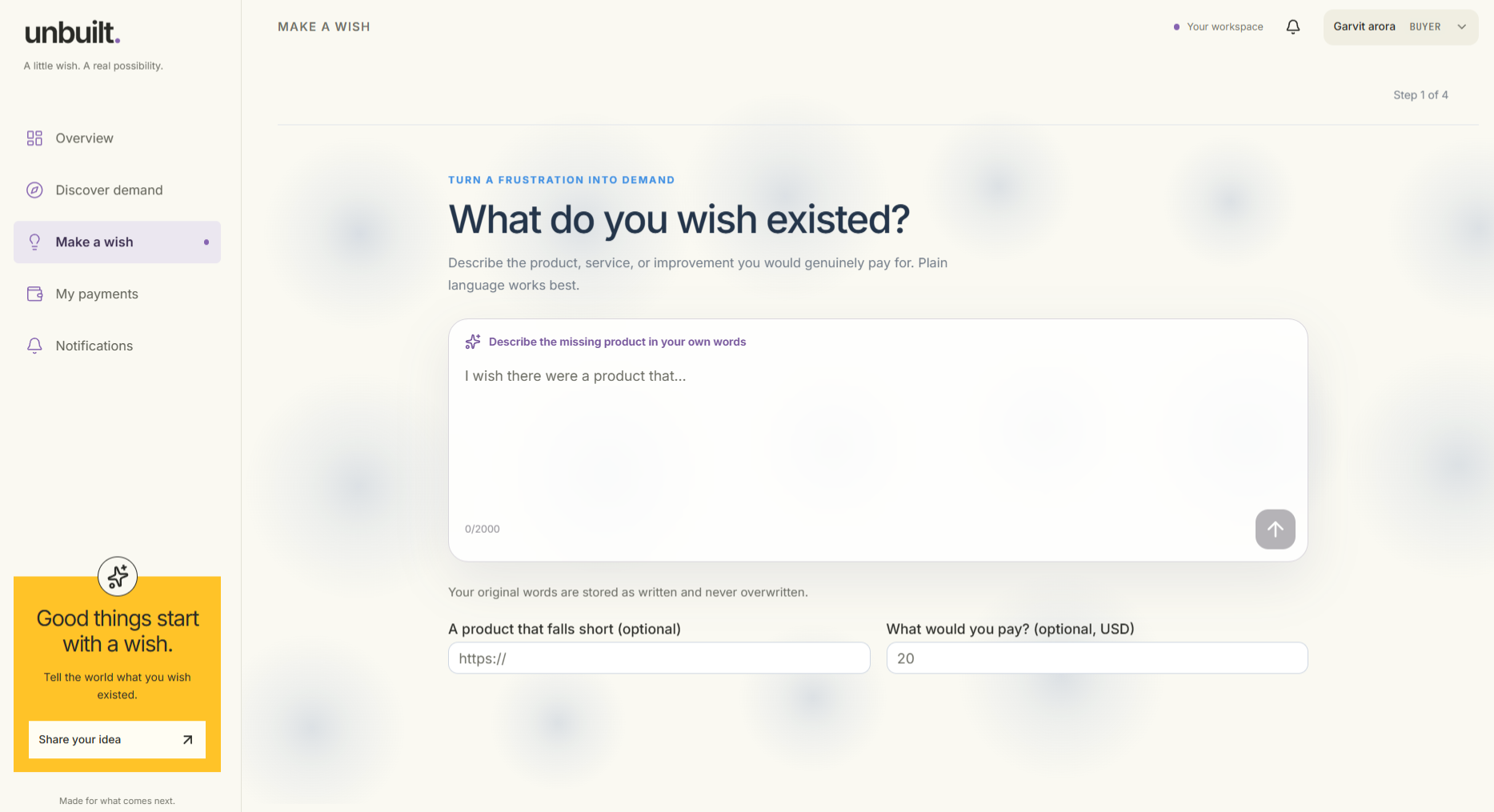
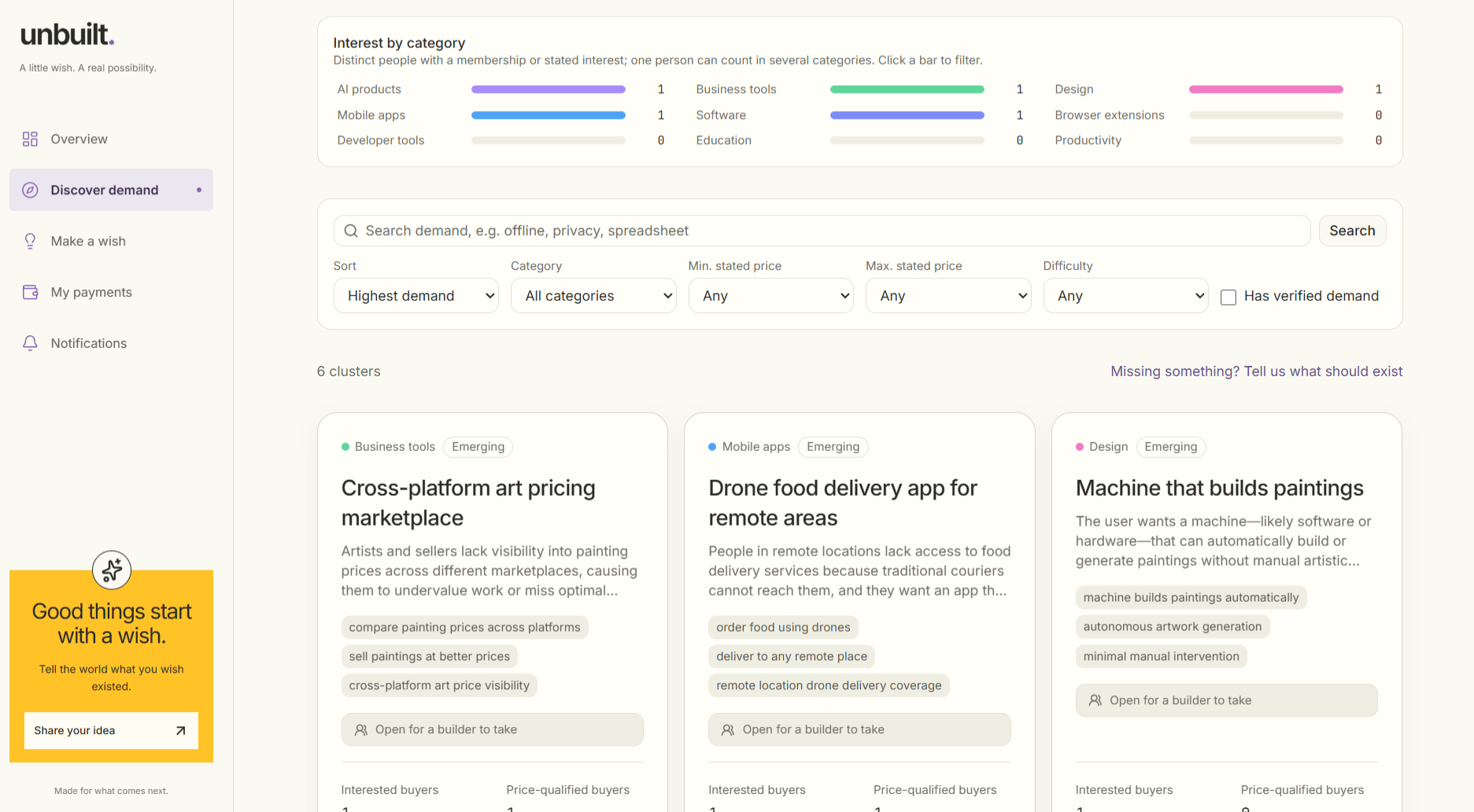
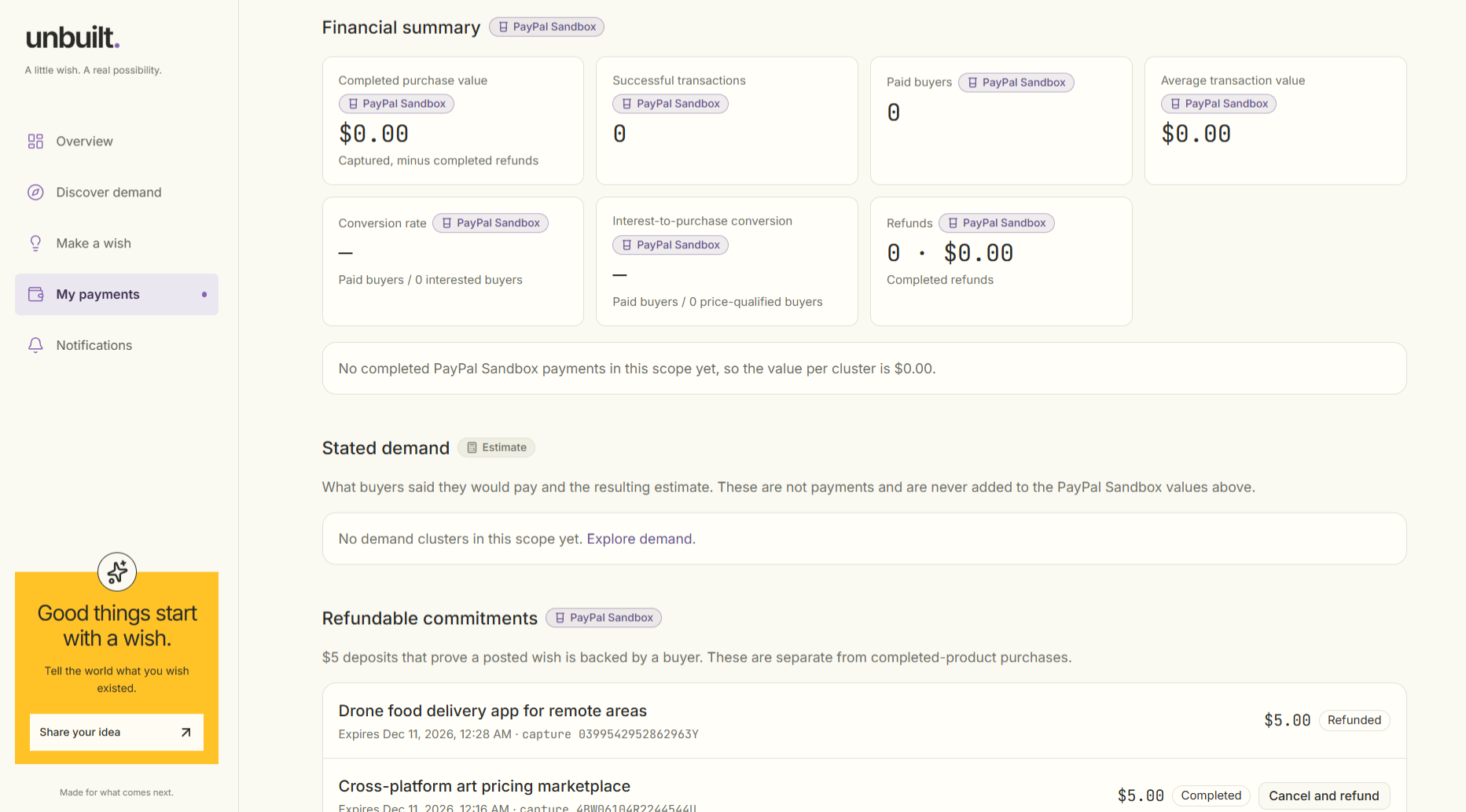
Inspiration
UnBuilt came from a problem I faced myself. I tried building two startup ideas that looked promising on paper. I spent time developing them, speaking to people, and even managed to raise some initial funding. But once the products were ready, hardly anyone was interested enough to actually use or pay for them.
That experience taught me that building the product was not the hardest part. The hardest part was knowing whether the problem was real before building anything.
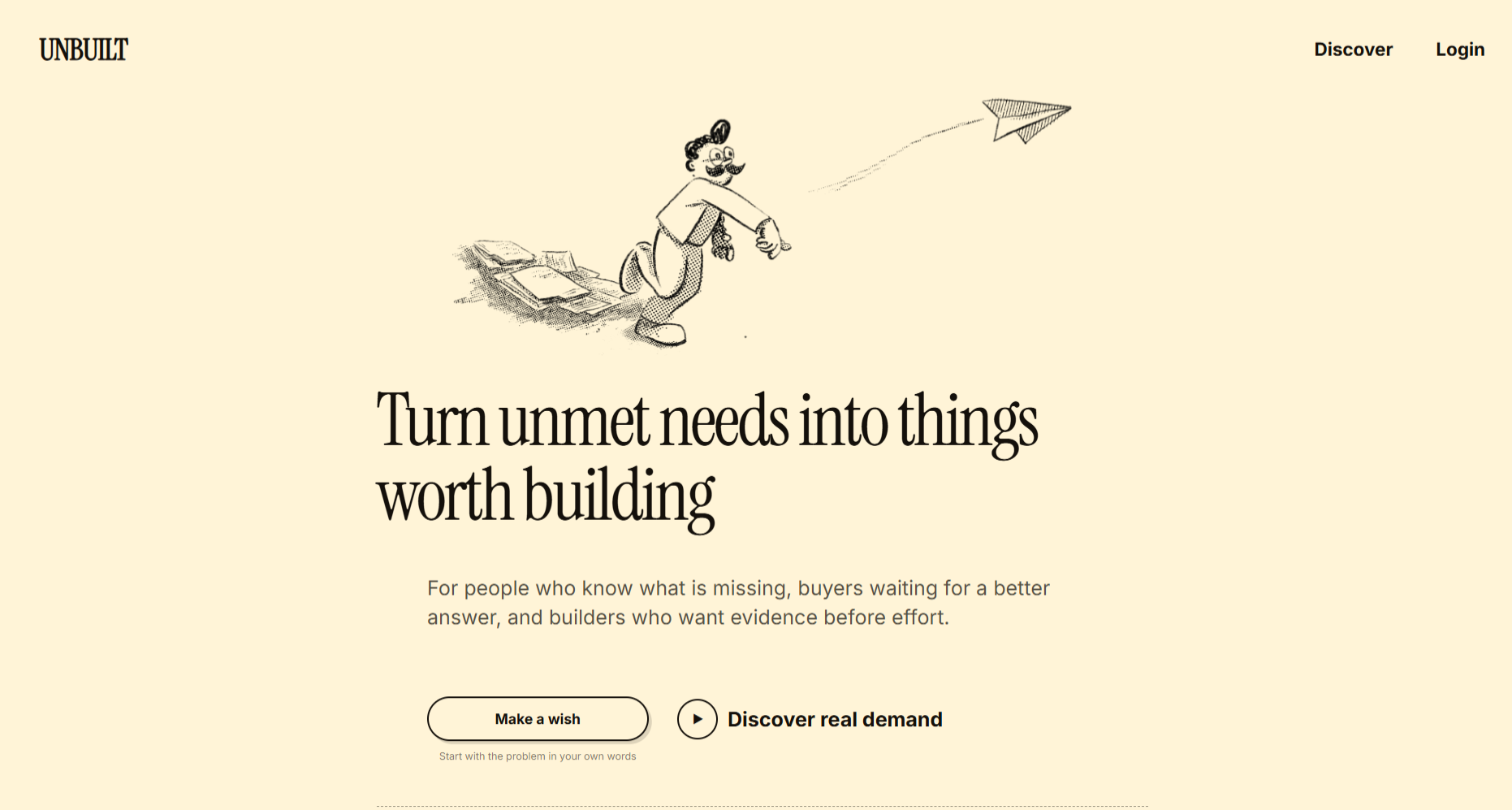
Most platforms help founders promote ideas after they have already invested months into them. I wanted to reverse that process. What if people could first describe what they genuinely wished existed, and builders could discover those needs before writing code?
That became UnBuilt.
What it does
UnBuilt is a demand-first marketplace connecting people who need products with builders looking for validated ideas.
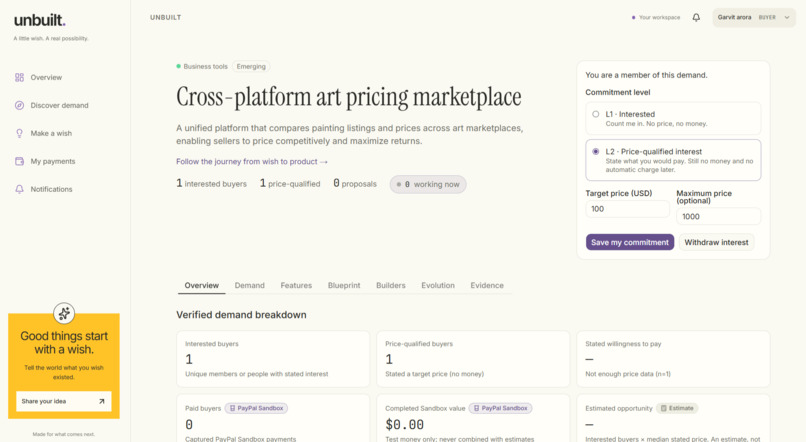
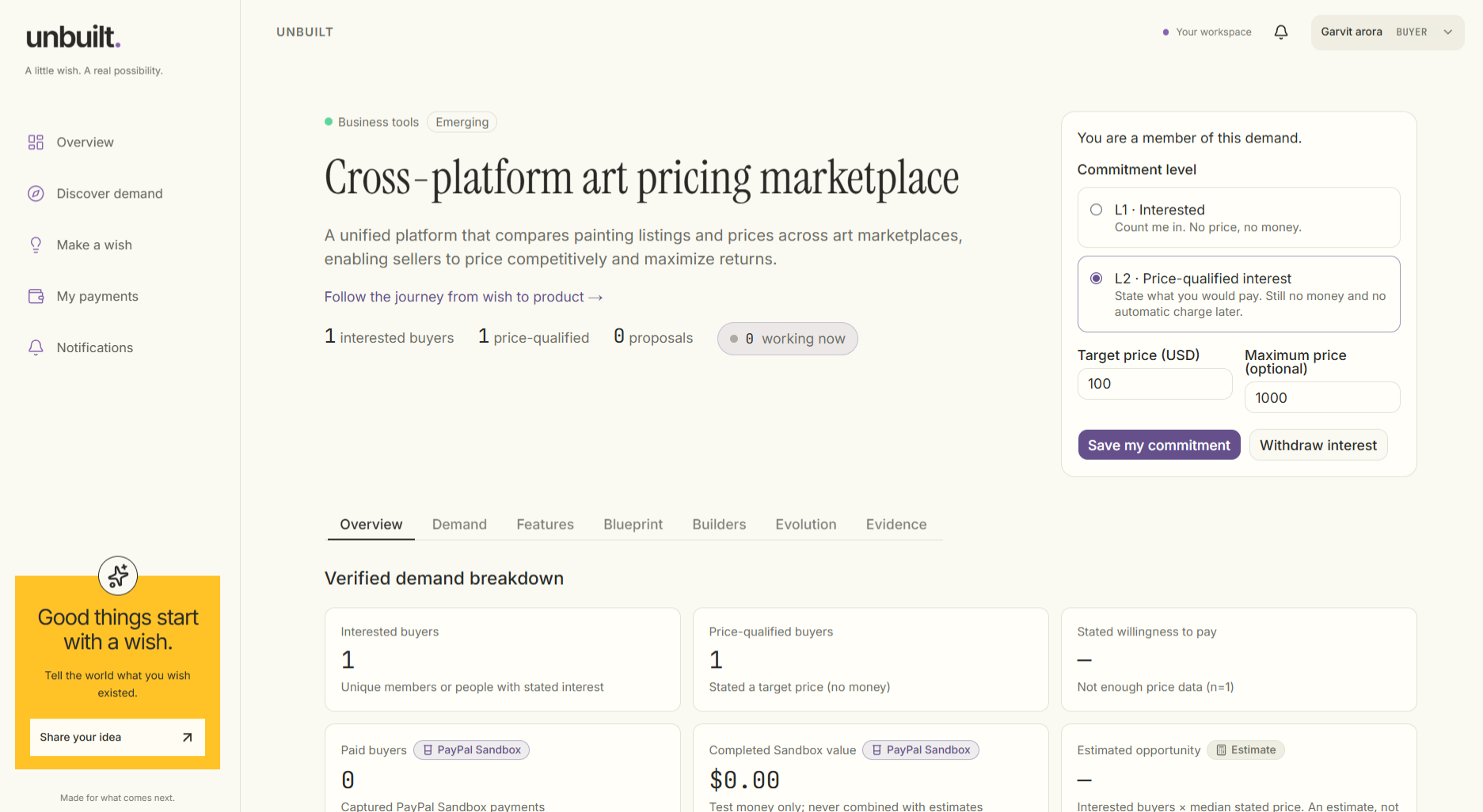
A buyer starts by describing a problem or product they wish existed. UnBuilt then researches the idea, looks at existing solutions, identifies competitors and gaps, and turns the original request into a structured opportunity.
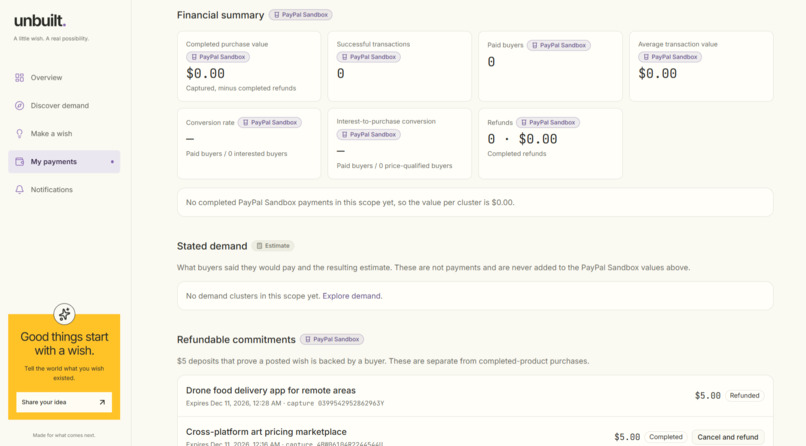
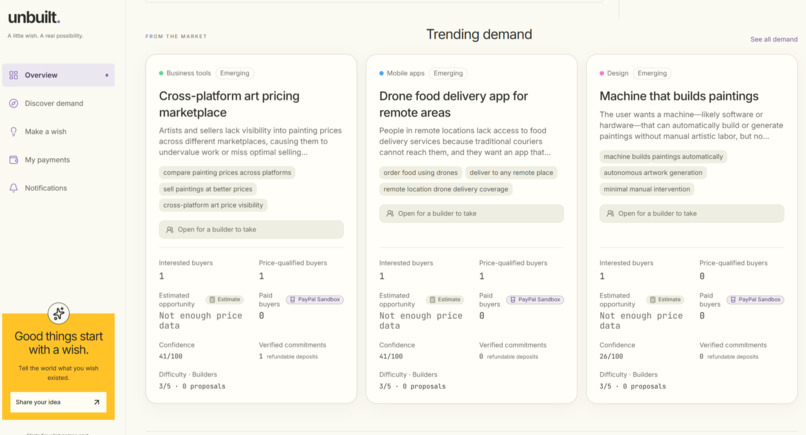
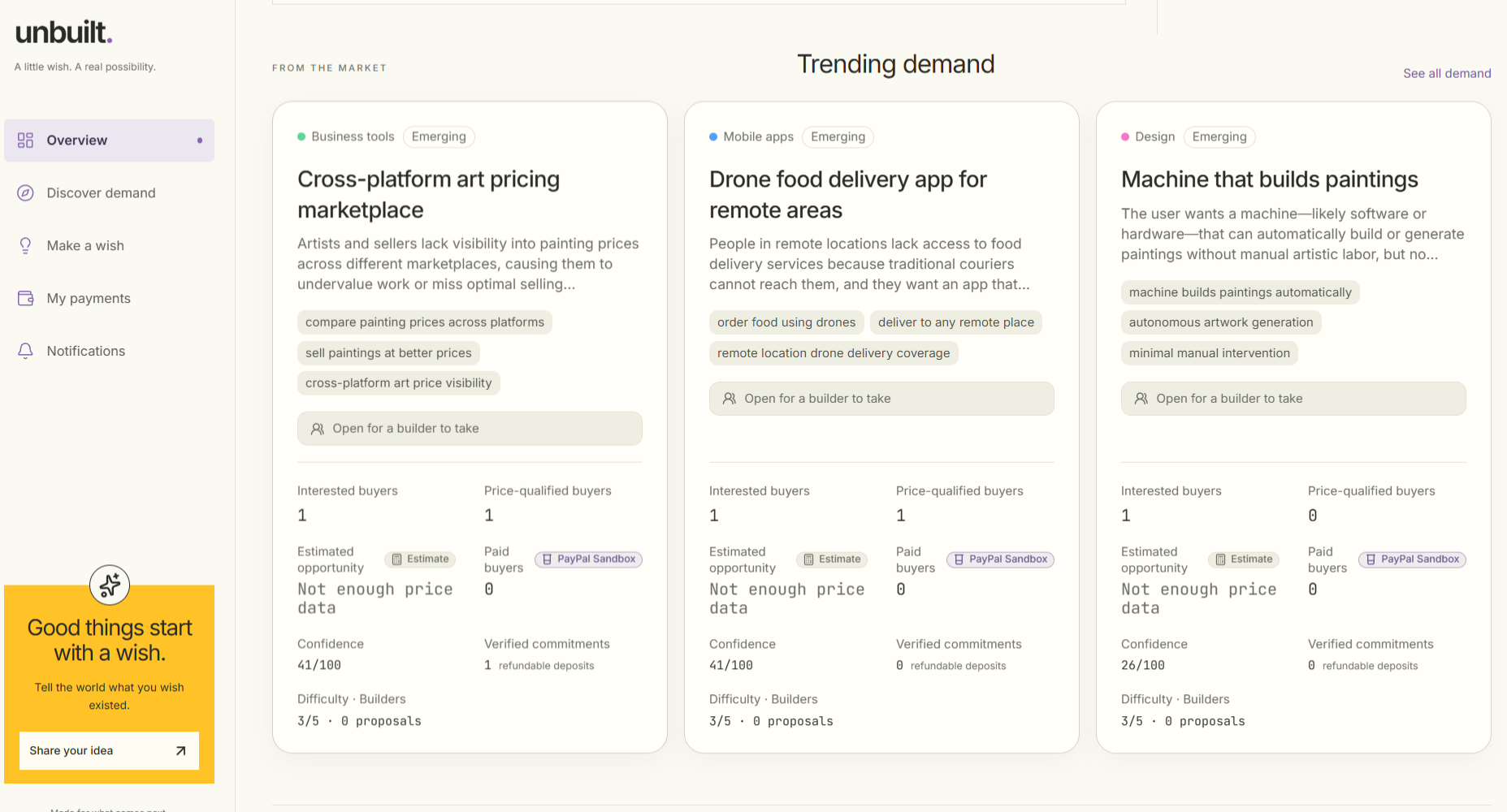
Similar wishes are grouped into demand clusters so builders can see when multiple people are asking for related solutions. Instead of relying only on likes or upvotes, buyers can make refundable PayPal commitments to show genuine purchase intent.
Builders can explore these researched opportunities, review the requirements, and commit to building one. When a product is ready, the builder submits evidence of their work. UnBuilt evaluates it against the original requirements and creates an integrity report, giving both sides a clearer and more trustworthy delivery process.
How we built it
We built UnBuilt with Next.js and TypeScript, using Supabase for authentication, PostgreSQL data storage, row-level security, and user profiles.
Tinker handles the main AI analysis and transforms rough wishes into structured product briefs. Tavily provides current web research, while Elasticsearch stores and retrieves research evidence. We also included fallback paths so the core platform can continue working if an optional external service is unavailable.
PayPal Sandbox powers payment-backed buyer commitments, captures, refunds, and payment verification. The application is deployed on Render, with uptime monitoring and health checks for the backend.
We designed the product around two main roles: buyers who submit real problems and builders who want to discover what people are already asking for.
Challenges we ran into
The biggest challenge was turning a vague sentence into useful research without changing what the buyer actually meant. The AI had to add structure and context while keeping the original problem at the centre.
Payments were another major challenge. A commitment needed to represent real intent, but it also had to remain refundable and safe for the buyer. We had to account for incomplete payments, delayed status updates, refunds, and situations where either side might make a false claim.
Authentication and production deployment also took careful work. Email confirmation links, redirect URLs, environment variables, database policies, and sandbox credentials all behaved differently between localhost and the deployed application.
We also spent a lot of time improving the interface. The platform contains research, demand signals, payments, builder workflows, and evaluation reports, but it still needed to feel understandable to someone seeing it for the first time.
Accomplishments that we're proud of
We are proud that UnBuilt goes beyond being another idea board.
A submitted wish becomes a researched opportunity with competitors, evidence, demand signals, and clear requirements. Builders do not have to depend entirely on intuition, and buyers have a way to demonstrate that their request is serious.
We also built a complete flow connecting research, demand discovery, PayPal commitments, builder workspaces, submission evaluation, and integrity reports.
Another accomplishment was making optional integrations fail safely. If one research provider is unavailable, the entire platform should not become unusable.
Most importantly, we built something that directly addresses the reason our earlier ideas failed: we built first and looked for demand later. UnBuilt changes that order.
What we learned
We learned that interest and intent are very different. People may say an idea sounds useful, but a payment-backed commitment is a much stronger signal.
We also learned that AI research is only valuable when users can understand where the conclusions came from. Evidence, confidence, competitors, and limitations matter as much as the final summary.
On the technical side, we learned a lot about secure payment flows, Supabase row-level security, webhook handling, production authentication, resilient integrations, and designing multi-step experiences without overwhelming the user.
The biggest lesson was simple: validation should happen before development, not after it.
What’s next for UnBuilt
Next, we want to improve demand clustering so related wishes can be matched more accurately across industries and different ways of describing the same problem.
We also want to strengthen the integrity evaluation system with better evidence checking, milestone-based delivery, buyer feedback, builder reputation, and dispute handling.
Future versions could support team commitments, private business requests, richer market reports, builder recommendations, milestone payments, and live collaboration between buyers and builders.
Our long-term goal is to make UnBuilt a place where builders no longer have to guess what to create, and where people with genuine problems can help bring the right products into existence.
Built With
- agents
- elasticsearch
- next.js
- openrouter
- paypal
- react
- render
- resend
- supabase
- tinker
- zapier

