-
-
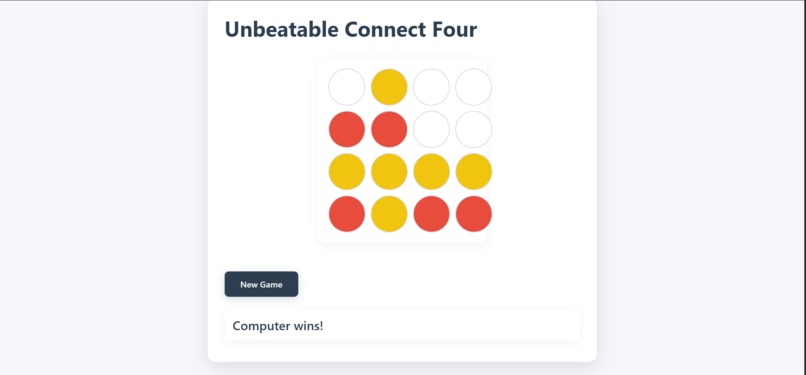
Four Connect
-
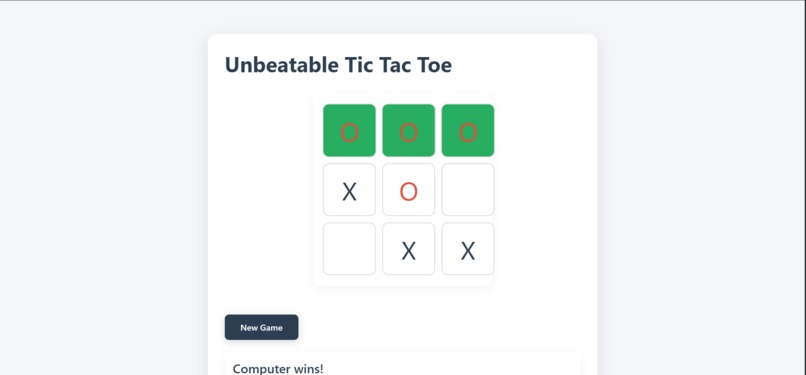
Tic Tac Toe
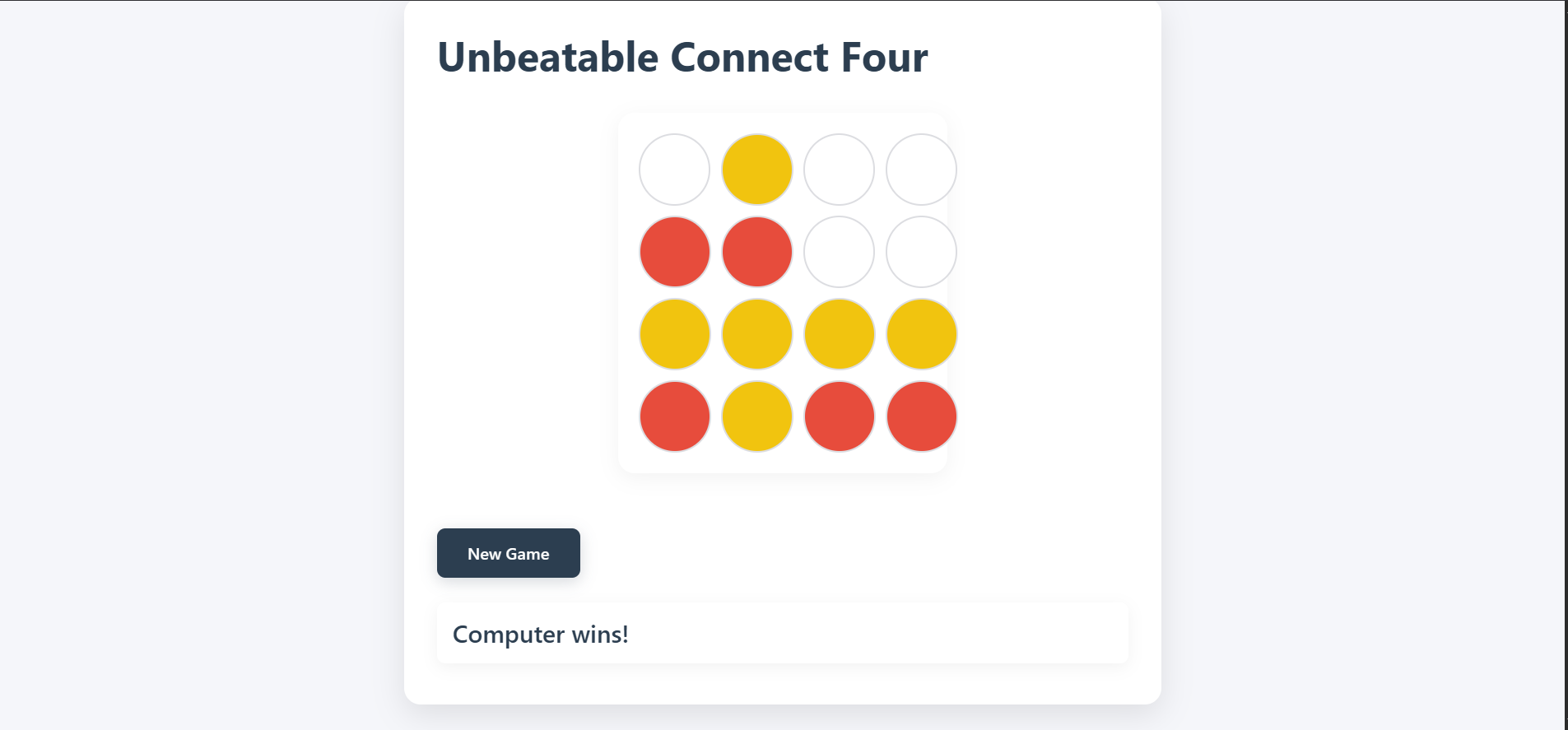
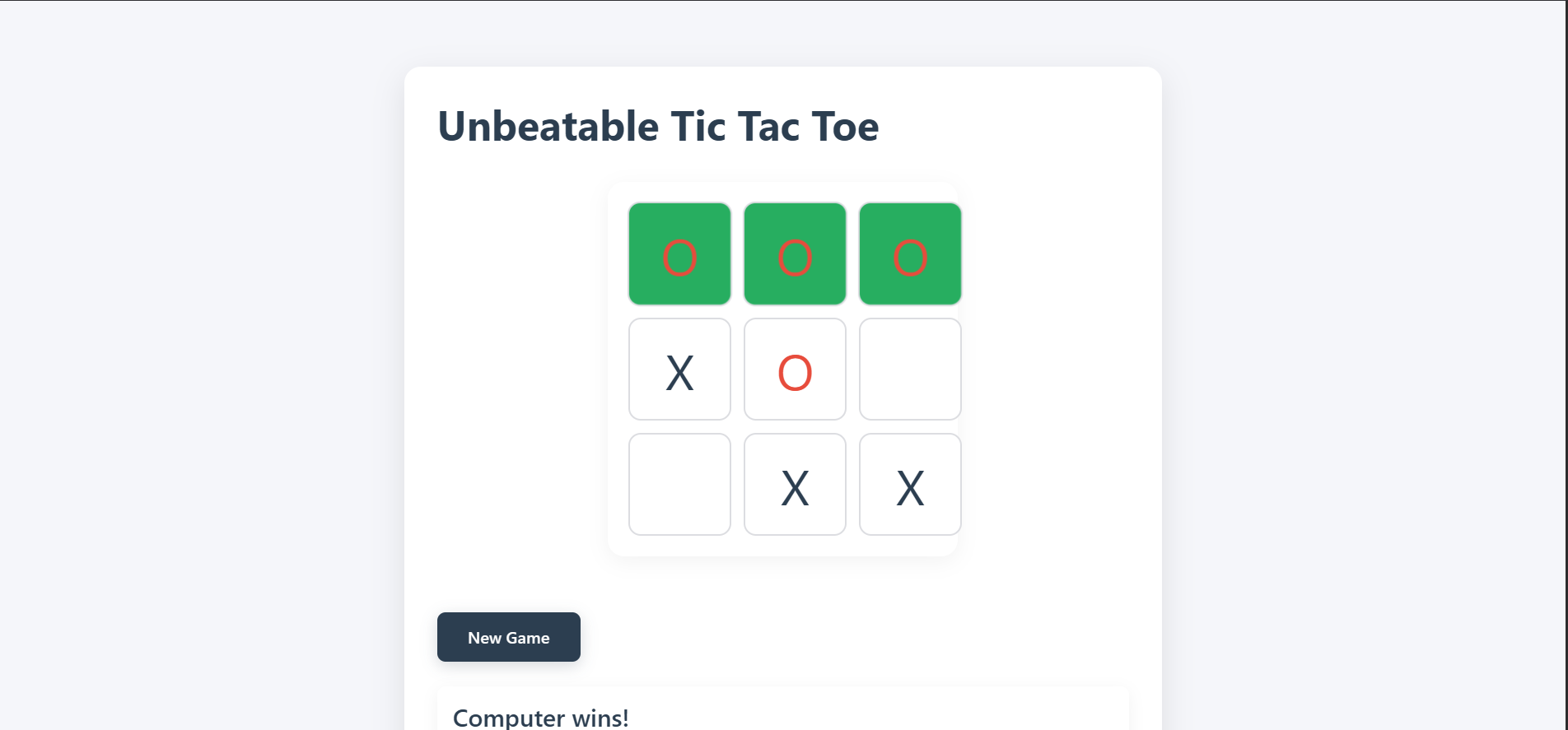
🎮 Inspiration The idea for Unbeatable Game was born from a fascination with artificial intelligence and game theory. I’ve always been intrigued by how some classic games like chess or tic-tac-toe can be "solved" and how AI can become an impossible opponent. I wanted to create an experience where players would genuinely feel the intensity of battling a nearly flawless opponent — not just a hard game, but a truly unbeatable one.
🛠️ How I Built It The game was built using a combination of:
Frontend: React.js for a responsive and interactive UI
Backend: Node.js with Express to handle game logic and player sessions
AI Logic: Implemented using the Minimax algorithm with alpha-beta pruning for optimal decision-making
State Management: Redux for managing game states and player moves
Deployment: Hosted on Vercel with backend APIs served from Render
💡 What I Learned Throughout this project, I gained deep insights into:
Building and optimizing AI algorithms like Minimax
Game design patterns and user experience flows
Efficient state and performance management in React
Handling real-time feedback and difficulty scaling
The psychological elements of what makes a game feel “unbeatable” yet fair
🧩 Challenges Faced Some of the biggest hurdles I faced included:
Balancing AI difficulty: Ensuring the game was challenging without feeling unfair
Performance optimization: Preventing the AI from causing noticeable lag during complex decision-making
User engagement: Keeping players motivated even when they couldn’t win
Bug fixing in edge cases: Like handling simultaneous moves or undo logic
🚀 Final Thoughts Unbeatable Game is more than just a game — it's a test of logic, patience, and strategic thinking. It pushed my limits as a developer and deepened my appreciation for AI in interactive systems. The project taught me not just how to build, but how to challenge players intellectually while keeping them entertained.


Log in or sign up for Devpost to join the conversation.