Inspiration
Nowadays video calling platforms don't offer a secure environment for video chatting. These platforms often log your call data, and they almost always require your login information which not only destroys your anonymity but can also be very tedious.
What it does
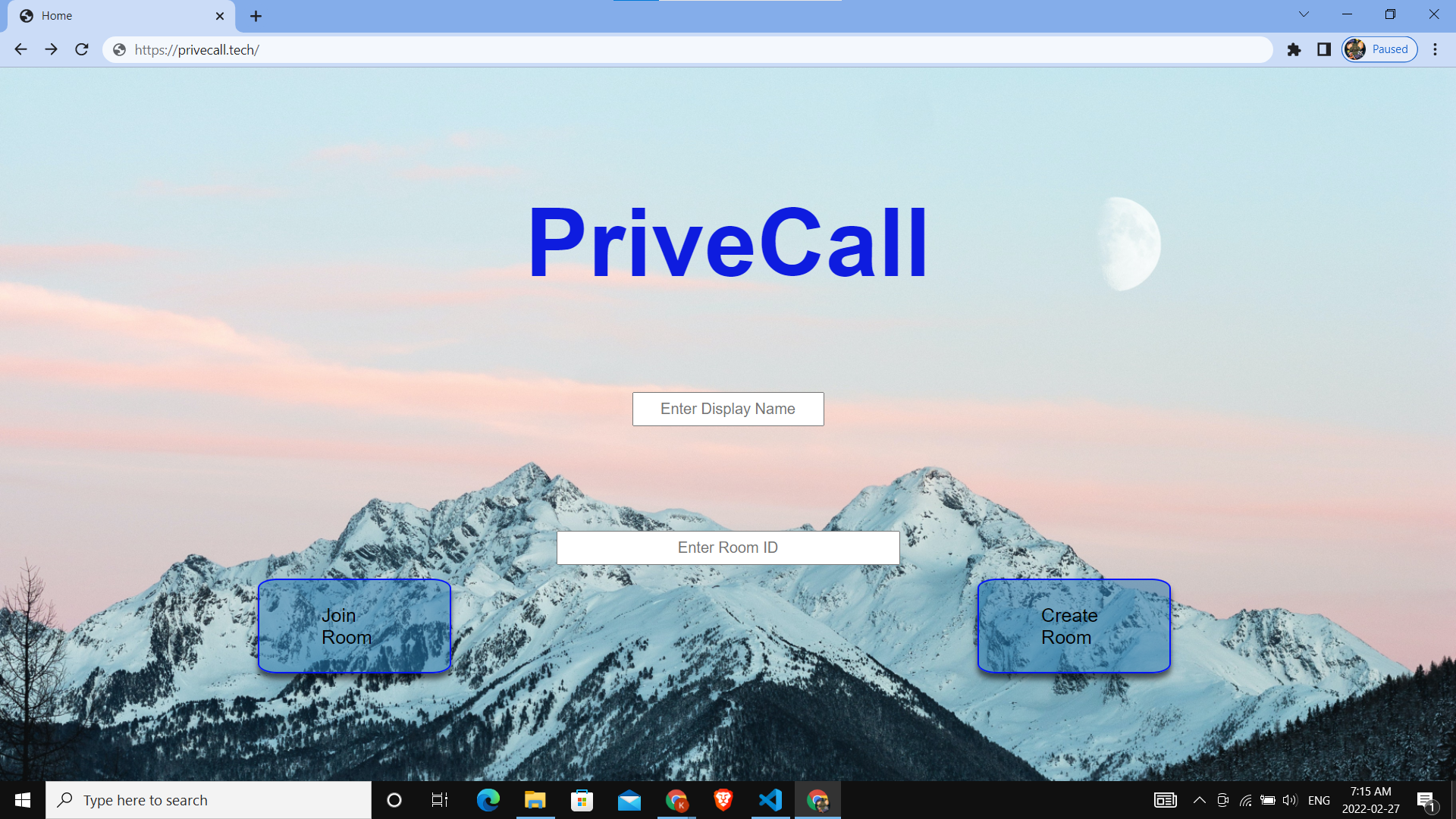
We built a web application that allows you to create secured video call rooms without any account or any logs of your data being made. We made sure to prioritize user security and anonymity.
How we built it
We used Socket.io and Express to allow for communication between the server and the clients. We used Javascript, CSS, embedded Javascript, and HTML5 for the front end.
Challenges we ran into
- None of our members had experience with webhosting on Google Cloud, figuring that out was very time consuming and difficult
- Our Socket.io broadcasting events were not initially working
Accomplishments that we're proud of
- My team and I built a functional encrypted URL video calling platform!
- We successfully finished our project on time
- We figured out how to use a virtual machine on Google Cloud
- Successfully made a Domain Pointer on domain.com to the External IP of Google Cloud Instance
What we learned
We learned how to use numerous programming languages, libraries, and frameworks such as Node.js, Socket.io, Peerjs, nodemon, Javascript, CSS, HTML5. We also learned how to use domains (specifically how to set up a domain on domain.com) and how to WebHost using Google Cloud. Additionally, we all improved our skills in critical thinking and programming.
What's next for PriveCall
We will be focusing on developing a more user-friendly API and incorporating many more features, such as screen sharing, public video call rooms, and much more!
Built With
- css
- domain.com
- express.js
- google-cloud
- html5
- javascript
- node.js
- nodemon
- peerjs
- socket.io


Log in or sign up for Devpost to join the conversation.