-
-
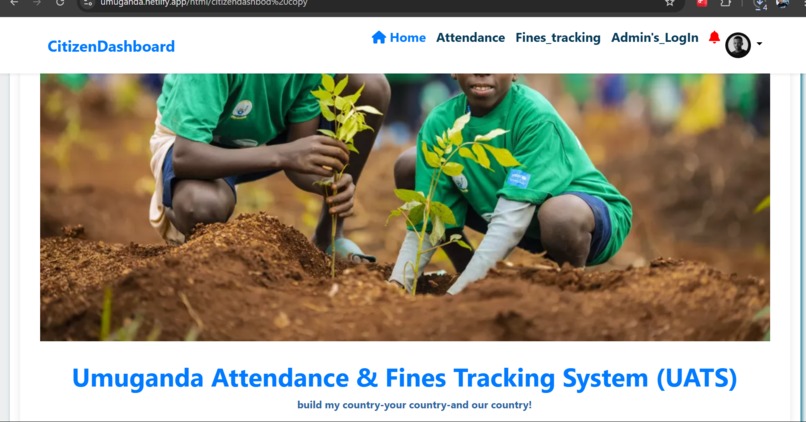
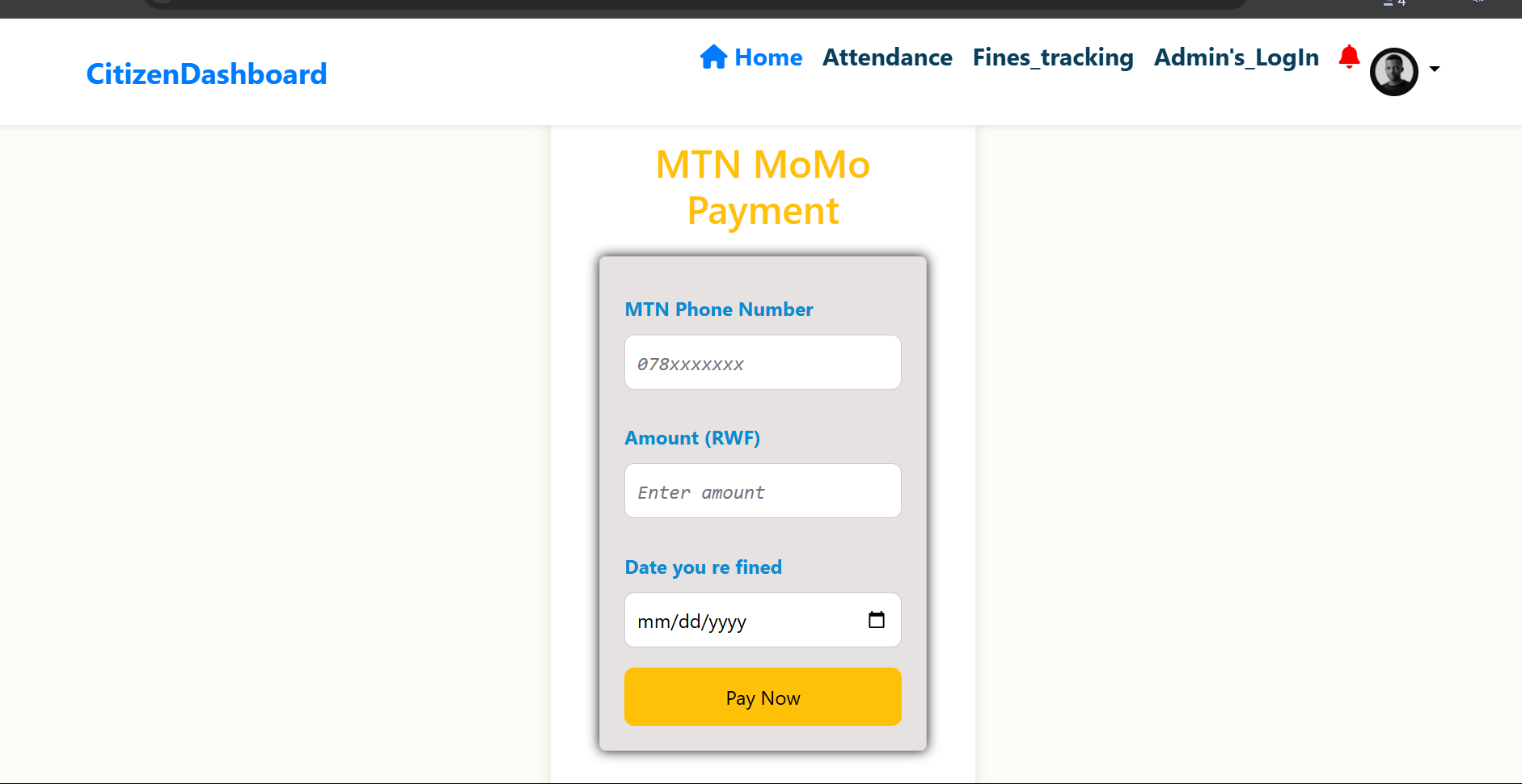
CITIZEN DASHBOARD TO TRACK THEIR ATTENDANCE AND FINES OF ABSENTE THEN PAY FEES
-
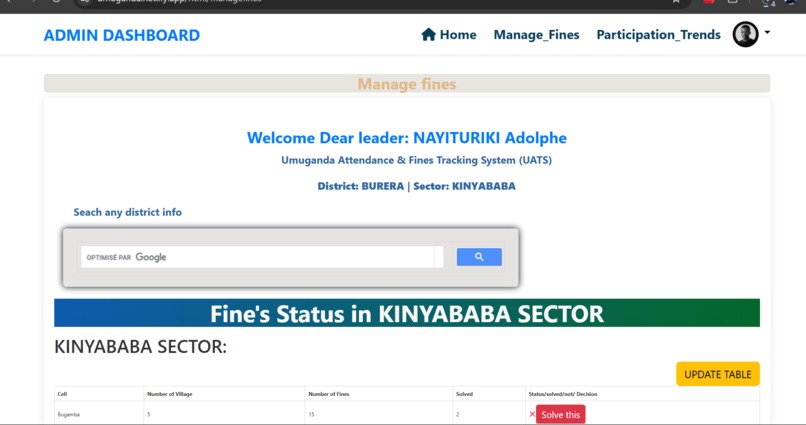
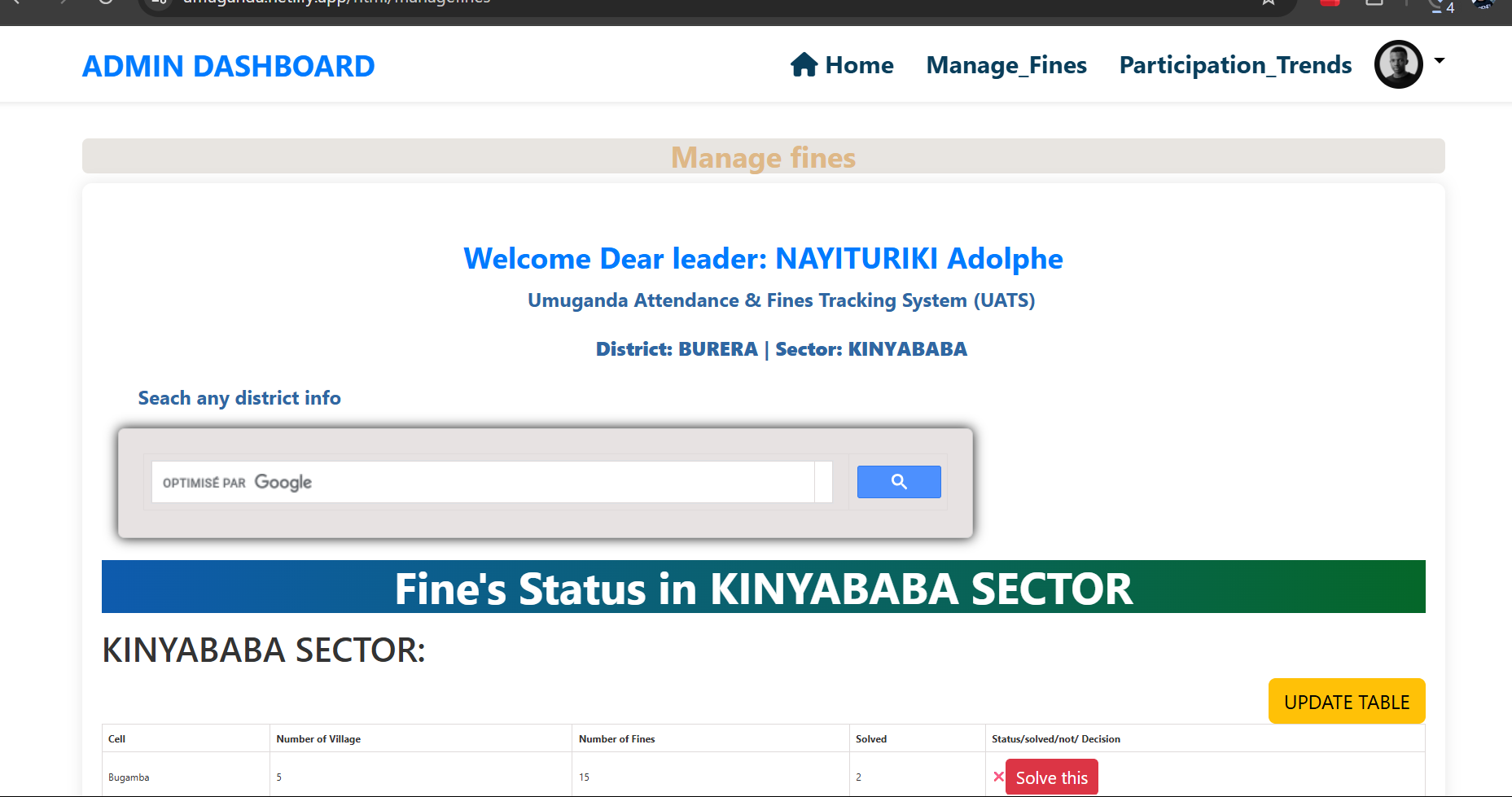
ADMIN OR USER DASHBOARD "sector leader" TO IMPORSE FINES TO ABSENTEES AND TRACK ATTENDANCE TRENDS
-
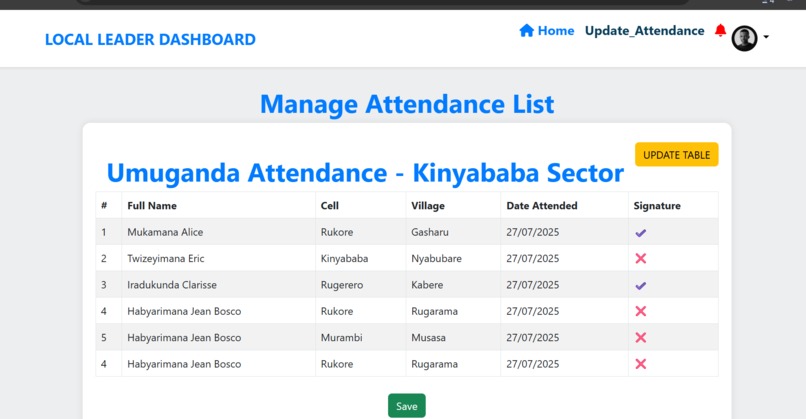
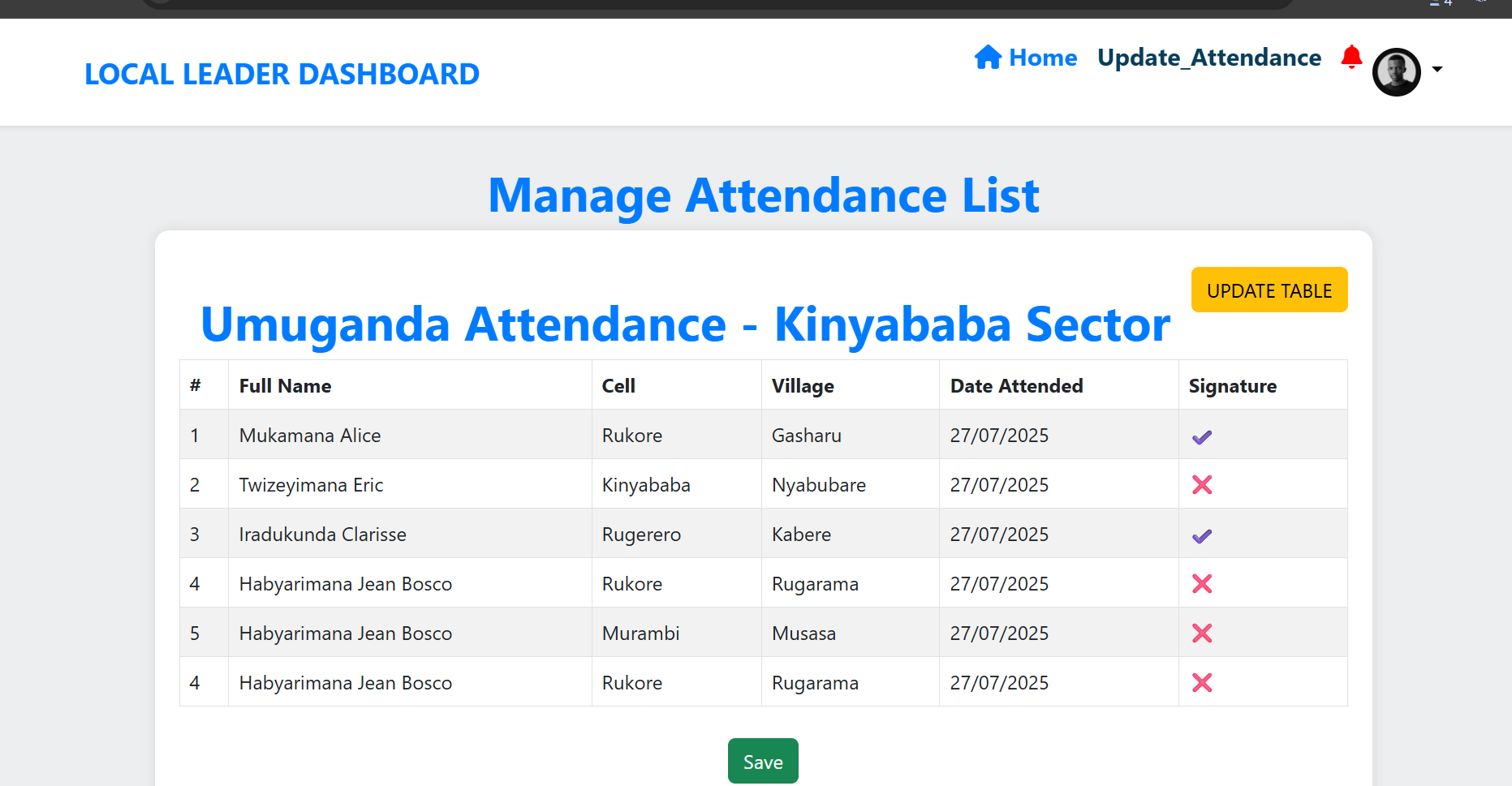
LOCAL LEADER DASHBOARD TO MANAGE ATTENDACE TO UMUGANDA
-
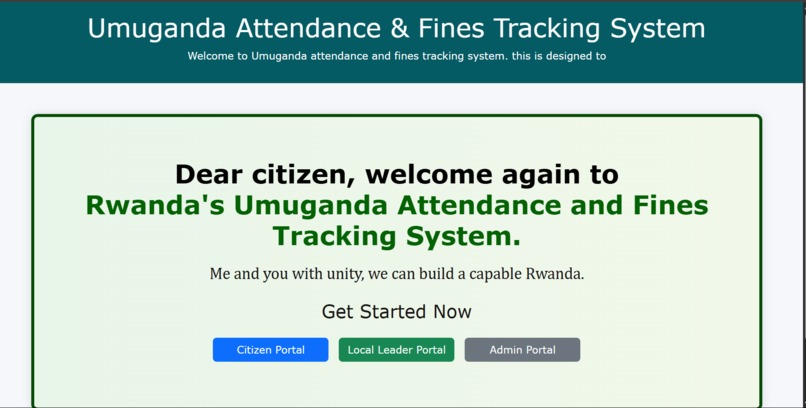
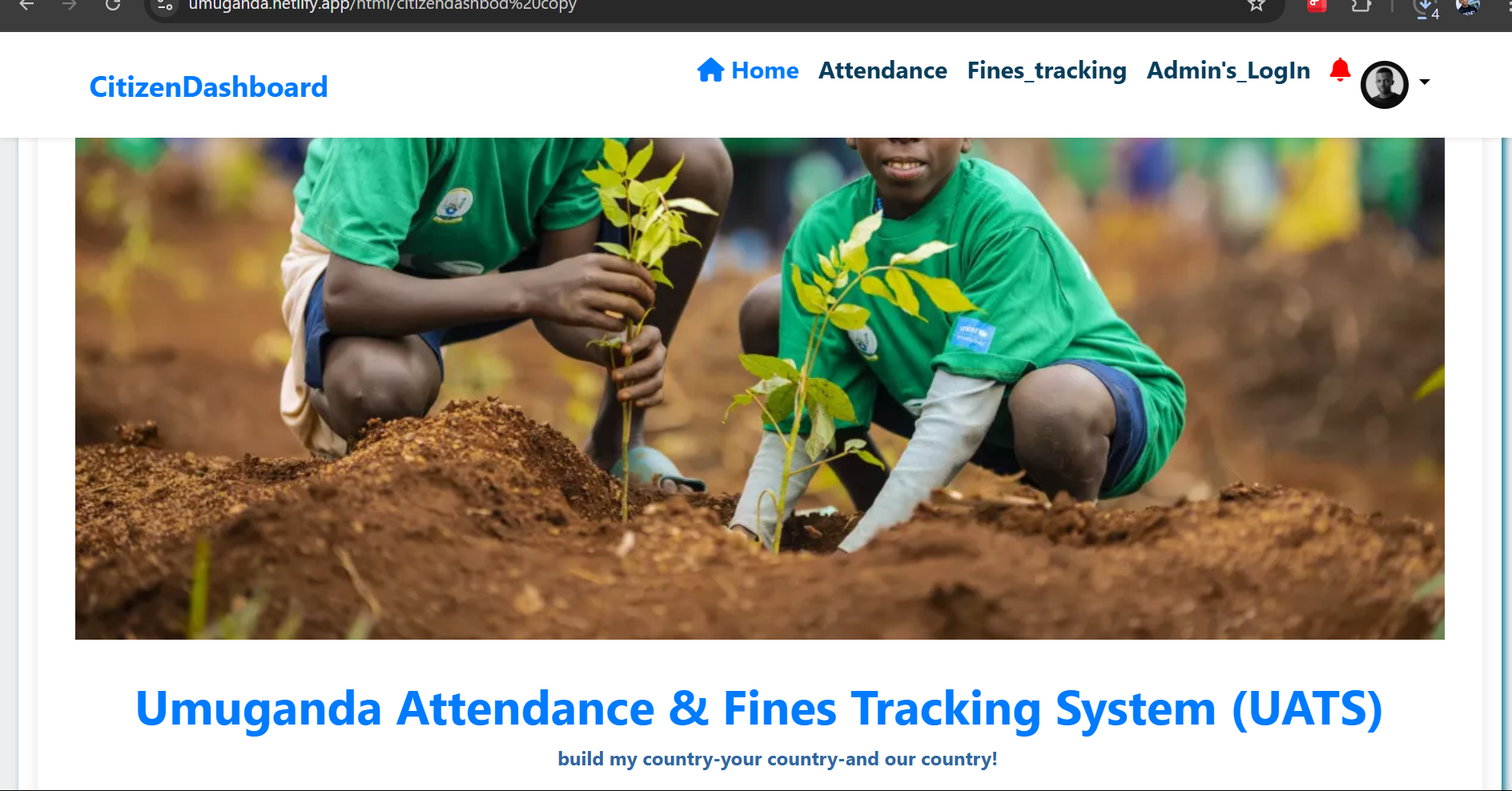
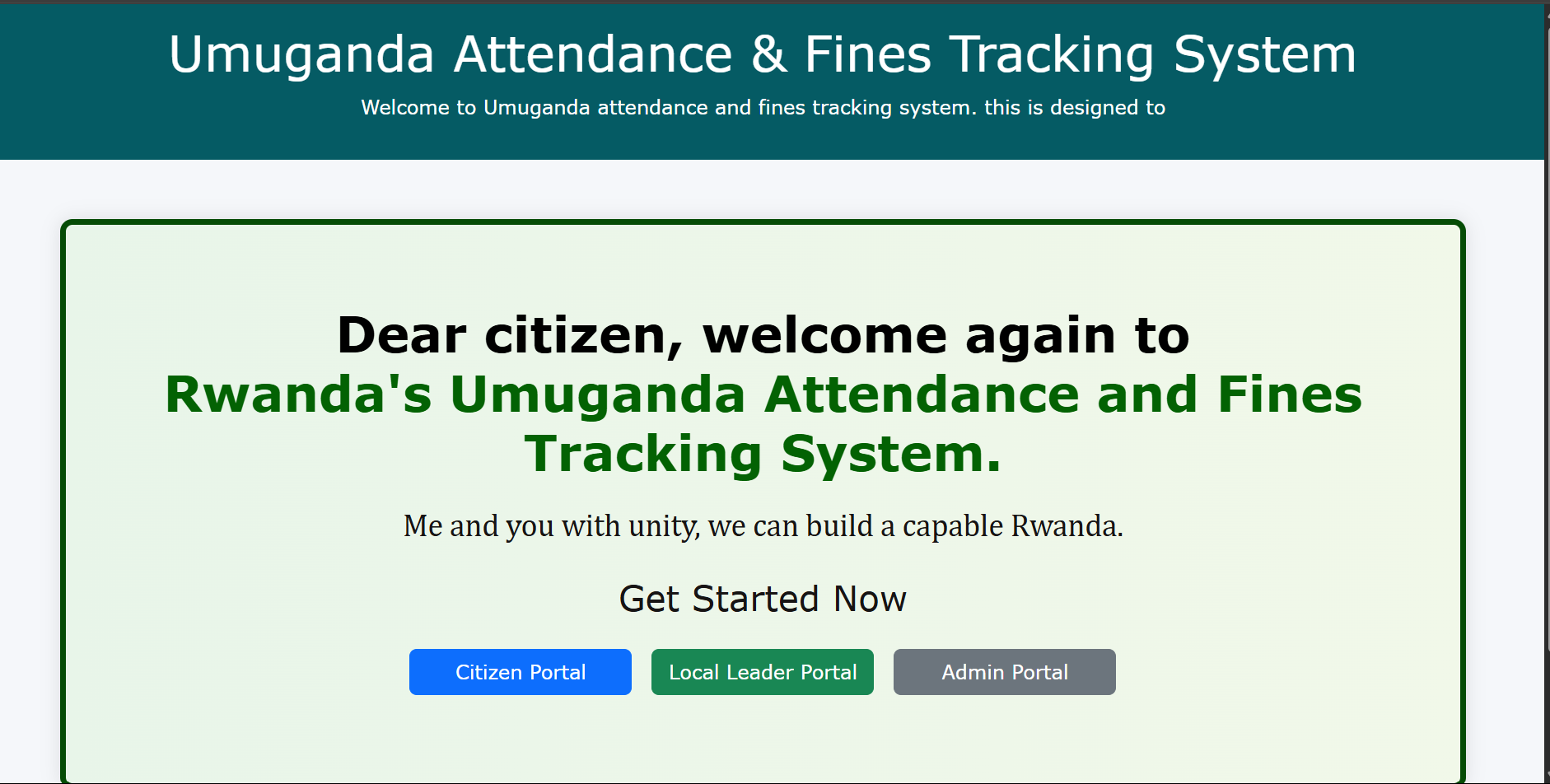
WELCOMING WEB PAGE THAT ALLOW CITIZEN, LOCAL LEADERS, AND SECTOR LEADERS TO LOG INTO CORESPONDING PAGE
-
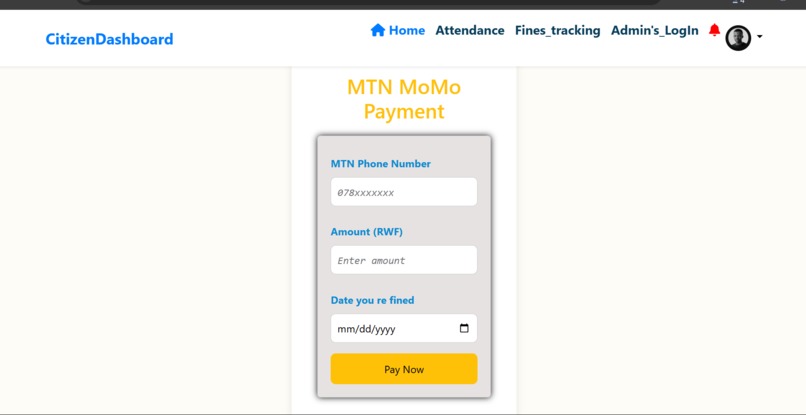
PAYMENT METHOD (mtn or airtel
Inspiration
I was inspired by the idea of combining technology with culture to solve real-world problems. In Rwanda, Umuganda is a monthly community service activity that brings people together to work on development initiatives. While its impact is significant, there's still a gap in how participation is tracked and reported. I wanted to address that issue by creating a digital solution that not only respects the cultural tradition of Umuganda but also enhances it with a simple and effective attendance system. My goal was to help local leaders manage participation more easily and allow government officials to monitor engagement across villages with more accuracy.
What it does
The project is a web-based platform that enables local leaders to record and update community attendance data during Umuganda. Users can input names, cells, villages, and attendance status, including a signature field to confirm participation. The system also allows administrators to view and export attendance records. It eliminates the need for manual paperwork, reduces errors, and increases transparency in tracking community service engagement. With this platform, participation data is organized, accessible, and easier to analyze.
How we built it
I built the project using HTML, CSS, and JavaScript for the frontend, and PHP with MySQL for the backend. The system runs on an Apache server through XAMPP during development. I used MySQL to create a relational database structure that stores information about users, cells, villages, and attendance records. The interface was styled with a combination of Bootstrap and custom CSS to ensure that the application is user-friendly and mobile responsive. I also managed the project code through GitHub, which helped me track changes and maintain version control.
Challenges we ran into
One of the main challenges was configuring the local Apache server correctly. At first, I encountered a “404 Not Found” error because my server path and directory structure were misconfigured. It took some debugging and adjustment of the .htaccess file and Apache settings to get everything working properly. Another challenge was creating a responsive interface that would work well on both desktop and mobile devices. I had to experiment with different CSS techniques and media queries to achieve a layout that adapts to different screen sizes. Managing user sessions and ensuring data security for administrative features also required careful planning and testing.
Accomplishments that we're proud of
I’m proud that this project brings real value to the community by supporting a national initiative in a modern way. It digitizes a tradition that is deeply rooted in Rwandan culture while making it more efficient and transparent. I was able to create a fully functional platform with clean navigation, useful features, and a simple yet effective design. The system can be deployed locally or extended to a broader audience with additional features. It feels good to contribute to something that strengthens community engagement and public accountability.
What we learned
Through this project, I learned how to solve real challenges facing citizens and government, by integrating front-end and back-end technologies to create a complete web application. I gained a deeper understanding of database design, user authentication, and form validation in PHP. I also improved my skills in responsive design and troubleshooting server issues. Most importantly, I learned how to design a system based on real community needs and ensure that the solution is both practical and culturally respectful.
What's next for umuganda
Looking ahead, I plan to develop a mobile version of the application that allows offline attendance recording for rural areas with limited internet access. I also want to add a feature that visualizes village performance on a map and provides real-time analytics on participation trends. In future iterations, I aim to improve user security by implementing token-based authentication and role-based access. Another long-term goal is to integrate biometric identification methods such as fingerprint scanning to make the attendance process even more accurate and secure.


Log in or sign up for Devpost to join the conversation.