-
-
Saw
Inspiration
Imagine a homeowner who has invested in a solar panel. Every day, it generates ample clean energy, but they only use a small fraction of it to charge a single phone and power a lightbulb at night. The rest, kilowatts of valuable power, is completely wasted, just gets lost and wasted.
Now, imagine their neighbor just a few meters away. They have a growing family and modern needs: an electric shower, a TV for the family to gather around, lights for their children to study, and maybe even a washing machine or an electric cooker. Their demand for energy is high, and they are often left at the mercy of an expensive and unreliable grid, sometimes running out of power when they need it most.
This glaring inefficiency is the heart of our inspiration. On one side of a fence, there is wasted potential. On the other, there is unmet need. Umeme Pamoja was born from the simple idea of building a bridge across that fence, to turn one person's daily waste into their neighbor's reliable power, and in doing so, empower the entire community.
What it does
Umeme Pamoja, "The Local Energy Network," is a smart, peer-to-peer energy trading platform. It transforms homes with solar panels into micro-power stations, allowing them to automatically and securely sell their surplus energy to their immediate neighbors.
For sellers, it creates a new, passive income stream. For buyers, it provides a cheaper, more reliable alternative to the national grid. For the community, it builds a decentralized, bottom-up energy grid that is resilient and sustainable. We built our solution on three core principles:
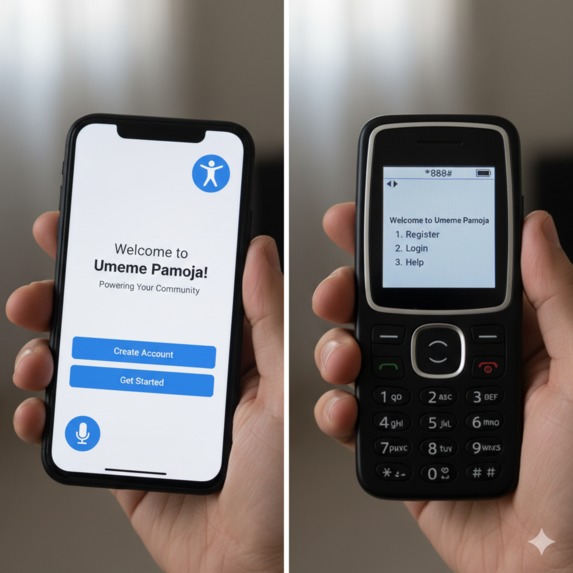
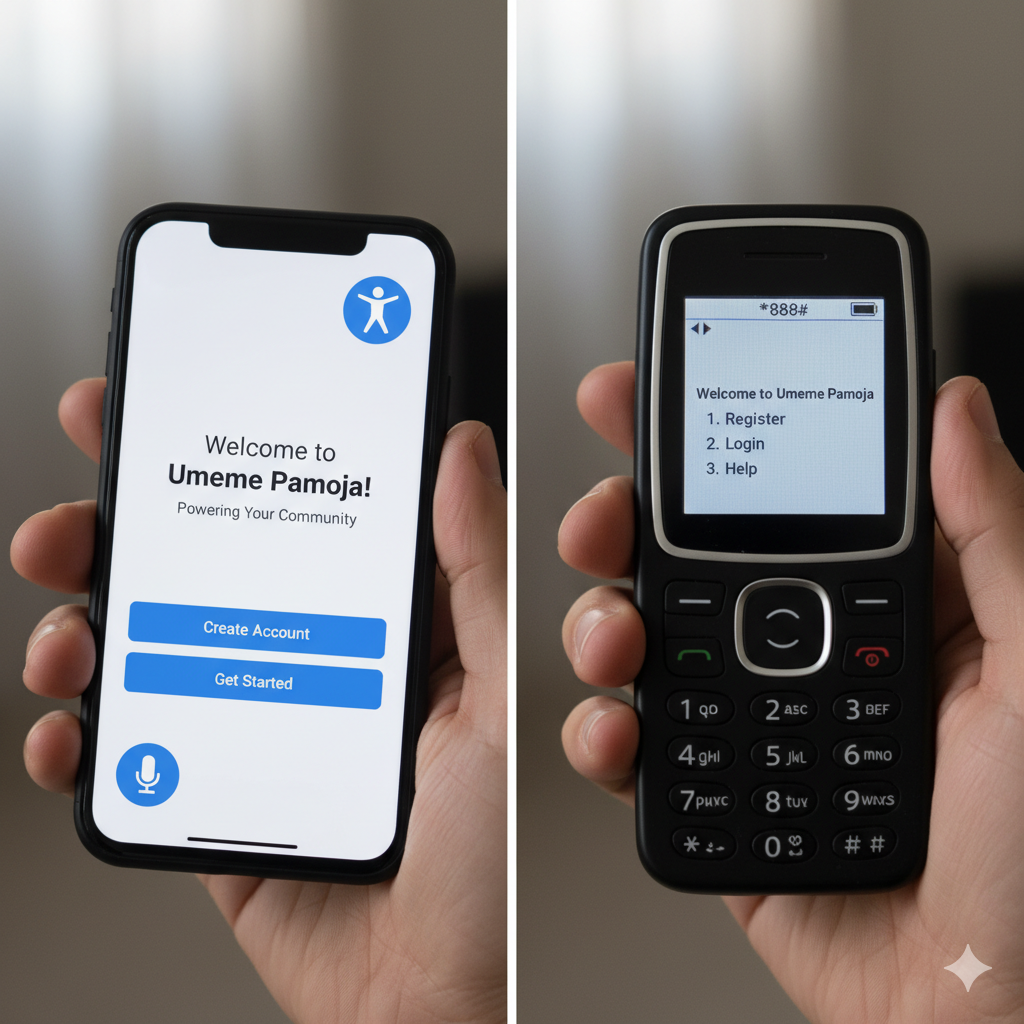
- Radical Inclusion: Accessible via a smartphone app with speech commands and a parallel USSD service for non-smartphone users.
- Guaranteed Privacy: An anonymous user ID system protects both buyers and sellers, preventing community friction.
- Seamless Transactions: Deep integration with M-Pesa ensures every transaction is instant, secure, and trusted.
How we built it
As a two-person team in a 7-day hackathon, we focused on bringing our vision to life through rapid, user-centric prototyping.
- User Journey Mapping: We started by creating internal development personas, a solar owner with surplus power, and a neighbor needing reliable energy. Mapping their potential needs and social frictions led us directly to our core principle of anonymity. We realized that to build trust, the platform must hide real identities and use unique user IDs for all transactions.
- High-Fidelity Mockups: We designed every screen of the application with this "anonymity-first" approach, from the USSD menus to the smartphone app dashboard.
- Interactive Prototyping: Using Figma, we linked these static screens into a fully interactive, clickable prototype that demonstrated this anonymous user flow.
- Product Walkthrough: We then used Loom to record a comprehensive demo video, narrating the user journey while clicking through the Figma prototype to show how the system works in a real-world, private, and secure scenario.
- Centralized Hub: Finally, we organized all our assets into a professional GitHub repository to serve as the single source of truth for our project.
Challenges we ran into
Our biggest challenge was designing for true inclusivity. An app is not enough. We realized that to serve entire communities, we had to build a system that worked for everyone, including the elderly or those without expensive smartphones. This forced us to design a completely parallel USSD interface, ensuring that our platform's core functionality was accessible through simple text commands on any mobile phone.
What we learned
This hackathon taught us the incredible power of prototyping. In just a few days, we were able to transform a complex idea into a tangible, interactive experience. We learned that you don't need a fully coded product to effectively communicate a vision and demonstrate user value. Presenting a realistic prototype helped us identify and solve user experience challenges early on, like the absolute necessity for anonymity in transactions.
What's next for Umeme Pamoja
Our path forward is clear and focused. The next steps are to develop the real grid and application, pilot, and then expand.


Log in or sign up for Devpost to join the conversation.