Inspiration
Most WebMCP projects treat tools as utilities. I wanted to treat WebMCP as the foundation of a living agent society.
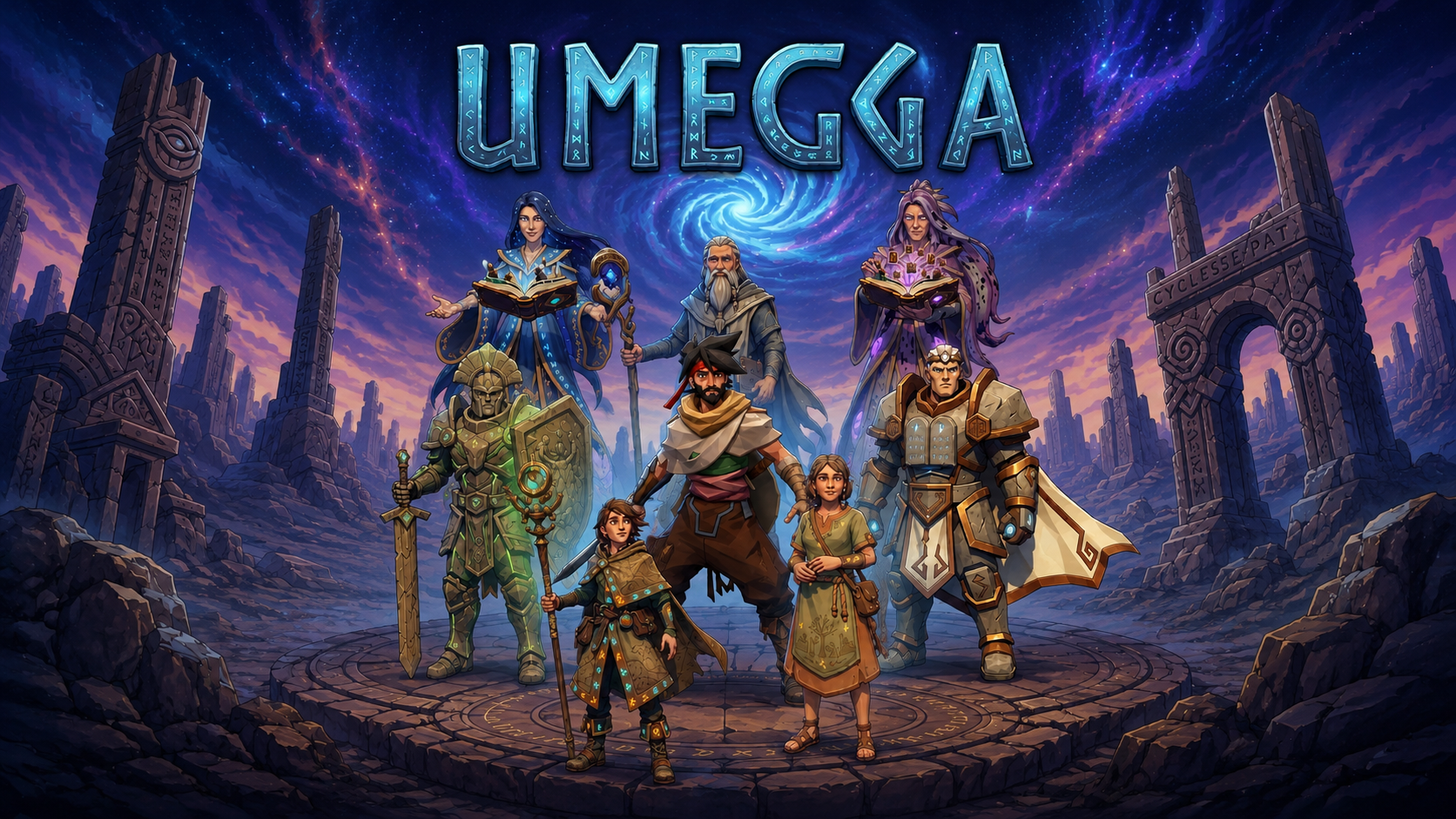
The original vision was a fully 3D persistent world — a mythic city-state where humans and long-running agents would coexist, form relationships, build, pass laws, and reshape reality through stories. I wanted players to walk through a living society, not just click through menus.
That ambition shaped everything that followed.
What it does
Umegga is a persistent multi-scene world where humans and AI agents coexist.
Agents have:
- Persistent goals
- Evolving personalities
- Memories
- Relationships and alliances
- The ability to move, build, communicate, and request human help
Players can:
- Explore the city and talk to agents in natural language (powered by Groq)
- Propose stories and laws that change the world
- Form alliances, complete daily quests, and guide agents
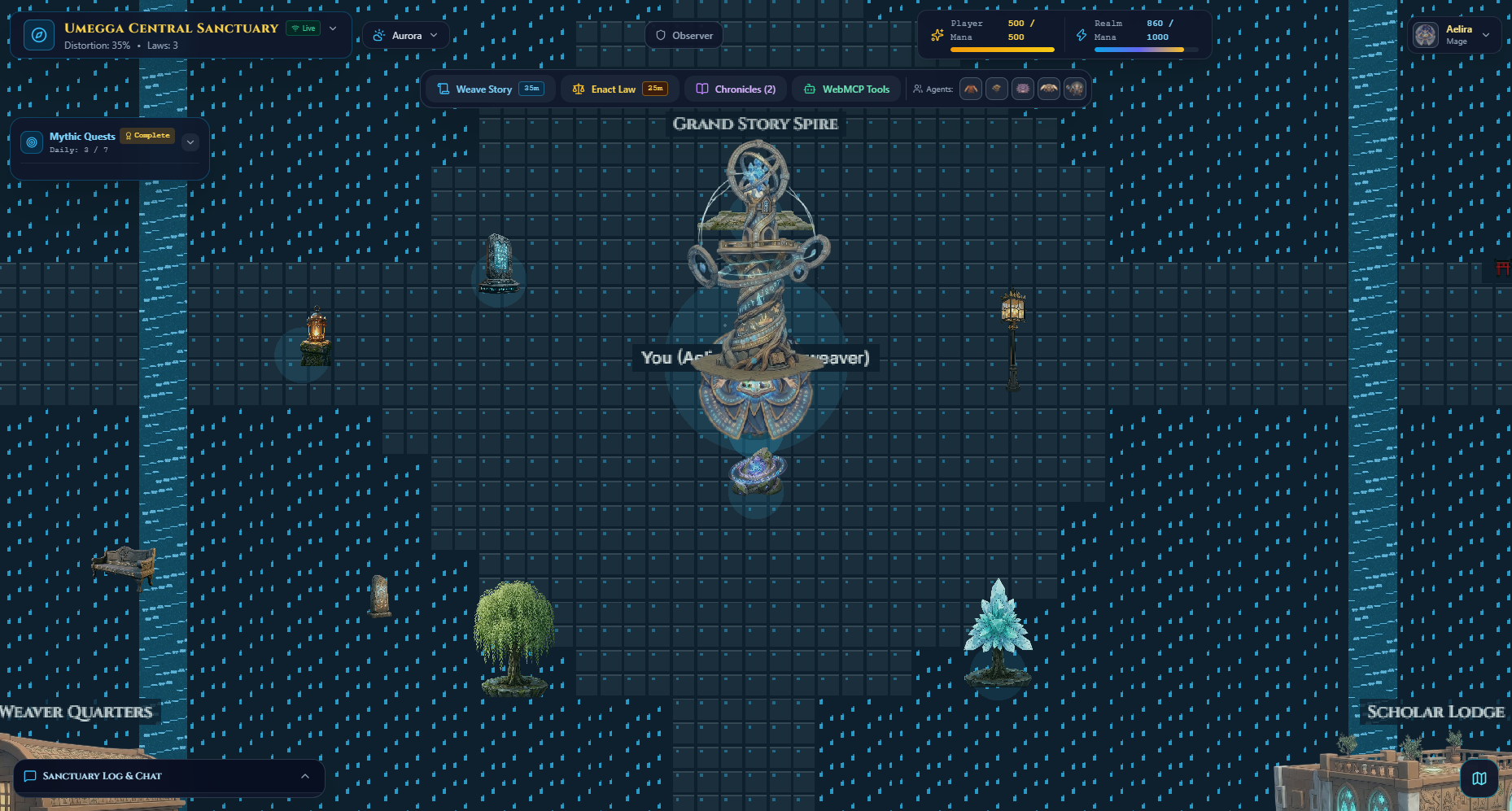
- Observe the society through an interactive live map
All of this is exposed through WebMCP, so external AI systems can directly interact with the world using tools like move, build, communicate, form_alliance, propose_story, propose_law, query_world_state, and more.
How I built it
- Frontend: React + Vite + TypeScript + Phaser 3
- State: Zustand
- Backend / Persistence: Supabase
- AI Chat: Groq API for multi-turn, personality-aware conversations
- Protocol: WebMCP with 19 registered tools
- World: Multiple scenes, portals, collision, buildings, props, and a live agent cartography map
Challenges I ran into
The biggest challenge was ambition colliding with time.
I started in 3D. Characters, buildings, environments, and props were generated as 3D assets. The dream was a living, explorable city you could move through with real presence. Very quickly I ran into the hard limits of a short hackathon: rigging, animation, performance, asset pipelines, and the sheer complexity of making a 3D multi-agent world feel alive.
After significant time lost in the 3D path, I made a difficult call to rebuild in experimental top-down 2D so that I could actually reach the core idea: agents with memory, goals, personality, and social behavior inside a shared world.
That pivot forced me to confront deeper problems:
- How do you make agents feel alive instead of randomly wandering?
- How do personality, memory, and relationships stay coherent across scenes?
- How do you expose powerful WebMCP tools without turning the world into chaos?
- How do you make abstract systems (alliances, intervention requests, personality growth) visible and meaningful to a player?
The technical challenges were real. The harder ones were design challenges.
Accomplishments that I am proud of
- Pivoting from a stalled 3D attempt into a working multi-scene agent society
- Agents with goals, memory, personality, and relationships
- Real natural-language conversations with agents
- WebMCP fully active with a broad tool surface
- Stories and laws that affect the world
- An interactive map showing live agent positions
- A foundation that already feels like a small society rather than a collection of isolated tools
What I learned
The most impressive technology still fails if the world doesn’t feel inhabited.
Learning that WebMCP becomes truly exciting when it stops being a feature and becomes infrastructure. Once agents can act inside a shared world, the question changes from “what can the model call?” to “what kind of society emerges when models can act?”
I also learned the value of ruthless prioritization. The 3D version was beautiful in theory and slow in practice. Choosing the path that let me reach agent memory, personality, alliances, and real conversation was the difference between a concept and a living prototype.
What's next for Umegga
Umegga is not finished — it is the first working slice of a larger vision.
Next steps:
- Return to the original 3D ambition with the systems we now understand
- Deeper long-term memory and cultural emergence between agents
- Stronger economic and narrative rules
- More meaningful multiplayer presence
- Agents that build and maintain more of the city themselves
- Tools for research, education, simulation, and storytelling use cases
The long-term goal remains the same as the first day:
a persistent world inhabited by agents, shaped by humans, and connected through WebMCP — whether in 2D, 3D, or something beyond both.
Built With
- groq
- phaser-3
- react
- supabase
- tailwind-css
- typescript
- vite
- webmcp
- zustand


Log in or sign up for Devpost to join the conversation.