Inspiration
We all love stargazing, but finding a good place to go isn't easy. Most websites just give you lists of locations or reviews. We wanted something that could actually tell us where to go and whether the sky would be clear enough to see stars that night.
What it does
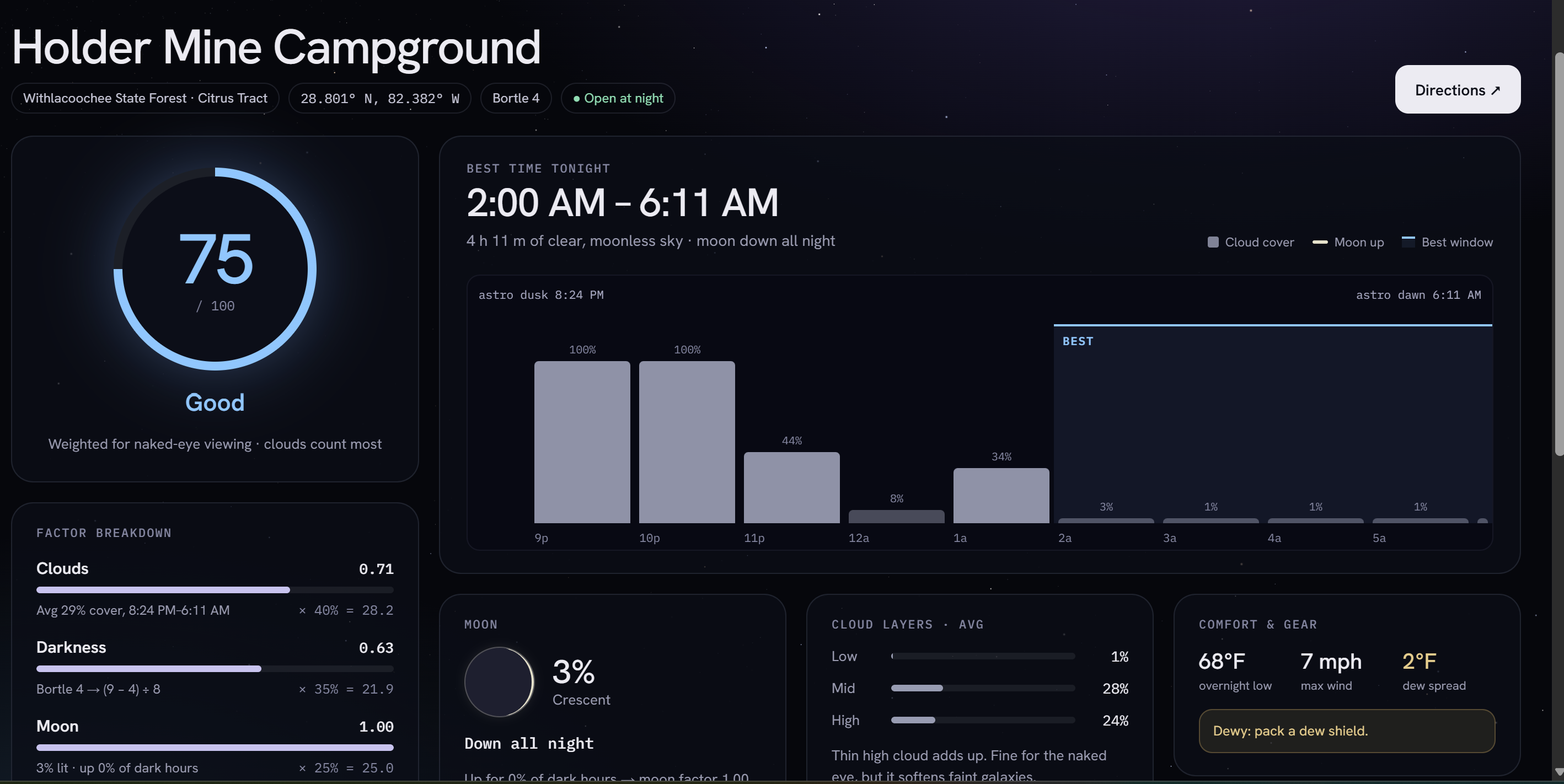
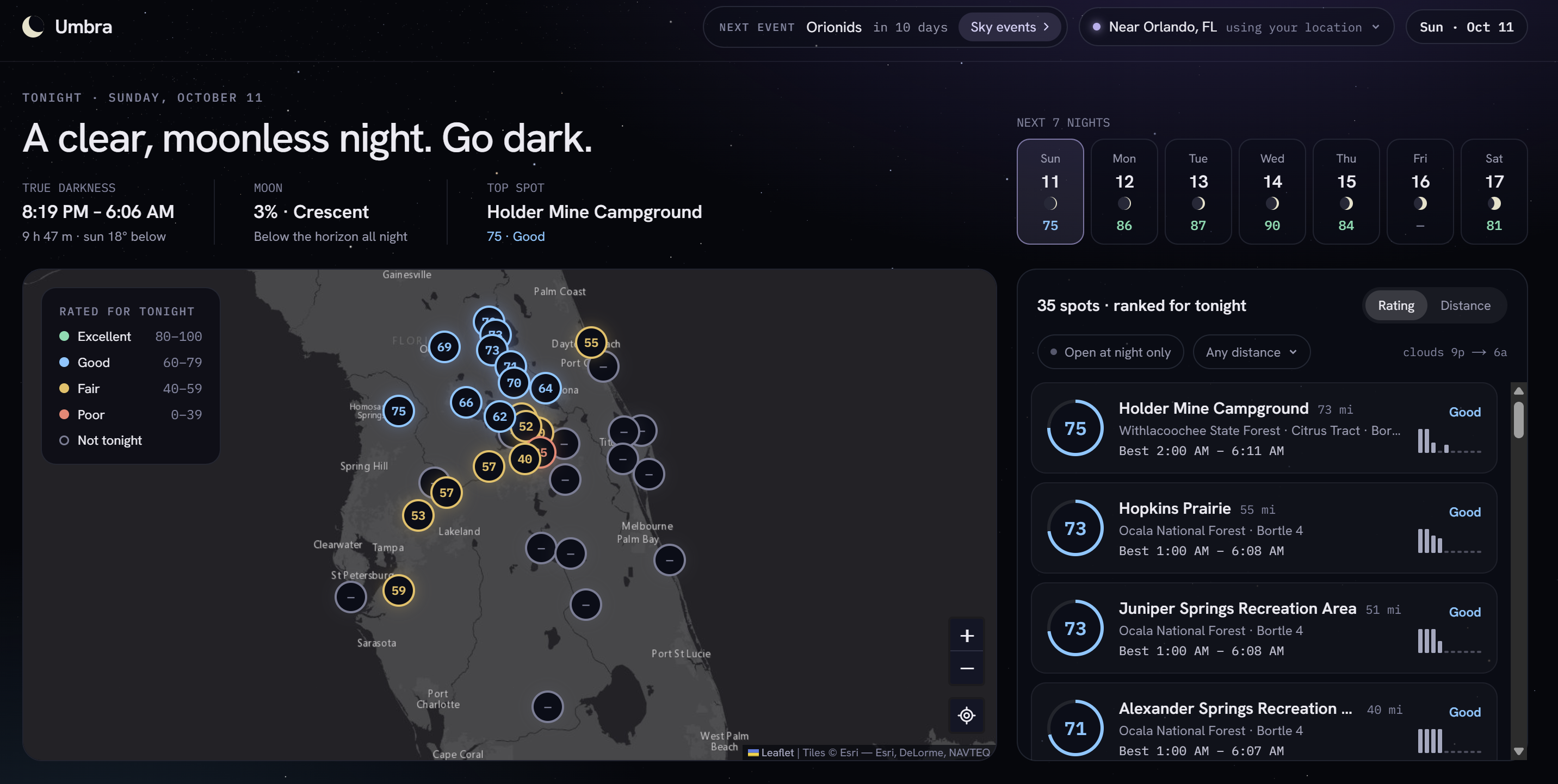
Umbra helps people find the best places and times to stargaze. It uses weather, light pollution, and moonlight to give locations a score out of 100.
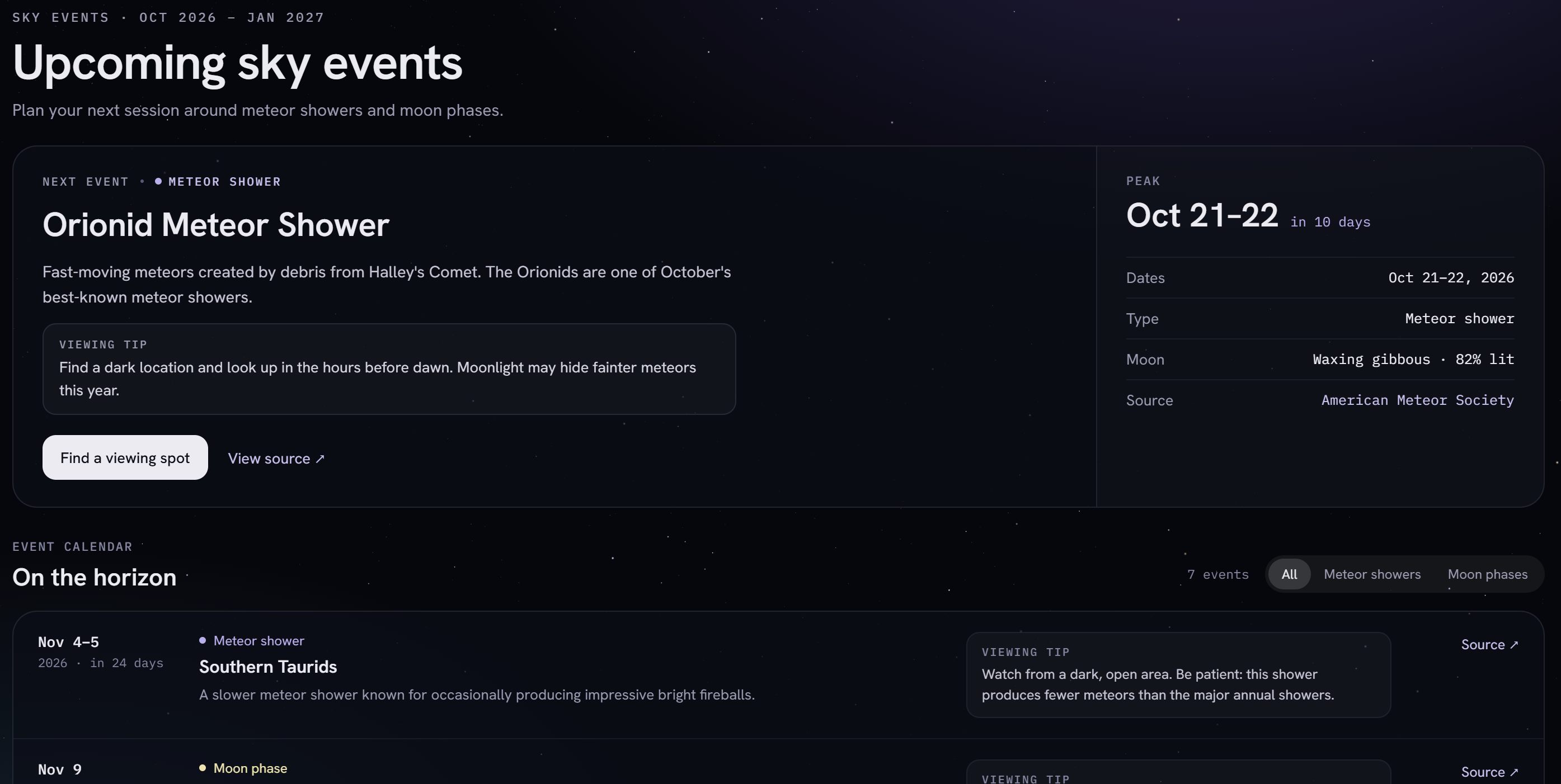
Users can explore spots on a map, check the best viewing times, see upcoming meteor showers, and learn which constellations to look for.
How we built it
We built Umbra using Next.js, React, and TypeScript. We used Open-Meteo for weather forecasts, SunCalc for moon and sun calculations, and Leaflet for the map.
We also created our own scoring system to combine everything into one easy-to-understand rating.
Challenges we ran into
Our biggest challenge was figuring out how to combine weather, moonlight, and light pollution into a fair score. We also had to deal with overnight forecasts and make sure everyone's code worked together.
Accomplishments that we're proud of
We're proud that we built a working stargazing app in just 36 hours. Our favorite part is that Umbra doesn't just show locations. It explains why a spot is good and when you should go.
What we learned
We learned a lot about working with APIs, building a full-stack website, using GitHub as a team, and solving problems under a tight deadline.
What's next for Umbra
Umbra already covers all 50 states, with at least two stargazing spots in each state and 35 in Florida. We want to keep expanding our locations so people have even more options close to home.
Some of the features we'd like to add include:
- More stargazing locations: Expand our nationwide coverage with more places in every state
- Personalized scoring: Different viewing preferences for casual stargazing, telescope users, and astrophotography
- More environmental factors: Smoke, haze, and atmospheric conditions that affect visibility
- Better travel planning: Actual driving times instead of only straight-line distances
- Community reports: Allowing visitors to share current sky conditions, crowd levels, and access information
- Expanded astronomy events: More celestial events and location-specific viewing recommendations
Ultimately, we want Umbra to make astronomy feel less intimidating and more accessible.
You shouldn't need to be an expert, check five different websites, or spend an hour researching just to enjoy the night sky. We want people to be able to open Umbra, find a good place, and go see the stars.
Built With
- css3
- github
- html5
- javascript
- leaflet.js
- next.js
- node.js
- open-meteo
- react
- suncalc
- three.js
- typescript
- vercel
- vitest

Log in or sign up for Devpost to join the conversation.