-
-
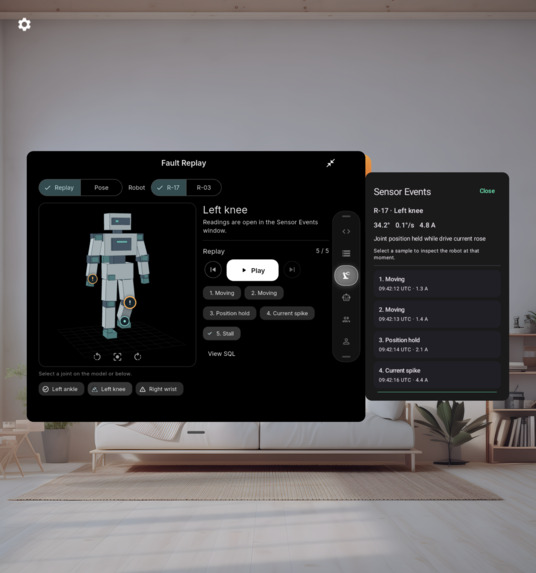
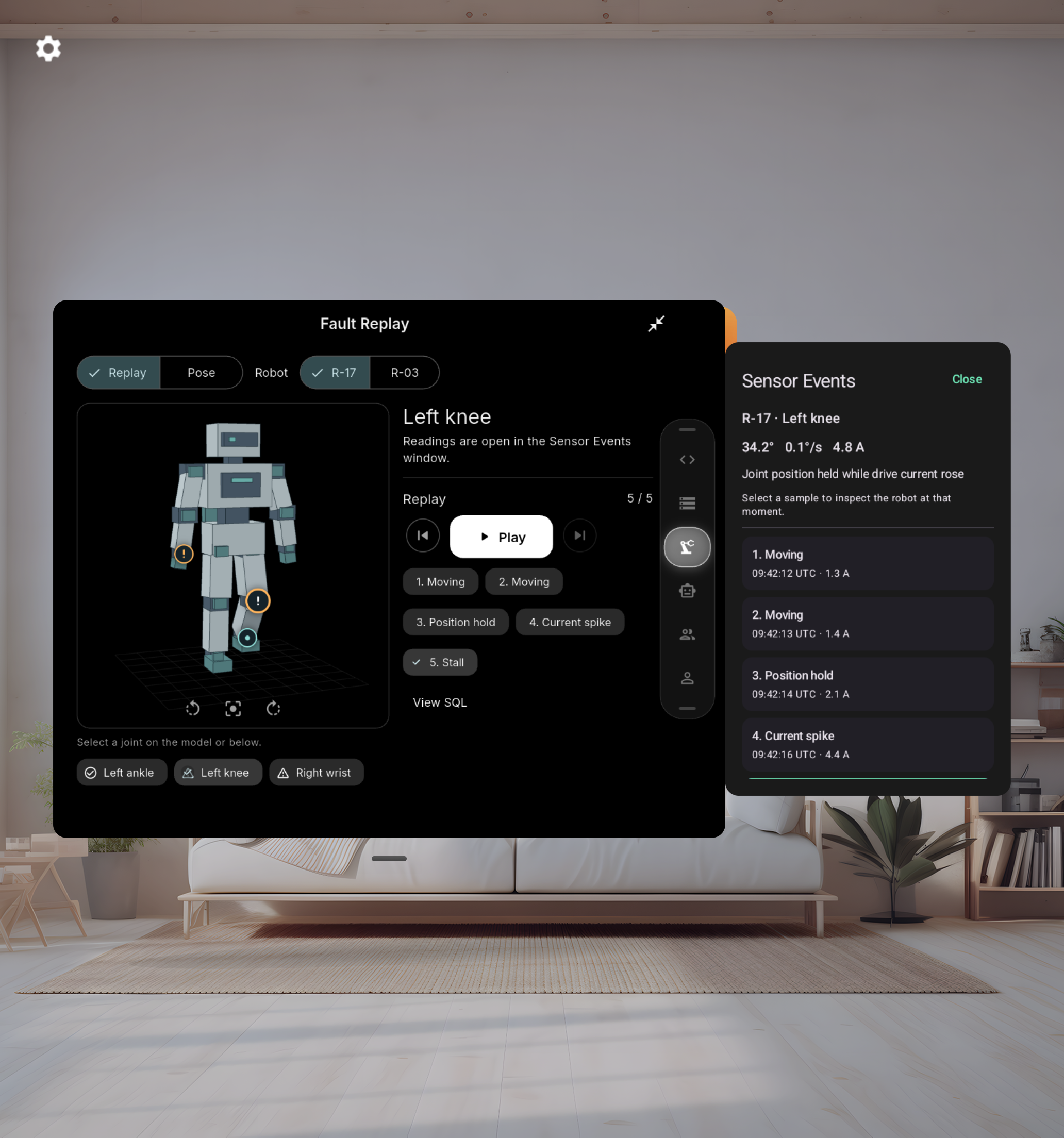
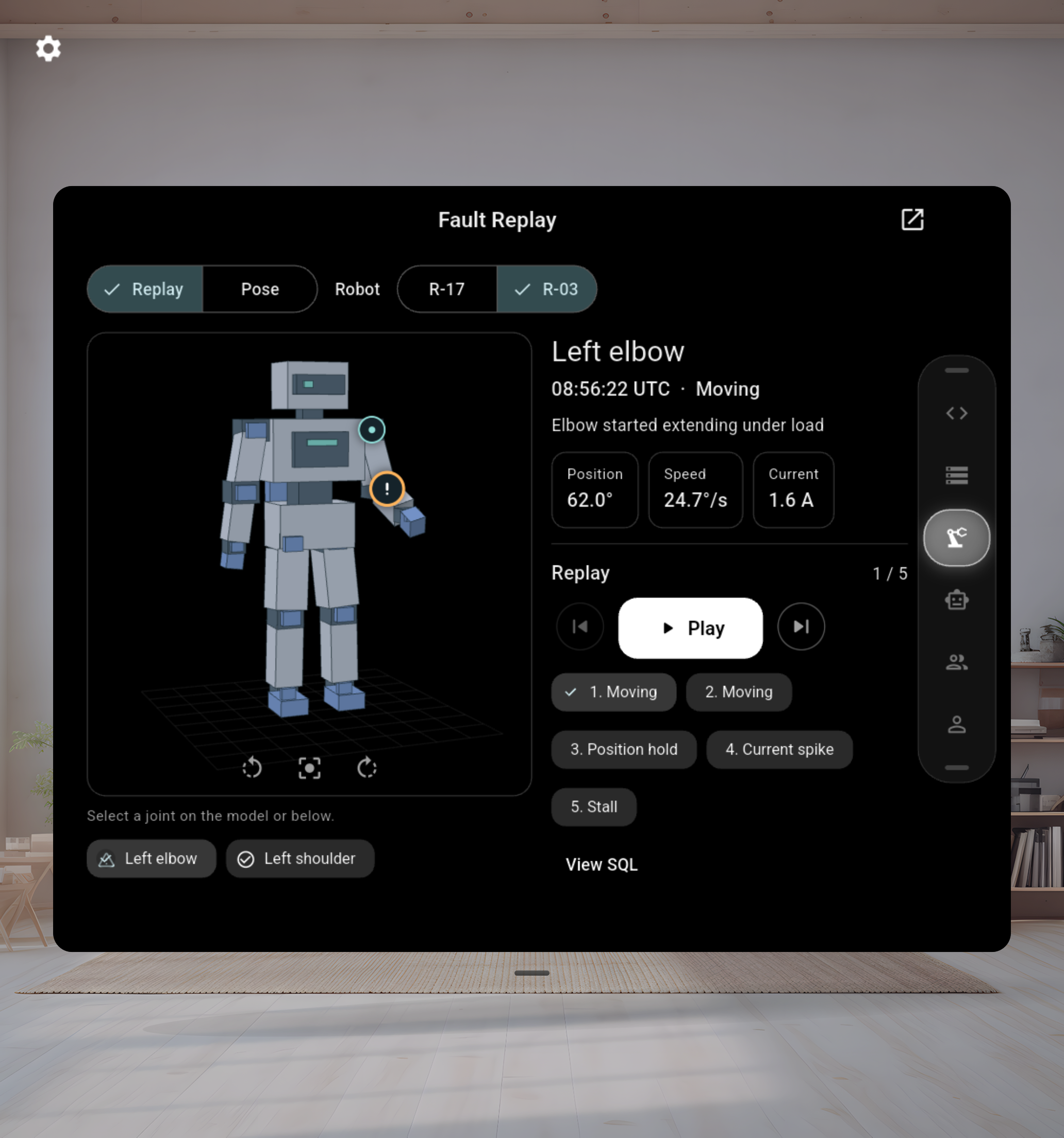
R-17 knee stall: robot replay and synchronized Sensor Events in Meta Spatial Simulator. Schema & SQL is closed.
-
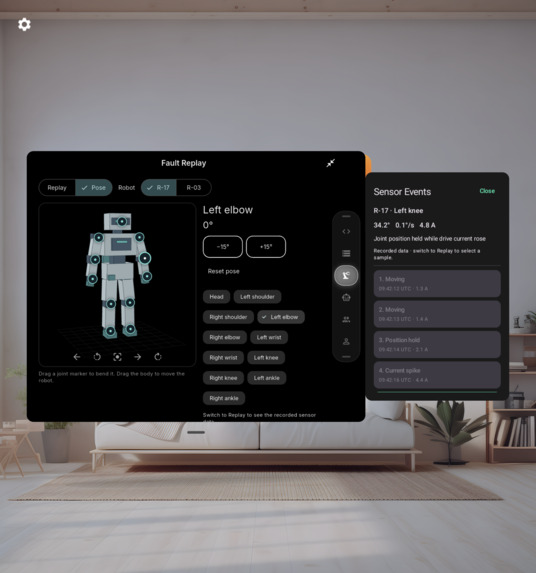
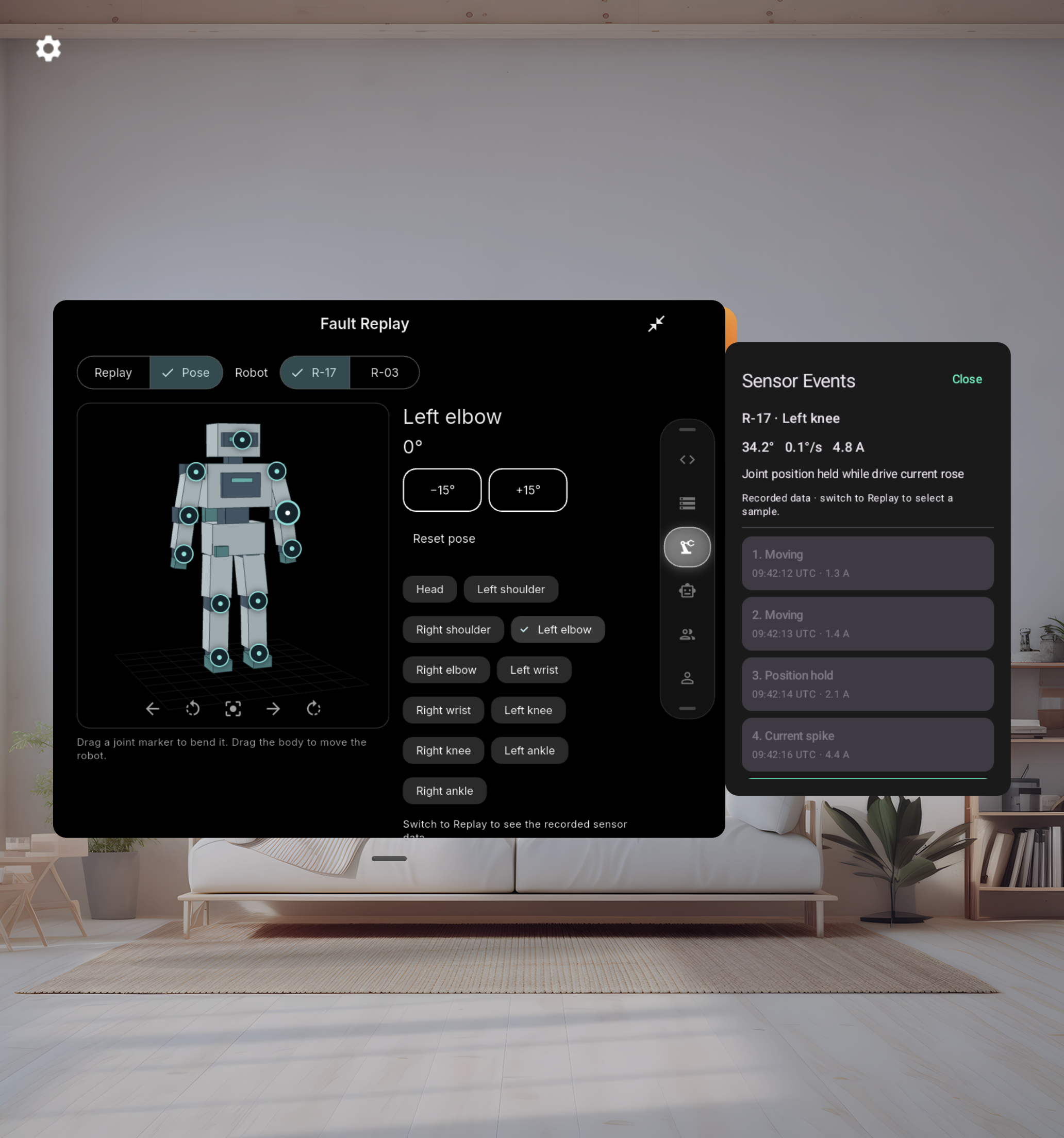
Pose mode: joint markers, labeled angle controls, movement and reset. Actual signed build 19 in Meta Spatial Simulator.
-
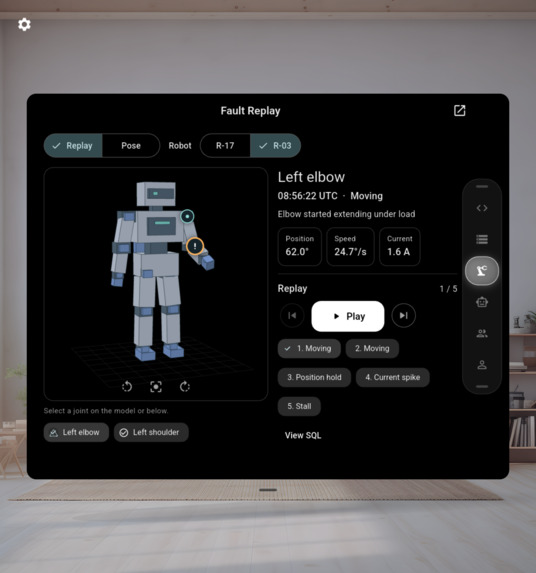
Companions closed: recorded readings and sample navigation return to the main panel. Meta Spatial Simulator, signed build 19.
Inspiration
I am Om Patel, a Robotics & Automation student in Gujarat, India, and the creator of ULTSQL, a database engine written in Dart. I built ULTSQL Studio as an Android workspace for managing databases, exploring tables, running commands, and using optional AI and collaboration tools.
Robotics gave that foundation a new purpose: connect recorded data to the machine it describes. When a joint stops moving, I want to inspect its motion and sensor readings together, then compare it with a healthy joint.
What it does
The original app: a database workspace built around my local ULTSQL engine.
The XR adaptation: an offline robot investigation inside that existing app. Choose Continue as Guest → Replay, select a robot and joint, then play or seek through a bundled fictional recording.
The main window keeps the robot and controls in view. Two companion windows organize the investigation:
- Schema & SQL: the data structure and context behind the selected recording.
- Sensor Events: recorded samples and readings; selecting an event seeks the same replay.
For R-17's knee, the stall sample shows almost no motion while current reaches 4.8 A:
$$ \text{joint velocity} \approx 0 \quad \text{while motor current rises} $$
Compare its healthy ankle or switch to R-03. Pose mode adds direct joint and body manipulation, labeled button alternatives, and reset controls.
How I built it
I retained the Flutter app and added an XR-only Kotlin/Jetpack Compose host using the Meta VR Layout SDK. One Flutter replay controller owns the local database, selection, samples, and playback. Native windows mirror that state and return actions; version checks reject stale updates.
The recording contains 21 fictional telemetry events in an isolated in-memory database. The investigation requires no account, network connection, or physical robot. Codex assisted with implementation and testing; ElevenLabs provided the demo narration.
Challenges I faced
The hardest part was keeping several windows consistent through sample changes, navigation, and lifecycle events. Closing a window restores its information in the main panel. Backgrounding pauses playback and preserves the selection. Retry handling disposes partially initialized database resources.
What I learned
Spatial adaptation requires careful decisions about what stays together, what deserves its own window, and what happens when that window disappears. Reliable state ownership matters as much as visual presentation.
What I am proud of
A working investigation spans robot motion, sensor events, and data context, with a complete main-panel fallback. 133 Dart tests and four native tests passed, and signed build 19 completed the recorded offline simulator walkthrough.
What's next
My roadmap is to bring every existing tab and feature into the spatial workspace, starting with table management and a live table viewer, then query results, diagrams, the terminal, and AI assistance. Related tools would share database context and retain a main-panel fallback. Physical Quest validation and real telemetry imports are also planned. Current XR evidence is simulator-only. Target public launch: January 4, 2027.