-
-
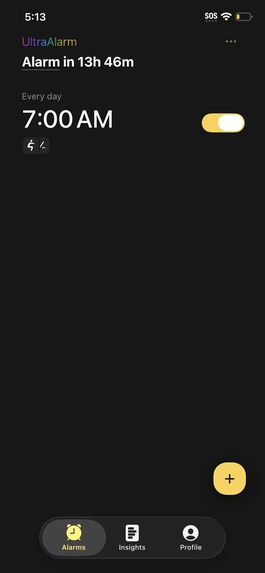
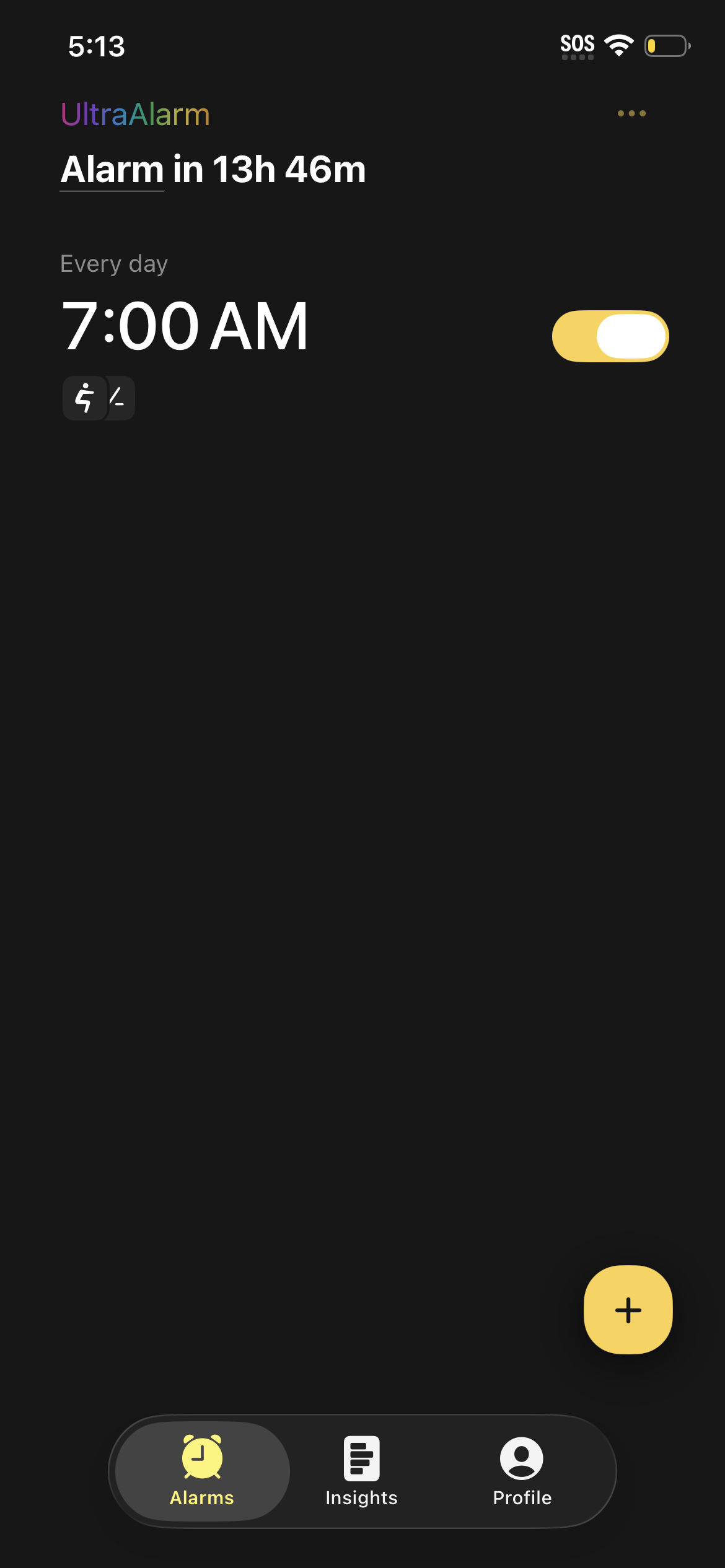
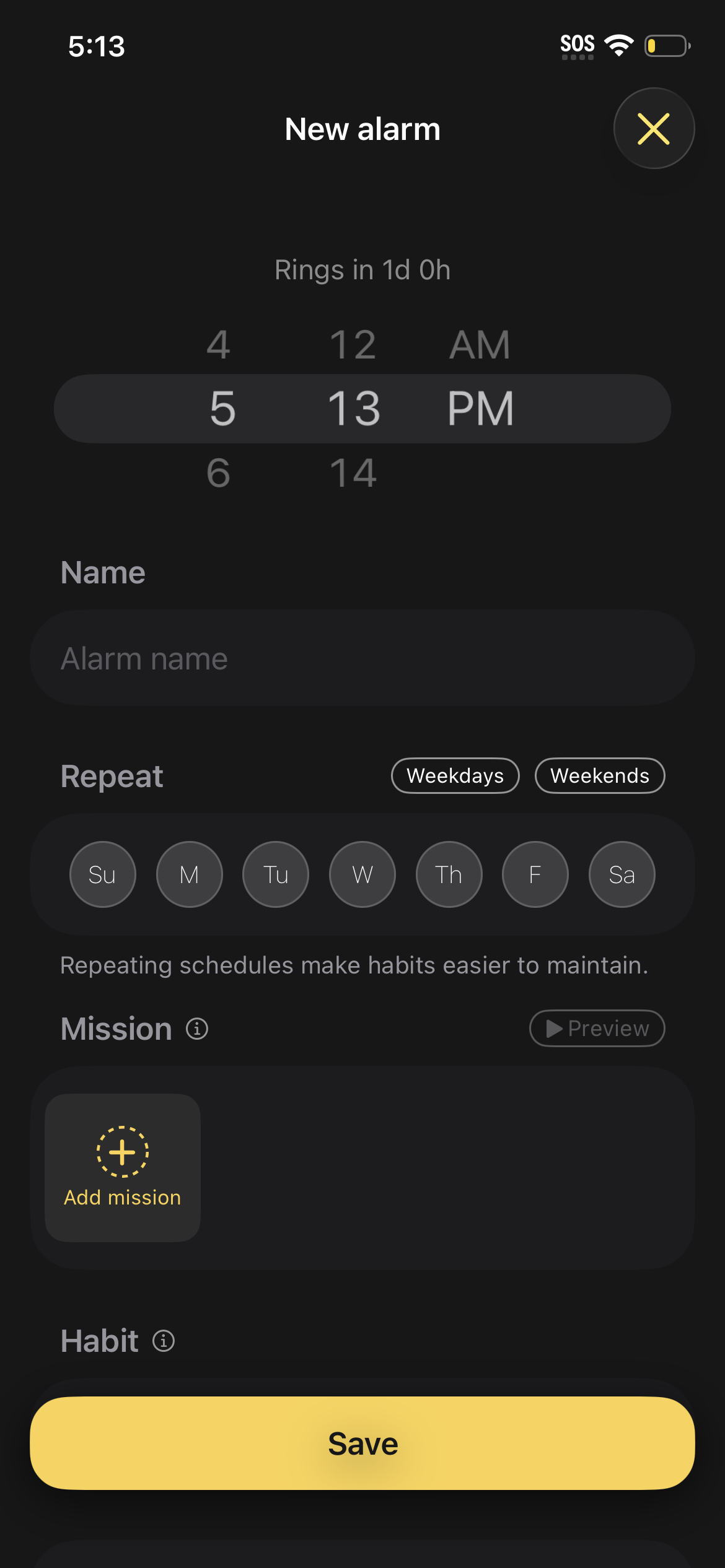
Tap the “+” button in the bottom-right corner to set an alarm.
-
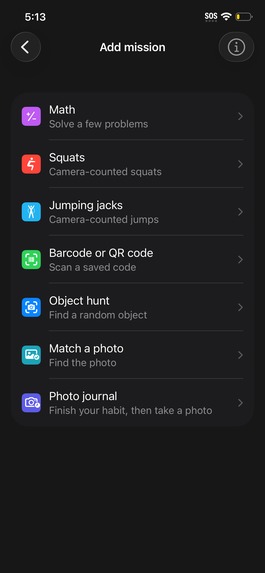
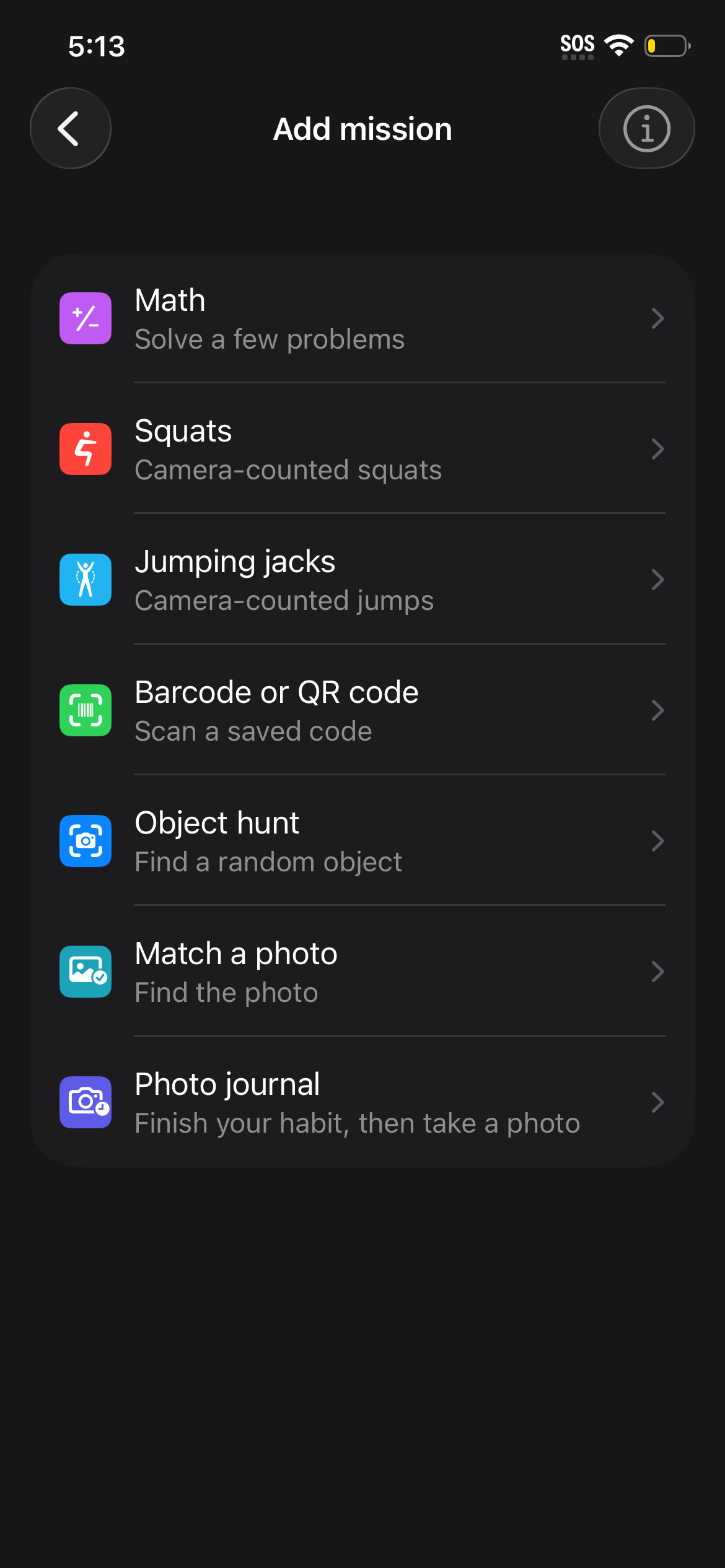
Choose your missions. You can add up to 5 per alarm, and you must complete them all to turn it off.
-
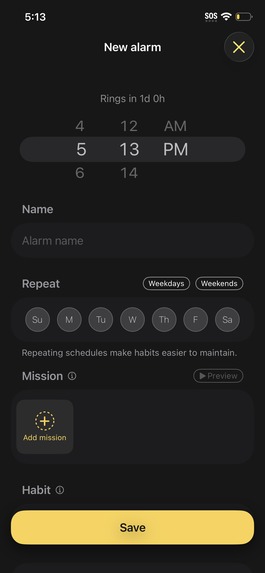
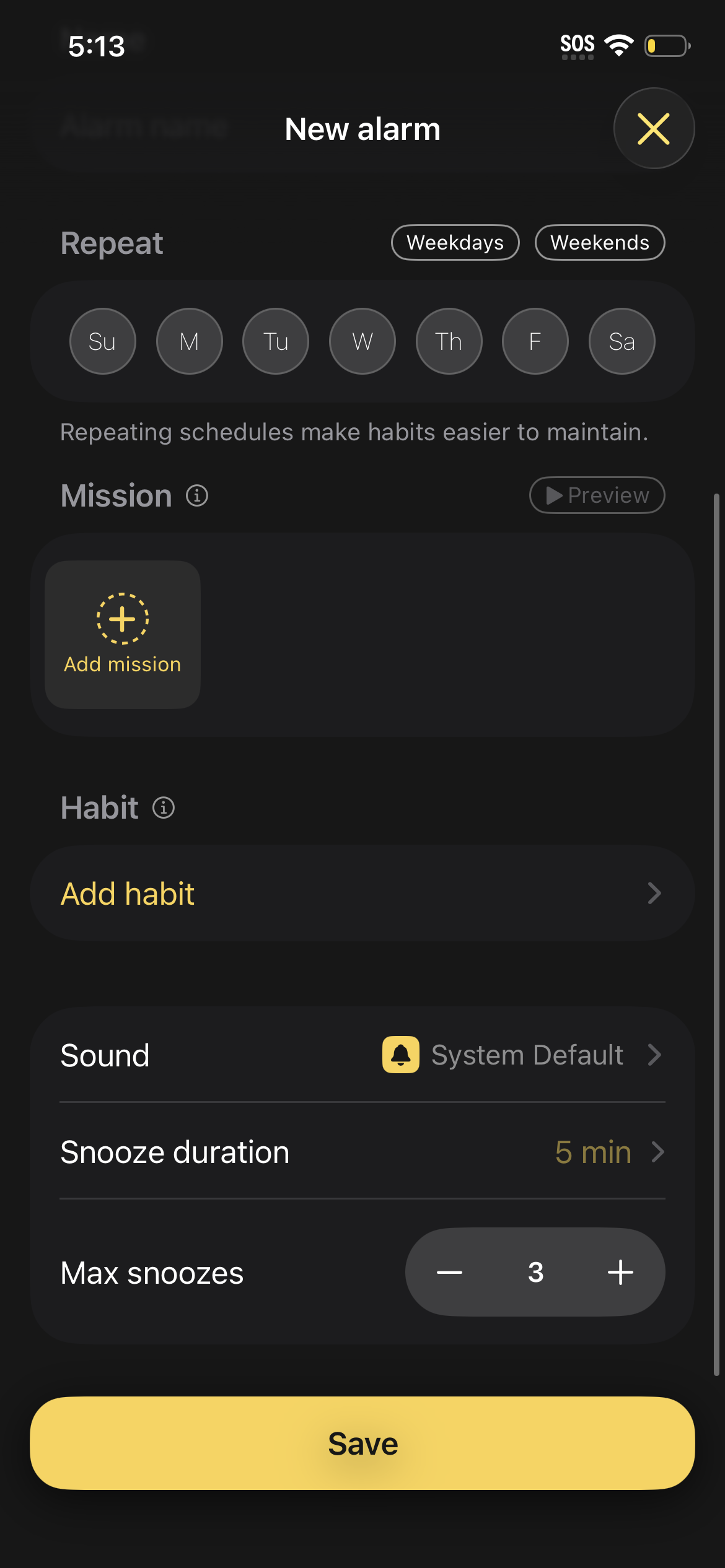
On alarm settings page, choose time, missions, habits you want to link to the alarm, alarm sound, snooze duration, and number of snoozes.
-
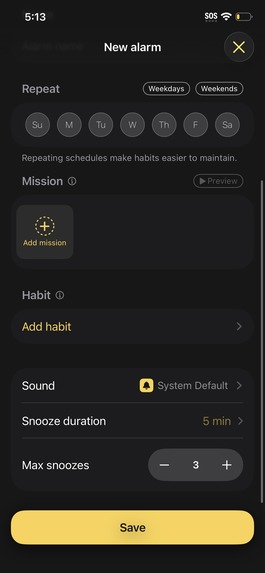
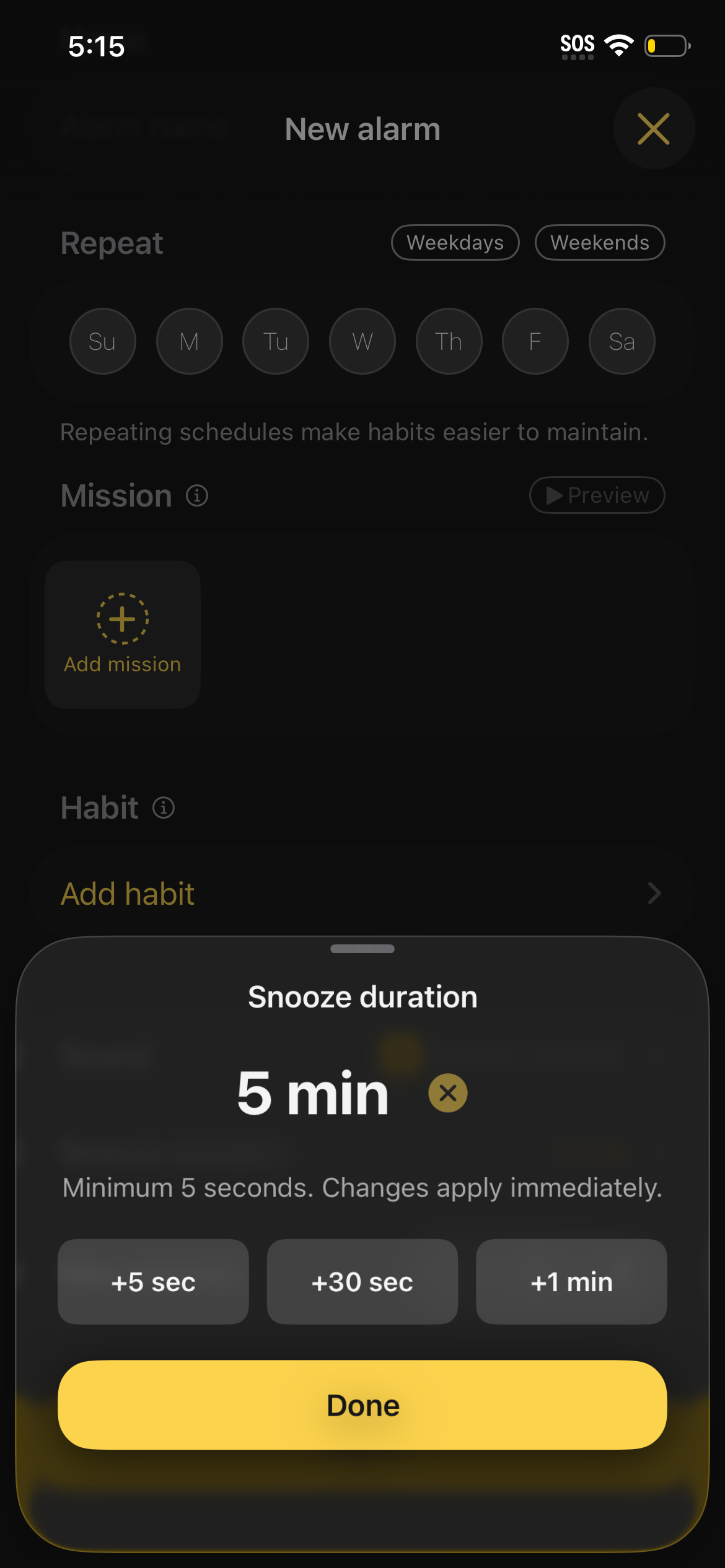
You can customize the snooze duration and number of snoozes, or turn snooze off completely.
-
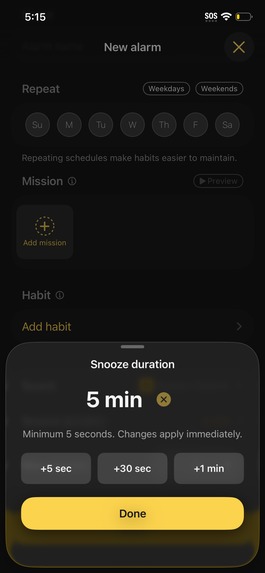
Easy controls to adjust the snooze duration.
-
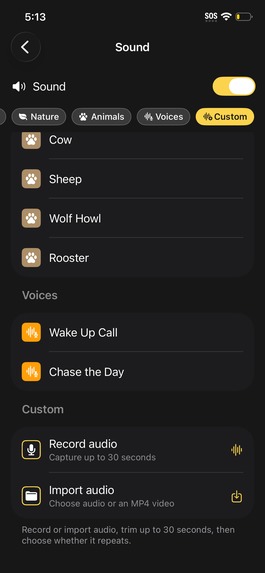
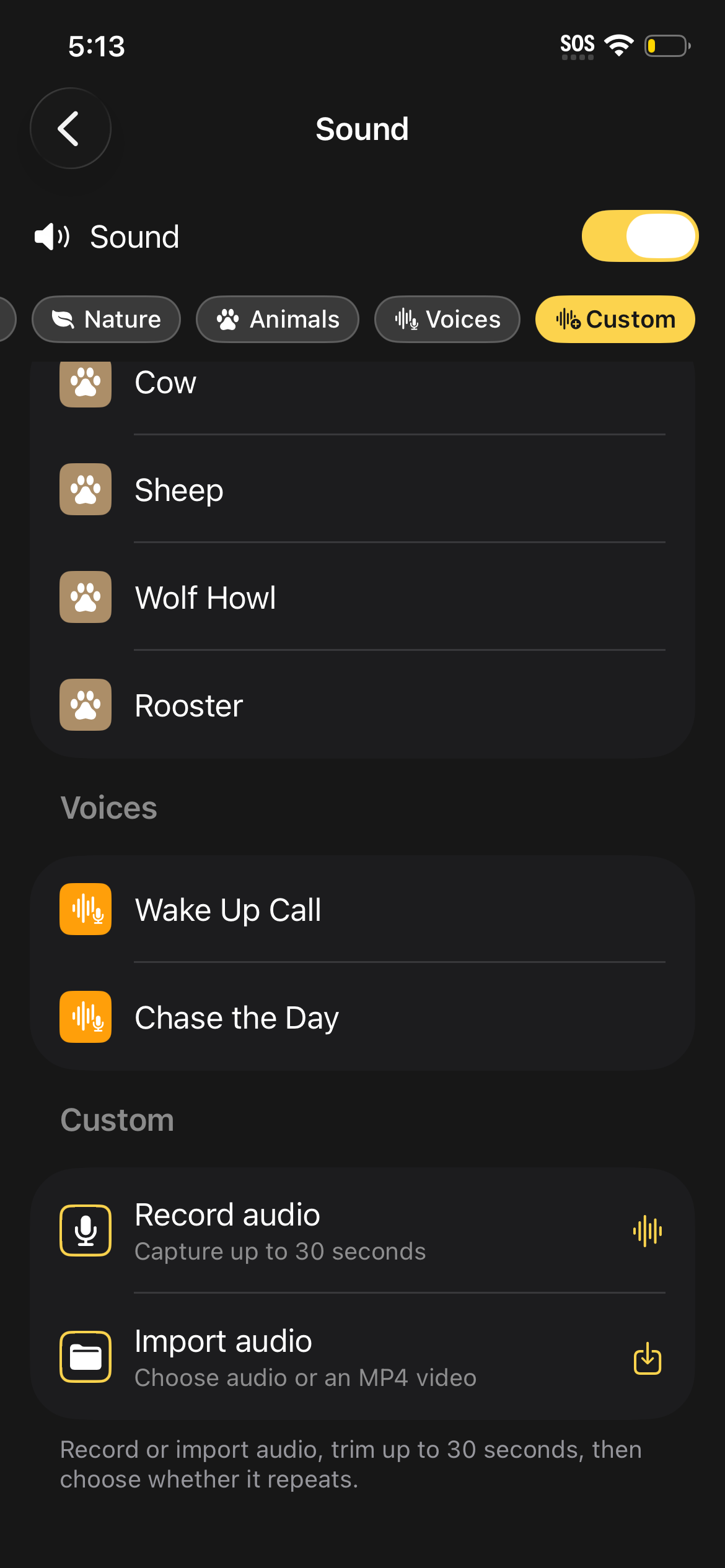
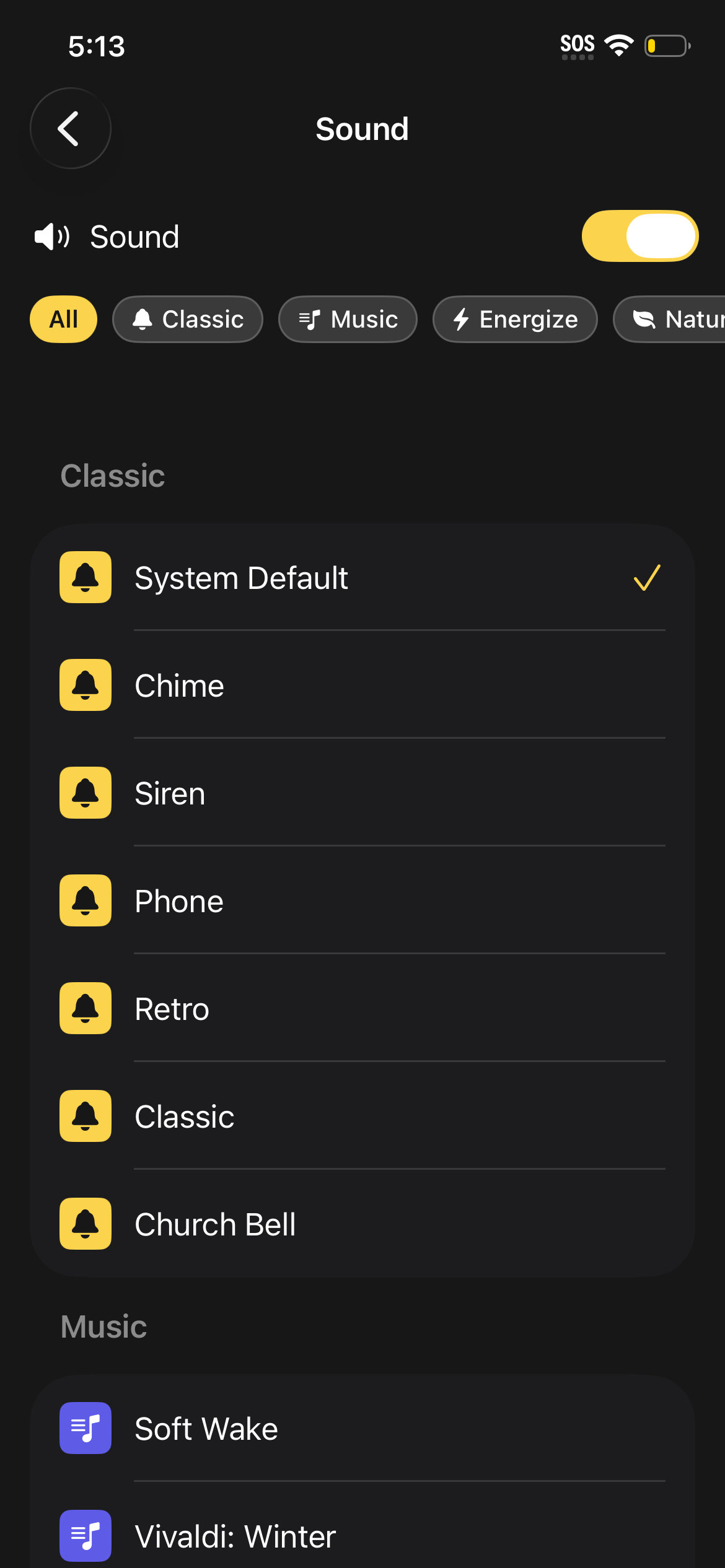
Choose from a variety of alarm sounds, or upload and record your own.
-
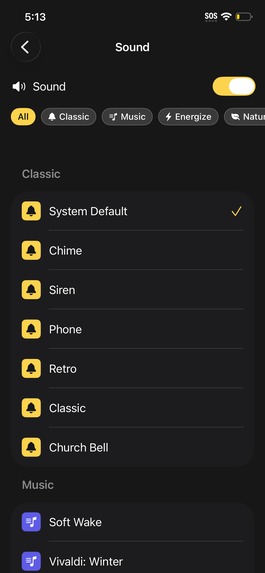
If you turn off the alarm sound, the alarm will vibrate instead.
-
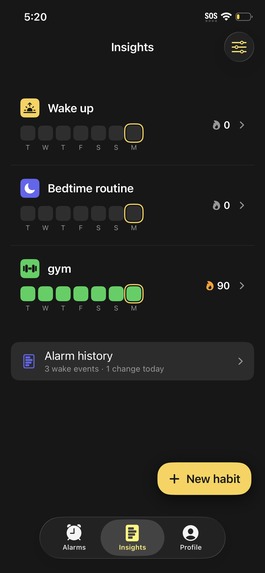
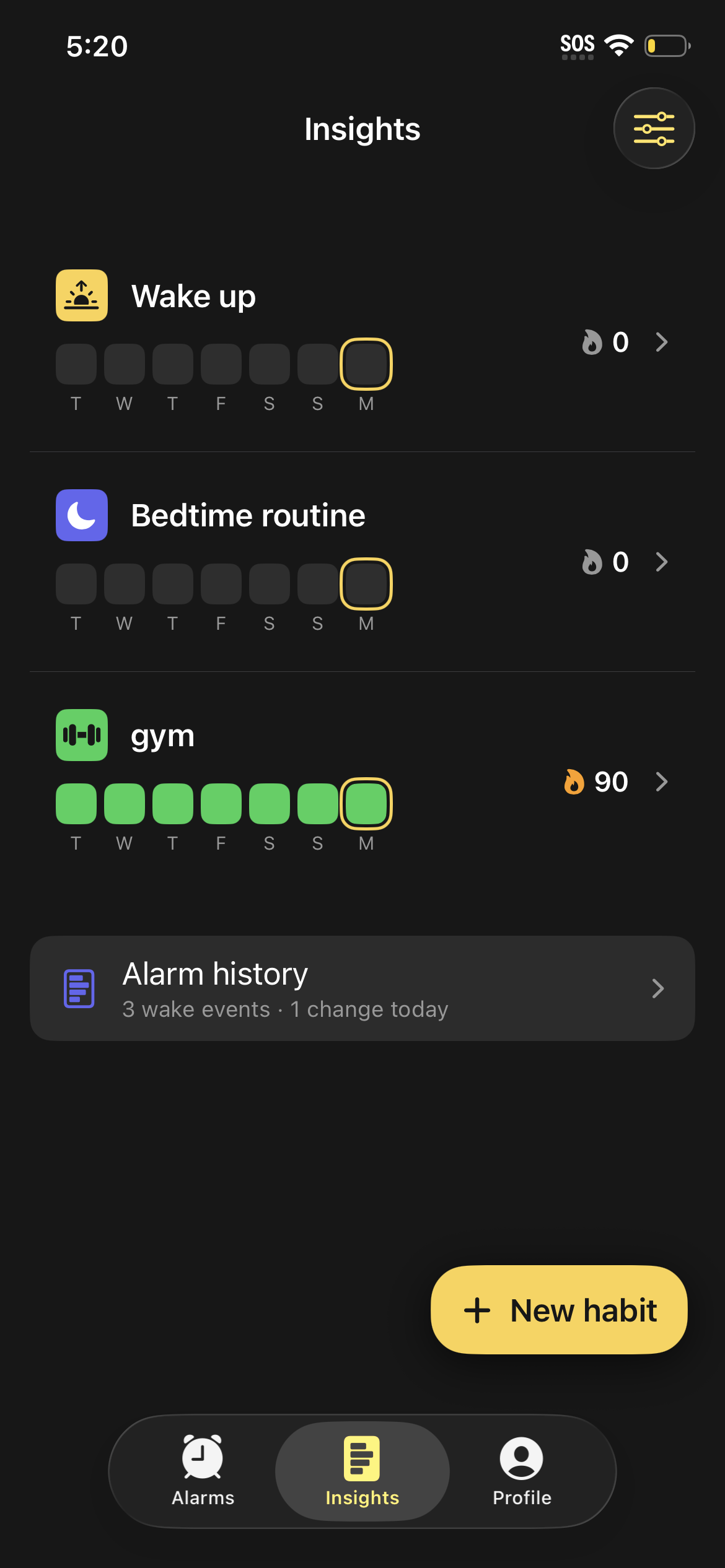
You can track your habit streaks and how long it takes you to wake up or start a habit.
-
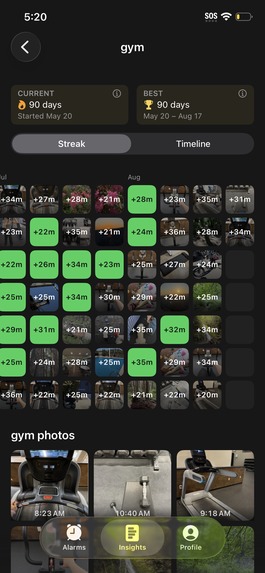
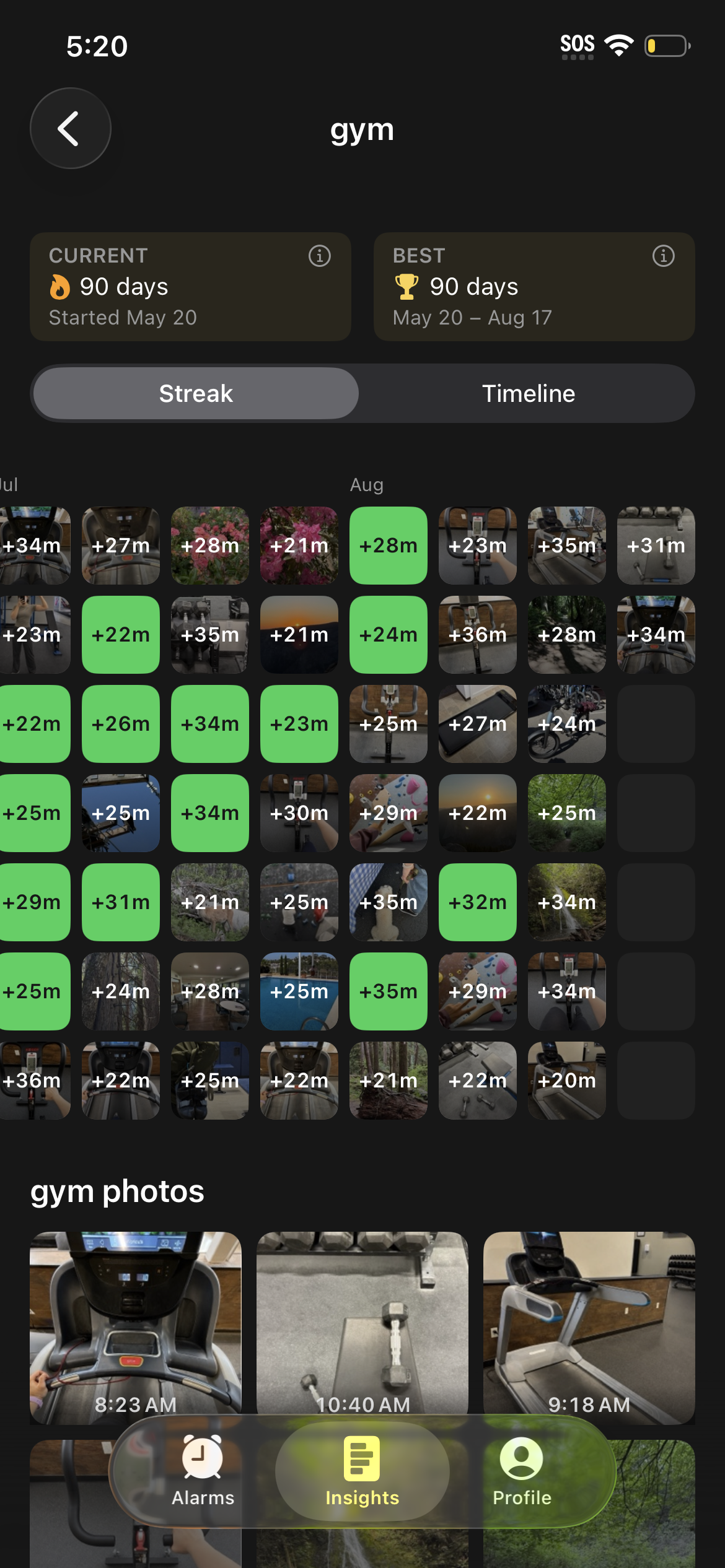
Link a Photo Journal mission to a habit, take a photo each time, and track your progress over time.
-
App Icon
Inspiration
I became obsessed with fixing my sleep after struggling to wake up early while working remotely at xAI. I was constantly exhausted, and at one point, my sleep got bad enough that I started missing meetings.
That pushed me to optimize everything: my bedroom layout, bedsheets, lighting, humidity, pajamas, exercise schedule, diet, vitamins, protein intake, and more.
Eventually, I quit my job and built an alarm that helped me actually stick to the routine that worked for me. Now I’m launching it because I believe all the people can benefit from this.
The long-term goal is to help people build a personalized morning routine they can stick to. We’re starting with the alarm.
What it does
UltraAlarm is an alarm clock app that requires you to complete tasks before you can turn off the alarm. Instead of simply tapping a button to dismiss an alarm, users complete missions such as:
Jumping jacks Squats Math problems Photo matching Barcode scanning Object finding and more
The alarm keeps users engaged until they complete a mission they’ve chosen. With Photo Journal, they can capture what they accomplished and look back on their progress over time, helping them stay motivated.
And this is just the beginning. Imagine your morning alarm giving you the day’s weather, helping you pick what to wear, briefing you on your schedule and to-dos, organizing your meetings with AI, reviewing yesterday’s vocabulary, and reminding you what to prepare for the day ahead. The possibilities are endless.
How we built it
We first focused on the core alarm system and mission flow, then built different physical and mental missions around it.
A large part of the development process involved thinking through real-world situations that a typical alarm app might not handle well, such as customizable snooze settings, personalized alarm sounds, starting an alarm early if you’ve already completed the habit, showing a countdown to your next alarm, and setting quick alarms.
Challenges we ran into
One of our biggest challenges was building a reliable alarm experience within iOS limitations.
Opening the app does not necessarily mean a user is fully awake, so we designed the alarm to continue until the required mission is actually completed. At the same time, we had to keep the alarm reliable without unnecessarily draining battery, while working within iOS’s strict background-processing limitations.
We also found that the first few days of changing an alarm routine can be the hardest. To help users stay consistent, we built features such as Photo Journal, which creates a visual diary of completed habits, and streaks that let users look back and see their progress over time.
Accomplishments that we're proud of
Most apps are designed to make things easier, but with UltraAlarm, we took a different approach. We realized that when it comes to waking up, users actually need more friction, more time, and more effort before they are fully awake.
We’re proud that UltraAlarm evolved from a simple idea about making alarms harder to dismiss into a more complete system that helps people follow through on what they want to achieve, one morning and one day at a time.
What we learned
One of our biggest learnings was that some people naturally know when it’s time to start something, while others, especially those dealing with time blindness, executive function challenges, or simply a lot of noise in daily life, can struggle to follow through even on small tasks.
We also learned that a normal alarm can be too easy to dismiss. Our brains need more than a second or two to transition from sleep to being fully awake.
That same idea extends beyond waking up. A trigger to go to the gym may need to be stronger and last longer than a simple reminder. The goal is to help someone start the action immediately, before they have time to change their mind or put it off. And because that decision happens every day, the trigger needs to support consistency over time.
Finally, we learned that building an alarm app is much more technically complicated than it appears. Reliability matters more than almost anything else. If an alarm fails even occasionally, users can quickly lose trust in the product.
What's next for UltraAlarm
Our goal is to become the system that helps people turn the life they want into action, starting with their daily routine.
Everyone’s day begins with waking up, and how we start the morning often sets the tone for everything that follows. Once we’re awake, we face hundreds of small decisions, and we want to make those decisions easier by organizing the right information and actions for each person.
For a kayaker, that might mean checking the wind and weather before deciding whether to go out. For someone who loves fashion, it could mean seeing the forecast and planning what to wear. For a business owner, it might mean getting a quick update on what’s happening across the company. For a deal hunter, it might be a quick briefing on the best deals that day. For someone focused on fitness, it could be a pre-planned workout.
Eventually, each of these could become a mission inside the app, turning the alarm from something that simply wakes you up into something that helps you start your day with intention.

Log in or sign up for Devpost to join the conversation.