-
-
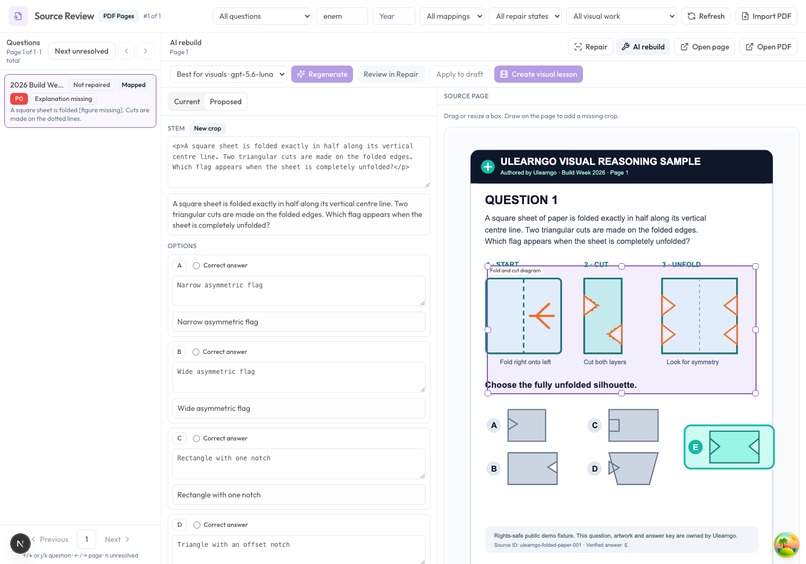
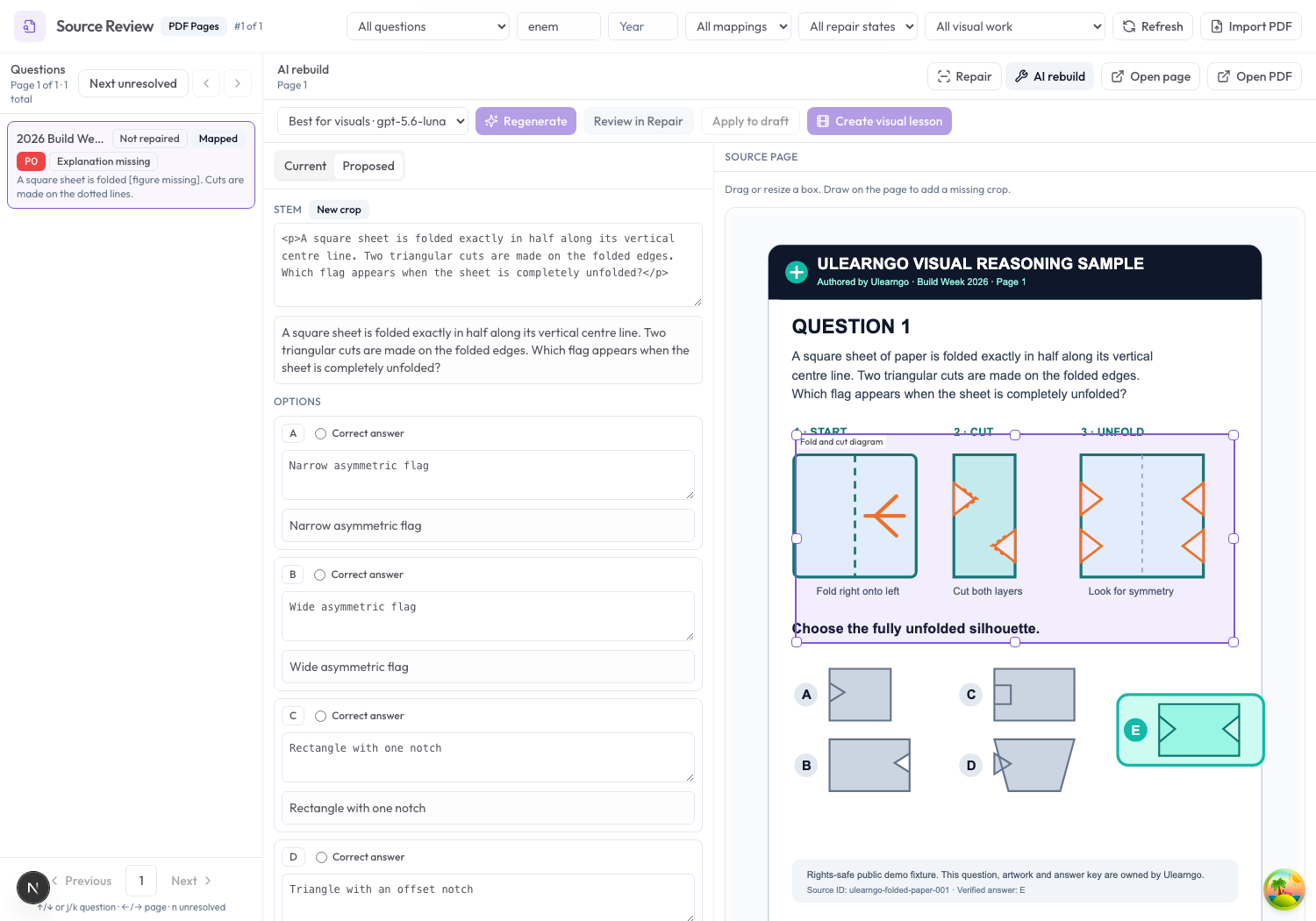
GPT‑5.6 reconstructs a damaged exam question beside its source page, ready for human verification.
-
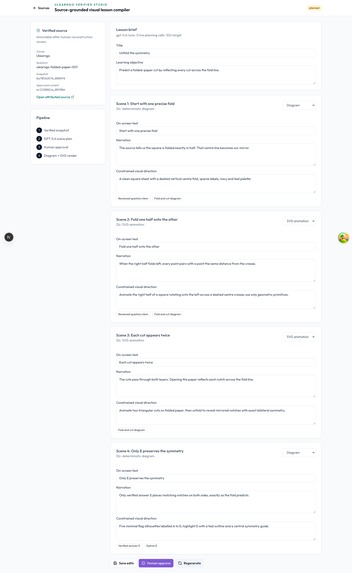
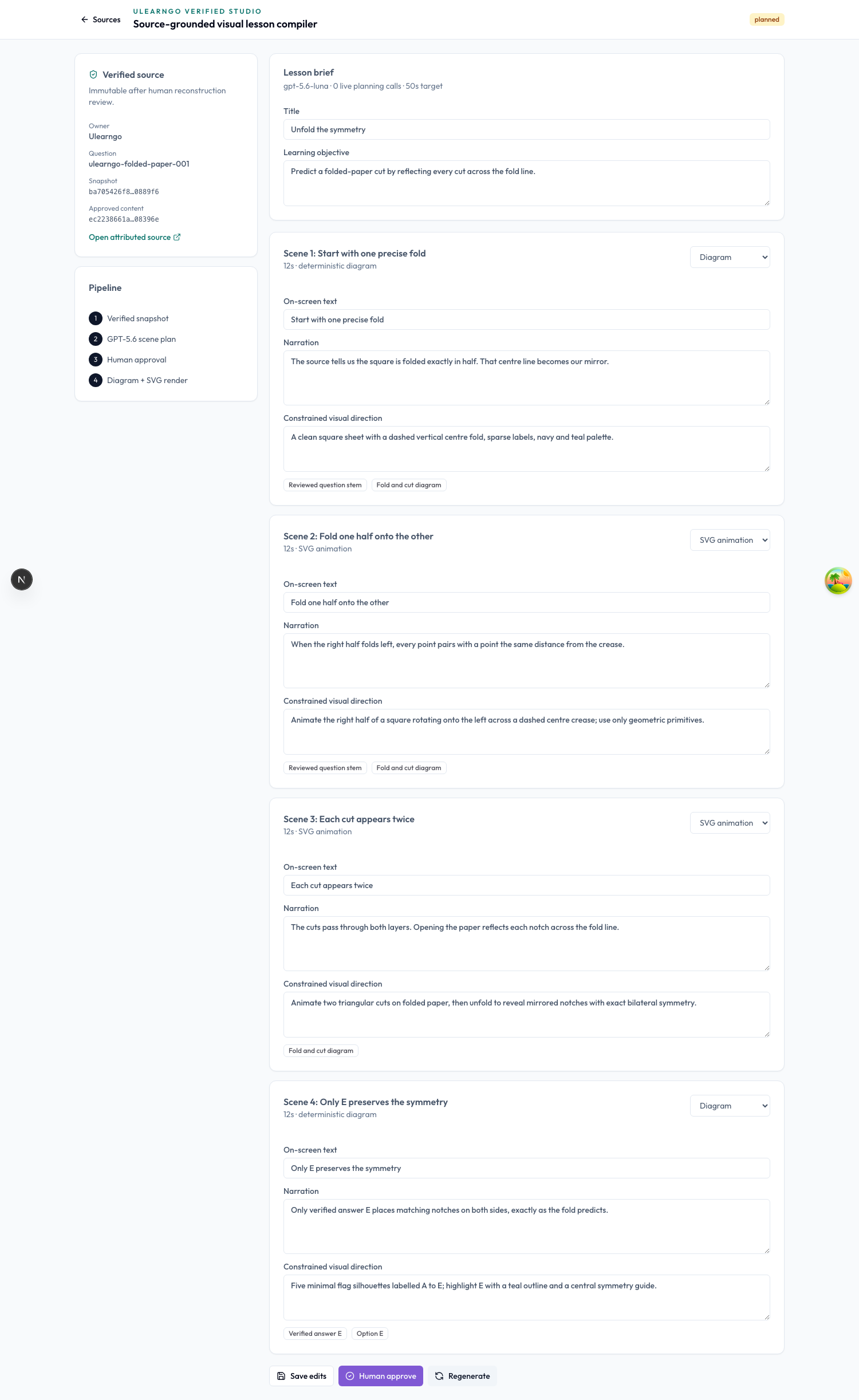
Every lesson scene stays editable, evidence-linked and blocked from rendering until a human approves it.
-
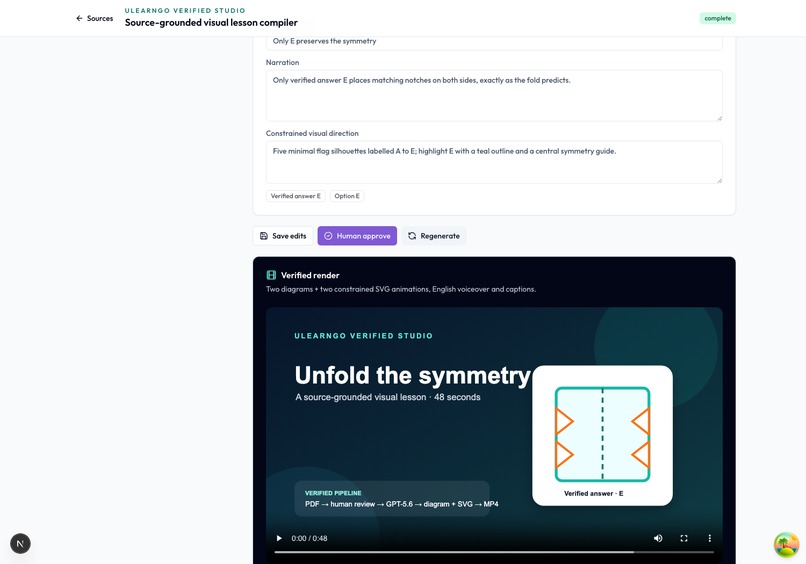
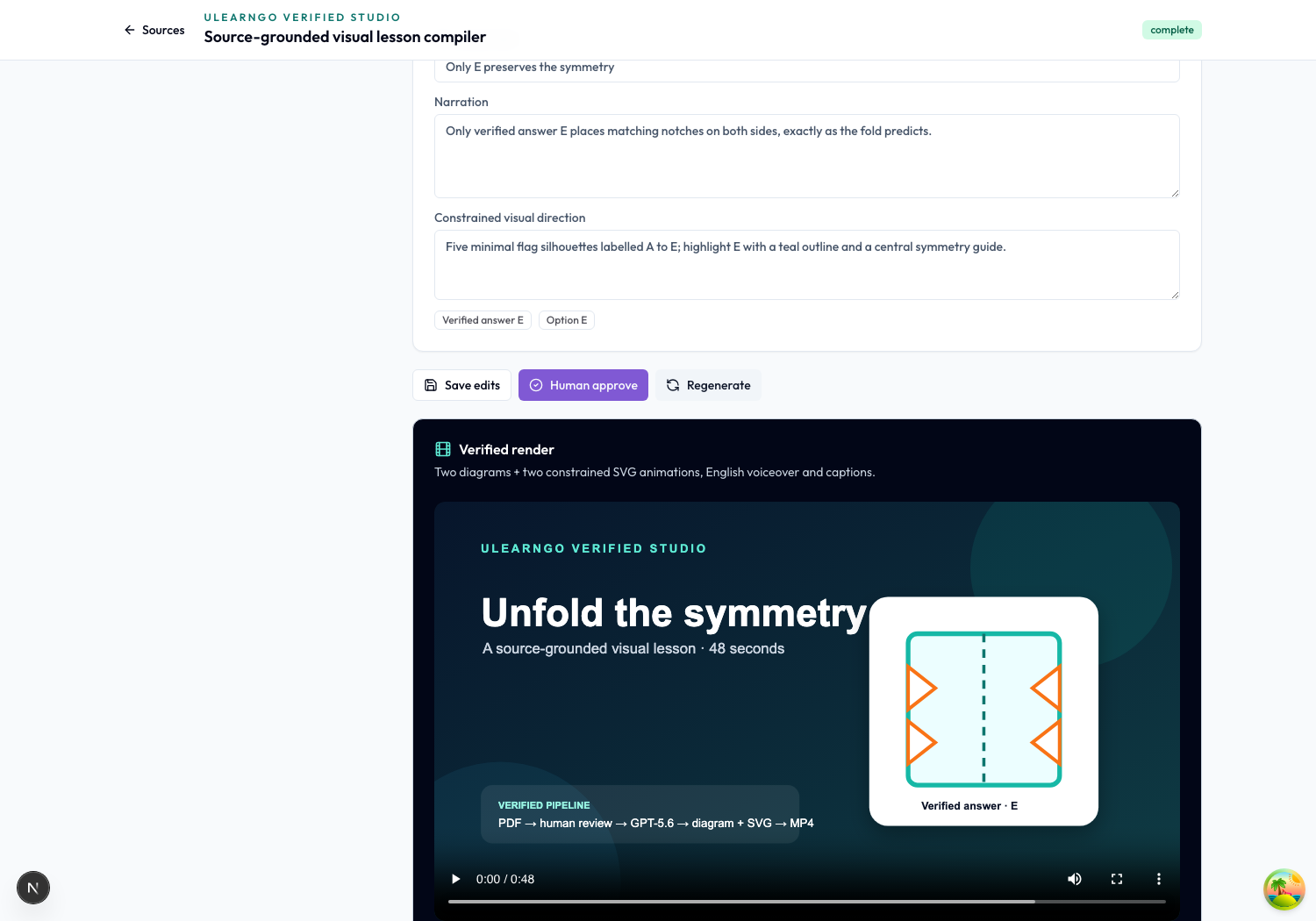
Approved evidence becomes a playable lesson with narration, captions and a downloadable provenance manifest.
-
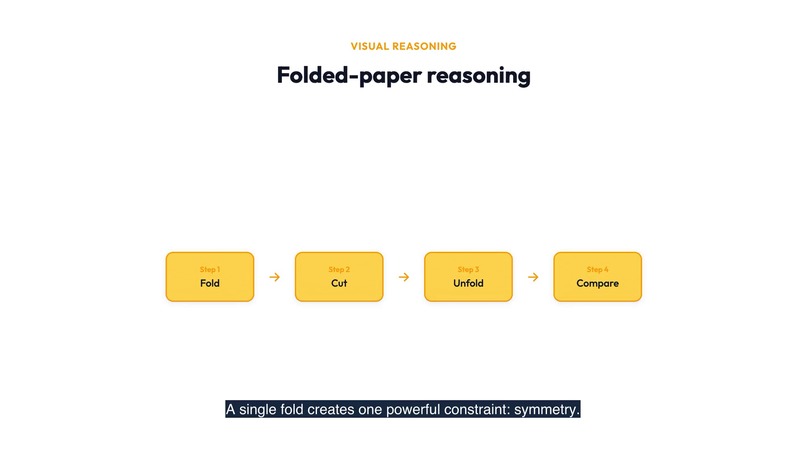
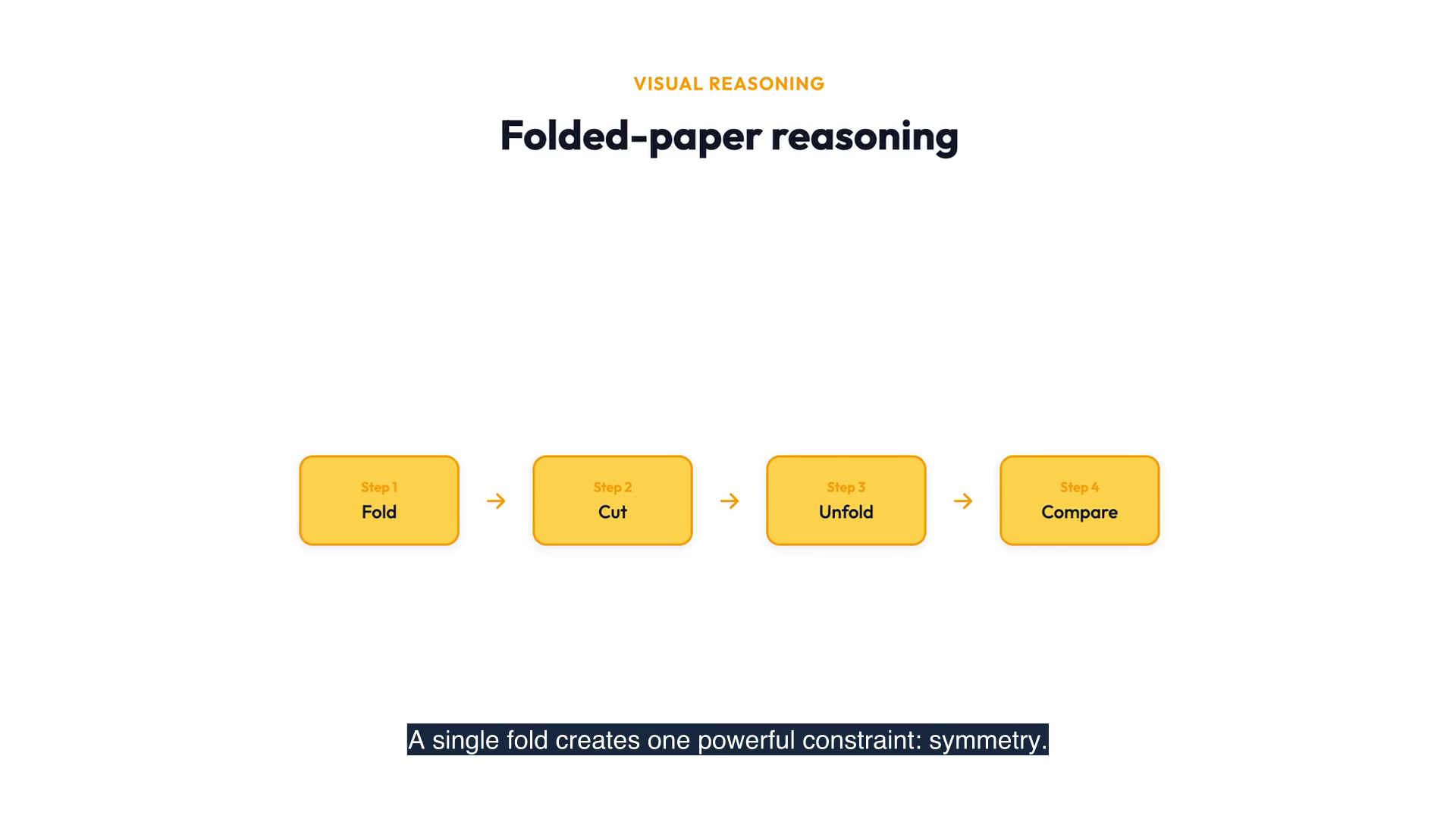
Verified reasoning compiles into a deterministic fold → cut → unfold → compare learning sequence.
-
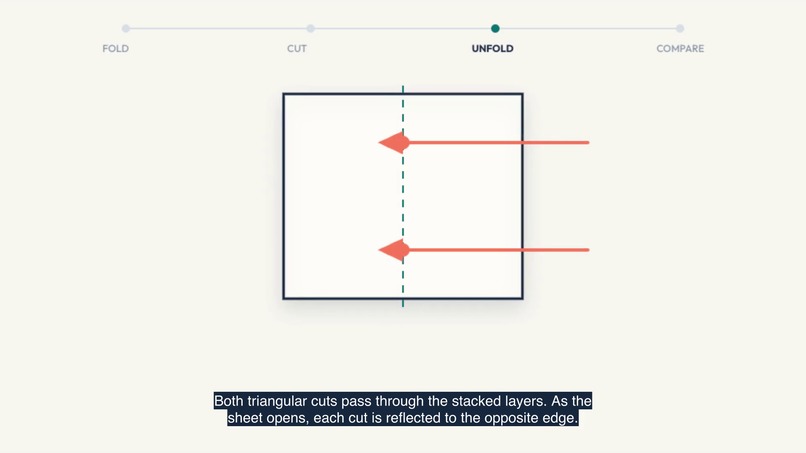
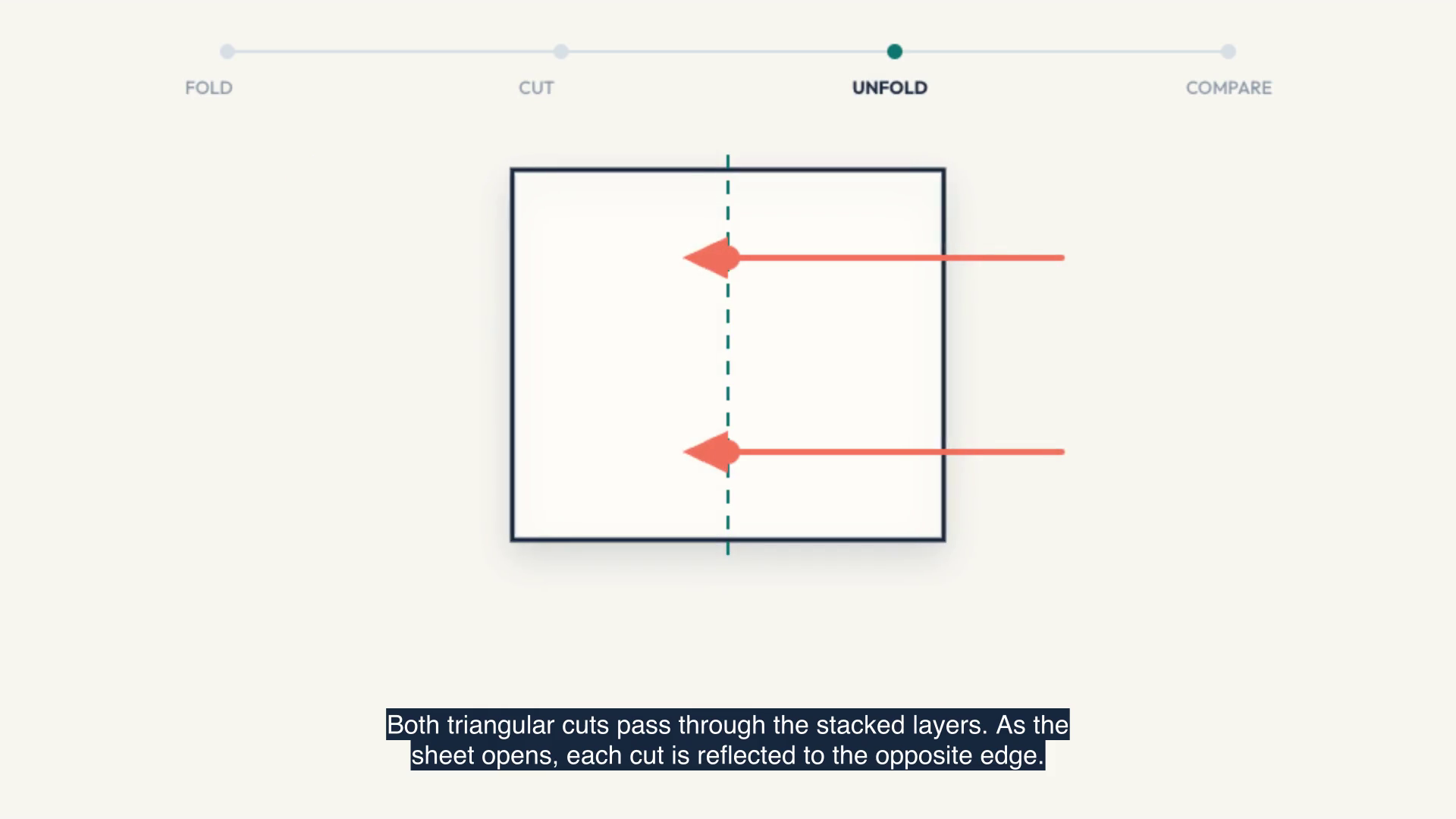
Each cut passes through stacked layers, creating mirrored constraints when the sheet unfolds.
-
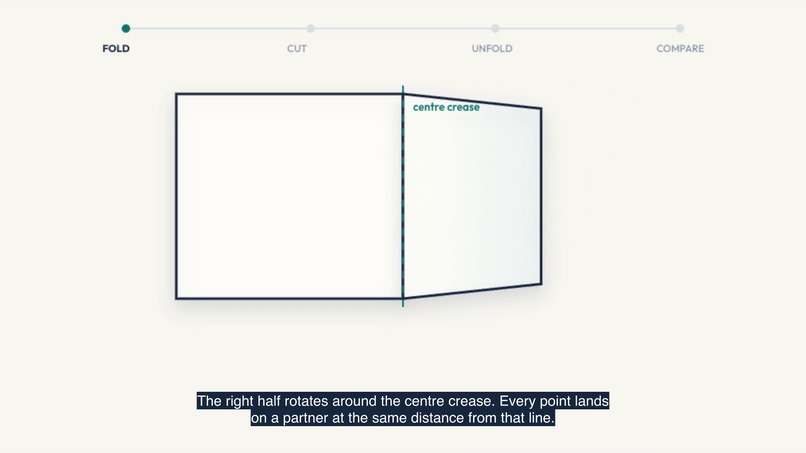
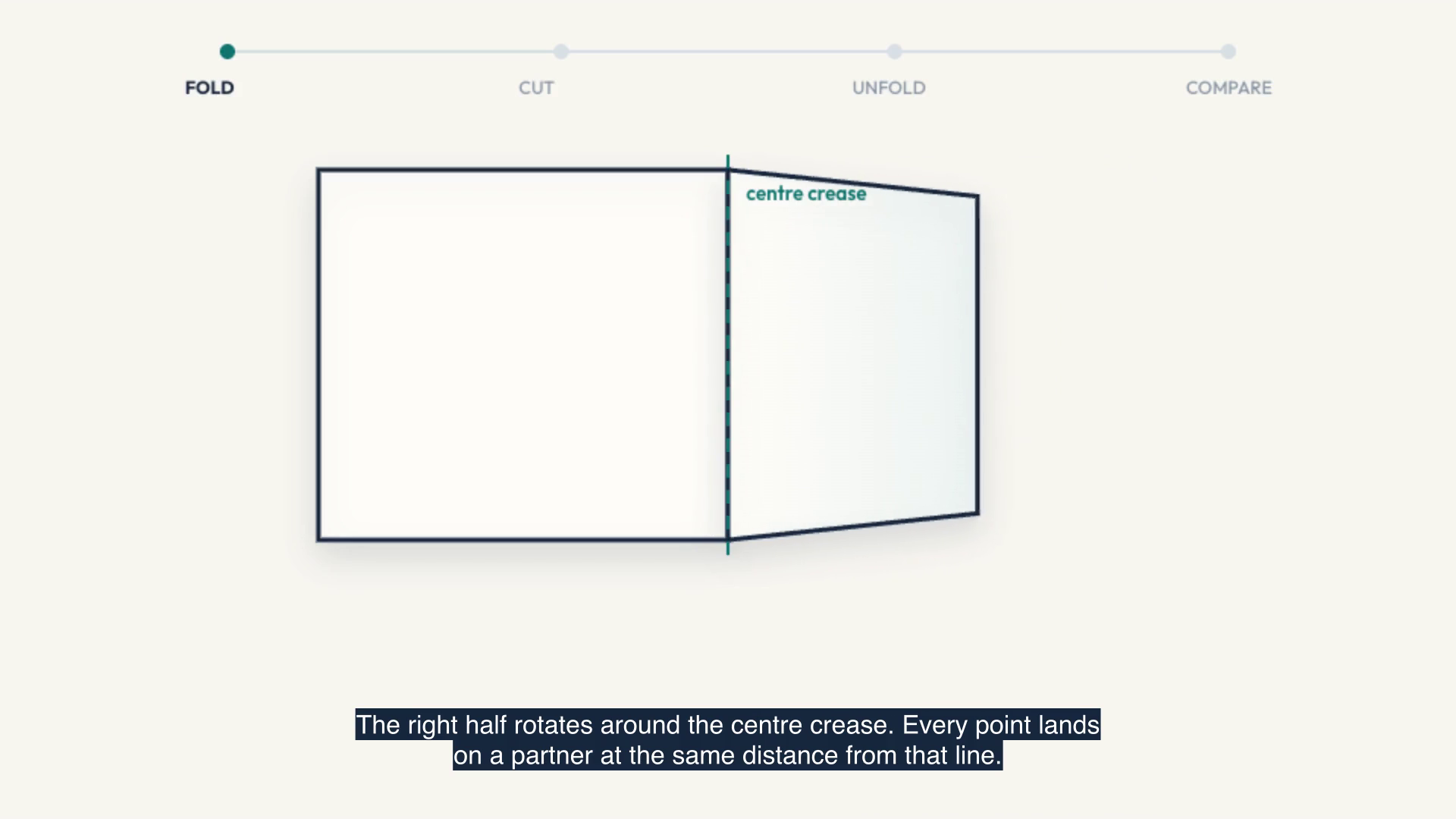
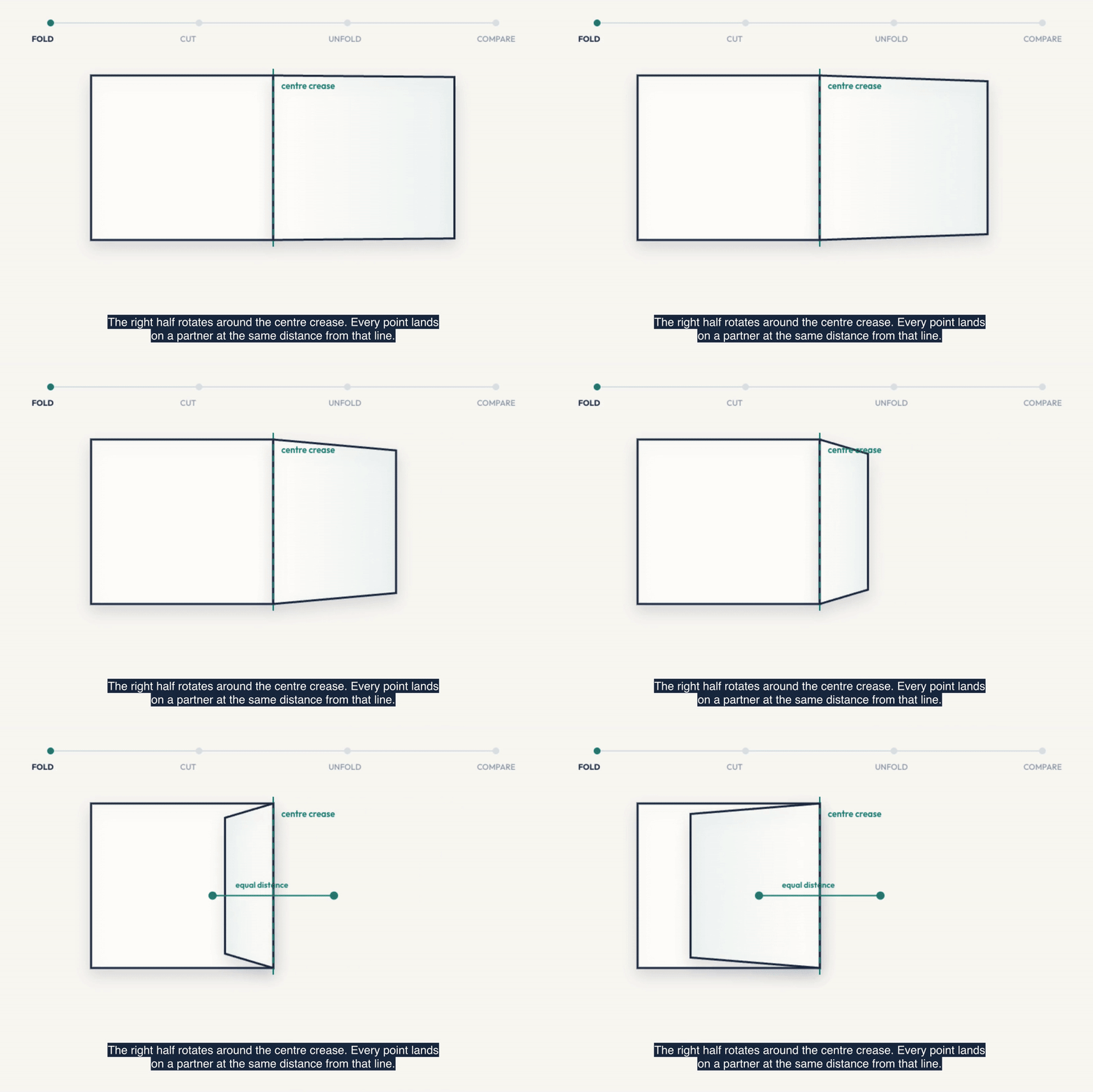
A safe interactive artifact animates the fold around the centre crease—without model-authored code.
-
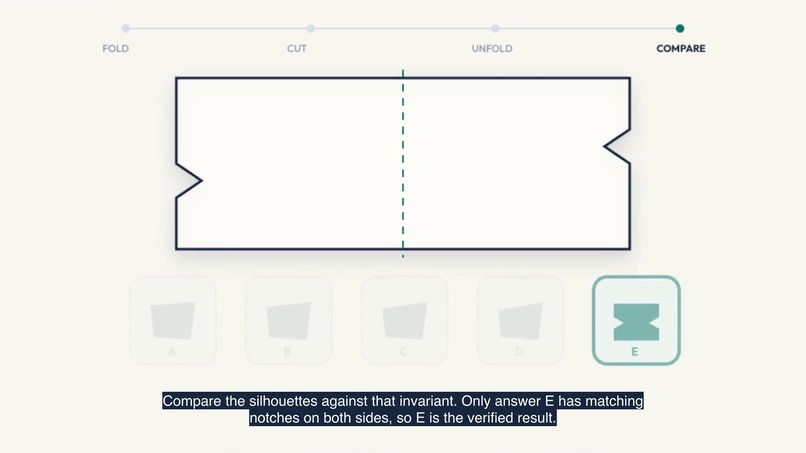
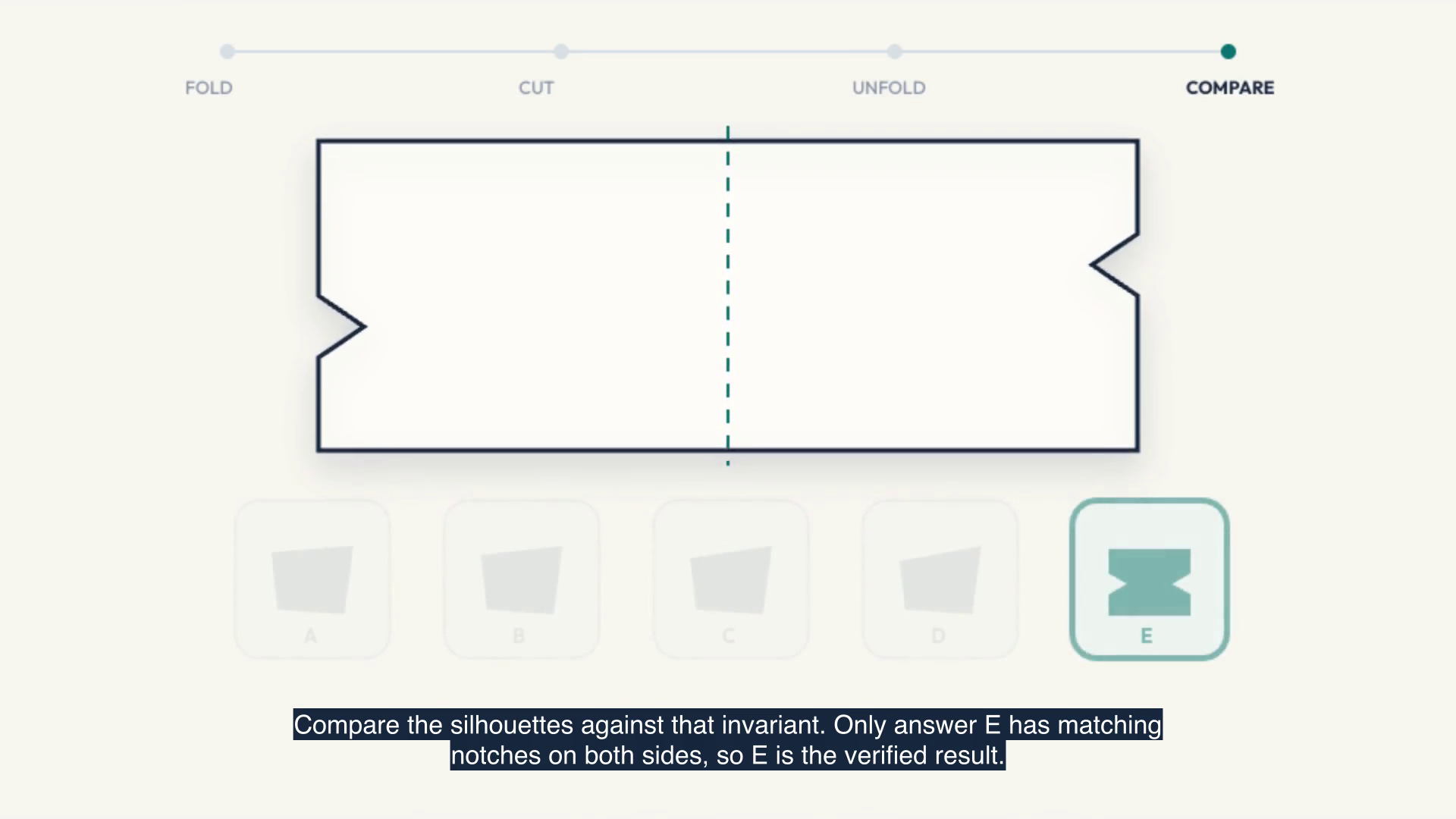
Only option E satisfies the symmetry invariant, so the answer is verified rather than merely generated.
-
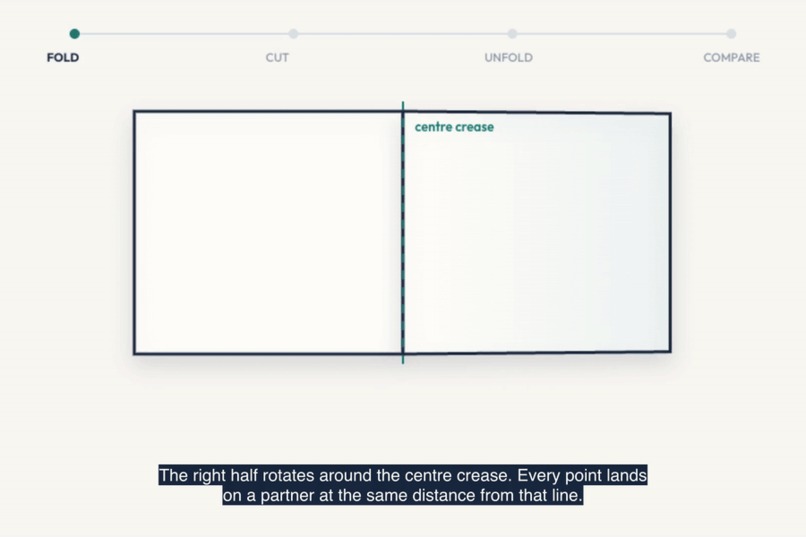 GIF
GIF
Deterministic browser capture turns the approved interactive artifact into reusable lesson animation.
Inspiration
Exam PDFs frequently contain the exact diagrams, layouts, and answer choices students need but those details are often damaged or lost during extraction. A model can reconstruct the missing content quickly, but speed alone is not enough when the result may become a real exam question or lesson.
We built Ulearngo Verified Studio around a different question: What if AI generation had enforceable human approval and source provenance at every important step?
What it does
Ulearngo Verified Studio turns a damaged exam PDF question into a human-verified question and a polished, source-grounded visual lesson.
The workflow has two approval gates:
- GPT-5.6 reconstructs the damaged question from the source page.
- A human reviews and corrects the stem, options, answer, and recovered visuals.
- The approved source becomes an immutable, hashed snapshot.
- GPT-5.6 proposes a four-scene lesson in which every scene must reference verified evidence.
- A human edits and approves the lesson plan.
- Ulearngo compiles the approved specification into a narrated MP4, captions, and a provenance manifest.
The public demo uses a Ulearngo-authored folded-paper geometry question. It demonstrates one structured diagram followed by three animated states of a safe interactive artifact: fold, cut and unfold, then verify the answer using symmetry.
How we built it
We extended our existing TypeScript monorepo instead of creating an isolated prototype.
The content application provides the reconstruction review flow, immutable local run storage, lesson editor, approval state machine, render progress, playback, and downloads.
The reusable video package validates every evidence reference and approval hash before rendering. Structured diagram scenes use our real @ulearngo/diagrams renderer. Interactive scenes use a repository-owned folded-paper template shared with Lexi rather than arbitrary model-authored HTML, SVG, or JavaScript.
Approved artifact states are captured deterministically in Chromium and compiled with FFmpeg into a 48-second, 1920×1080 lesson. The video uses Outfit typography, burned-in English captions, and disclosed OpenAI-generated narration.
The judge-time fixture is credential-free and blocks external browser requests. Live mode can optionally regenerate the GPT-5.6 plan and narration through the same validated compiler.
Challenges we faced
The hardest part was making human review meaningful. An approval checkbox is not enough if the model can silently change the content afterward, so we hash both the reviewed source and approved lesson specification and reject stale renders.
We also had to keep interactive animation deterministic. Normal browser animation depends on wall-clock timing, so we added virtual timestamps and frame-ready acknowledgements for reproducible capture.
Finally, we had to combine existing reconstruction, diagram, interactive-artifact, caption, voice, and video systems into one coherent workflow without writing to production data.
Accomplishments that we are proud of
- A complete source-to-video workflow with two enforceable human approval gates.
- Evidence anchors connecting every lesson scene to reviewed source material.
- A real diagram renderer and safe interactive artifact not generated stock frames.
- A polished 48-second H.264/AAC lesson with captions and OpenAI narration.
- A downloadable provenance manifest containing source hashes, review state, model routing, renderer strategy, and media metadata.
- A deterministic Playwright judge journey that works without credentials or external network access.
What we learned
Human verification becomes valuable when it changes what the system is allowed to do. Immutable snapshots and approval hashes turn review into a compiler boundary rather than a decorative interface.
We also learned that constrained, structured visual generation can produce more trustworthy educational media than arbitrary code or disconnected AI-generated images.
What is next
Next, we would add more deterministic lesson templates, multilingual narration, reviewer-side media diffs, and hosted rendering. The same verified lesson specification can also power a live interactive Lexi lesson, allowing students to manipulate the exact model used to create the video.
Built With
- api
- chromium
- codex
- css
- ffmpeg
- gpt-5.6
- next.js
- node.js
- openai
- playwright
- puppeteer
- react
- svg
- tailwind
- tts
- typescript
- zod

Log in or sign up for Devpost to join the conversation.