\Inspiration
Rapid urbanization in cities like Chennai has led to rising temperatures due to the Urban Heat Island (UHI) effect. Increasing concrete structures, vehicle emissions, and shrinking green cover motivated us to build an AI-powered system that can monitor, predict, and reduce urban heat risks in a data-driven way.
What it does
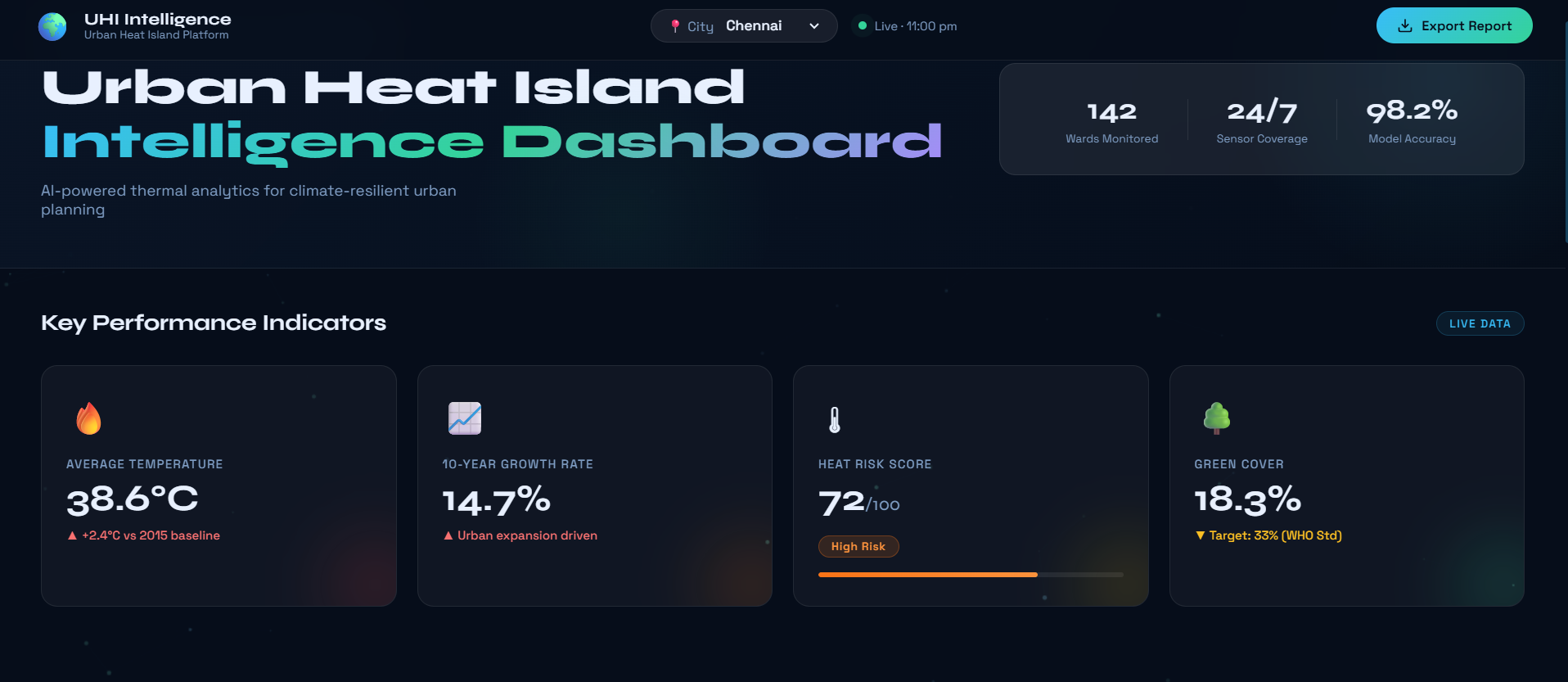
The UHI Intelligence Platform analyzes temperature trends, green cover data, and urban density patterns to generate a real-time Heat Risk Score. It predicts future heat intensity using AI models and recommends mitigation strategies such as tree plantation zones and cool roof implementation areas.
How we built it
We built a full-stack web application using HTML, CSS, and JavaScript for the frontend, with Python-based machine learning models for heat risk prediction. Data visualization tools were integrated to display KPIs, projections, and city-level insights interactively.
Challenges we ran into
Collecting clean and structured urban climate datasets
Simulating realistic prediction models
Designing a dashboard that is both technical and easy to understand
Balancing performance with visual interactivity
Accomplishments that we're proud of
Developed a working AI-based risk scoring model
Built an interactive and responsive dashboard
Generated automated city-level heat mitigation reports
Created a scalable framework aligned with climate action goals
What we learned
Practical application of AI in climate analytics
Importance of clean data for reliable predictions
UI/UX plays a major role in decision-making platforms
Sustainable tech solutions require multidisciplinary thinking
What's next for UHI Intelligence Platform
Integration of real-time satellite and IoT temperature data
Expansion to multiple cities across India
Mobile application development
Deployment on cloud infrastructure for large-scale access
Collaboration with municipal authorities for real-world implementation


Log in or sign up for Devpost to join the conversation.