Inspiration
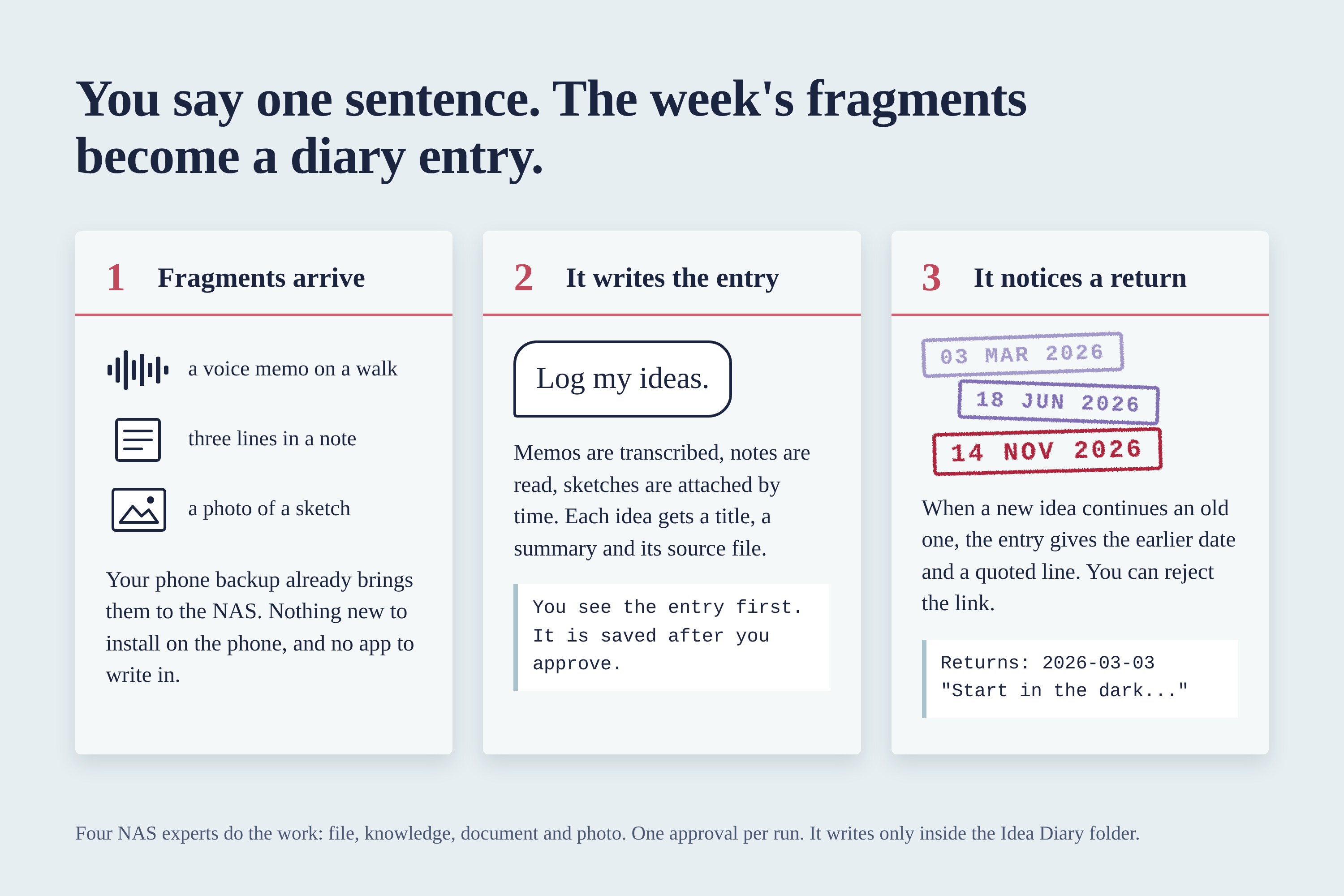
Ideas rarely arrive as finished notes. They arrive as a voice memo recorded on a walk, a photo of a sketch, three lines typed late at night. A phone backup carries all of them to the NAS, where they are never seen again. Months later the same idea comes back and nobody notices it is a return.
I also looked at what is already on UGREEN SkillHub. The 30 official Skills each do one job in one area, and none keeps anything between runs. I wanted a Skill that remembers.
What it does
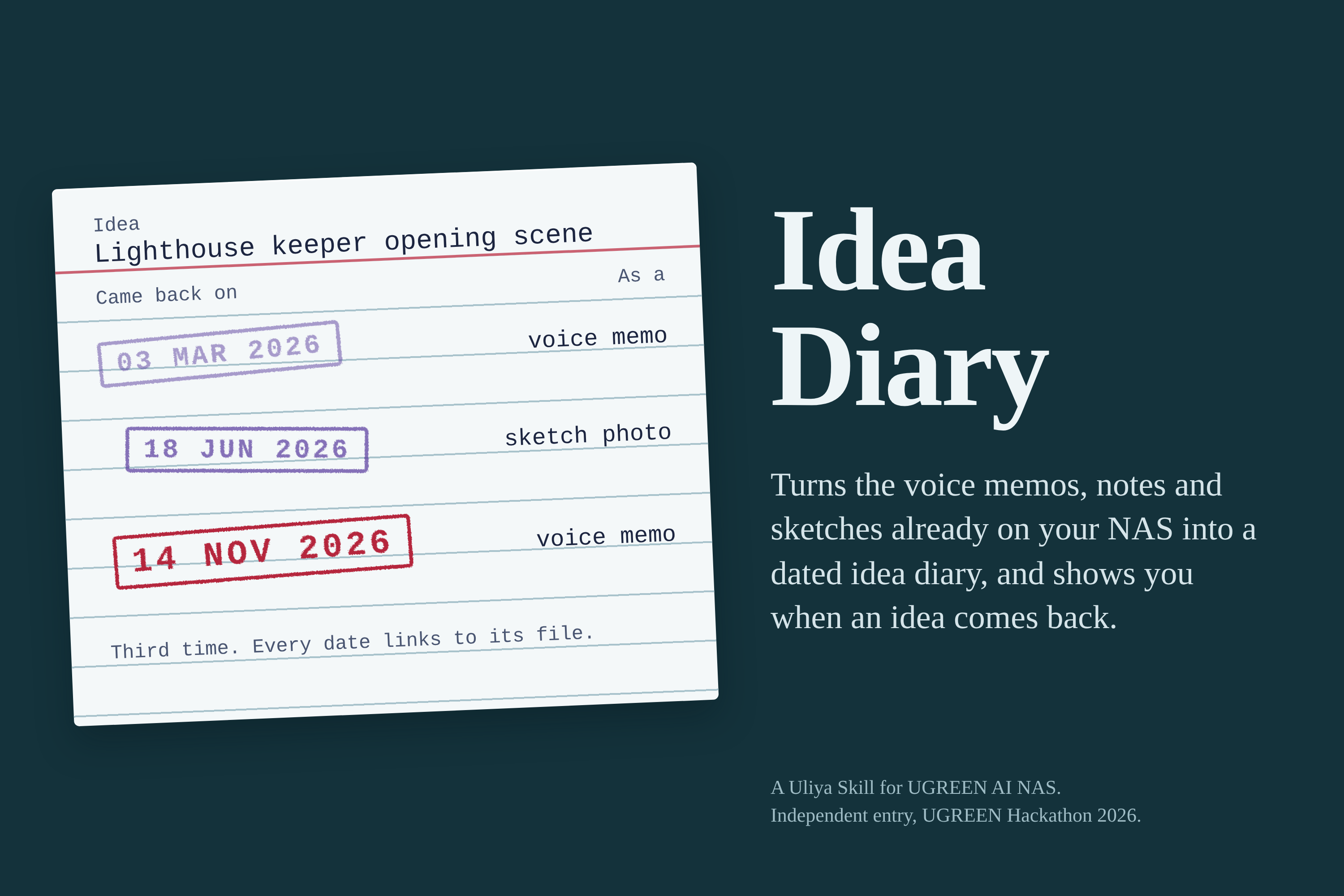
Idea Diary keeps a diary of your ideas without you writing it.
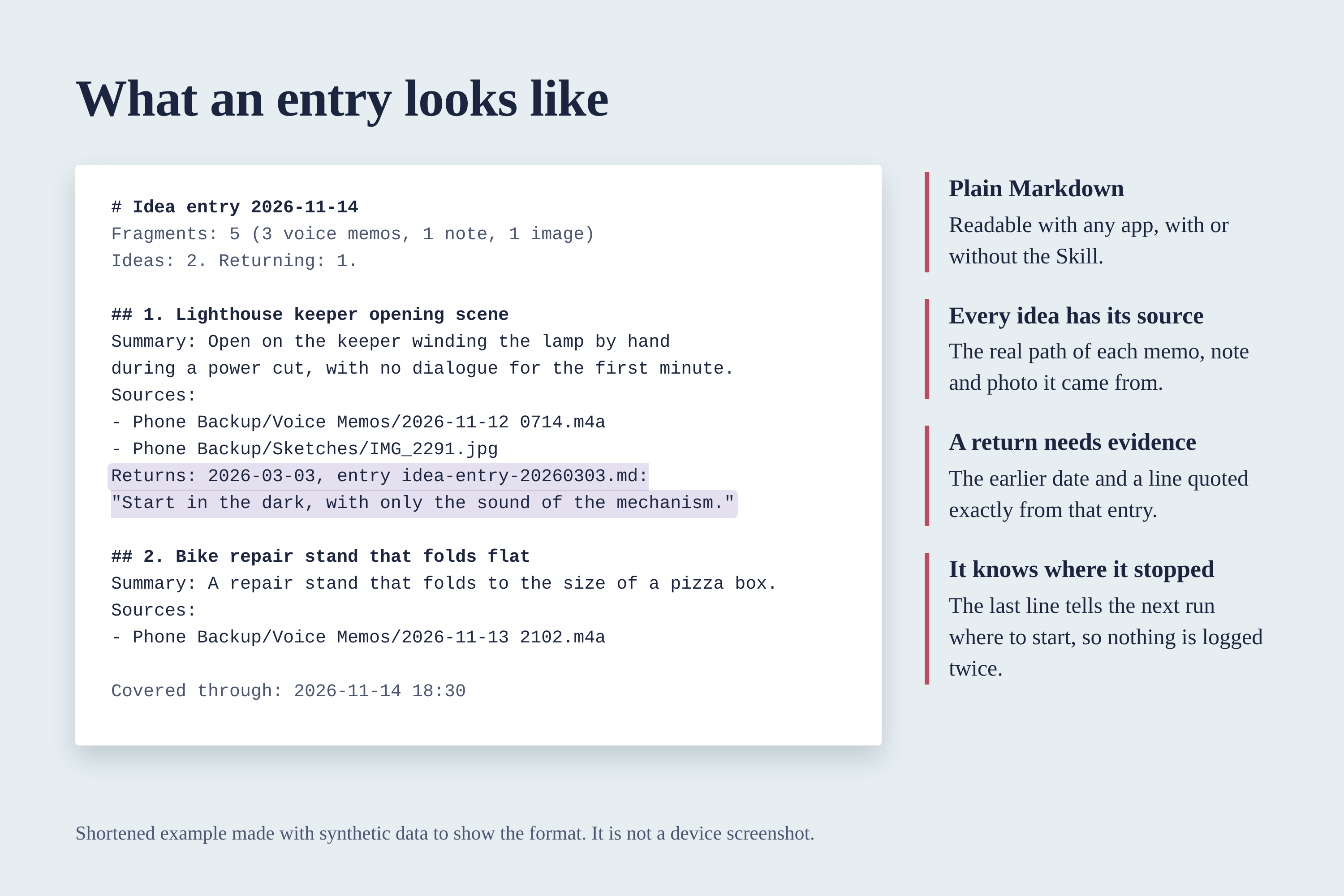
- Log. Say "log my ideas". It reads the voice memos, notes and sketch photos that arrived since the last run and writes one dated entry, with every idea linked to its source file.
- Returning ideas. It compares each new idea with earlier entries. A match is recorded with the earlier date and a line quoted exactly from that entry.
- Remember. Tell it a project name, a tag, or that two ideas are not related. It adds a line to a preferences note and follows it on later runs.
- History. Ask for the history of one idea and get every entry that mentions it, in date order.
- Roll up. On request it writes a one-page index of a month.
The diary is plain Markdown in one folder. The Skill writes only there, and never moves, renames or deletes a source file.
How we built it
I used UGREEN's official Uliya Skill kit 0.7.7 and its capability catalog. The Skill is Markdown only: one SKILL.md and four reference files. It delegates 14 steps to four registered experts: file, knowledge, document and photo.
I worked spec first. Requirements, design and a task list were each written and approved before any Skill file. I used Claude, by Anthropic, to read the catalog, review published Skills for overlap, draft the files and run the official checker.
Challenges we ran into
- No code and no direct access. A Skill can only ask an expert in plain language, so every instruction had to be self-contained.
- No memory by default. I made the diary itself the memory: entries are written once, and each ends with a "covered through" marker that tells the next run where to start.
- Late backups. A memo recorded on Tuesday may reach the NAS on Friday. The Skill goes by arrival time, so it is not missed.
- Overlap. Two official Skills cover single steps I also use. I reshaped the idea around what they do not do: memory across runs, and one record built from voice, notes and photos.
- No device in Round 1. I could not run it, so I wrote a validation plan in its place.
Accomplishments that we're proud of
- It passes the official checker with 0 errors and 0 warnings.
- Every step is mapped to a published capability.
- A log run asks for one approval.
- A returning idea is always backed by a quoted line, and the user can reject it.
- Failures are reported as they are. A memo that cannot be transcribed is listed, not guessed.
What we learned
A static pass is not proof that a Skill works. Designing around approvals and missing results took more thought than the main flow. Checking what already exists changed the idea for the better.
What's next for Idea Diary
If selected as a finalist, I will run the eleven test cases in the validation plan and settle the eight assumptions that only a device can answer. After that: describing sketches once the vision capability can handle a batch of images, and a retry for memos that failed to transcribe.
Built With
- claude-code
- markdown
- ugos
- ugreen-ai-nas
- uliya
- uliya-skill-kit
