-
-
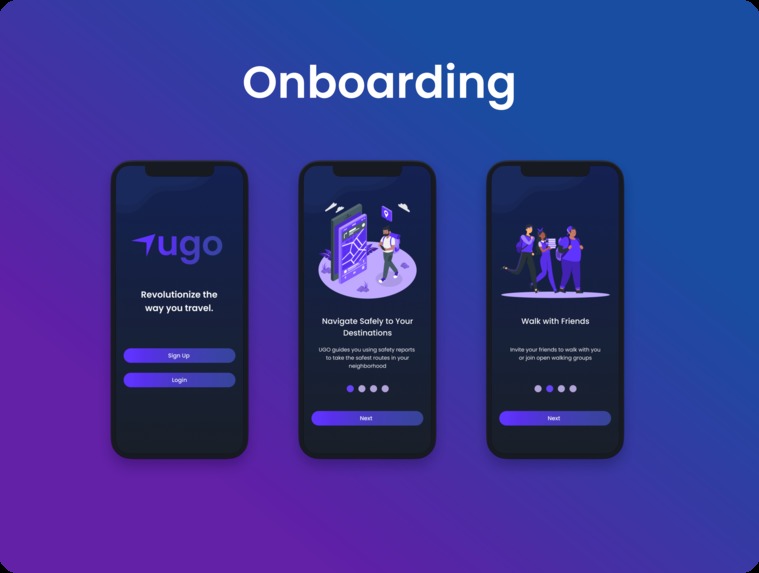
Onboarding
-
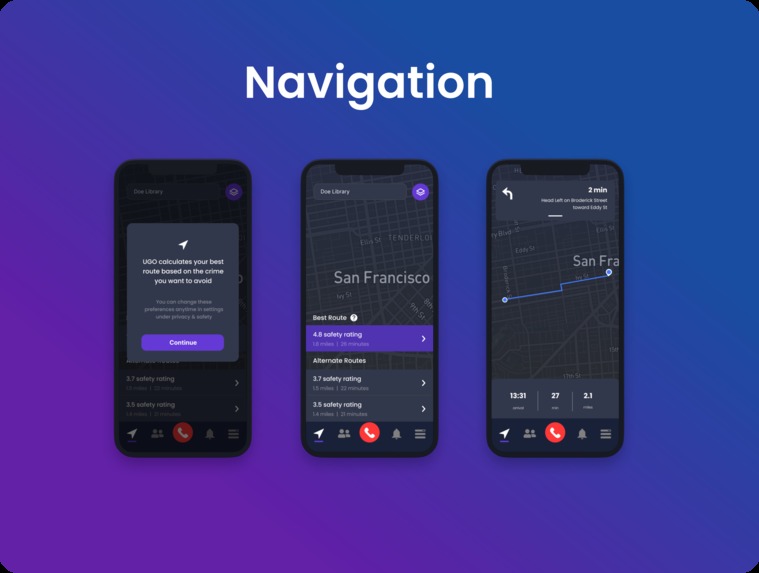
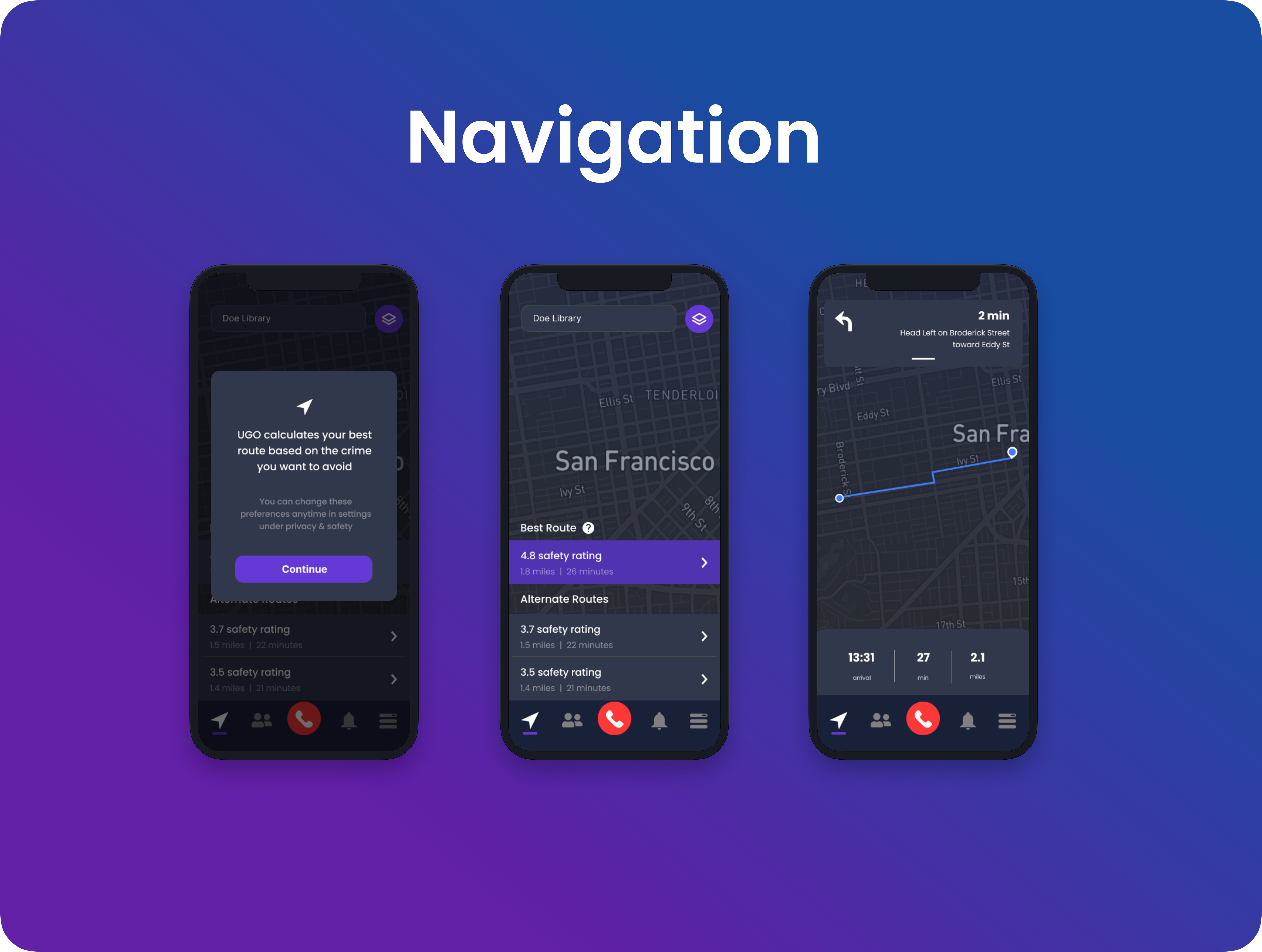
Navigation
-
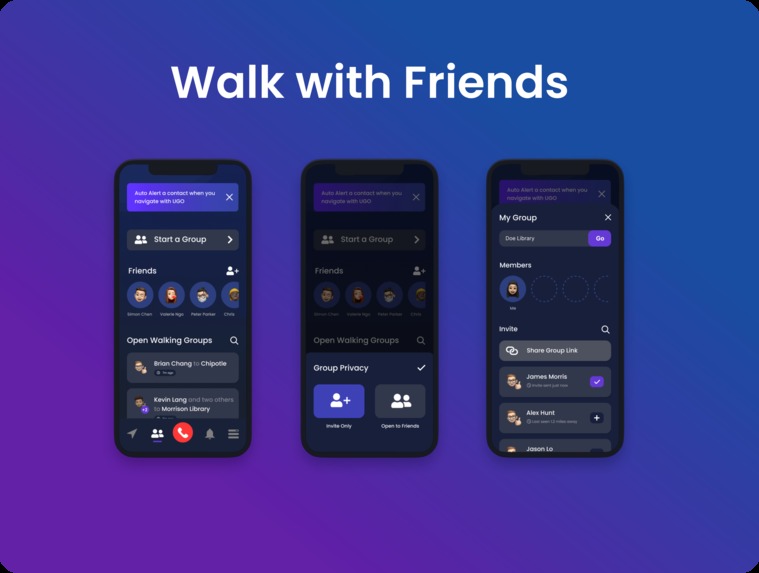
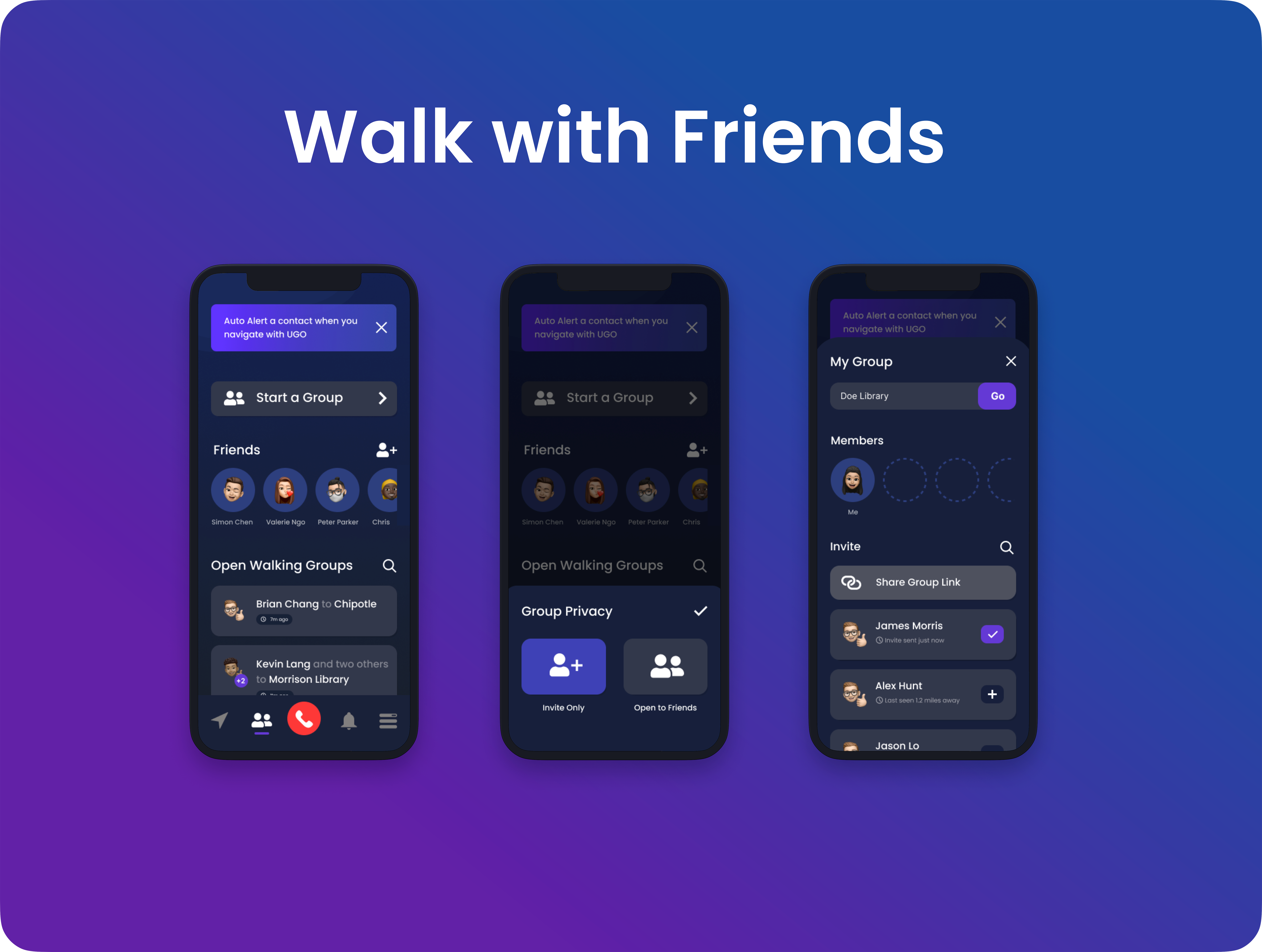
Walk with Friends
What is the problem your solution addresses?
As three students living through microaggressions and racial violence, we noticed increasing rates of violence (e.g. increased cases of AAPI hate crimes in NYC) and fear of the outside world (e.g. the pandemic’s after effects) in our corresponding cities. In terms of statistics, we discovered that New York City experienced a drastic 343% increase in anti-Asian hate crimes. Similarly, San Francisco’s rate jumped to an alarming 567% increase, and the violence doesn’t stop there. Many marginalized groups experience similar physical and emotional racial prejudice. These crimes not only affect the victims but also those with a similar identity. Besides racial identities, all genders also reported experiencing heightened anxieties exploring the outside world due to increased crime rates. Our application solves the problem of not feeling safe when walking outside alone.
Why did you pick this solution, and how does it address the problem?
As mentioned previously, we picked this solution because it’s a very important topic to us. We addressed the problem through UGO’s features. UGO provides a solution to alleviate the stress experienced when walking outdoors, especially alone. With thorough research on navigation technologies and peer research, we discovered that including the feature of traveling with peers reduces anxiety. UGO brings home increased awareness of local criminal activities to inform folks to make educated travel decisions. UGO offers extensive features such as the option to customize settings to alert the user on specific incidents. Additionally, the application includes heat map technology that displays an area’s population in real-time, allowing the user to comfortably map their route. UGO’s advocacy for social change is deeply connected with our hopes to see more folks outdoors without worrying about being alert of their surroundings and being weighed down by anxieties of facing a dangerous situation.
Inspiration
According to Jakob’s law, an intuitive user experience is built by familiarity - no need to reinvent the wheel! We took inspiration from Google and Apple Maps - two mapping software millions of users navigate daily in order to create a unique yet intuitive experience. We also drew inspiration from current safety and crime reporting apps, doing a thorough competitive analysis to discover their main features and gaps.
User research
From talking with college students who walk around their neighborhood every day, we discovered several things - 1) walking with others was almost always preferred, 2) users often pre plan their routes so they don’t get lost, and 3) they often alert roommates and friends when they leave their house at night. From here, we started brainstorming a list of key features to meet user needs. Once we had finished wireframing, we prototyped our low fidelity design and asked 2 users to accomplish 3 different tasks as well as note whether they would use the app and how they felt about its interface. We overall got positive feedback, but made changes based on confusion on UX language, unclear interaction, and visual hierarchy.
What it does
UGO has 4 main features. The first is viewing your neighborhood by heat maps, allowing the user to see geographic clusters of crime reports as well as user activity. The second is UGO’s safety navigation feature, allowing the user to pick a location and choose a route based on safety ratings and distance from crime reports. The third is our friend system, where users can create a walking group to a destination or join an existing one to easily rendezvous with friends. Lastly is the ability to get notifications of recent crime reports from local police, giving you the geographic location of the report as well as its distance from you.
How we built it
After our initial research stage, we developed two How Might We statements. How might we make college students feel safer walking in their city? How might we connect student travelers together for a safer journey? These two questions helped define what issues we wanted to solve as we went into our design stage. We then created a list of product goals and ideated features, grouping them by category and practicality of design/implementation. After, we built a user flow of all the possible interactions one could have with the app, transferring that into about 30 low-fidelity wireframes. We prototyped it with Figma and ran 2 usability tests, integrating the feedback, and then finally moved into high fidelity design!
Challenges we ran into
One challenge we ran into was the market viability of the app - there are many safety and crime reporting tools on the app store. However, we soon realized that many of them were either paid, had poor UI, or didn’t plan routes based on reported incidents. They also didn’t have any social features besides posting on a live “community bulletin board,” but app store reviews complained that the bulletin board often filled up the map with unnecessary reports. Another challenge we ran into was sourcing candidates for user interviews and testing - we were grateful to get 5 total candidates, but finding someone in our time frame was tough.
Accomplishments that we're proud of
Visually, we’re proud of how many screens we were able to convert high fidelity! We have about 80 screens total, about 30 of them loading animations. We’re also glad we were able to do usability tests, as input from our target audience gave us key feature ideas. Lastly, we think this app is very viable and could be widely used by college students and any other frequent walker!
What we learned
Through a combination of article research, competitive analysis, and user interviews, we learned of key safety trends and pain points that our solution could solve. Urban cities are seeing an enormous spike in hate crimes and street violence over the last several years, and with the pandemic people are feeling even lonelier.
What's next for UGO
In the future, our team will tackle in-depth crime mapping, include more statistics to encourage learning, and conduct a round of high-fidelity user testing to refine more features of the app.
Built With
- figma


Log in or sign up for Devpost to join the conversation.