-
-
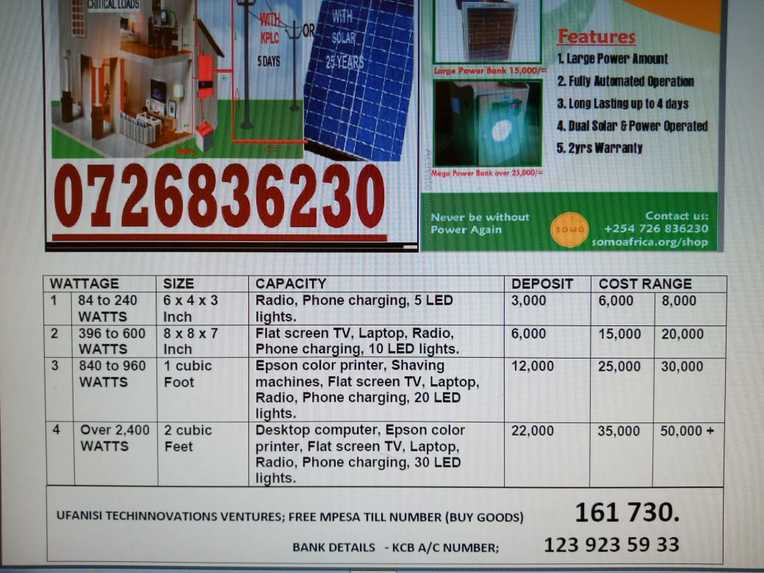
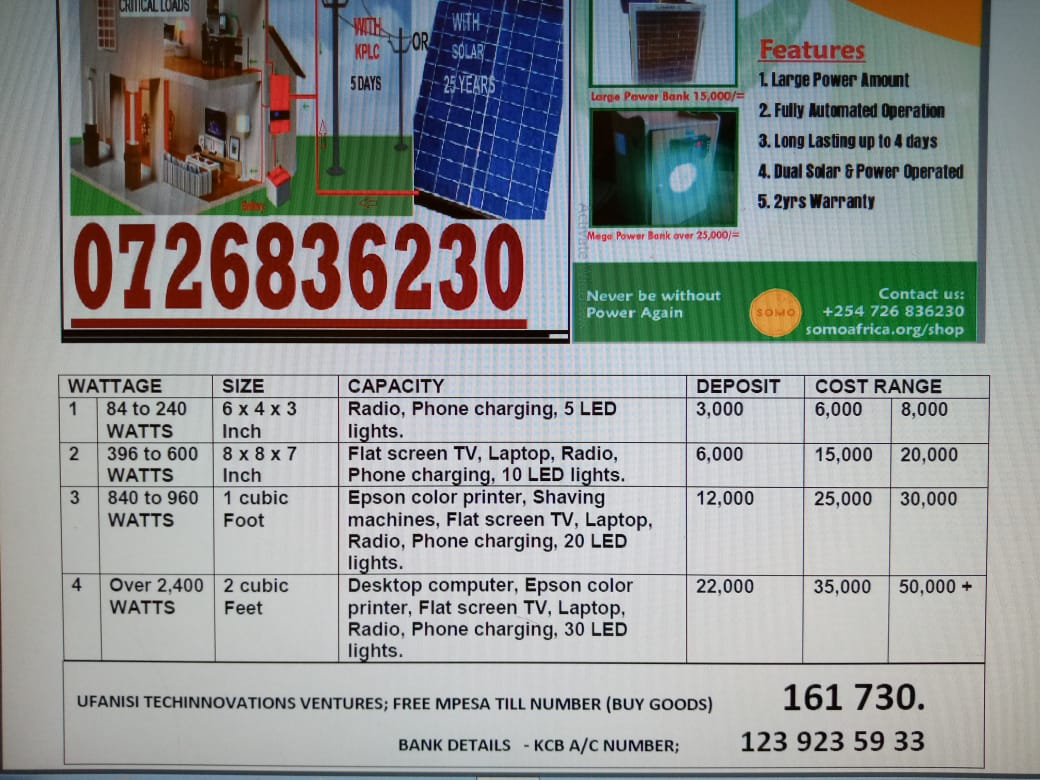
Price List of our products
-
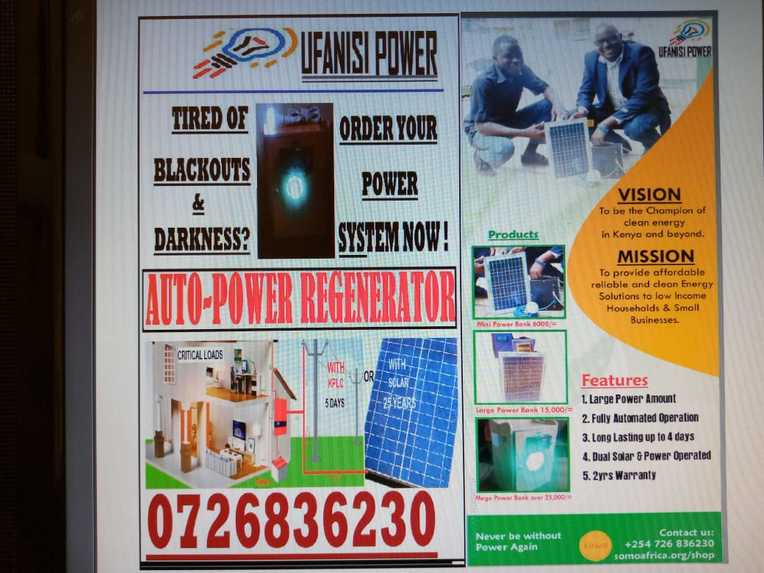
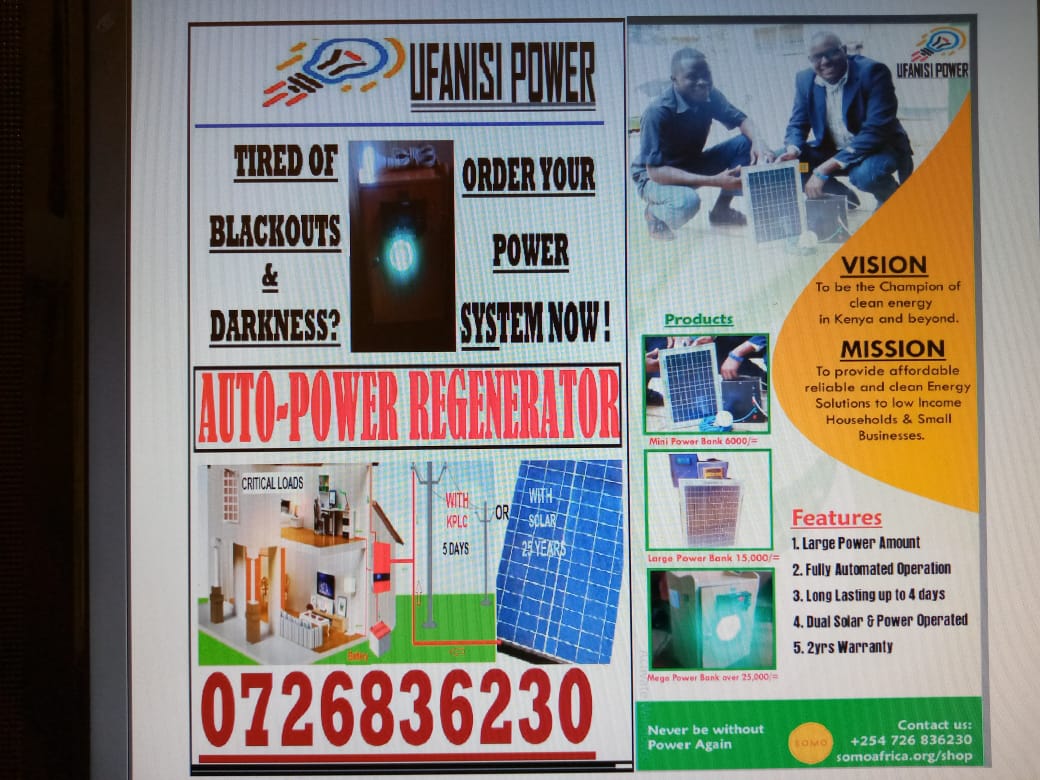
Leaflet of our products
-
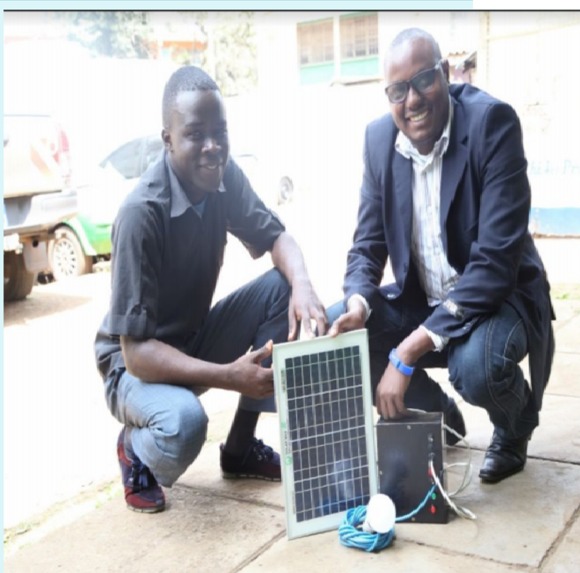
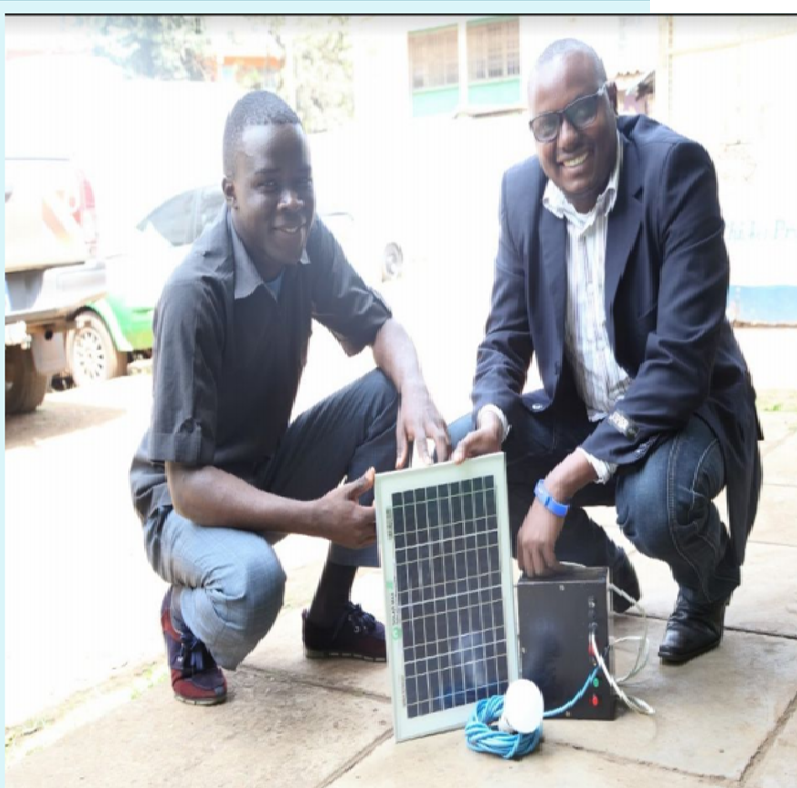
Co-Founders
-
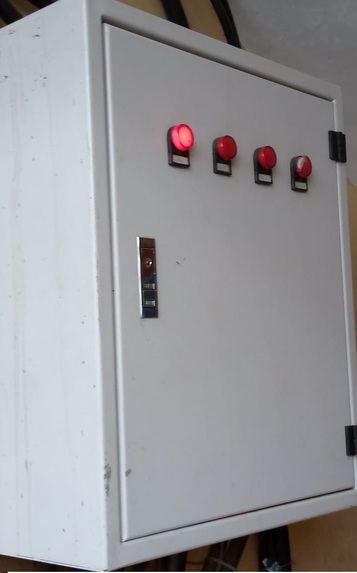
1kw Power Bank
-
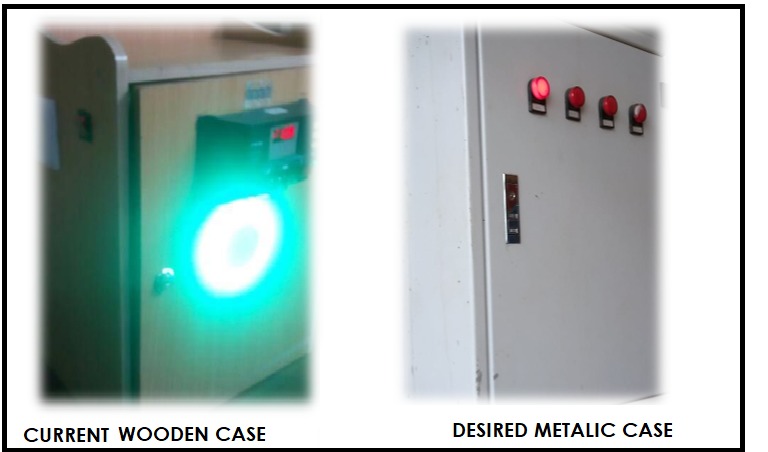
2 KW power bank
Inspiration
Since schools closed in Kenya, due to COVID-19, the ministry of education and other agencies have indicated that learners should undertake online learning or technology-mediated learning on TV, radio, ed-tech apps, and mobile phones. While such learning may take place in some urban areas, for many marginalized children in slums and rural, COVID-19 school closures are a deep challenge. Learning mediated through ed-tech remains out of reach for many disadvantaged children due to power challenges. In slums and most rural areas, for example, electricity does not reach households, excluding children from online learning.
We champion high quality, affordable, clean lighting, and power solution to enable children in poor rural and urban slums to study at home during and after Corona-pandemic.
FREQUENT POWER OUTAGES; The Kenya Power and Lighting Company, a government corporation, owns and operates most of the electricity transmission and distribution systems in the country and sells electricity to over 5.9 million customers (KPLC 2017). Thus, with over 5.9 million households and businesses relying on KPLC as a major source of electricity, frequent power blackouts have been catastrophic disruptions to the businesses and household power consumers that must be addressed.
LACK OF AFFORDABLE SOLAR POWER SOLUTION IN RURAL KENYA - According to Innovation and Renewable Electrification in Kenya, there are only 320,000 rural households with solar power connections amounting to only 4.4% of all rural household in Kenya. The UNEP (Kenya: Integrated assessment of the Energy Policy) cites that more than 83 percent of Kenyan rural population use firewood and kerosene for lighting.
What it does
The Ufanisi Back-up is an innovative power unit that introduces the unique concept of low-cost power backing systems running both on mains and solar power and employing locally available components to create an effective power backup system that conveniently addresses the problem of lack of clean affordable power and frequent power outages. Our unique value propositions;
Superior Quality - Hand Fabrication. Our product is hand fabricated ensuring high-quality parts are well installed as opposed to automated soldering of surface mount onboard electronic components.
Much Higher Power at Lower Cost. The Ufanisi backup uses high capacity and high quality yet low-cost lead-acid batteries for power storage ranging from 84 watts to 4500 watts while competing products use low power expensive lithium-ion batteries of 6 to 22 watts at most.
Dual Power Operation Ufanisi products can be powered by either solar or mains, this enables people without the mains power to obtain clean free energy. This also enables people with mains connection to avoid blackouts and the cost of the purchasing and installing solar panels or expensive power generators.
Pay as you go system - This will help parents afford the system as will not need upfront payment of the whole price.
How we built it
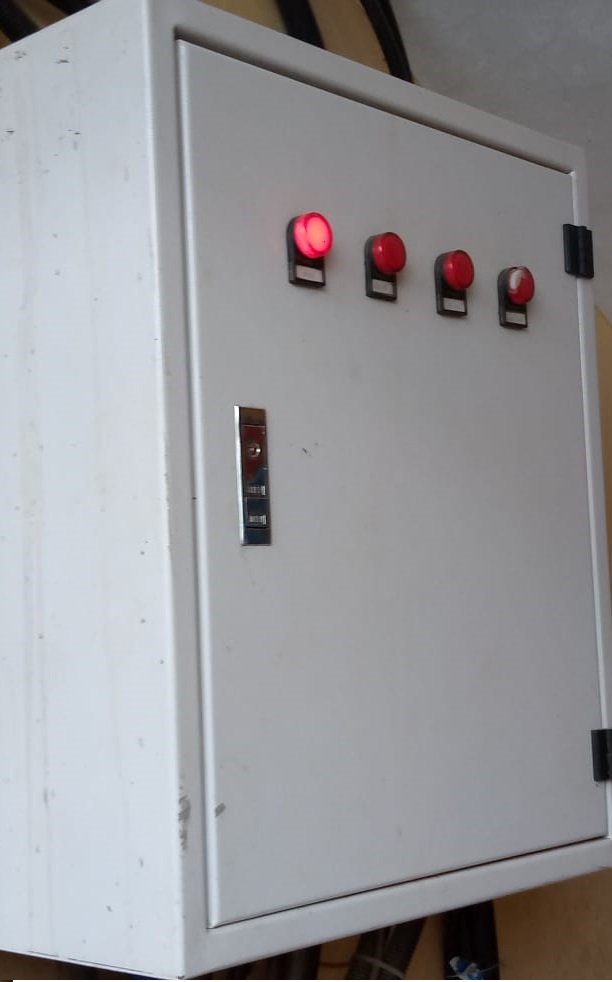
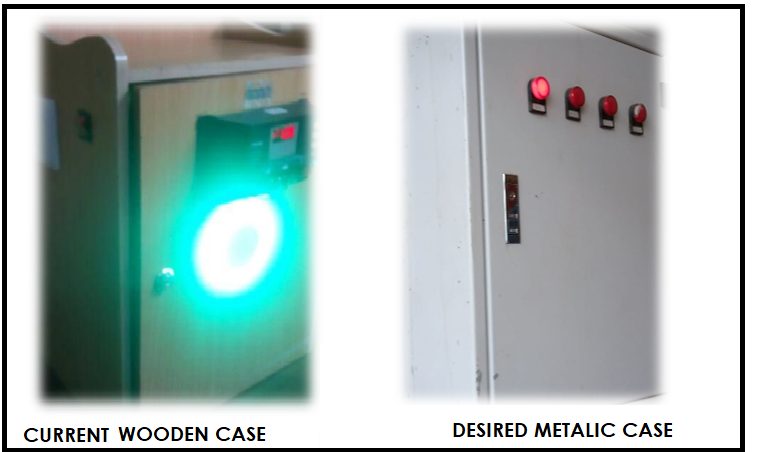
The ufanisi backup comprises of a smart battery charging control circuitry fabricated from the microcontroller module. The unit is automated by the use of a changeover system that senses both light and dark or absence or presence of electricity to either turn on or off as appropriate. The product stores electric charge in high efficient self-servicing power batteries and all the components are housed in the strong fabricated housing unit.
Challenges we ran into
Illegal Copying of Technology Innovation - Our product innovation stands the risk of being copied by competitors, this may deny our business the competitive edge we possess from our research. Lack of capital for mass production and mass marketing of the product to stimulate demand.
Accomplishments that we're proud of
To years of product sales over 20 units have been sold to customers all over the country, Admission into SOMO-AFRICA entrepreneurship training program.
What we learned
Since schools closed in Kenya, the ministry of education and other agencies have indicated that learners should undertake online learning or technology-mediated learning on TV, radio, ed-tech apps, and mobile phones. While such learning may take place in urban areas, for many marginalized children in slums, COVID-19 school closures is a deep challenge. Learning mediated through ed-tech remains out of reach for many disadvantaged children due to power challenges. In slums and rural areas, for example, electricity does not reach households, excluding children from online learning.
What's next for UFANISI CLEAN ENERGY AND STUDY LIGHTING FOR SCHOOL CHILDREN
Establishing and equipping 50 units per day production workshop. Obtaining a patent from KIPI. Reaching 50,000 needy children with affordable Ufanisi power and lights kits. Mass marketing to promote the uptake of our product. Obtaining KEBS certification of quality.
Built With
- green-energy
- learning
- power
- solar


Log in or sign up for Devpost to join the conversation.