-
-
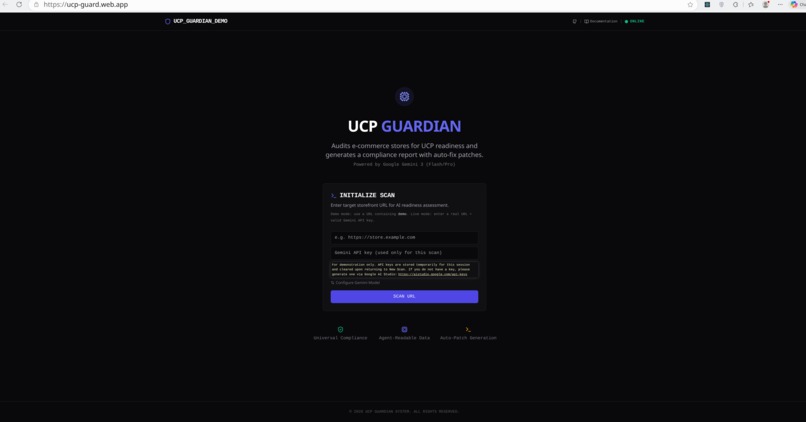
Home
-
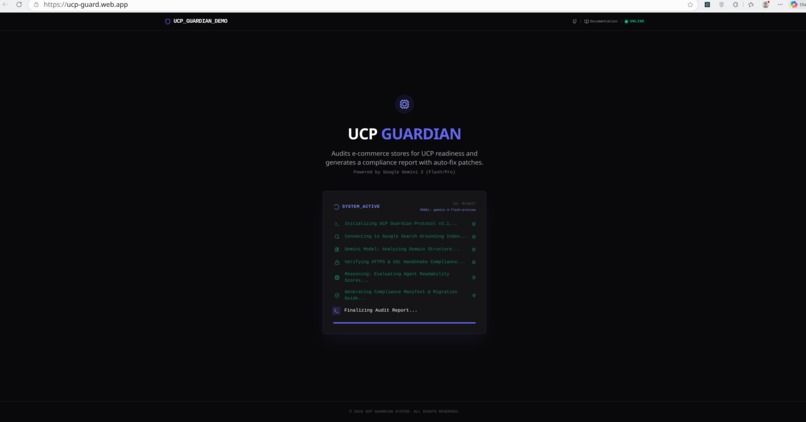
Demo analysis
-
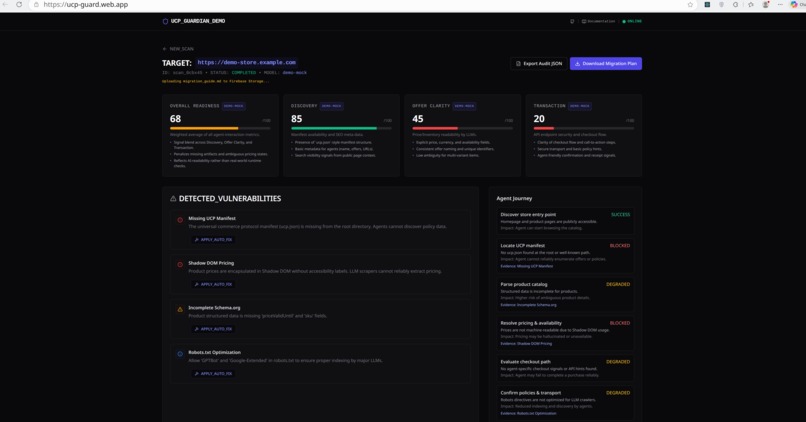
Demo Report
-
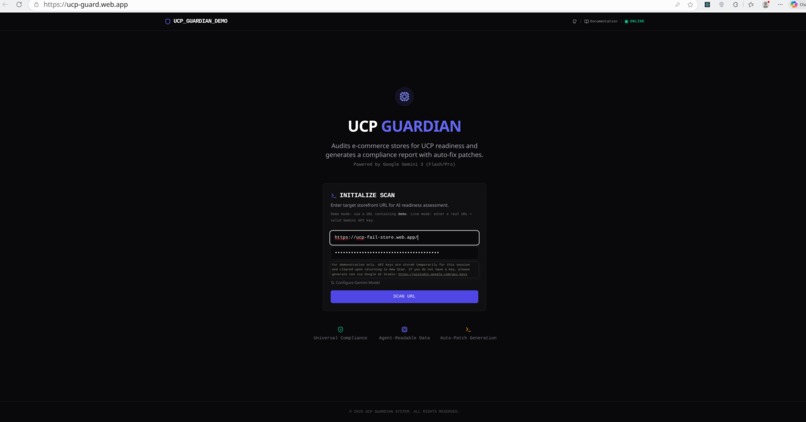
ucp fail store
-
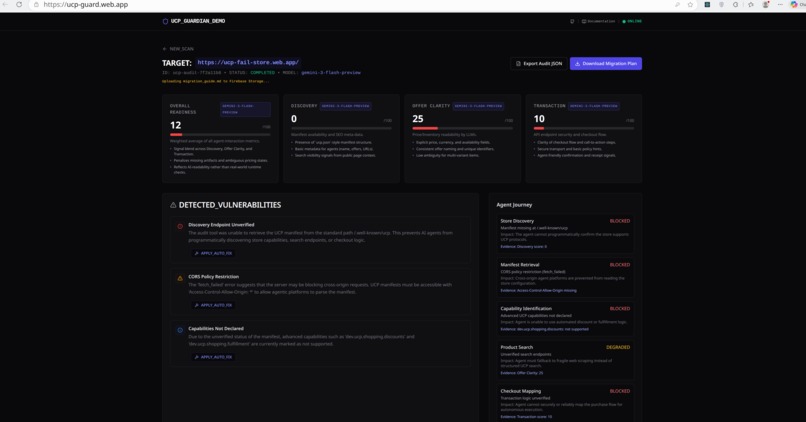
ucp fail store report
-
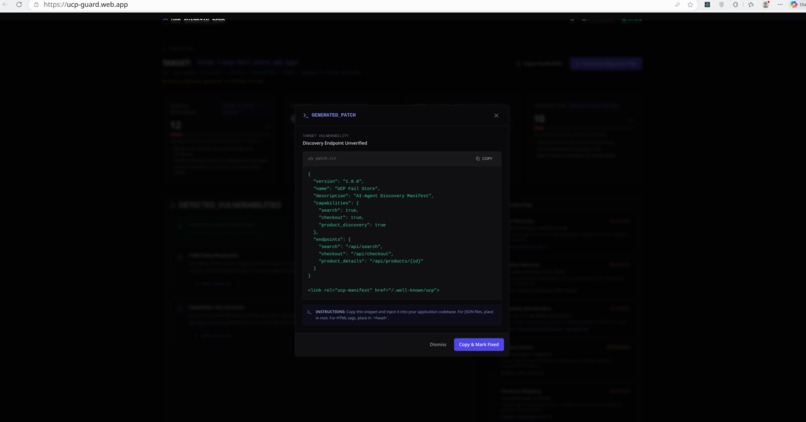
ucp generated patch
Inspiration
With the release of the Universal Commerce Protocol (UCP), ecommerce is entering a new phase where AI agents, not just humans, need to discover, understand, and transact with online stores.
However, most existing ecommerce platforms are built for human users and traditional browsers. From an AI agent’s perspective, many stores are difficult or impossible to reason about due to missing protocol artifacts, unclear pricing signals, and opaque checkout flows.
I was inspired to build UCP Guardian as a practical way to answer a simple but critical question for merchants:
“How ready is my store for agent-driven commerce?”
What this project does
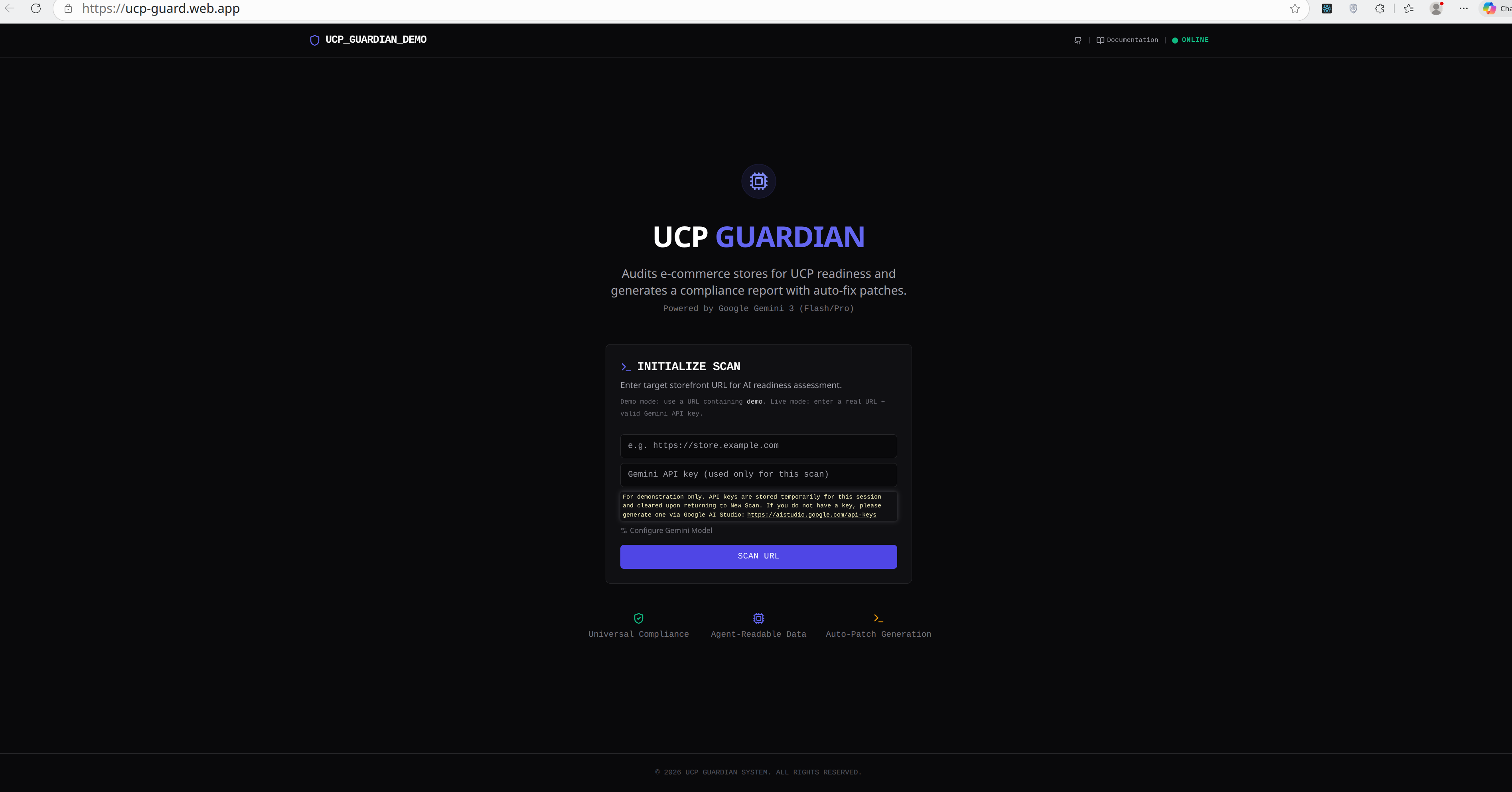
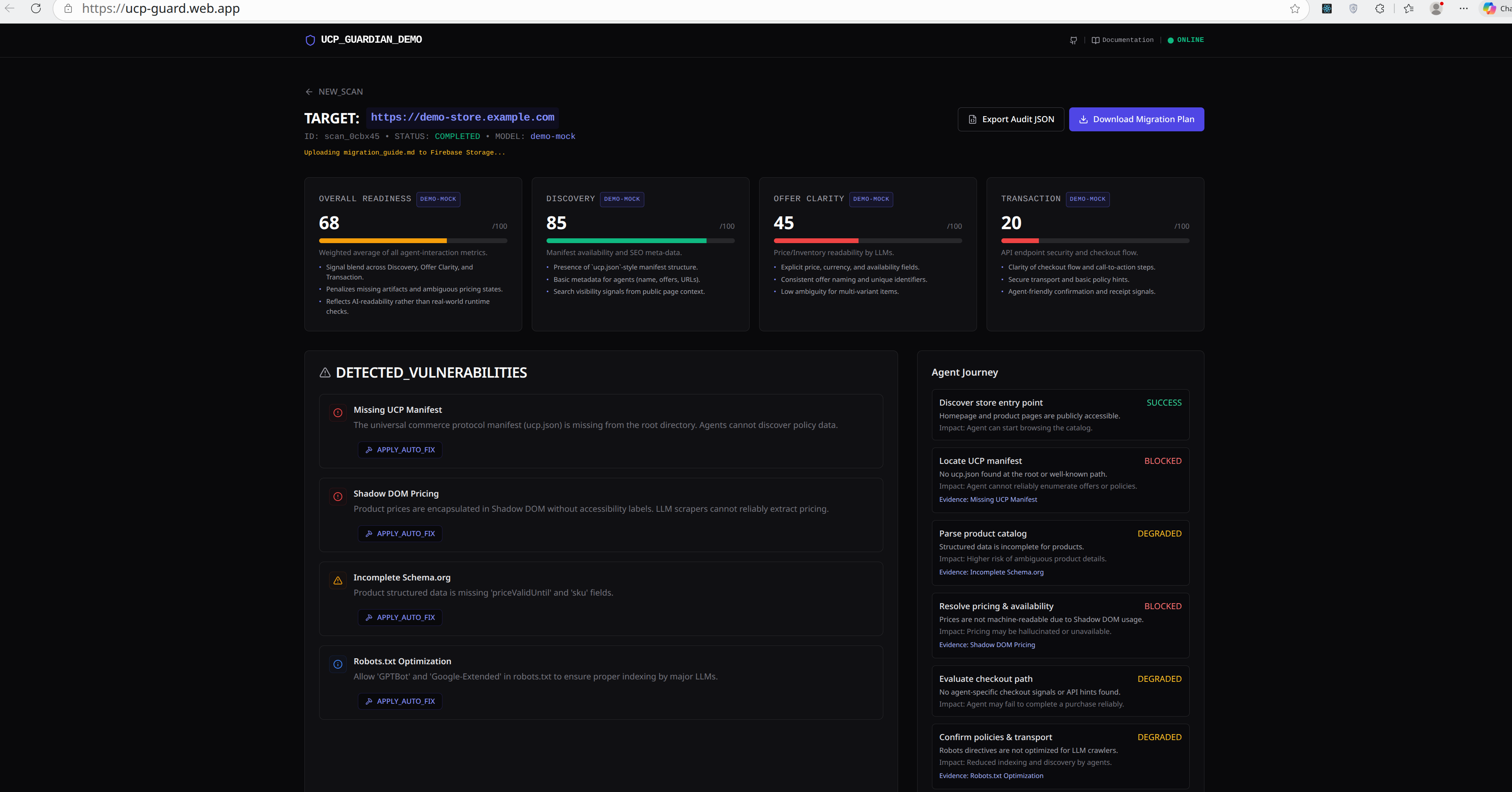
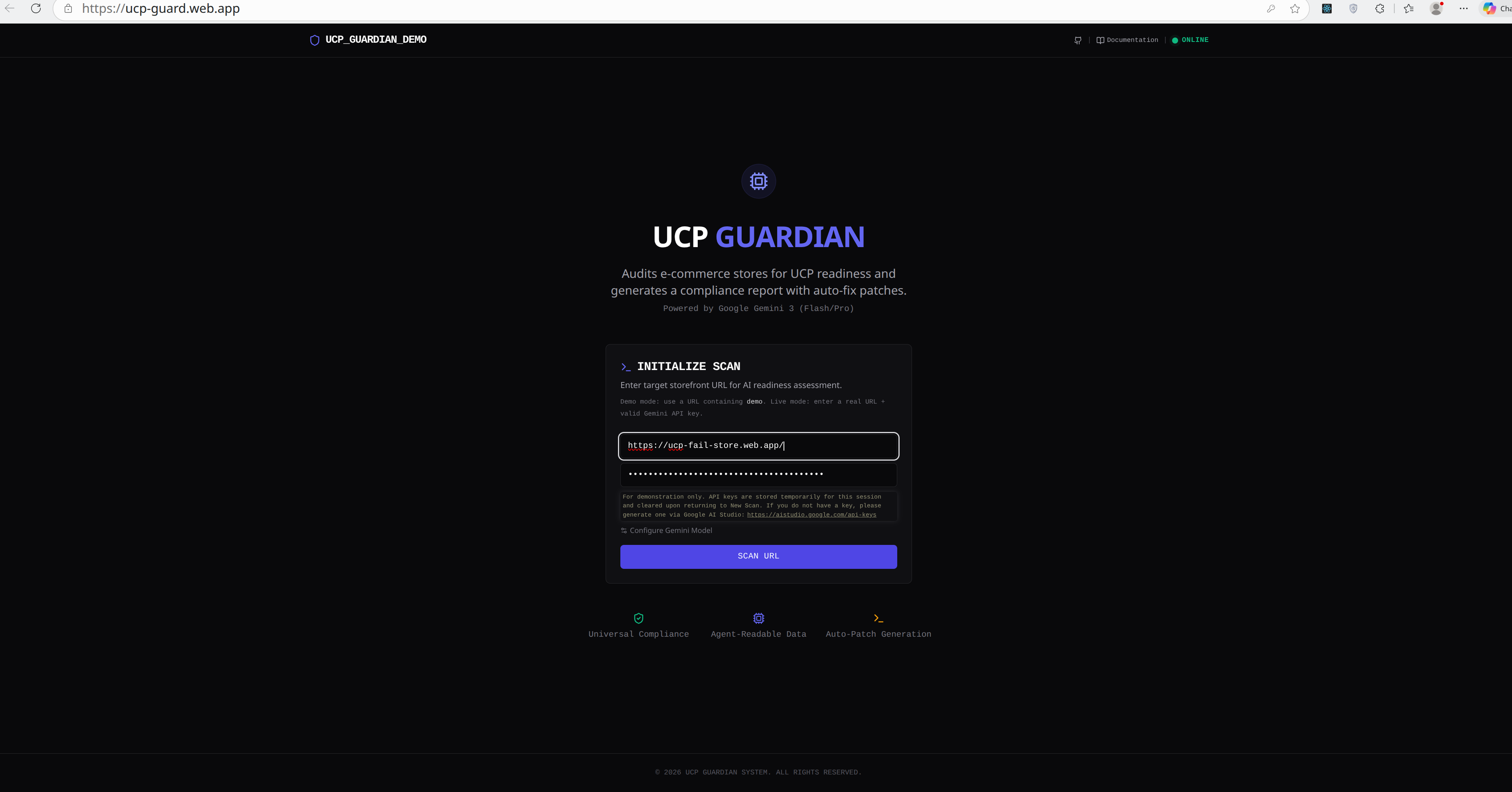
UCP Guardian is a demo auditing tool that evaluates how well an ecommerce storefront aligns with the Universal Commerce Protocol.
Given a storefront URL, the application:
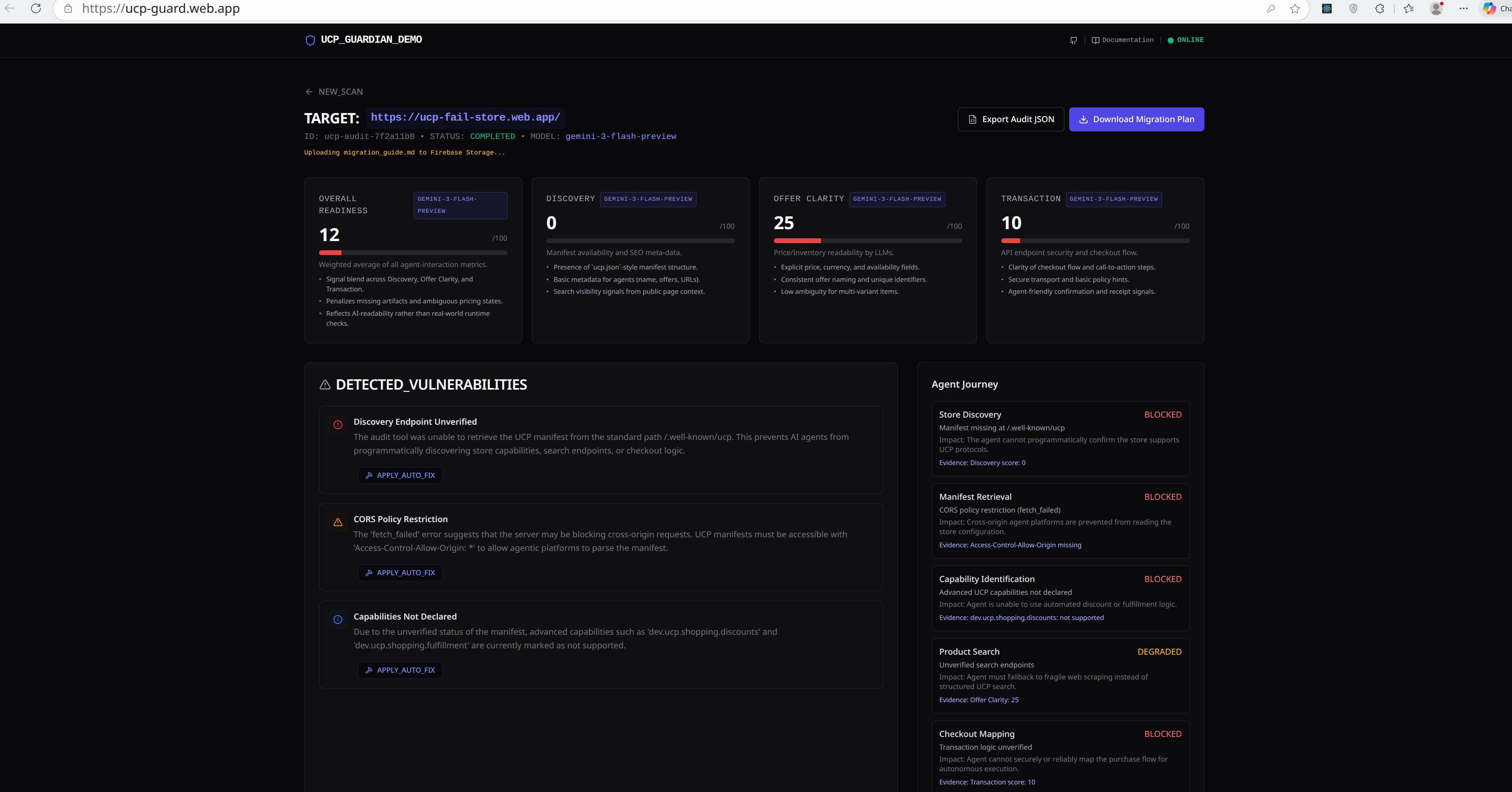
- Checks for UCP discovery signals such as
/.well-known/ucp - Analyzes AI-readability across discovery, offer clarity, and transaction readiness
- Simulates an AI agent’s journey through the store
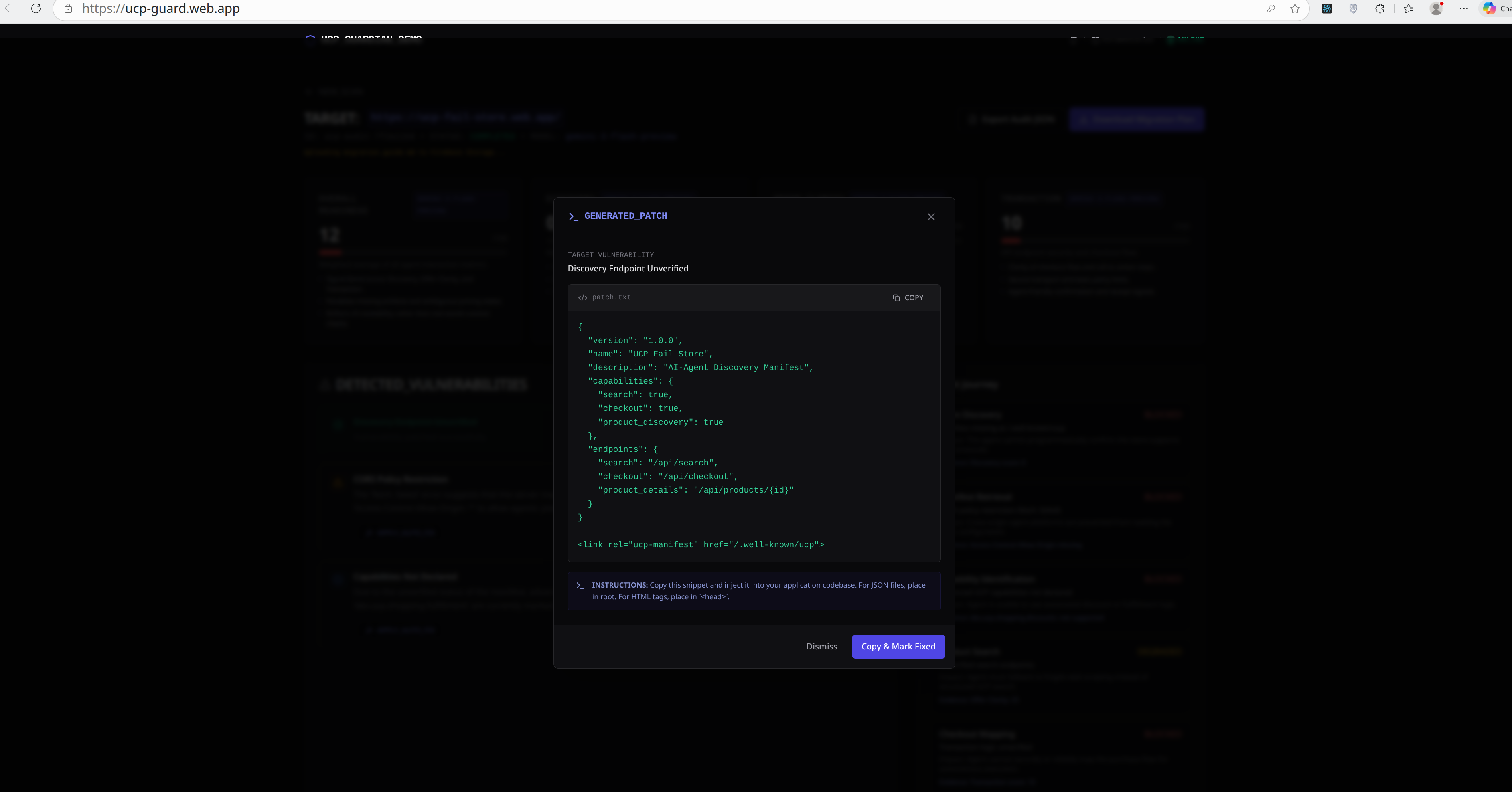
- Generates actionable artifacts, including a UCP manifest and a migration guide
- Explains why certain failures block autonomous agents, not just what is missing
The goal is not to build a full ecommerce platform, but to provide clear diagnostics and guidance for merchants preparing for the agentic commerce ecosystem.
How I built it
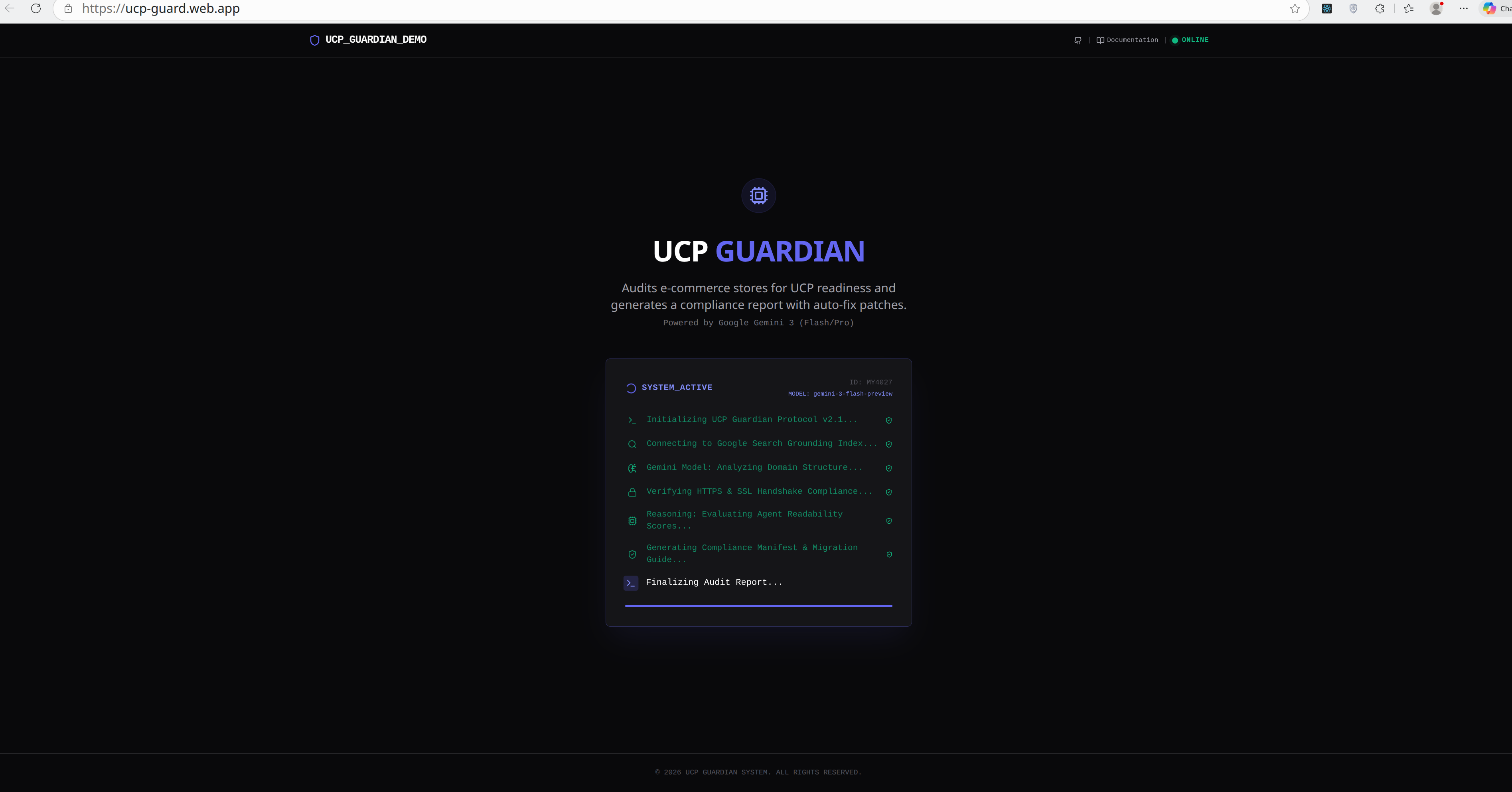
UCP Guardian is a browser-based application built with React and TypeScript.
At the core of the system is Google Gemini 3, which acts as a reasoning engine rather than a simple chat interface. Gemini is used to:
- Analyze storefront signals and protocol artifacts
- Interpret ambiguous or missing metadata from an agent’s perspective
- Generate migration guidance and patch suggestions
- Produce a narrative agent journey explaining success and failure points
For demonstration purposes, the app supports two modes:
- Demo mode, which produces deterministic mock results without requiring an API key
- Live scan mode, which uses Gemini 3 models to perform real analysis when a valid API key is provided
In a real production system, the same frontend could connect to a high-performance backend with a Go-based crawler and API services, while Gemini continues to handle reasoning and analysis.
Challenges I ran into
One of the main challenges was distinguishing between protocol discovery and full transactional compliance. A store can be discoverable by AI agents while still lacking the runtime infrastructure needed for autonomous checkout.
To address this, I designed UCP Guardian to clearly separate:
- Structural readiness (discovery and declaration)
- Runtime readiness (transactions and fulfillment)
Another challenge was ensuring that AI-generated feedback remained actionable and not overly generic. Careful prompt design and scoped reasoning were required to keep outputs relevant and grounded.
What I learned
This project reinforced that agentic commerce is not just about APIs — it is about clarity, structure, and trust from an AI agent’s point of view.
I also learned how powerful Gemini 3 can be when used as a reasoning component inside a system, rather than as a conversational chatbot. Treating the model as an “AI auditor” unlocked much more useful and explainable behavior.
What’s next
Future work could include deeper schema validation, richer transaction simulations, and integration with real ecommerce platforms. However, for this hackathon, the focus is on demonstrating how AI agents reason about commerce readiness — and how merchants can prepare for that future.

Log in or sign up for Devpost to join the conversation.