Inspiration
Our inspiration came from the "care gap" faced by over 106,000 young people in Indonesia when they leave their orphanages. Real stories, like those of Anas & Syarifuddin, show that they are forced into independence without practical skills like financial management or how to handle a job interview. The startling fact that 90% of them are in these institutions due to family poverty, not because they are orphans, made us realize the problem is a lack of opportunity and preparation. We were moved to build a digital bridge that gives them a fair starting line in life.
What it does
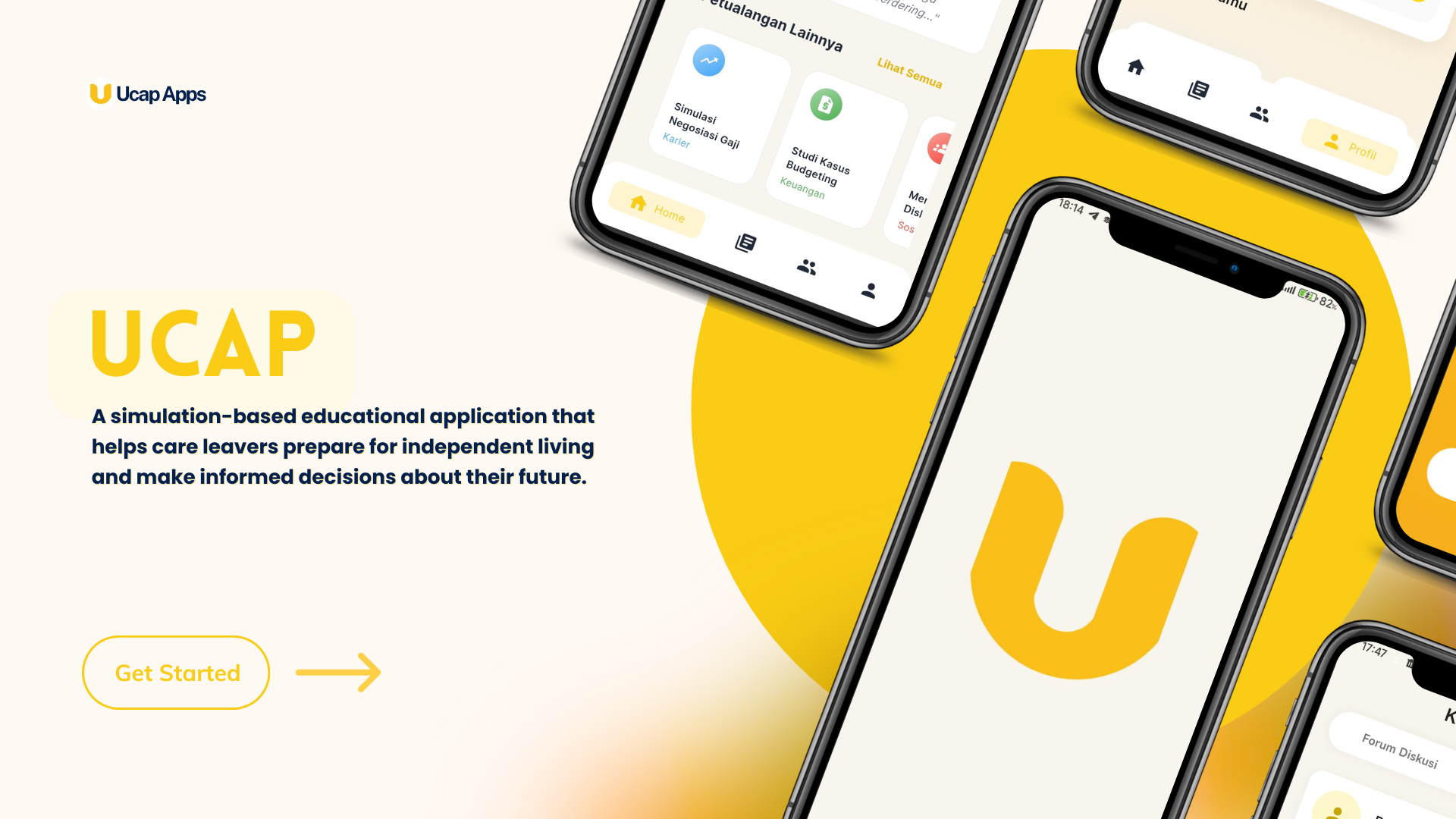
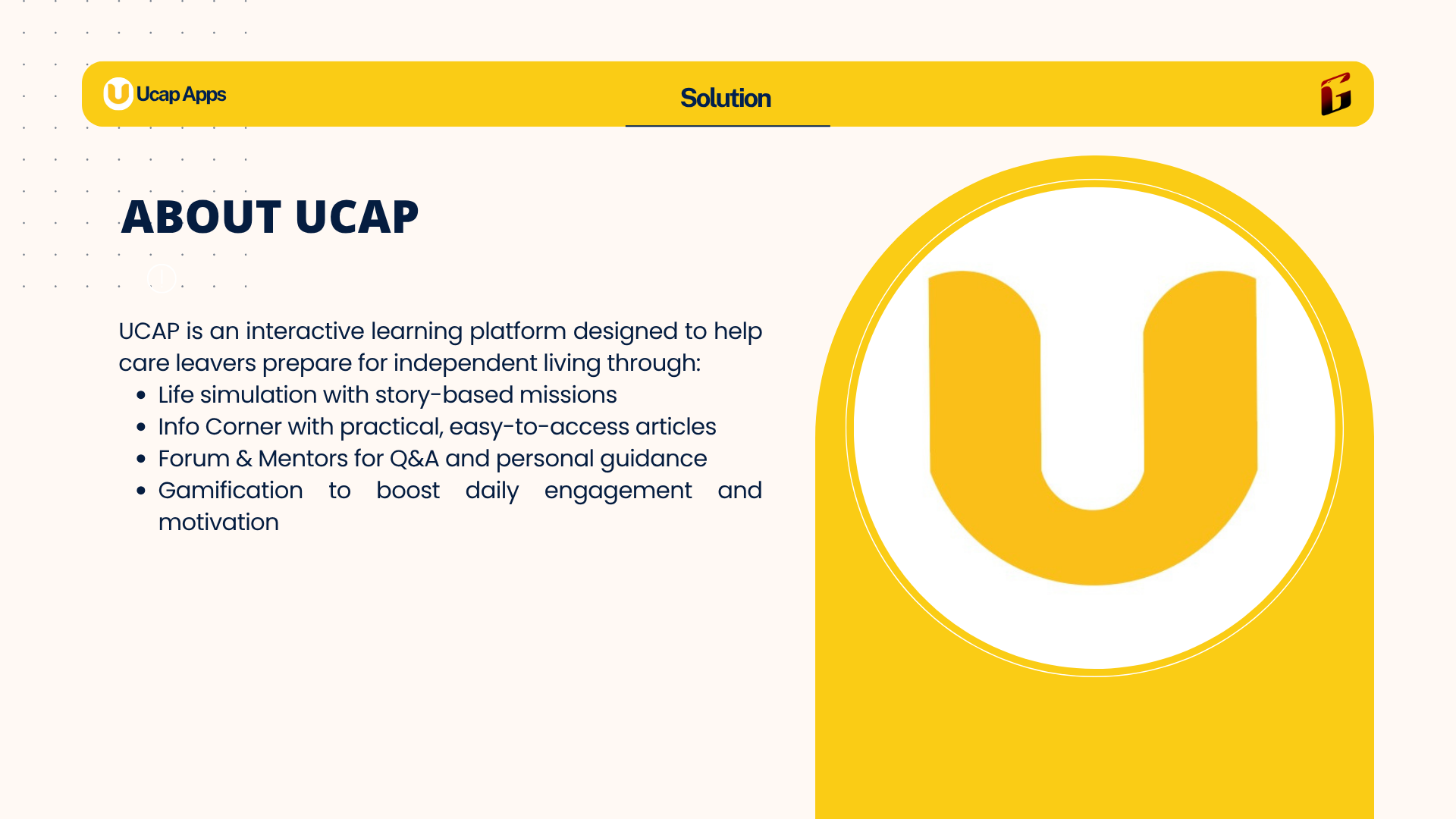
Ucap is an interactive learning platform designed to prepare care leavers for independent life. The app functions as a life-skills "gym" through four main features:
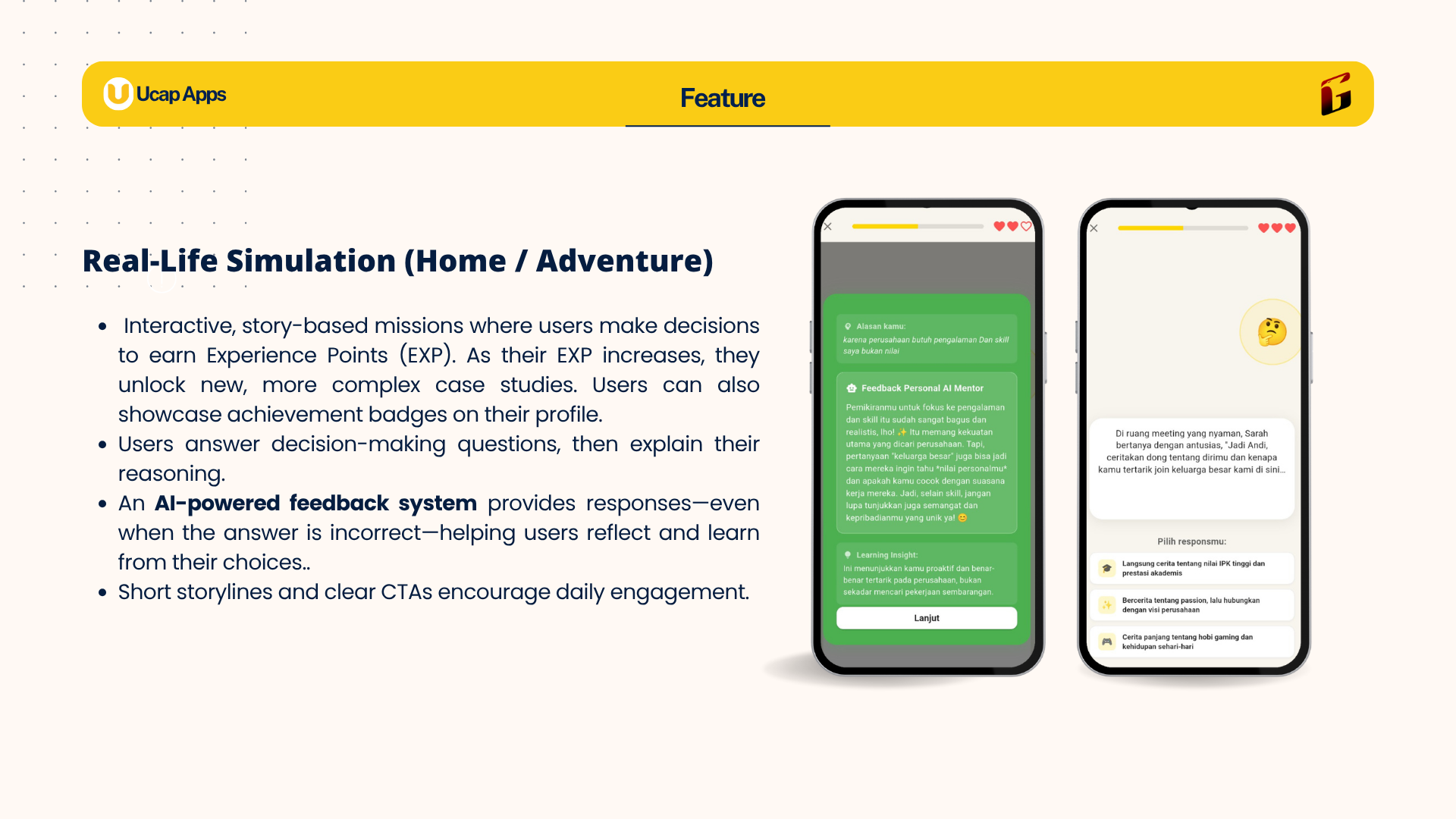
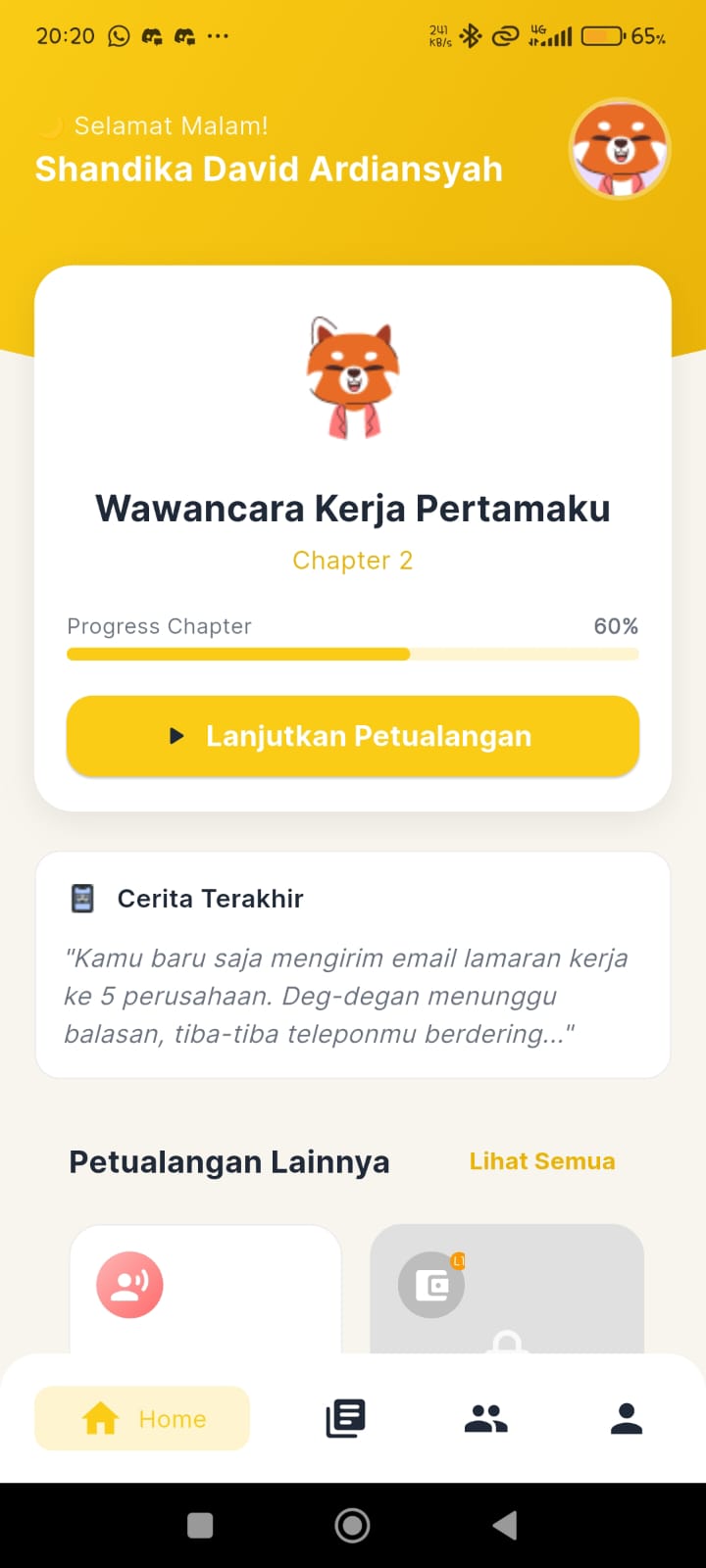
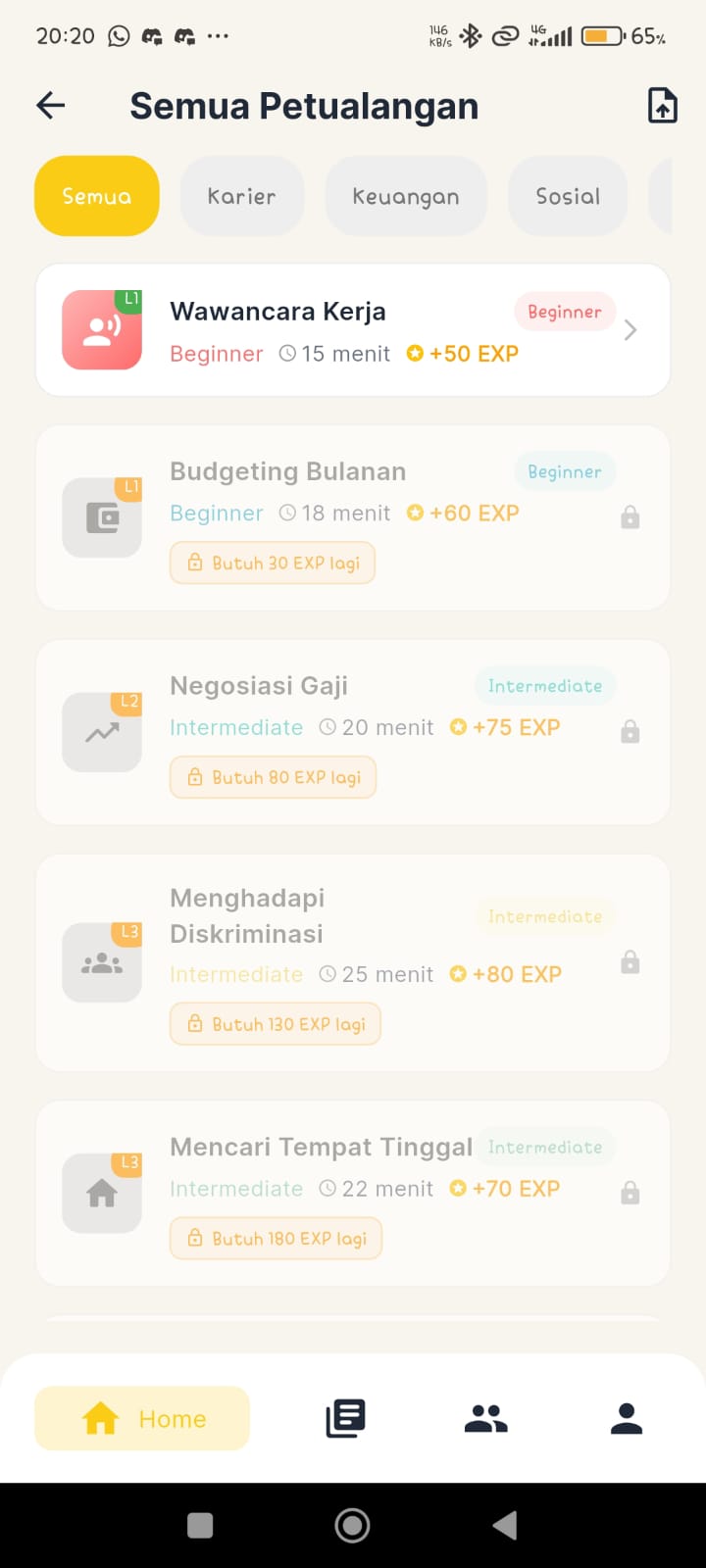
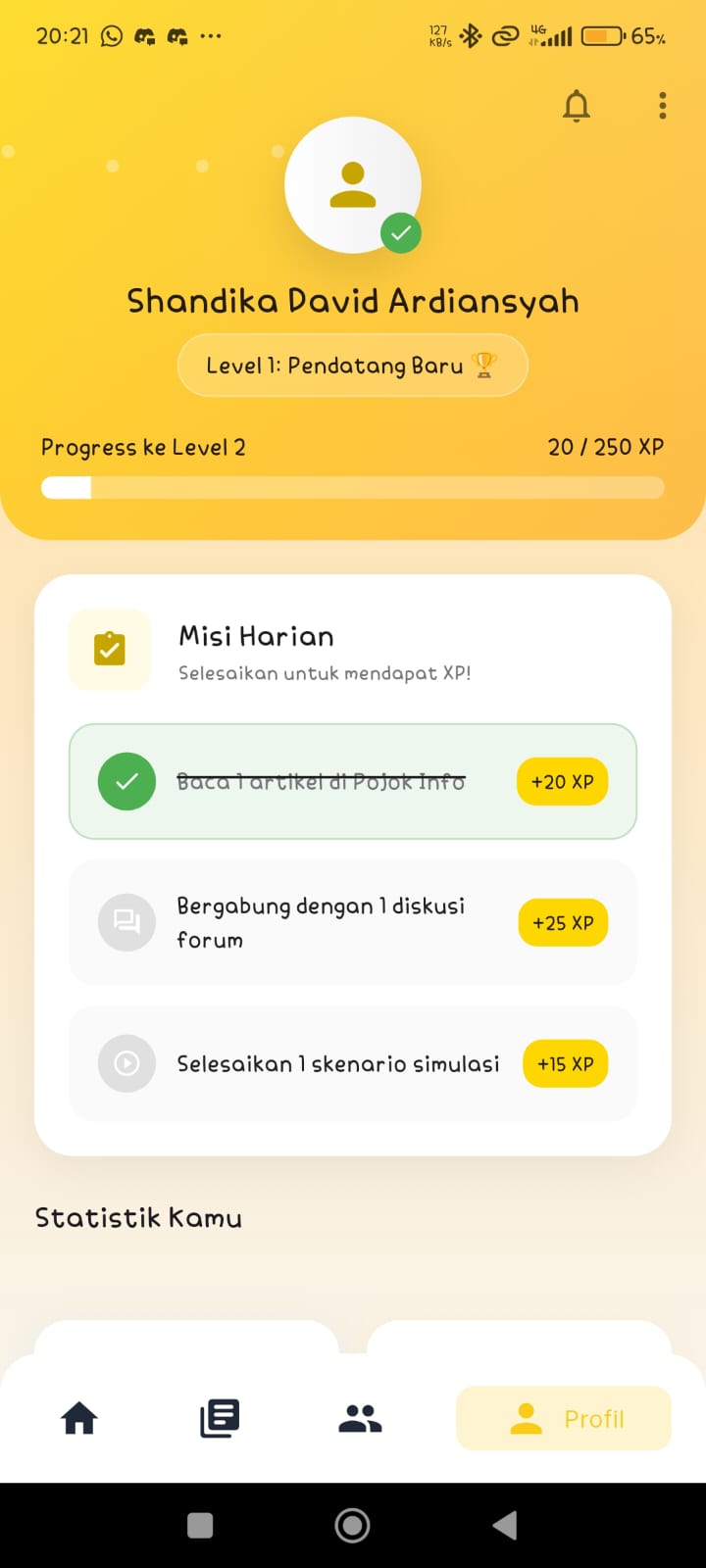
- Life Simulation (Adventure): Interactive, story-based missions where users make decisions to earn Experience Points (EXP). As their EXP increases, they unlock new, more complex case studies. Users can also showcase achievement badges on their profile.
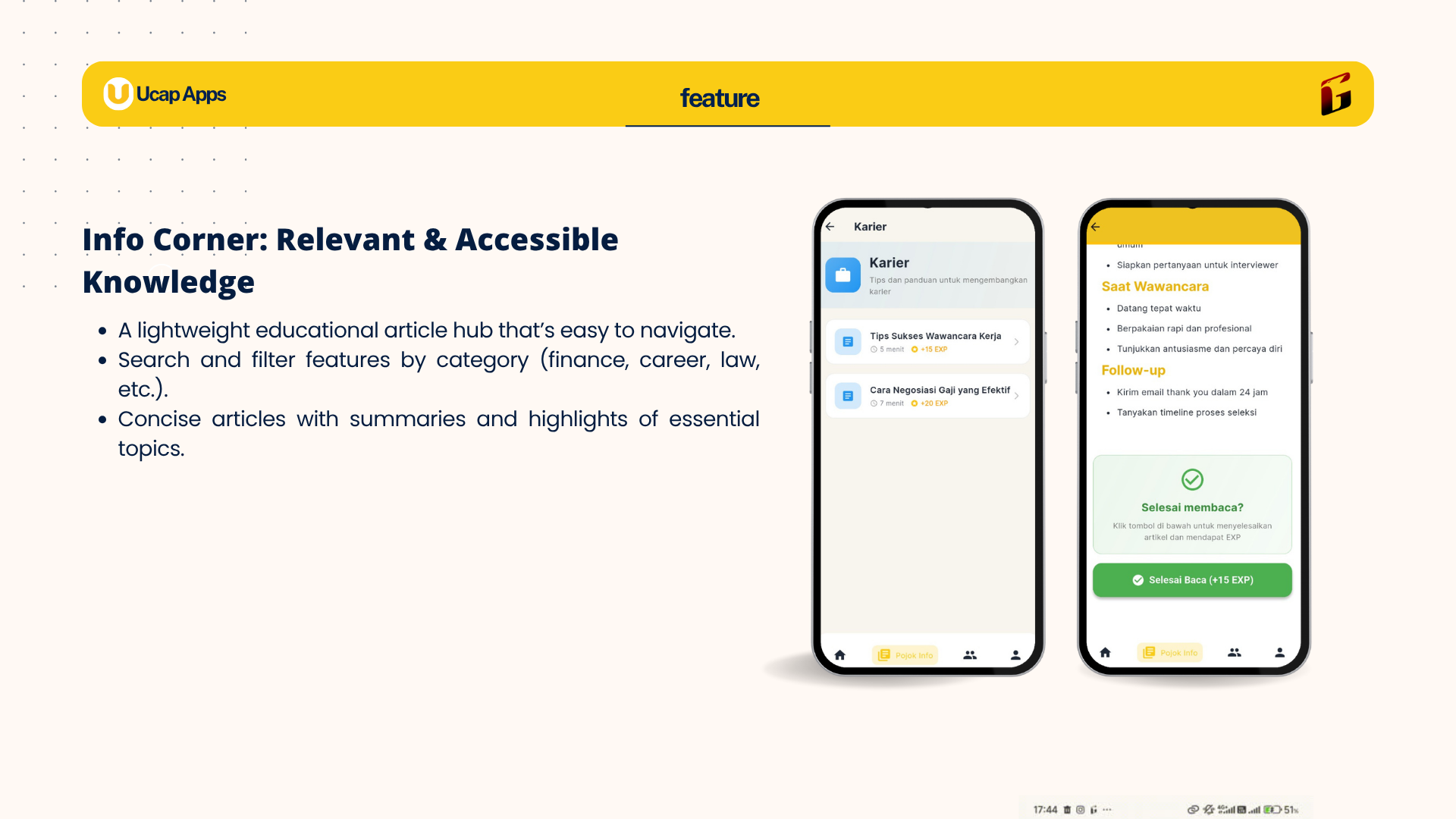
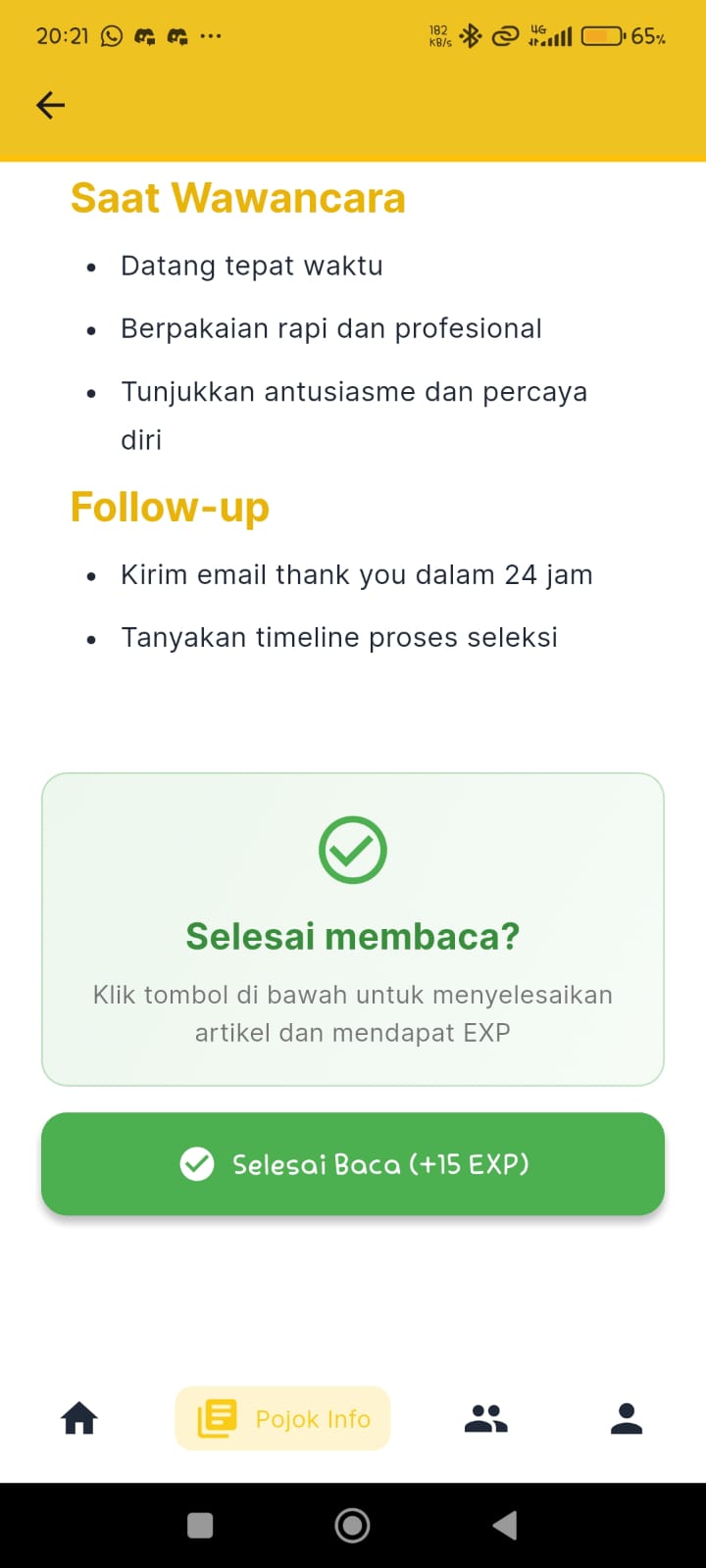
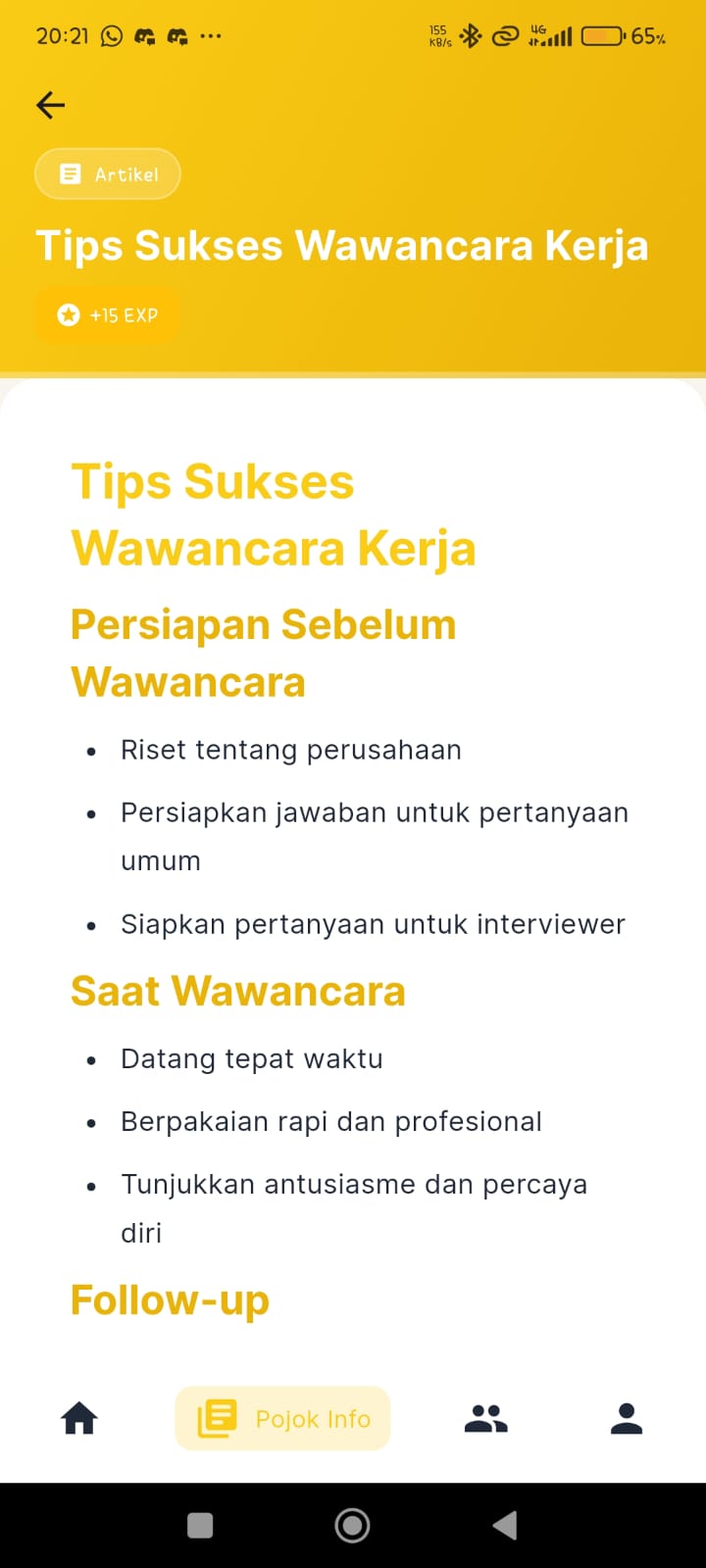
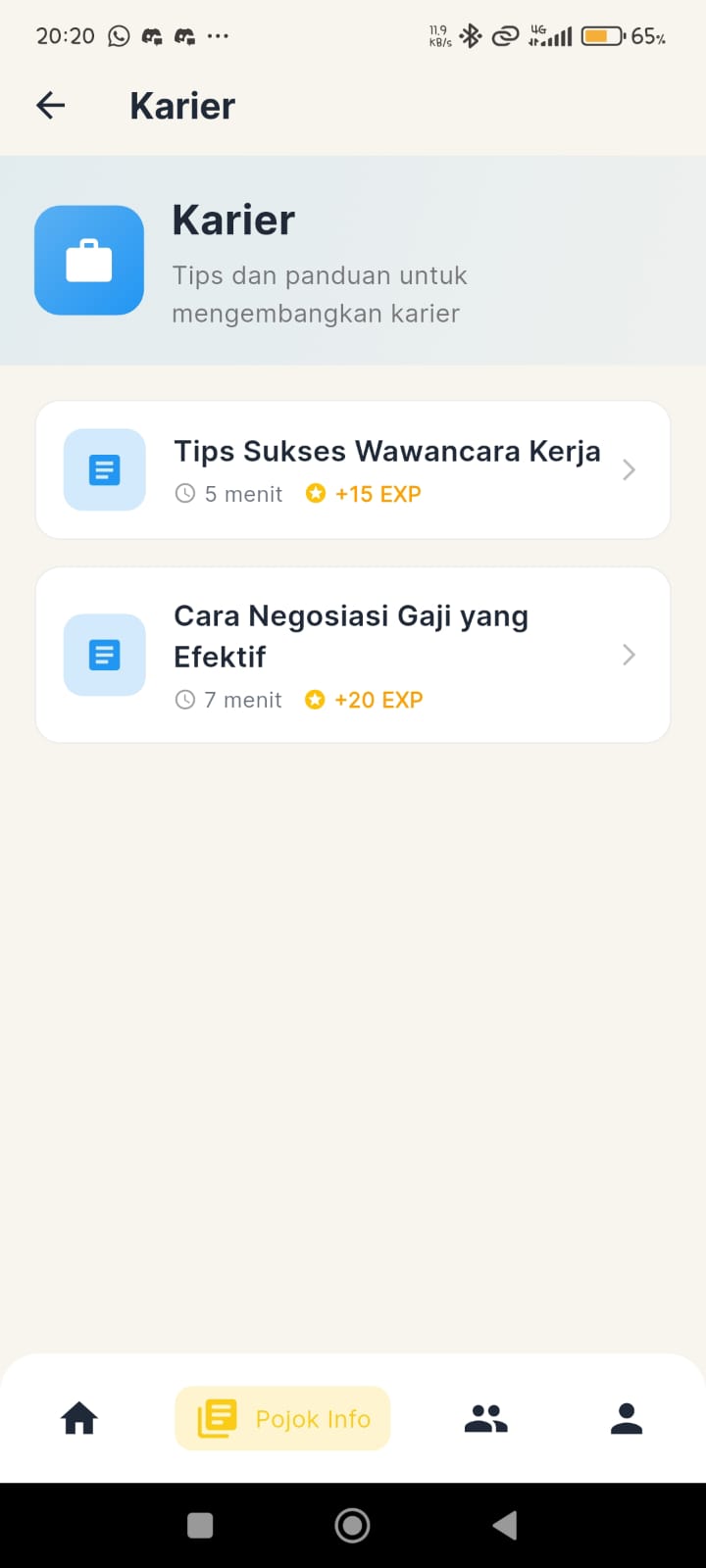
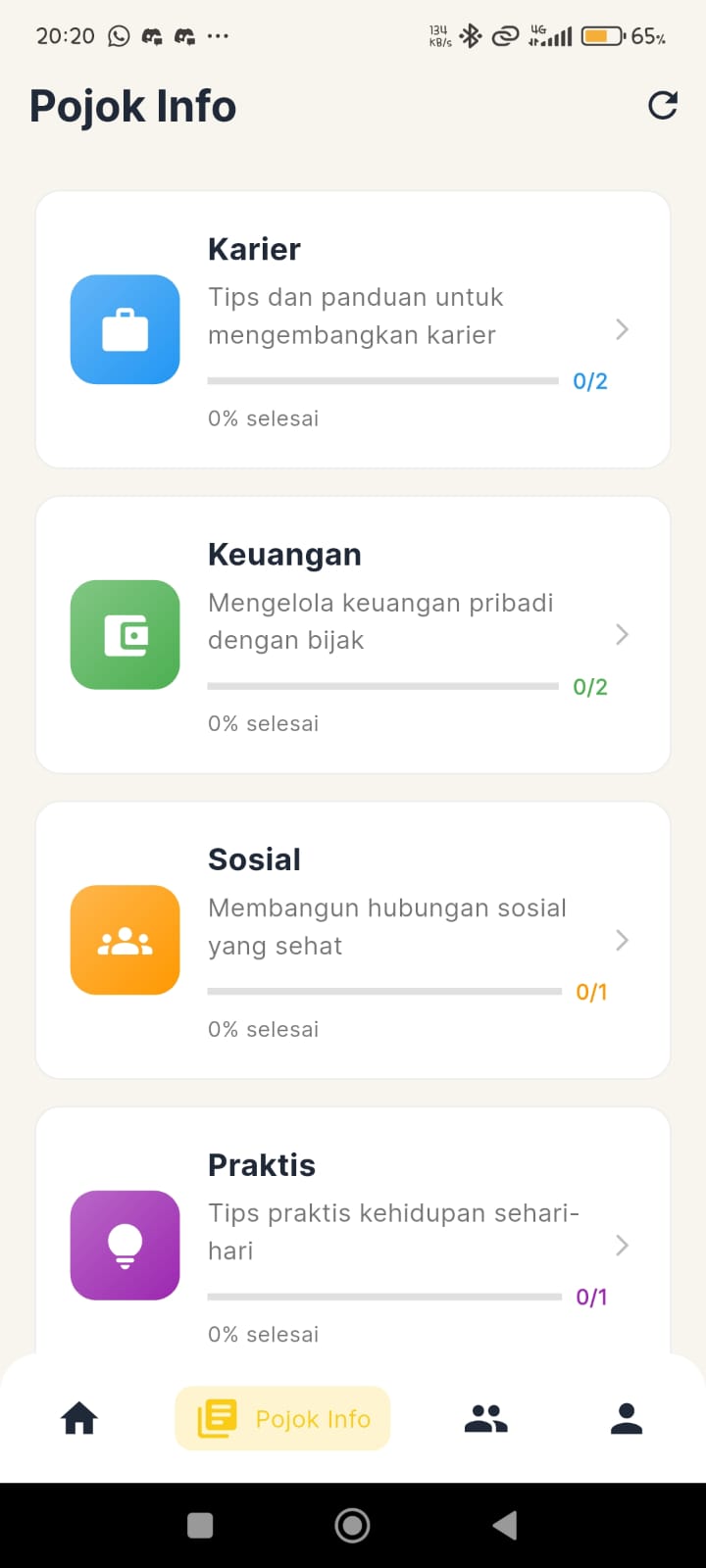
- Info Corner: A practical knowledge hub with concise, easy-to-digest articles on crucial topics. Reading articles also grants users EXP, creating another incentive to learn.
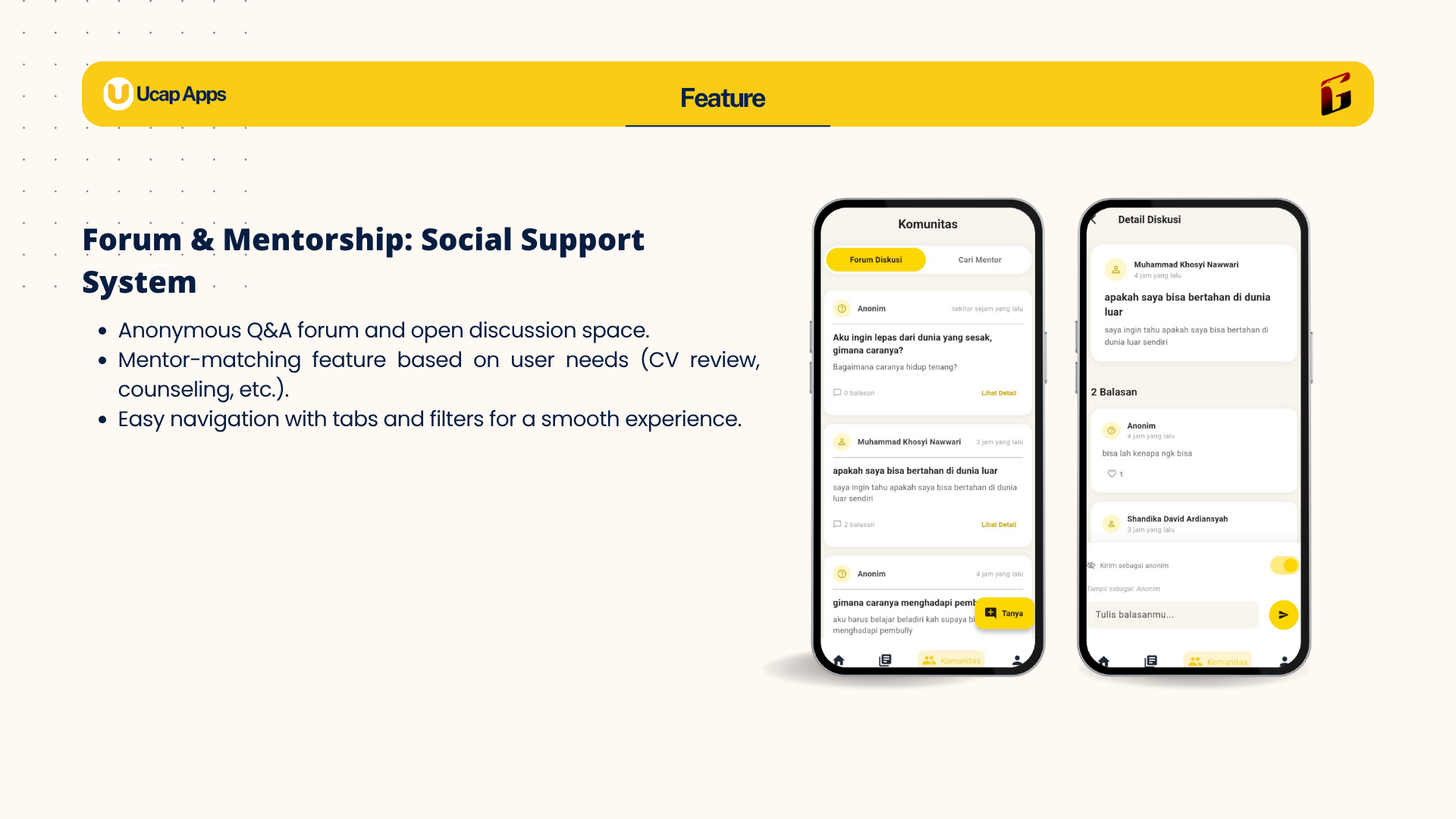
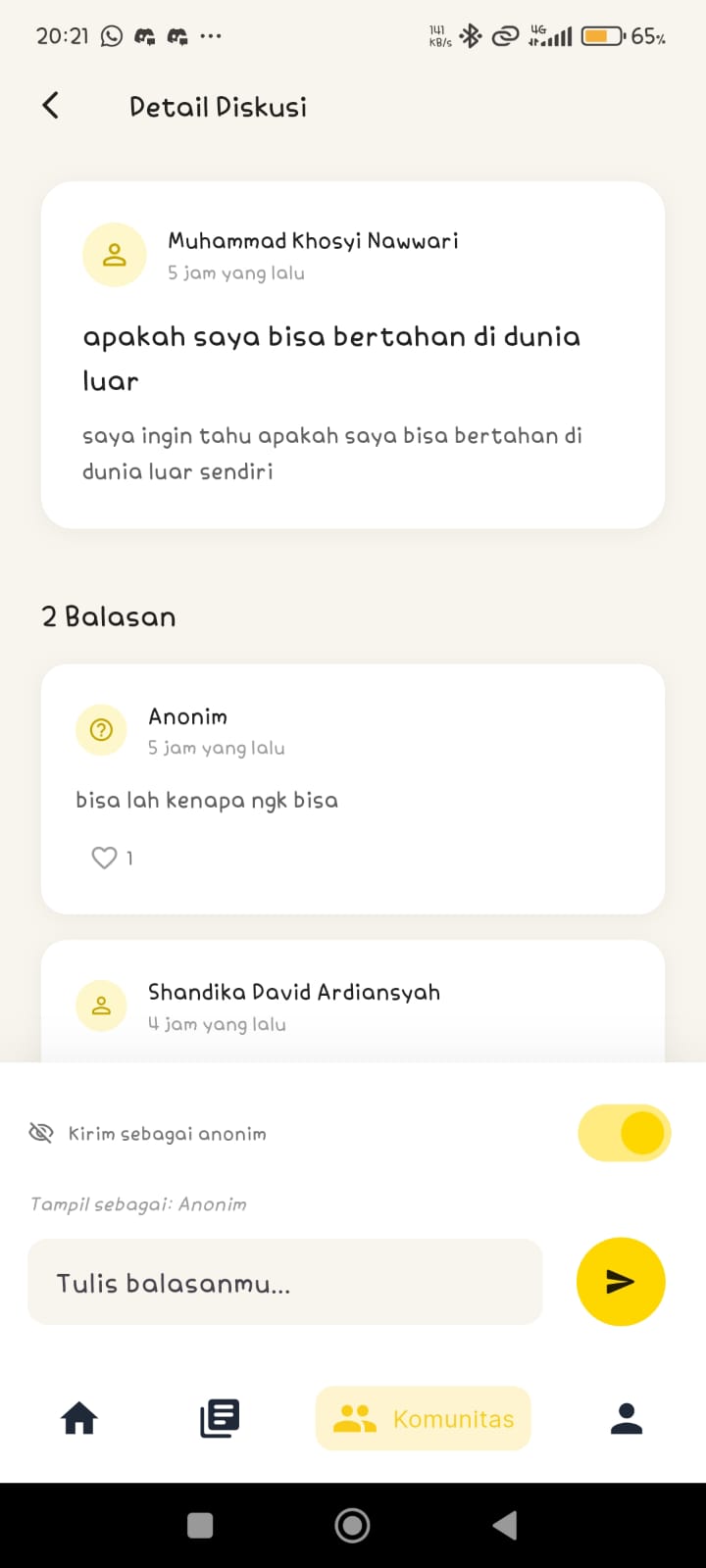
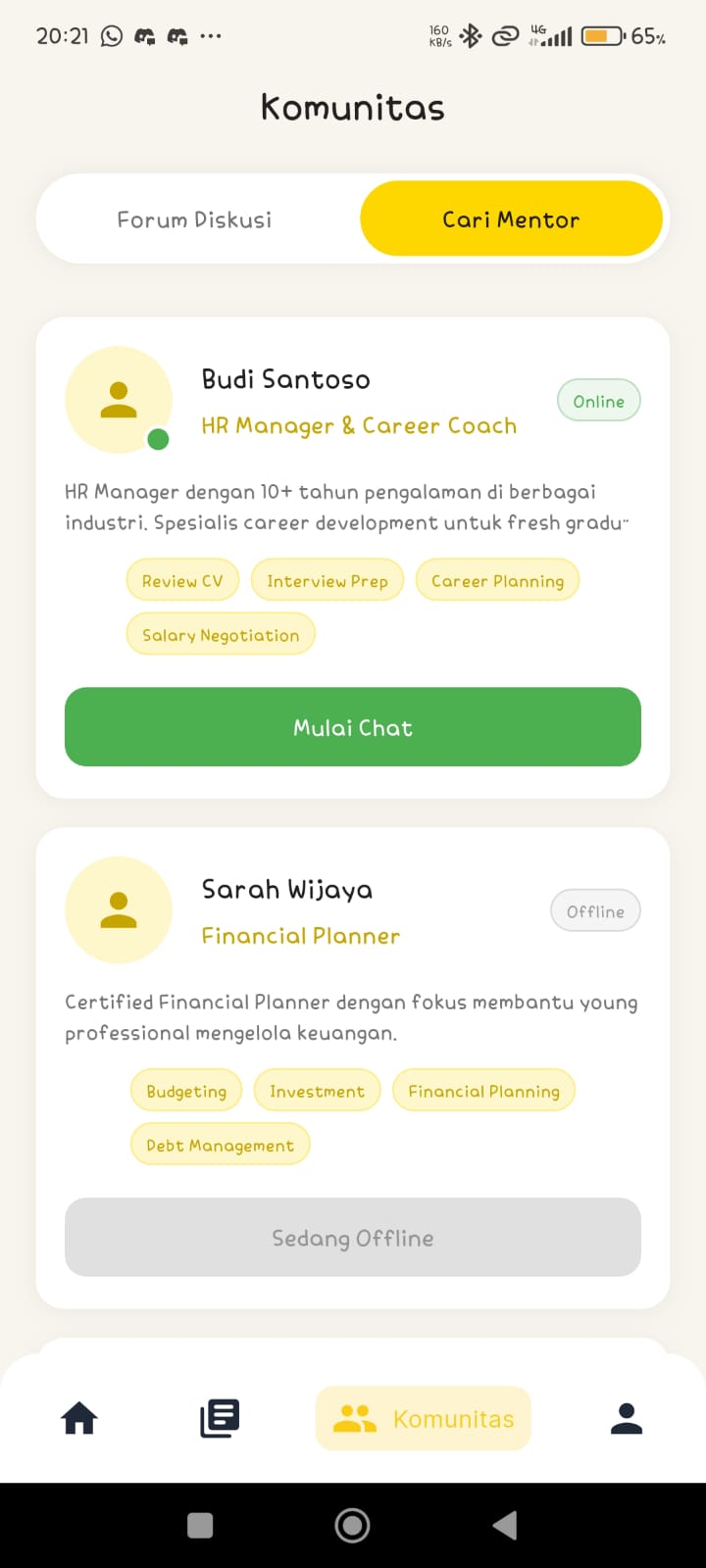
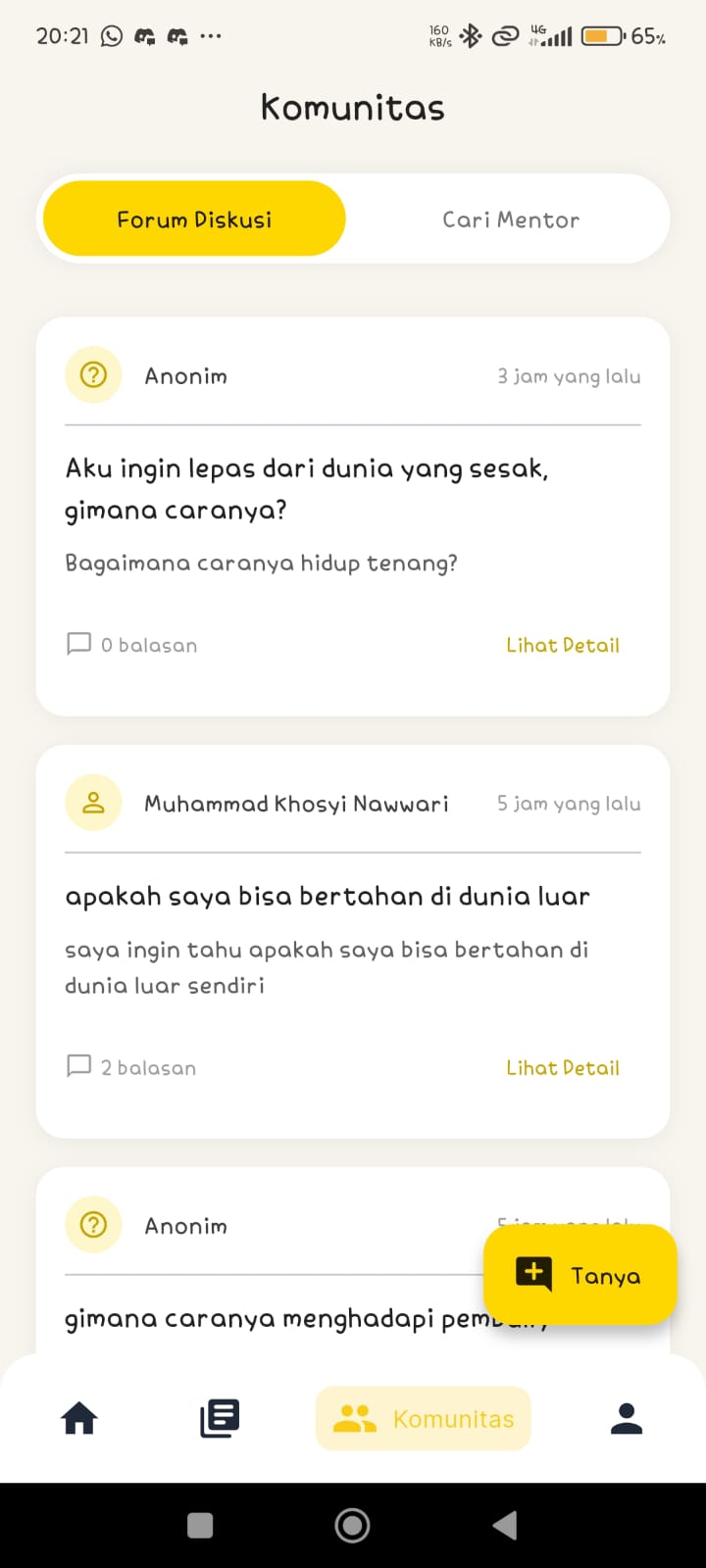
- Forum & Mentors: A safe, anonymous discussion space for peers and access to volunteer mentors for personal guidance.
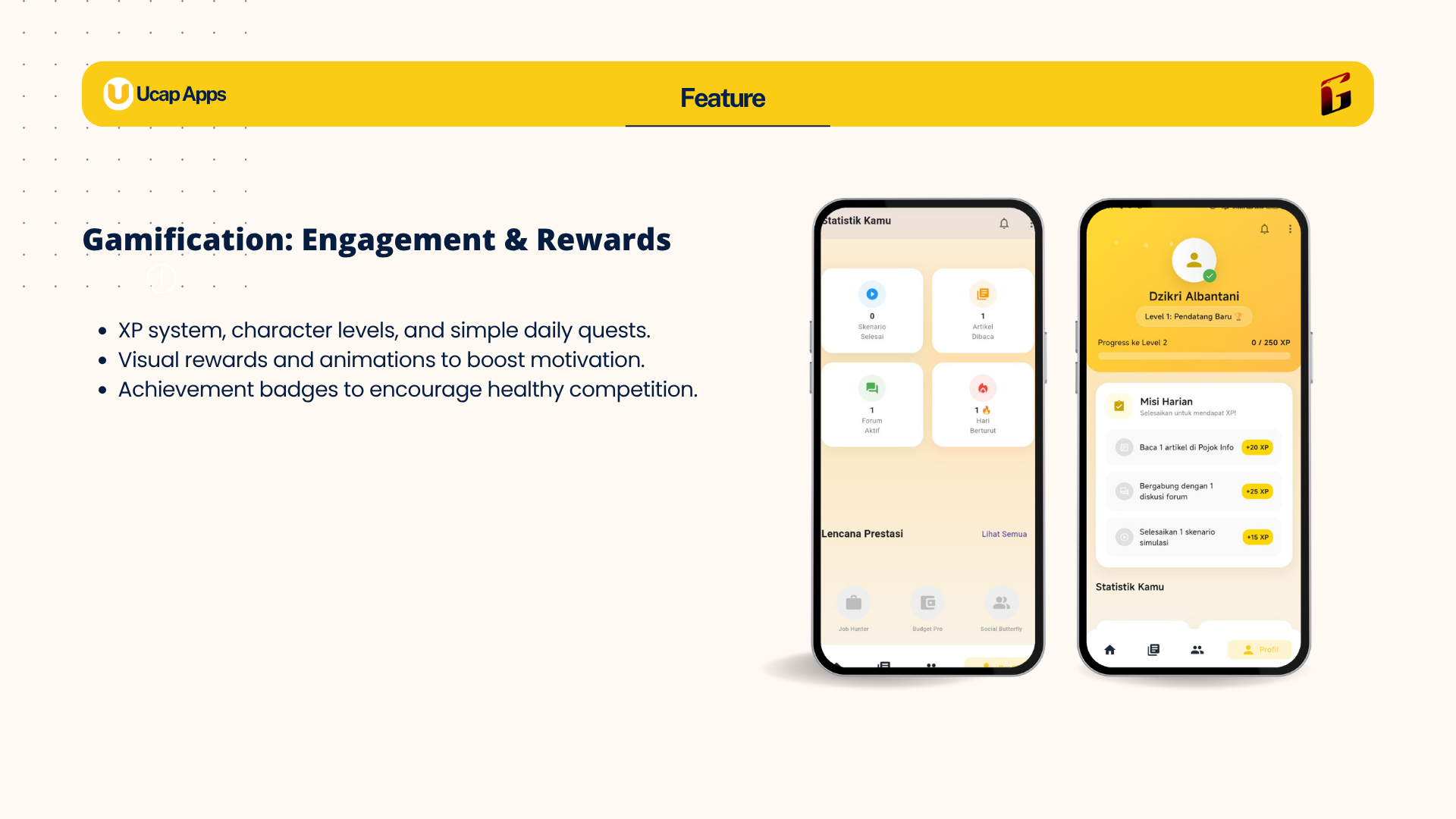
- Gamification: An overall system of EXP, levels, and daily quests to boost user motivation and create a rewarding learning journey.
How we built it
We built Ucap using the Flutter framework, which is designed for cross-platform development. For the scope of this hackathon, we focused our efforts on developing the Android version of the app. For the backend, we integrated Firebase for its robust services, including user authentication and database management. The core of our interactive feedback system is powered by the Google Gemini API, which we integrated into our Life Simulation Adventure to provide users with insightful and constructive advice based on their decisions.
Challenges we ran into
- Team Setbacks: Navigating the hackathon was tougher as two of our team members were sick, which impacted our workflow and put more pressure on the rest of the team.
- Time Management & Technical Hurdles: Within the tight 30-hour timeframe, we faced significant technical challenges, especially in implementing the EXP and content-locking system from scratch. Managing our time effectively while debugging was a constant battle.
- Maintaining Focus: Staying motivated and focused throughout an intense, energy-draining 30-hour hackathon was a major challenge in itself, requiring strong teamwork and discipline to push through to the finish line.
- Creating Authentic Scenarios: Designing simulations that were realistic without being cliché required deep research and empathy to ensure the scenarios felt relevant and impactful to our target users.
Accomplishments that we're proud of
- From Idea to Product in 30 Hours: We are incredibly proud of transforming a concept from our minds into a functional product in just 30 hours. Seeing our idea come to life under such intense pressure was a massive achievement.
- Intense Collaboration Under Pressure: We are proud of our team's synergy in maintaining non-stop collaboration for 30 consecutive hours. Unlike typical projects, this hackathon demanded constant communication and active teamwork, and our ability to stay aligned was critical to our success.
- Thriving in a New Challenge: Successfully completing this event is a major accomplishment, especially since it was the very first hackathon for two of our team members. They found the experience to be both incredibly challenging and enjoyable.
- Leveraging the Google Ecosystem: We are proud of how we strategically used a lean but powerful tech stack. We utilized almost the entire Google ecosystem—Flutter for the app, Firebase for the backend, and the Gemini API for our core AI feature. This choice was key to dramatically accelerating our development speed.
What we learned
Beyond the social problem we aimed to solve, this hackathon taught us invaluable lessons about teamwork, execution, and resilience. We learned the true meaning of intense collaboration, communicating non-stop for 30 hours to turn our shared vision into working code. Facing challenges like team members getting sick taught us to be adaptable and supportive, forcing us to adjust our plans on the fly. Technically, we learned the incredible speed of rapid prototyping by leveraging the Google ecosystem. Using Flutter, Firebase, and the Gemini API together was a practical lesson in building fast and effectively. For our first-time members, the biggest takeaway was personal: they learned they could thrive in a high-pressure, competitive environment, which was an amazing and fun experience.
What's next for Ucap
The journey for Ucap has just begun. Our immediate next step is to continue the development of the prototype we built during this 30-hour sprint. Our primary focus will be on refining and enhancing the user experience (UX) by incorporating user feedback to make the app more intuitive, engaging, and impactful. We plan to evolve this hackathon project into a polished, production-ready application ready to make a real difference.


Log in or sign up for Devpost to join the conversation.