-
-
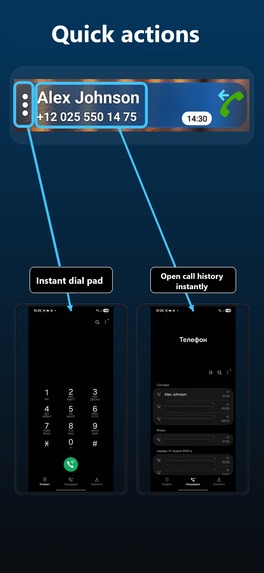
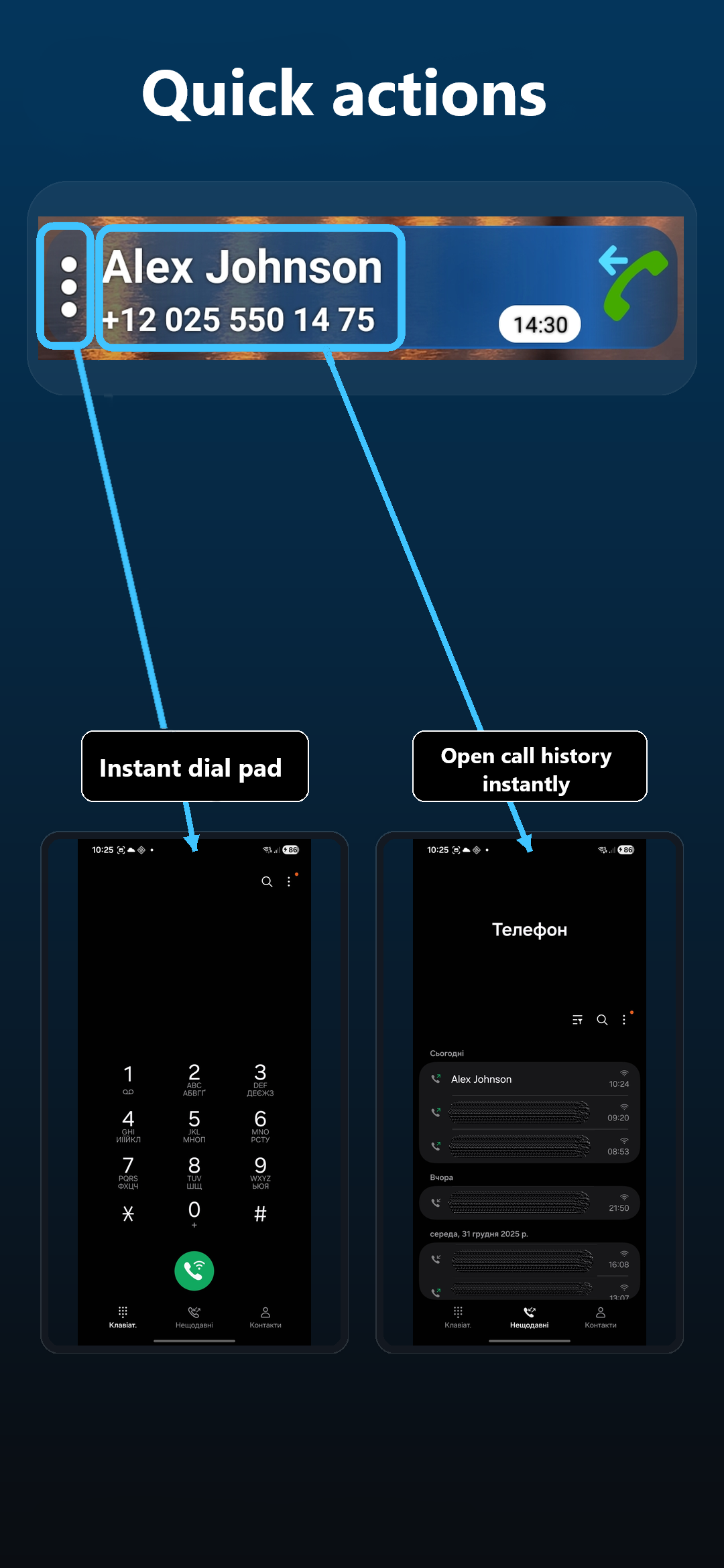
nstant access to calls Open the dialer or recent call history directly from the widget.
-
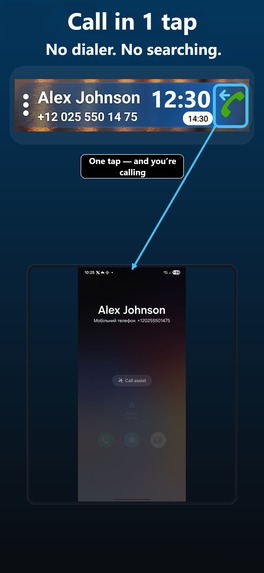
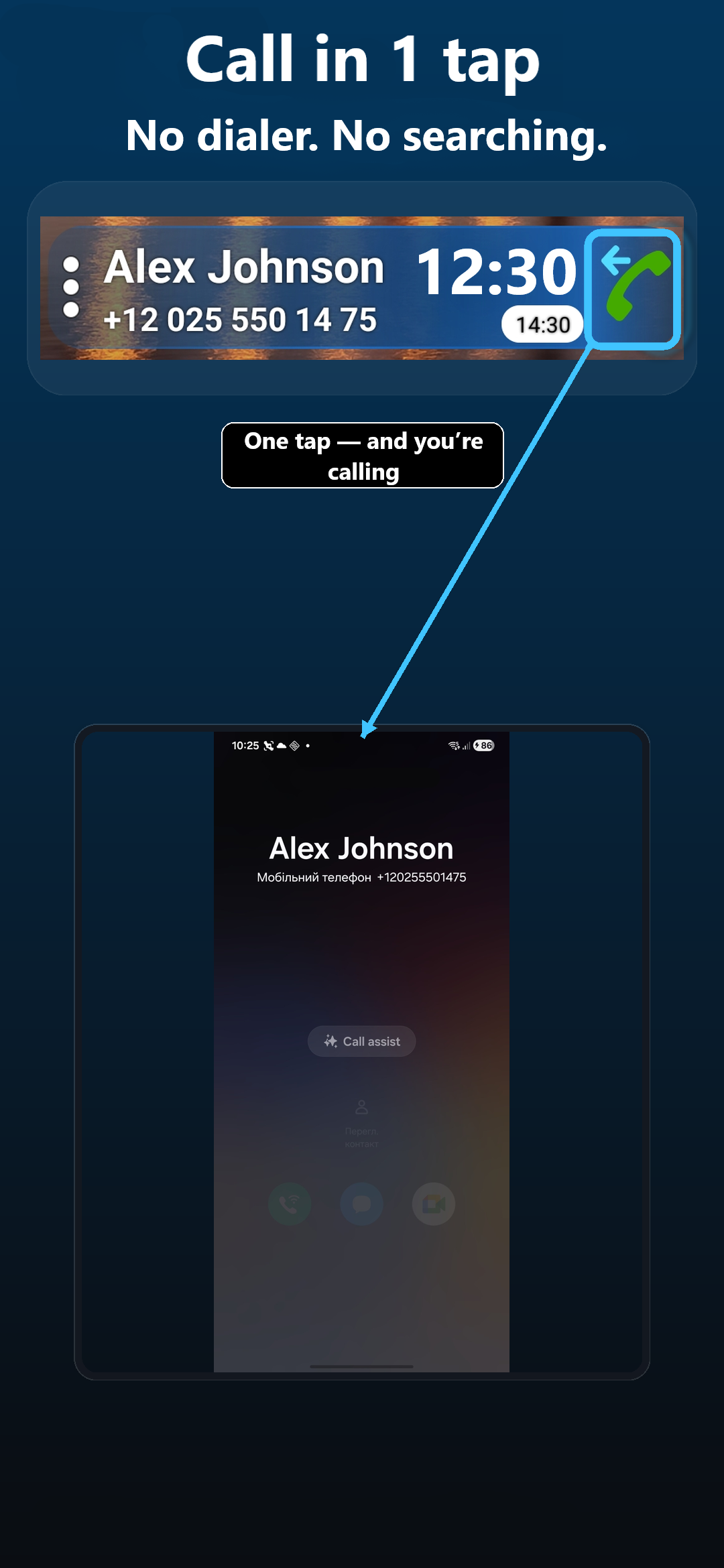
Call back in one tap After a missed or completed call, contact the latest number directly from your home screen.
-
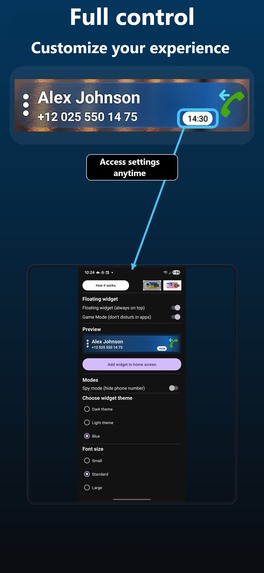
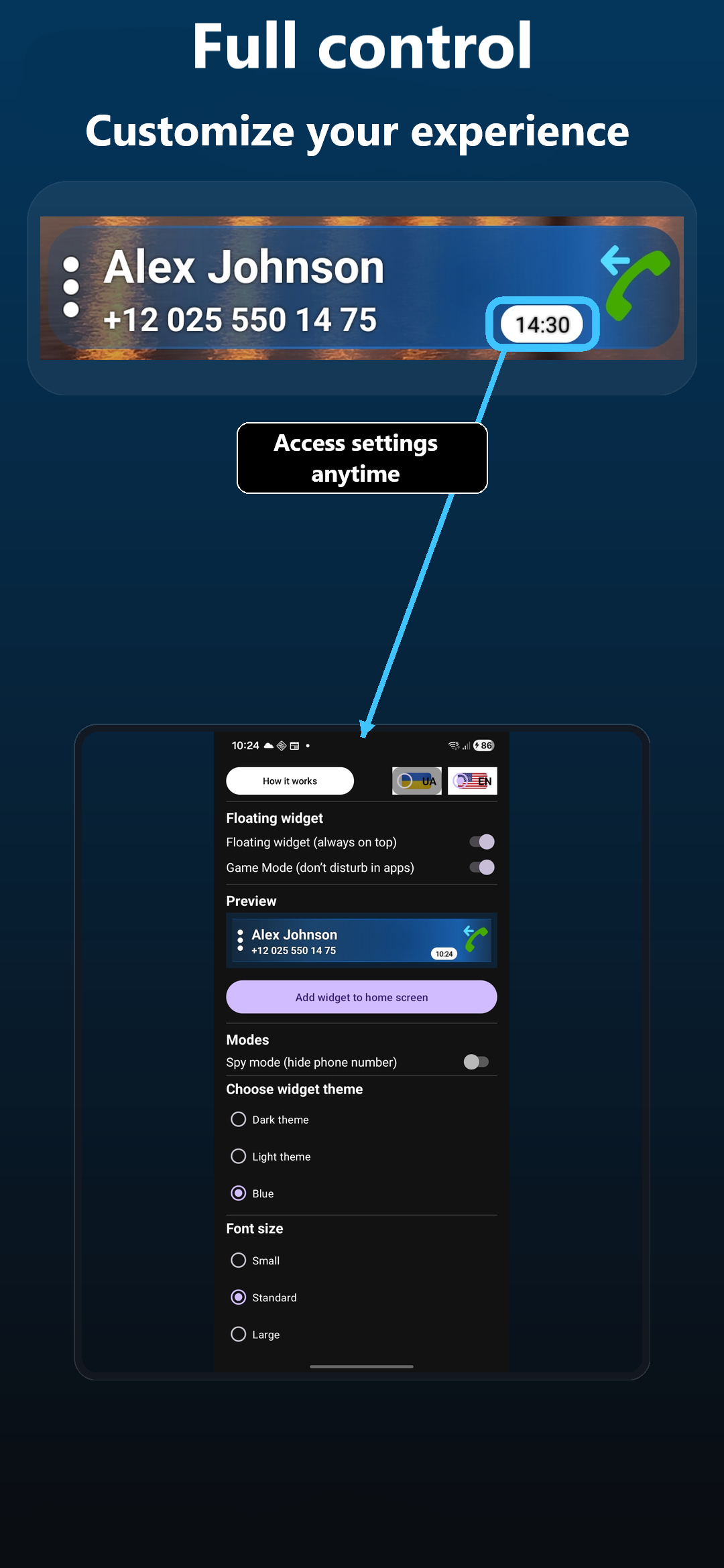
Full control over your widget Customize privacy, theme, language, and text size to fit your needs.
Inspiration
The default phone app is useful, but access to its most common actions can still be improved.
I wanted to create a simple Android tool that makes everyday calling faster without replacing the system phone app. UCall Widget Lite adds a compact widget to the home screen and turns it into a smarter entry point for calls.
What it does
UCall Widget Lite helps users:
- call back the latest number with one tap;
- open the phone dialer quickly;
- open the recent calls list;
- hide the displayed phone number with Privacy Mode;
- choose a widget theme;
- adjust the font size;
- switch between Ukrainian and English;
- add the widget directly from the app.
After a missed or completed call, the widget updates with the latest call information. The user can then call that number back directly from the home screen.
How I built it
UCall Widget Lite is a native Android application written in Kotlin.
The project uses:
- Android App Widgets;
- RemoteViews;
- Android call-log APIs;
- BroadcastReceiver and background update logic;
- SharedPreferences for user settings;
- Android localization resources;
- Gradle and Android Studio.
Codex was used throughout the development process to create the Lite version, review the architecture, implement features, diagnose build issues, simplify background logic, and test the final application.
Challenges
The main challenge was keeping the product reliable while making it lightweight.
Android widgets have strict limitations compared with normal application screens. Widget actions, background updates, permissions, call-log access, localization, and different launcher behavior all had to work together without adding an unnecessary foreground service or overlay.
Another challenge was privacy. The widget can display recent call information on the home screen, so I added a Privacy Mode that allows the phone number to be hidden.
Accomplishments
I am proud that UCall Widget Lite is not only a prototype.
It can be installed, configured, localized, added to the Android home screen, and used for a real one-tap callback. The application also includes an onboarding explanation, customizable themes, font sizes, and privacy settings.
The project shows how Codex can help a non-technical product creator turn a practical idea into a working Android product.
What I learned
I learned how Android widgets behave across the app lifecycle, how call-log permissions affect the user experience, and how important it is to separate essential product functionality from unnecessary technical complexity.
Creating the Lite version also showed me that a focused product can sometimes be more useful than a larger application with many background services.
What's next
The next steps are:
- broader testing across Android devices and launchers;
- publishing UCall Widget Lite on Google Play;
- improving accessibility;
- collecting user feedback;
- adding optional advanced functionality while keeping the Lite version fast and reliable.
UCall Widget Lite has one clear goal:
Make everyday phone access smarter and make calling back the latest number as simple as one tap.

Log in or sign up for Devpost to join the conversation.