-
-
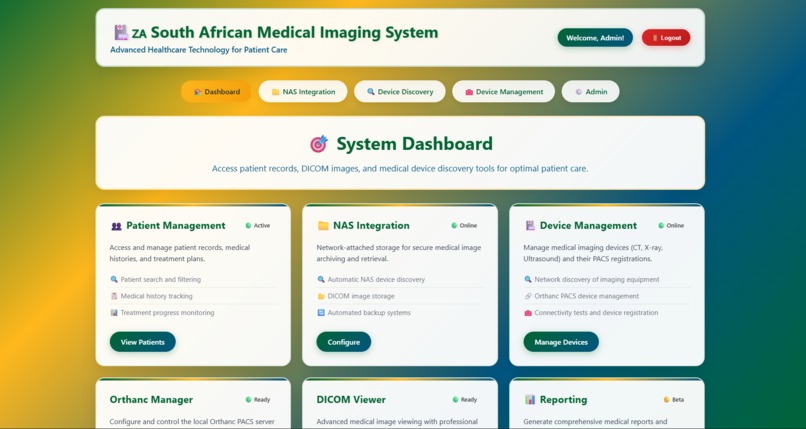
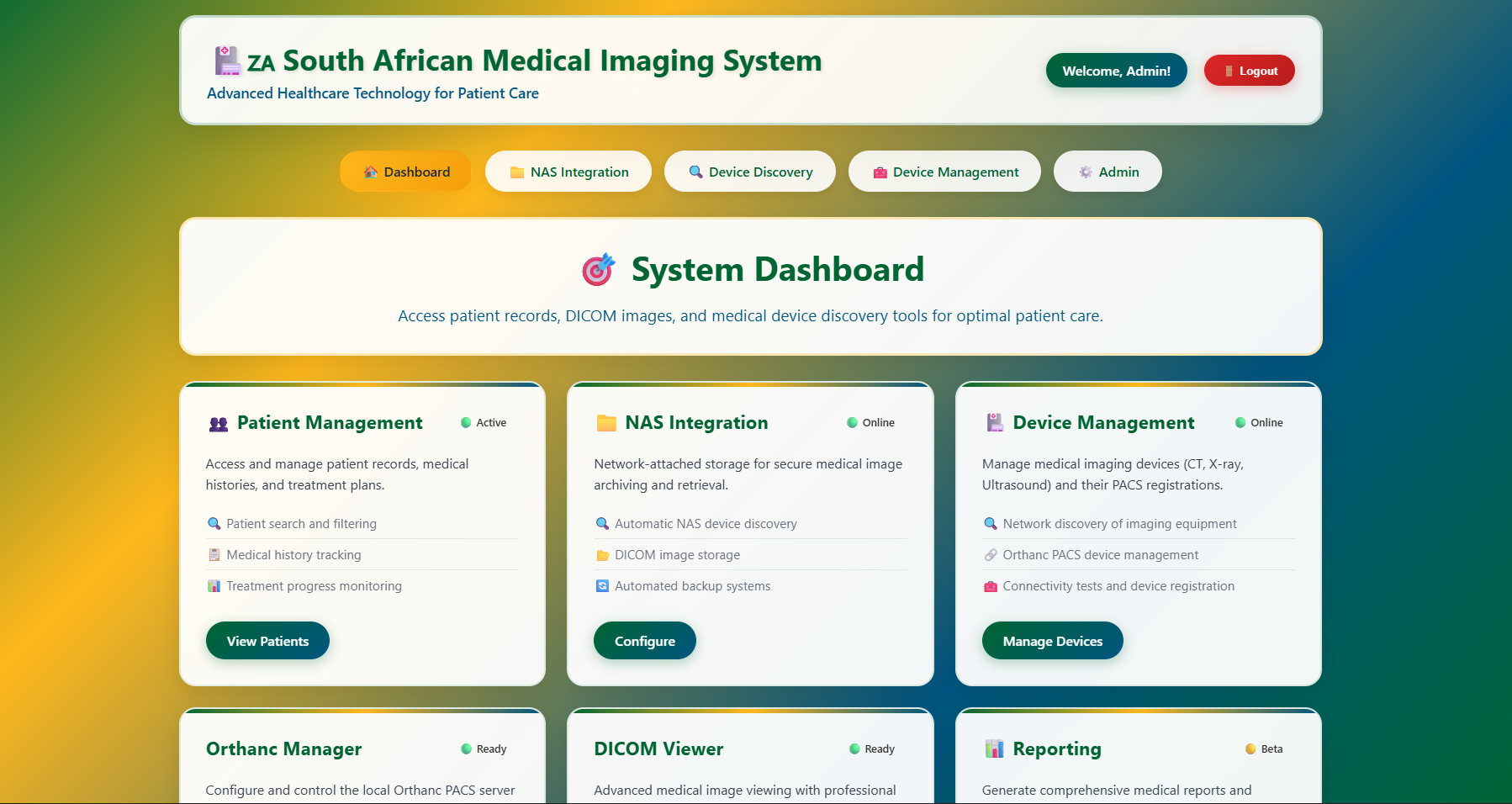
PACs Dashboard
-
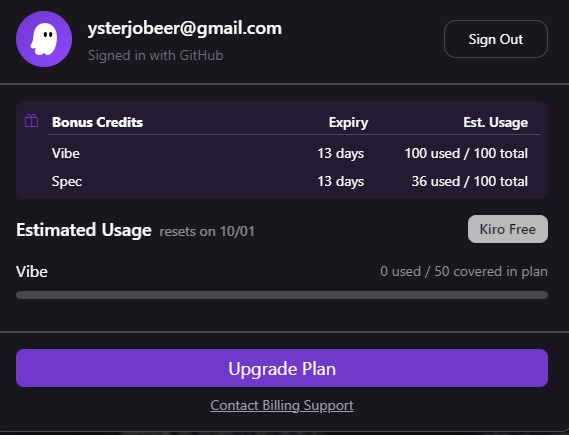
Used Kiro to its absolute max
-
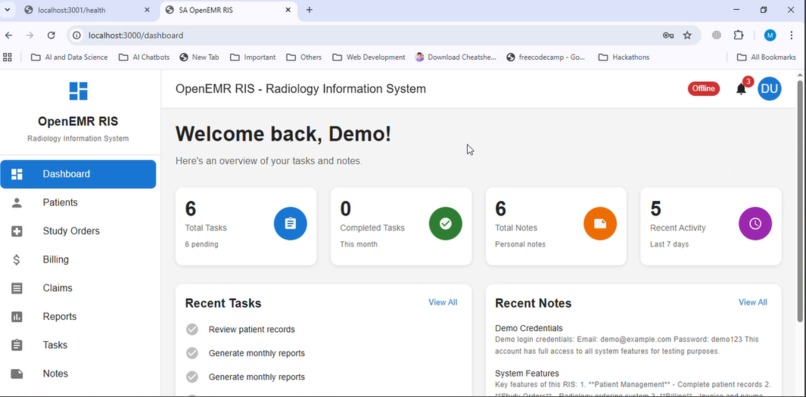
RIS dashboard
-
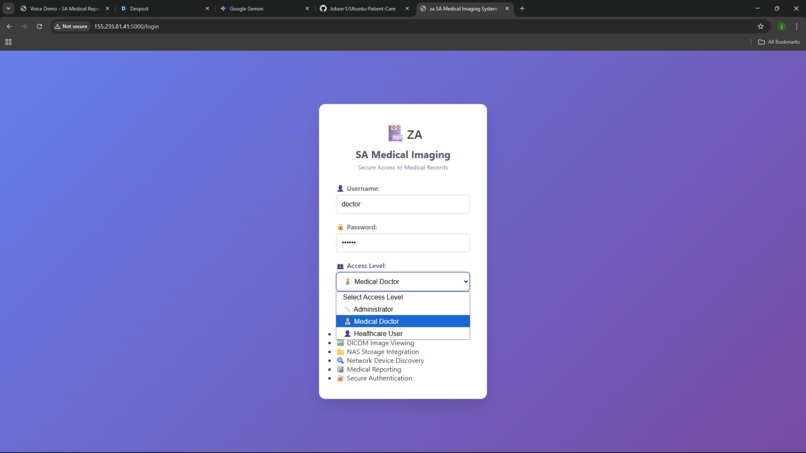
Login page


Ubuntu Patient Care: A Rebellion for Life
Inspiration
The Problem. Our Problem.
This is a story you know. A doctor needs an ultrasound to save a life, but the machine is "end of life." A multi-billion dollar company, like Philips, tells you, "Sorry, we can't offer any services or parts. Please buy a new machine."
The frustration is real. Close your eyes for a moment. Picture the face of the one person you cherish most in this world. The one who taught you to ride a bicycle. The one who held your hand when you were scared, the loved one that sacrificed so much to make your life better. Now, imagine a moment of pure terror: their life hangs in the balance, and the care they need is just out of reach because a multi-billion dollar company has deemed a perfectly good machine "end of life." They've put a price on your loved one's life—a price lower than the cost of a new piece of equipment. Perfectly good machines are being decommissioned and shipped overseas as e-waste, deemed worthless by corporate mandates. Meanwhile, millions of our loved ones suffer because they cannot afford the systems that are built for profit, not for our people.
This is not a business problem. It's a moral failure of a system that serves those who can pay, while leaving millions our loved ones behind.
Our Mission. Our Rebellion.
We are a small team of passionate developers who said: Enough!!
We are building a free, open-source medical system to end this injustice. Ubuntu Patient Care is a comprehensive Radiology Information System (RIS), Picture Archiving and Communication System (PACS), Medical reporting and medical billing/accounting platform
We are building it to be accessible, maintainable, modular, easy to customize and ethically sound. We live for others, for something much larger than ourselves. Our passion + Kiro code, we realized, could be a weapon against this systemic cruelty. We committed to building Ubuntu Patient Care: a free, open-source medical system that declares, with every line of code, that our loved one's life is priceless.
What it does
Ubuntu Patient Care is our comprehensive act of rebellion – a fully functional, offline-first medical ecosystem designed to bring world-class healthcare to communities in need, especially here in South Africa. Our system comprises four seamlessly integrated, highly modular components:
- South African PACS Dashboard: A Picture Archiving and Communication System tailored for our reality. Referring doctors can view DICOM images of their patients directly on their phones if they are on the LAN WiFi network. It boasts robust NAS integration, intelligent machine discovery, and easy integration capabilities.
- Medical Reporting Module: This module empowers clinicians. Doctors can effortlessly pull images from NAS devices, compare them side-by-side, and use advanced voice dictation to generate accurate and rapid reports on patient images.
- Customized OpenEMR / RIS Dashboard: Built upon the strength of OpenEMR, this is a comprehensive Radiology Information System and Electronic Medical Records platform. It's extensively customized for South African workflows, managing patient registration, appointments, and medical histories with local nuances.
- Medical Billing / Accounting Dashboard: A powerful module that integrates seamlessly with local clearing houses and directly with over 33 major South African medical schemes. It handles age analysis, day-end/month-end processing, and generates all essential financial statements, making complex medical billing efficient and accessible.
Every feature, from 11 official language support to Load Shedding Awareness and Traditional Medicine Integration, is designed to elevate the value of every single life.
How we built it
Ubuntu Patient Care, in its ambition, was initially a dream too massive for a small team to achieve within a hackathon timeframe. We stand on the shoulders of giants – we owe immense respect to the open-source communities behind OpenEMR and Orthanc, whose foundational work provided the ethical and robust base for our system. Without them, our rebellion would have remained just a dream.
Then, we discovered our secret weapon: Kiro.
This hackathon wasn't just a competition; it was a testament to what's possible when passion, powerful open-source foundations, and cutting-edge AI merge. We committed to pushing Kiro to its absolute limits, using it as our primary development partner. The proof is in our usage: we maxed out every single Vibe and Spec credit.
- Vibe Coding as Our Accelerator: Kiro's vibe-coding capabilities allowed us to rapidly prototype and generate the initial scaffolding and core logic for all four of our complex modules. What would have taken weeks of tedious setup and boilerplate code was accomplished in days, allowing us to focus our precious time on the unique South African customizations and integrations.
- Spec-Driven Development as Our Architect: This was where Kiro truly shined for our mission-critical components. For the intricate Medical Billing module, we used Kiro's spec-driven development to define the architecture for integrating with over 33 diverse South African medical schemes. We literally gave Kiro natural language specifications for API endpoints, data models, and business logic, and it generated robust, production-ready code. This ensured accuracy and compliance, proving that Kiro isn't just a code generator, but a partner in building reliable, high-stakes systems.
- Modular Design from the Ground Up: Kiro facilitated our commitment to modularity, generating distinct, loosely coupled services that are easy to maintain, extend, and adapt for any future use case.
Every Kiro request wasn't just about generating code; it was an act of love, a promise kept to the people whose lives depend on our system. It allowed our small team to achieve what felt impossible.
Challenges we ran into
Building a world-class medical system with offline-first capabilities, tailored for a specific, complex national healthcare landscape, presented formidable challenges:
- Offline-First Data Synchronization: Designing a robust mechanism for local databases to seamlessly sync with central servers when internet connectivity becomes available was a significant architectural hurdle, especially ensuring data integrity and conflict resolution.
- Integrating Disparate Open-Source Giants: Harmonizing OpenEMR (PHP-based EMR) with Orthanc (C++/Python PACS) and building custom React/Python dashboards required deep understanding of their APIs and careful orchestration.
- South African Healthcare Complexity: The unique requirements of 11 official languages, load shedding, traditional medicine integration, and the myriad of medical aid schemes meant extensive customization and localized logic. Kiro was instrumental in navigating this complexity by rapidly prototyping solutions.
- Resource Constraints: As a small team competing against 10,000 developers, time and manpower were our most precious resources. This is precisely where Kiro became indispensable, multiplying our output.
Accomplishments that we're proud of
We are immensely proud of:
- Building a Fully Functional, Offline-First System: Delivering four interconnected, production-ready modules that can operate seamlessly without an internet connection – a critical feature for remote clinics.
- Deep South African Customization: From 11 official language support to direct integration with over 33 local medical schemes, and even awareness for load shedding, our system is truly built for our reality.
- Leveraging Kiro to its Fullest: Maxing out our Kiro Vibe and Spec credits isn't just a statistic; it's a testament to how we pushed the boundaries of AI-assisted development to achieve an audacious goal. We believe this showcases Kiro's potential better than any other project.
- A Solid Foundation for a Movement: We haven't just built a hackathon project; we've laid the groundwork for a global rebellion, a community-driven effort to ensure everyone has access to quality healthcare.
- Proving that Passion + Kiro = Impact: Our greatest accomplishment is demonstrating that even a small team, armed with passion and the right tools, can challenge the status quo and build solutions that truly save lives.
What we learned
This hackathon was a masterclass in several key areas:
- The Power of AI-Assisted Development: We learned that Kiro is not just a coding assistant; it's a force multiplier. It allowed us to focus on the "why" and "what" of our project, while it handled a significant portion of the "how." This changes the game for small teams tackling large problems.
- The Depth of Open-Source Communities: Our respect for the OpenEMR and Orthanc communities grew exponentially. Their commitment to open-source excellence provides an invaluable foundation for projects like ours.
- The Importance of Mission-Driven Development: When you are building for something larger than yourself, the challenges become opportunities, and the effort becomes a labor of love. This personal connection drove our team through every late night.
- Modularity is Key to Adaptability: Our modular architecture, facilitated by Kiro, taught us the importance of building systems that can evolve and adapt to diverse global healthcare needs.
What's next for Ubuntu Patient Care: Kiro-Powered RIS/PACS
This hackathon is just the beginning of our rebellion. Our vision for Ubuntu Patient Care is expansive:
- Growing the Movement: We aim to attract more passionate developers to our open-source community. Every line of code, every bug fixed, every Kiro request executed, every story shared will help save a life. We envision a vibrant community where the race is to be the number one contributor to making life better for the ones we love.
- Global Adaptability: Leveraging our modular design, we plan to create "localization packs" to adapt Ubuntu Patient Care to other countries and regions, ensuring its life-saving impact extends worldwide.
- Advanced AI Integration: We will explore deeper integrations with cutting-edge AI for predictive analytics, disease early detection, and personalized patient care, further enhancing the system's capabilities.
- Deployment in Real Clinics: Our immediate goal is to pilot Ubuntu Patient Care in clinics across Empangeni and other underserved areas, gathering feedback and demonstrating its tangible, life-saving impact in the real world.
- An Urgent Call to Action: The fight for justice in healthcare is not for tomorrow; it is for now. We need your help to make this a reality. While our full system is deployed on a secure, private network to protect patient data, we want you to experience a glimpse of its power firsthand. We invite you to try out our voice dictation feature, an essential part of the Medical Reporting Module. It's a work in progress, but it's a real-world demonstration of how our code is already fighting to save lives. You can try it here: [https://attempted-sonic-assumption-kim.trycloudflare.com)
We believe that code, like any powerful tool, is a weapon. We choose to wield it against injustice. Join our fight. You have the secret, powerful weapons: Kiro, code, and your passion for the people you love. You are not alone!



Log in or sign up for Devpost to join the conversation.