-
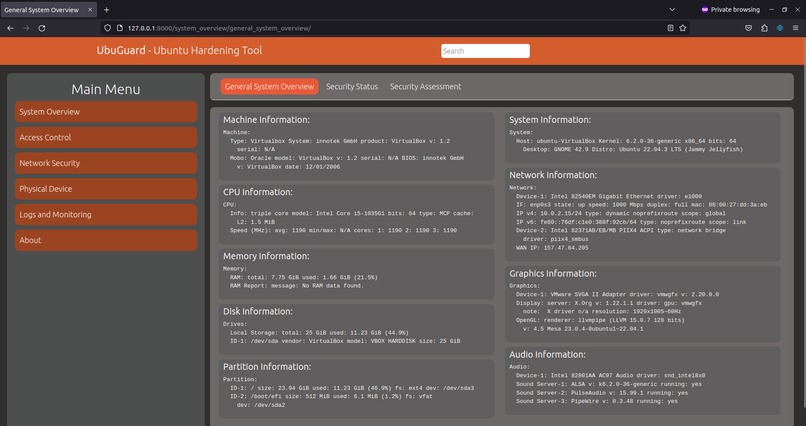
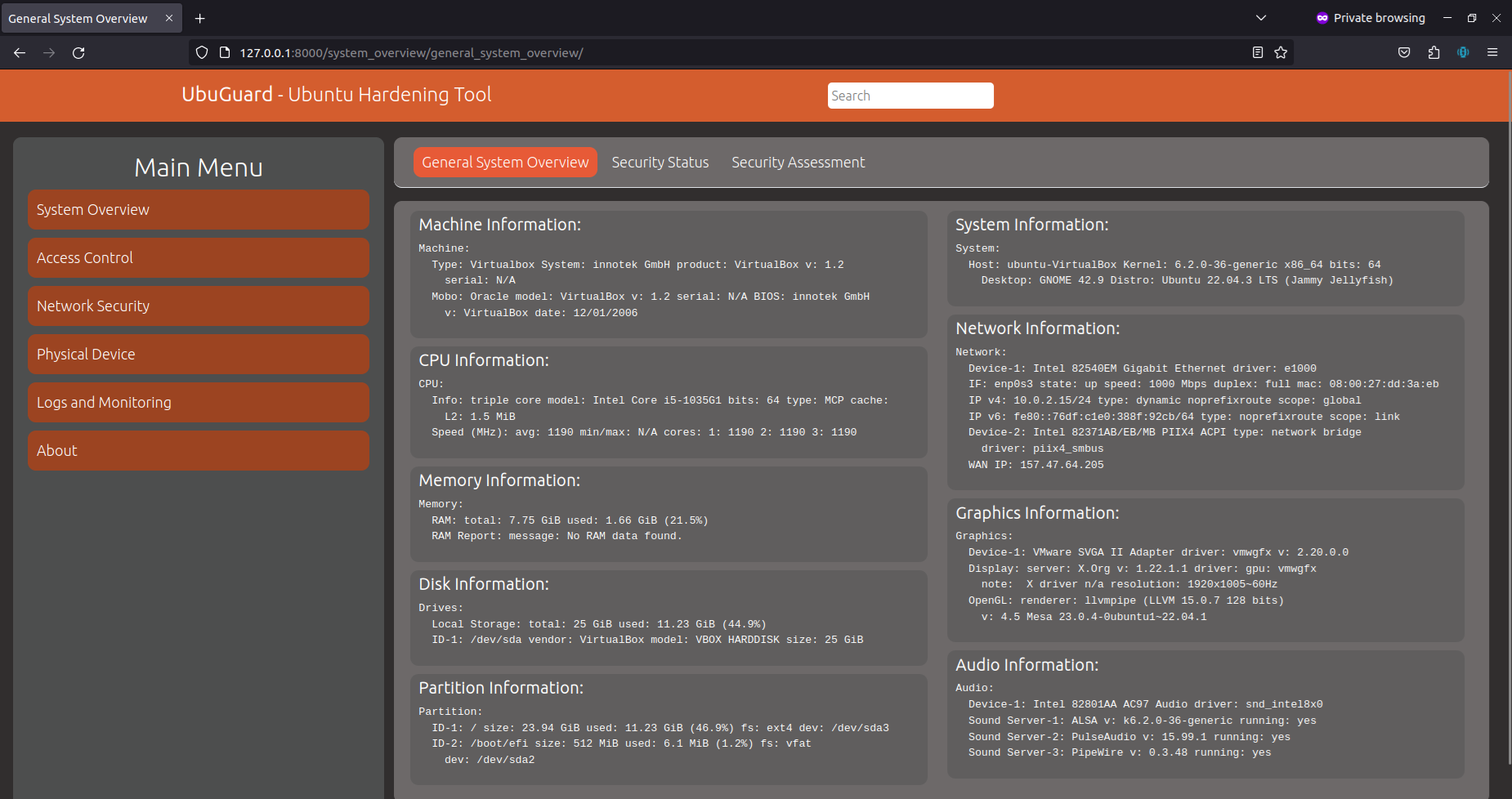
Landing Page
-
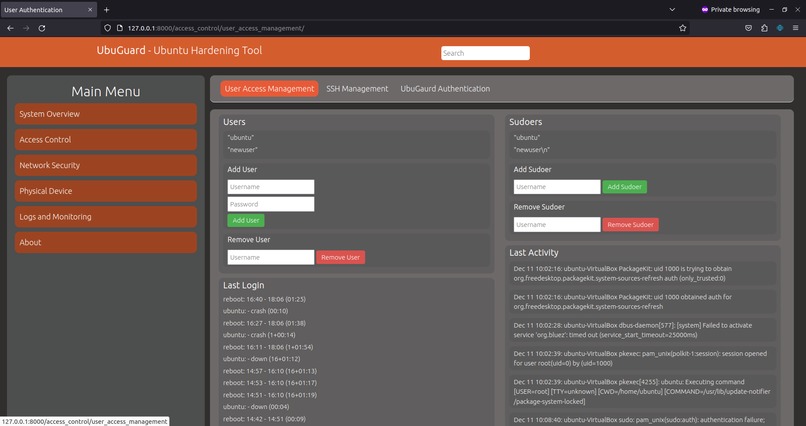
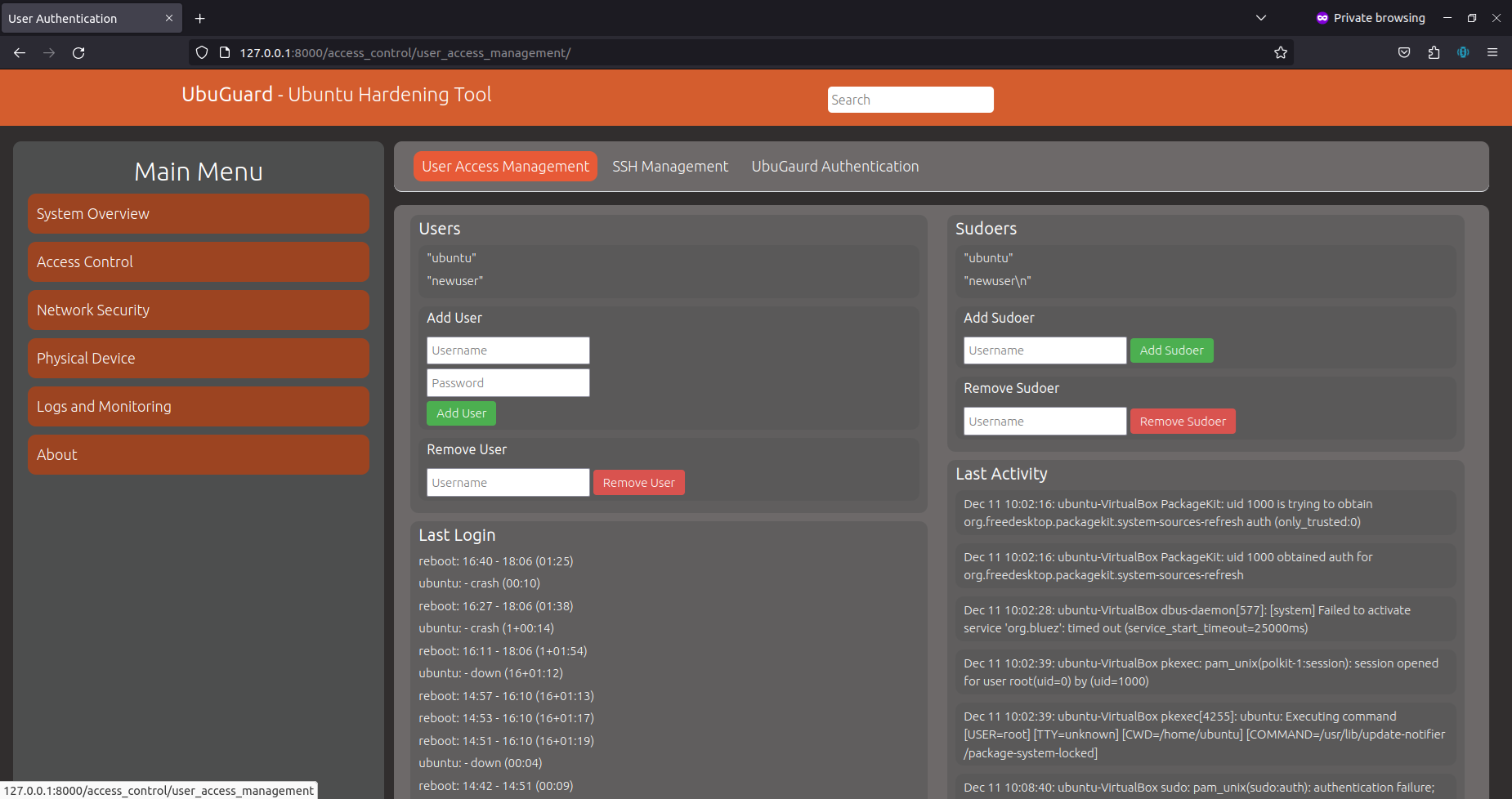
User Access Management
-
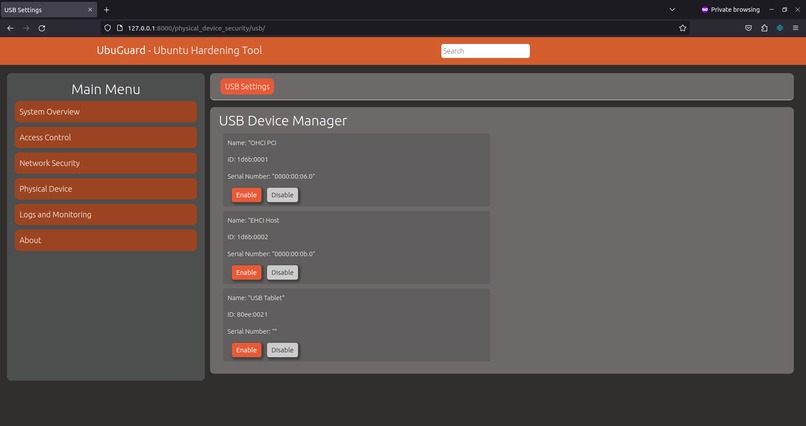
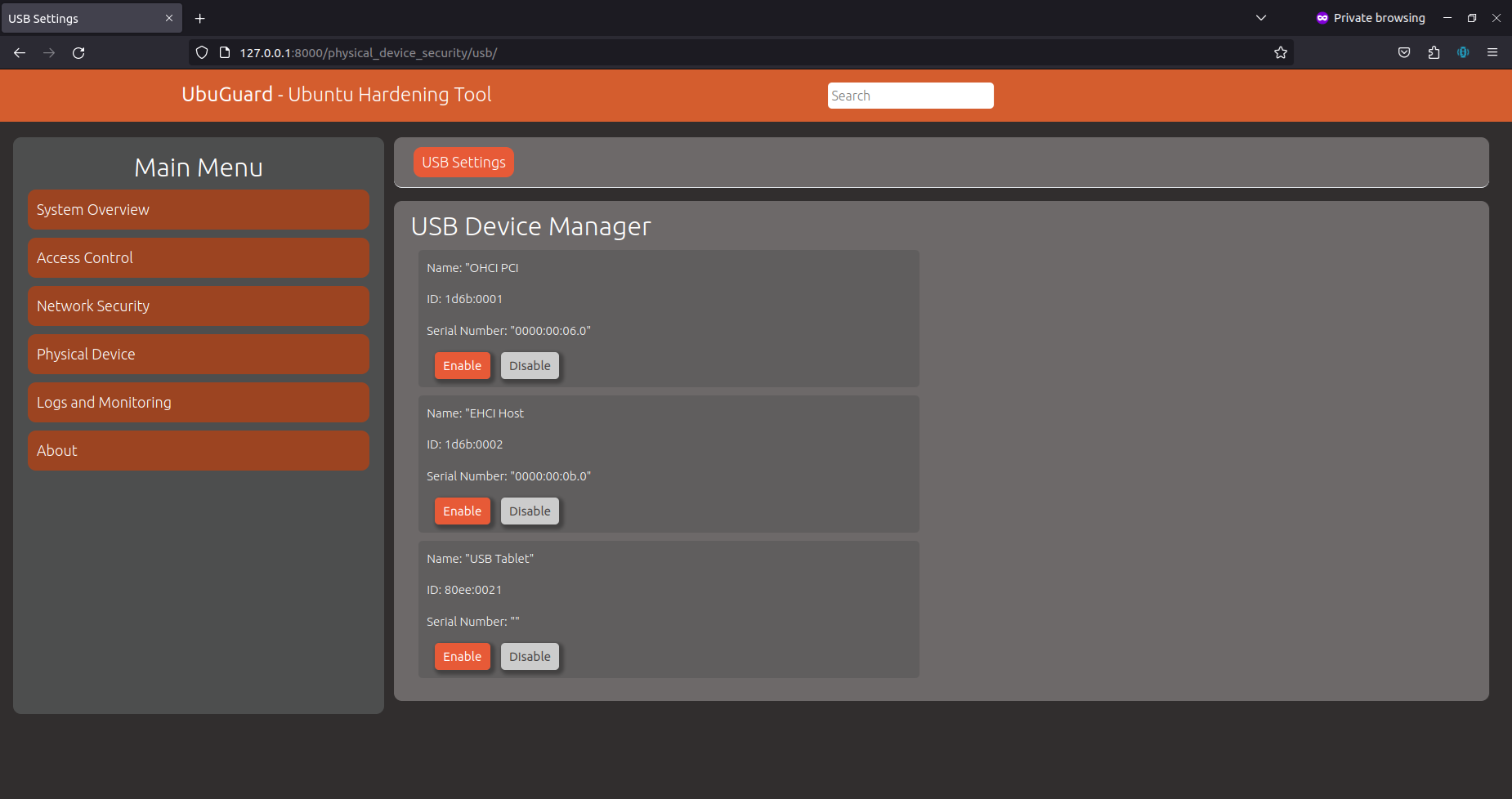
USB Settings
Inspiration
The inspiration behind UbuGuard stems from the need to address the complexities and challenges users face in implementing security measures on Ubuntu operating systems. Recognizing the absence of a user-friendly tool for efficient security management, we aimed to bridge this gap and empower users, regardless of their technical expertise, to enhance the security of their systems seamlessly.
What it does
UbuGuard is a graphical user interface (GUI) designed to simplify and streamline the process of implementing security measures on Ubuntu operating systems. It leverages the Django web framework to manage interactions between the GUI and the backend controller, facilitating user-friendly execution of security configurations. The tool employs Python scripting to interact with the system, ensuring effective security measures without the need for complex command-line operations.
How we built it
The core scripting of UbuGuard is done in Python, addressing frontend logic, backend controller tasks, and security configurations. The Django web framework handles GUI initialization and backend processes. Shell commands are employed to directly interact with the Ubuntu system, implementing security measures. SQLite3 serves as the database backend for storing system configurations and user details securely.
Challenges we ran into
The primary challenge was completing the task within the given time period, especially in the context of listing and implementing a comprehensive set of security measures. The decision to use shell commands instead of bash scripts was the best adaptation during the development process. Aligning security best practices with a user-friendly interface also posed design challenges that we had to address collaboratively.
Accomplishments that we're proud of
We are proud to have developed a tool that simplifies security configurations on Ubuntu systems, making it accessible to users with varying technical skills. The seamless integration of Python scripting, Django framework, and Bash scripts allows for efficient security management, reducing the risk of misconfigurations and enhancing overall system security.
What we learned
Through the development of UbuGuard, we learned the importance of balancing security best practices with user-friendliness. The integration of multiple technologies, including Python, Django, and Bash scripting, taught us valuable lessons in creating a cohesive and effective security tool for Ubuntu.
What's next for Ubugaurd
Looking ahead, we plan to expand UbuGuard's capabilities by incorporating additional security features and refining the user interface based on user feedback. Ongoing improvements, support for new Ubuntu releases, and collaboration with the community remain essential components of UbuGuard's future development.

Log in or sign up for Devpost to join the conversation.