-
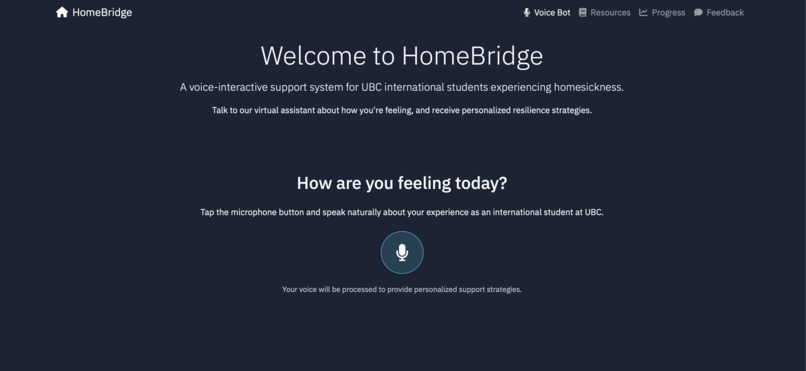
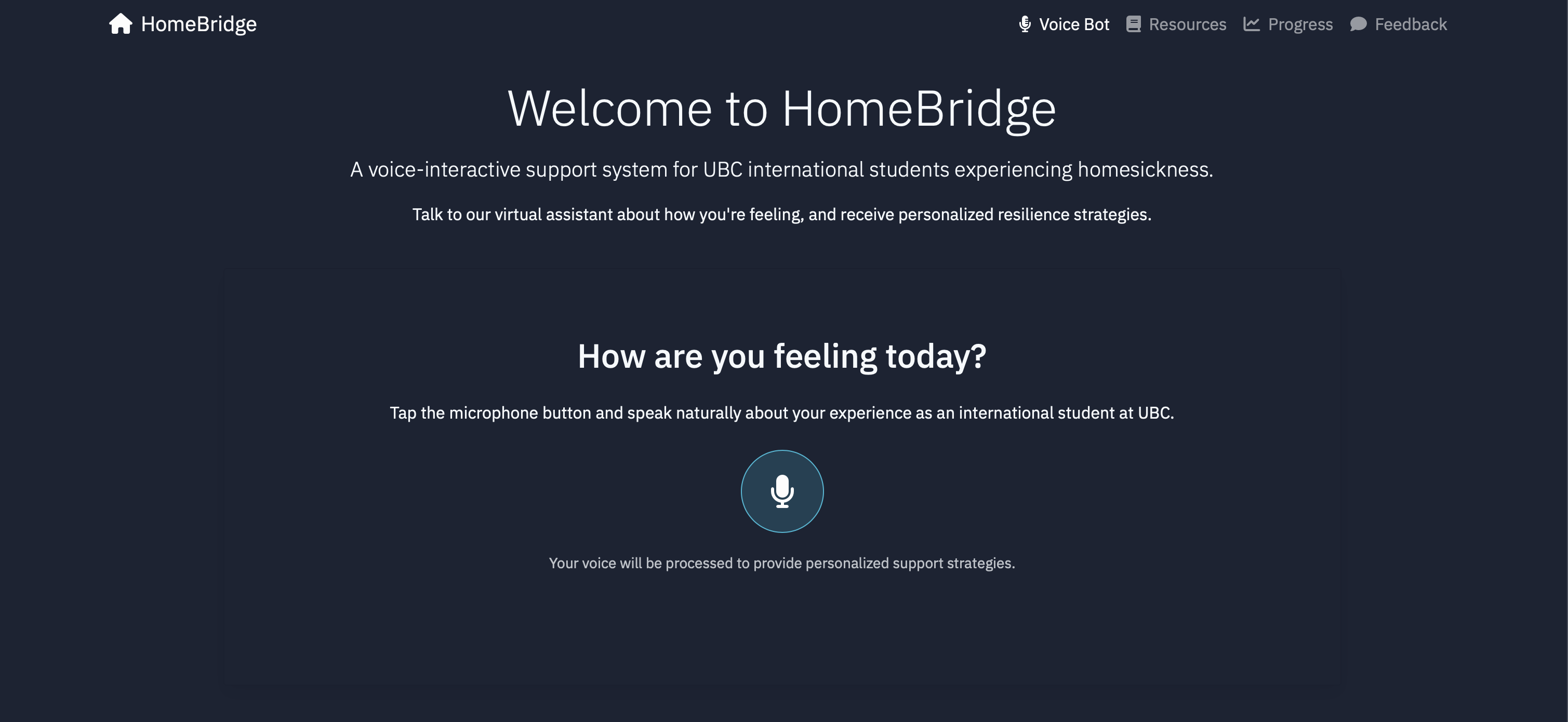
Voice Bot - where users start.
-
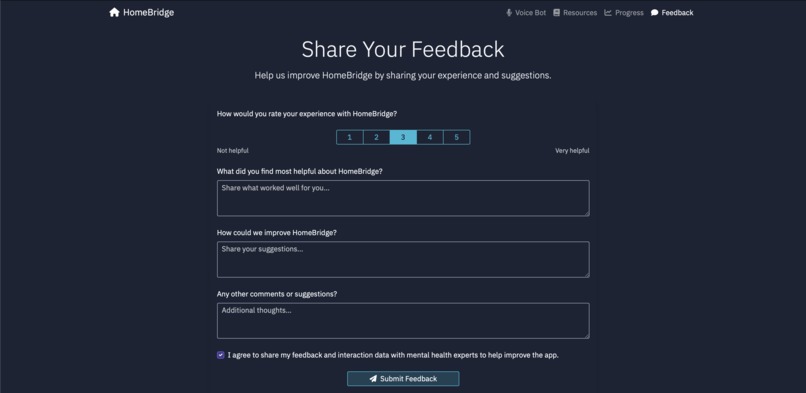
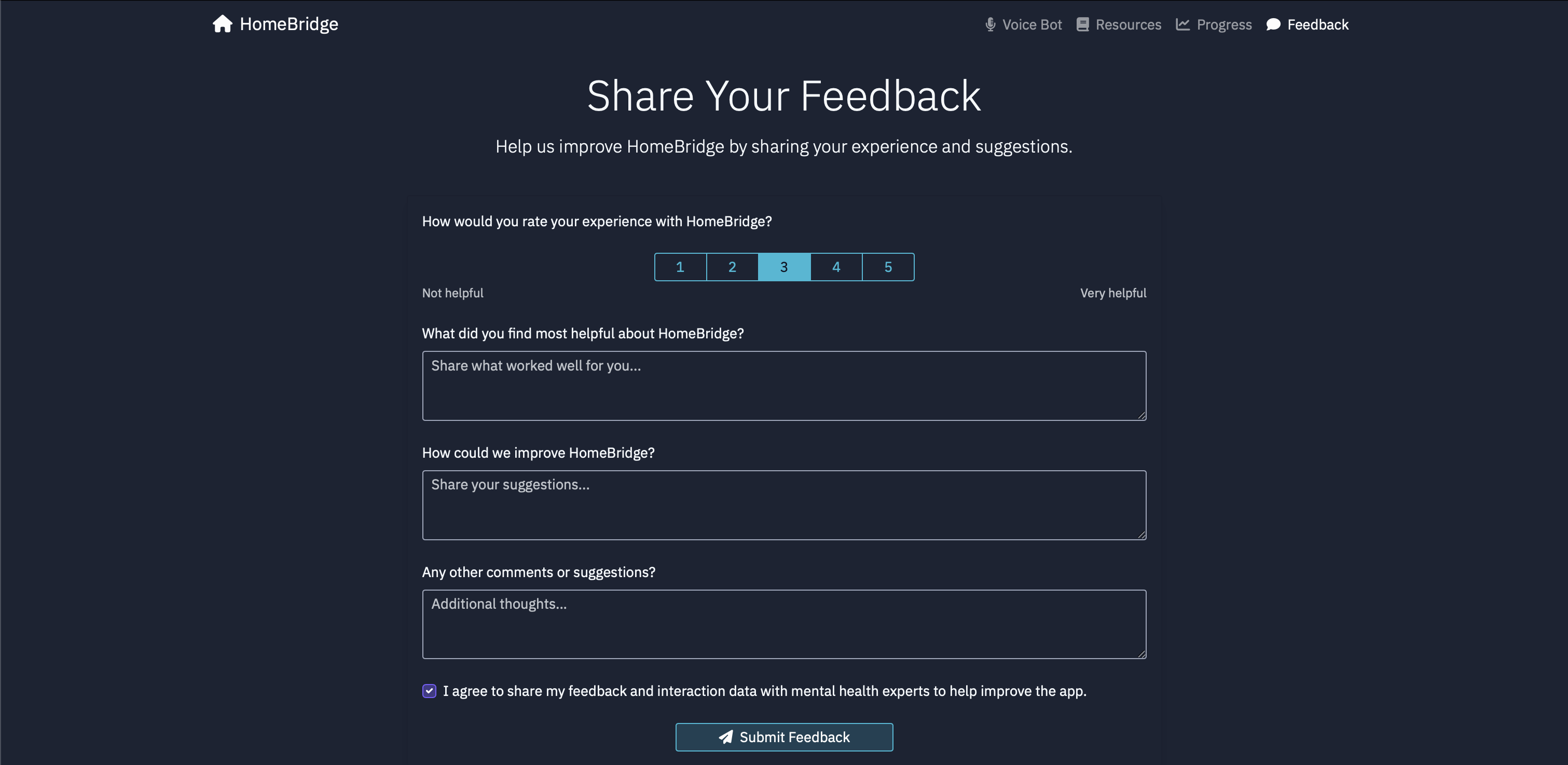
Feedback - how can users improve with the platform?
-
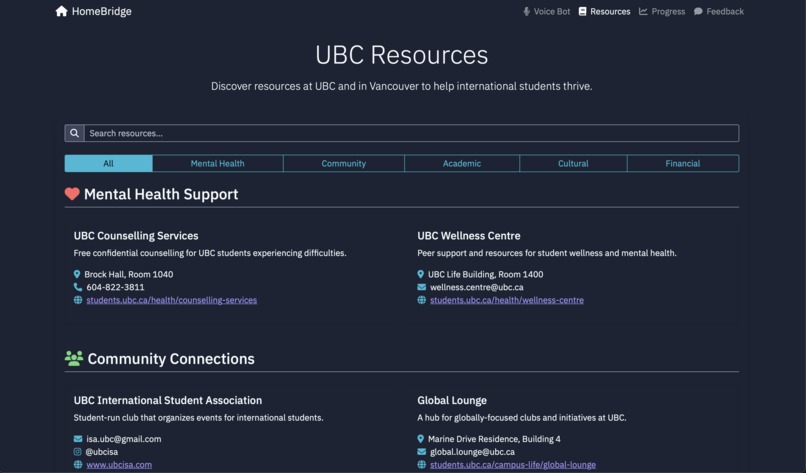
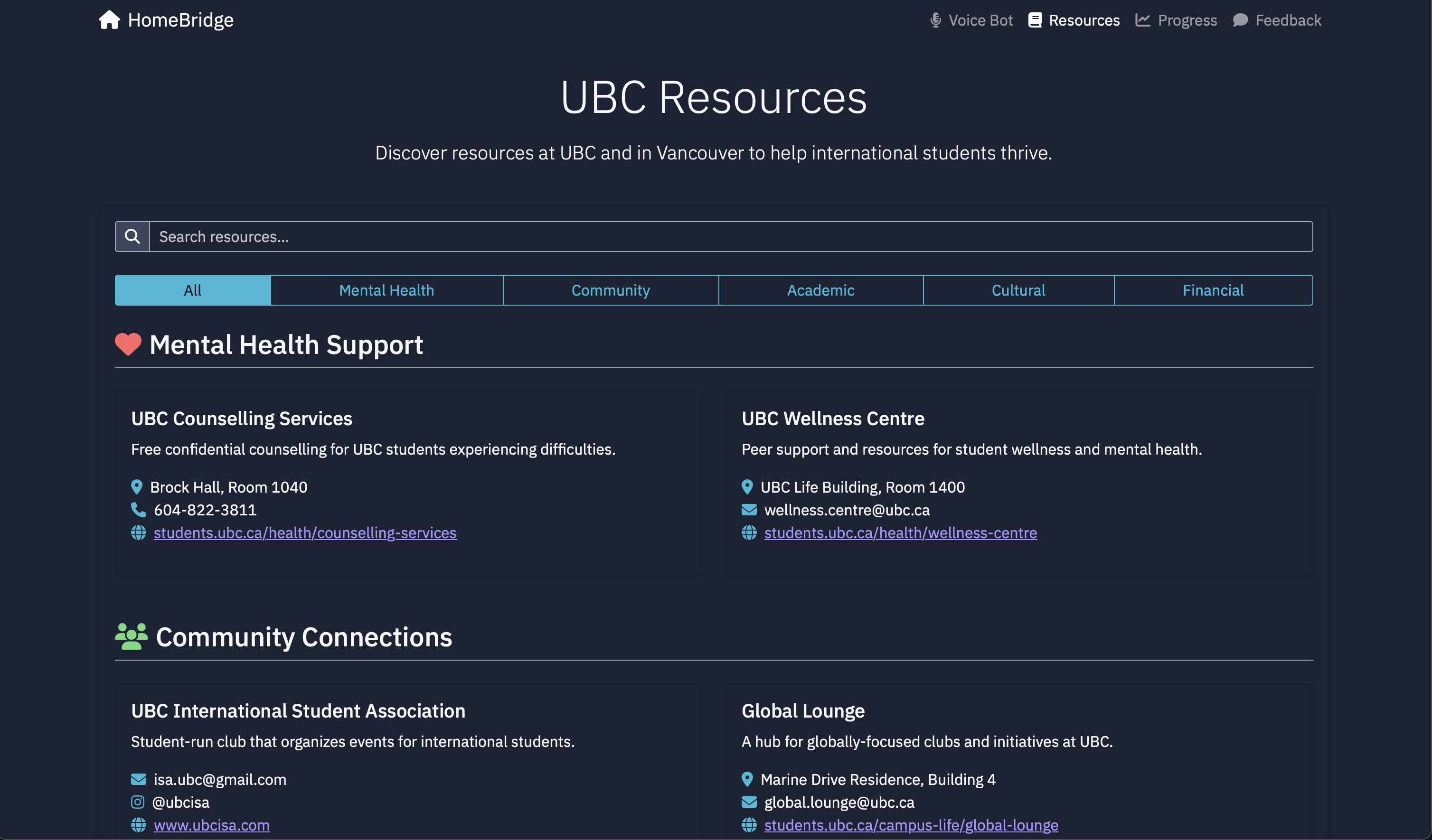
Resources - where users have coordinated resources for reference
-
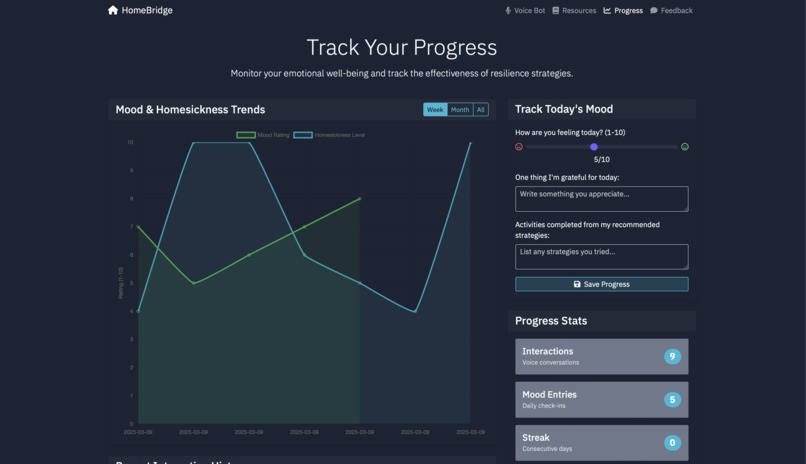
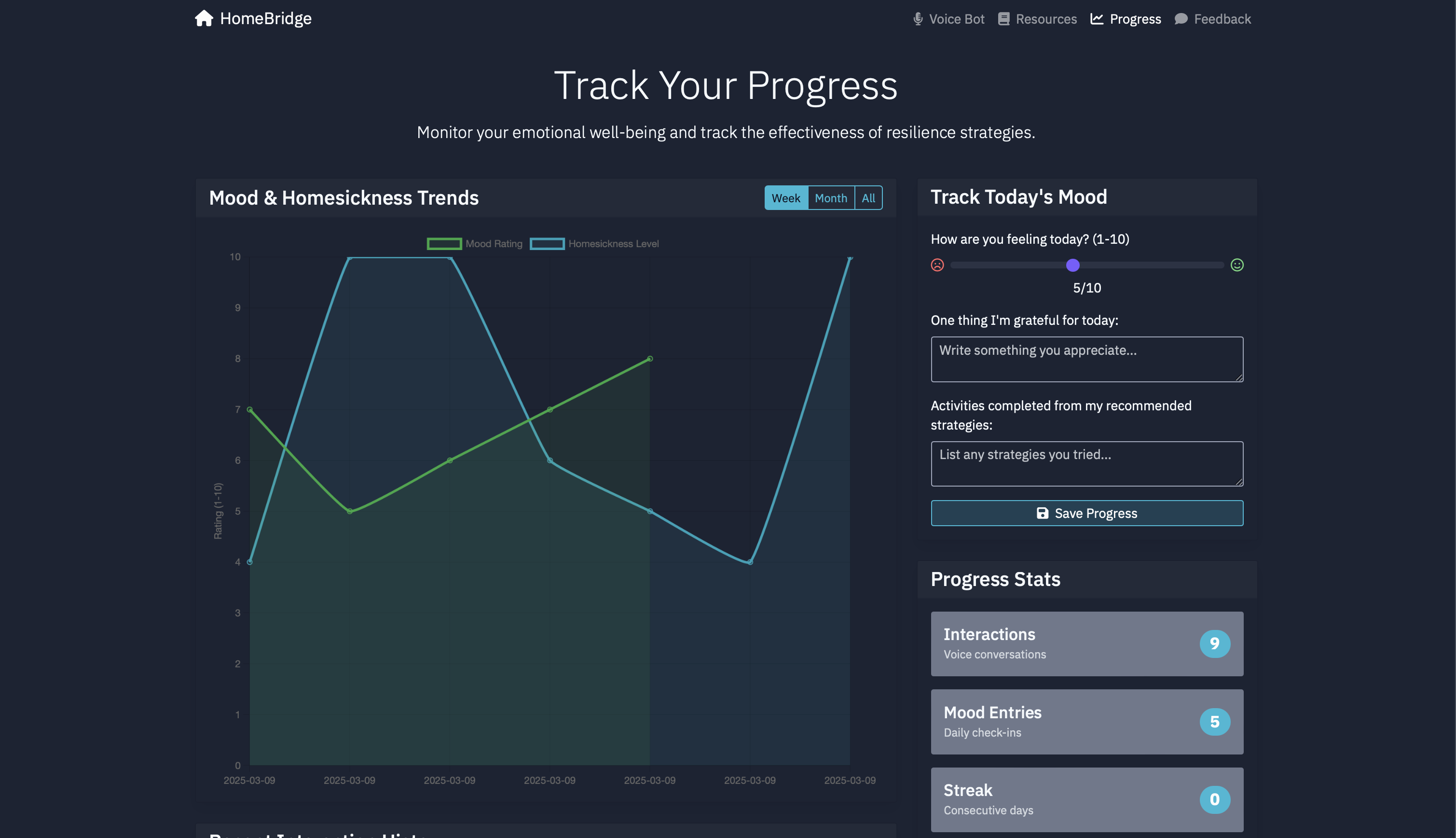
Progress - where users keep track of progress over time
Inspiration
Life transitions are an inevitable part of life, and university is no different. For first-year university students coming from abroad into the new frontier of Vancouver, this is especially true. Over fifteen discovery interviews with cmd-f attendees and mentors, I found a common pattern between homesickness and unhappiness in transitioning into university. Mental well-being as a holistic individual is fundamental for enriching learning experiences, which is why an all-in-one solution is necessary.
What it does
The platform works by analyzing data from voice conversations to detect homesickness and emotional states. It then provides personalized recommendations, resources, and insights based on the user's feelings and trends over time.
1️⃣ Talk to the AI voice bot for strategies & support
2️⃣ Log strategies & gratitude entries in your journal
3️⃣ Track progress & access UBC-specific resources ranging from academic, cultural, and mental health
How I built it
I built by quickly prototyping my hypothesis through replit and rapidly iterating on the demo through text to generative AI along with feedback from technical mentors to double check certain aspects, such as how the risk is calculated and the initial contrast imbalance.
Challenges I ran into
- Getting the contrast right and balanced with the rest of the user interface
- Calculating the risk properly by attaching the appropriate resources inside of it
Accomplishments, specific quotes validating solution (reworded for clarity)
- "There were very huge life changes for me in UBC compared to India in terms of presentations, projects, getting into the culture and making friends. I think this voice bot is really good because I don't want to type everything in so that I can help improve my scores, get into the culture, and make friends. This would really help me." - Vaibhav Sharma, multi-hackathon winner and UBC international student from India
- "I moved to this country five months ago to start fresh, leaving behind everything in my career. When you come from another country, you're focused on settling instead of your own health and getting a community. In fact, I didn't know what specific communities to connect with and right away when I moved to UBC! Aside from the UI minor fixes, I'd use this as long as trust is established with privacy protocols " - anonymous interviewee from Rwanda at cmd-f 2025, moved to UBC five months ago
- "I think that the resources and recommendation activities are useful for what they could do to improve their situation. When you’re new, it takes time to get used to the support that you can get. When you just come to UBC, you don’t know that you can get support for their mental health and you can provide output of resources that you can go to. If there’s one that’s not for you, you can try as many as you wanted. This matters since I think mental health ties into uni experience so any way in a way it imposes everything you do. " - anonymous international student interviewee at cmd-f
What I learned
A few key takeaways that I learned over the past 24 hours from my research:
- Some of the biggest root causes of students not tending to self-reflect are that deliberate reflection consumes 20% of the brain's energy, like trauma survivors showing an 18% lower baseline PFC activity (BMC) and the limbic system prioritizes eating/sleeping (brainstem functions) over PFC-driven reflection. Grief exacerbates this, with nucleus accumbens reactivity spiking 37% for loss-related stimuli (PMC). Hence, the mental brainpower that it takes to self reflect though shown to have benefits for people are quite huge which is why those don't form as habits.
- Another huge root cause is that marginalized groups, which can include international students, spend 31% more mental energy on survival needs (per your poverty research), leaving fewer resources for reflection. Plus, healthcare systems prioritize acute care (e.g., $12k neurofeedback) over preventive tools like gratitude journaling (41% symptom reduction at $0 cost). Hence it'll be harder for students to be happy due to the limited accessibility and cost in there.
What's next for UBC HomeBridge
⚪ Enhance AI accuracy and deepen technical development beyond the initial prototype—across frontend, backend, and UI ⚪ Add a new accounts section for individual use ⚪ Collaborate further with psychologists, counselors, and international students for continuous validation and refinement

Log in or sign up for Devpost to join the conversation.