🌌 Inspiration
The skies have always fascinated humanity — from ancient stargazers to modern scientists. Yet, the unknown still lingers. The idea for UAP Detector powered by MeDo was born from curiosity and the desire to merge AI precision with cosmic mystery. We envisioned a platform that doesn’t just record anomalies but interprets them intelligently, bridging science, art, and imagination.
Inspired by aerospace innovation and the growing interest in anomaly detection, our goal was to build a system that feels like a mission control for the unexplained — immersive, data-driven, and visually cinematic.
🚀 What It Does
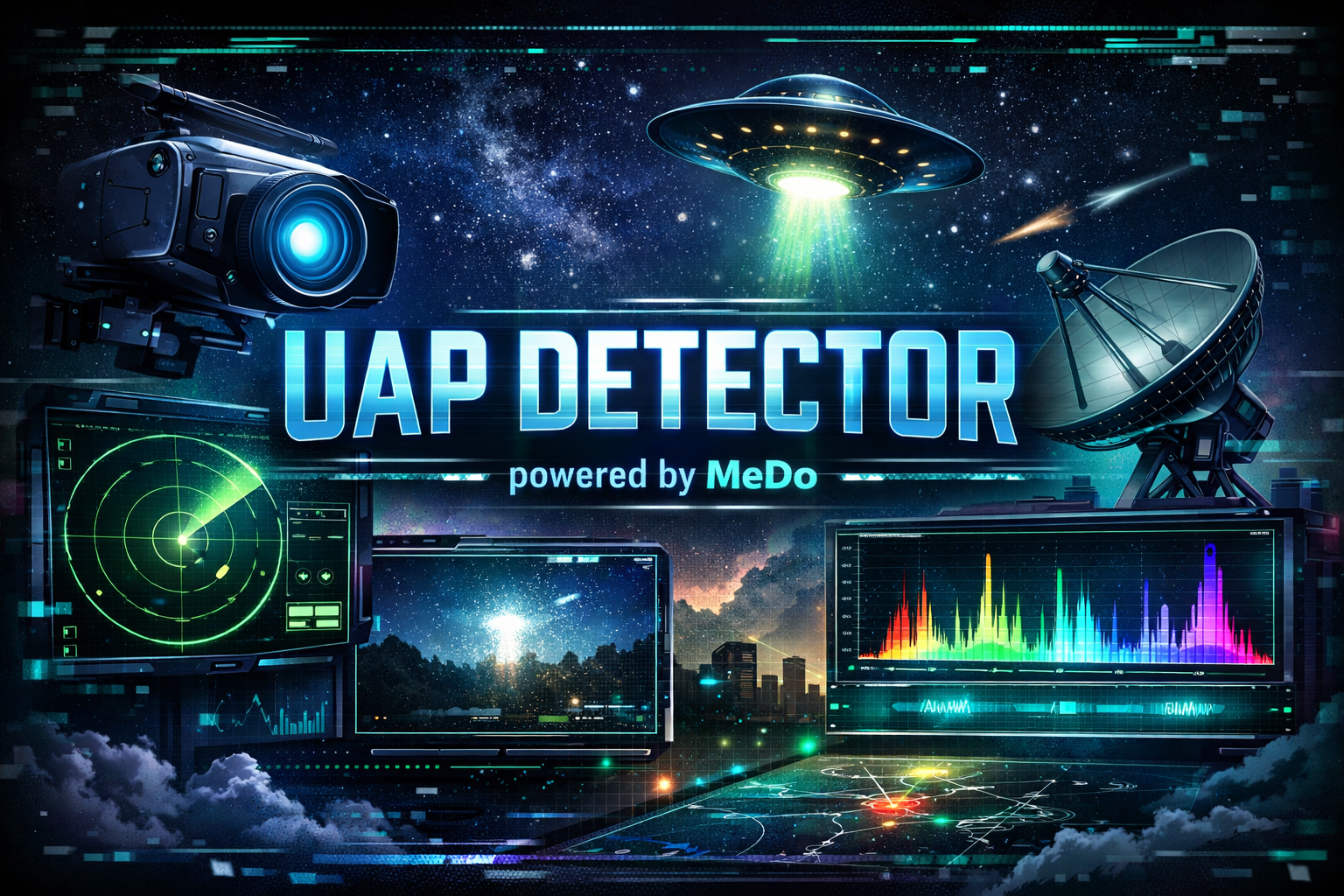
UAP Detector is an AI-powered anomaly detection platform that combines multiple sensing and visualization layers to track and analyze unidentified aerial phenomena (UAPs).
It now includes:
- Real-time visual detection using camera feeds and image analysis.
- Radar simulation with waveform visualization and anomaly blips.
- Signal Analyzer with real-time waveform monitoring and electromagnetic band analysis.
- Frequency Scanner with spectrum sweeps and animated frequency visualization.
- Location-based logging with timestamped event tracking.
- Immersive backgrounds: live video loops, animated starfields, cyberpunk glitch effects, holographic borders, and scan-line overlays.
All detections are stored securely in Supabase and can be exported for research or community sharing.
🧠 How We Built It
We built the project using the MeDo no-code AI platform, leveraging its modular architecture for rapid prototyping.
Tech Stack Highlights:
- Frontend: MeDo visual builder + custom CSS animations for cyberpunk styling.
- Backend: MeDo’s AI logic layer for anomaly detection and classification.
- Database: Supabase for secure storage, multimedia uploads, and CSV export.
- Visualization: RadarSimulation.tsx, SignalAnalyzer.tsx, FrequencyScanner.tsx with glitch text and holographic UI.
- Deployment: Hosted on MeDo’s cloud infrastructure with live video backgrounds and dynamic updates.
⚙️ Challenges We Ran Into
- Balancing realism and immersion: Making radar/frequency visuals scientifically plausible while maintaining cinematic cyberpunk aesthetics.
- Performance optimization: Ensuring animated starfields, glitch effects, and video backgrounds run smoothly across devices.
- Data synchronization: Keeping detection modules in sync with the dashboard without lag.
- No-code limits: Extending MeDo’s environment with custom TypeScript and CSS required creative workarounds.
🏆 Accomplishments That We’re Proud Of
- Integrated live video backgrounds and animated starfields for a dynamic, immersive UI.
- Added Signal Analyzer and Frequency Scanner modules for deeper anomaly detection.
- Designed a futuristic cyberpunk interface with glitch text, holographic borders, and scan-line overlays.
- Built a multi-sensor detection dashboard that feels like a real mission control system.
📚 What We Learned
- How to extend no-code platforms with custom components for advanced functionality.
- The importance of visual storytelling in making technical data engaging.
- Techniques for optimizing real-time animations and effects without sacrificing performance.
- Collaboration across design, AI, and data disciplines can yield results that are both functional and artistic.
🔮 What’s Next for UAP Detector powered by MeDo
- Integration with satellite and weather data for contextual anomaly analysis.
- Community portal for collaborative sightings and pattern recognition.
- Mobile app version with AR sky scanning and real-time alerts.
- AI model refinement using open datasets for improved classification accuracy.
- Partnerships with aerospace and research organizations to validate and expand detection capabilities.
Built With
- capcut/dreamina-(visual-assets)
- cloud-deployment-(medo-hosting)
- custom-css-animations
- cyberpunk
- frequency-spectrum-analyzer
- github-(collaboration)
- html/css
- javascript
- json-data-pipelines
- medo-no?code-ai-platform
- radar-visualization-modules
- rest-apis
- styling
- supabase
- ui


Log in or sign up for Devpost to join the conversation.